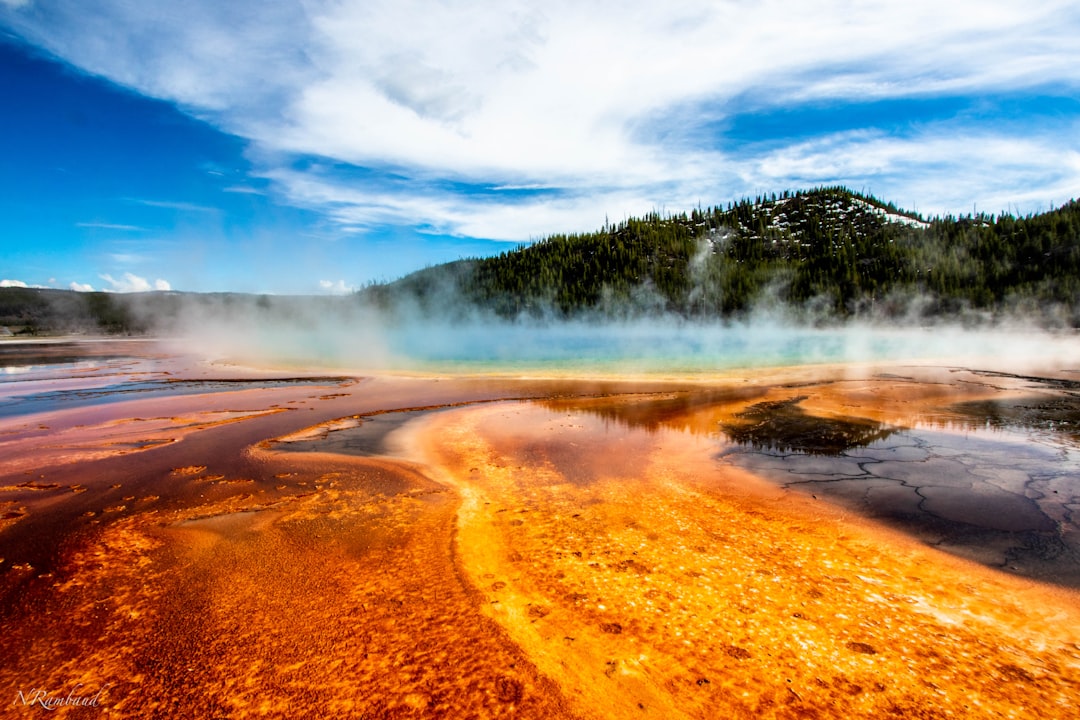
The First National Park: How Yellowstone Sparked America’s Love Affair with Nature”
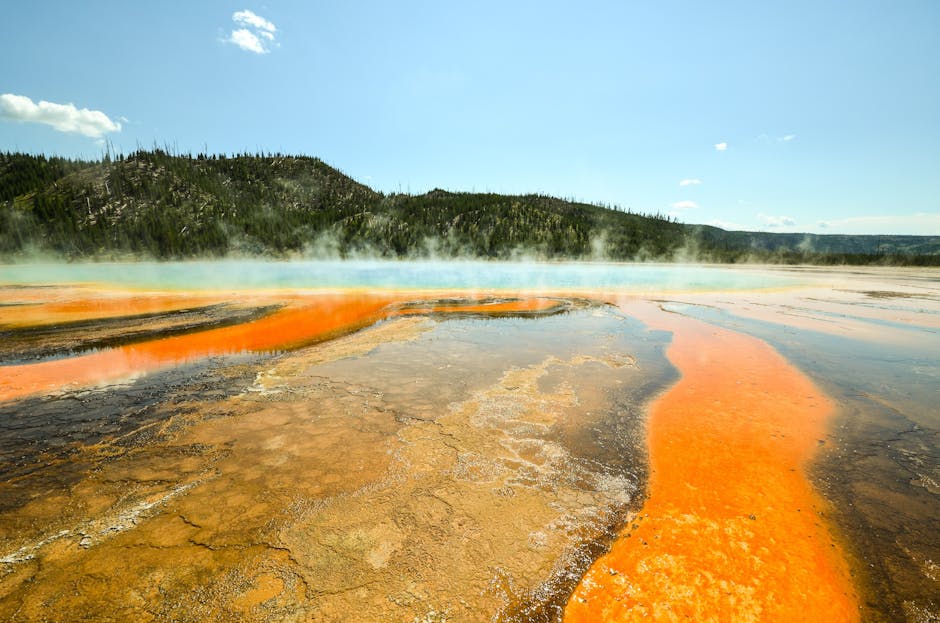

Why America's First National Park Changed Everything
The First National Park: How Yellowstone Sparked America's Love Affair with Nature began on March 1, 1872, when President Ulysses S. Grant signed a groundbreaking law. This act created the world's first national park, sparking a movement that led to over 6,000 protected areas across 100 countries.
Here's what made Yellowstone's creation so revolutionary:
- A Bold New Idea: Setting aside 2.2 million acres of land not for profit, but for people
- For Everyone: Declared a "public park or pleasuring-ground for the benefit and enjoyment of the people"
- Proof in Pictures: Stunning photographs by William Henry Jackson and paintings by Thomas Moran convinced Congress that Yellowstone's wonders were real
- Global Inspiration: Led to Australia's Royal National Park (1879) and Canada's Banff National Park (1885)
- Living Legacy: Now welcomes over 4 million visitors yearly and protects the oldest public bison herd in America
At a time when America was growing fast and land meant money, a small group of visionaries did something remarkable. They looked at Yellowstone's geysers, canyons, and wildlife and said: "This belongs to all of us."
It wasn't an easy sell. Recovering from the Civil War, most Americans saw land as something to be used for farming, mining, or development. But breathtaking images from the 1871 Hayden Survey told a different story—one of natural wonders that deserved protection.
President Grant's signature didn't just create a park. It planted an idea that became America's greatest gift to the world: the belief that some places are too special to own, too precious to change, and too important to lose.
This is the story of how that happened—and why it still matters today.

Terms related to The First National Park: How Yellowstone Sparked America’s Love Affair with Nature:
- The True Story of Sacagawea: Guide, Interpreter, and American Icon
- The Hello Girls: The Unsung Heroes of World War I
Before the Park: A Land of Wonder and a Bold New Idea
Long before it was a park, this land was home to people who knew its secrets and sparked wild tales from explorers. It was here that a radical idea began to form—that some places are worth saving simply for their beauty.
A Home for Millennia: The First Peoples of Yellowstone

It's important to know that Yellowstone wasn't an empty wilderness. People had called this place home for at least 11,000 years.
At least 27 tribes had deep connections to this land, where they hunted, gathered plants, traded, and held sacred ceremonies. The Crow people called it "Aw'Pawishe" (land of steam), and the Assiniboine and Sioux knew it as "Pahaska" (white mountain country).
The region was a treasured source of obsidian, a volcanic glass for making tools, with over 50 ancient quarry sites found in the park. The Tukudika people, a Shoshone band known as the "Sheep Eaters," lived here year-round, thriving in the high country.
Their spiritual connection to this land ran deep, passed down through generations. They understood the geysers and knew how to live in harmony with this powerful landscape.
Sadly, a false story later claimed that tribes feared the geothermal features. This convenient myth, used to justify removing Native people, has been debunked. As detailed in scholarship from the Wyoming Law Review, Indigenous people were the region's first stewards, and more on their long history reveals their central role.
The First National Park: How Yellowstone Sparked America's Love Affair with Nature has a complete history—one that begins thousands of years before 1872.
"Colter's Hell": Early Explorers and a New Way of Thinking
The first non-Native to see Yellowstone was likely John Colter of the Lewis and Clark Expedition. After exploring the region in 1807-1808, he returned with stories of boiling mud and steaming rivers. People laughed, thinking he'd lost his mind.
The area was nicknamed "Colter's Hell," and for decades, tales from mountain men like Jim Bridger were dismissed as exaggerations.
But America was changing how it thought about land.
In the 19th century, land meant profit. The spirit of Manifest Destiny drove people west to farm, mine, and build. Land was meant to be used, and the idea of leaving it alone was almost unthinkable.
As historian Patricia Limerick noted, a practical reason Yellowstone became a park was that "No one could think of anything useful to do with it," as its high, rocky terrain was poor for farming.
But something deeper was stirring. In 1869 and 1870, expeditions ventured into Yellowstone and came back changed, convinced they'd seen something that needed protecting.
Imagine men gathered around a campfire near Madison Junction, awestruck by what they'd seen. Surveyor Cornelius Hedges was among them. Instead of claiming the land for profit, they discussed a radical idea: what if it belonged to everyone?
That campfire conversation planted a seed for a new way of thinking: that some places are too special to belong to just one person. They should belong to all of us.
It was a bold idea for its time. But as we'll see, it was an idea whose time had come.
The Birth of a National Treasure: How Yellowstone Became a Park
It took a special kind of effort to convince a nation to set aside such a vast and valuable piece of land. It wasn't just words, but breathtaking images and heartfelt passion that turned a dream into a reality for all Americans.
The Power of Pictures: Capturing Yellowstone's Soul

The turning point came in 1871 with an expedition led by geologist Ferdinand Vandiveer Hayden. This wasn't just a scientific survey. Hayden wisely brought along painter Thomas Moran and photographer William Henry Jackson, whose work would change everything.
Their mission was to capture Yellowstone's soul and bring it back to a skeptical nation.
Jackson photographed Old Faithful erupting, the steaming terraces of Mammoth Hot Springs, and other wonders that had seemed too fantastic to be real. Moran, meanwhile, created vibrant canvases of the Grand Canyon of the Yellowstone that glowed with an inner light.
These weren't just pretty pictures. They were proof.
For years, stories of Yellowstone were dismissed as lies. But when Congress saw Jackson's photos and Moran's paintings, they saw the truth. As one observer noted, these images "captivated the public imagination more than reports or speeches ever could."
The images reached ordinary Americans, allowing people who would never visit the remote territory to glimpse its beauty. It stirred a love for the wild places that made the country unique.
A Promise to the People: The Yellowstone National Park Protection Act
Armed with this visual evidence, Hayden presented a 500-page report to Congress, lobbying with tireless determination.
On December 18, 1871, a bill was introduced to set aside over 2 million acres as a public park.
This was no small ask. The nation was still recovering from the Civil War, and most people saw land as something to develop. Yet the idea of preserving this extraordinary place for its beauty began to resonate.
The bill called for the land to be dedicated "as a public park or pleasuring-ground for the benefit and enjoyment of the people." Not for profit. Not for private ownership. For everyone.
On March 1, 1872, President Ulysses S. Grant signed the Yellowstone National Park Protection Act into law. With that signature, The First National Park: How Yellowstone Sparked America's Love Affair with Nature officially began.
It was a promise from one generation to all future generations—a declaration that some wonders belonged to all of us.
The 42nd Congress did something remarkable. They saved a remote corner of the country not for riches, but for pride. It was a gift of vision and kindness that would inspire the world.
The First National Park: How Yellowstone Sparked America's Love Affair with Nature
Creating the park was just the first step. Learning how to care for it, protect it, and share it with the world became a journey of its own, one that would inspire a global movement and cement Yellowstone's place in our hearts.
Growing Pains: Protecting America's New Gem
Creating Yellowstone was a beautiful moment, but reality proved difficult. Congress set aside the land "for the benefit and enjoyment of the people" but provided no money to protect it.
Without funding, the first superintendent was powerless. Poachers slaughtered bison, vandals damaged thermal features, and squatters moved in. The park was in danger of being destroyed before most Americans knew it existed.
In 1886, the U.S. Army rode to the rescue. For three decades, soldiers became Yellowstone's guardians. They patrolled the backcountry, enforced regulations, and removed those who would harm the park. They also built the first roads and facilities, making the park accessible while keeping it wild.
A lasting gift is the Old Faithful Inn (1904), a cathedral of logs and stone. It embodies the "Parkitecture" style, designed to complement nature.
By 1916, America needed a unified approach for its growing family of parks. President Woodrow Wilson created the National Park Service, 44 years after Yellowstone's birth. Its mission was simple: to conserve the scenery, wildlife, and natural objects "unimpaired for the enjoyment of future generations."
It was a promise from one generation to all those yet to come.

America's Best Idea Goes Global
The bold experiment in Yellowstone didn't stay in America—it traveled the world.
The idea that some places are too precious to own and too important to lose resonated far beyond our borders. Australia looked at Yellowstone and thought, "We should do that too." In 1879, they established Royal National Park. Canada followed in 1885 with Banff National Park.
The message spread across continents. Countries with different cultures and histories understood the same truth: some places belong to everyone, held in trust for the future.
Today, more than 6,000 national parks exist in over 100 countries around the globe. From the cloud forests of Costa Rica to the savannas of Tanzania, protected places carry forward that original American idea.
A small group around a campfire sparked a global conservation movement. They couldn't have imagined their conversation would inspire a commitment touching every inhabited continent.
The First National Park: How Yellowstone Sparked America's Love Affair with Nature sparked the world's love for protecting breathtaking places. It's a story of America at its best: a source of ideas that lift up everyone, everywhere.
And it all started with people who looked at something beautiful and said, "Let's save this—not for ourselves, but for everyone who comes after us." That's a gift that truly keeps on giving.
Yellowstone's Enduring Legacy: A Story Still Unfolding
For over 150 years, Yellowstone has been more than just a place on a map. It's a living ecosystem, a classroom for scientists, and a cherished destination where generations of families have made lifelong memories.
The Evolving Purpose of The First National Park: How Yellowstone Sparked America’s Love Affair with Nature
Initially, Yellowstone was seen as a grand "pleasuring-ground" for adventure. Over the decades, however, we began to understand that protecting it meant caring for an entire, interconnected web of life.
The 1963 Leopold Report was a turning point, shifting the goal from maintaining scenery to nurturing whole ecosystems. This new thinking led to one of America's most remarkable conservation stories.
After a 70-year absence, wolves returned to Yellowstone in 1995-96. Their reintroduction restored balance to the landscape. The wolves influenced elk populations, allowing willows and aspens to recover. Birds returned, beavers built dams, and the entire ecosystem began to heal.
The First National Park: How Yellowstone Sparked America's Love Affair with Nature is a living laboratory at the heart of The Greater Yellowstone Ecosystem. It protects the oldest and largest public bison herd in the United States and incredible biodiversity. More than half the world's geysers still steam here, just as they did for the first explorers.

A Cherished Destination for Generations
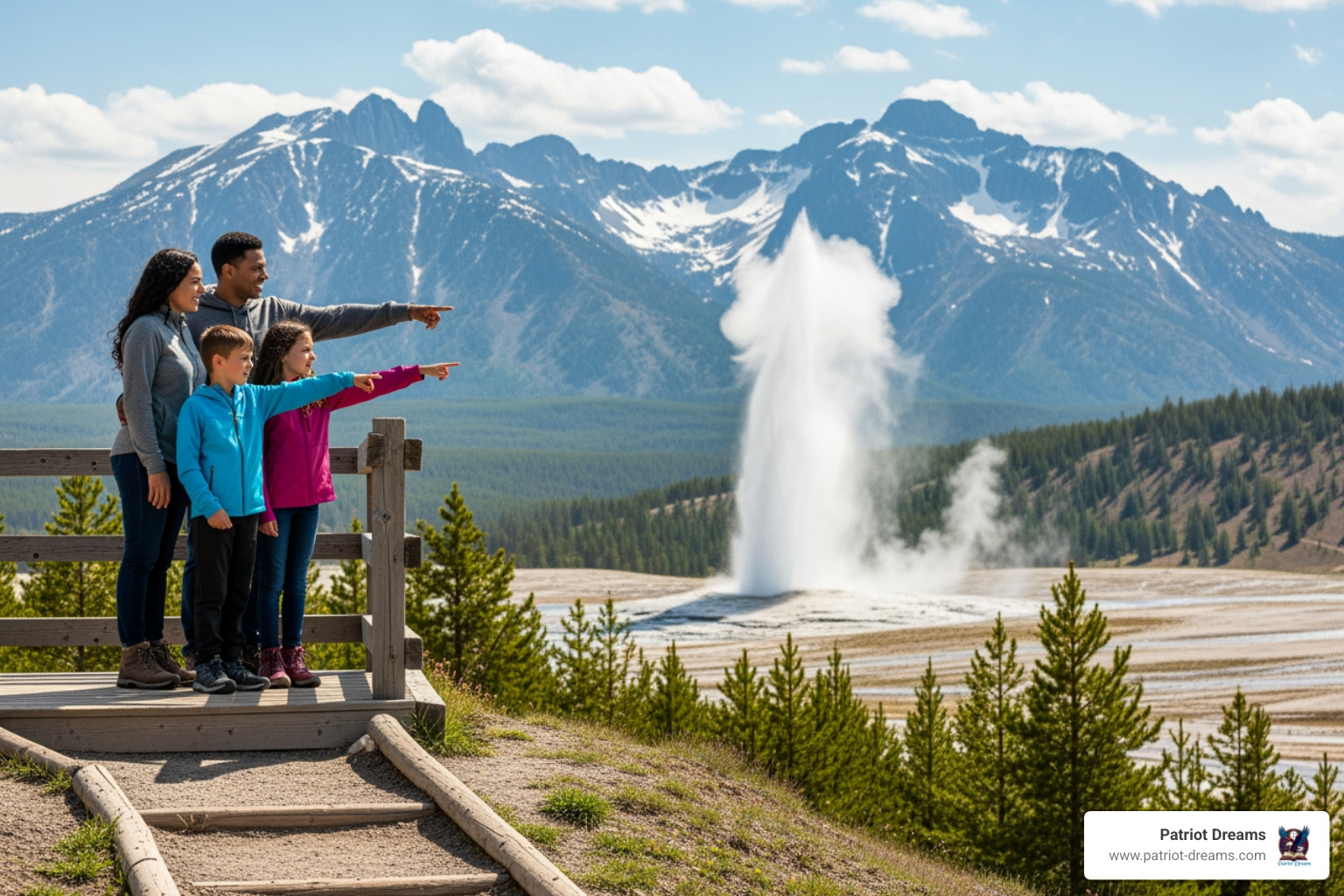
When automobiles were first admitted in 1915, the park opened to more of America. Families could drive to see Old Faithful for themselves, experiencing the wonder in person.
From 1933 to 1942, the Civilian Conservation Corps built trails, campgrounds, and visitor facilities, making Yellowstone more welcoming while respecting the natural world.
The numbers show a growing love: one million visitors a year by 1948. Programs like Mission 66 later revitalized infrastructure to handle the park's popularity. In 2015, a record 4.1 million people visited, each adding their own chapter to the park's story.
Spanning more than 2 million acres across three states, Yellowstone remains a place where families create lifelong memories. It's where children see their first bison, where grandparents share stories of their own visits, and where we all connect with a piece of America's soul, preserved for us all.
This spirit of findy and connection echoes through all our nation's stories, from the journeys shared in American Pioneer Stories to the legacy we're building today. Yellowstone reminds us that some gifts just keep on giving.
Frequently Asked Questions about Yellowstone's History
Why is Yellowstone called the world's first national park?
On March 1, 1872, the Act Establishing Yellowstone National Park (1872) set aside 2.2 million acres as a "public park... for the benefit and enjoyment of the people." While other places like Bogd Khan Uul National Park in Mongolia were protected earlier, Yellowstone's creation was the first on such a grand, national scale for public benefit. More importantly, it established a model of public land preservation that inspired a global movement. The idea spread to Australia, Canada, and over 100 countries, which is why it's considered the world's first national park in spirit and influence.
What was the most important factor in Yellowstone's creation?
The most important factor was the visual proof from the 1871 Hayden Survey. For years, stories of Yellowstone's wonders were dismissed as tall tales. But the photographs by William Henry Jackson and paintings by Thomas Moran provided undeniable evidence to Congress. These images captured the nation's imagination and created an emotional connection that turned the idea of a park into a reality.
How did the creation of the park affect Native American tribes?
This is an important and painful part of Yellowstone's story. For at least 11,000 years, this land was home to Indigenous peoples. At least 27 tribes have deep ancestral connections to the region, where they hunted, gathered, and held ceremonies. The park's establishment in 1872 led to their forced removal from these ancestral lands. New regulations prohibited traditional practices like hunting and fishing, which had sustained their communities for millennia. The vision to preserve nature for future generations unfortunately excluded its original human stewards. Understanding this complete history is essential to appreciating the full story of The First National Park: How Yellowstone Sparked America's Love Affair with Nature.
Conclusion: A Gift That Keeps on Giving
From a campfire conversation to a guide of hope for the world, Yellowstone's story touches the American heart. It reminds us that our greatest acts are often for those we'll never meet—for future generations we can only imagine.
The First National Park: How Yellowstone Sparked America's Love Affair with Nature when visionaries declared, "This belongs to everyone." Setting aside over 2 million acres for people, not profit, planted a seed that grew into a worldwide movement. Today, over 6,000 national parks in 100 countries prove that one good idea, born from kindness, can change the world.
For over 150 years, Yellowstone has been more than geysers and mountains. It's a classroom for scientists, a place for family memories, and a reminder that the most important things are too precious to own, too beautiful to change, and too vital to lose.
This gift speaks to our ability to think beyond ourselves and pass something beautiful forward. Every family photo at Old Faithful, every child's wonder at a bison herd, and every moment of peace in its forests are part of the legacy that began with a bold idea in 1872.
At Patriot Dreams, we believe these are the stories that bring us together. The stories of people who looked ahead with hope, who chose preservation over profit, who believed in a better tomorrow. We're honored to help share these moments of American history that remind us of our shared values and enduring spirit.
The story of Yellowstone isn't finished. It continues every time someone visits, every time we protect wild places, every time we choose to save something beautiful for those who come after us. That's the real gift—not just what was given to us, but what we choose to give forward.
We invite you to explore more stories that celebrate the moments, places, and people that make America special. Find the legacies that continue to shape us and inspire us.
Join the Patriot Dreams Community
Download the app today and start your journey through American history and personal legacy.

Explore Our Latest Insights
Dive into stories that shape our American legacy.