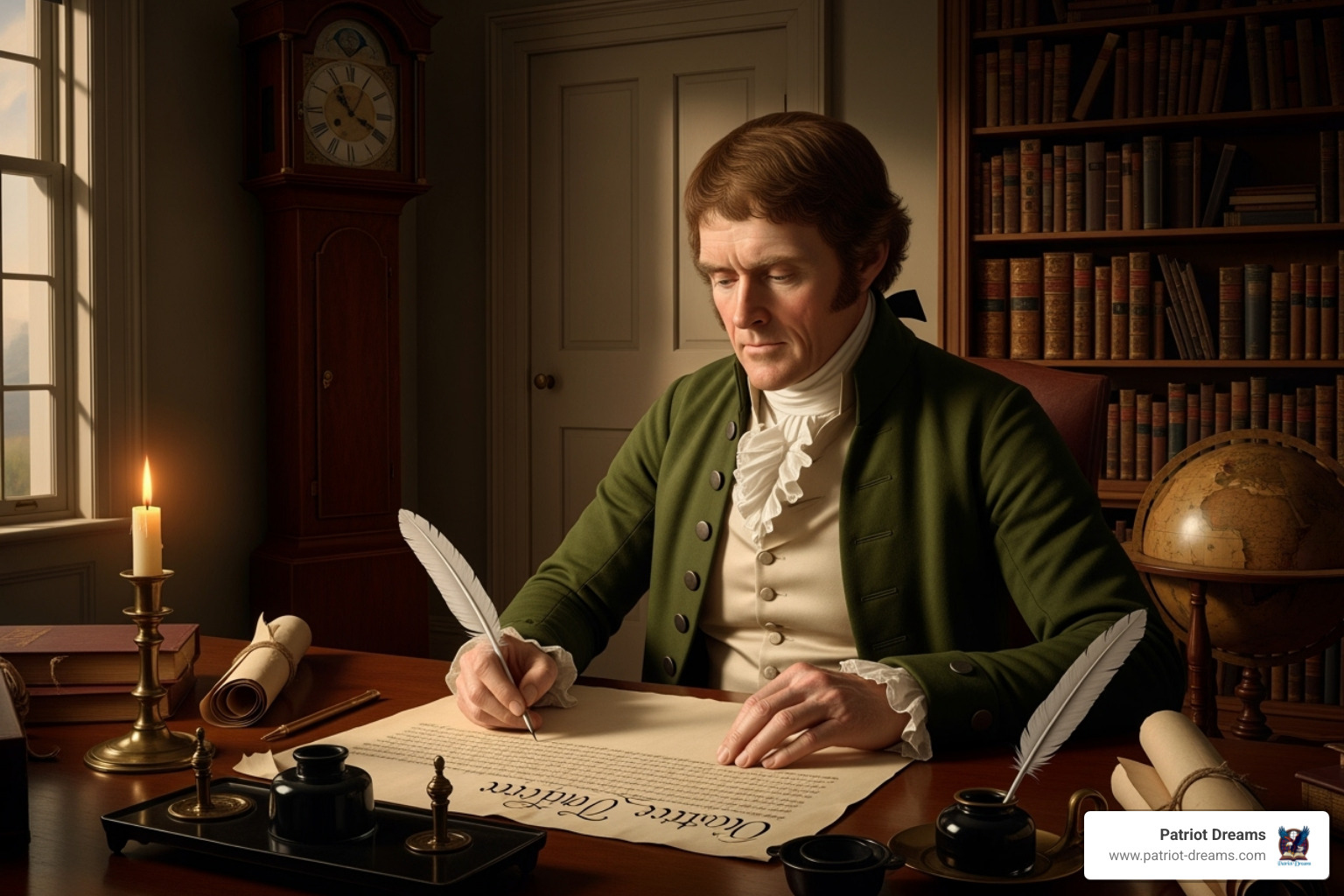
From Segregation to Suffrage: Key Moments in American History
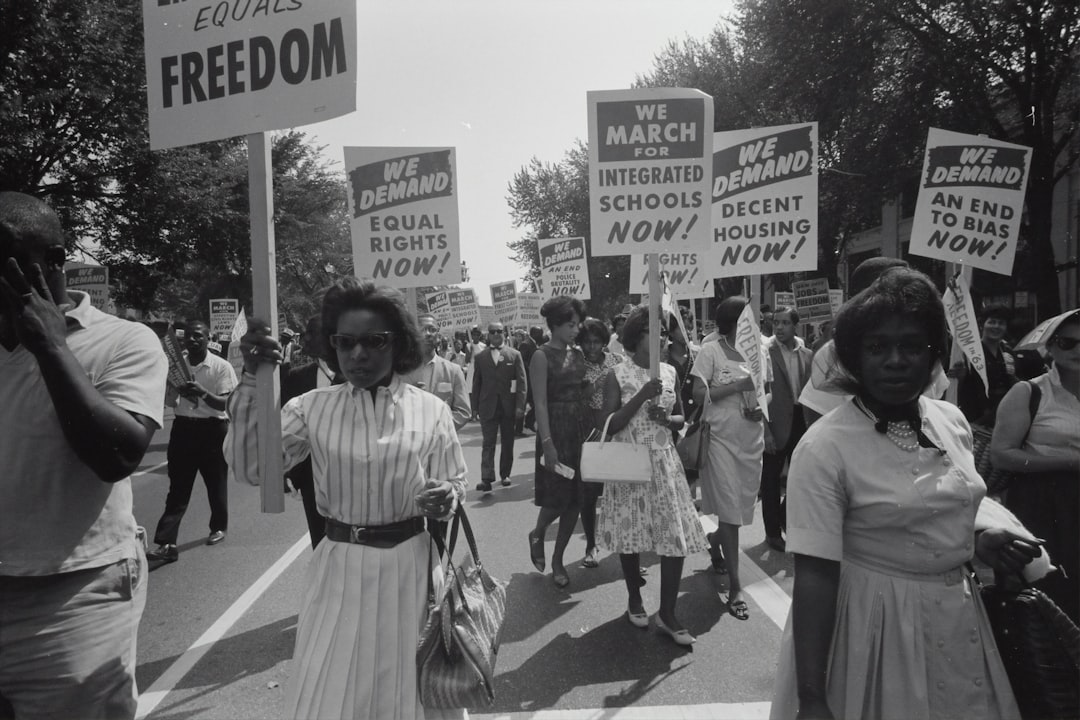

A Movement That Changed the Heart of a Nation

The Civil Rights movement was a pivotal chapter in American history, spanning roughly from 1954 to 1968, when ordinary citizens joined together to demand equal rights and an end to racial segregation. Here's what you need to know:
What It Achieved:
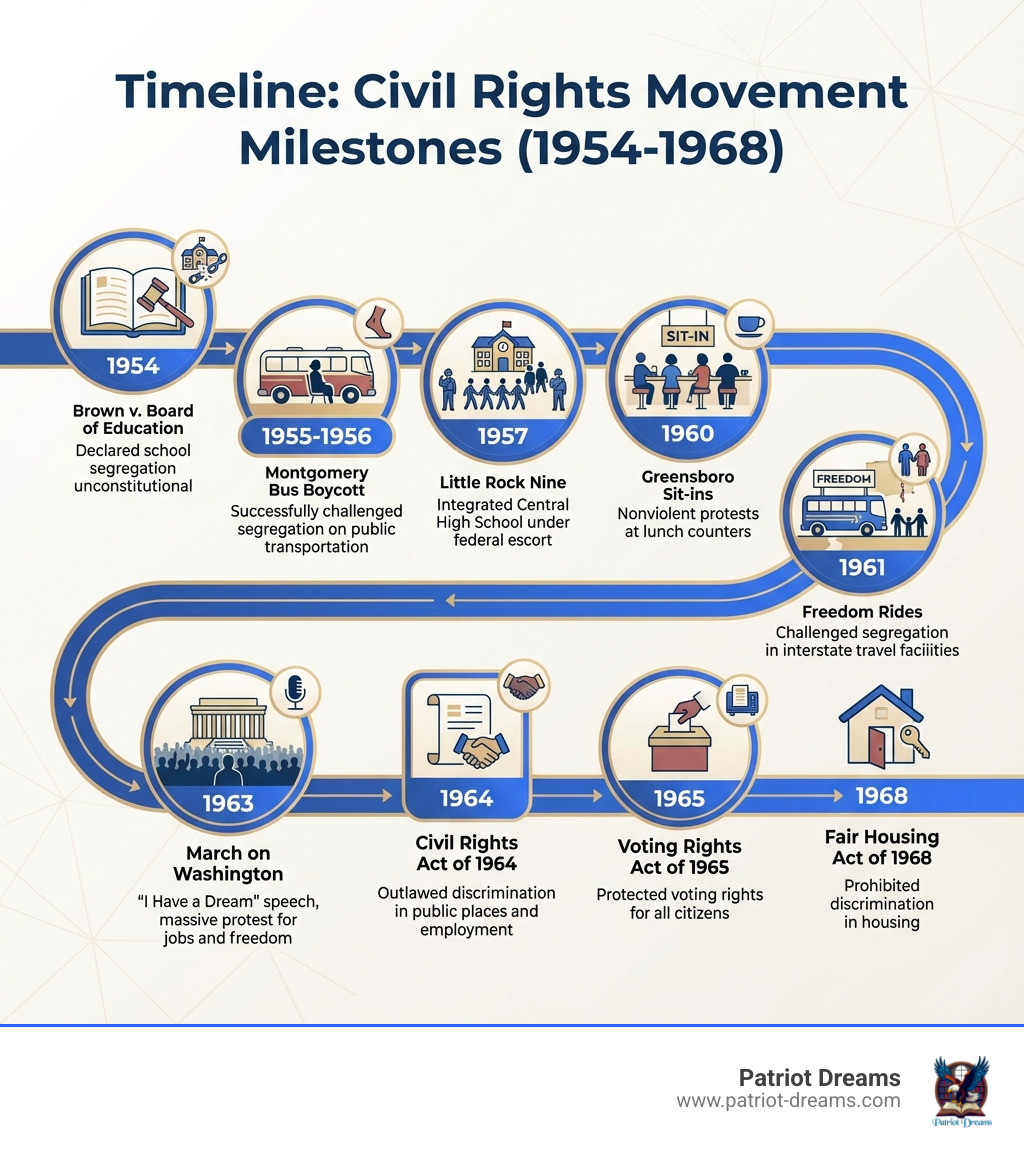
- Brown v. Board of Education (1954) - Declared school segregation unconstitutional
- Montgomery Bus Boycott (1955-1956) - Successfully challenged segregation on public transportation
- Civil Rights Act of 1964 - Outlawed discrimination in public places and employment
- Voting Rights Act of 1965 - Protected voting rights for all citizens
- Fair Housing Act of 1968) - Prohibited discrimination in housing
Key Leaders:
- Dr. Martin Luther King, Jr. - Champion of nonviolent resistance
- Rosa Parks - Sparked the Montgomery Bus Boycott
- John Lewis - Student activist and lifelong advocate
- Fannie Lou Hamer - Voting rights organizer
- Thurgood Marshall - Supreme Court lawyer and justice
Welcome to one of the most inspiring stories in American history. It's a story about neighbors standing up for neighbors. About students refusing to accept injustice. About everyday people who believed so deeply in the promise of America that they risked everything to make it real.
This wasn't just a political movement—it was a moral awakening. From church basements in Montgomery to lunch counters in Greensboro, from the steps of the Lincoln Memorial to the Edmund Pettus Bridge in Selma, Americans of all backgrounds came together. They marched peacefully. They sang songs of hope. They held firm to the conviction that our nation could—and must—live up to its founding ideals.
The Civil Rights movement reminds us that change is possible when people unite around a common dream. It shows us that courage doesn't always roar—sometimes it's the quiet voice that says, "I will try again tomorrow."
Civil Rights movement definitions:
The Long Road to Freedom: Roots of the Movement
The journey towards the modern Civil Rights movement was a long one, deeply rooted in centuries of struggle. After the Civil War, our nation took important steps with the passage of the 13th, 14th, and 15th amendments. These Reconstruction Amendments aimed to abolish slavery, grant citizenship to African Americans, and protect their voting rights. It was a hopeful time, a moment when the promise of equality seemed within reach for all.
However, this hope was soon overshadowed by the rise of Jim Crow laws across the South. These laws created a system of racial segregation and discrimination that touched every aspect of life. From separate schools and public facilities to restrictions on voting, Jim Crow enforced a harsh reality of inequality. The Supreme Court's 1896 ruling in Plessy v. Ferguson tragically cemented this system, establishing the "separate but equal" doctrine, even though facilities for Black Americans were almost always inferior. It was a stark reminder that legal pronouncements alone couldn't erase deeply ingrained prejudices.
Yet, even in these challenging times, the seeds of future change were being sown. Early organizations like the National Association for the Advancement of Colored People (NAACP) began to emerge, laying the groundwork for legal challenges and advocacy. The Great Migration saw millions of African Americans move from the rural South to urban centers in the North, seeking better opportunities and escaping the harsh realities of Jim Crow. This demographic shift created new communities and strengthened calls for justice.
A significant step forward came in 1948 when President Harry Truman issued Executive Order 9981, desegregating the United States armed forces. It was a powerful message that the ideals of equality should extend to those who bravely served our country. These were all crucial building blocks, reminding us that the fight for civil rights is a continuous story of resistance, resilience, and the unwavering belief in a better tomorrow.
Turning the Tide: Key Moments of the Struggle
The mid-20th century witnessed a series of pivotal moments that truly turned the tide in the struggle for civil rights. These were moments when individual acts of courage blossomed into widespread movements, catching the attention of the nation and the world.
Challenging Segregation in Schools and Public Life
One of the most monumental legal victories came in 1954 with the Supreme Court's unanimous ruling in Brown v. Board of Education. This landmark decision declared that "separate educational facilities are inherently unequal," effectively outlawing racial segregation in public schools across the United States. It was a powerful affirmation that every child, regardless of their skin color, deserved an equal opportunity to learn and thrive. This ruling was the culmination of decades of tireless legal work by the NAACP, demonstrating the power of persistent advocacy.
The impact of Brown v. Board was felt almost immediately, though not without significant resistance. In 1957, we saw the incredible bravery of the Little Rock Nine. These nine African American students, attempting to integrate Central High School in Little Rock, Arkansas, faced immense opposition from state officials and angry mobs. It took federal intervention, with President Eisenhower deploying the 101st Airborne Division, to ensure their safety and uphold the court's desegregation order. Their courage under adversity became a symbol of the struggle for educational equality.
The spirit of challenging segregation continued to spread, especially among young people. In 1960, four courageous college students in Greensboro, North Carolina, sat down at a segregated Woolworth's lunch counter and refused to leave until they were served. This simple act of defiance, known as the Greensboro Sit-ins, sparked a wave of similar student-led sit-ins across the South. These peaceful protests were incredibly effective, leading to the desegregation of many public facilities and inspiring the formation of the Student Nonviolent Coordinating Committee (SNCC), giving young Black people a vital role in the movement.
The Power of Peaceful Protest
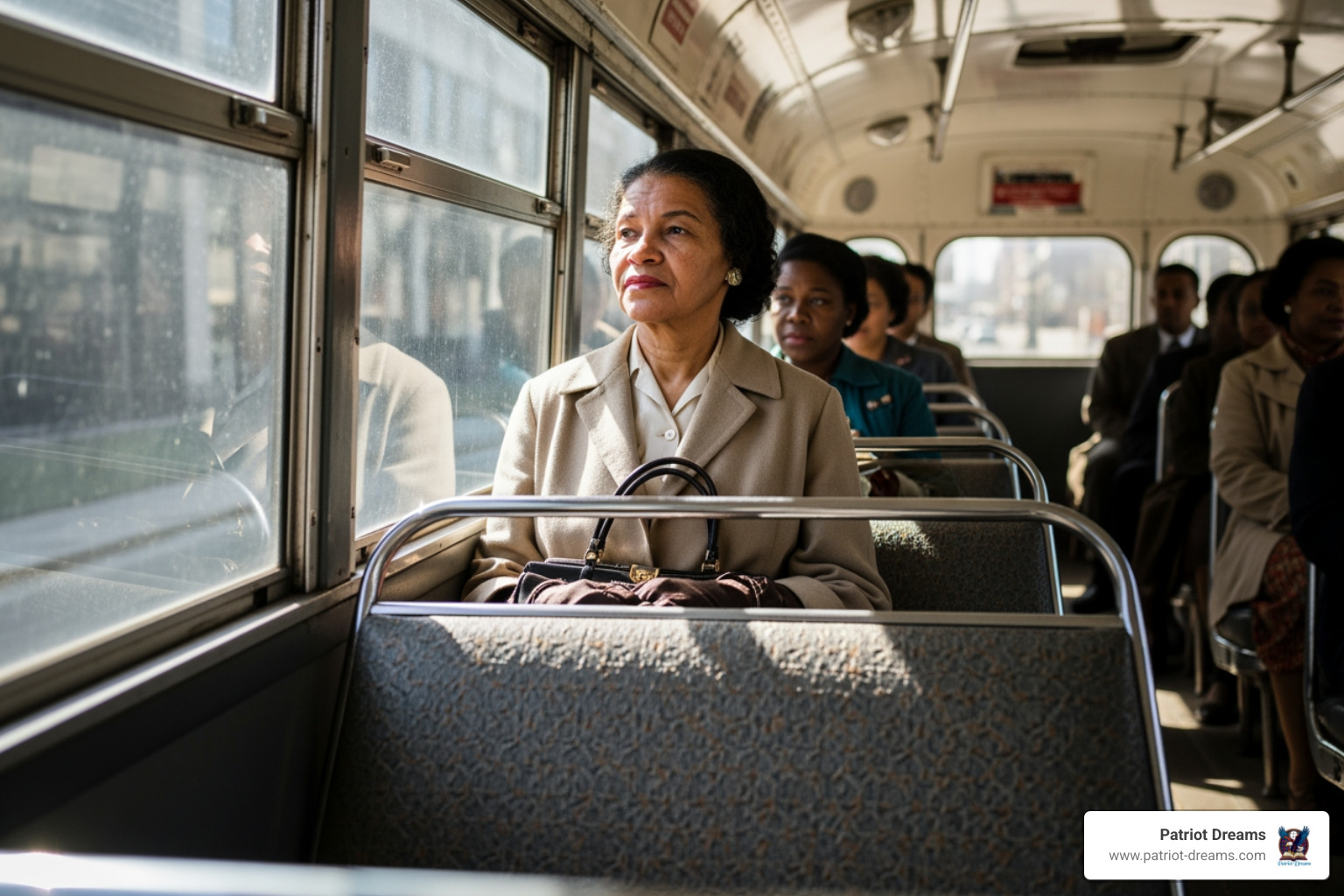
Sometimes, the quietest acts can ignite the biggest changes. On December 1, 1955, in Montgomery, Alabama, a seamstress named Rosa Parks refused to give up her seat to a white passenger on a city bus. Her arrest sparked outrage and became the catalyst for the Montgomery Bus Boycott, a pivotal event organized by the Montgomery Improvement Association (MIA) and initiated by the Women's Political Council. For 381 days, African Americans in Montgomery walked, carpooled, and organized, refusing to ride the segregated buses. This collective act of nonviolent resistance, led by a young Dr. Martin Luther King, Jr., ultimately led to the Supreme Court declaring bus segregation unconstitutional. It was a testament to the power of unity and perseverance.
The commitment to peaceful protest was further demonstrated by the Freedom Rides of 1961. Organized by groups like the Congress of Racial Equality (CORE) and SNCC, brave volunteers, both Black and white, rode interstate buses into the Deep South to challenge segregation in bus terminals. They faced brutal violence and arrests, but their unwavering determination exposed the harsh realities of segregation to the nation and forced federal intervention to protect their rights.
In the spring of 1963, the Birmingham Campaign became a defining moment. Led by Dr. King and the Southern Christian Leadership Conference (SCLC), large-scale sit-ins and marches protested the city's brutal segregation policies. The response from authorities, including the use of fire hoses and police dogs against peaceful demonstrators, horrified the nation and the world. It was during his imprisonment in Birmingham that Dr. King penned his profound "Letter from Birmingham Jail," articulating the moral imperative to resist unjust laws. The raw images and powerful words from Birmingham galvanized public opinion and created immense pressure for federal action.
A March for Jobs and Freedom
Building on the momentum of these protests, a powerful vision took shape. A. Philip Randolph, a veteran labor leader, had long envisioned a massive demonstration for economic and civil rights. On August 28, 1963, his vision became a reality with the March on Washington for Jobs and Freedom. Hundreds of thousands of people, a diverse coalition of Americans from all walks of life, converged on the nation's capital. It was a day of profound unity, music, and impassioned speeches, culminating in Dr. Martin Luther King, Jr.'s iconic "I Have a Dream" speech on the steps of the Lincoln Memorial. This powerful address articulated the aspirations of a nation yearning for justice and equality, leaving an indelible mark on our collective consciousness and demanding comprehensive civil rights legislation.
Voices of Courage: Leaders of the Civil Rights Movement
The Civil Rights movement was not just about events; it was about people—ordinary Americans who found extraordinary courage to lead, organize, and inspire. Their stories remind us of the incredible impact individuals can have when they stand for what's right.
Visionaries and Organizers
At the forefront was Dr. Martin Luther King Jr: The Dream, The Struggle, The Legacy, a guide of hope and a champion of nonviolent resistance. His philosophy, inspired by Mahatma Gandhi, guided the SCLC and countless activists. He believed in the power of love and peaceful protest to dismantle even the most entrenched systems of injustice.
But the movement was far more than just its most famous figures. It was built on the vital grassroots work of unsung heroes like Ella Baker, a tireless organizer who believed in empowering local leaders and fostering democratic decision-making within organizations like SNCC. She said, "Strong people don't need strong leaders." Her work ensured the movement was truly "of the people."
Then there was the powerful voice of Fannie Lou Hamer, a sharecropper from Mississippi who became a fierce advocate for voting rights. Her courageous testimony at the 1964 Democratic National Convention, recounting the brutal retaliation she faced for trying to register to vote, brought the harsh realities of voter suppression into America's living rooms. Her unwavering spirit and powerful songs inspired countless others.
And we remember the steadfast leadership of John Lewis, who as a young student was at the forefront of sit-ins, Freedom Rides, and the brutal Selma marches. His commitment to nonviolent activism, even in the face of severe beatings, made him a moral compass for the movement and a lifelong advocate for justice.
Victories in the Halls of Congress
The bravery on the streets and in the courtrooms eventually translated into significant legislative victories. In 1957, the Civil Rights Act of 1957 was passed, the first major civil rights measure since 1875. It established a U.S. Commission on Civil Rights and a civil rights division in the Department of Justice, laying important groundwork for federal protection of voting rights.
Another crucial barrier to voting was removed with the ratification of the 24th Amendment in 1964, which abolished the poll tax. This tax had been used in many Southern states to disenfranchise poor voters, especially African Americans. We believe in the simple, fundamental right to cast a ballot, and this amendment was a significant step towards ensuring that right for all.
The culmination of years of struggle and advocacy came with the landmark Civil Rights Act of 1964. This sweeping legislation outlawed discrimination based on race, color, religion, sex, or national origin, banning it in public accommodations, education, and employment. It was a transformative moment, opening doors that had been closed for far too long.
Following closely, in 1965, the Voting Rights Act of 1965 was signed into law. This act prohibited race-based restrictions on voting, suspended literacy tests, and stationed federal poll watchers in counties with patterns of voting discrimination. Its impact was profound: in the 65 years prior to its passage, only eight African Americans were elected to the House; in the six decades that followed, 145 Black Members served in Congress. This legislation truly opened up our democracy to millions of citizens.
President Lyndon B. Johnson played a critical role in pushing these bills through Congress, using his political skill and moral conviction to rally support. His dedication helped translate the dreams of the movement into the laws of the land.
The Lasting Echo: The Movement's Enduring Legacy
The Civil Rights movement left an indelible mark on the fabric of American society and continues to resonate in our lives today. Its legacy is a testament to the power of collective action and the enduring pursuit of justice.
How the Civil Rights Movement Changed America
One of the most profound changes was the breaking of the entrenched system of racial segregation in the South. No longer could public facilities be legally separated by race, nor could educational institutions deny access based on skin color. This dismantling of Jim Crow laws fundamentally altered the landscape of daily life for millions of Americans.
Crucially, the movement secured voting rights for all citizens, particularly African Americans in the South who had been systematically disenfranchised for decades. This expansion of the franchise dramatically increased African American political representation, bringing new voices and perspectives into the halls of power. From local elections to Congress, the presence of Black leaders grew significantly, shaping policies and advocating for their communities.
Beyond these legal and political shifts, the movement opened doors in education and employment. Affirmative action policies, for example, were developed to address the lingering effects of past discrimination, aiming to create more equitable opportunities for all. While challenges persist, the Civil Rights movement laid the foundation for a more inclusive society where merit, not race, should determine one's path.
Inspiring a Nation and the World
The impact of the Civil Rights movement extends far beyond our borders. It served as a powerful model for other social justice movements around the globe, inspiring people fighting for equality and human rights in places like Northern Ireland and South Africa. The nonviolent strategies and the moral clarity of the movement demonstrated that peaceful resistance could indeed conquer oppression.
We believe that the timeless lessons from this era — about courage, resilience, and community — are more relevant than ever. The movement taught us the importance of civic engagement, reminding us that democracy is not a spectator sport; it requires active participation from all its citizens. It showed us that when we come together, united by shared values and a common purpose, we can overcome seemingly impossible obstacles and build a more just and compassionate society. It is a story that truly makes us feel proud to be American.
Frequently Asked Questions about the Civil Rights Movement
We often hear questions about this remarkable period in our history, and we're always happy to share what we've learned.
What were the primary goals of the movement?
At its heart, the Civil Rights movement sought to achieve full equality for African Americans in the United States. This meant ending racial segregation in all public and private spheres, stopping discrimination in housing, education, and employment, and securing the fundamental right to vote without intimidation or artificial barriers. The ultimate goal was to dismantle the systemic injustices that denied African Americans their basic human dignity and constitutional rights.
What were the main strategies used by activists?
Activists employed a diverse range of strategies, all rooted in nonviolent civil disobedience. These included peaceful marches, economic boycotts (like the Montgomery Bus Boycott), sit-ins at segregated lunch counters, and voter registration drives that bravely challenged existing laws and practices. Alongside these direct actions, the movement also pursued legal challenges through the court system, strategically chipping away at discriminatory laws like "separate but equal."
How did women contribute to the movement?
Women were absolutely central to the success of the Civil Rights movement, often serving as the backbone of its grassroots organizing efforts. They were crucial organizers, strategists, and courageous leaders, though their contributions were sometimes overlooked in historical narratives. Figures like Rosa Parks, whose singular act of defiance sparked the Montgomery Bus Boycott, and Ella Baker, who mentored countless young activists and emphasized community-based leadership, were indispensable. Jo Ann Robinson, who led the Women's Political Council, was instrumental in planning the Montgomery Bus Boycott. Fannie Lou Hamer's powerful voice and unwavering commitment to voting rights inspired millions. These women, and countless others, were the heart and soul of the movement, proving that courage knows no gender.
Conclusion: Carrying the Dream Forward
The Civil Rights movement is a powerful testament to the American spirit. It is a story of neighbors helping neighbors and communities standing together for what is right. It reminds us that our nation's journey toward "liberty and justice for all" is a continuous one, built on the courage of those who came before us and the dedication of those who continue to strive for a more perfect union.
This journey to fulfill our nation's promise of liberty and justice for all continues in the hearts of every American who believes in a brighter future. You can hear more inspiring stories of American courage and perseverance with Patriot Dreams. We invite you to Explore our collection of historical stories and find the rich mix of our shared heritage.

Join the Patriot Dreams Community
Download the app today and start your journey through American history and personal legacy.

Explore Our Latest Insights
Dive into stories that shape our American legacy.