How to Save Your Family History for the Next Generation

Why Every Family Story Deserves to Be Saved
Read Time: 10 mins
To preserve family history means to gather the photos, letters, voices, and memories of the people who came before you — and protect them so the next generation can hold onto them too.
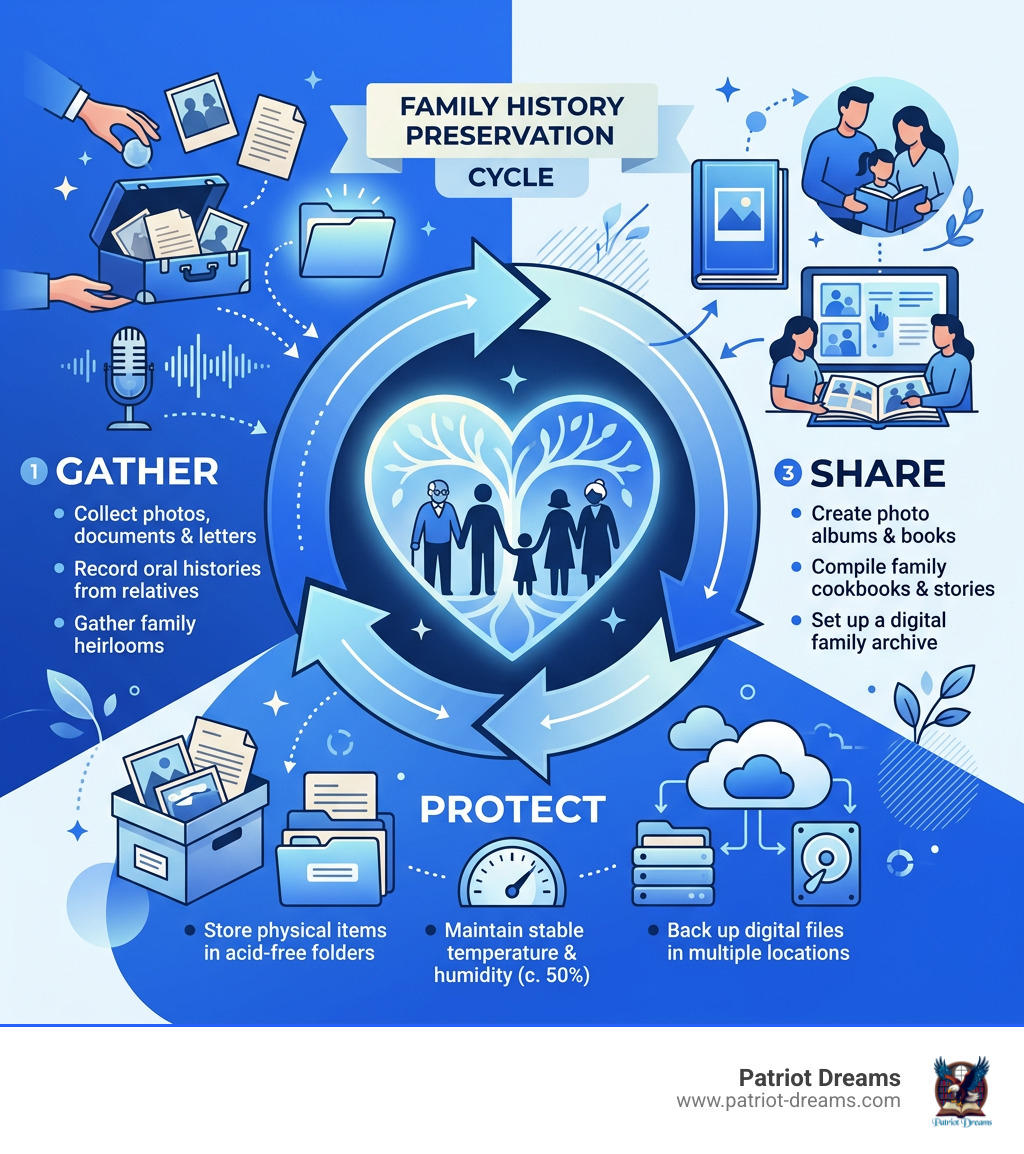
Here's a quick overview of how to do it:
- Gather — Collect photos, documents, letters, heirlooms, and recorded stories from relatives
- Protect — Store physical items in acid-free folders at stable temperature and humidity (around 50%), and back up digital files in multiple locations
- Share — Create books, cookbooks, photo albums, or digital archives that family members can access and enjoy
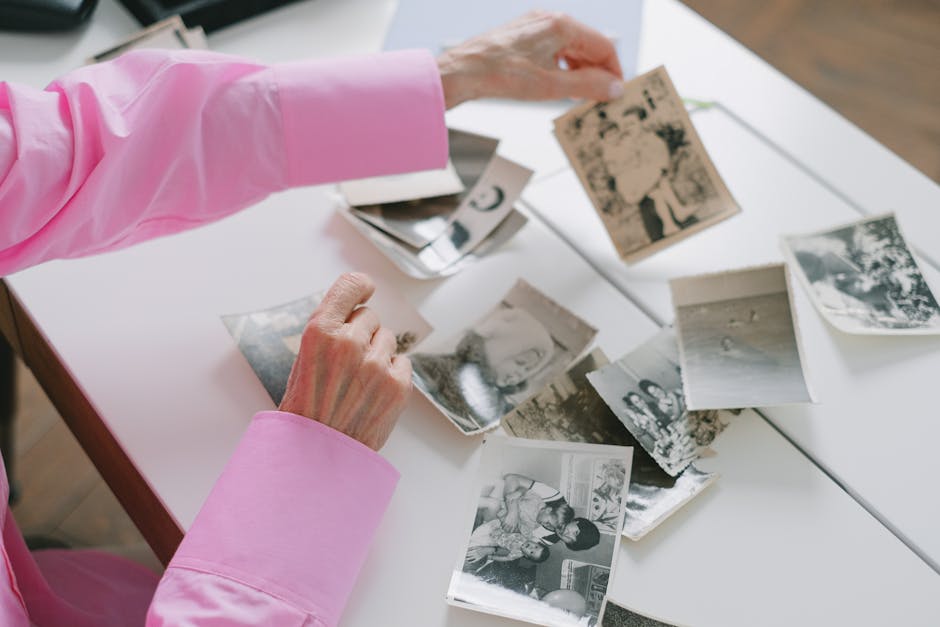
There's something quietly powerful about sitting with an older relative and flipping through a weathered photo album together. A face appears. A name surfaces. A whole life — once nearly forgotten — comes back into the light.
These moments matter more than we realize.
Your family's story is irreplaceable. And right now, while the people who carry those memories are still with us, is the best time to start saving them.
But here's something worth knowing before you dive in: not all family history preservation is created equal. Research has found that roughly 92% of online family trees contain errors — sometimes dozens of them. One study observed 130 out of 141 trees incorrectly recording where an ancestor emigrated and died. A single mistake, copied and recopied, can quietly rewrite a family's true story.
That's why thoughtful, careful preservation matters so much. It's not just about collecting information. It's about getting it right — and passing it on with love.
This guide will walk you through everything you need, from protecting physical heirlooms to recording oral histories to sharing your archive in ways that feel warm, meaningful, and lasting.
Preserve family history terminology:
- American Revolution stories
- California Gold Rush
- Oregon Trail stories
Why We Must Preserve Family History with Care
When we talk about saving our history, we aren't just talking about names and dates on a dusty ledger. We are talking about the "emotional history" of our people. It is the story of how your great-grandmother felt when she first saw the Statue of Liberty, or the resilience your grandfather showed when he started a small business during a difficult era. These stories are the threads that weave our national tapestry together.
However, relying solely on large, public genealogy websites can be risky. While these platforms host billions of records, they also host millions of user-generated errors. It is common to find trees with many blatant mistakes. If we don't take the time to verify our own records, we risk losing the truth of our ancestors' lives to a sea of digital misinformation.
For a deeper look into why these narratives matter, explore our Preserving Family Stories Guide.
The Heartfelt Importance of Your Story
Every family has its own brand of everyday heroism. Maybe it was a neighborly act of kindness during a harvest or the quiet perseverance of a teacher in a one-room schoolhouse. When we preserve family history, we give our children a sense of belonging. Knowing that they come from people who faced challenges and kept going provides them with a "superpower" of sorts—a foundation of strength they can lean on when life gets tough.
Navigating the Risks of Online Genealogy
The digital age has made research easier, but it has also made it easier to spread misinformation. One incorrect marriage record can be copied 50 times over in a single afternoon. To protect your legacy, we recommend keeping your research tree private until you are absolutely certain of your sources. Always try to find the original document—whether it’s a census record or a military discharge paper—before clicking "accept" on a hint.
Practical Steps to Archive Your Physical Heirlooms
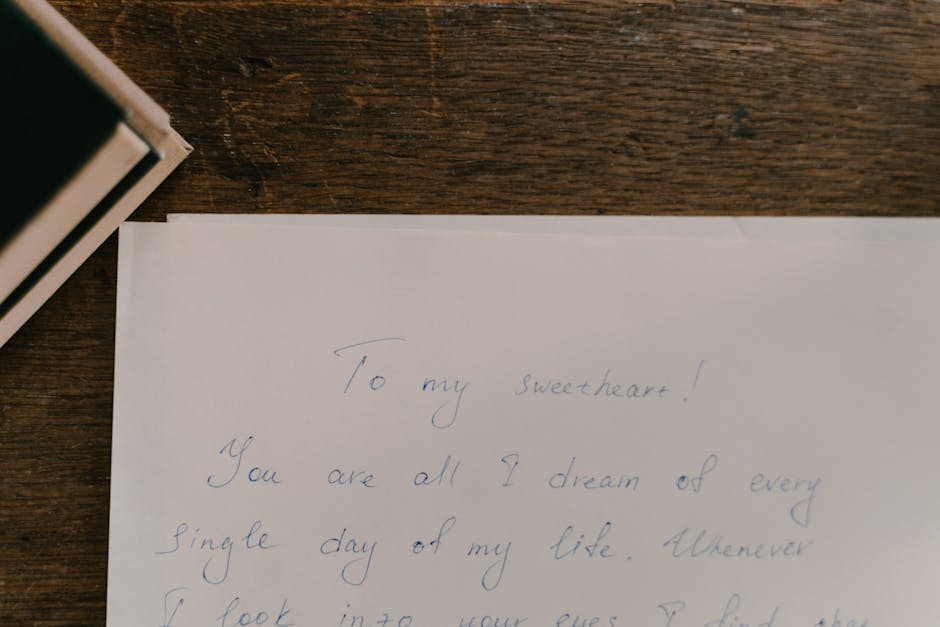
Our homes are often filled with treasures we don't even realize we have. A tattered recipe card, a pressed flower in a diary, or a set of "best" china used only on Sundays—these are the physical anchors of our memories. But paper and fabric are fragile. They breathe the same air we do, and they can "choke" on too much heat or moisture.
Creating a Safe Environment for Memories
If you want your archives to last another hundred years, you have to think like a museum curator. The biggest enemies of your family records are light, heat, and humidity.
- Temperature & Humidity: Aim for a stable environment. Avoid attics (too hot) and basements (too damp). A closet in the main part of your house is usually best. Professional archivists recommend keeping your storage area at about 50% relative humidity.
- Light: UV rays fade ink and brittle paper. Keep your most precious documents in dark storage.
- Enclosures: Use lignin-free, acid-free, and buffered boxes. These materials don't "off-gas" or leak chemicals that eat away at your paper.
For those looking to build a more formal collection, our American Heritage Archives resource offers more specialized tips.
The Gentle Art of Organizing Artifacts
When you start sorting through boxes, it’s tempting to use "sticky" photo albums or paper clips. Please, don't! Old-fashioned tape and metal clips can rust and stain your treasures.
Instead, use a soft graphite pencil to label the back edges of photos. Never use a pen, as the ink can bleed through over time. If you have a photo of "Uncle Jerry’s 1972 birthday," write down the full names of everyone in the shot, their birth dates, and the location. Future generations might not know who "Uncle Jerry" was, but they will certainly appreciate knowing his full name and where he lived.
Capturing the Voice: The Art of the Family Interview
There is no substitute for the sound of a loved one’s voice. The way they chuckle at a memory or the specific cadence of their speech is a treasure beyond measure. This is where we at Patriot Dreams feel most at home—helping you capture the heartbeat of your history.
How to Prepare to Preserve Family History Through Voice
Before you sit down with a relative, do a little "pre-interview" homework. Look through old photos to use as prompts. If your grandfather was in the military, research his unit or the places he was stationed.
- Equipment: You don't need a fancy studio. A modern smartphone is an incredible recording tool.
- Location: Find a quiet, carpeted room (to reduce echo). Turn off the TV and the refrigerator if it hums too loudly.
- Questions: Ask open-ended questions. Instead of "Did you like school?" try "Tell me about your favorite teacher and what your classroom looked like."
You can find a list of helpful prompts in our guide on how to Record Family Stories.
Listening with Love: Conducting the Interview
The most important part of an interview isn't the recording—it's the listening. Be patient. If there’s a long silence, let it be. Sometimes the best stories come out after a moment of quiet reflection. Start with a casual chat to put your relative at ease. You might even record multiple sessions over several weeks to avoid "interview fatigue."
If you’re looking for a way to visualize these stories geographically, check out our Digital Story Map.
Modern Methods for Digital Stewardship
Our "shoeboxes" are often digital folders. While digital files don't rot like paper, they can become "obsolete" if we aren't careful. Remember floppy disks? We want to make sure your digital archive doesn't suffer the same fate.
Preservation MethodPhysical StorageDigital ArchivingLongevity100+ years (if kept dry/cool)Indefinite (if migrated regularly)AccessibilityLimited to whoever holds the boxShareable worldwide instantlyRiskFire, flood, physical decayData corruption, platform closureBest PracticeAcid-free boxes & 50% humidity"3-2-1" Backup (3 copies, 2 formats, 1 offsite)
Digital Tools to Help Preserve Family History
To keep your digital records safe, we recommend using a combination of tools. Many online services offer accounts for storing trees and photos, but you should always keep your own copies on a personal hard drive and a secure cloud service.
Our blog about Patriotic Stories Apps shows how families can bridge the gap between historical exploration and personal legacy, making the process feel less like a chore and more like a journey. You can learn more about our approach to Family History Preservation on our blog.
Ensuring Privacy and Longevity for Digital Records
Privacy is a big concern for many families. When using online tools, look for those that are "private by design." You should always own your data and be able to export it in a GEDCOM format—the universal language of genealogy. This ensures that if one website goes out of business, you can take your "family tree" and move it elsewhere.
Also, don't forget about the "official" digital records. Resources like the Library of Congress and National Archives are wonderful for finding the "bones" of your history—like census records and military files—to support the "flesh" of your family stories.
Creative Formats to Share Your Family Legacy
Once you have gathered your materials, the real joy begins: sharing them! A box of photos under the bed doesn't inspire anyone, but a beautifully curated book can spark a conversation that lasts all evening.
Crafting Heirlooms Beyond the Page
Think outside the traditional "family tree" chart. There are so many creative ways to preserve family history:
- Family Cookbooks: Don't just list the ingredients. Include a photo of the handwritten recipe and a story about the person who used to make it. You can even include a QR code that links to a video of a relative explaining a specific technique.
- Musical Playlists: Did your grandmother love a specific lullaby? Did your father have a favorite song from his time in the service? Creating a digital playlist with notes on why each song matters is a beautiful, modern way to connect.
- Heritage Maps: Use an interactive map to show where your ancestors lived, worked, and traveled. This helps younger generations visualize the "path" that led to them.
For those ready to put pen to paper, exploring guides on how to structure a family narrative or create a legacy book is a wonderful place to start.
Sharing Difficult Stories with Sensitivity
Every family has its "shadows"—secrets, disagreements, or difficult times. While it can be tempting to leave these out, many historians believe that being honest about the "lows" as well as the "highs" makes for a richer, more healing history. Secrets can sometimes act like "psychic poison," but sharing them with kindness and context can reduce shame. Use inclusive narratives that honor everyone’s experience, even when stories contradict each other. That "Rashomon effect"—where different people remember the same event differently—actually adds emotional depth to your archive.
Frequently Asked Questions about Preserving Your Heritage
How do I start if I have no physical records?
Don't worry! Start with yourself and work backward. Write down everything you remember. Then, talk to the oldest living relatives you can find—even distant cousins. You can also search public databases like the Digital Public Library of America (DPLA) or local historical societies. Often, "lost" documents like land deeds or birth certificates can be tracked down through government archives.
What is the best way to digitize old photographs?
You don't necessarily need a flatbed scanner. Many people use high-quality smartphone apps to "photograph" their photos. The key is to do it in bright, indirect natural light to avoid glare. Always digitize both the front and the back of the photo if there is writing on it. Keep one high-resolution master copy and a smaller version for sharing on social media.
How can I involve younger generations in this project?
Make it a game! Ask them to help you "interview" a grandparent using a list of fun questions. Show them old photos and ask them to guess who the people are. If they are tech-savvy, they might enjoy helping you scan photos or manage a digital story map. The goal is to make them feel like they are "detectives" uncovering a mystery.
Conclusion
At the end of the day, to preserve family history is an act of love. It’s a way of saying to those who came before us, "I remember you," and to those who come after us, "You belong."
By taking these small, gentle steps—protecting a letter, recording a story, or verifying a date—you are building a bridge across time. You are ensuring that the values of kindness, resilience, and everyday heroism that define our American story are never lost.
We invite you to join our community and use the App for Patriotic Families to start your journey today. Your family's story is a light—let's make sure it keeps shining for generations to come.

Join the Patriot Dreams Community
Download the app today and start your journey through American history and personal legacy.

Explore Our Latest Insights
Dive into stories that shape our American legacy.