"We Stick Together": The Unforgettable Sacrifice of the Sullivan Brothers

A Bond of Brothers from the Heartland
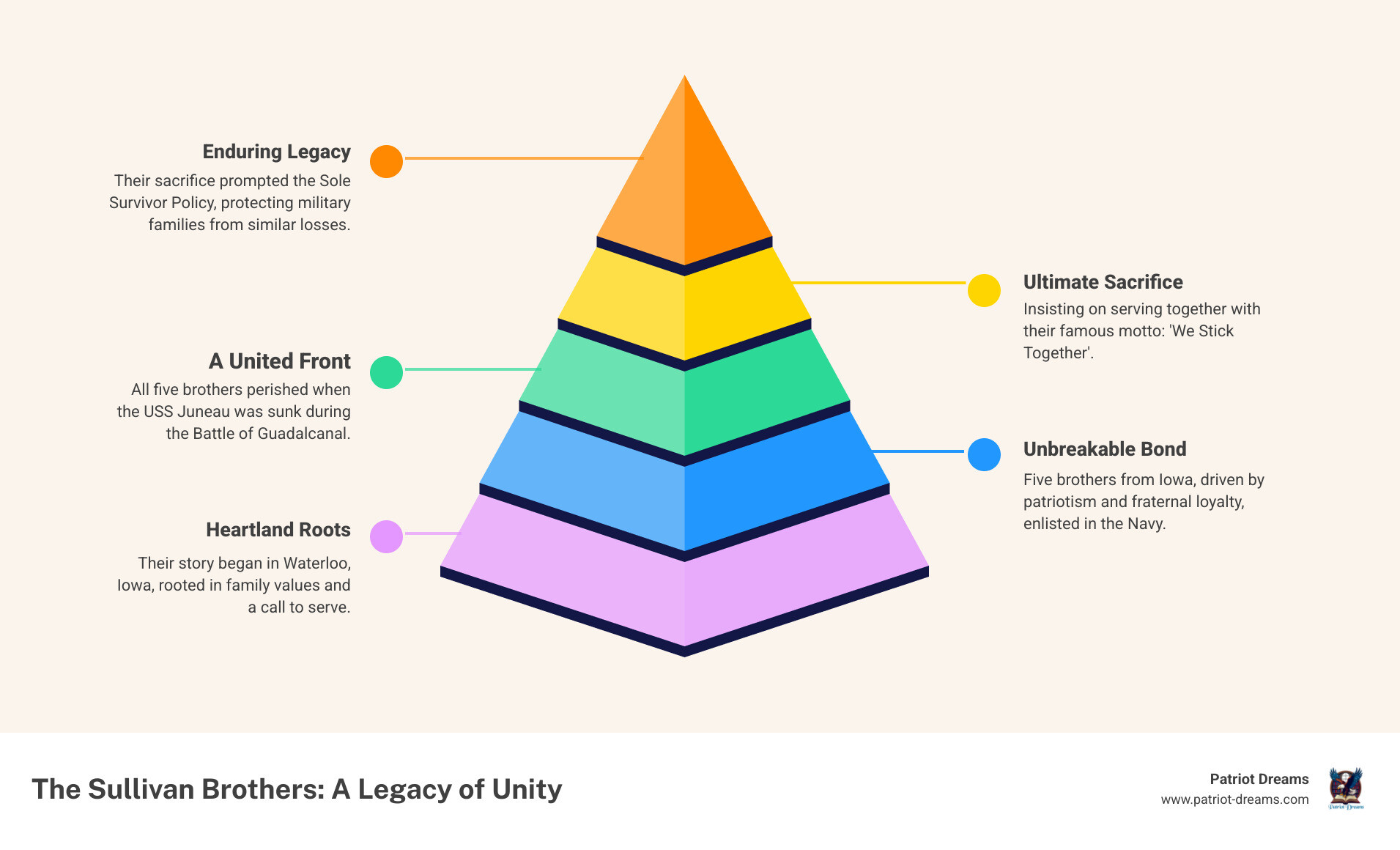
"We Stick Together": The Unforgettable Sacrifice of the Sullivan Brothers tells the story of five brothers from Waterloo, Iowa—George, Francis, Joseph, Madison, and Albert—who insisted on serving together in the U.S. Navy during World War II. Their unwavering bond led to their assignment aboard the USS Juneau, where all five lost their lives when the ship was sunk during the Battle of Guadalcanal on November 13, 1942.
Quick Facts About the Sullivan Brothers:
- Who they were: Five brothers from Waterloo, Iowa (George, Francis, Joseph, Madison, and Albert Sullivan)
- Their motto: "We stick together"
- When they enlisted: January 3, 1942, after a friend died at Pearl Harbor
- Their ship: USS Juneau (CL-52), a light cruiser commissioned February 1942
- How they died: All five perished when the USS Juneau was torpedoed and sank in just 42 seconds
- Casualties: 687 men lost; only 10 survivors rescued
- Their legacy: Two Navy destroyers named USS The Sullivans; influenced the Sole Survivor Policy
There's something deeply American about the Sullivan brothers' story. These weren't politicians or famous generals. They were ordinary young men from Iowa's heartland who worked at the local packing plant, played sports with neighborhood friends, and rode motorcycles together.
When Pearl Harbor was attacked, they made a choice that reflected their most cherished value: family comes first. They would serve their country, yes—but they would do it together.
Their insistence on staying side by side, even in war, touched something profound in the American spirit. It reminded us that the bonds of family and loyalty are worth fighting for, even when the cost is unimaginably high.
Simple guide to "We Stick Together": The Unforgettable Sacrifice of the Sullivan Brothers":
- The Real Life Behind the Legend: Casey Jones and the Making of an American Railroad Hero
- When Film Becomes History: How Movies Shape Our View of America
- Behind the Badge: Real Stories of American Heroes in Pop Culture
"We Stick Together": A Promise to Serve as One
The year was 1941, and the world was plunged into the chaos of World War II. For many Americans, the war felt distant until December 7, when the Japanese attack on Pearl Harbor shattered our nation's peace. This devastating event, which saw the sinking of battleships like the USS Arizona and the loss of thousands of lives, galvanized the American public and spurred a massive wave of enlistment.
For the Sullivan brothers—George, Francis, Joseph, Madison, and Albert—the call to duty was deeply personal. A close friend, Seaman 1st Class William V. Ball, was killed while serving on the battleship USS Arizona during the attack. The news hit the close-knit family hard, igniting a fierce desire for justice and a steadfast resolve to serve their country.
On January 3, 1942, just weeks after Pearl Harbor, the five brothers from Waterloo, Iowa, made a monumental decision. They walked into the recruiting office and reenlisted in the U.S. Navy. But they did so with a unique condition, one that would echo through history and become their enduring motto: "We stick together." They wanted to serve, and they wanted to do it side-by-side, a testament to their unwavering bond and a desire to avenge their fallen friend. This profound motivation, rooted in both patriotism and personal loyalty, defined their journey.
A Letter to the Navy
At the time, the U.S. Navy had policies that generally discouraged siblings from serving together on the same vessel, especially in combat zones. This was a sensible guideline, aimed at preventing the kind of devastating loss that the Sullivan family would ultimately endure. However, it wasn't a strict, unbreakable rule, nor was there a formal "Sullivan Act" passed by Congress to forbid it, as some common misconceptions suggest. Instead, the policy allowed for exceptions, and the Sullivan brothers were determined to be one.
George Sullivan, the eldest, took it upon himself to champion their cause. He penned a heartfelt letter to the Department of the Navy, explaining their unique request and emphasizing their commitment to serving as a unit. He famously stated that they would make a team "that can't be beaten." The brothers made it clear that their enlistment was contingent on their ability to stay together. Their plea wasn't just a preference; it was an insistence, born from a lifetime of shared experiences and an unbreakable family bond.
Perhaps moved by their collective spirit and the urgency of wartime enlistment, or perhaps seeing the potential for a powerful symbol of unity, the Navy ultimately granted their special request. This decision, while seemingly a small administrative detail at the time, paved the way for an extraordinary and tragic chapter in American history. It allowed the Sullivan brothers to start on their naval journey together, a testament to their unwavering bond and the strength of their shared purpose.
All Aboard the USS Juneau
With their request granted, the five Sullivan brothers—George, Francis, Joseph, Madison, and Albert—were assigned to the USS Juneau (CL-52). This light cruiser, commissioned on February 3, 1942, was a relatively new ship, ready to join the growing American fleet in the Pacific. Imagine the mixture of excitement and solemn duty as the brothers boarded their new home at sea, a vessel that would carry them into the heart of the conflict.
The USS Juneau was a formidable ship, designed for speed and armed with anti-aircraft guns, though its lighter armor made it vulnerable to torpedoes. It was built for the intense naval engagements that characterized the Pacific Theater. After its commissioning, the Juneau was deployed to the Pacific in August 1942, entering the crucible of the Guadalcanal Campaign, one of the most brutal and strategically vital battles of World War II.
For the Sullivan brothers, serving on the Juneau together was the fulfillment of their promise. They were a family crew, representing countless American families who sent their loved ones to war. Their presence on the ship, bound by their "We stick together" motto, wasn't just a personal choice; it was a powerful symbol of the collective spirit of service that defined our nation during World War II. We remember the Juneau not just as a warship, but as the vessel that carried these five brave brothers into history.
The Ultimate Sacrifice at Guadalcanal
The USS Juneau, with the Sullivan brothers aboard, soon found itself in the thick of the fighting in the Pacific Theater. By late 1942, the Solomon Islands, particularly Guadalcanal, had become a pivotal battleground. Control of this island was crucial for both Allied and Japanese forces, leading to a series of fierce land, air, and sea engagements. The Naval Battle of Guadalcanal, fought in November 1942, was one of the most intense and decisive naval conflicts of the war.
The USS Juneau was an active participant in these harrowing battles. On November 12, 1942, the ship was struck by a torpedo from the Japanese destroyer Amatsukaze. Though damaged, the Juneau remained afloat. However, the battle was far from over. The following morning, November 13, 1942, as the Juneau was withdrawing with other damaged ships, fate intervened with devastating speed.
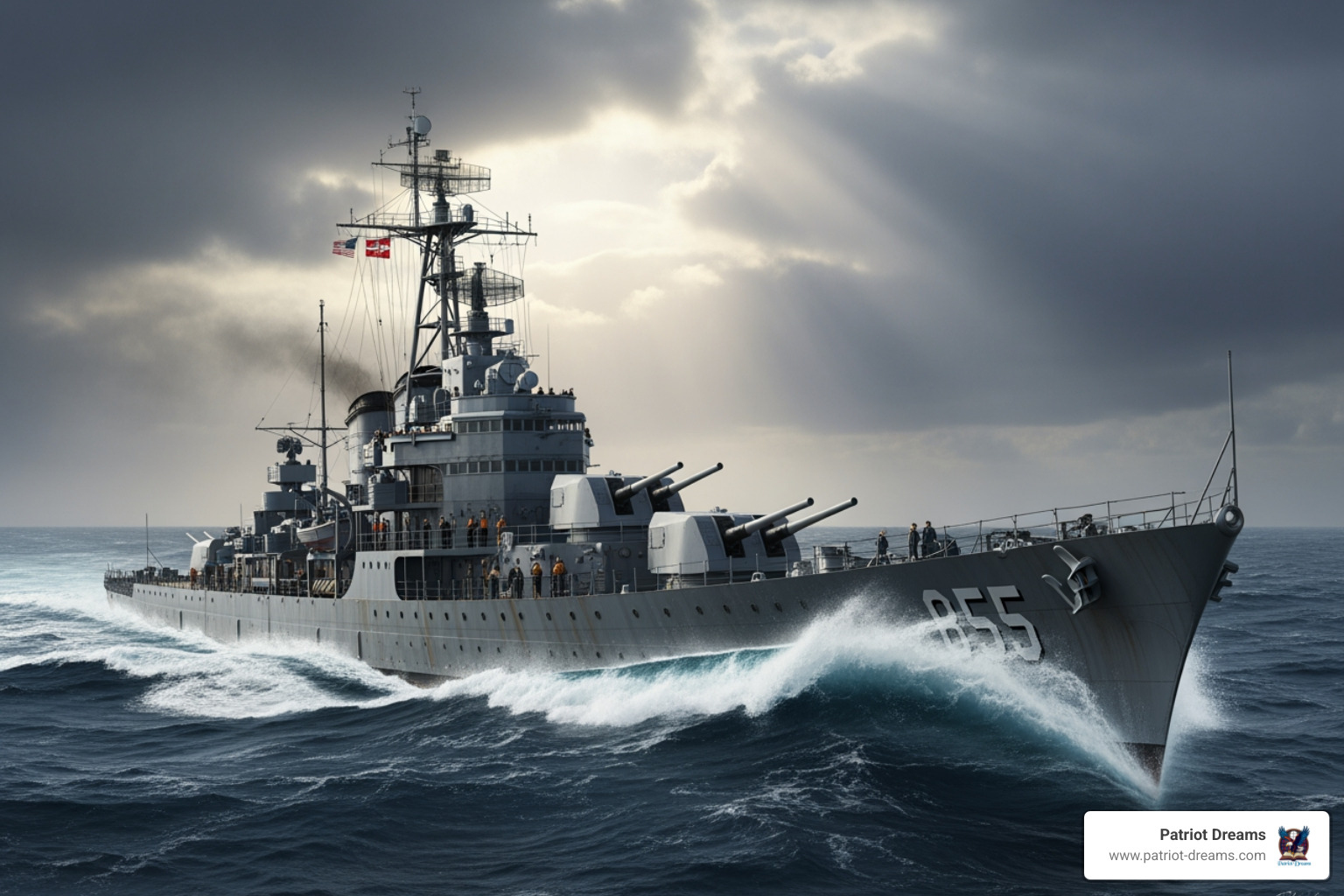
The Sinking of the Juneau
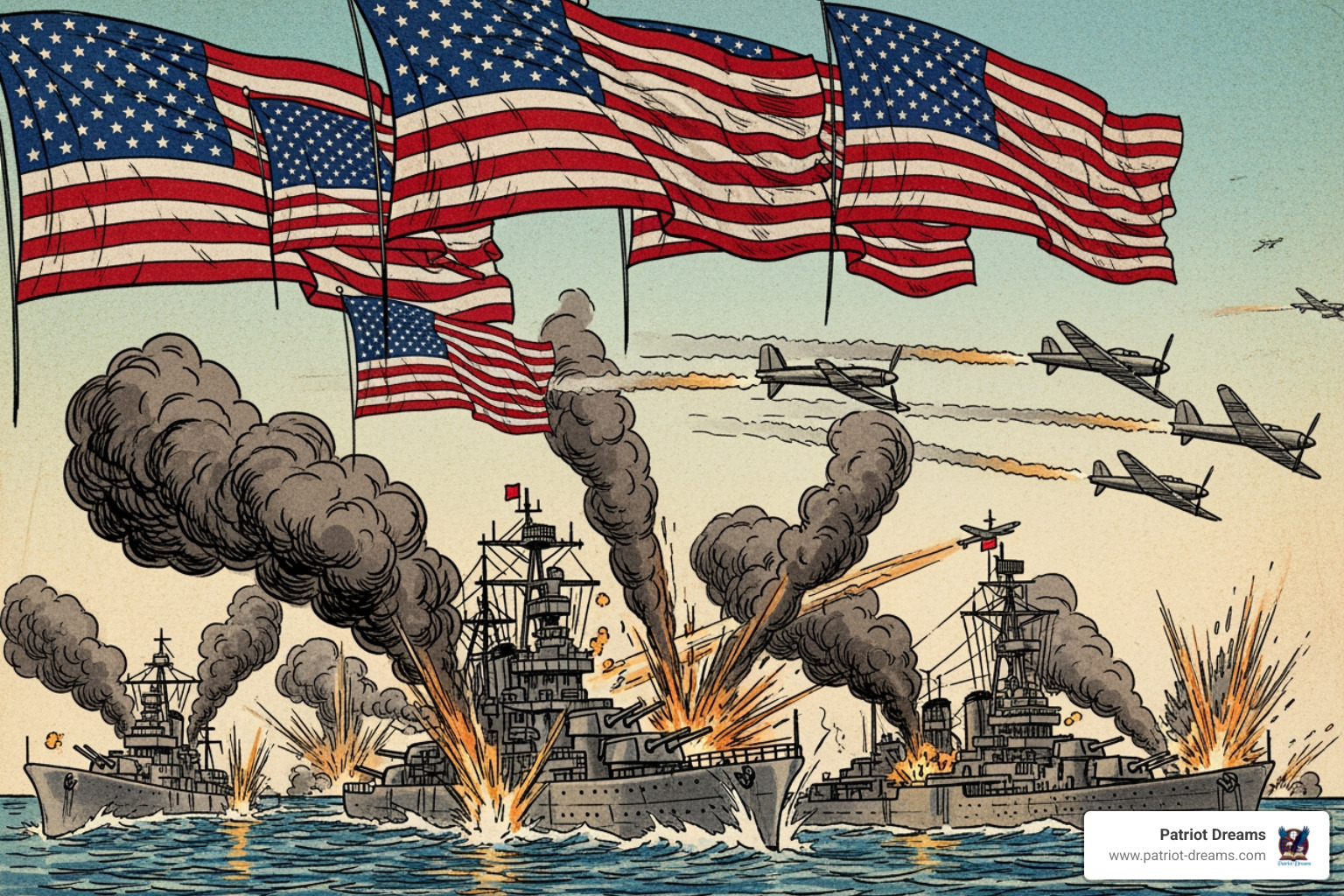
The morning of November 13, 1942, dawned with the Pacific still reeling from the previous day's naval clashes. The USS Juneau, already damaged, was limping away from the battle when tragedy struck again. At 11:01 a.m., a Japanese submarine, the I-26, fired a torpedo that slammed into the Juneau. The impact was catastrophic. The torpedo struck the ship's ammunition magazines, triggering a massive, internal explosion.
The USS Juneau was obliterated in an instant. The ship sank in just 42 seconds, a blink of an eye that sealed the fate of hundreds of sailors. Captain Gilbert C. Hoover, commander of the American task force, described the horrifying scene: "When the torpedo hit, there was a large single explosion and the air was filled with debris, much of it in large pieces… The whole ship disappeared in a large cloud of black, yellow black, and brown smoke." The speed and violence of the sinking left little chance for survival. Of the crew of over 600 sailors, an astonishing 687 men perished in the initial blast or the events that followed. It was a devastating loss of life, a grim reminder of the brutal realities of naval warfare.
"We Stick Together": The Unforgettable Sacrifice of the Sullivan Brothers on the Open Sea
In the chaotic aftermath of the USS Juneau's rapid sinking, approximately 100 to 140 men initially survived the blast, finding themselves adrift in the vast, unforgiving waters of the Pacific. These brave souls faced unimaginable horrors: exposure, dehydration, shark attacks, and the desperate hope for rescue. However, due to a series of logistical errors and miscommunications, search efforts were tragically delayed for days. It would be eight agonizing days before a PBY Catalina aircraft finally located the survivors, by which point only 10 men remained.
The fate of the Sullivan brothers, true to their motto, unfolded together, yet tragically individually. We know that three of the brothers—Frank, Joseph, and Madison—died instantly in the catastrophic explosion that tore the Juneau apart. Albert, the youngest, managed to survive the initial blast but tragically drowned the very next day, unable to withstand the harsh conditions of the open sea. George, the eldest, clung to life for several more days. Accounts from the few survivors suggest he became delirious, possibly from hypernatremia (a high concentration of salt in the blood), wounds, or overwhelming grief, calling out for his brothers: "Al, Matt, Red, Frank? Where are my brothers?" He eventually succumbed to his injuries and the brutal elements, reportedly disappearing into the waves, leaving no Sullivan brother among the rescued 10.
Their story is a poignant testament to the human spirit's resilience and the profound cost of war. The courage of those who endured the initial sinking and the subsequent days adrift, even if they ultimately did not survive, reminds us of the incredible sacrifices made. The fact that the wreck of the USS Juneau was finally finded in 2018 brought a measure of closure to a story that has long been etched in the heart of American history.
A Nation Mourns: The Enduring Legacy of the Sullivan Brothers
The news of the USS Juneau's sinking and the loss of all five Sullivan brothers did not reach their parents, Thomas and Alleta Sullivan, immediately. In the agonizing weeks following the battle, rumors and uncertainty swirled. Alleta Sullivan, filled with a mother's intuition and dread, wrote to the Bureau of Naval Personnel in January 1943, seeking information about her sons. Her letter was answered by none other than President Franklin D. Roosevelt, who explained the brothers were missing in action. However, his response came just one day after the official notification had already arrived.
On January 12, 1943, a somber scene unfolded at the Sullivan home in Waterloo, Iowa. Three men in uniform—a doctor, a lieutenant commander, and a chief petty officer—arrived at their door. Thomas Sullivan, seeing the officers, knew instantly that the news would be grim, perhaps one son lost. But the devastating truth was far worse: all five of their beloved boys were gone. It was a blow that shook not just the family, but the entire nation.
The story of the Sullivan brothers quickly became a national symbol of sacrifice and family loyalty during World War II. President Roosevelt himself penned a personal letter to the Sullivan parents, expressing the nation's sorrow and admiration for their sons' courage. Their story was widely publicized, becoming a rallying point for the war effort and a poignant reminder of the human cost of freedom.
The Sullivan Family's Courageous Homefront Mission
In the face of unimaginable grief, the Sullivan family displayed a remarkable spirit of resilience and patriotism. Thomas and Alleta Sullivan, along with their surviving daughter Genevieve, chose to turn their personal tragedy into a powerful force for good on the homefront. They started on a courageous mission, traveling across the country to support the war effort.
By January 1944, the Sullivan family had spoken to over a million workers in 65 cities, visiting shipyards and defense plants. Their presence, their story, and their unwavering spirit inspired countless Americans to redouble their efforts in war production and to purchase war bonds. Alleta Sullivan, in particular, became a symbol of maternal strength and sacrifice. She even sponsored a ship, the fleet tug USS Tawasa, christening it herself, further embedding her family's legacy into the fabric of the Navy.
Not to be outdone, their sister, Genevieve Sullivan, also answered the call to service, enlisting in the U.S. Naval Reserve, becoming a part of the Women Accepted for Volunteer Emergency Service (WAVES). The Sullivan family's contributions extended far beyond the battlefield, demonstrating how American families, even in their darkest hours, united to support the war effort. Their story reminds us of the profound strength and unity that characterized our nation during those challenging times.
The Lasting Impact of "We Stick Together": The Unforgettable Sacrifice of the Sullivan Brothers
The legacy of "We Stick Together": The Unforgettable Sacrifice of the Sullivan Brothers extends far beyond their individual stories, profoundly shaping military policy and national memory. Their extraordinary sacrifice ensured that their names would forever be etched in American history.
In honor of the brothers, two destroyers have proudly borne their name, USS The Sullivans. The first, DD-537, a Fletcher-class destroyer, was commissioned on September 30, 1943, less than a year after their deaths. The second, DDG-68, an Arleigh Burke-class destroyer, was commissioned on April 19, 1997. Both ships carry the powerful and resonant motto, "We Stick Together," a constant reminder of the brothers' unbreakable bond and ultimate sacrifice.
Their story also captivated Hollywood, leading to the 1944 film "The Fighting Sullivans," which brought their tale of loyalty and sacrifice to a wider audience, solidifying their place in popular culture as American heroes.
Perhaps one of the most significant impacts of the Sullivan brothers' tragedy, alongside the losses suffered by other families like the Borgstrom brothers, was its influence on military policy. These heartbreaking cases contributed directly to the establishment of the 1948 Sole Survivor Policy. This policy, which allowed for draft exemptions for sole surviving sons, aimed to prevent a similar scale of loss for any single family. While there was no specific "Sullivan Act" passed by Congress, their story was a powerful catalyst for this critical change in military regulations, and their influence remains a cornerstone of how the military considers family welfare.
In a poignant modern development, the wreck of the USS Juneau was found in 2018, over 75 years after its sinking. This finding offered a tangible link to the past, bringing a new dimension to the brothers' story and the final resting place of their ship. The significance of the Sullivan brothers' motto, "We Stick Together," continues to resonate, embodying not just their personal loyalty but also the broader American values of unity, family, and unwavering commitment in the face of adversity. Their sacrifice serves as a timeless reminder of the profound bonds that hold us together as a nation.
Frequently Asked Questions about the Sullivan Brothers
Why were the five Sullivan brothers allowed to serve on the same ship?
The brothers insisted on serving together as a condition of their enlistment, reflecting their family motto, "We stick together." Despite a non-binding Navy guideline suggesting siblings serve on different ships, their heartfelt request was granted as an exception. George Sullivan even wrote to the Department of the Navy to make their case, and their determination ultimately swayed the decision.
Did the Sullivan brothers' deaths lead to a new law?
Their story, along with the losses suffered by other families, was a significant factor that influenced the creation of the formal Sole Survivor Policy in 1948. This policy allowed for draft exemptions for sole surviving sons if they had already lost a family member to military service. However, a specific "Sullivan Act" is a common misconception; no such law was ever passed by Congress. The Navy's policies regarding family members serving together have evolved over time, but there isn't one specific act named after the Sullivans.
How are the Sullivan brothers remembered today?
Their legacy of family and sacrifice is honored in numerous ways. Two U.S. Navy destroyers have been named USS The Sullivans (DD-537 and DDG-68), with the modern DDG-68 proudly carrying their motto, "We Stick Together." Their story was dramatized in the 1944 film "The Fighting Sullivans" and continues to be taught in schools and remembered in memorials. A museum in their hometown of Waterloo, Iowa, preserves their memory, and their story continues to inspire Americans with its powerful message of unity and devotion. The findy of the USS Juneau wreck in 2018 also renewed interest and remembrance of their sacrifice.
A Story of Family That Belongs to All of Us
The story of the Sullivan brothers is more than just a historical account of wartime tragedy; it's an enduring symbol of American values. Their unwavering commitment to each other, their family motto, "We Stick Together," and their ultimate sacrifice resonate deeply with our shared ideals of unity, loyalty, and community. It reminds us that even in the darkest of times, the bonds of family and the spirit of togetherness can shine brightest.
At Patriot Dreams, we believe in preserving and sharing these powerful stories of American heroism and connection. The Sullivan brothers' tale is a testament to the quiet strength and profound love that can be found in everyday American families. Their legacy encourages us to cherish our own bonds, to support one another, and to remember that together, we can face any challenge. We are truly inspired by their spirit and honored to share their unforgettable sacrifice.
We hope you'll explore more stories that shaped our nation's character and continue to inspire us all.

Join the Patriot Dreams Community
Download the app today and start your journey through American history and personal legacy.

Explore Our Latest Insights
Dive into stories that shape our American legacy.