The First Drive-In Movie Theater: When America Fell in Love with the Big Screen Under the Stars
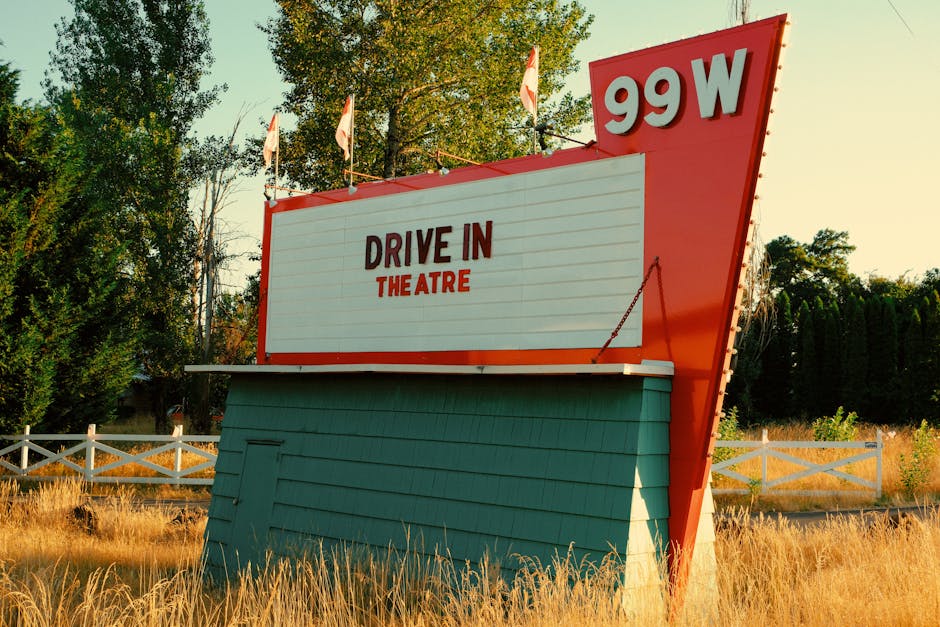

A Night of Magic Under the American Sky
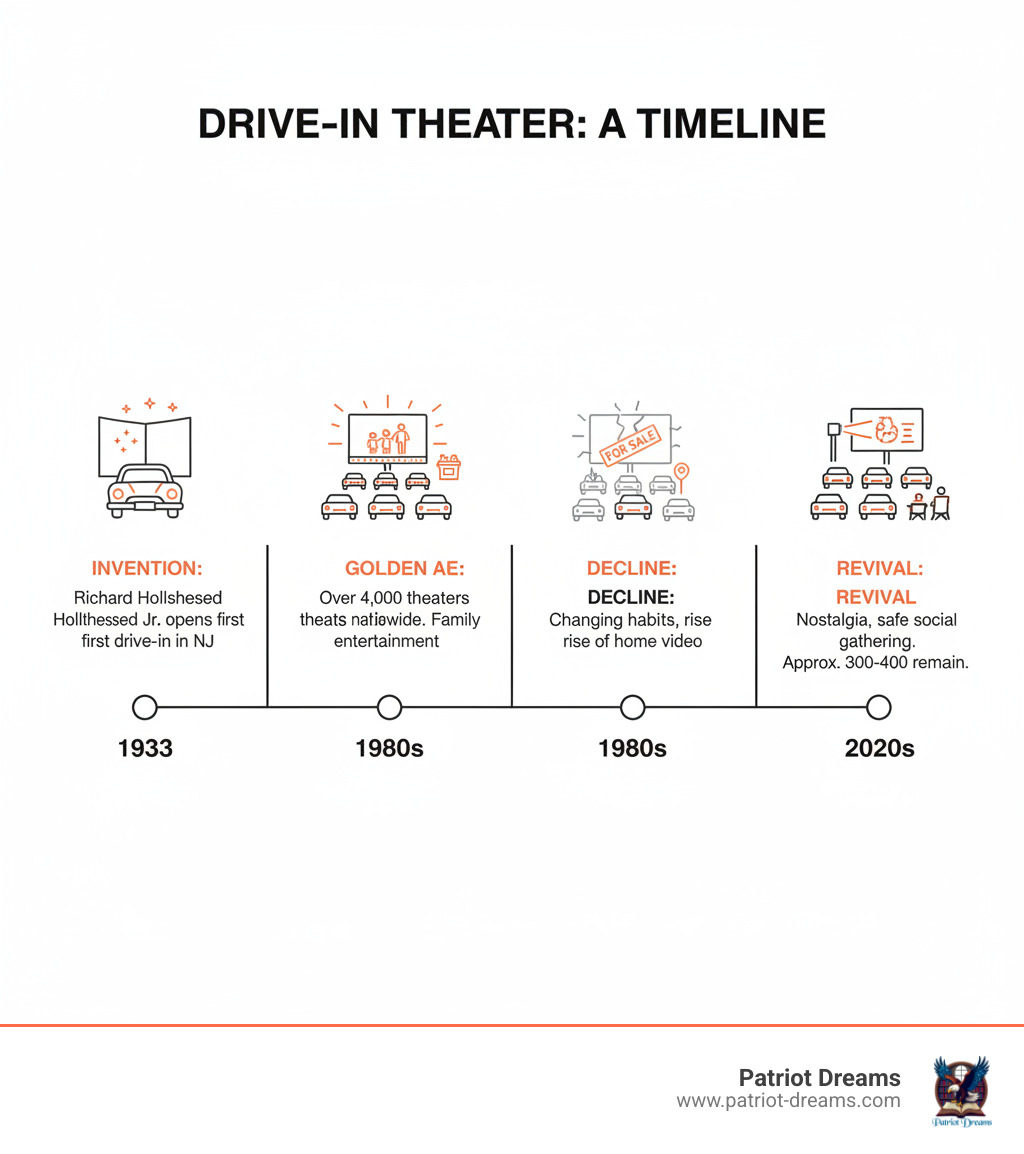
The First Drive-In Movie Theater: When America Fell in Love with the Big Screen Under the Stars began on June 6, 1933, when Richard Hollingshead, Jr. opened Park-In Theaters in Camden, New Jersey. Inspired by his mother's discomfort in traditional theater seats, Hollingshead created a simple, caring solution that would become a beloved American tradition.
Quick Facts About America's First Drive-In:
- Inventor: Richard Hollingshead, Jr., a sales manager at an auto parts company
- Opening Date: June 6, 1933
- Location: Camden (Pennsauken Township), New Jersey
- First Film Shown: "Wives Beware" starring Adolphe Menjou
- Original Price: 25 cents per car, plus 25 cents per person
- Peak Era: Late 1950s with over 4,000 drive-ins nationwide
- Today: Approximately 300-400 drive-ins remain in the United States
There's something wonderfully American about the drive-in movie theater. Picture this: a warm summer evening, families in station wagons, children in pajamas nestled in the back seat, and a giant screen glowing against the darkening sky. It was entertainment, yes, but it was also community, freedom, and a touch of magic all rolled into one.
What started as one man's thoughtful solution to help his mother enjoy movies comfortably grew into a nationwide phenomenon. During the Great Depression, when money was tight and spirits needed lifting, Hollingshead believed people wouldn't give up two things: their cars and going to the movies. He was right.
The drive-in wasn't just about watching films. It was about creating memories under the stars, about making entertainment accessible to everyone, and about celebrating the simple joy of being together.
An Idea Born from Kindness: The Invention of the Drive-In
Sometimes the best ideas start in the most unexpected places. For Richard Hollingshead, Jr., it wasn't a business plan or a market study that sparked his invention. It was simply watching his mother struggle to get comfortable in a cramped movie theater seat.
Richard noticed how much his mother loved going to the movies, but those narrow theater seats just weren't made for everyone. Instead of accepting this as just the way things were, he started thinking: what if there was a better way? What if people could enjoy movies without giving up their comfort?
It was the early 1930s, right in the heart of the Great Depression. Times were tough, and families were cutting back on everything. But Richard, who worked as a sales manager at his father's company, Whiz Auto Products, noticed something interesting. Even when money was tight, people held onto two things: their cars and their trips to the movies. These weren't just possessions or activities—they were sources of joy, freedom, and escape during difficult times.
That's when the idea hit him. Why not bring these two loves together?
Richard didn't just dream about his idea—he rolled up his sleeves and got to work. In his own driveway in Riverton, New Jersey, he started experimenting. He mounted a 1928 Kodak projector on the hood of his car and nailed two white sheets between trees in his backyard to create a makeshift screen. Night after night, he tested and tinkered.
The trickiest problem was making sure everyone could see. If you've ever sat behind a tall person at the movies, you know how frustrating that can be. Richard placed blocks under different cars in his driveway, simulating various parking positions. He measured angles, adjusted heights, and carefully worked out a system of curved, ramped rows tilted at just five degrees. It was simple but brilliant—even the folks in the back could see over the cars in front.
All this careful work paid off. On August 6, 1932, Richard filed for a patent, and on May 16, 1933, he received U.S. patent 1,909,537. That official document represented more than just a clever invention. It was a promise: a place where families could truly relax, where children could be children, and where everyone could enjoy the magic of movies together.
The First Drive-In Movie Theater: When America Fell in Love with the Big Screen Under the Stars was born from one son's kindness toward his mother—and his belief that everyone deserved comfort and joy.
The Birth of The First Drive-In Movie Theater: When America Fell in Love with the Big Screen Under the Stars
Just three weeks after receiving his patent, Richard Hollingshead opened the gates to something America had never seen before. On June 6, 1933, Park-In Theaters welcomed its first visitors in Pennsauken Township, Camden, New Jersey.

Picture the scene that warm June evening: a massive 40 by 50-foot screen standing tall against the twilight sky, with space for 400 cars spread out in those carefully planned curved rows. The first film to flicker across that screen was a British comedy called "Wives Beware," starring Adolphe Menjou.
Families pulled up in their Ford Model Bs and Buick Series 40s, curious and excited about this new kind of entertainment. The price was just right for Depression-era budgets: 25 cents per car, plus 25 cents for each person, with a cap of one dollar total. For a family of four or five, that was a bargain compared to buying individual theater tickets.
The response was everything Richard had hoped for. Families loved it immediately. Here was a place where you didn't need to dress up or worry about your children making noise. If the kids got tired, they could curl up in the back seat and fall asleep. Parents could chat quietly or enjoy a snack without disturbing anyone. It felt like bringing your living room to the movies—or maybe bringing the movies to your living room.
This beautiful blend of comfort, affordability, and entertainment was pure American ingenuity at work. Richard Hollingshead had created something special: a new kind of family gathering place where memories would be made under the stars for generations to come.
It all started with a simple act of caring—and that's what makes this story so wonderfully American.
The Golden Age: How America Fell in Love with the Big Screen Under the Stars
After those early days at Park-In Theaters, the drive-in concept caught on slowly at first. But when World War II ended and America began to rebuild, something remarkable happened. The First Drive-In Movie Theater: When America Fell in Love with the Big Screen Under the Stars wasn't just a clever invention anymore—it became part of the fabric of American life.
The post-war years brought a wave of prosperity and change. Families were growing during the Baby Boom, new suburbs were springing up across the country, and perhaps most importantly, more Americans owned cars than ever before. The automobile had become more than just transportation; it was a symbol of freedom, independence, and the American Dream itself. The drive-in theater stood at the perfect intersection of all these cultural shifts.
The numbers tell an astonishing story. In 1947, there were just 155 drive-in theaters scattered across the United States. By 1951, that number had exploded to over 4,000. The popularity continued to soar through the late 1950s and into the mid-1960s, with some estimates suggesting nearly 5,000 drive-ins dotted the American landscape at their peak. Most of these theaters found their home in the wide-open spaces of rural and suburban America, where land was affordable and the night sky stretched endlessly overhead.
This wasn't just a trend or a fad. Drive-ins had become a genuine national pastime, woven into the rhythm of American life. They offered an evening of entertainment at a price most families could afford, making Hollywood magic accessible to everyone. The drive-in represented something uniquely American: the freedom of the open road meeting the allure of the silver screen, all under a canopy of stars.
For many people, a night at the drive-in meant more than just watching a movie. It was about the anticipation of loading up the car, the excitement of pulling into your spot, and the simple joy of sharing an experience with your community. The drive-in captured the spirit of an era when America looked forward with optimism and hope. To learn more about this fascinating chapter in American entertainment, you can explore The History of the Drive-In Movie Theater.
A Place for Families and First Dates
The beauty of the drive-in was its ability to be exactly what each person needed it to be. For parents with young children, it was nothing short of a blessing. Imagine the relief of being able to load your little ones—already in their pajamas—into the family station wagon for a night out. No need to worry about dressing up or keeping everyone perfectly still and quiet. If the kids got tired halfway through the double feature, they could simply curl up in the back seat and drift off to sleep while Mom and Dad enjoyed the rest of the film.
The casual atmosphere was part of the charm. Unlike the formal indoor theaters where ushers enforced strict rules, the drive-in welcomed you as you were. Many locations added playgrounds where children could burn off energy before the show, and some even featured mini-golf courses and restaurants, changing a simple movie night into an all-evening family adventure.

As the Baby Boom generation grew into teenagers, the drive-in took on new life as the place to be for young people. It became a safe hangout spot, a cherished location for first dates, and a gathering place where friends could socialize without the watchful eyes of parents hovering too close. The privacy of your own car combined with the excitement of being out with friends created something special—a rite of passage that an entire generation would remember fondly.
The drive-in offered teenagers a degree of independence they couldn't find elsewhere, all while remaining an affordable evening of entertainment. These theaters, sometimes playfully called "passion pits," became woven into the social fabric of American youth culture, creating memories that would last a lifetime.
But beyond the families and the teenagers, the drive-in served as a genuine community gathering spot. Neighbors would wave to each other from their cars. Couples on dates would park alongside families with children. Everyone shared the same experience under the same vast sky, connected by the flickering light of the screen and the stories unfolding before them. Whether it was the latest blockbuster or a charming B-movie, what mattered most was being together, sharing popcorn, and creating moments that would become treasured memories.
These gatherings remind us how deeply entertainment is woven into our cultural identity. The drive-in wasn't just about movies—it was about connection, community, and the values we hold dear. It's these kinds of shared experiences that show us how movies capture our history and reflect who we are as Americans.
From Crackling Speakers to Car Radios: The Ever-Changing Experience
When Richard Hollingshead opened The First Drive-In Movie Theater: When America Fell in Love with the Big Screen Under the Stars, he faced a challenge that would puzzle him for years: how do you deliver clear sound to hundreds of cars spread across a parking lot? His first solution was practical but imperfect—speakers mounted high atop the massive 60-foot screen tower. The idea made sense in theory, but in practice, the sound would lag, echo, or fade depending on where you parked. If you were in the back row, you might hear the dialogue a split second after seeing the actors' lips move. It was far from ideal, but it was a start.
The real breakthrough came in 1941, when RCA introduced something that would become as iconic as the drive-in itself: individual in-car speakers. These small metal boxes, with their distinctive look and slightly crackling sound, would hang right on your car window. Suddenly, every family had their own personal volume control. No more straining to hear over the wind or your neighbor's engine. The familiar ritual of clipping that speaker onto the window became part of the magic—a small act that signaled the show was about to begin.

As the decades rolled on, technology kept improving the experience. By the 1980s, many drive-ins had switched to FM radio transmission, letting you hear the movie through your car's own stereo system. The sound quality was crystal clear, sometimes even in stereo, making you feel like you were right there in the action. It was a far cry from those early crackling speakers, though many of us still remember them fondly.
But the drive-in experience was about more than just watching and listening. Throughout the 1950s and beyond, these outdoor theaters kept adding new features to make the evening even more special. Double features became the norm, giving families two movies for the price of one—what a deal! As competition grew from indoor theaters, some drive-ins added second and even third screens, changing simple parking lots into entertainment complexes.
The amenities grew too. Places like the Johnny All-Weather Drive-In in Copiague, New York, which opened in 1957, could park 2,500 vehicles and featured a full-service restaurant, a playground where children could burn off energy before the show, and even a shuttle train to carry families around the grounds. Other drive-ins offered mini-golf courses, pony rides for the kids, baby bottle warmers for the littlest moviegoers, and yes, even laundry services. These weren't just movie theaters—they were destinations where families could spend an entire evening together, creating memories that would last a lifetime.
Every innovation, from those first crackling speakers to the modern FM broadcasts, showed the same spirit that built America: when something matters to people, we find ways to make it better. The drive-in kept evolving because it understood something simple but profound—people wanted to gather, to share stories, and to be together under the stars.
The Curtain Falls and Rises Again: The Drive-In's Enduring Legacy
For all its magic and popularity, the drive-in theater couldn't escape the changing tides of American life. By the 1970s, the landscape that had nurtured these outdoor theaters was shifting, and the beloved institutions that had brought so much joy began to fade.
Rising land values became one of the biggest challenges. Those sprawling lots on the edge of town, once considered inexpensive outskirts, suddenly became prime real estate as cities and suburbs expanded. Many drive-in owners faced a difficult choice: continue operating a seasonal business, or sell to developers eager to build shopping malls and housing developments. For many families who had poured their hearts into these theaters, it was a heartbreaking decision.
The arrival of indoor multiplexes brought a new kind of competition. These climate-controlled theaters offered multiple screens showing the latest films, comfortable seating, and year-round operation. The 1970s oil crisis didn't help matters either, as Americans became more cautious about leisure driving.
But perhaps the most significant change came from our own living rooms. The rise of home entertainment—first with VHS tapes in the 1980s, then cable television, DVDs, and eventually streaming services—meant families could enjoy movies anytime they wanted, without leaving the couch. The convenience was undeniable, and drive-in attendance continued to decline.
The final challenge arrived in the early 21st century with the costly transition to digital projection. While digital technology offered sharper images, converting a single screen could cost $70,000 or more. For many independent drive-in owners already struggling to stay afloat, this expense was simply too much to bear.
The Revival of The First Drive-In Movie Theater: When America Fell in Love with the Big Screen Under the Stars
Just when it seemed the drive-in might become nothing more than a fond memory, something wonderful happened. During the COVID-19 pandemic, when indoor gatherings felt risky and we all craved connection, the drive-in offered exactly what we needed: a safe way to gather, to feel normal again, to share an experience together.
Attendance surged in ways no one expected. Families refinded the simple joy of watching movies under the stars. Pop-up drive-ins appeared in parking lots and fields across the country, introducing children who'd never known this experience to the magic their grandparents remembered. It was as if America collectively remembered what made drive-ins special in the first place.
Communities rallied around their local theaters with heartwarming dedication. Hull's Drive-In in Lexington, Virginia, became the nation's first non-profit, community-owned drive-in theater, saved by neighbors who refused to let their cherished landmark disappear. Similar stories played out across the country, as people recognized these weren't just businesses—they were cultural treasures worth preserving.
The power of nostalgia proved stronger than anyone imagined. A new generation found what their parents and grandparents had always known: there's something irreplaceable about watching a movie from your car, surrounded by family, beneath a canopy of stars. Many drive-ins invested in modern equipment, including laser projectors and improved FM sound systems, proving that tradition and innovation could work hand in hand.
The pandemic reminded us of something essential about the enduring appeal of a simple, shared experience. In a world that often feels complicated and divided, the drive-in offers something beautifully straightforward: good stories, good company, and good memories made together. It's the kind of gentle, unifying experience that brings out the best in all of us—exactly the spirit that makes America special.
Frequently Asked Questions about the First Drive-In Theaters
You've just taken a journey through the heartwarming story of how The First Drive-In Movie Theater: When America Fell in Love with the Big Screen Under the Stars came to be. Now, let's answer some of the most common questions people have about this beloved piece of American history.
Who invented the drive-in theater and why?
The drive-in theater was the brainchild of Richard Hollingshead, Jr., a sales manager at his father's auto products company. But what truly makes this story special is why he invented it. Richard noticed that his mother found the cramped, uncomfortable seats in traditional movie theaters difficult to sit in for long periods. Rather than simply accepting this inconvenience, he saw an opportunity to create something better—not just for her, but for everyone who faced similar challenges.
During the uncertain days of the Great Depression, Richard observed something interesting: no matter how tough times got, people held onto two things they loved—their automobiles and going to the movies. These were their escapes, their sources of joy. So he asked himself a simple but brilliant question: what if we could combine these two American passions? That thoughtful question, born from kindness and keen observation, led to an innovation that would capture the hearts of millions.
When and where did the first drive-in movie theater open?
History was made on June 6, 1933, when Richard Hollingshead opened the world's first drive-in theater in Camden, New Jersey (specifically in Pennsauken Township). He called it "Park-In Theaters," and it was unlike anything America had seen before.
The theater could accommodate 400 cars and featured a substantial 40 by 50-foot screen. The first film shown was the British comedy "Wives Beware," starring Adolphe Menjou. The admission price was wonderfully affordable—just 25 cents per car, plus 25 cents per person, with a cap of one dollar per group.
What really captured people's hearts was how Hollingshead advertised his new venture. He promoted it as a place where "The whole family is welcome, regardless of how noisy the children are." In an era when parents often worried about their children disturbing other moviegoers, this was a and deeply welcoming message. It spoke to the very heart of what the drive-in was meant to be—a place for everyone.
What made drive-in theaters so popular?
The magic of the drive-in wasn't just about watching movies—it was about the entire experience. Drive-ins perfectly captured two things Americans loved most: the freedom of the open road and the enchantment of Hollywood. But beyond that, they offered something truly special.
For families, drive-ins were a blessing. Parents could bring their children, often already dressed in their pajamas, without worrying about disturbing other patrons. The casual atmosphere meant no need to dress up or follow strict theater etiquette. If the little ones fell asleep in the back seat, the evening could continue without interruption. The affordable pricing made it accessible to families of all income levels, especially important during the Depression and post-war years.
For teenagers, the drive-in became the perfect social gathering spot. It was a safe place for first dates, where young couples could enjoy a movie with a bit of privacy. These "passion pits," as they were sometimes called, became woven into the fabric of American youth culture, creating memories that would last a lifetime.
Perhaps most importantly, drive-ins fostered a genuine sense of community. They were places where neighbors gathered, where families created traditions, and where people shared in the simple joy of being together under a vast, star-filled sky. The drive-in wasn't just a business—it was a celebration of the American spirit of innovation, family, and togetherness.
Conclusion: Keeping the Stars in Our Eyes
The story of The First Drive-In Movie Theater: When America Fell in Love with the Big Screen Under the Stars is so much more than a tale about entertainment—it's a beautiful reminder of how one person's simple act of caring can grow into something that touches millions of lives. From Richard Hollingshead, Jr.'s thoughtful solution for his mother's comfort to the thousands of drive-ins that once dotted our nation, this journey embodies what makes America special: innovation born from kindness, community built on shared joy, and traditions that connect us across generations.
The drive-in theater gave us something precious. It gave families a place to gather without formality or fuss. It gave teenagers a space to create their own memories and find their independence. It gave communities a gathering spot under the stars, where neighbors became friends and strangers became part of something bigger than themselves. These outdoor theaters reminded us that sometimes the best experiences aren't the most complicated or expensive—they're the ones that bring us together in simple, genuine ways.
Today, as we watch the heartwarming revival of drive-ins across America, we're reminded that some traditions are simply too wonderful to fade away completely. Whether you experienced the golden age of drive-ins or you're part of the new generation finding their magic, there's something universally appealing about settling into your car, looking up at that giant screen, and watching stories unfold beneath a canopy of stars.
These are exactly the kinds of heartfelt stories we cherish at Patriot Dreams—narratives that connect us to our past, celebrate our shared values, and remind us of the goodness woven throughout American history. The enduring spirit of the drive-in lives on, not just in the memories we treasure, but in every new moment we create together, proving that kindness, community, and simple joys never truly go out of style.
We invite you to explore more inspiring American stories on our blog, where history comes alive through the voices and experiences that shaped our nation. You can also find historical sites near you and experience stories in unique listening modes by visiting https://www.patriot-dreams.com/app. Let's keep the stars in our eyes and the stories in our hearts.

Join the Patriot Dreams Community
Download the app today and start your journey through American history and personal legacy.

Explore Our Latest Insights
Dive into stories that shape our American legacy.