Home on the Range: What Ranch Life is Really Like
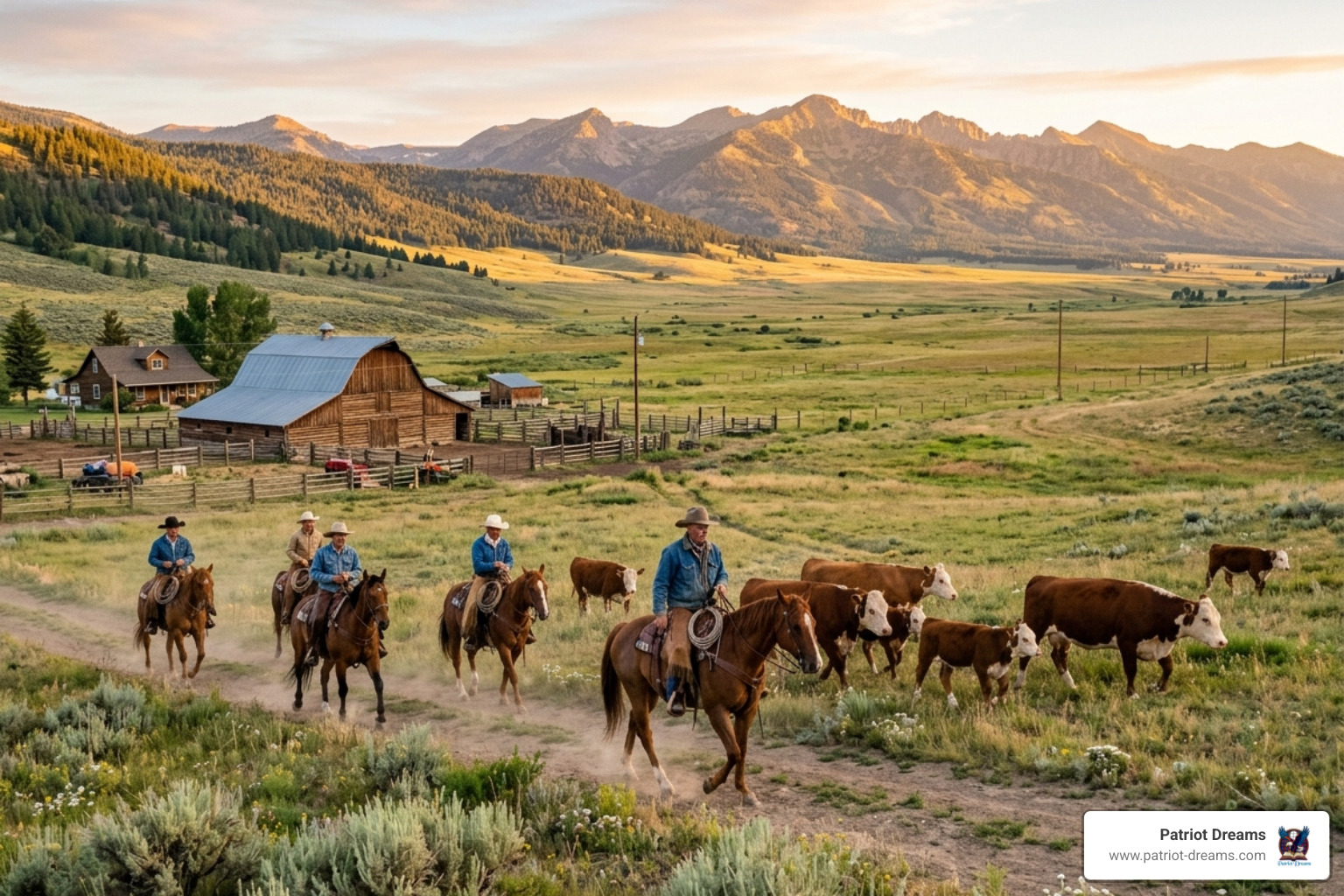

What American Cowboy Ranch Life Is Really Like
American cowboy ranch life is one of the most enduring traditions in our nation's story — and it's very much alive today.
Here's a quick look at what it really involves:
- Daily hours: Wake-up at 3:30–4:00 AM, often working until midnight
- Core work: Feeding livestock, riding fence, herding cattle, calving, branding
- Seasonal rhythm: Calving in winter, branding in spring, herding in summer, weaning in fall
- Pay: Starting around $21,600/year; experienced cattle bosses earn roughly $48,000
- Key skills: Horsemanship, animal care, physical stamina, problem-solving, integrity
- Modern tools: EID tags, EPD databases, and ultrasound — alongside horses and ropes
- The reward: Not money, but freedom, heritage, and a life lived close to the land
It's not the life you see on TV. It's harder, quieter, and — for those who live it — far more meaningful.
There's something quietly powerful about a way of life built around caring for the land and the animals that depend on you. Long before sunrise, while most of America is still asleep, cowboys are already at work. Horses are fed. Fences are checked. Calves are watched over.
It's a life shaped by seasons, not schedules. By values, not trends.
One veteran cattle boss with over 20 years of experience put it simply: despite the low pay and brutal hours, the lifestyle makes you "rich on life." That feeling — of riding out into open country, doing honest work, and passing something real down to the next generation — is what keeps the cowboy tradition alive.
This guide is for anyone who's ever felt the pull of that life. Whether you grew up on a ranch, dream of starting fresh, or simply want to understand what it truly means to be a working cowboy in America today — you're in the right place.
The Heartbeat of the American Cowboy Ranch Life
At its core, American cowboy ranch life is about more than just moving cattle from one pasture to another. It is a profound commitment to The Ranching Tradition, where families act as stewards of the vast American landscape. In April 2026, as we look across the Great Plains and the Rocky Mountains, we see that the heartbeat of this lifestyle remains steady, fueled by quiet competence and a deep respect for the land.
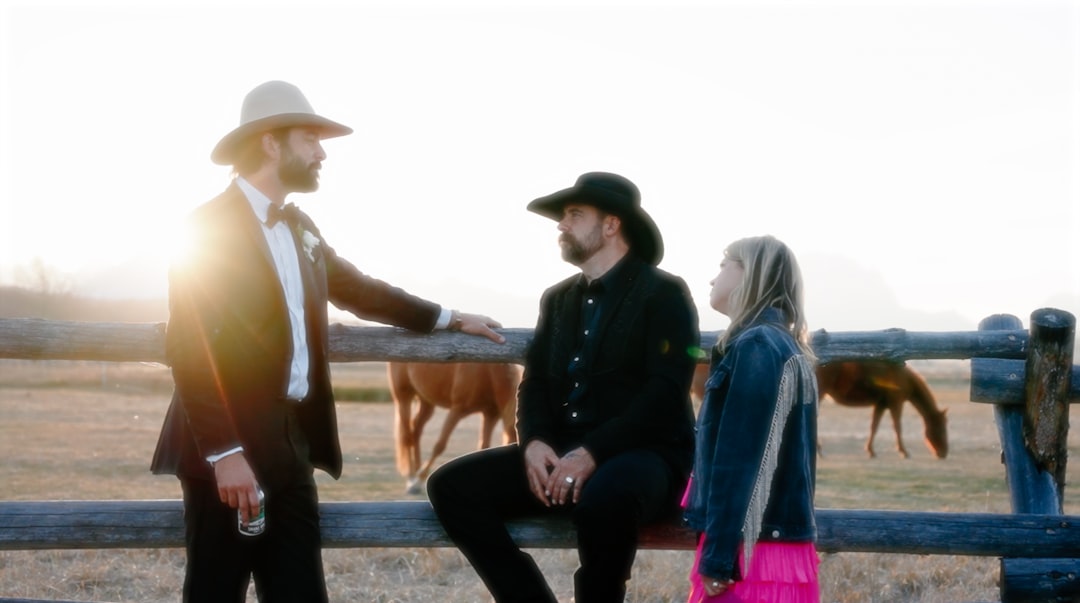
Ranching is a heritage passed down through stories and shared labor. It’s about a neighbor coming over to help with a difficult birth in the middle of a blizzard, or a community gathering for a weekend roping event. This sense of community roots is what keeps the spirit of American Pioneer Stories alive in the modern era. Whether a ranch spans 100 acres or 46,000 acres, the goal is the same: to conserve the land for the generations that follow.
Seasonal Rhythms of American Cowboy Ranch Life
A cowboy’s calendar isn't marked by holidays, but by the needs of the herd. Each season brings a specific set of demands that require total dedication:
- Winter: This is often the most grueling time. It involves breaking ice on water troughs and "calving" — checking on pregnant heifers around the clock. When a blizzard hits, the cowboy is out there ensuring every animal has feed and shelter.
- Spring: As the grass turns green, it's time for branding. This is a communal effort where neighbors help each other identify new calves, vaccinate them, and ensure the health of the herd. It’s a tradition that echoes the grit found in Oregon Trail Stories.
- Summer: Cattle are often moved to higher elevations or larger pastures. This involves "herding" and constant fence maintenance. You might spend all day in the saddle checking miles of barbed wire to ensure no one wanders off.
- Autumn: This is the season of weaning and "preg-checking." It’s a time of transition where the year’s work culminates in shipping calves and preparing the mother cows for the winter ahead.
Finding Your Way into American Cowboy Ranch Life
You might wonder if someone without a ranching background can still join this world. The answer is a resounding yes, though it requires a humble heart and a willingness to work. Programs like the American Cowboy Academy have emerged to bridge the gap, offering intensive courses that cover everything from "Horsemanship 101" to fixing complex water systems.
The best advice for any newcomer is to "be a sponge." Aspiring cowboys often start as entry-level ranch hands, earning about $21,600 a year. It’s a path that requires finding a mentor — a seasoned cattle boss who is willing to teach the nuances of animal behavior and the "cowboy code."
From Dawn to Dusk: A Day in the Life
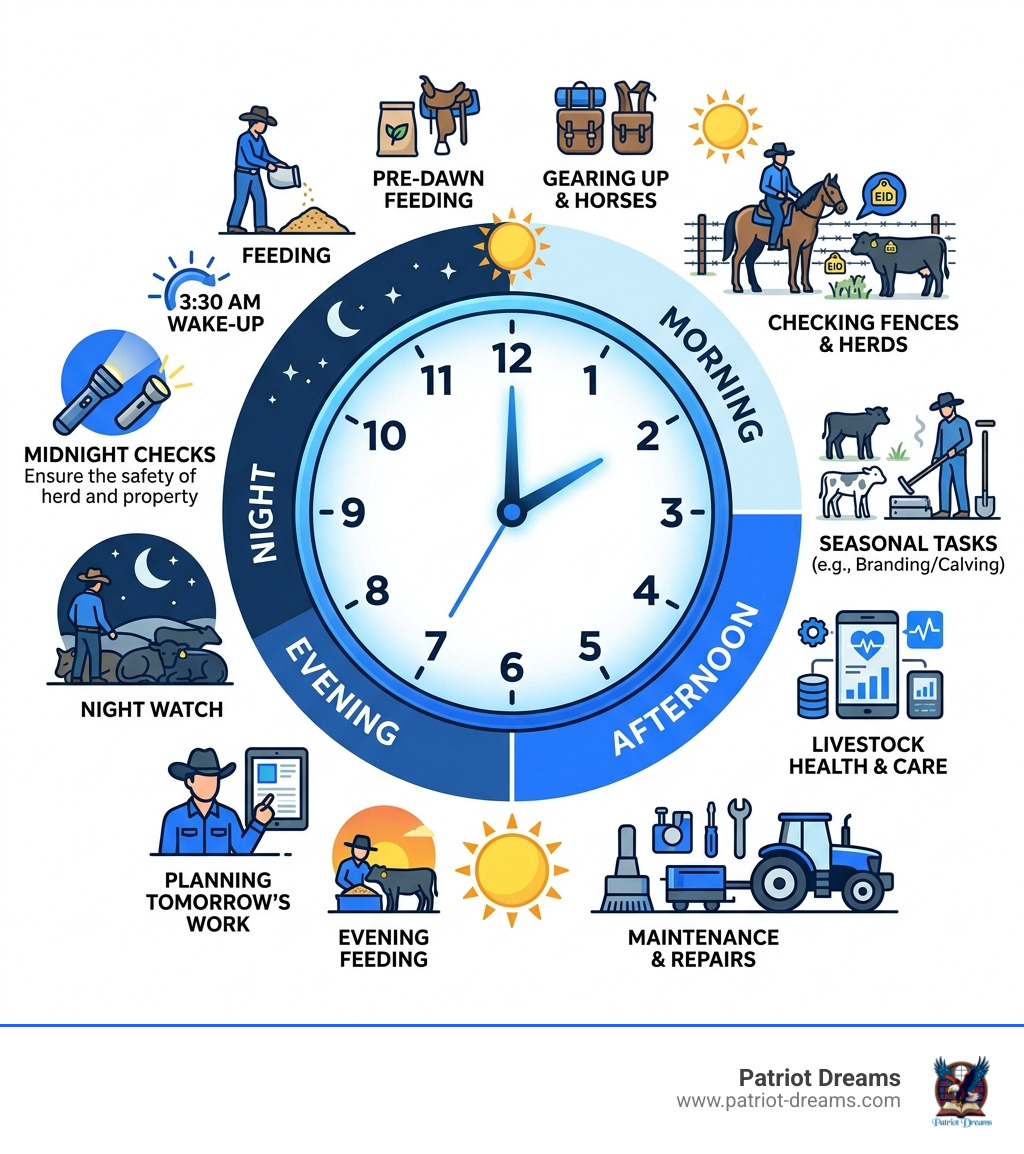
What does a typical Tuesday look like for a working cowboy? It starts early. Very early. Most cowboys are out of bed by 3:30 or 4:00 AM. There is a strict rule on traditional ranches: the animals eat before the humans do.
After a quick cup of coffee, the first task is rounding up the "remuda" — the group of saddle horses used for the day's work. On a large operation, a single cowboy might go through seven horses in a day if the work is particularly taxing. Much of the morning is spent in the saddle, riding across thousands of acres to check herd health.
A Day in the Life on a Texas Ranch involves a constant eye for detail. Is a calf limping? Is a water trough leaking? In the afternoon, the work shifts to maintenance. This could mean fixing a broken gate, repairing a tractor, or mending a fence line that was taken down by a fallen tree.
As evening falls, the horses are cared for first. Only then do the ranch hands gather for a meal. This is where the "camaraderie" happens — sharing stories of the day’s "wrecks" or successes under the wide Western stars. By the time a cowboy hits the pillow at midnight, they may have only four hours before the cycle starts again.
Balancing Tradition with Modern Innovation
While the image of a cowboy often involves a 19th-century silhouette, today’s American cowboy ranch life is a sophisticated blend of old and new. We still use horses because they are the most efficient way to navigate rugged terrain without stressing the cattle. High-quality beef often starts with "low-stress handling" on horseback.
However, look closer at a modern cowboy’s gear, and you’ll see the 21st century at work.
- EID Tags: Electronic Identification tags allow ranchers to track an animal's health and history with a quick scan.
- EPD Databases: Expected Progeny Difference data helps cowboys make scientific decisions about breeding to improve the herd's quality.
- Ultrasound: This technology is used to check for marbling in the beef, ensuring the highest quality product for the American table.
This balance is a perfect example of The Frontier Myth Today. We preserve the values of the Old West while using every tool available to ensure the ranch remains viable in a modern economy.
The Skills and Spirit of the Modern Cowboy
To succeed in American cowboy ranch life, you need more than just a hat and boots. You need "salt" — a Western term for grit and resilience.
The essential skills include:
- Horsemanship: This is the cornerstone. You must understand your horse as a partner, not just a tool.
- Animal Husbandry: A cowboy must be part-vet, able to spot illness or injury before it becomes a crisis.
- Problem-Solving: When you’re ten miles from the nearest road and a water pump breaks, you have to figure out how to fix it with what you have on your belt.
- Integrity: In this world, a man’s word is his bond. If you say you’ll watch a fence line, you watch it until the job is done.
This spirit of self-reliance connects modern ranchers to the Mountain Men Frontier Tales of our past. It’s a physical and mental endurance test that filters out those who are only in it for the "glamour."
Challenges and the "Richness of Life"
We won't sugarcoat it: the challenges are real. The pay is low, often shaking out to $10–$14 per hour when you factor in the 18-hour days. Mother Nature is a difficult boss; she can take a healthy calf in a matter of minutes during a spring storm.
Furthermore, the land itself is under threat. In states like Montana and Wyoming, large working ranches are being bought by wealthy individuals and turned into "getaway" properties. This reduces the amount of land available for traditional ranching and makes it harder for young families to stay in the industry.
So why do they do it?
Every cowboy we speak to says the same thing: it’s the freedom. It’s the ability to raise your children in an environment where they learn the value of hard work and the reality of life and death. It’s about "heritage preservation." As one cattle boss said, "I might be broke at the end of the month, but I'm rich on life."
Frequently Asked Questions about Ranching
Is ranch life like the show Yellowstone?
Not exactly. While Yellowstone has brought a lot of attention to the West, real American cowboy ranch life is much "scrappier." You won't see many cowboys in $1,000 hats driving brand-new custom trucks. Most working cowboys use gear that has been repaired a dozen times. The "drama" on a real ranch usually involves a broken water pipe or a cow stuck in a bog, not Hollywood-style shootouts.
What is the typical salary for a working cowboy?
As of April 2026, an entry-level ranch hand starts at roughly $21,600 per year. A "Cattle Boss" with 20 years of experience might earn around $48,000. While the salary sounds low, it often includes "perks" like housing, meat, and a place to keep your horses. It’s a lifestyle choice where you trade a high paycheck for a high quality of life.
Is the cowboy way of life a dying profession?
It is a profession under pressure, but it isn't dying. While land loss and a lack of young people learning the trade are concerns, the cultural resilience of the American cowboy is strong. As long as Americans want high-quality, grass-raised beef, there will be a need for the men and women who know how to manage the herds on horseback.
Conclusion
The story of the American cowboy is far from over. It’s a story of perseverance, kindness toward animals, and a deep, abiding love for the American soil. At Patriot Dreams, we believe these stories are the threads that hold our national tapestry together.
By preserving these personal legacies through audio storytelling, we ensure that the "quiet heroics" of the ranch never fade away. If you feel inspired by the grit and grace of the cowboy lifestyle, we invite you to explore more of our heritage through our American History Stories mobile app.
The range is still wide, the sun is still rising, and the cowboy is still out there, making sure the heartbeat of the West stays strong.
Read Time: 10 mins read

Join the Patriot Dreams Community
Download the app today and start your journey through American history and personal legacy.

Explore Our Latest Insights
Dive into stories that shape our American legacy.