
The Jacksonian Era: Shaping America's Early Republic
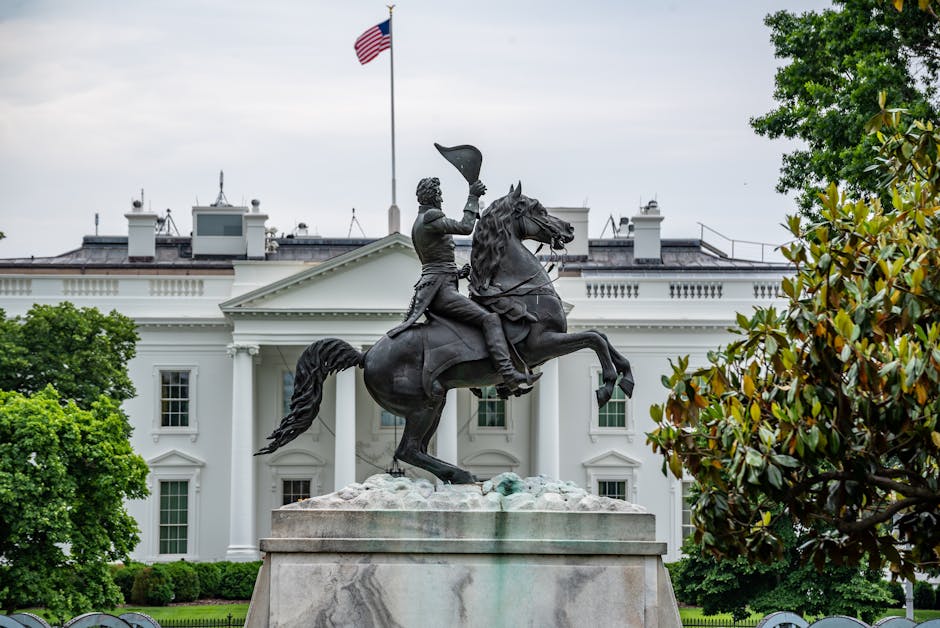

The Age of the Common Man

The Andrew Jackson presidency (1829-1837) marked a turning point in American history when a frontier-born soldier became the seventh President and transformed how Americans thought about democracy itself.
Key Facts About Andrew Jackson's Presidency:
- Served: Two terms, from March 4, 1829 to March 4, 1837
- Major Accomplishments: Paid off the national debt (1835), resolved the Nullification Crisis, expanded voting rights for white men
- Challenging Policies: Signed the Indian Removal Act (1830), vetoed the Second Bank of the United States
- Legacy: Founded the Democratic Party, strengthened executive power, a legacy also marked by the great hardship of Native American removal
Andrew Jackson wasn't born into wealth or power. He grew up in the Carolinas, fought the British at age thirteen, and bore scars from that war for the rest of his life. He became a lawyer, a plantation owner, and eventually a military hero who defeated the British at New Orleans.
But what made Jackson different from every president before him was who he represented. He was the first president from west of the Appalachian Mountains. The first to win office by appealing directly to everyday voters rather than political elites. His supporters saw him as one of their owna self-made man who understood their struggles.
Jackson's presidency brought sweeping changes. He challenged powerful banks he believed favored the wealthy. He stood firm when a state tried to ignore federal law. He opened government jobs to ordinary citizens and dramatically expanded presidential power.
Yet, his story is also a complex one. His presidency included the Indian Removal Act, which led to the forced relocation of thousands of Native Americans from their homes, a journey of immense hardship known as the Trail of Tears. Like many prominent figures of his time, he was also a lifelong owner of enslaved people, a part of his life that stands in contrast to the era's growing democratic ideals.
If you would like to read a more traditional reference account alongside this story-driven approach, you can also visit the Andrew Jackson entry on Wikipedia while you listen.
Understanding Jackson means looking at the whole picturea champion of democracy for some, while the promise of liberty was not yet extended to others. His era shaped America in ways we still feel today.
Relevant articles related to Andrew Jackson presidency:
From Frontier Hero to the White House
Andrew Jackson's journey to the presidency began far from the halls of power, in the rugged frontier lands of the Carolinas. Born on March 15, 1767, to Scotch-Irish immigrants, his early life was marked by hardship and conflict. At the tender age of thirteen, he joined the fight against the British during the Revolutionary War, an experience that left a lasting mark—literally. He carried a scar on his head from a British officer's sword, a testament to his early defiance. This early exposure to the harsh realities of war and the struggle for independence deeply shaped his character and his lifelong distrust of British influence.
After the war, Jackson pursued a legal career, studying law and practicing throughout Tennessee before settling in Nashville. But it was his military prowess that truly launched him into the national spotlight. In 1802, he was elected General of the Tennessee Militia. His leadership during the War of 1812 solidified his reputation as a formidable commander. He led successful campaigns against the Creek Nation, culminating in the decisive Battle of Horseshoe Bend in 1814. Following this victory, Jackson imposed the Treaty of Fort Jackson, securing millions of acres of land for white settlers and further enhancing his image as a protector of American expansion.
His most famous military achievement came on January 8, 1815, at the Battle of New Orleans, where his forces inflicted a decisive defeat upon the British army. This victory, though it occurred after the Treaty of Ghent had been signed, made him a national hero. It was during these challenging times that his soldiers, recognizing his unwavering determination and resilience, affectionately nicknamed him "Old Hickory." This moniker perfectly captured his tough, unyielding spirit, much like the strong wood of a hickory tree.

Jackson's military career continued with the First Seminole War, where his aggressive tactics, including an invasion of Spanish Florida, hastened the United States' acquisition of Florida in 1819. These military triumphs established him as a symbol of American strength and expansion, a hero who embodied the spirit of the growing nation.
Behind the public figure was a man who deeply cherished his personal life, especially his beloved wife, Rachel. Their marriage, however, became a target of vicious slander during the heated 1828 presidential campaign, with opponents accusing Rachel of bigamy due to a technicality in her divorce from her first husband. These attacks deeply distressed Rachel, and she tragically passed away on December 22, 1828, just before Jackson left for Washington to assume the presidency. This profound personal loss profoundly impacted Jackson, fueling his distrust of political enemies and shaping his resolve throughout his time in office. He famously had inscribed on her tombstone, "A being so gentle and yet so virtuous, slander might wound, but could not dishonor."
The Rise of a People's Candidate
The path to the White House for Andrew Jackson was unconventional, marked by both popular support and political intrigue. His first attempt at the presidency in 1824 was a pivotal moment. Despite winning the popular vote and receiving the highest number of electoral votes (99), he failed to secure a majority, sending the decision to the House of Representatives. There, Henry Clay, one of the other candidates, threw his support behind John Quincy Adams, who then won the presidency and appointed Clay as his Secretary of State. Jackson's supporters cried foul, denouncing it as a "corrupt bargain" and fueling Jackson's determination for the next election. This perceived injustice rallied his base and laid the groundwork for a new political movement.
The 1828 campaign was unlike any before it. Personalities and slander played a larger role than ever, with intense attacks on both sides. As we mentioned, the accusations leveled against Rachel Jackson were particularly cruel and, in Jackson's view, contributed to her premature death. However, Jackson's direct appeal to the mass of voters, particularly those in the newly expanding western states, proved irresistible. He was the first U.S. president to come from the area west of the Appalachians and the first to gain office by directly connecting with the ordinary citizen. He defeated Adams in a landslide victory, securing 178 electoral votes to Adams's 83, and winning 56 percent of the popular vote. This marked the true rise of "Jacksonian Democracy," a political philosophy that celebrated the common man and challenged the established elite. It was a new kind of politics, one that emphasized the power of the people and forever changed the landscape of American elections.
A New Vision for the Presidency
The Andrew Jackson presidency ushered in an era known as Jacksonian Democracy, fundamentally altering the role of the president and the nature of American governance. Jackson saw himself as the direct representative of the "common man," a stark contrast to the more aristocratic leaders who preceded him. He was the first president to truly champion the idea that success should stem from hard work and natural ability, rather than inherited status or wealth. This philosophy inspired a uniquely American sense of promise and hope, encouraging citizens to believe in their own potential.
One of the hallmarks of Jacksonian Democracy was the expansion of voting rights. While this expansion primarily benefited white men, it represented a significant step towards a more inclusive political system at the time, moving away from property qualifications that had limited participation. Jackson also challenged the existing system of political appointments, advocating for a "rotation in office" policy, sometimes called the "spoils system," which replaced many federal employees with his political supporters. He believed this was a way to make government more responsive to the popular will and prevent entrenched bureaucracy, arguing that government duties were "so plain and simple" that offices should rotate among deserving applicants.
Jackson also dramatically strengthened the power of the presidency. He firmly established that presidents could be more than mere executives enforcing laws; they could be active leaders, representing the will of "the people" against entrenched interests. His forward-thinking, action-oriented mentality pushed the boundaries for what both the president and the nation could achieve. When faced with opposition from his official cabinet, particularly during the "Petticoat Affair" (a social scandal involving Secretary of War John Eaton's wife, Peggy), Jackson relied heavily on a group of informal advisors known as his "Kitchen Cabinet." This move further demonstrated his willingness to operate outside traditional norms to achieve his goals.
The Bank War and the Economy
One of the defining debates of the Andrew Jackson presidency was the "Bank War," a significant disagreement over the Second Bank of the United States. Jackson held a deep-seated belief that the Bank was a powerful, government-backed institution that primarily benefited a wealthy elite. He saw the Bank, with its substantial capital, as a source of inequality that held too much influence over the nation's economy.
When Congress passed a bill in 1832 to reauthorize the Bank's charter, Jackson famously vetoed it. His veto message, which framed the Bank as an institution at odds with democratic principles, resonated with his supporters and became a cornerstone of Jacksonian Democracy. He believed that the Bank concentrated too much power in the hands of a few, which could limit economic opportunities for ordinary Americans.
Following his re-election in 1832, Jackson took further action against the Bank by ordering the withdrawal of federal deposits, transferring them to state-chartered banks, which his critics called "pet banks." This move was instrumental in the Second Bank's federal charter being allowed to expire in 1836.
A remarkable achievement during the Andrew Jackson presidency, and one that truly stands out in American history, was the complete payment of the national debt in 1835. This was a testament to his administration's fiscal policies and a source of immense pride for Jackson and his supporters. This focus on economic opportunity for the common person and ensuring fiscal responsibility became a central theme of his legacy.
The Nullification Crisis: A Union Preserved
The Andrew Jackson presidency faced a severe test of federal authority during the Nullification Crisis, a constitutional challenge that put the strength of the Union to the test. The crisis originated with the "Tariff of Abominations" of 1828 and subsequent tariffs in 1832, which imposed high duties on imported goods. These tariffs were popular in the industrial North but deeply disliked in the agricultural South, where many felt they unfairly burdened consumers and harmed the export economy.
South Carolina, led by Jackson's own Vice President, John C. Calhoun, declared these federal tariffs null and void within its borders, asserting a state's right to reject federal laws it considered unconstitutional. This sparked a heartfelt debate over states' rights versus federal authority, echoing earlier constitutional discussions and foreshadowing the sectional divides that would continue to challenge the nation.
Jackson, a devoted defender of the Union, responded with a firm resolve. He viewed nullification as a grave threat to the integrity of the United States. During a notable exchange at a Jefferson Day dinner, Jackson famously toasted, "Our federal Union: It must be preserved!" in a clear response to Calhoun's states' rights position. On December 10, 1832, he issued a powerful Nullification Proclamation, stating with conviction that states could not nullify federal laws and that he was prepared to ensure compliance.
His firm stance, combined with the passage of the Force Bill (authorizing the president to use the army to enforce federal law) and a compromise tariff negotiated by Henry Clay, ultimately resolved the crisis. South Carolina reconsidered its position, and the Union was preserved. This episode demonstrated Jackson's unwavering commitment to the federal union and his willingness to use strong executive leadership to protect it. It was a crucial moment that underscored the importance of unity for the young republic.
A Fuller Picture of the Jacksonian Era
The Andrew Jackson presidency was a period of immense change, filled with moments of inspiration alongside difficult truths. The era saw a great wave of westward expansion, opening new lands for settlement. For many, this was the American dream in action—a chance to build a new life and future. At the same time, to understand this period fully, it's important to also listen to the stories of those for whom this era of change brought great hardship. Looking at our history with open hearts helps us appreciate the full picture of our nation's journey.

A Difficult Chapter: Indian Removal
One of the most difficult chapters of the Andrew Jackson presidency was his policy towards Native American tribes. Guided by a belief in westward expansion and a desire to open lands for new settlers, Jackson signed the Indian Removal Act into law on May 28, 1830. This act gave the president authority to negotiate treaties for exchanging Native American lands in the East for lands west of the Mississippi River.
This policy greatly affected the "Five Civilized Tribes"—the Cherokee, Creek, Choctaw, Chickasaw, and Seminole—who had acceptd many aspects of American culture, including farming, written languages, and constitutional governments. Despite Supreme Court rulings like Worcester v. Georgia (1832), which supported Cherokee sovereignty, Jackson's administration moved forward with its removal policy.
The result was the forced relocation of tens of thousands of Native Americans. The journey, which came to be known as the "Trail of Tears," was one of immense hardship, and many lives were lost along the way from disease, starvation, and exposure. It is a somber part of our national story, one that reminds us of the human cost that can accompany periods of great change and teaches us about the consequences of such policies.
The Question of Slavery
Another important part of understanding the Jacksonian Era is acknowledging the role of slavery, which stood in stark contrast to the democratic ideals he championed for white Americans. Andrew Jackson, like many of his contemporaries, was a lifelong slave owner, and his plantation, The Hermitage, was built and run with the labor of enslaved people. He brought enslaved workers to the White House and continued to be involved in the institution of slavery throughout his presidency.
This stands as a deep contradiction to the democratic ideals that were expanding for others during his time. His administration's policies also sought to quiet the growing national conversation about slavery, viewing the passionate arguments from both sides as a threat to the unity of the nation. Anything that jeopardized the Union, in Jackson's eyes, was to be opposed. This perspective, while aimed at preserving national unity, had the effect of protecting the institution of slavery during his time. It's a reminder that the idea of "democracy" in early America was still growing and did not yet include everyone.
Frequently Asked Questions about the Andrew Jackson Presidency
We often hear questions about the Andrew Jackson presidency, and we're happy to shed some light on a few common ones.
Why was Andrew Jackson called "Old Hickory"?
Andrew Jackson earned the nickname "Old Hickory" from his soldiers during the War of 1812. After a particularly grueling march through the wilderness, where his troops were facing severe supply shortages and harsh conditions, Jackson displayed incredible toughness and resilience. He shared their hardships, walking alongside them when his horse gave out, and refusing to abandon anyone. His unwavering spirit and ability to endure, much like the strong, unyielding wood of a hickory tree, inspired his men. The nickname stuck, becoming a symbol of his iron will and enduring character, which he carried throughout his military and political careers.
What was the "corrupt bargain" of 1824?
The "corrupt bargain" refers to the controversial outcome of the 1824 presidential election. In that election, Andrew Jackson won the popular vote and had the most electoral votes, but he didn't secure a majority. This meant the decision went to the House of Representatives. Henry Clay, who was also a candidate and the Speaker of the House at the time, used his influence to throw his support behind John Quincy Adams. After Adams was elected president, he appointed Clay as his Secretary of State. Jackson's supporters were outraged, alleging that a "corrupt bargain" had been struck: Clay, they claimed, had traded his support for a powerful cabinet position. While no concrete evidence of corruption was ever found, the accusation deeply damaged Adams's presidency and fueled Jackson's resolve to run again in 1828, contributing significantly to his eventual victory.
Did Andrew Jackson really pay off the national debt?
Yes, Andrew Jackson's administration did indeed pay off the national debt in 1835. This was a remarkable and singular achievement in American history, as it's the only time the United States has ever been completely debt-free. Jackson, a firm believer in fiscal responsibility and limited government spending, made paying off the debt a priority. His efforts were aided by revenue from land sales and tariffs, as well as his controversial "Bank War" policies which reduced the government's financial messs with the Second Bank of the United States. This accomplishment was a point of immense pride for Jackson and his supporters, seen as a triumph of economic populism and sound financial management.
Conclusion: The Enduring Echo of a Transformative Era
The Andrew Jackson presidency stands as a monumental and complex chapter in American history, one that continues to spark discussion and reflection. Jackson was undeniably a transformative figure, a "self-made man" who reshaped the American political landscape and the very nature of the presidency. He expanded the concept of democracy, bringing the "common man" into the political process in unprecedented ways and leaving an indelible mark on the development of the Democratic Party. His firm leadership during the Nullification Crisis also reinforced the principle of federal supremacy, ensuring the preservation of our young Union during a critical period.
Yet, his legacy also has its difficult aspects. The forced removal of Native American tribes, which led to the sorrowful journey known as the Trail of Tears, is a chapter that stands in stark contrast to the ideals of liberty and justice. His lifelong ownership of enslaved people and his administration's policies on the issue also remind us that the promise of American democracy did not yet extend to everyone during his era.
Understanding the Andrew Jackson presidency means embracing this complexity—appreciating the moments of inspiring leadership and democratic expansion, while also thoughtfully acknowledging the experiences of all people during that time. It's a journey into the heart of America's growing pains, a testament to how our nation has evolved, sometimes with great difficulty, toward a more perfect union. As we explore these stories, we hope to foster a deeper, more thoughtful connection to our shared past, inspiring us to reflect on the values that truly define us today. At Patriot Dreams, we believe that by truly understanding all facets of our history, we can better appreciate the path we've traveled and the journey that still lies ahead. Our audio stories aim to bring these rich, multifaceted narratives to life, inviting you to explore America's journey with us.

Join the Patriot Dreams Community
Download the app today and start your journey through American history and personal legacy.

Explore Our Latest Insights
Dive into stories that shape our American legacy.