Why Sybil Ludington Is the Midnight Rider You Should Be Following

The Midnight Rider America Almost Forgot
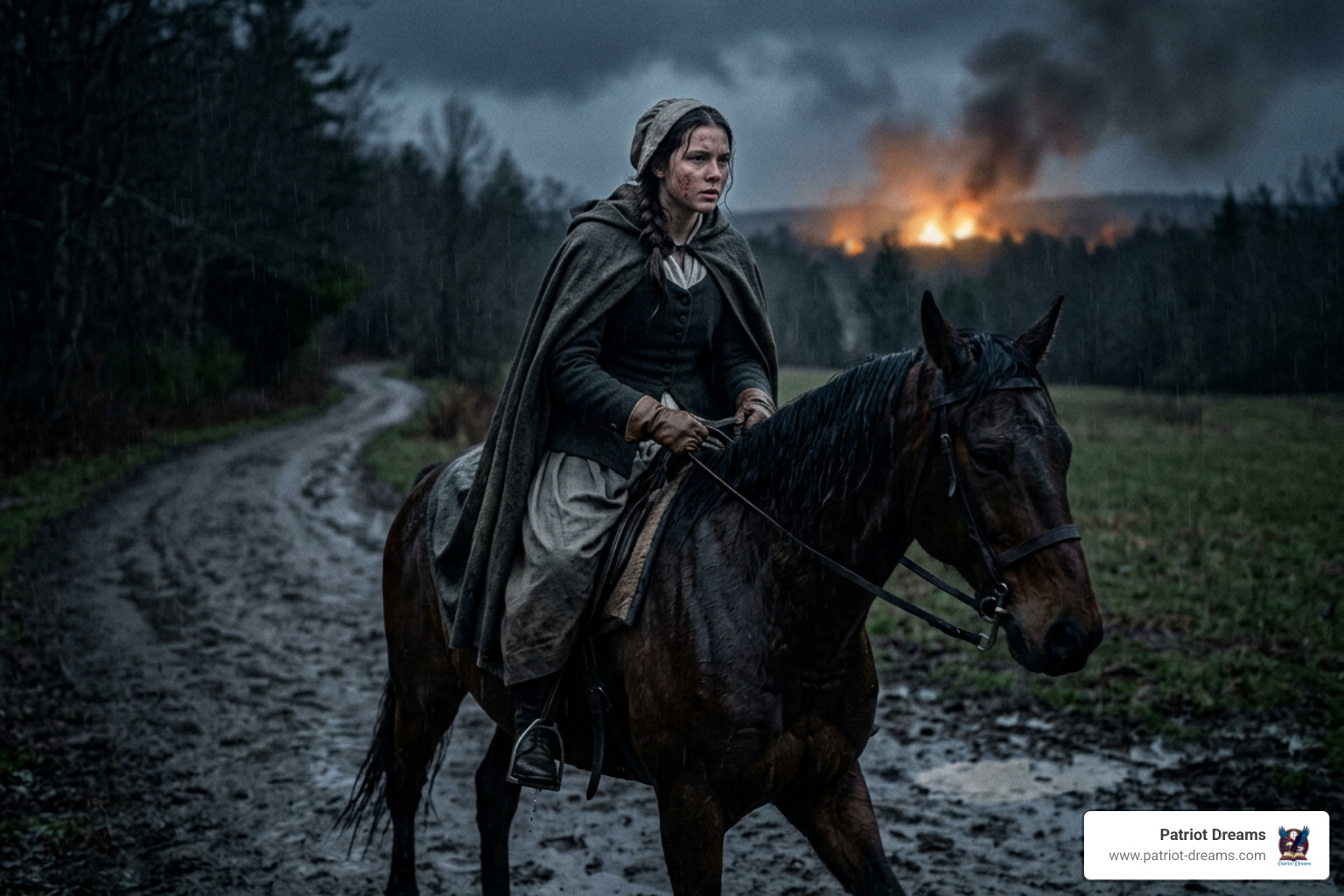
The Sybil Ludington ride is one of the most remarkable — and most overlooked — stories of the American Revolution. On the night of April 26, 1777, a 16-year-old girl saddled her horse and rode alone through a driving rainstorm to warn her neighbors that the British were burning Danbury, Connecticut.
Here are the key facts at a glance:
- Who: Sybil Ludington, eldest daughter of Colonel Henry Ludington
- When: Night of April 26, 1777, starting around 9:00 PM
- Where: Putnam County, New York
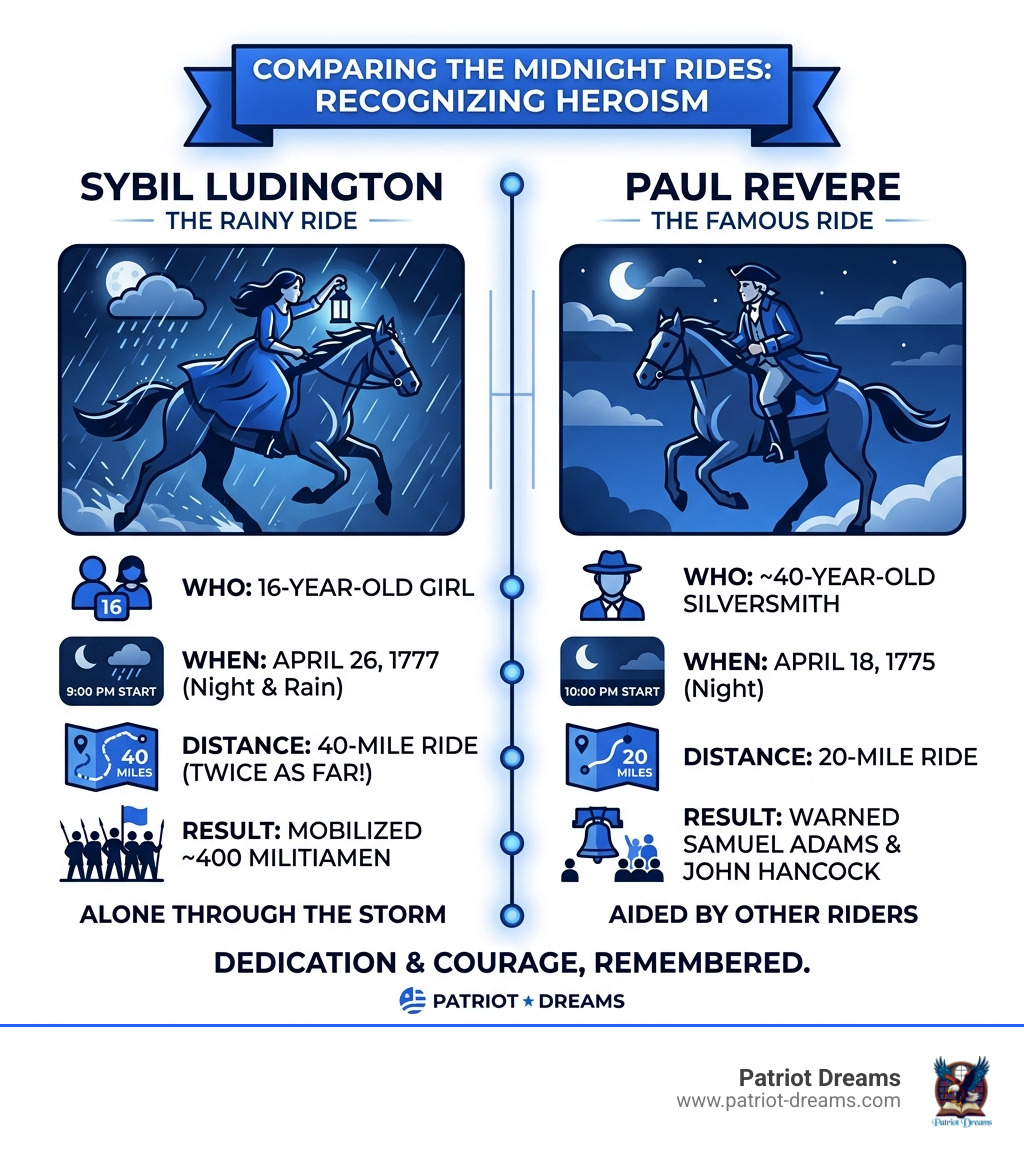
- Distance: Approximately 40 miles — nearly twice the distance of Paul Revere's famous ride
- Purpose: To muster roughly 400 militiamen and respond to a British raid on a Continental Army supply depot
- Result: Militia troops mobilized and confronted British forces at the Battle of Ridgefield
Most of us grew up hearing about Paul Revere. But this young girl — riding farther, alone, in the rain — is a name worth knowing by heart.
Her story is about more than just one brave night. It's about the quiet, ordinary people who showed up when their community needed them most. That is a very American kind of courage.
Sybil Ludington ride word roundup:
The Heart of the Sybil Ludington Ride
To truly understand the Sybil Ludington ride, we have to look at the world she lived in back in 1777. Sybil was the eldest of 12 children, born to Henry and Abigail Ludington. Her father, Colonel Henry Ludington, was a respected leader who commanded the 7th Regiment of the Dutchess County Militia. He was also a man with a target on his back; the British had offered a bounty of 300 English guineas for his capture.
In the spring of 1777, the British, led by General William Tryon, landed about 2,000 troops on the shores of Connecticut. Their goal was to destroy a massive Continental Army supply depot in Danbury. This wasn't just any warehouse — it was a lifeline for the American cause, filled with molasses, flour, meat, and medical supplies.
When the British arrived, they didn't just burn the supplies. They discovered the Continental Army's stores of rum and whiskey, leading to a breakdown in military discipline. As the skies over Danbury turned orange with fire, a weary messenger arrived at the Ludington home in Fredericksburg (now Ludingtonville), New York. He was exhausted and unfamiliar with the local terrain. The militia needed to be gathered, but the Colonel had to stay at his post to organize the men as they arrived.
That is when 16-year-old Sybil stepped forward. Whether she volunteered or her father asked her, the mission was clear: ride through the night and rouse the 400 militiamen scattered across the countryside. You can read more about the brave individuals of this era in our guide to Revolutionary War Heroes.
According to Sybil Ludington | American Revolutionary War heroine | Britannica, her ride was a pivotal moment that allowed the Patriots to eventually confront the British at the Battle of Ridgefield.

A Courageous Journey Through the Night
Imagine, for a moment, being 16 years old and stepping out into a driving rainstorm at 9:00 PM. There were no streetlights, no GPS, and the roads were little more than muddy tracks through the woods. Sybil wasn't just fighting the weather; she was riding through territory frequented by "Skinners" — outlaws and British loyalists who were known for their ruthlessness.
We often hear that she prodded her horse (often called "Star" in legends) with a stick, using it to bang on the shutters and doors of farmhouses. She didn't have time to dismount at every stop. She had to keep moving. "The British are burning Danbury! Muster at Ludington’s!" she likely shouted into the dark.
This was a feat of incredible physical endurance. She rode from her home in Kent, south to Mahopac, then north to Stormville, covering roughly 40 miles before returning home at dawn, soaked to the skin but successful. Her efforts are a highlight in our American Revolution Stories Ultimate Guide.
As detailed in Sybil Ludington’s Midnight Ride – An American Story, the courage required to navigate those unfamiliar roads in the dark is what makes her a "female Paul Revere."
Comparing the Sybil Ludington Ride to Paul Revere
It is almost impossible to mention the Sybil Ludington ride without bringing up Paul Revere. While we love all our Founding Fathers, it is fascinating to look at the numbers.
| Feature | Sybil Ludington | Paul Revere |
|---|---|---|
| Age at Ride | 16 | 40 |
| Distance | 40 miles | ~12–20 miles |
| Weather | Heavy rainstorm | Clear, moonlit night |
| Capture | Never captured | Captured by British patrol |
| Companions | Solo | Part of a network (Dawes & Prescott) |
| Outcome | Successfully rallied 400 men | Alerted Lexington; didn't reach Concord |
Sybil rode twice as far as Revere, and she did it at a much younger age without the help of a pre-arranged signal system like the "one if by land, two if by sea" lanterns. While Revere is a household name thanks to Henry Wadsworth Longfellow’s famous poem, Sybil’s story remained largely a local legend for over a century. If you are curious about other leaders from this time, check out Who Are Founding Fathers Of Usa.
Understanding the History and Legend
As we look back from the year 2026, we have to ask: why did it take so long for Sybil’s story to reach the history books? The first time the Sybil Ludington ride appeared in print was in 1880, in a book by historian Martha Lamb. This was more than 100 years after the ride took place!
The story likely survived as a cherished family memory. In 1854, her nephew, Charles H. Ludington, wrote a letter asking for her recognition, which is one of the earliest written links we have to the event. The narrative gained massive popularity during the "Colonial Revival" of the late 19th and early 20th centuries. During this time, Americans were looking for heroes who embodied the spirit of the Revolution, and Sybil fit the bill perfectly.
However, because there are no contemporary newspaper reports from April 1777 that mention her by name, some scholars have debated the specifics. As Smithsonian Magazine points out, the lack of primary sources from the actual year of the ride makes it a "questionable history" for some, while others see it as a vital piece of oral tradition that was simply "too good not to be believed."
The Scholarly Consensus on the Sybil Ludington Ride
In our modern era, historians tend to view Sybil as a symbol of the "veiled roles" women played in the Revolution. Even if some details were embellished over a century of storytelling, the core of the story — a young woman helping her father muster a militia during a crisis — aligns with what we know about the period.
The Daughters of the American Revolution (DAR) has had a complex relationship with the story. In 1996, they noted that the evidence wasn't strong enough to meet their strict criteria for a war heroine, yet many local chapters continue to honor her. This tension between academic skepticism and local pride is common in American history. It reminds us that history is a living thing, often found in the stories passed down through families. You can explore more about how our nation's history was documented in The Declaration Of Independence What It Really Says And Why It Still Matters.
The Impact of the Danbury Raid and Ridgefield
The Sybil Ludington ride wasn't just a physical feat; it had real military consequences. Because Sybil successfully rallied the 7th Regiment, Colonel Ludington’s men were able to join other Patriot forces, including those led by General David Wooster and a then-loyal Benedict Arnold.
The British had torched Danbury, destroying 1,600 tents and thousands of barrels of flour. However, as they tried to retreat to their ships, the rallied militia harassed them every step of the way. The resulting Battle of Ridgefield was a fierce engagement. Though the British eventually escaped, the heavy resistance they faced convinced them that raiding the interior of Connecticut and New York was a dangerous proposition.
Today, you can still see the impact of this event through the historical markers scattered across Putnam County. These signs, many erected in the 1930s to boost tourism, trace her speculative route and remind us of the bravery of the local militia. For more on the leaders of the Continental Army, visit George Washington The General Who Became Americas First President.

A Legacy of Bravery and Kindness
Sybil’s life after the war was that of a hardworking American woman. She married Edmond Ogden, a veteran himself, and they had one son, Henry. After her husband died of yellow fever, Sybil operated a tavern in the Catskills to support her family. She was a businesswoman and a mother, living to the age of 77.
Her legacy was truly cemented in the 20th century. In 1961, the sculptor Anna Hyatt Huntington created the famous bronze statue of Sybil that stands on the shore of Lake Gleneida in Carmel, New York. It depicts a determined young woman, hair flying, prodding her horse forward. It is a beautiful tribute to the spirit of youth and service.
In 1975, as part of the Bicentennial celebrations, the U.S. Postal Service issued a "Contributors to the Cause" stamp featuring Sybil. This brought her story to millions of people across the country, finally giving her a place alongside figures like Samuel Adams patriot.
Honoring Everyday Heroism in Modern Times
Today, the Sybil Ludington ride continues to inspire. Since 1979, the Sybil Ludington 50K Run has been held in April, with athletes covering the same 40-mile distance she did. It is a wonderful way to connect physical endurance with historical memory.
Organizations also use her name to honor modern bravery. The NRA, for example, offers the Sybil Ludington Women's Freedom Award to recognize women who have made significant contributions to the shooting sports and the defense of the Second Amendment.
At Patriot Dreams, we believe that stories like Sybil's are the threads that hold our national fabric together. They remind us that history isn't just made by "great men" in powdered wigs; it's made by 16-year-old girls in the rain, by innkeepers, and by families who choose to do what is right. This sense of community and shared purpose is at the heart of The First Fourth Of July Celebration A Nation Finds Its Voice.
Frequently Asked Questions about Sybil Ludington
How far did Sybil Ludington actually ride?
Legend and local historical markers state she rode 40 miles. This journey took her through the modern-day towns of Carmel, Mahopac, Kent Cliffs, and Stormville. This is nearly double the distance of Paul Revere's ride, which was approximately 12 to 20 miles depending on the route.
Was Sybil Ludington's horse really named Star?
In many children's books and modern fictional retellings, her horse is named "Star." However, there is no contemporary historical record from 1777 that mentions the horse's name. It is a charming detail that has become part of the folklore, much like the idea that she used a "high-pitched feminine halloo" to wake the soldiers.
Did George Washington really thank Sybil Ludington?
There is a popular story that General George Washington personally visited the Ludington home to thank Sybil for her service. While it makes for a lovely ending to the tale, modern historians have not found any mention of this meeting in Washington's extensive diaries or papers. However, the lack of a written record doesn't necessarily mean the family tradition is false; it simply means it remains in the realm of oral history.
Conclusion
The Sybil Ludington ride is a story that warms the heart and reminds us of the resilience of the American spirit. Whether you are a history buff or someone who simply loves a story of a neighbor helping a neighbor, Sybil’s journey is a beacon of courage.
At Patriot Dreams, we are passionate about bringing these stories to life. Our platform uses interactive maps and audio storytelling to help you explore the heritage of your own backyard. We believe that by preserving these family legacies and historical moments, we stay connected to the values that built our country: kindness, perseverance, and a willingness to show up when called.
We invite you to Explore more historical American figures and discover the many "unlikely heroes" who helped shape the United States. Perhaps there is a story of courage in your own family tree waiting to be told. After all, as Sybil showed us, you are never too young — and the night is never too dark — to make a difference.

Join the Patriot Dreams Community
Download the app today and start your journey through American history and personal legacy.

Explore Our Latest Insights
Dive into stories that shape our American legacy.