The First National Road: America’s Original Highway to the Future

When America Built Its First Highway to Tomorrow
The First National Road: America's Original Highway to the Future was the nation's first federally funded highway, authorized by Congress in 1806 and built between 1811 and 1839. It stretched 620 miles from Cumberland, Maryland, to Vandalia, Illinois, connecting the eastern states with the western frontier and serving as the main artery for westward expansion in the early 19th century.
Quick Facts About the National Road:
- Length: 620 miles
- Construction Period: 1811-1839
- Route: Cumberland, Maryland to Vandalia, Illinois
- Cost: Nearly $7 million
- Modern Designation: U.S. Route 40
- Impact: Quadrupled Indiana's population between 1820-1840
- Construction Method: Macadamization (layered stone technique)
- Right-of-Way Width: 66 feet (roadway was 20 feet wide)
Before the roar of interstate highways and the romance of Route 66, there was a simpler dream: to unite a young nation scattered across mountains and valleys. The National Road was America's first great highway, but it was so much more than stone and gravel. It was a promise—that distance wouldn't divide us and that every American, no matter how far west they ventured, was still connected to home.
This is the story of ordinary people who built an extraordinary path. With hand tools and determination, they carved a road through the wilderness that would carry generations of dreamers westward. In doing so, they laid the foundation for every journey we take today. The National Road wasn't just about getting from one place to another; it was about becoming one people, one nation, moving forward together.
Handy The First National Road: America’s Original Highway to the Future” terms:
- History of Yellowstone: America’s First National Park and Its Legacy
- The True Story of Sacagawea: Guide, Interpreter, and American Icon
A Dream Forged in Unity: The Birth of the National Road
The idea of a national road was more than just about transportation. It was about weaving the fabric of a new country together. It was a bold vision to turn a collection of states into a truly united nation, ensuring that the mountains would not divide what the revolution had joined.
A Vision to Connect a Young Nation
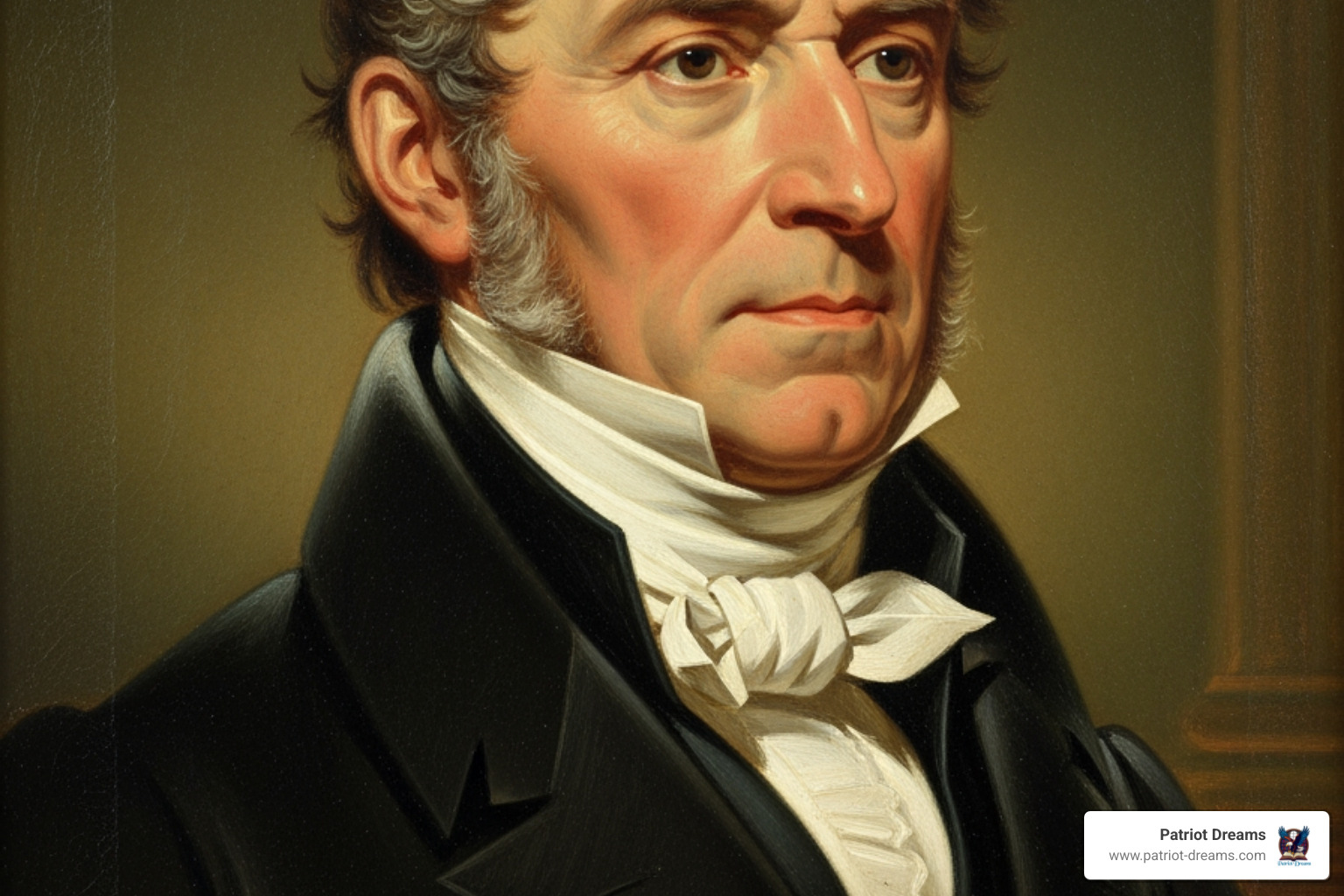
The dream of a national road began with America's founders. As a young surveyor, George Washington saw how the Appalachian barrier could divide the new nation, and he knew a connection was vital. Years later, President Thomas Jefferson acted on this vision, authorizing what would become The First National Road: America's Original Highway to the Future in 1806. The project's great champion was Jefferson's Treasury Secretary, Albert Gallatin.
He saw the road as essential for survival and economic opportunity, envisioning a path that would unify East and West, conquer the mountain barrier, serve a military necessity, and allow commerce to flow freely between farmers and markets. This spirit of looking toward new horizons defined early America. To learn more about the adventurous spirit that shaped our nation, explore more about the spirit of the frontier.
From Idea to Reality: The First Federally Funded Road
The 1806 act of Congress authorizing the road was a landmark moment. It was America's first major federally funded infrastructure project, setting a precedent for generations. The funding itself was innovative, paid for by the sale of public lands in Ohio—the frontier would fund its own future.
Construction began in 1811 in Cumberland, Maryland, with the initial goal of reaching the Ohio River at Wheeling. As America grew, so did the road's ambition, pushing westward until it reached Vandalia, Illinois, in the 1830s. Every mile sparked route debates about which towns to pass through and how to share costs between federal and state governments. These weren't just arguments about geography; they were conversations about what kind of nation America would become. With every stone laid, the road proved that when Americans work together, even mountains can't stand in the way.
Paving the Way West: A Feat of American Ingenuity
The construction of The First National Road: America's Original Highway to the Future was a monumental undertaking, a testament to the grit and determination of early Americans. With little more than hand tools, strong backs, and an unwavering spirit, workers carved a path through dense forests and over rugged mountains, creating a highway that was ahead of its time.
It's hard for us to imagine today what it must have been like to build a road by hand. But that's exactly what thousands of workers did, one stone at a time, creating something that would serve generations to come.
Engineering a Path Through the Wilderness
Building a road of this magnitude in the early 19th century was an incredible feat of civil engineering. Workers cleared a 66 feet wide path through dense wilderness, building a 20-foot-wide roadway almost entirely on manual labor. The key to its durability was the macadamization technique, adapted from Scottish engineer John Loudon MacAdam.
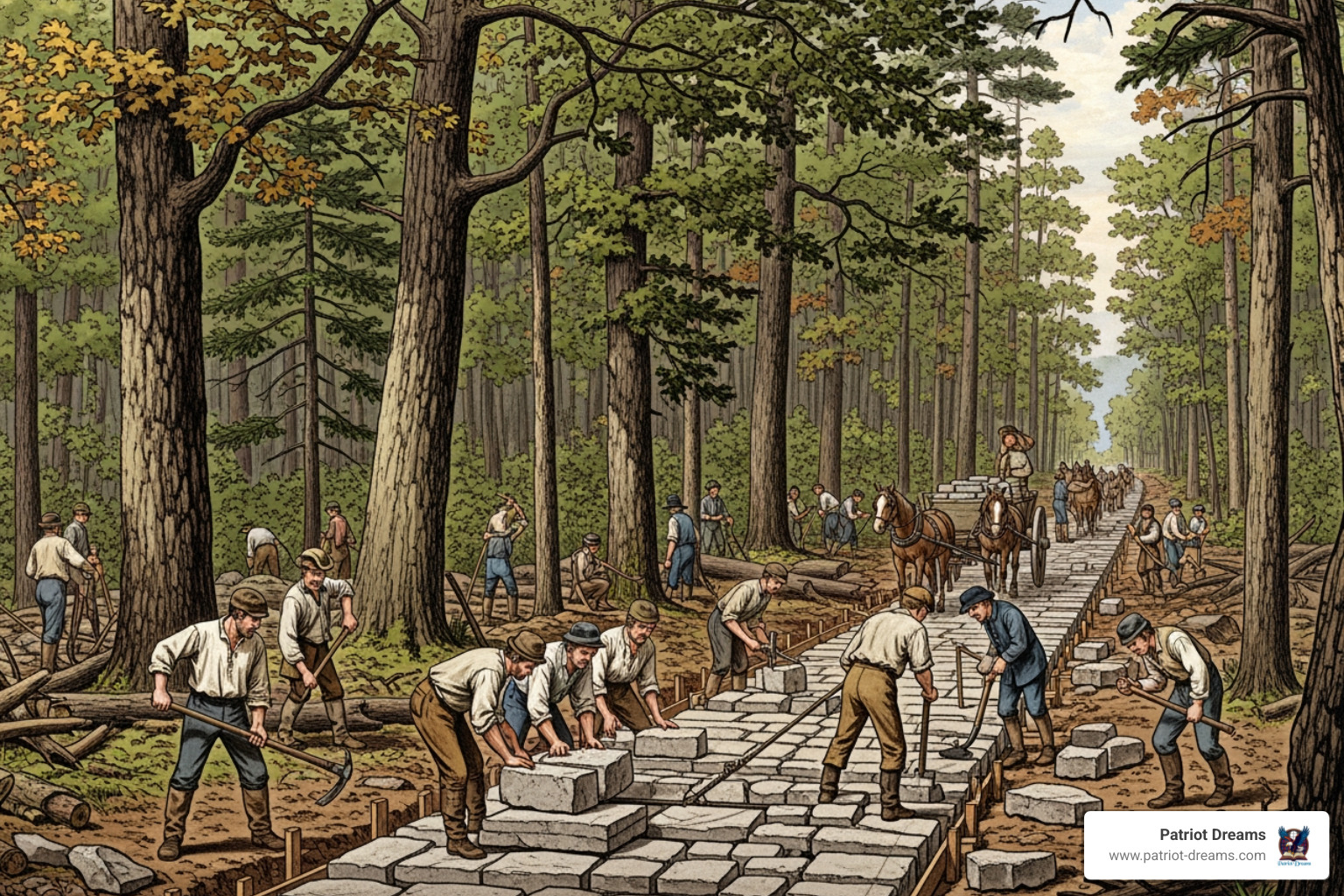
This method involved creating a layered stone construction of compacted, broken stones, with larger stones at the base and smaller ones on top. The road was also built with a crowned surface—higher in the middle—with ditches on the sides. This ingenious design allowed rainwater to drain off, preventing the mud that plagued earlier roads.
Beyond the road itself, builders constructed impressive stone arch bridges, many of which, like the Dunlap's Creek Bridge in Brownsville, Pennsylvania, still stand as testaments to their skill and are considered a landmark of civil engineering.
Overcoming Mountains and Mud: The Challenges of Construction
The journey of building this remarkable road was filled with immense challenges. Workers endured arduous manual labor, breaking rocks and felling trees with simple tools like shovels and axes, all while battling the steep grades of the Allegheny Mountains.
Harsh weather conditions, from brutal winters to sweltering summers, made the work even more grueling. The project also steered a complex political landscape. Funding often stalled due to debates over states' rights and federal power, causing construction delays—notably between 1818 and 1824. Despite Congress ultimately spending nearly $7 million, maintenance challenges were ongoing.
The solution was to transfer ownership of completed sections to the states, which then introduced toll houses to fund repairs. A humorous tale about President Martin Van Buren's muddy mishap, where his coach was supposedly tipped into the mud in protest of the road's condition, highlights the constant struggle for upkeep. Through it all, the builders persevered, creating a future for a nation on the move.
The Great Migration Road: Life on America's First Highway
The finished road quickly became the nation's main artery, a busy corridor of life teeming with pioneers seeking new beginnings, merchants carrying goods, and families heading west. It was a river of humanity, and along its banks, a unique American culture blossomed.
A River of People: The Impact on Westward Expansion
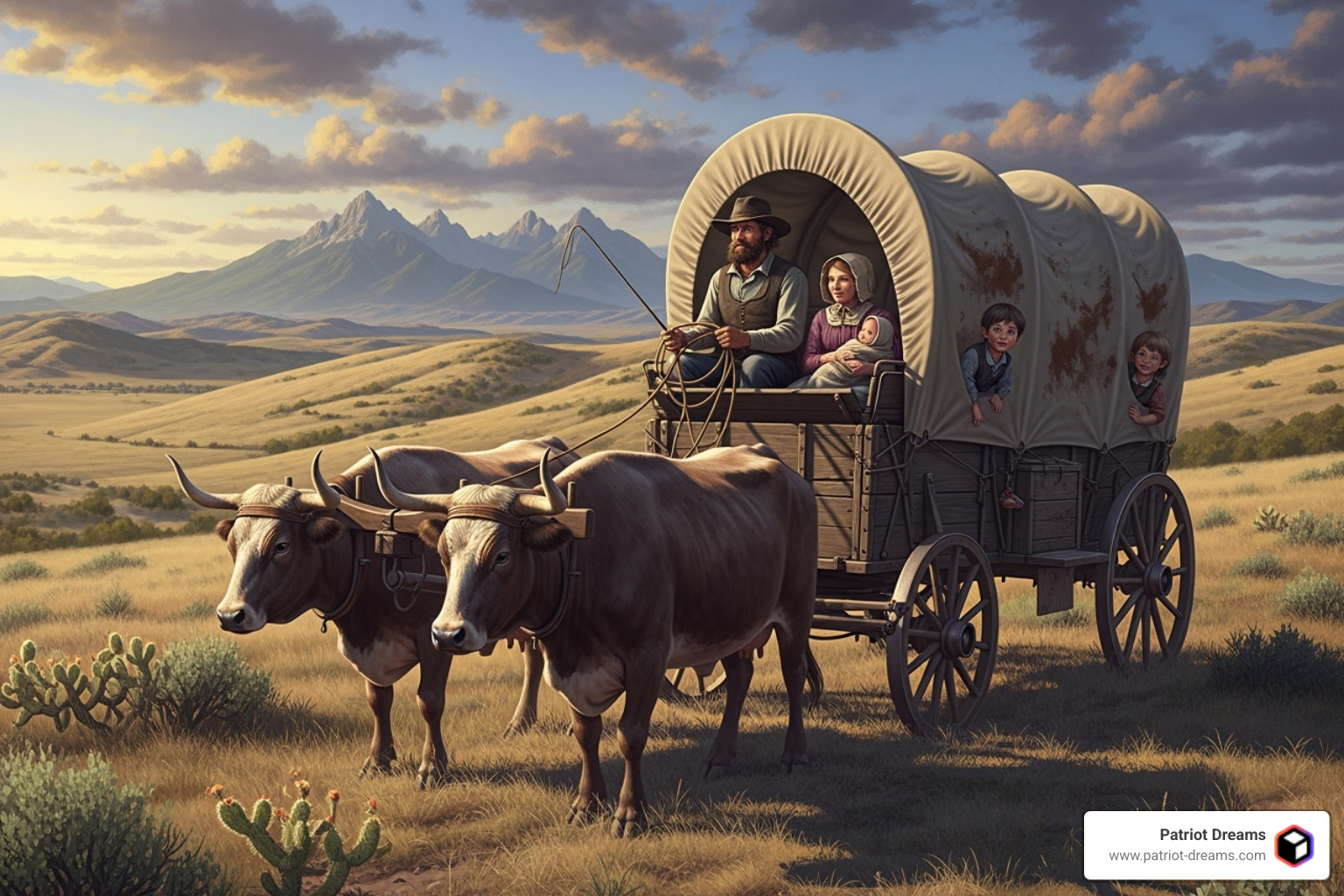
Once completed, The First National Road: America's Original Highway to the Future became a lifeline that breathed life into the western territories. The impact was immediate; between 1820 and 1840, Indiana's population quadrupled as families headed west on the road. Sturdy Conestoga wagons, the workhorses of the era, hauled tons of freight at a steady 15 miles a day, while swifter stagecoaches carried passengers and mail at 60 to 70 miles a day.
This new artery of commerce was revolutionary. Western farmers sent their goods east, and manufactured products flowed west, dramatically cutting travel time and costs. Towns like Cumberland, Uniontown, and Wheeling sprang up along the route, growing into busy communities. These are the kinds of stories that inspire us at Patriot Dreams—stories of ordinary Americans who rolled up their sleeves and built something remarkable together. You can find more tales of courage and determination in Inspiring American pioneer stories.
Taverns, Teamsters, and Travelers: Daily Life on the Pike
Life along The First National Road: America's Original Highway to the Future hummed with activity. It's said there was about one tavern for every mile—over 600 gathering places where weary travelers could find rest and conversation. These ranged from fancier "stagecoach taverns" to no-frills "wagon stands" for teamsters.
The road was alive with characters, especially the "Pike Boys"—the tough, resourceful teamsters who guided the Conestoga wagons. In the evenings, tavern rooms filled with travelers swapping stories and sharing news. A merchant from Philadelphia might sit beside a farmer from Ohio, and strangers became companions, bound by the shared experience of the road. This mixing of people from all walks of life created a unique sense of community, weaving together the fabric of a growing nation. To explore more of these fascinating narratives from our nation's past, visit Forgotten American legends born on the road.
The First National Road: America's Original Highway to the Future
Though its heyday of wagon traffic would eventually pass, the spirit of The First National Road: America's Original Highway to the Future never faded. It adapted and evolved, laying the groundwork for the very highway systems we depend on today, proving that a path to the future is often built upon the foundations of the past.
From Wagons to Rails to Automobiles
The National Road's heyday of wagon traffic faded with the arrival of the "Steam King"—the railroad. By the 1850s, trains from the B&O Railroad offered speed the old road couldn't match, and the once-busy Pike grew quiet. But this wasn't the end. In the early 1900s, the Good Roads Movement and the rise of the automobile gave the road a second life. As Americans bought cars like the Model T, they needed reliable roads to explore the country.
The Enduring Legacy of The First National Road: America's Original Highway to the Future
The influence of The First National Road: America's Original Highway to the Future is profound. It served as the foundational precursor to our modern federal highway systems, including the Interstate Highway System. The bold idea of a federally funded national road—championed by Albert Gallatin and authorized by Thomas Jefferson—set the precedent for every major infrastructure project that followed.
Today, while interstates like I-70 and I-68 handle long-distance travel, much of the original National Road remains alive as U.S. Route 40. Travelers can still see its beautiful stone arch bridges, like the Dunlap's Creek Bridge, original iron mile markers, and historic inns and toll houses. The Wheeling Suspension Bridge, completed in 1849, is another treasure. Designated a National Scenic Byway and an All-American Road, the road is a living museum and a tangible link to our past, reminding us of what we can accomplish together. For a deeper understanding of how this pioneering highway shaped our nation, we encourage you to explore The story of America's first highway.
Frequently Asked Questions about the National Road
You might have some questions about this remarkable piece of American history. Let's explore some of the most common ones together.
Why was the National Road so important?
The First National Road: America's Original Highway to the Future was our first federally funded highway. It served as the main artery for westward expansion in the early 19th century, physically and symbolically uniting the eastern states with the growing western frontier. It fostered commerce, encouraged settlement, and helped create a shared American identity, setting a powerful precedent for future national projects.
Can you still drive on the National Road today?
Yes, and it's a wonderful journey through history! Much of the original The First National Road: America's Original Highway to the Future lives on as U.S. Route 40. You can follow its historic path through six states, seeing original stone bridges, cast-iron mile markers, and charming towns that grew up alongside the road.
How was the National Road built?
The construction of The First National Road: America's Original Highway to the Future was an engineering marvel for its time, built almost entirely by hand. Workers used a technique called macadamization, creating a durable road from layers of compacted, broken stone. The road surface was also "crowned"—built higher in the middle—so rainwater would drain off, an ingenious design that made it a sturdy, all-weather highway.
A Road That Still Connects Us
The First National Road: America's Original Highway to the Future is more than just a historic route on a map. It's a beautiful reminder of what we can achieve when we work together toward a common goal—when we put aside our differences and build something lasting for the generations that follow.
Think about it: ordinary Americans, with simple hand tools and extraordinary determination, carved a path through wilderness and over mountains. They didn't just build a road; they built a connection. They turned a dream of unity into something you could walk on, ride on, and eventually drive on. One stone at a time, one mile at a time, they created a highway that would carry millions of people toward new beginnings.
That spirit—that beautiful, stubborn belief that we're better when we're connected—still echoes along Route 40 today. When you drive those old stretches, passing stone bridges that have stood for nearly two centuries, you're traveling the same path that pioneers, merchants, and families took when they were chasing their own American dreams. You're part of a story that spans generations, a story that says we're all on this journey together.
This is the kind of story we cherish at Patriot Dreams. It's not just about where we've been; it's about remembering the values that got us here—hard work, unity, and hope for tomorrow. These are the stories that remind us of who we are and inspire us to keep moving forward, together.
We invite you to explore more stories that have shaped our nation and continue to inspire us on our journey through America. Because every road we've traveled, every bridge we've built, and every dream we've chased has brought us to this moment—and the journey is far from over.

Join the Patriot Dreams Community
Download the app today and start your journey through American history and personal legacy.

Explore Our Latest Insights
Dive into stories that shape our American legacy.