
Birth of the Big Apple: How the First Skyscrapers Rewrote America’s Skyline

When America Decided to Touch the Sky
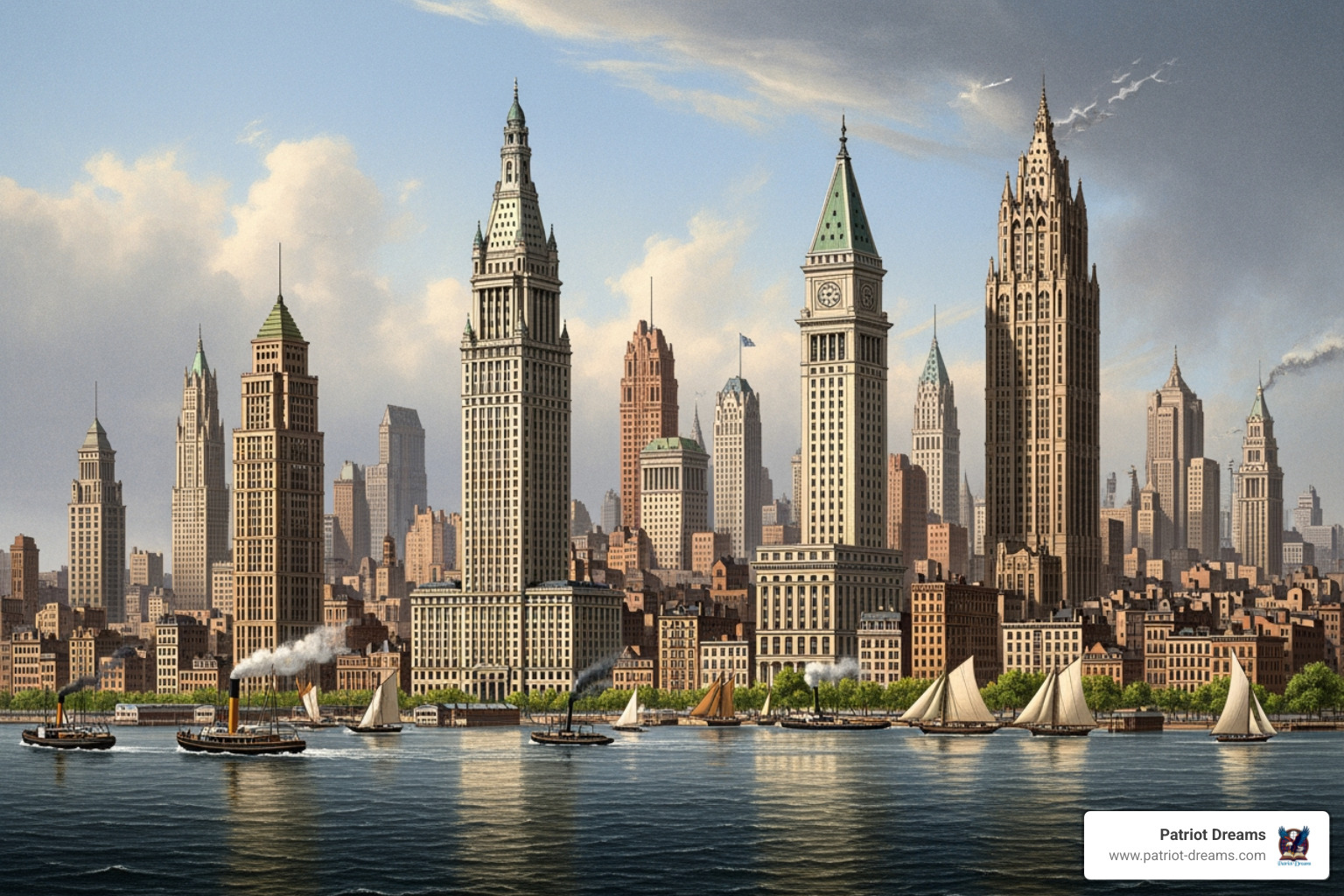
Birth of the Big Apple: How the First Skyscrapers Rewrote America's Skyline marks a transformative moment in American history — when our cities stopped spreading out and started reaching up. Between the 1870s and 1913, New York City pioneered a new kind of building that would forever change the very idea of what an American city could be.
Quick Answer: The Key Moments in America's Skyscraper Story
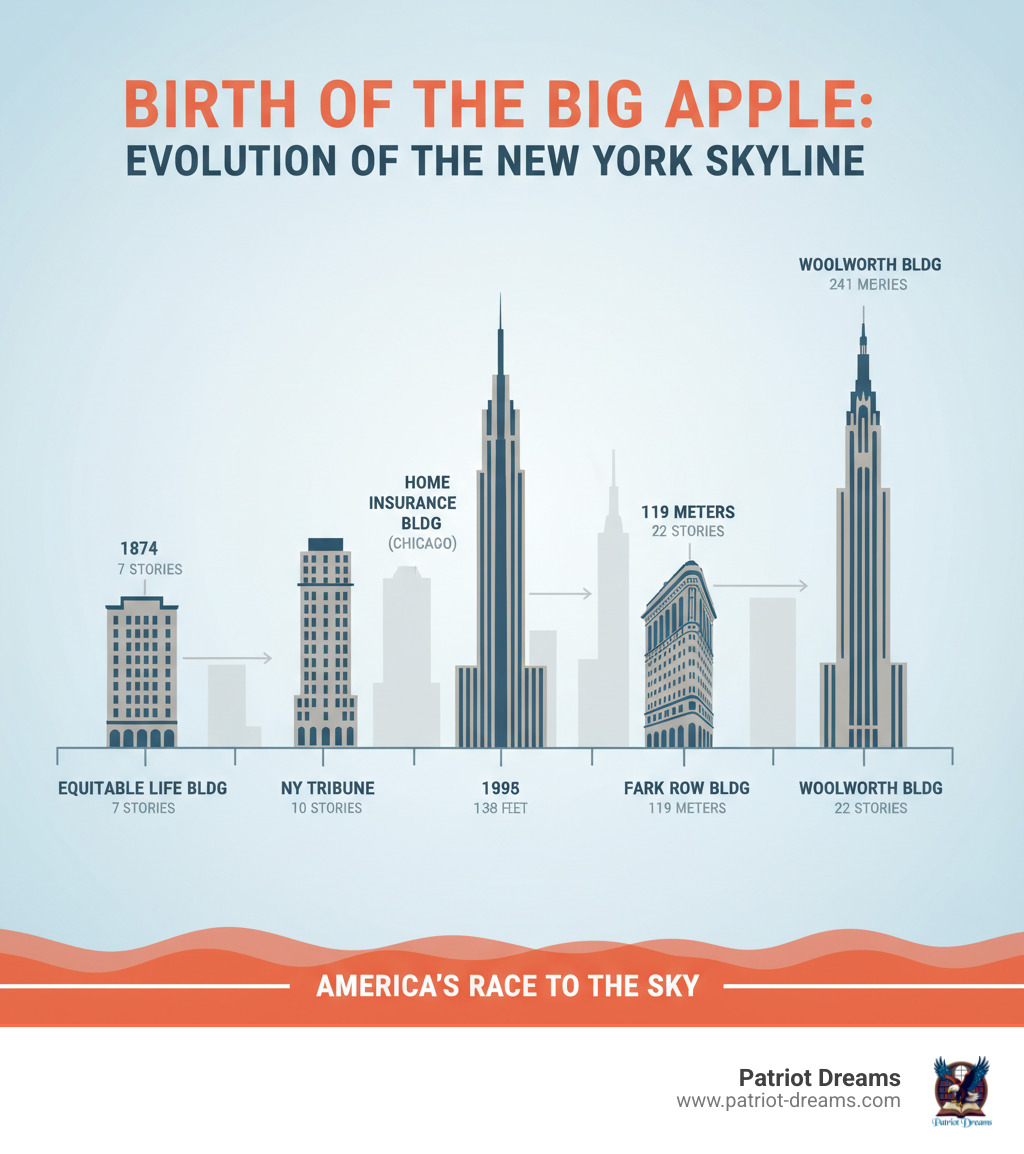
- 1870: The Equitable Life Assurance Building rises seven stories, introducing passenger elevators
- 1885: Chicago's Home Insurance Building uses steel-frame construction at 138 feet
- 1892: New York officially allows steel-skeleton construction
- 1899: The Park Row Building reaches 119 meters, becoming the world's tallest office building
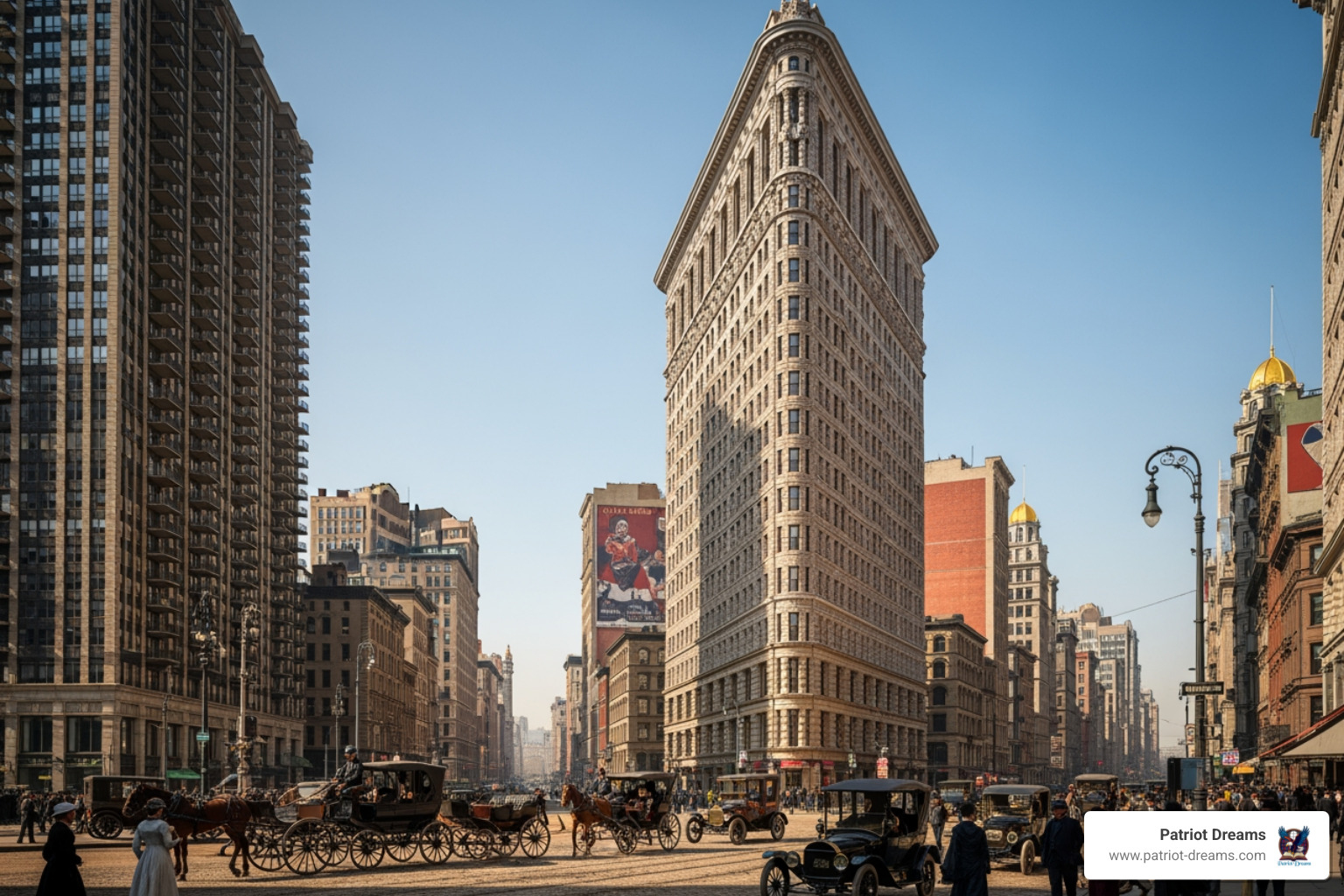
- 1902: The iconic Flatiron Building captures the world's imagination with its unique triangular design
- 1913: The Woolworth Building soars to 241 meters — more than twice the height of Park Row — earning the title "Cathedral of Commerce"
Imagine lower Manhattan in 1870, where the tallest structures were church steeples. Most buildings were only four stories high, limited by the number of stairs people were willing to climb. But a combination of ingenuity, ambition, and new technology was about to create an entirely new structure. These weren't just tall buildings; they were statements of possibility, monuments to the idea that there was always room to grow if you were willing to look up.
The story of America's first skyscrapers is about the people who made them possible: the engineers who solved impossible problems, the workers who walked steel beams high in the air, the architects who dreamed in vertical lines, and the New Yorkers who watched in wonder as their city transformed.
Explore more about Birth of the Big Apple: How the First Skyscrapers Rewrote America’s Skyline:
- TV’s America: How Series like ‘Western’ and ‘Period Drama’ Re-Write Our History
- The American Story: Values, Beliefs, and Myths Unveiled
A New Horizon: Imagining a Vertical City
The New York City skyline wasn't always the iconic image we know today. For decades, the 280-foot spire of Trinity Church was the highest point in Lower Manhattan. Most buildings were a modest four stories, and a ten-story structure was a rarity. Yet, even then, Americans dreamed of building upward.
This dream was born from both necessity and a pioneering spirit. As a narrow island, Manhattan had no more room to spread out. With a growing population and booming commerce, land values soared. The only way to grow was up. This vertical ascent became a powerful symbol of American ambition — a testament to the belief that with ingenuity, anything is possible.
These early skyscrapers were more than just buildings; they were bold statements that transformed New York into a global guide of modernity. Each new height reached helped rewrite America's urban story, etching our dreams into the sky.
The Seeds of Ambition: Why New York Reached for the Sky
In the late 1800s, America was in the midst of the Gilded Age, a time of great change and possibility. New York City was the heart of this change, with money flowing through Wall Street and people arriving daily, drawn by the promise of opportunity. The city was exploding with growth, but as an island, Manhattan was running out of space. By the 1870s, land in Lower Manhattan had become some of the most valuable on Earth.
This growth was fueled by waves of immigration that more than tripled the city's population between 1880 and 1920. All these new workers, entrepreneurs, and dreamers needed places to do business, creating an urgent need for centralized office space. With no room to build out, the only solution was to build up. This shift from horizontal to vertical thinking was more than just practical; it was a new vision for the American city.
This era also saw the rise of corporate pride as a driving force. Early skyscrapers were not just functional; they were powerful statements. A tall, magnificent headquarters became a giant advertisement, a symbol of a company's success and stability. This sparked a friendly race for prominence, as businesses competed to have the tallest building in the skyline. On Newspaper Row, papers like the New York World built impressive headquarters to outdo one another. Insurance companies like the Equitable Life Assurance Society constructed their own monuments to inspire public confidence. These buildings were symbols of power that proved the most practical solution — building up—could also be the most inspiring, shaping the Birth of the Big Apple: How the First Skyscrapers Rewrote America's Skyline.
More info about American Cultural History.
The Tools of Giants: Innovations That Made the Skyscraper Possible
Turning the dream of a vertical city into reality required more than ambition; it needed groundbreaking innovation. For centuries, buildings were limited by heavy, load-bearing walls. To reach the sky, a new way of building was essential.

It’s a story of American innovation, pushing boundaries and finding clever solutions. Just like so many moments in our history, when a challenge arose, people found a way to overcome it.
More info about American Innovation History.
The Steel Skeleton: A Revolutionary Framework
The key breakthrough was the steel skeleton frame, an idea often credited to Chicago architect William Le Baron Jenney. Inspired by the strength of a simple birdcage, he imagined a building supported by a metal framework rather than its walls. This led to the Home Insurance Building (1885), a ten-story marvel that weighed only a third of a traditional masonry building of the same size. This innovation was possible thanks to the Bessemer process, which made high-quality steel affordable. Steel frames allowed for lighter, stronger, and taller structures with large windows and open interiors. New York City officially approved steel-skeleton construction in 1892, paving the way for its vertical growth and the Birth of the Big Apple: How the First Skyscrapers Rewrote America’s Skyline.
The Safe Elevator: Conquering Vertical Travel
A tall building is only useful if you can get to the top floors. The person who solved this challenge was Elisha Graves Otis. At the 1853 New York World's Fair, he dramatically demonstrated his "Allsafe" braking system. By cutting the hoisting cable of an elevator platform he was standing on, he showed that his safety brake would prevent it from falling. This built crucial public trust in elevators. The first Otis passenger elevator was installed in 1857, changing upper floors from undesirable attic space into prime real estate with the best views and light. Together, the steel frame and the safe elevator made the modern skyscraper a practical reality.
Birth of the Big Apple: How the First Skyscrapers Rewrote America's Skyline
With the technology in place, New York City began its ascent. While Chicago pioneered the skyscraper, New York made it legendary, pushing heights that captured the world's imagination. This era was defined by visionary architects, innovative engineers, and the famed "Skywalkers" — Mohawk ironworkers known for their fearless work on the high steel.
The First Steps: Early Tall Buildings and Their Impact
New York's journey to the sky began with buildings that were daring for their time. The seven-story Equitable Life Assurance Building (1870) was a marvel, largely because it featured passenger elevators. It was soon followed by the ten-story New York Tribune Building and Western Union Telegraph Building in 1874. While many New Yorkers looked up in awe, some raised concerns about the buildings blocking sunlight and posing fire risks. These early structures, and the debates they sparked, marked the beginning of a new urban identity.
The Race to the Clouds and the Birth of the Big Apple: How the First Skyscrapers Rewrote America's Skyline
The turn of the century saw a breathtaking "race to the clouds." The Park Row Building (1899) reached 119 meters, becoming the world's tallest office building. Then, in 1902, the beloved Flatiron Building captured the city's heart with its unique triangular shape. The race continued with the Singer Building (1908) and the Metropolitan Life Tower (1908). The era's crowning achievement was the magnificent Woolworth Building (1913). Soaring to 241 meters, this neo-Gothic masterpiece was nicknamed the "Cathedral of Commerce," a perfect symbol of the Birth of the Big Apple: How the First Skyscrapers Rewrote America's Skyline.
A New Style for a New Century: The Lasting Impact of the Birth of the Big Apple
As they grew taller, skyscrapers also became more beautiful. Architects moved beyond purely functional designs to accept ornate Gothic, Beaux-Arts, and eclectic styles. The Woolworth Building, with its intricate details and graceful spire, showed that a building could be both an engineering marvel and a work of art. These towers created the recognizable skyline that became synonymous with New York and inspired cities across America to build their own vertical dreams.
This era showed that when we combine innovation with artistry, we can create wonders that inspire for generations.
Why the American Dream Still Resonates: A Cultural Deep Dive.
A City Transformed: The Skyscraper's Lasting Legacy
The first skyscrapers fundamentally changed how people felt about their city. New York became a vertical marvel, a global symbol of modernity and opportunity. The legacy of these early towers, born from the Birth of the Big Apple: How the First Skyscrapers Rewrote America’s Skyline, continues to influence architecture and urban planning today.
Shaping the City: Zoning Laws and Urban Planning
As buildings grew taller, they began to cast long shadows, blocking light and air from the streets below. To solve this, New York City passed the groundbreaking 1916 Zoning Resolution. This pioneering law required new buildings to have "setbacks," meaning the upper floors had to step back from the street. This simple rule not only preserved light and air but also led to the iconic "wedding cake" silhouettes of famous Art Deco skyscrapers like the Chrysler Building and the Empire State Building.
Explore more about urban planning and skyscrapers at The Skyscraper Museum's online exhibit.
A Lasting Impression on Film and History
New York's skyscrapers quickly became more than just buildings; they became characters in our national story. As the backdrop for countless films and shows, from the dramatic climb of King Kong to stories of ambition and romance, these structures are woven into the American Dream. They stand as powerful reminders of perseverance, collective effort, and the human spirit's capacity to dream big.
Frequently Asked Questions about New York's First Skyscrapers
What is considered the very first skyscraper?
This is a friendly debate among historians! While Chicago's Home Insurance Building (1885) is often celebrated as the first to use a modern steel-frame construction, New York's Equitable Life Assurance Building (1870) was a trailblazer in its own right. At seven stories, it was one of the first tall buildings to use passenger elevators, making height practical. Both cities played a vital role in the Birth of the Big Apple: How the First Skyscrapers Rewrote America’s Skyline.
Why is the Flatiron Building so famous?
The Flatiron Building (1902) became an instant icon due to its unique and charming triangular shape, designed to fit a wedge-shaped plot at the intersection of Fifth Avenue and Broadway. Its dramatic appearance and beautiful Beaux-Arts style captured the public's imagination, making it one of the most photographed buildings of its time and a symbol of a new century's dynamism.
How did people react to the first skyscrapers?
Reactions were wonderfully mixed. Many people were filled with awe, viewing the towers as symbols of American progress and ingenuity. At the same time, others expressed thoughtful concerns. They worried that the tall structures would block sunlight, create wind tunnels, and pose new safety challenges, like fire hazards. This mix of wonder and worry was a natural part of the city adapting to such a grand change.
A Story Written in the Sky
When we look at the first skyscrapers, we see more than just brick and steel; we see a testament to the American spirit — one of innovation, resilience, and the courage to dream big. They tell the story of a community on a crowded island that, when faced with a challenge, chose to reach for the sky. This bold decision, made with heart and ingenuity, created a skyline that captured the world's imagination.
This journey of ambition and problem-solving is a key part of the Birth of the Big Apple: How the First Skyscrapers Rewrote America’s Skyline. It reminds us that when we face our own challenges with courage and a willingness to think differently, we can achieve incredible things together. Our shared history is full of such inspiring moments.
To explore more stories from our nation's past that warm the heart and uplift the spirit, we invite you to find the historical journeys waiting for you in the Patriot Dreams app. It’s a wonderful way to connect with the very best of America.

Join the Patriot Dreams Community
Download the app today and start your journey through American history and personal legacy.

Explore Our Latest Insights
Dive into stories that shape our American legacy.