TV’s America: How Series like ‘Western’ and ‘Period Drama’ Re-Write Our History


A Journey Through Time in Your Living Room
TV's America: How Series like 'Western' and 'Period Drama' Re-Write Our History is about much more than entertainment—it's about how the stories we watch shape the way we remember and understand our shared past. These beloved shows bring history into our homes, making distant eras feel close and personal, connecting us to the courage, struggles, and dreams of those who came before us.
Key Ways Historical TV Shapes Our Understanding:
- Creates emotional connections to historical periods through relatable characters and family stories
- Fills in the gaps of what daily life might have looked like in different eras
- Reflects modern values like community, perseverance, and kindness through historical settings
- Sparks curiosity that leads viewers to explore real history, visit historic sites, and learn more
- Makes history accessible for all ages, turning learning into a shared family experience
There's something truly special about gathering around the television to watch a story unfold in a different time. Whether it's a wagon train heading west, a family building their ranch in Montana, or neighbors helping each other through hard times in a small town, these shows remind us of the timeless values that built America. They help us see that the people of the past weren't so different from us—they loved their families, worked hard, faced challenges with courage, and hoped for a better tomorrow.
Historical television has been bringing families together for generations. From the classic Westerns of the 1950s to today's beautifully crafted period dramas, these stories have always served as a bridge between then and now. They help us understand where we came from and inspire us to preserve those stories for the generations who will come after us.

Basic TV’s America: How Series like ‘Western’ and ‘Period Drama’ Re-Write Our History glossary:
- American pioneer stories
- The American Story: Values, Beliefs, and Myths Unveiled
Crafting a Window to the Past: The Building Blocks of Historical TV
When we settle into our favorite chair to watch a historical series, something wonderful happens. We're not just watching a story unfold—we're stepping through a doorway into another time. The real magic of TV's America: How Series like 'Western' and 'Period Drama' Re-Write Our History lies in how these shows transport us to places we've never been and introduce us to people we'll never forget.
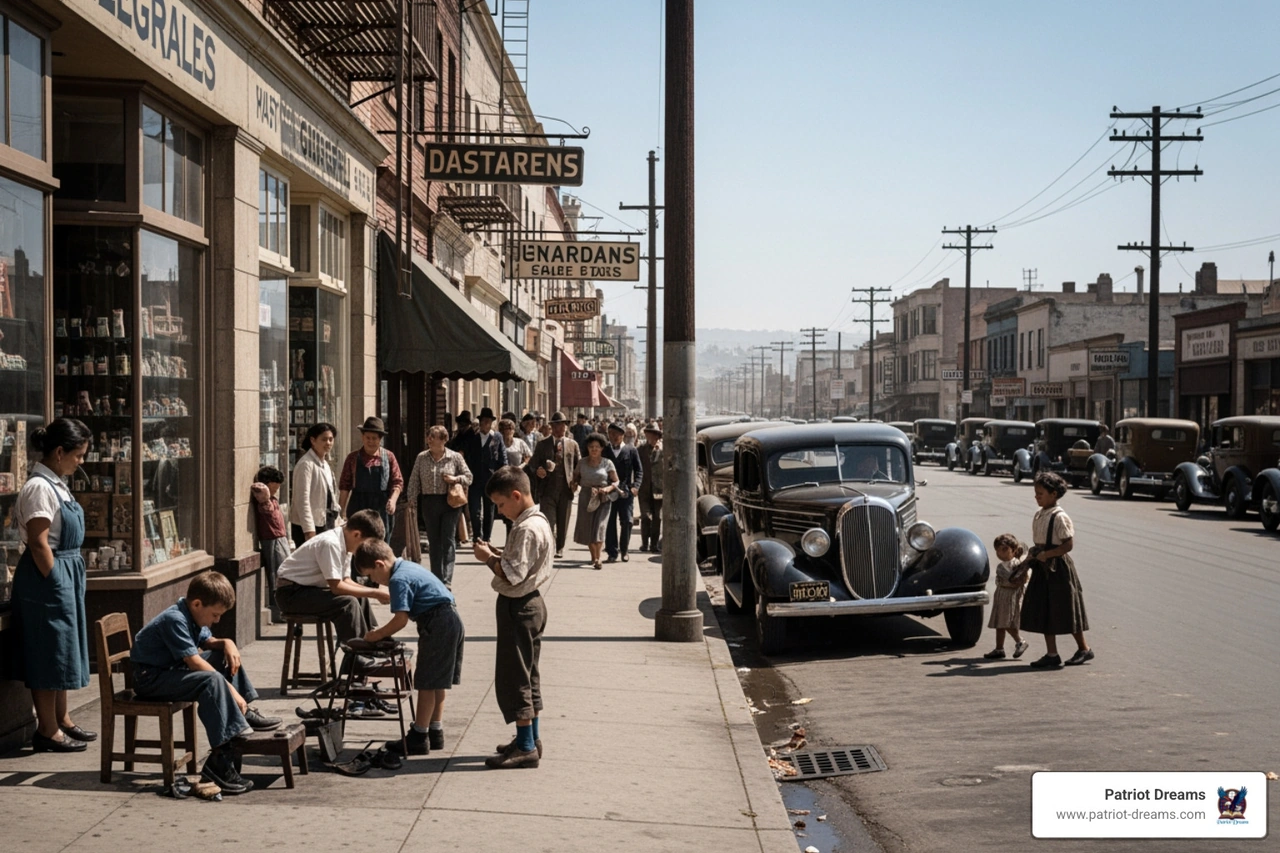
Think about what makes these shows feel so real. It's the way a character's costume tells us who they are before they even speak. It's the music that swells at just the right moment. It's the dusty main street of a frontier town or the neat parlor of a Gilded Age mansion. Every detail, from the way people talk to the objects they touch, works together to create a world we can almost step into.
These carefully crafted elements—the character archetypes we recognize, the plot devices that keep us coming back, and the visual storytelling that takes our breath away—all combine to bring history to life in a way that feels personal and immediate. It's not about perfection; it's about connection.
Unforgettable Characters Who Feel Like Neighbors
The heart of any great historical series beats in its characters. These are the people who make us care, who make history feel less like dates in a textbook and more like stories about our own families.
You'll often meet familiar faces in these shows: the determined pioneer who won't give up no matter how hard the trail gets, the wise leader who guides their community through impossible challenges, or the caring neighbor who shows up with a hot meal when times are tough. These characters might be fictional, or they might be inspired by real people who walked American soil, but they all do the same important thing—they humanize history.
Take the Dutton family in their journey westward to Montana. Their struggles and hopes mirror those of countless real families who packed up everything they owned to start fresh in an unknown land. Or think about how some series bring us closer to figures like Theodore Roosevelt during his transformative years in the Dakota Territory, showing us how personal trials shaped the man who would become president. In other shows, we witness the personal sacrifices of our nation's founders, seeing them not as marble statues but as real people with doubts and dreams.
These stories remind us that the people who shaped America faced the same kinds of challenges we do—they worried about their families, they made mistakes, they picked themselves up and tried again. When we see ourselves in their struggles and triumphs, history stops being something that happened "back then" and becomes part of our own story. You can learn more about inspiring people from our past and find how their journeys continue to inspire us today.
Worlds We Can Almost Touch: The Power of Setting and Style
Close your eyes and imagine you're walking down a street in New York City in the late 1800s. What do you hear? The clip-clop of horse hooves on cobblestones. The rustle of silk gowns. The calls of street vendors. Now imagine the wide-open spaces of the Dakota Territory—the wind in the grass, the creak of a saddle, the endless sky.
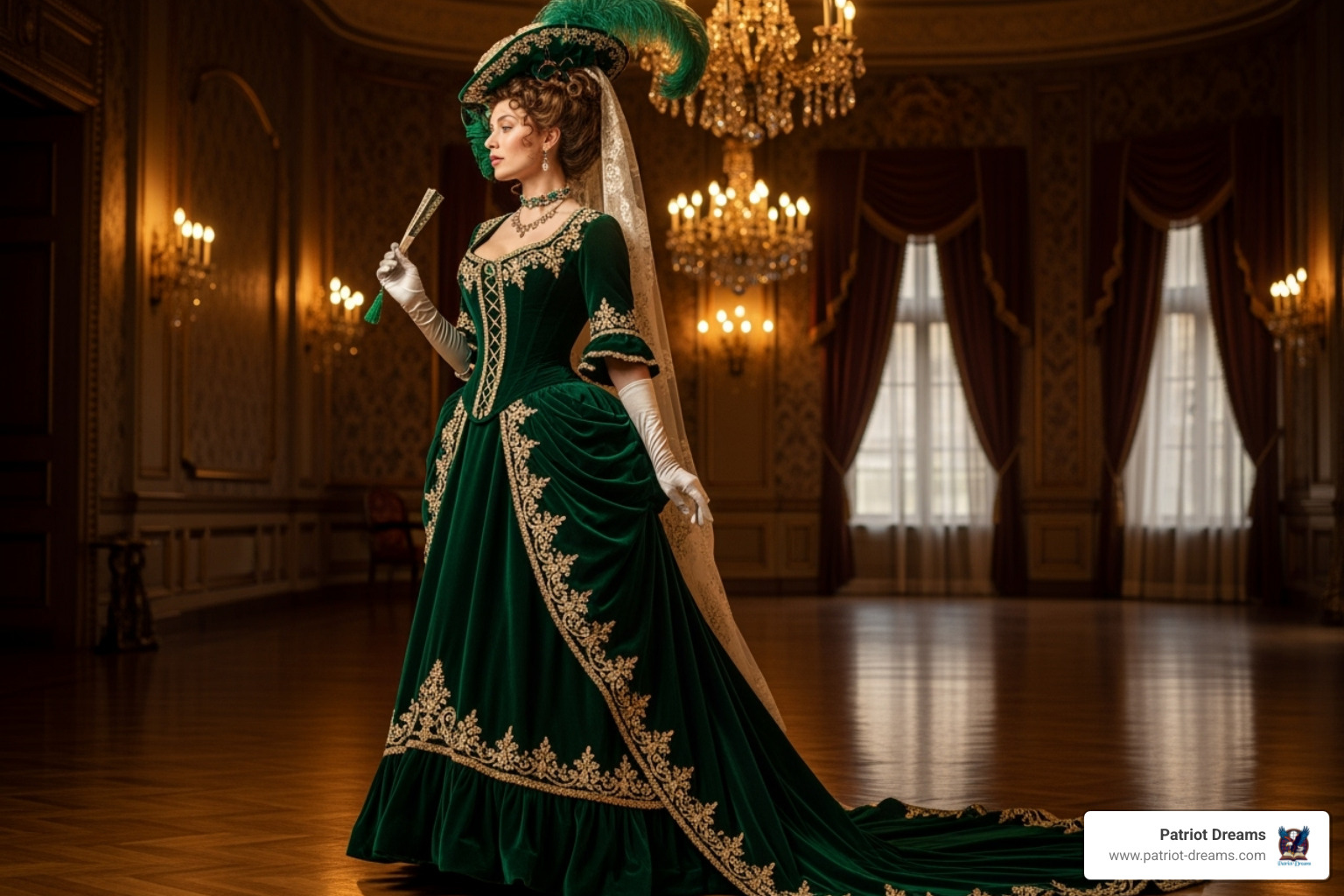
This is the power of visual storytelling in period dramas and Westerns. Every costume tells a story. A worn pair of boots speaks of hard work and long journeys. An neat gown with intricate beadwork reveals wealth, status, and the skilled hands that created it. Set design transports us whether we're in the opulent ballrooms where old money and new money collided after the Civil War, or in the gritty, lawless towns of the frontier where survival meant courage and quick thinking.
Even the music plays a crucial role. A fiddle tune at a barn dance, a hymn sung in a small church, or an orchestral piece at a grand ball—these sounds create an atmosphere that helps us feel the era in our bones.
The way characters speak matters too. The formal phrases of an earlier time, the regional accents that tell us where someone's from, the expressions that have long since faded from everyday use—all of these details add richness to the experience. There's something charming about how much fancier everything sounded in those days, isn't there?
Whether it's the grand estates and intricate social rules of the early 1900s, the vibrant energy of the jazz age, or the atmospheric streets of turn-of-the-century cities, these carefully crafted worlds help us understand the environments that shaped remarkable people. They give us context for understanding figures like Theodore Roosevelt: The Fearless Leader Every Young American Should Know, showing us not just what they did, but the world they lived in.
When all these elements come together—the characters, the settings, the sounds, the textures—we get something special. We get a window to the past that feels real enough to touch, real enough to inspire us to learn more about the true stories behind the drama.
TV's America: How Series like 'Western' and 'Period Drama' Re-Write Our History
When we watch a Western or a period drama, something interesting happens. These shows don't just tell us about history—they shape how we remember it. They become part of our shared story, influencing what we think about when we picture the past. TV's America: How Series like 'Western' and 'Period Drama' Re-Write Our History reveals how television has become one of the main ways millions of people learn about and connect with American history.
Think about the 'Yellowstone' series and its prequels '1883' and '1923'. Through the fictional Dutton family's journey, we see the American West come alive. These shows explore the challenges of building a life on the frontier, the relationships between settlers and Indigenous Americans, and the ongoing question of who belongs to the land. They help us think about our nation's story in new ways, sparking conversations about what really happened and what it all means.
The beauty of these historical shows is that they make the past feel real and personal. They fill in the everyday details that history books often leave out—the way a pioneer mother might have comforted her children during a thunderstorm, or how neighbors came together to help rebuild after a fire. When we watch '1883', we're not just learning dates and facts; we're experiencing the hope and heartache of families heading west to build new lives.
These stories become part of how we understand ourselves as Americans. They perpetuate narratives of hope and resilience that have always been central to our identity. Whether it's a family persevering through hard times or a community rallying together in crisis, these shows remind us of the values that have carried us through every chapter of our history.
Holding a Mirror to Today: How the Past on TV Reflects Our Own Hopes
Here's something wonderful about historical television: when it shows us the past, it's also showing us ourselves. The themes that mattered in 1883 or 1923 still matter today. Community, family, perseverance, and kindness—these aren't old-fashioned ideas. They're timeless truths about what makes life meaningful.
Shows like 'Call the Midwife', set in 1950s East London, or 'When Calls the Heart', following a young schoolteacher in a small western mining town, beautifully illustrate how people faced challenges with compassion and courage. We watch characters help their neighbors, support their families, and keep going even when times are tough. Sound familiar? It should, because those are the same challenges and choices we face today.
'The Chosen', the multi-season show about the life of Jesus set in the 1st century, demonstrates how historical settings can help us reflect on universal human experiences. By placing us in a different time, these shows help us see our own lives more clearly. They remind us that the human heart hasn't changed much over the centuries. People have always longed for connection, meaning, and belonging.
These stories connect generations, too. When grandparents, parents, and children watch together, they're sharing more than entertainment. They're finding common ground with those who came before us, recognizing that the struggles and joys of life remain remarkably constant. The pioneers who built communities in the wilderness faced different challenges than we do, but they drew on the same wellsprings of strength: faith, family, and friendship.
Exploring "What If?": How TV Helps Us Imagine Our Shared History
One of the most exciting things historical dramas do is fill in the blanks. History gives us the big events and important dates, but television helps us imagine what it actually felt like to live through those times. What did people talk about over dinner? How did they celebrate? What kept them awake at night?
Shows like 'The Great', a creative take on the rise of Catherine the Great, or 'The Sympathizer', exploring the Vietnam War and its aftermath through personal stories, demonstrate how blending fiction with historical facts can make the past come alive. 'Black Sails' reimagines real pirates during the Golden Age of Piracy, while 'Turn: Washington's Spies' brings the Culper Ring's espionage efforts during the American Revolution to vivid life.
These shows place fictional characters within real historical events, allowing us to experience history through deeply personal stories. We get to walk alongside people who might have existed, feeling what they felt, seeing what they saw. It's like having a time machine in our living room.
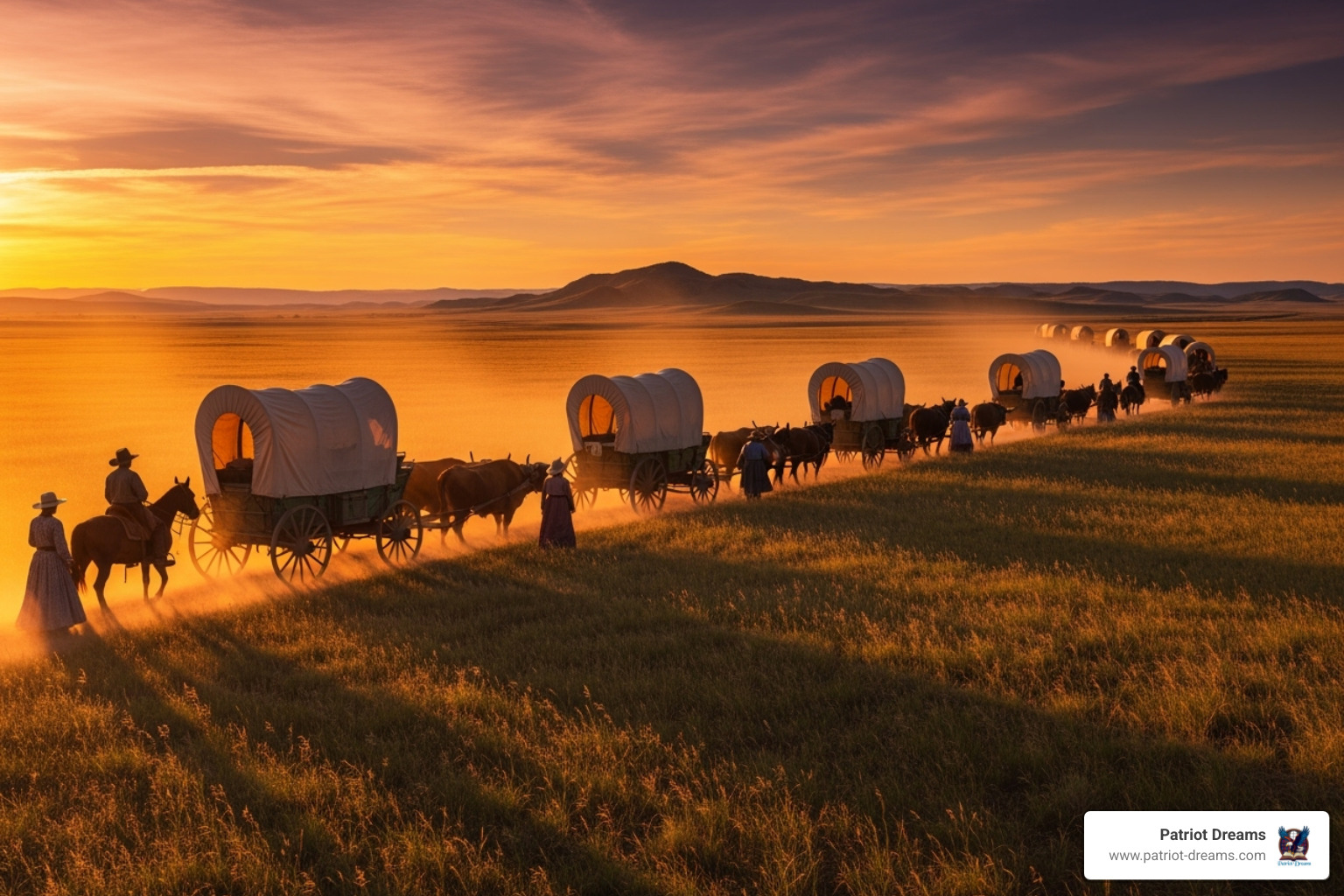
This imaginative approach to history makes it personal and relatable. Instead of memorizing facts about the American Revolution, we follow the fears and hopes of a spy risking everything for freedom. Rather than reading statistics about westward expansion, we ride along on a wagon train, feeling the dust and hearing the creaking wheels.
These narratives invite us to explore "what if" scenarios and consider the human stories behind the grand sweep of history. They make history feel less like a dusty textbook and more like a living conversation—one that includes us. After watching these shows, many viewers find themselves wanting to learn more, to listen to real American pioneer stories and find how the true tales compare to what they've seen on screen. That curiosity is perhaps the greatest gift these shows give us: the desire to know our real history even better.
The Spark of Curiosity: Balancing Storytelling with History
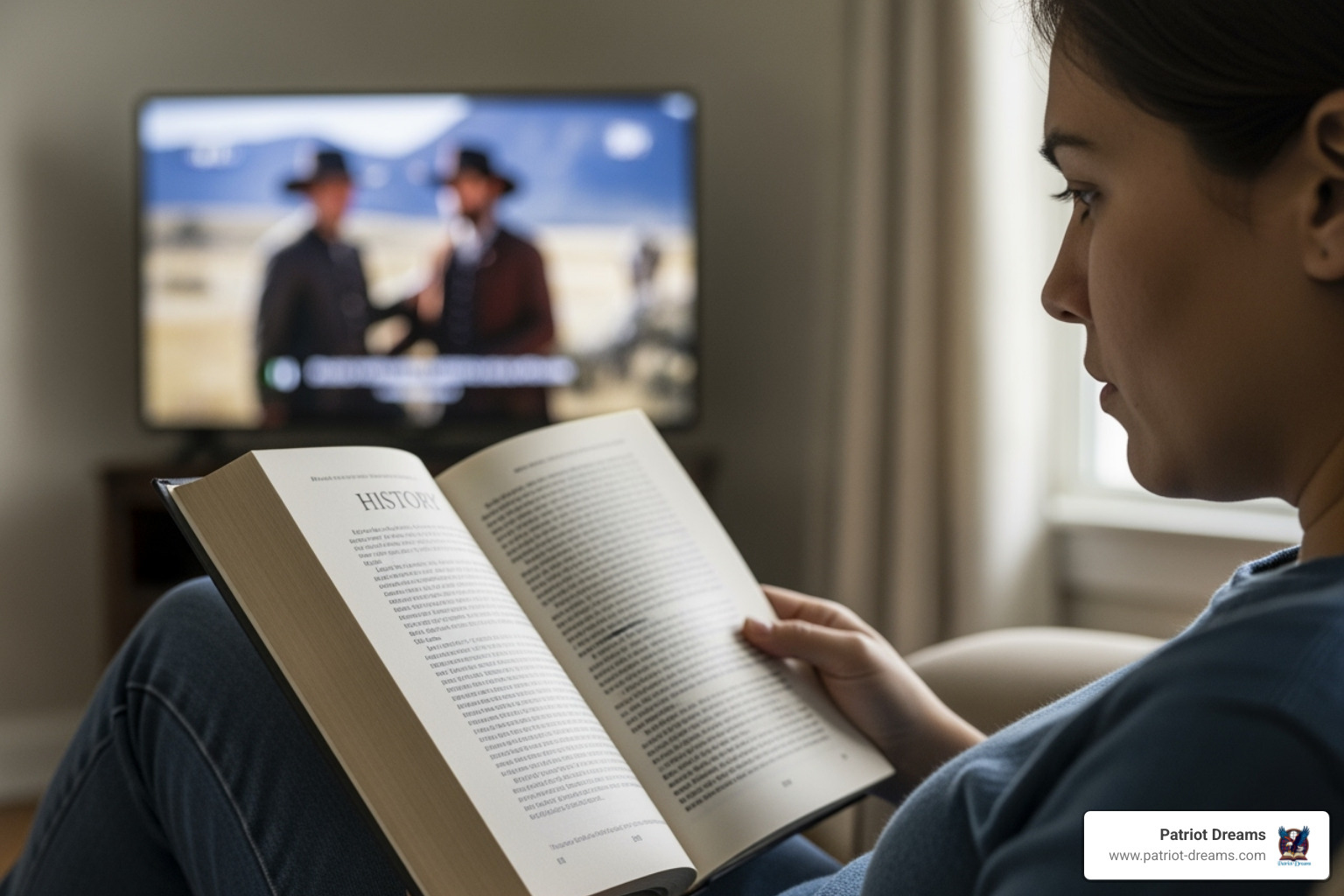
When we think about TV's America: How Series like 'Western' and 'Period Drama' Re-Write Our History, one of the most important things to understand is the beautiful dance between dramatic storytelling and historical accuracy. These shows are, at their heart, entertainment. They're meant to draw us in, make us feel something, and keep us coming back week after week. Sometimes that means the creators take a few creative liberties with dates, combine several real people into one character, or imagine conversations that no one recorded.
And you know what? That's okay. These divergences from strict historical accounts aren't failures—they're often the very things that make history come alive for us. They serve as a starting point, a spark that lights our curiosity and sends us on our own journey to find what really happened.
Of course, there's a responsibility that comes with telling historical stories. When we watch these shows, they shape how we think about the past. They become part of our shared memory, our collective understanding of where we came from. That's why it's wonderful when they inspire us to go deeper, to read more, to seek out the full and sometimes complicated truth behind the drama.
The Difference Between a Story and a History Lesson
Here's something important to remember: television is a narrative art form, not a documentary or a textbook. When a storyteller sits down to create a historical series, their primary goal is to create an emotional connection with you, the viewer. They want you to care deeply about the characters, to feel the weight of their struggles, and to celebrate their triumphs as if they were your own.
A historian's job is different. Historians carefully piece together the past using evidence, primary sources, and meticulous research. They're bound by what can be proven and documented. But storytellers often need to fill in gaps, condense long stretches of time into a single season, or create composite characters to help the narrative flow. They're painting with broader brushstrokes to capture the feeling of an era, not necessarily every precise detail.
That's why shows like 'The Great'—which openly calls itself a "satirical dramedy loosely based" on Catherine the Great's rise to power—can be so entertaining and valuable. They offer us a captivating window into the past, but they also carry an implicit invitation: "This is our version. Now go find out what really happened!" This is exactly how television shapes our view of the past in meaningful ways.
These series are not meant to replace textbooks or serious historical study. Instead, think of them as the friendly neighbor who tells you an exciting story that makes you want to learn more. They're the beginning of a conversation, not the end of one.
How TV's America: How Series like 'Western' and 'Period Drama' Re-Write Our History Can Inspire a Love for the Real Stories
The truly wonderful thing about historical television is how it sparks curiosity in ways that dusty textbooks sometimes can't. Think about your own experience. How many times have you watched a compelling period drama and found yourself immediately searching online to learn more? Or planning a visit to a historical site? Or picking up a biography of someone you'd only vaguely heard of before?
This is the positive impact of fictionalized history at its best. After watching 'The Gilded Age,' you might find yourself fascinated by the real social upheaval of late 19th-century New York and the clash between old and new money. 'John Adams' might send you down a rabbit hole learning about the American Revolution beyond the simplified version you learned in school. Even shows that take significant creative liberties, like 'The Tudors' with its dramatic portrayal of King Henry VIII, can serve as a gateway to deeper knowledge about English history and its influence on America.
This change from passive viewer to active learner is something truly special. It turns an evening on the couch into the beginning of a lifelong interest. It encourages further reading, inspires visits to historical sites, and motivates us to learn about the real figures who lived through these extraordinary moments. Parents and children can watch together, then explore the real history as a family, creating memories while learning about their heritage.
These captivating narratives don't just entertain us—they invite us into an ongoing conversation about who we are and where we came from. They help us discover more about American cultural history in ways that feel personal and meaningful. And when we're inspired to seek out the real stories behind the drama, we often find that the truth is even more amazing than the fiction. That's when the real magic happens.
From the Wild West to the White House: Notable Journeys into America's Past
There's something magical about watching history come alive on screen. When we settle in to experience TV's America: How Series like 'Western' and 'Period Drama' Re-Write Our History, certain eras capture our hearts more than others. The vast landscapes of the pioneer days, the neat yet turbulent Gilded Age, and the brave struggles of our nation's founding—these moments have been brought into our homes through beautifully crafted series that celebrate courage, innovation, and faith.
These shows do more than entertain us on a quiet evening. They help us understand who we were and, in many ways, who we still are as a people. They remind us that the values we hold dear today—hard work, community, perseverance, and hope—have always been at the heart of the American story.
The Pioneer Spirit on the Small Screen
The journey westward holds a special place in our collective imagination, and television has given us a front-row seat to those remarkable adventures. '1883', the prequel to 'Yellowstone', follows the Dutton family as they brave the arduous wagon train journey west. We watch them face impossible challenges, lean on each other through hardship, and build the foundations of a new life in the rugged American West. This series, along with 'Yellowstone' and '1923', helps us "renegotiate the myth of the American West," showing us both its beauty and its complexities.
Then there's 'Elkhorn', which brings us into Theodore Roosevelt's transformative years in the Dakota Territory. We see how the wide-open spaces and demanding frontier life shaped a young man into the leader he would become—someone who understood both the wildness and the promise of America. And in 'When Calls the Heart', we meet a young schoolteacher who brings hope and learning to a small coal mining town in the west, reminding us that pioneers weren't just those who traveled far, but also those who stayed and built communities with care and dedication.
These stories honor the immense courage it took to settle the frontier. They show us families holding together through storms, neighbors helping each other survive harsh winters, and communities forming in the most unlikely places. They invite us to reflect on American Pioneer Stories and appreciate the resilience that carried our ancestors through their greatest challenges.
The Foundation of a Nation
The birth of the United States is another chapter that television has brought to vivid life. The principles of freedom and democracy didn't emerge easily—they were forged through sacrifice, debate, and an unwavering commitment to something greater than any one person. 'John Adams', the HBO series, gives us an intimate look at the second president's life, showing us not just the grand moments but the personal struggles and deep convictions that shaped the Revolutionary era. We see a man who loved his family, wrestled with difficult decisions, and never wavered in his belief that people deserved to govern themselves.
'Turn: Washington's Spies' takes us into the shadowy world of the Culper Ring during the American Revolution, celebrating the unsung heroes who risked everything for independence. These weren't famous generals or wealthy statesmen—they were everyday people who chose courage when it mattered most. Their stories remind us that the foundation of our nation was built by countless acts of bravery, both large and small.
These narratives help us understand how our national identity was formed and why the ideals of liberty and justice still resonate so deeply today. They make the Revolutionary era feel personal and real, inspiring us to learn about more Revolutionary War heroes and carry forward the legacy of their remarkable dedication to a dream that would become America.
Conclusion: Where the Story on Screen Meets the Stories in Our Hearts
There's something truly wonderful about how historical television connects us to the past—not just as dates in a textbook, but as real human experiences filled with hope, struggle, and triumph. TV's America: How Series like 'Western' and 'Period Drama' Re-Write Our History shows us that these captivating narratives, with their unforgettable characters and beautifully crafted worlds, do more than entertain. They inspire us to look deeper, to ask questions, and to find that the real stories behind the fiction are often even more remarkable than anything we could imagine.
When we watch a family heading west in a wagon train, or see a community come together during hard times, something stirs in our hearts. These shows remind us of the values that have always mattered most: courage in the face of uncertainty, kindness toward our neighbors, perseverance through challenges, and the unbreakable bonds of family. They help us see ourselves in the people who came before us, and they inspire us to carry those same values forward.
But as powerful as these television stories are, they're just the beginning. The authentic voices of real Americans—the everyday heroes, the quiet moments of courage, the personal sacrifices that truly built our nation—deserve to be heard and preserved. That's where the importance of preserving authentic voices becomes so vital.
At Patriot Dreams, we're honored to be a place where you can hear the true, personal stories of America. Our platform brings American history, heritage, and personal stories to life through audio, creating a unique experience that combines historical exploration with family legacy preservation. We believe that every American story matters, and that when we listen to these authentic voices, we feel a deeper connection to our shared journey.
We invite you to experience history not just as a viewer, but as a listener. Explore the interactive map of American history and let the real voices of our past speak to your heart. These are the stories that truly shaped our nation—stories of ordinary people doing extraordinary things, of communities supporting one another, and of the timeless values that continue to inspire us today.
Together, we can keep these precious stories alive for the generations to come, ensuring that the heart of America beats strong in every family, every community, and every listening ear.

Join the Patriot Dreams Community
Download the app today and start your journey through American history and personal legacy.

Explore Our Latest Insights
Dive into stories that shape our American legacy.