From Soldiers to Sites: Your Essential Guide to Civil War History


Walking in the Footsteps of History

Civil War battlefields are more than just quiet fields and rolling hills scattered across America—they are sacred places where the fate of our nation was decided, where over 620,000 soldiers gave their lives, and where the promise of a more perfect union was forged in the crucible of conflict.
Top Civil War Battlefields to Visit:
- Gettysburg, Pennsylvania - Turning point of the war with 51,000 casualties over three days
- Antietam, Maryland - Bloodiest single day in American history with 23,000 casualties
- Vicksburg, Mississippi - 47-day siege that gave the Union control of the Mississippi River
- Manassas, Virginia - Site of two major battles where "Stonewall" Jackson earned his name
- Appomattox Court House, Virginia - Where Lee surrendered to Grant, ending the war
These hallowed grounds, once scenes of tremendous conflict, are now places of peace and reflection. They invite us to pause, and connect with the human stories behind the history books.
More than 109 million people visited historic sites within the National Park System in 2018, and that number continues to grow. Families, students, and history enthusiasts are finding that walking these grounds offers something no textbook can provide—a tangible connection to the courage, sacrifice, and resilience that shaped our nation.
The quiet fields hold powerful stories. At Gettysburg, you can stand where Abraham Lincoln delivered his famous address, redefining the war as a fight for a "new birth of freedom." At Antietam, you can walk the paths where a single day's battle changed the course of history and paved the way for the Emancipation Proclamation. At Vicksburg, you can see the trenches where soldiers endured a 47-day siege that split the Confederacy in two.
These sites aren't just about remembering the past—they're about understanding the journey that brought us together as one nation. They remind us of the values that unite us: courage in the face of adversity, compassion for our fellow Americans, and hope for a better tomorrow.
Whether you're planning your first battlefield visit or you're a seasoned traveler of historic sites, this guide will help you find the stories, plan meaningful visits, and connect with the remarkable heritage we all share.
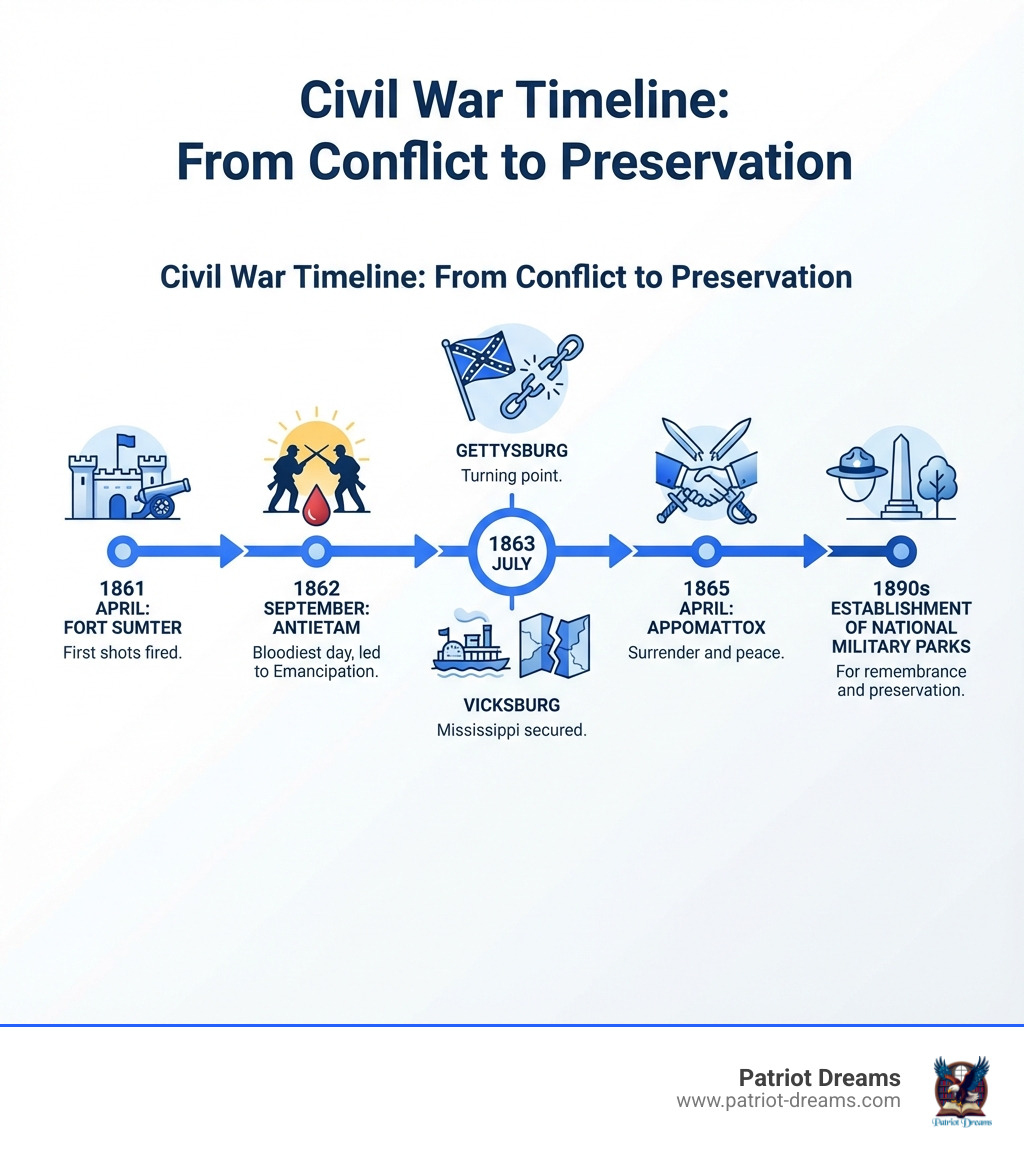
Basic Civil War battlefields terms:
- Family history preservation
- Traveling Through Time: American Small Towns That Feel Like a Vintage Film Set
Hallowed Grounds: Five Essential Sites of Remembrance
These special places offer a window into our nation's past. Each one tells a unique story of the American spirit. Here are five essential sites where you can pause, reflect, and connect with a pivotal chapter in our history, truly experiencing the profound impact of the Civil War battlefields.
Gettysburg, Pennsylvania: A Turning Point and a Promise
The Battle of Gettysburg, fought over three days in July 1863, stands as a monumental turning point in the Civil War. It was the largest battle of the conflict, involving approximately 165,000 soldiers, and it resulted in an astonishing 51,000 casualties, making it the bloodiest battle in the shortest amount of time. Confederate General Robert E. Lee's second invasion of the North was decisively repulsed here, marking the Confederate Army's last major attempt to advance into Union territory. The Union victory here, though costly, invigorated Northern morale and set the stage for the war's eventual end.
Beyond the military significance, Gettysburg is forever linked to President Abraham Lincoln's timeless address, delivered months later at the dedication of the Soldiers' National Cemetery. His words, calling for a "new birth of freedom," eloquently articulated the war's purpose and the enduring ideals of our nation.
Today, visitors to Gettysburg National Military Park can walk in the footsteps of soldiers at iconic sites like Little Round Top, Devil's Den, Cemetery Ridge, and Culp's Hill. The emotional weight of Pickett's Charge, where 12,500 Confederates bravely charged the Union center, is palpable. The park offers extensive walking trails and driving tours, allowing us to immerse ourselves in the landscape. Further battle stories come alive at the Gettysburg National Military Park Museum & Visitor Center, where exhibits and films provide crucial historical context and personal accounts. It's a place where we are reminded of the immense sacrifice made for the unity and freedom we cherish today.
Antietam, Maryland: The Day the Nation Held Its Breath
On September 17, 1862, the Battle of Antietam unfolded in the quiet fields near Sharpsburg, Maryland, forever etching itself into American history as the single bloodiest day of the Civil War. In just twelve hours, over 22,000 to 23,000 soldiers were killed, wounded, or missing in action. It was a brutal, tactical stalemate, but its strategic consequences were profound.
The Union Army, under Maj. Gen. George B. McClellan, managed to halt Lee's first invasion of the North. While not a decisive Union victory on the battlefield, it provided President Lincoln with the military leverage he needed to issue the preliminary Emancipation Proclamation. This pivotal document transformed the nature of the war, shifting its focus from merely preserving the Union to fighting for the abolition of slavery. It also deterred European intervention on behalf of the Confederacy, profoundly impacting the course of the war.
Visiting Antietam National Battlefield today is a solemn experience. We can take an 8.5-mile self-guided driving tour, stopping at key landmarks such as the infamous "Bloody Lane," where intense fighting raged for hours, and Burnside's Bridge, a picturesque stone bridge over Antietam Creek that saw fierce Union assaults. The Dunker Church, a small white building that stood witness to the battle, offers a stark reminder of the conflict's intensity. The visitor center provides an excellent starting point, with exhibits and a film to prepare us for the solemn journey through this hallowed ground. To dig deeper into this pivotal battle, we encourage you to Learn about the Battle of Antietam.
Vicksburg, Mississippi: The Key to the River
The Siege of Vicksburg, a relentless 47-day campaign from May 18 to July 4, 1863, was a strategic masterpiece by Union General Ulysses S. Grant. Known as the "Gibraltar of the Confederacy," Vicksburg's position high on bluffs overlooking the Mississippi River made it a formidable stronghold. Its fall was critical, as it meant the Union gained complete control of the Mississippi, effectively splitting the Confederacy in two and severing vital supply lines. This victory, coupled with Gettysburg's outcome just one day later, marked a decisive turning point in the war.
The campaign was a testament to both military brilliance and civilian endurance. Residents of Vicksburg endured weeks of bombardment, taking refuge in caves dug into the hillsides. The surrender of the city on July 4th was a crushing blow to the Southern cause.
Today, Vicksburg National Military Park invites us to explore the expansive battlefield with its 20 miles of reconstructed trenches and earthworks, giving us a vivid sense of the siege's scale. The park is adorned with 1,325 historic monuments and markers, each telling a piece of the story. A highlight is the USS Cairo Gunboat and Museum, featuring a recovered Union ironclad, offering a unique glimpse into naval warfare of the era. The National Cemetery, with its 17,000 Union soldiers, stands as a poignant reminder of the human cost. We can easily spend a day or more driving, walking, and reflecting on this critical chapter in American history. Discover the story of the Vicksburg Siege and witness the landscape that changed the course of a nation.
Manassas, Virginia: Where Early Hopes Met Harsh Reality
The plains of Manassas, Virginia, witnessed not one, but two major engagements that profoundly shaped the understanding of the Civil War. The First Battle of Bull Run (or First Manassas) on July 21, 1861, shattered the naive belief on both sides that the war would be short and glorious. Here, Confederate General Thomas J. Jackson earned his famous nickname "Stonewall" for his resolute stand against Union forces. The Confederate victory sent a clear message: this would be a long and bloody conflict.
Just over a year later, in August 1862, the Second Battle of Bull Run (Second Manassas) saw another decisive Confederate victory, bringing their military confidence to its peak. These battles were crushing defeats for the Union and a stark lesson in the grim realities of modern warfare. They taught both sides the need for better training, leadership, and organization.
Manassas National Battlefield Park, covering 5,000 acres, offers a rich visitor experience. We recommend starting at the Henry Hill Visitor Center, where introductory films and exhibits set the scene. From there, we can explore significant sites like the Stone House, which served as a field hospital, and the various walking trails that crisscross the battlefield. Standing on Henry Hill, imagining the roar of cannons and the clash of armies, helps us understand the immense courage and terror of those early days. To plan your visit and walk these hallowed grounds, you can find more information at Plan your visit to Manassas.
Appomattox Court House, Virginia: A Quiet End and a New Beginning
No tour of Civil War battlefields is complete without a stop at Appomattox Court House, the place where the American Civil War formally concluded. On April 9, 1865, in the parlor of Wilmer McLean's home, Confederate General Robert E. Lee surrendered his Army of Northern Virginia to Union General Ulysses S. Grant. This moment, though the result of years of brutal fighting, was characterized by a remarkable display of respect and reconciliation between the two great commanders.
Grant's generous terms of surrender, allowing Confederate soldiers to keep their horses and go home, helped pave the way for healing and reunification. It was a quiet end to a tumultuous conflict, signaling the start of a new chapter for a fractured nation.
Appomattox Court House National Historical Park preserves the historic village as it appeared in 1865. Visitors can tour the reconstructed McLean House, where the surrender took place, and explore other historic buildings that make up the village. Walking through this peaceful setting, we can reflect on the profound significance of that day—the end of a devastating war and the arduous beginning of national reunification. It's a place that teaches us about forgiveness and the enduring spirit of the American people. To experience this powerful site for yourself, See where the Civil War ended.
Planning Your Journey of Remembrance
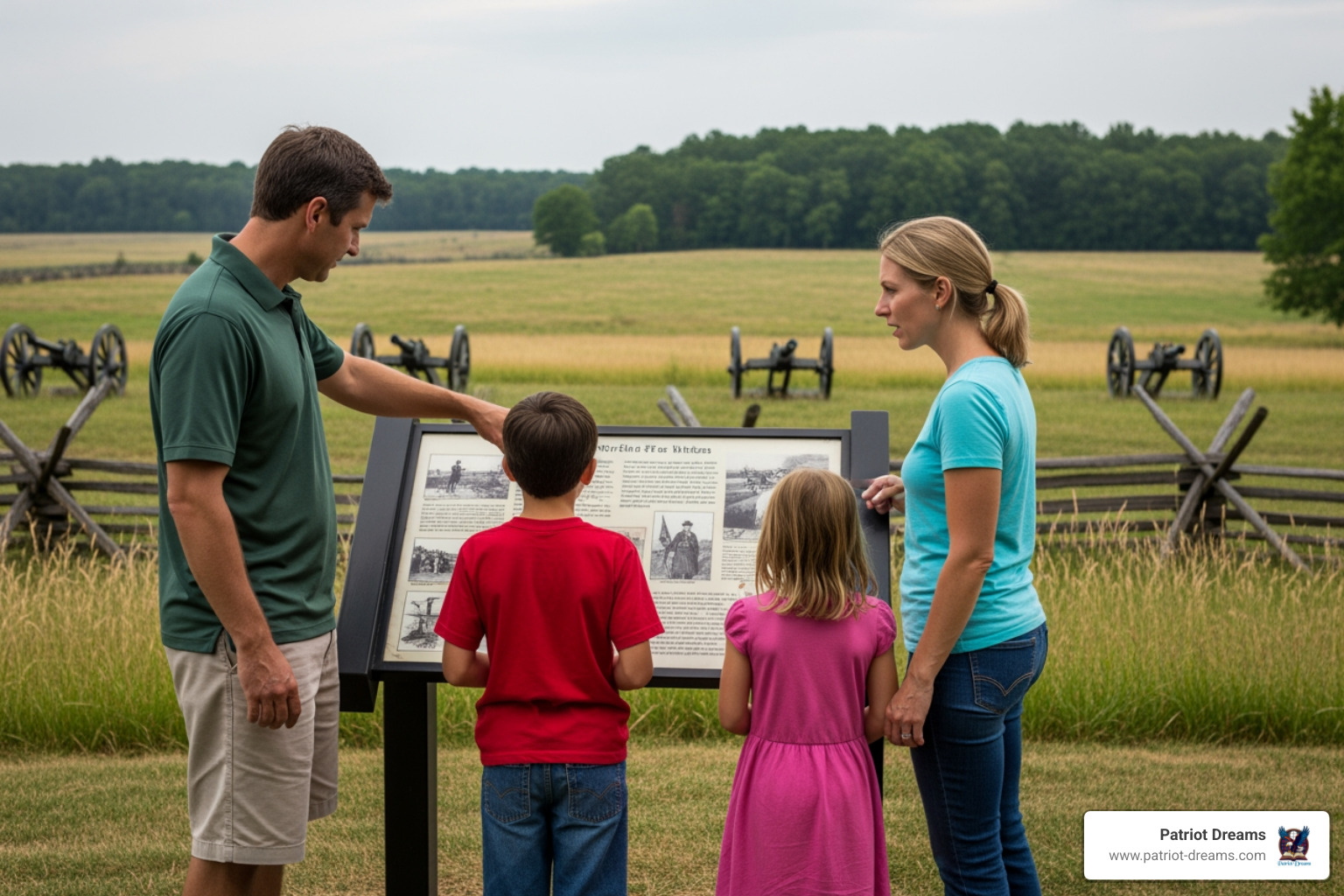
A visit to a battlefield can be a deeply moving experience for all ages. With a little planning, you can create a meaningful journey for your family to connect with these important stories, fostering a deeper understanding of our shared heritage. We believe these experiences can bring families closer, creating lasting memories and a sense of shared history.
Tips for Visiting Civil War Battlefields
Visiting a Civil War battlefield is much more than just seeing a historical marker; it's an immersive journey into our past. To make the most of your trip, we have a few friendly suggestions:
- Start at the Visitor Center: This is always our first recommendation. Most National Park Service sites have excellent visitor centers with introductory films, museum exhibits, and knowledgeable rangers. Watching the film helps set the stage and provides crucial context for what you're about to see.
- Talk to a Friendly Park Ranger: These dedicated individuals are a treasure trove of information. They can offer personalized recommendations, answer your questions, and share insights that bring the history to life. Don't be shy!
- Wear Comfortable Shoes for Walking: You'll want to explore the grounds, walk the trails, and stand where history happened. Good walking shoes are a must for comfort and safety.
- Bring Water and Snacks: Exploring can make you hungry and thirsty, especially during warmer months. Many battlefield parks are expansive, and amenities might not be immediately available.
- Use a Map to Follow the Story: Pick up a park map at the visitor center. Many offer self-guided driving tours with numbered stops corresponding to a narrative. This helps you follow the progression of the battle and understand its key moments.
Here's a little list of what else to bring to improve your experience:
- A camera, to capture the serene beauty and solemnity of these places.
- A journal, to jot down your thoughts and reflections.
- An open heart, ready to connect with the stories of courage, sacrifice, and the enduring American spirit.
These sites are preserved for us to learn, reflect, and grow. They are outdoor classrooms where the past speaks to the present.
Lesser-Known Civil War Battlefields with Powerful Stories
While the major Civil War battlefields like Gettysburg and Antietam rightly receive much attention, countless other sites across the United States hold equally powerful, though perhaps less widely known, stories. These places offer a deeper, often more intimate, connection to the conflict.
Shiloh, Tennessee: Fought in April 1862, the Battle of Shiloh was one of the earliest major battles in the Western Theater, and at the time, it was the bloodiest battle in American history. Over 23,000 casualties were sustained over two days. The fighting was incredibly fierce, particularly in an area known as the "Hornet's Nest," where Union troops held their ground against repeated Confederate assaults for hours. Shiloh National Military Park offers a moving experience, with a 12-mile driving tour highlighting 20 significant stops. It's a place that reminds us of the sheer brutality of the early war and the profound impact it had on families across the nation. We encourage you to Explore Shiloh National Military Park.
Fredericksburg, Virginia: When Abraham Lincoln learned of the Union defeat at Fredericksburg in December 1862, he declared, "If there is a place worse than hell, I’m in it." This battle was a crushing defeat for the Union, but it also showcased immense courage, particularly in areas like Slaughter Pen Farm. Here, Union soldiers faced impossible odds, charging against entrenched Confederate positions on Marye's Heights. Today, the Fredericksburg & Spotsylvania National Military Park preserves this site, allowing us to walk the 1.75-mile interpretive trail at Slaughter Pen Farm. It's a testament to the bravery of common soldiers who fought with unwavering determination. To learn more about this decisive battle, visit Learn about the Battle of Fredericksburg.
Palmito Ranch, Texas: Widely considered the final battle of the American Civil War, Palmito Ranch was fought on May 12, 1865, more than a month after Robert E. Lee's surrender at Appomattox. Union forces, unaware of the war's official end, engaged Confederate troops near Brownsville, Texas. This remote, marshy prairie serves as a poignant reminder that history's threads are long and complex, and that even after the main curtain falls, echoes of conflict can linger. Though a "final, lonely, meaningless little spatter" as historian Bruce Catton described it, Palmito Ranch offers a unique perspective on the war's winding down and the challenges of communication in the 19th century. You can Read about the final battle at Palmito Ranch. These lesser-known sites deepen our understanding of the war's widespread impact and the diverse stories woven into its fabric.
Preserving Our Shared Heritage: A Labor of Love
Keeping these sacred grounds safe for future generations is a task carried on by dedicated people and organizations. Their tireless work ensures that these stories of sacrifice, courage, and unity will never be forgotten. It's a testament to our collective commitment to remembering where we've been as a nation.
The Role of Our National Park Service
The National Park Service (NPS) plays an indispensable role in safeguarding America's Civil War battlefields and other historic sites. As caretakers of America's treasures, the NPS is responsible for managing a vast array of places, from battlefields and military parks to memorials and historic homes directly affected by the conflict. There were over 10,000 armed conflicts during the Civil War, and the NPS's American Battlefield Protection Program has identified nearly 400 of the most significant.
Their work involves much more than just maintaining the physical grounds. The NPS provides invaluable education and interpretation, offering visitors a deeper understanding of the events that transpired. Through visitor centers, interpretive signs, ranger-led tours, and educational programs, they help us connect with our history in a meaningful way. They ensure that the stories of soldiers, civilians, and leaders are preserved and shared, helping to explain the profound impact these battles had on the course of the Civil War and American history. The evolution of battlefield preservation, from early efforts by veterans to establish national military parks to the comprehensive approach of today, reflects a growing national commitment to these sites. We can explore many of these remarkable places and Find Civil War parks to visit across the country.
The American Battlefield Trust and Community Efforts
Complementing the efforts of the National Park Service, organizations like the American Battlefield Trust are vital partners in the ongoing mission of preserving these hallowed grounds. The Trust focuses specifically on saving land from development, ensuring that the landscapes where crucial moments of history unfolded remain intact for future generations. We are truly inspired by their dedication.
The American Battlefield Trust has achieved remarkable success, saving over 57,000 acres of battlefield land across the country. Their work is often a labor of love, involving fundraising, land acquisition, and working closely with local communities. They don't just save land; they also restore landscapes to their wartime appearance, removing modern intrusions and replanting period-appropriate vegetation. This meticulous work allows visitors to experience the battlefields as closely as possible to how soldiers would have seen them.
These community-driven efforts, supported by countless volunteers and donors, are a powerful testament to the power of people working together to protect our shared heritage. The ongoing challenges for preservation include continued development pressures, climate change impacts, and the need for sustained funding. However, the future prospects are bright, thanks to the unwavering commitment of organizations like the American Battlefield Trust and the growing public interest in heritage tourism. Their tireless efforts ensure that the lessons and stories embedded in these landscapes will continue to inspire and educate us all. To learn more about how they preserve these invaluable sites, visit Learn about battlefield preservation.
Frequently Asked Questions about Civil War Battlefields
What was the most significant battle of the Civil War?
Defining the "most significant" battle of the Civil War is a fascinating question, and the answer often depends on what aspect of the war you're considering. While Gettysburg is frequently called the "high-water mark" of the Confederacy and a major turning point due to its sheer scale (51,000 casualties) and its role in ending Lee's invasion of the North, other battles hold immense significance for different reasons.
For example, the Battle of Antietam, though a tactical stalemate, was strategically crucial because it provided President Lincoln with the confidence to issue the preliminary Emancipation Proclamation, fundamentally changing the war's moral and political objectives. Similarly, the Siege of Vicksburg, a 47-day campaign, was vital for the Union gaining control of the Mississippi River, effectively splitting the Confederacy in two and severely crippling its ability to wage war. Without control of the Mississippi, the Confederacy was truly divided.
Each of these battles, along with others like Fort Sumter (the first shots) and Appomattox (the end), played a unique and indispensable role in shaping the nation's future. Together, they form a mosaic of events that collectively determined the outcome of the war and the destiny of the United States.
Are Civil War battlefields family-friendly?
Absolutely! Most Civil War battlefields are managed by the National Park Service and are wonderfully suited for family visits. We find that they offer a unique blend of outdoor recreation and engaging historical education. Many parks feature wide-open spaces, easy walking trails, and scenic driving tours that are accessible for families with children of all ages.
A particular highlight for younger visitors is often the Junior Ranger program. This program provides activity booklets that guide children through the park, encouraging them to learn about history, nature, and preservation. Upon completion, they earn a badge and become official Junior Rangers, making the learning experience interactive and memorable. Many visitor centers also offer kid-friendly exhibits and films that help bring the history to life in an understandable way. It's a fantastic opportunity for children to connect with history outside of a textbook, fostering a sense of curiosity and appreciation for our nation's past.
How can I learn more about the soldiers who fought there?
Learning about the individual soldiers who fought on these Civil War battlefields can be one of the most moving parts of your visit. Many battlefield visitor centers have dedicated exhibits that focus on the personal stories of soldiers, often featuring letters, diaries, photographs, and artifacts that offer a poignant glimpse into their lives and experiences. We encourage you to seek out these personal narratives; they remind us that behind the grand strategies were individuals with hopes, fears, and families.
For those looking to trace their own family history or dig deeper into the lives of specific soldiers, the National Park Service's Civil War Soldiers and Sailors System is a wonderful online resource. This comprehensive database allows you to search for soldiers by name, state, and regiment, providing basic service information. It's an excellent starting point for genealogical research and can help you uncover your family's connection to the Civil War. Furthermore, local historical societies, libraries, and university archives often hold extensive collections of primary source materials, including letters and regimental histories, that can shed light on the experiences of those who served. These resources help us honor the memory of every individual who played a part in this pivotal chapter of our nation's story.
Conclusion: Where History's Echoes Inspire Our Future
The stories of the Civil War are more than just dates and facts; They are tales of courage, resilience, and a nation striving to heal and come together. These Civil War battlefields are not just land, but living monuments where the echoes of the past can inspire us to build a better future. The quiet fields, once filled with the din of battle, now offer a serene space for reflection, reminding us of the profound sacrifices made for the ideals of unity and freedom.
Visiting these sites, walking where so many stood, allows us to connect with the human spirit that persevered through one of our nation's most challenging times. It teaches us about the strength found in community, the importance of understanding different perspectives, and the enduring hope for a more perfect union. The lessons of our history continue to light our way forward, guiding us to be kinder, more thoughtful, and more connected to one another. At Patriot Dreams, we believe in the power of these stories to connect us all, making our nation's past a source of inspiration for our present and future. Discover more inspiring American stories and how our nation was forged.

Join the Patriot Dreams Community
Download the app today and start your journey through American history and personal legacy.

Explore Our Latest Insights
Dive into stories that shape our American legacy.