Hands Off the Americas: The Main Points of the Monroe Doctrine That Redefined US Power

The Main Points of the Monroe Doctrine at a Glance
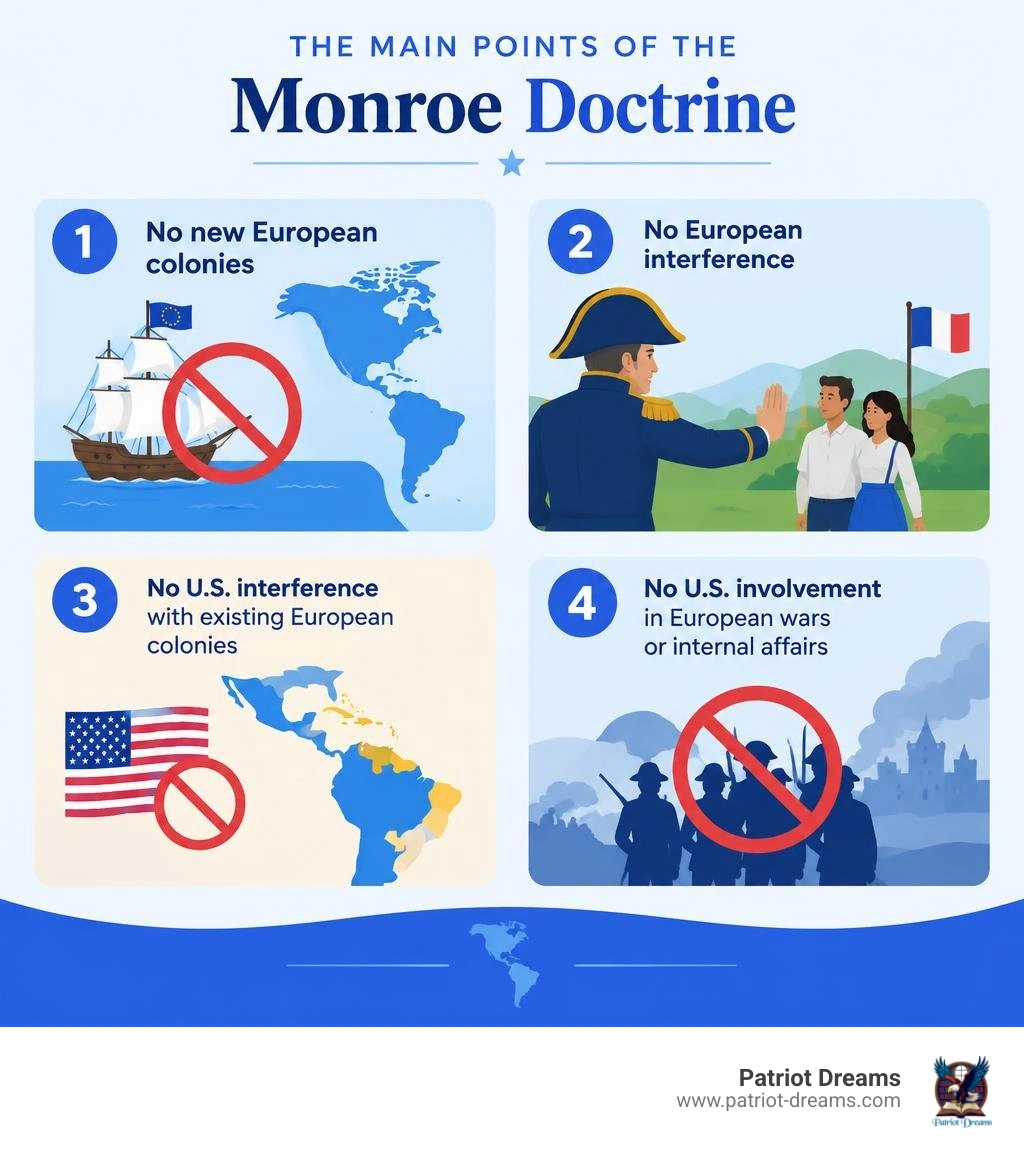
The Monroe Doctrine set out four main points in 1823:
- No new European colonies in the Americas.
- No European interference with newly independent nations in the Americas.
- No U.S. interference with existing European colonies in the Americas.
- No U.S. involvement in European wars or internal affairs.
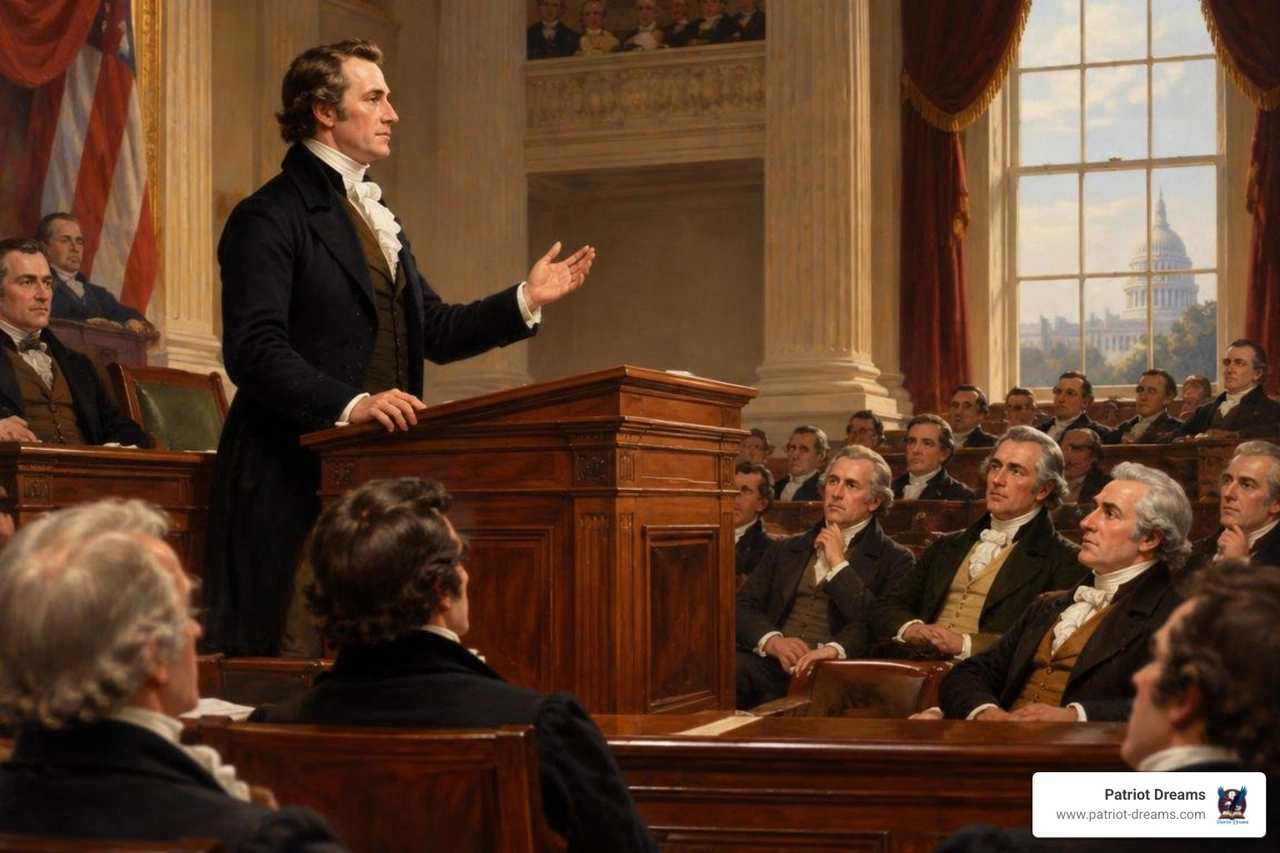
President James Monroe laid out these boundaries in an address to Congress on December 2, 1823. The United States could not enforce them on its own at the time, but the statement went on to shape American foreign policy for generations.
We're Kyle & Emily, and we'll walk through what each point meant in 1823 and how its meaning changed over time.
Learn more about main points of the monroe doctrine:
- The Monroe Doctrine
- the monroe doctrine 1823
Historical Origins: Why James Monroe Drew a Line in 1823
How the Main Points of the Monroe Doctrine Emerged in 1823
To understand why President James Monroe delivered this bold message, we have to look at the world map of the early 1820s. Across Central and South America, a wave of courage and resilience was sweeping through former Spanish colonies. Inspired by the promise of liberty, people throughout Latin America fought for and won their independence, bringing an end to centuries of Spanish imperial rule. By 1823, nearly all of Spain's colonies in the Americas were either entirely free or standing on the threshold of self-governance.
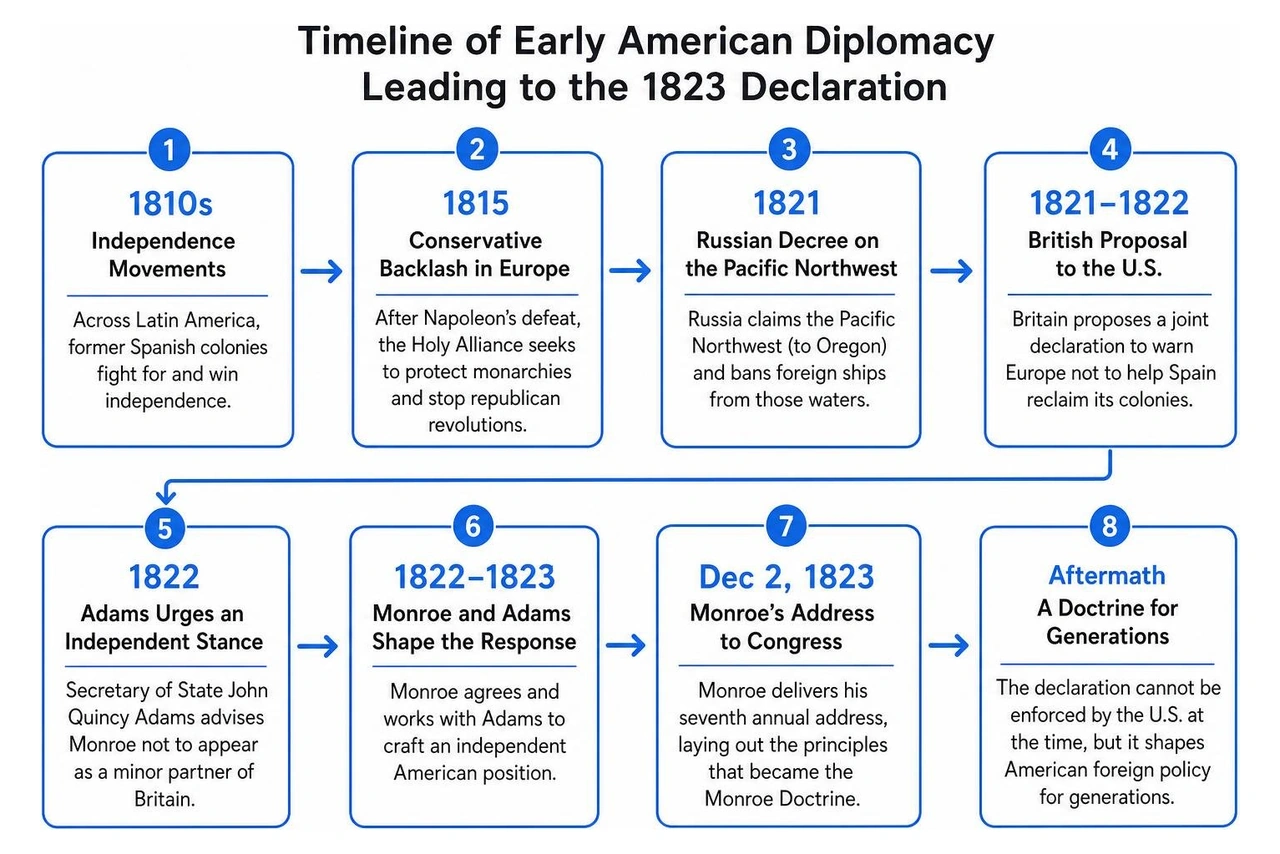
Back in Europe, however, monarchies viewed these democratic breakthroughs with unease. Following the defeat of Napoleon, the conservative powers of the Holy Alliance (Austria, Prussia, and Russia) sought to protect royal dynasties against republican revolutions. At the same time, the Russian Empire issued an imperial decree in 1821 asserting control over the Pacific Northwest coastline down into modern-day Oregon and banning foreign ships from those waters.
Sensing a shifting geopolitical landscape, British Foreign Secretary George Canning approached the United States with an offer. Great Britain proposed a joint declaration warning European powers not to help Spain reclaim its lost colonies.
While some American leaders favored partnering with London, Secretary of State John Quincy Adams urged President Monroe to take an independent stance. Adams argued that the United States should not appear as a minor partner riding in the wake of the British navy. Monroe agreed, weaving Adams's strategic insights into his seventh annual address to Congress. For a deeper look at the diplomatic exchanges of this era, read the official historical background on the Monroe Doctrine.
The Philosophy of Separate Hemispheres
At its core, the address expressed a profound belief in two distinct political worlds: the Old World and the New World. The young American republic wanted to nurture self-government and self-determination across the Americas, away from the dynastic rivalries that had long driven European conflicts.
This perspective reflected a defensive posture rooted in mutual boundaries. The United States promised to let European kingdoms manage their own affairs, asking only that European monarchies respect the sovereign choices of the independent nations in the Western Hemisphere. You can review the foundational ideas behind this approach in our definition of the Monroe Doctrine.
The 4 Main Points of the Monroe Doctrine Explained

President Monroe did not issue his doctrine as a separate legal decree or an international treaty. Instead, the policy was embedded directly into his routine December 2, 1823, message to the 18th Congress. Over time, historians distilled Monroe's words into four distinct pillars that defined American hemispheric diplomacy. You can explore the original transcript through the Monroe Doctrine primary document records.
Here is a closer look at each core principle:
1. Non-Colonization in the American Continents
Monroe declared that the American continents, having achieved a free and independent condition, were no longer open to future colonization by any European powers.
This principle served as a firm diplomatic boundary, primarily responding to Russian claims in the Pacific Northwest and preventing European monarchies from carving out fresh territory in the Americas. Monroe made it clear that every inch of land in the Americas belonged under the authority of existing sovereign nations, not foreign empires looking for new colonies.
2. Separation of European and American Political Systems
Monroe emphasized that the political systems of Europe were fundamentally different from those of the Americas. While European governance remained rooted in hereditary monarchies and imperial alliances, the Western Hemisphere was building a future based on constitutional liberty and representative republics.
Monroe warned that any attempt by European monarchies to extend their system to any part of the Western Hemisphere would be viewed as dangerous to U.S. peace and safety. It was an early declaration of hemispheric solidarity, signaling that an attack on the sovereignty of neighboring republics felt uncomfortably close to home.
3. Non-Interference in Existing European Colonies
To demonstrate good faith and avoid unnecessary foreign entanglements, Monroe drew a clear distinction between newly liberated nations and long-standing European holdings.
The United States pledged that it would not interfere with the existing colonies and dependencies of European powers. Territories such as British Canada, Spanish Cuba, and various Caribbean islands held by France, the Netherlands, or Britain would remain undisturbed by the United States. This pragmatic assurance helped reassure foreign courts that Washington was not seeking immediate territorial conquest.
4. Non-Interference in European Internal Affairs and Wars
In exchange for European non-intervention in the Americas, the United States made a matching commitment across the Atlantic. Monroe reaffirmed the traditional American policy of isolationist neutrality, originally championed in George Washington's Farewell Address.
The United States pledged never to participate in the internal wars, balance-of-power struggles, or domestic disputes of European nations. Monroe drew a clear line across the ocean: Europe would govern Europe, and the Americas would govern the Americas.
Evolution and Corollaries: How the Doctrine Transformed Over Time
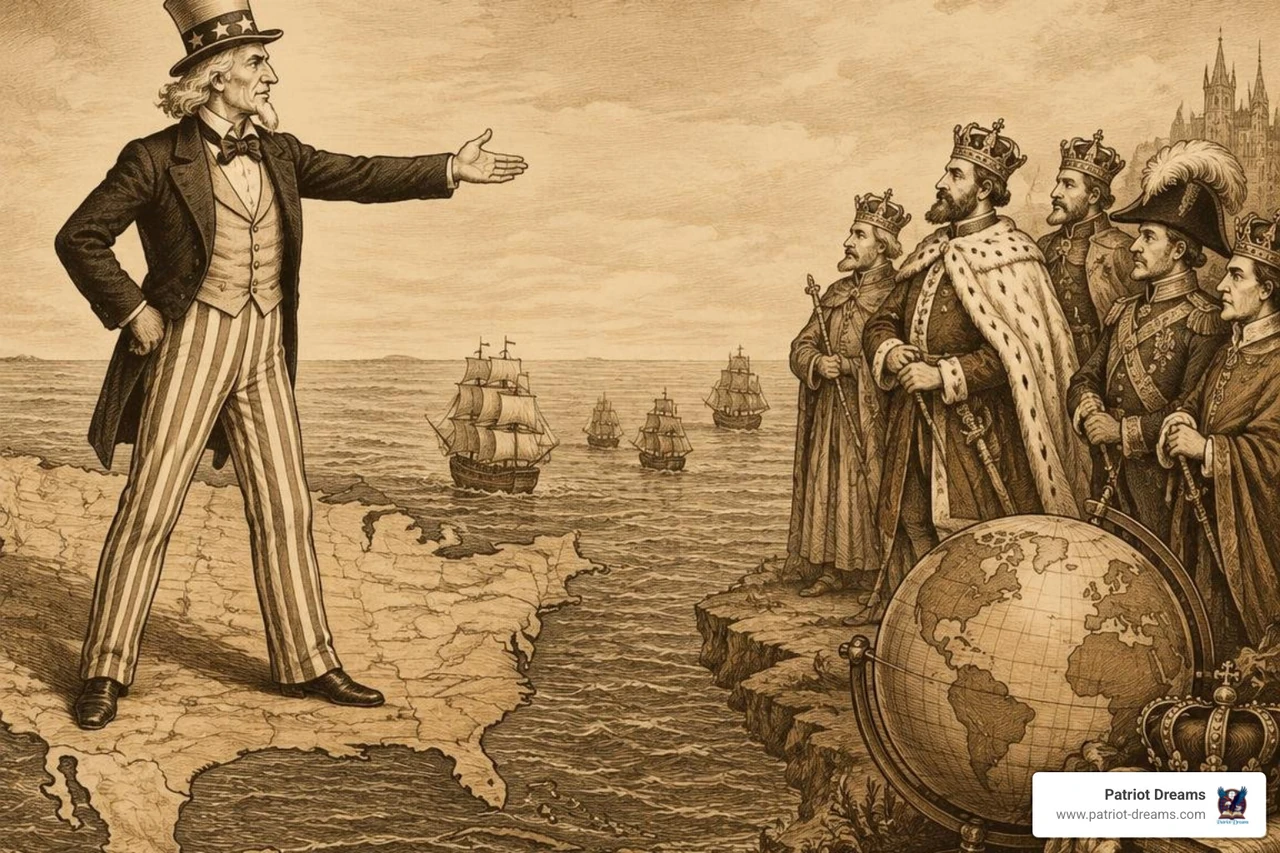
When Monroe first articulated these principles, European courts largely brushed them aside. In 1823, the United States was a young nation without a large standing army or a battle-tested blue-water fleet. In fact, European observers often noted that the doctrine was initially backed less by American cannons and more by Great Britain's Royal Navy. Britain wanted to keep Spanish-American ports open for free commerce under its own Pax Britannica policy, effectively deterring other European monarchies from crossing the Atlantic.
Over the 19th and 20th centuries, as the United States grew in industrial strength and territorial reach, the doctrine evolved from a modest defensive posture into a powerful pillar of American foreign policy. Discover more about this long-term diplomatic journey in the comprehensive historical overview of the Monroe Doctrine.
| Dimension | Original 1823 Monroe Doctrine | 1904 Roosevelt Corollary |
|---|---|---|
| Primary Goal | Prevent new European colonization | Prevent European intervention by policing neighbors |
| U.S. Role | Defensive protector and neutral observer | Active international police power |
| Use of Force | Purely defensive against foreign attacks | Preemptive military and financial intervention |
| Hemispheric Stance | Respects sovereignty of newly freed states | Manages internal finances and political order |
During the American Civil War, France challenged the doctrine by invading Mexico and establishing a puppet monarchy under Austrian Archduke Maximilian. Once the Civil War concluded in 1865, the United States mobilized diplomatic support and sent troops to the southern border to aid Mexican President Benito Juárez, reaffirming its commitment to hemispheric independence and prompting French forces to withdraw.
The Roosevelt Corollary and Hemispheric Policing
The most dramatic transformation of Monroe's policy came in December 1904, when President Theodore Roosevelt introduced what became known as the Roosevelt Corollary.
Faced with recurring European naval blockades against Caribbean nations over unpaid sovereign debts (such as in Venezuela and the Dominican Republic), Roosevelt fundamentally redefined the doctrine. He argued that chronic instability or financial default in neighboring nations might tempt European intervention. To prevent European gunboats from arriving, Roosevelt asserted that the United States had the right to exercise an "international police power" across the Western Hemisphere.
Instead of merely telling Europe to keep hands off, Roosevelt's "Big Stick" policy positioned Washington as a regional overseer, managing customs houses and mediating regional disputes.
From the Cold War to the 21st Century
As world politics shifted across the 20th century, the Monroe Doctrine continued to be adapted to meet new challenges:
- World War II Solidarity: By 1940, American public opinion strongly favored mutual defense across the Americas. A national survey revealed that 81% of Americans supported defending Canada under the Monroe Doctrine, 75% backed defending Mexico and Central America, and 69% supported defending South America against foreign aggression.
- The Cuban Missile Crisis (1962): When the Soviet Union stationed nuclear missiles in Cuba, President John F. Kennedy invoked the principles of the Monroe Doctrine to justify a naval quarantine around the island, preventing further military shipments.
- Modern Diplomatic Transitions: In 2013, Secretary of State John Kerry told the Organization of American States (OAS) that "the era of the Monroe Doctrine is over," championing an era of equal partnership among sovereign nations. Yet by 2025, discussions around national security strategies called on leaders to reassert traditional hemispheric priorities amid evolving global competition.
Hemispheric Impact: Latin American Perspectives and Criticisms
The legacy of the Monroe Doctrine across Latin America is complex and multifaceted. When James Monroe first shared his address in 1823, many leaders throughout Central and South America—including figures inspired by Simón Bolívar—welcomed the young United States' symbolic recognition of their hard-fought independence.
Over the decades, however, as the doctrine was paired with policies like the Roosevelt Corollary and the diplomatic style of the Andrew Jackson presidency, perspectives shifted. Many Latin American scholars and leaders came to view the policy not just as an umbrella of protection, but as a justification for unilateral intervention by the "Colossus of the North."
In response, Latin American jurists championed legal doctrines to safeguard their sovereign rights:
- The Calvo Doctrine: Argued that foreign investors must settle disputes in local domestic courts rather than calling for foreign military intervention.
- The Drago Doctrine (1902): Formulated by Argentine Foreign Minister Luis María Drago, it established that no foreign power should use armed force against an American nation to collect public debts.
These legal contributions eventually paved the way for modern multilateral organizations, including the Organization of American States, encouraging nations across North, Central, and South America to work together as equal neighbors.
Frequently Asked Questions About the Monroe Doctrine
What are the main points of the Monroe Doctrine in simple terms?
In simple terms, the Monroe Doctrine established a two-way street of non-interference:
- Europe was warned not to establish any new colonies in the Americas.
- Europe was told not to meddle with the governments of free American nations.
- The United States promised to leave existing European colonies alone.
- The United States promised to stay out of European wars and domestic disputes.
Who actually wrote the Monroe Doctrine?
While President James Monroe delivered the address and made the ultimate policy decisions, the primary author of the text was his brilliant Secretary of State, John Quincy Adams. Adams crafted the diplomatic phrasing, arguing persuasively that the United States should state its principles plainly and independently.
How did the British Navy help enforce the doctrine initially?
In 1823, the United States did not possess a navy large enough to police the entire Atlantic Ocean. Great Britain, seeking to protect its growing trade with independent Latin American nations, used its formidable Royal Navy to prevent rival European kingdoms from mounting recolonization expeditions.
Conclusion
History is often made in quiet moments of resolve. When President James Monroe spoke to Congress on a chilly December day in 1823, he offered a hopeful vision: a hemisphere of free, self-governing neighbors living peacefully, free from the old patterns of imperial rule.
Over the past two centuries, that vision has grown, weathered difficult challenges, and adapted to an ever-changing world. Yet beneath every treaty and diplomatic debate lies a shared human desire for community, home, and the freedom to chart our own course. When we listen to these historical stories, we discover that our neighbors—near and far—share the same enduring hopes for peace and family that unite us all.
To hear these historic voices brought to life, explore the full legacy of the James Monroe Doctrine through our interactive audio stories at Patriot Dreams.

Join the Patriot Dreams Community
Download the app today and start your journey through American history and personal legacy.

Explore Our Latest Insights
Dive into stories that shape our American legacy.