The Definitive Guide to Bessie Coleman History

Early Life and the Journey to Flight: From Texas to Chicago
Bessie Coleman was a pioneering American aviator who made history as the first African American and Native American woman to earn an international pilot's license in 1921. Overcoming severe racial and gender barriers, she became a world-renowned exhibition pilot and civil rights trailblazer whose enduring courage opened the skies for future generations of flyers.
Born on January 26, 1892, in Atlanta, Texas, Coleman grew up in a family of sharecroppers. She was one of thirteen children born to George and Susan Coleman, whose heritage bridged African American and Native American (Choctaw) ancestry. When Bessie was just a toddler, the family moved to Waxahachie, Texas, where they worked long days in the cotton fields. Life in rural Texas was defined by hard labor and strict segregation, yet Susan Coleman nurtured a deep love of reading and self-improvement in her children.
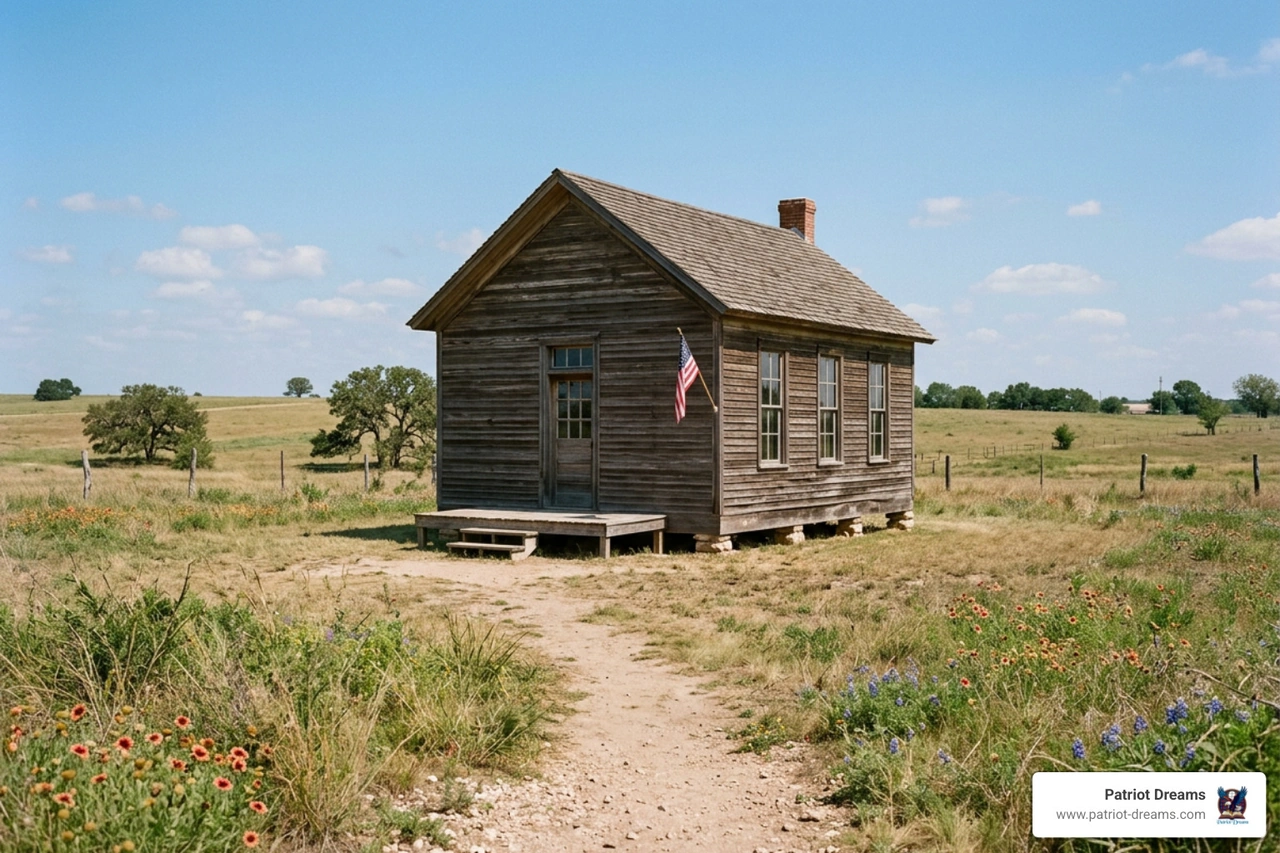
Young Bessie demonstrated extraordinary discipline from an early age. Each day, she walked four miles to attend a one-room, segregated schoolhouse, where she excelled in mathematics and read every book she could find. She went on to complete all eight grades, showing a fierce dedication to her education despite having to pause her studies each autumn to help harvest cotton.
In 1910, Coleman enrolled at the Oklahoma Colored Agricultural and Normal University (now Langston University) in Langston, Oklahoma. She used her hard-earned savings from washing laundry to pay for her tuition, but funds ran out after just one term, forcing her to return home.
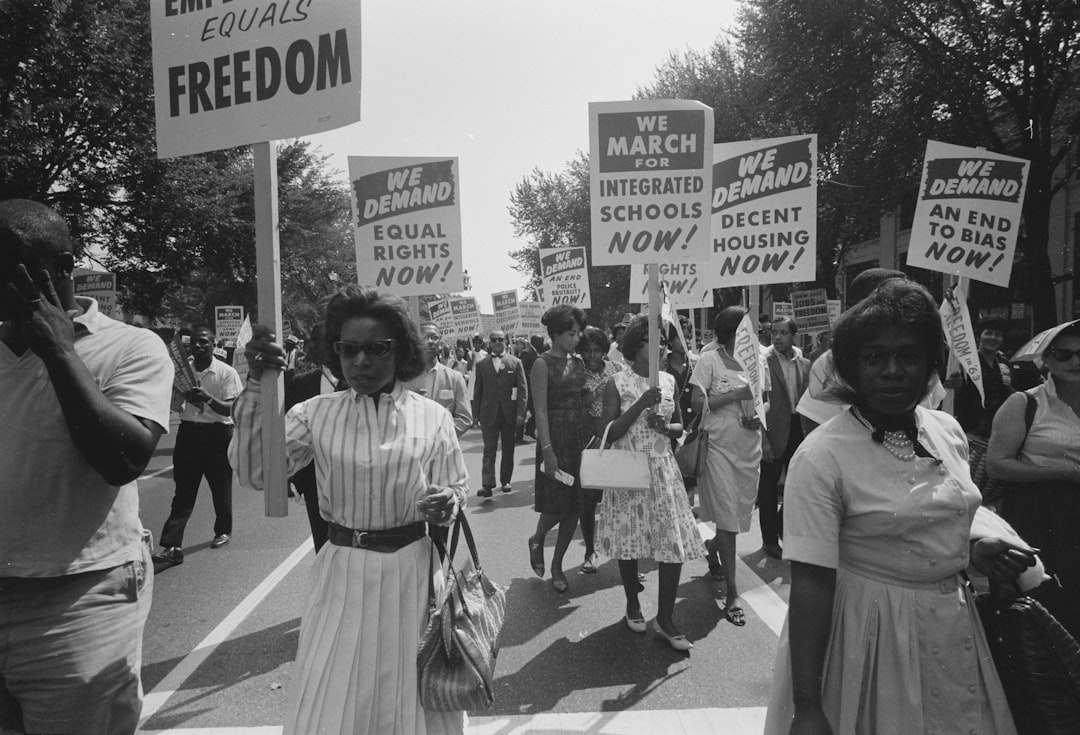
The promise of broader horizons soon beckoned. In 1915, at the age of 23, Coleman joined the Great Migration—a monumental movement of six million African Americans traveling from the rural South to Northern cities. She moved to the South Side of Chicago to live with her older brothers.
Working as a manicurist at the White Sox Barbershop in Chicago, Coleman listened intently to men returning from the battlefields of Europe. Her brothers had served in World War I and often teased her with stories of French women who were allowed to fly airplanes, claiming that American women could never do the same. Those stories sparked an unshakable fire within her. Learning about these bold possibilities placed her on a path alongside other inspiring figures featured in our Famous African American Figures Guide.
Early Milestones in Bessie Coleman History
Determined to take to the skies, Coleman applied to numerous flight schools across the United States. In the early 1920s, however, American aviation schools strictly barred both women and African Americans from admission. When every domestic door closed in her face, Coleman refused to accept defeat.
She sought counsel from Robert S. Abbott, the visionary founder and publisher of the Chicago Defender, one of the nation's most influential Black-owned newspapers. Abbott recognized Coleman's drive and offered a crucial recommendation: travel to France, where aviation schools welcomed students regardless of race or gender.
Before she could enroll, Coleman had to overcome a major hurdle—she did not speak French. Undaunted, she took evening classes at a Berlitz language school in Chicago while continuing to work as a manicurist to save every possible dime. Backed by financial support from Abbott and banker Jesse Binga, Coleman boarded the SS Imperator in late 1920 and sailed across the Atlantic.
Her destination was the prestigious Caudron Brothers School of Aviation in Le Crotoy, France. There, Coleman underwent a demanding seven-month training regimen. She learned to pilot a 27-foot French Nieuport 82 biplane—a complex machine with a notoriously temperamental steering mechanism that required immense physical strength. Despite witnessing a tragic crash during her training, Coleman persevered, learning how to handle stalls, recover from tailspins, and navigate adverse weather. Her remarkable overseas training journey is detailed further through archival collections at the Bessie Coleman | National Air and Space Museum. Her resolve placed her among the most dedicated Historical American Figures of the twentieth century.

Breaking Aviation Barriers: Earning the License and Barnstorming Fame
On June 15, 1921, the Fédération Aéronautique Internationale (FAI) awarded Bessie Coleman her international pilot's license. With this historic achievement, she became the first African American woman and the first Native American person in the world to hold a pilot's license.
Knowing that commercial piloting opportunities were nonexistent for women at the time, Coleman recognized that aerial exhibition flying was the only viable career path. She spent additional months in Europe taking advanced flight lessons in France and Germany, mastering daring aerobatic techniques before sailing back to New York in the autumn of 1921.
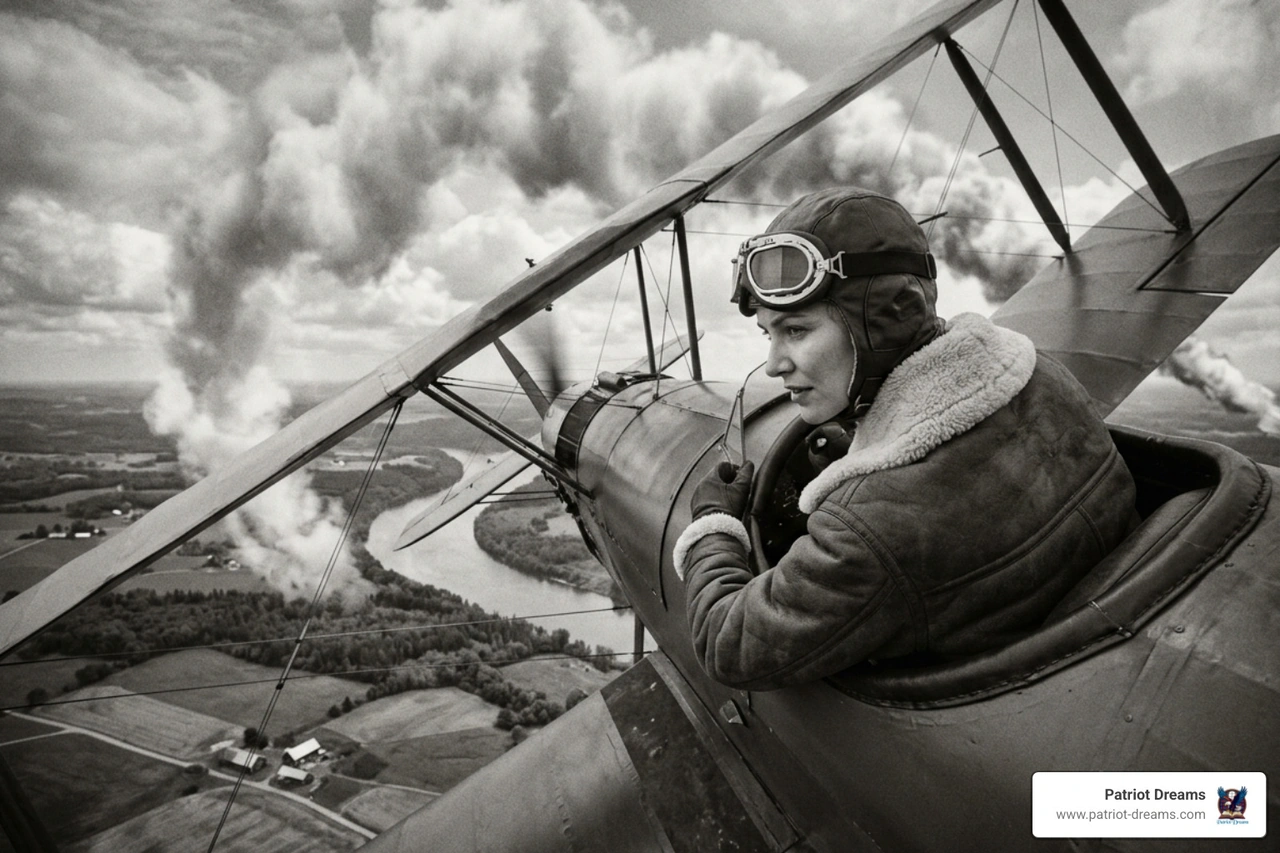
Upon her return, American audiences were captivated. Coleman made her first public flight in the United States on September 3, 1922, at Curtiss Field on Long Island, flying a Curtiss JN-4 "Jenny" biplane in front of an enthusiastic crowd of over 3,000 spectators.
Over the next several years, Coleman toured the country as a celebrated barnstormer. She performed breathtaking stunts, including:
- Near-vertical dives and sharp pull-ups just above the ground
- Intricate loop-the-loop maneuvers and figure eights
- Thrilling wing-walking and exhibition parachute jumps
Billed across the country as "Queen Bess, Daredevil Aviatrix," she delighted spectators of all backgrounds, as highlighted by the Smithsonian Magazine's profile on Bessie Coleman. Her aerial feats proved that the skies belonged to everyone, standing as an unforgettable chapter in American Innovation History.
Civil Rights Advocacy from the Cockpit
Coleman understood that her visibility in the cockpit offered a unique platform to challenge segregation. During an era when public events throughout the nation enforced strict racial boundaries, Coleman instituted a firm personal policy: she refused to fly at any venue or airshow that did not permit integrated attendance through a single, shared entrance.
In Waxahachie, Texas, where she had once picked cotton, organizers attempted to create separate entrance gates for Black and white attendees. Coleman flatly stated that she would cancel her performance unless the gates were desegregated. The organizers conceded, and the entire community watched her soar together.
Beyond the airfield, Coleman gave lectures at churches, schools, and community theaters, passionately encouraging young men and women of color to pursue aviation careers. When a movie studio offered her a role in a film titled Shadow and Sunshine, she walked off the set upon discovering that the script required her to appear in ragged, subservient clothing, famously refusing to perpetuate demeaning stereotypes.
Coleman's ultimate ambition was to open a dedicated, non-discriminatory aviation school in the United States. She saved her appearance fees and opened a beauty shop in Orlando, Florida, to build the capital needed to buy planes and build hangars for future students. Her courage and principled stance rightfully earned her recognition among the most inspiring Famous Female Leaders In History.
Why Bessie Coleman History Matters in Early American Aviation
The story of Bessie Coleman is more than a tale of daring aerial maneuvers; it represents a turning point in American social history. During a time when institutional barriers sought to limit human potential, Coleman demonstrated that dedication and courage could transcend any artificial boundary.
| Historical Barrier (1920s) | Prevailing Industry Standard | Bessie Coleman's Breakthrough |
|---|---|---|
| U.S. Flight School Admissions | Excluded women and African Americans entirely | Taught herself French, traveled abroad, and earned an FAI license |
| Airshow Audience Segregation | Enforced separate seating and segregated entrance gates | Demanded equal access and refused to perform at segregated venues |
| Aviation Career Paths | Limited primarily to white male military or stunt pilots | Became an international barnstorming sensation and aviation advocate |
| Educational Vision | No domestic flight training available for minorities | Campaigned and raised funds to build a dedicated minority flight academy |
On April 30, 1926, Coleman was in Jacksonville, Florida, preparing for an airshow scheduled for the following day. She boarded her newly purchased Curtiss JN-4 Jenny for a test flight with her mechanic and publicity manager, William D. Wills, who was at the controls. Coleman did not fasten her seatbelt, as she was leaning over the edge of the cockpit to survey the terrain for an upcoming parachute jump.
At an altitude of approximately 3,000 feet, the aircraft suddenly entered an uncontrollable dive and flipped over. Coleman was thrown from the plane and died instantly upon impact. Wills was killed when the plane crashed and burst into flames moments later. An investigation by local authorities revealed that an unfastened wrench had slid into the open control gears, jamming the steering mechanism. Coleman was just 34 years old.
The loss reverberated across the nation. In Jacksonville, over 5,000 mourners attended her memorial service. Her casket was then transported to Chicago, where an estimated 10,000 people filed past to pay their final respects at the Pilgrim Baptist Church, with legendary civil rights leader Ida B. Wells-Barnett delivering the eulogy.
Preserving Bessie Coleman History and Heritage Today
Although Coleman did not live to open her flight school, her dream inspired immediate action. In 1929, aviation pioneer William J. Powell founded the Bessie Coleman Aero Club in Los Angeles, which trained numerous African American pilots and organized the nation's first all-Black airshow in 1931, drawing over 15,000 spectators.
Her life inspired the famous Tuskegee Airmen of World War II and paved the way for generations of aviators. In 1992, Dr. Mae Jemison, the first Black woman to travel into space, carried a photograph of Bessie Coleman aboard the Space Shuttle Endeavour.
Honors commemorating Coleman include:
- A 32-cent commemorative postage stamp issued by the U.S. Postal Service in 1995 as part of the Black Heritage series.
- Induction into the National Aviation Hall of Fame in 2006.
- A dedicated quarter released in 2023 by the United States Mint through the American Women Quarters Program.
- Coleman Mons, a major mountain on Pluto, named in her honor in 2021.
Exploring the history of trailblazers like Coleman helps us connect with the rich tapestry of our shared past. You can discover more inspiring biographies and interactive lessons when you Learn American History Online.
Frequently Asked Questions About Bessie Coleman
How did Bessie Coleman earn her pilot's license?
After being rejected by every American flight school she applied to, Coleman learned French through night classes in Chicago. With financial support from Chicago Defender publisher Robert S. Abbott and banker Jesse Binga, she traveled to France in late 1920. She enrolled in the Caudron Brothers School of Aviation in Le Crotoy, completed a rigorous seven-month curriculum, and received her international pilot's license from the Fédération Aéronautique Internationale on June 15, 1921.
What major obstacles did Bessie Coleman overcome?
Coleman faced profound racial and gender discrimination in early 20th-century America. Flight schools across the country barred Black and female applicants, forcing her to learn a new language and move abroad to receive training. She also overcame severe economic hardships, funding her travel through years of working as a laundress and manicurist, while risking her life flying fragile, open-cockpit vintage aircraft.
What is Bessie Coleman's lasting impact on modern aviation?
Coleman expanded the horizons of American aviation by proving that skill and courage have no racial or gender boundaries. Her trailblazing career directly motivated the creation of the Bessie Coleman Aero Club, inspired the Tuskegee Airmen, and opened the door for modern female aviators and astronauts, including Dr. Mae Jemison.
Conclusion
Bessie Coleman remains one of America’s most radiant examples of perseverance and hope. From a one-room schoolhouse in rural Texas to soaring gracefully through the clouds over Europe and the United States, she demonstrated that an individual's dreams can lift entire communities. Her life reminds us that true courage involves not only reaching new heights for oneself, but leaving a clear path behind for others to follow.
Here at Patriot Dreams, we are honored to share stories that celebrate kindness, determination, and the enduring pioneer spirit that unites us all. Whether you are discovering daring aviators or exploring the enduring wisdom of our Founding Fathers and pioneering historical figures, our interactive audio maps bring the warmth and depth of American history directly into your home. We invite you to explore our stories and keep the vibrant heritage of America alive for your family.

Join the Patriot Dreams Community
Download the app today and start your journey through American history and personal legacy.

Explore Our Latest Insights
Dive into stories that shape our American legacy.