Martin Luther King Jr Memorial

A Place of Hope on the National Mall
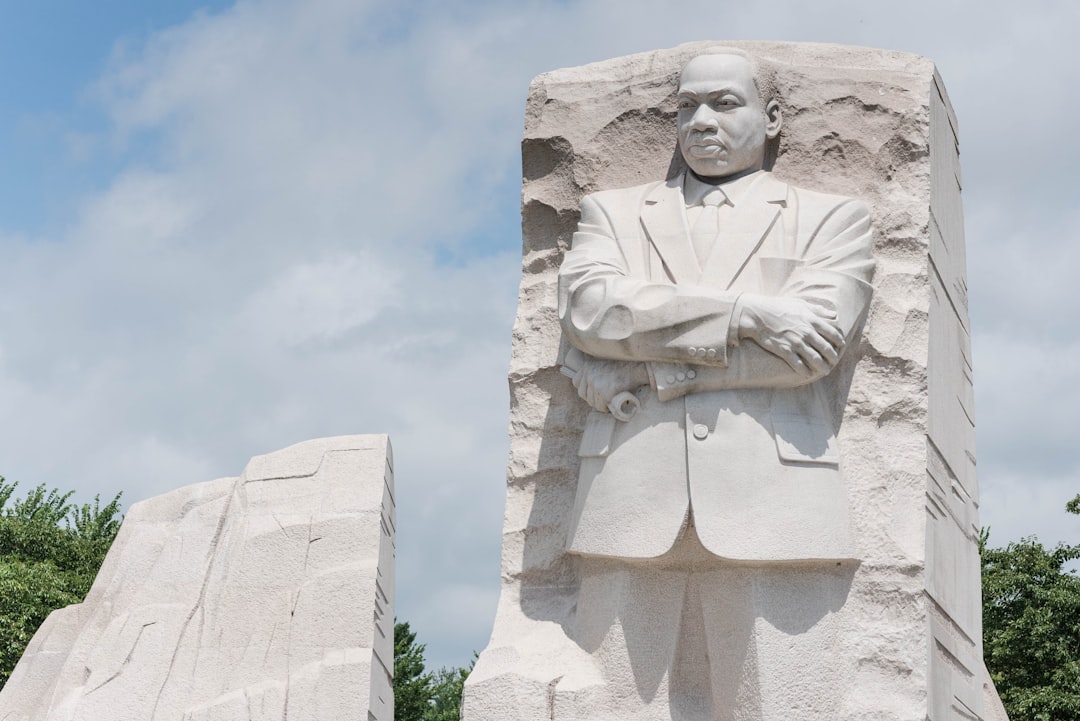
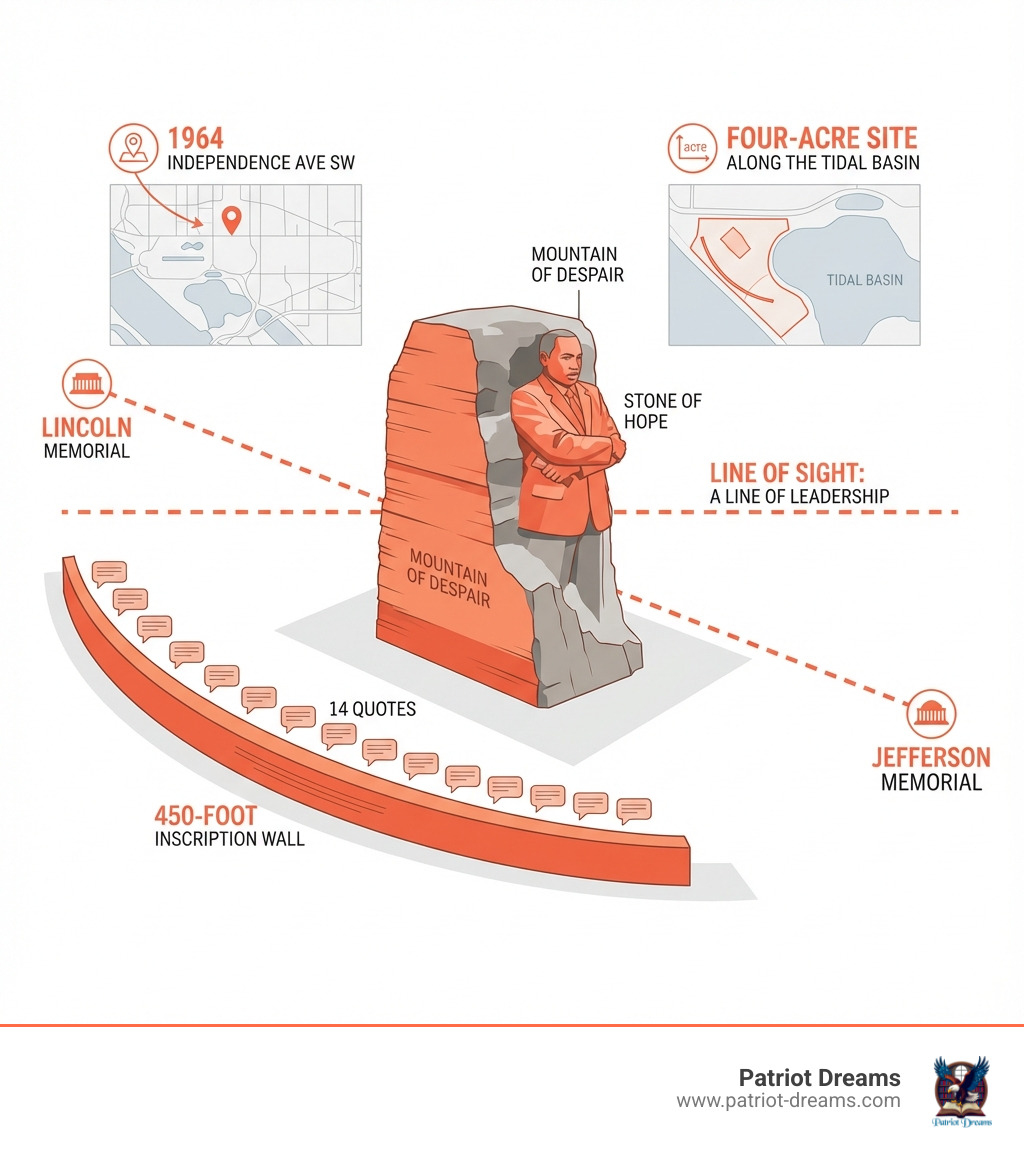
The Martin Luther King Jr Memorial stands in West Potomac Park in Washington, D.C., as the first memorial on the National Mall to honor an African American and a citizen activist rather than a president or war hero. Located at 1964 Independence Avenue SW—a deliberate nod to the Civil Rights Act of 1964—this four-acre memorial opened to the public on August 22, 2011, and features a powerful 30-foot statue of Dr. King emerging from a "Stone of Hope" carved out of a "Mountain of Despair."
Quick Facts:
- Location: West Potomac Park, along the Tidal Basin near the Lincoln and Jefferson Memorials
- Address: 1964 Independence Ave SW, Washington, D.C.
- Size: Four acres
- Main Feature: 30-foot statue of Dr. King (the "Stone of Hope")
- Inscription Wall: 450 feet long with 14 quotes from Dr. King's speeches and writings
- Hours: Open 24 hours a day, 7 days a week
- Admission: Free
- Opened: August 22, 2011
- Dedicated: October 16, 2011
When you walk through this memorial, you're not just looking at stone and water. You're walking through a story—one that reminds us of the power of peaceful resistance, the dignity of every person, and the dream of a more just America.
The memorial sits in a direct line of sight between the Lincoln Memorial and the Jefferson Memorial, creating what designers called a a "line of leadership." It's a visual reminder that Dr. King's work for freedom, equality, and justice stands alongside the founding principles of our nation.
Visitors come from all over the world to stand before the Stone of Hope, to read Dr. King's words carved into the granite walls, and to reflect on how far we've come—and how far we still have to go. It's a place that welcomes everyone, asks nothing but thoughtfulness, and offers something precious: inspiration.
Know your Martin Luther King Jr Memorial terms:
- Echoes of the Past: How 20th-Century America Lives On in Today’s Hit Songs
- When Film Becomes History: How Movies Shape Our View of America
- The Real Life Behind the Legend: Casey Jones and the Making of an American Railroad Hero
What is the Martin Luther King Jr. Memorial?
The Martin Luther King Jr Memorial is more than just a monument; it's a living tribute to a man whose dreams reshaped a nation. Located in West Potomac Park, nestled gracefully along the Tidal Basin, it stands as a profound symbol of the enduring struggle for freedom, equality, and justice in the United States. This memorial holds a unique place among the iconic structures of Washington, D.C., as the first to honor an African American individual and a citizen activist on the National Mall. It's a place designed for contemplation, inviting each visitor to reflect on Dr. King's powerful message and the ongoing journey toward a more perfect union.
Administered by the National Park Service, the Martin Luther King Jr Memorial became the 395th unit in the United States National Park Service system, signifying its national importance and its role in preserving American history and ideals. It was conceived as a space where Dr. King's vision—a world free from prejudice and injustice—could continue to resonate, inspiring future generations to uphold the principles he championed. The memorial’s very presence on the National Mall, a landscape traditionally reserved for presidents and war heroes, underscores the monumental impact of Dr. King's work and the Civil Rights Movement he led. It reminds us that true leadership comes in many forms, often from those who bravely stand for what is right, even when it is difficult. For more information, you can explore the Official memorial information provided by the National Park Service.
The Significance of the Address
Sometimes, a seemingly simple detail can carry profound historical weight. Such is the case with the official address of the Martin Luther King Jr Memorial: 1964 Independence Avenue SW. This isn't just a geographical marker; it's a deliberate and powerful symbolic gesture. The year "1964" directly references the landmark Civil Rights Act of 1964, a pivotal piece of legislation that outlawed discrimination based on race, color, religion, sex, or national origin.
This act was a monumental achievement for the Civil Rights Movement, a direct result of decades of tireless activism, courageous protests, and Dr. King's unwavering leadership. By situating the memorial at an address that echoes this historic moment, the designers created a permanent reminder of the progress made and the legal framework established to ensure equality. It's a subtle yet potent connection, ensuring that every visitor who notes the address is also reminded of the hard-won victories that paved the way for a more inclusive America. It’s a beautiful way to weave history into the very fabric of the memorial, inviting us to remember the journey of Stories of American Progress and the heroes who shaped them.
A Dream Realized: The Memorial’s Journey
The creation of the Martin Luther King Jr Memorial was a monumental undertaking, a journey spanning decades and fueled by the dedication of countless individuals and organizations. It began not with a grand design, but with a powerful vision championed by the Alpha Phi Alpha Fraternity, Dr. King's fraternity, which first proposed the idea of a national memorial in 1984. This ambitious dream slowly but surely gained momentum, culminating in Congressional authorization in 1996 through Public Law 104-333. This legislative act officially designated a site on the National Mall for the memorial, acknowledging the profound and lasting impact of Dr. King on the nation.
Once authorized, the next significant challenge was fundraising. Building a memorial of this scale required immense financial support, and a dedicated foundation was established to spearhead the effort. Through a combination of public and private donations, the project gradually amassed the necessary funds, with approximately $108 million raised by December 2008 towards a projected cost of $120 million. It was a testament to the collective desire of Americans to honor Dr. King's legacy.
Following fundraising, a global design competition was launched, attracting over 900 entrants from 52 countries, each vying for the honor of shaping this profound tribute. The chosen design, with its powerful symbolism and thoughtful layout, then moved into the construction phase. Construction officially began in December 2009, changing the vision into a tangible reality. This long and intricate process, from initial concept to completed structure, reflects the enduring commitment to preserving Dr. King's message for generations to come. To learn more about this remarkable journey, you can dig into More about the memorial’s creation.
Dedication and Opening
The day the Martin Luther King Jr Memorial opened to the public, August 22, 2011, marked a significant moment in American history. It was a culmination of decades of effort, dreams, and unwavering commitment. The memorial officially opened its gates, welcoming visitors to experience its profound beauty and powerful message.
However, the formal dedication ceremony, initially planned for August 28, 2011—the 48th anniversary of Dr. King's iconic "I Have a Dream" speech—faced an unexpected challenge. Hurricane Irene, a powerful storm, forced the postponement of this historic event. While a minor setback, it was handled with grace and flexibility, and the dedication was rescheduled for October 16, 2011.
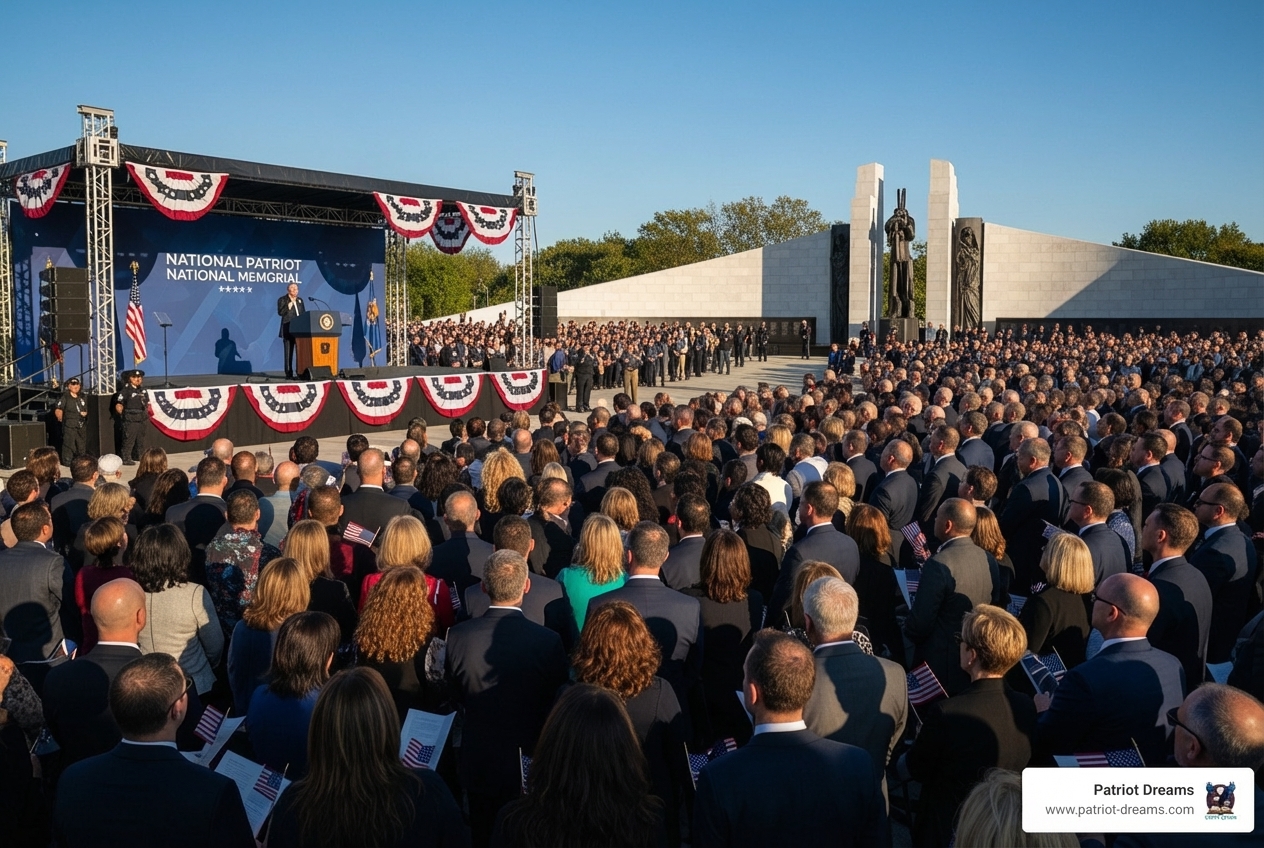
This rescheduled dedication day was a truly unforgettable occasion, a day of unity and remembrance that brought together civil rights leaders, dignitaries, and thousands of Americans. President Barack Obama delivered a poignant address, underscoring the memorial's significance and Dr. King's enduring call for justice and equality. It was a moment when the nation paused to reflect on Dr. King's immeasurable contributions and to reaffirm the ideals he stood for. The dedication served as a powerful reminder that even in the face of natural challenges, the spirit of unity and the commitment to Dr. King's legacy remained unshaken. You can watch highlights from this moving event through Memorial Dedication Highlights.
The Visionaries Behind the Design
Bringing the Martin Luther King Jr Memorial to life required not only monumental effort but also immense artistic vision. The overall design, which so powerfully conveys Dr. King's journey and message, was conceived by the ROMA Design Group, an architectural firm that emerged victorious from the highly competitive international design competition. Their winning concept skillfully translated Dr. King's own words and philosophy into a tangible, immersive experience for visitors.
At the heart of the memorial's design is the commanding 30-foot statue of Dr. King, known as the "Stone of Hope." This iconic sculpture was crafted by the talented Master Sculptor Lei Yixin, a renowned artist from China. His selection, while sparking some debate regarding the choice of a non-American artist for such a significant American figure, ultimately resulted in a powerful and contemplative depiction of Dr. King. Master Lei Yixin carefully carved Dr. King's likeness, aiming to capture his spirit of determination and his forward-looking vision.
The collaboration between ROMA Design Group's overarching vision and Master Lei Yixin's sculptural expertise resulted in a memorial that is both grand in scale and deeply personal in its message. Together, these visionaries created a space where architecture and art intertwine to tell a compelling story of struggle, perseverance, and hope, drawing inspiration from the very core of Historical American Figures like Dr. King. Their work ensures that Dr. King's legacy is not merely remembered but actively experienced by all who visit.
From a Mountain of Despair: The Memorial’s Powerful Symbolism
The Martin Luther King Jr Memorial is a masterclass in symbolic storytelling, drawing its central theme from one of Dr. King's most resonant speeches. The entire memorial design is a visual metaphor, directly inspired by a powerful line from his "I Have a Dream" speech: "Out of the mountain of despair, a stone of hope." This phrase encapsulates the very essence of Dr. King's struggle and his unwavering optimism for a better future.
As visitors approach the memorial, they start on a symbolic journey that mirrors the challenges and triumphs of the Civil Rights Movement. The landscape itself becomes a narrative, guiding us through the initial feelings of struggle and difficulty towards a powerful vision of progress and possibility. This deliberate design choice ensures that the memorial is not just a static representation but an interactive experience, inviting us to feel, reflect, and be inspired by the monumental shift Dr. King helped bring about in America. It’s a testament to the power of a dream to overcome the greatest obstacles.
The Mountain of Despair
The journey through the Martin Luther King Jr Memorial begins with a powerful symbolic element: the "Mountain of Despair." This feature is represented by two massive, rugged granite boulders that appear to have been split apart. As visitors enter the memorial grounds, they must pass through this cleaved mountain, a deliberate design choice that immediately immerses them in the narrative of Dr. King's life and the Civil Rights Movement.
These imposing granite pieces powerfully symbolize the immense struggles, difficulties, and obstacles that Dr. King and countless others faced in their fight for civil rights. They represent the entrenched segregation, the systemic injustice, and the profound despair that many Americans experienced. Passing through this "mountain" is a physical and emotional experience, evoking the arduous path that had to be overcome. It's a reminder that progress is often born out of immense challenge, and that the fight for justice is rarely easy. This initial passage sets the stage, preparing us for the profound message of hope that lies beyond, much like the Stories of Courage we cherish in our nation's history.
The Stone of Hope
Emerging from the "Mountain of Despair" is the awe-inspiring "Stone of Hope," the centerpiece of the Martin Luther King Jr Memorial. This is where visitors encounter the magnificent 30-foot statue of Dr. King himself, carved with remarkable detail and presence. The statue depicts Dr. King standing tall, with a determined gaze, looking out towards the horizon. This pose is not accidental; it symbolizes his forward-looking vision, his unwavering belief in a brighter future, and his enduring hope for justice and equality.
The material chosen for the sculpture is softened white granite, which gives the statue a luminous quality, especially under the Washington D.C. sun. The fact that Dr. King is carved from the mountain, rather than simply placed upon it, reinforces the core theme: hope emerges directly from the struggle. It suggests that even in the deepest despair, the seeds of hope and change can be found. The "Stone of Hope" is a powerful presence, inviting visitors to not only admire the artistry but also to feel the profound weight of Dr. King's legacy and the promise of his dream. It stands as a guide, reminding us that even after passing through the darkest valleys, we can always look towards a future filled with possibility.
Words Carved in Stone: The Inscription Wall
As you move through the Martin Luther King Jr Memorial, past the "Stone of Hope," you encounter another deeply moving element: the Inscription Wall. This impressive wall stretches for 450 feet, curving gently around the memorial plaza, and is adorned with 14 profound quotes from Dr. King's speeches, sermons, and writings. These aren't just random selections; they were carefully chosen to encapsulate the breadth and depth of his philosophy and his unwavering commitment to justice.
A distinguished "Council of Historians," which included notable figures like poet and activist Maya Angelou and renowned scholar Henry Louis Gates, oversaw the meticulous selection process. Their goal was to ensure that the chosen inscriptions accurately reflected Dr. King's core messages and resonated with the memorial's overarching themes. The quotes are thoughtfully arranged, guiding visitors through a narrative of Dr. King's life and work, focusing on universal themes such as justice, democracy, hope, and love. Standing before this wall, reading his powerful words, offers a truly Educational Audio Experience, allowing us to hear his voice echo through history and inspire us in the present.
How the Quotes Were Chosen
The selection of the 14 quotes inscribed on the Martin Luther King Jr Memorial was a deliberate and thoughtful process, aimed at representing the full spectrum of Dr. King's impactful career. The Council of Historians, tasked with this important responsibility, carefully reviewed his vast body of work, ensuring that the chosen words would resonate with his enduring legacy.
The quotes span from his earliest days of activism, such as his leadership during the Montgomery Bus Boycott, to profound reflections from his "Letter from a Birmingham Jail," and even excerpts from his final sermons. This careful curation ensures that the Inscription Wall provides a comprehensive snapshot of Dr. King's evolving thoughts, his unwavering commitment to nonviolent resistance, and his expansive vision for a just society. Each quote was selected not only for its individual power but also for how it contributes to the collective narrative of his life and the movement he led. They speak to the principles of equality, democracy, peace, and the transformative power of love, reminding us of the timeless wisdom he shared with the world. To explore these powerful words in more detail, you can Read more about the memorial’s quotes on the National Park Service website.
The “Drum Major” Inscription
During the development of the Martin Luther King Jr Memorial, one particular inscription on the "Stone of Hope" sparked significant controversy. An early version of the memorial included a paraphrased quote attributed to Dr. King: "I was a drum major for justice, peace and righteousness." While well-intentioned, this shortened version drew criticism from historians, civil rights leaders, and even Dr. King's family and close associates, including Maya Angelou. Critics argued that the paraphrased quote distorted Dr. King's original words, which came from his "Drum Major Instinct" sermon. In that sermon, Dr. King, with characteristic humility, said: "If you want to say that I was a drum major, say that I was a drum major for justice. Say that I was a drum major for peace. I was a drum major for righteousness. And all of the other shallow things will not matter."
The shortened version, by omitting the conditional "If you want to say that I was a drum major," was perceived by many as making Dr. King sound arrogant and self-aggrandizing, rather than the humble servant-leader he was. This community concern highlighted a crucial aspect of memorial design: the profound importance of authenticity and accuracy when presenting the words of historical figures.
After much public debate and discussion, the decision was made to remove the controversial inscription. This choice, though costly and challenging, was a testament to the desire to honor Dr. King's true words and spirit. It underscored the profound responsibility of a memorial to accurately reflect the legacy it celebrates, ensuring that his powerful and nuanced messages are conveyed with integrity. This episode reminds us that even in the creation of monuments, the journey towards honoring a legacy can involve important self-correction and a commitment to historical truth.
Frequently Asked Questions about the Martin Luther King Jr Memorial
We often receive questions from visitors planning their trip to the nation's capital and wanting to experience the profound presence of the Martin Luther King Jr Memorial. Here are some of the most common inquiries, with answers to help you plan your meaningful visit.
What are the hours for the Martin Luther King Jr. Memorial?
One of the beautiful aspects of the Martin Luther King Jr Memorial is its accessibility. We are pleased to share that the memorial is open 24 hours a day, 7 days a week, allowing visitors the flexibility to experience it at any time that suits them. Whether you prefer the quiet contemplation of dawn or the reflective glow of the memorial at night, it is always available.
While the memorial itself is always open, National Park Service rangers are typically on site from 9:30 a.m. to 10 p.m. daily. These knowledgeable rangers are there to answer questions, provide historical context, and offer interpretive programs, enriching your visit with deeper insights into Dr. King's life and legacy. We encourage you to engage with them and learn more about this remarkable man and the movement he led.
How do I get to the memorial?
The Martin Luther King Jr Memorial is conveniently located in West Potomac Park, making it easily accessible from other iconic landmarks on the National Mall. For those utilizing public transportation, the closest Metro stop is Smithsonian, which serves the Orange, Blue, and Silver lines. From there, it's a pleasant walk to the memorial, allowing you to take in the surrounding beauty of Washington, D.C.
The memorial is also well-situated for those exploring on foot, as it is in very close proximity to other memorials surrounding the Tidal Basin, such as the Franklin D. Roosevelt Memorial and the Jefferson Memorial. If you prefer to use the bus system, Metrobus offers various routes that can bring you close to the area. For precise navigation, the memorial's coordinates are Coordinates: 38°53′10″N 77°2′39″W. We recommend checking current public transport schedules and routes before your visit for the most up-to-date information.
Is there a fee to visit the memorial?
No, there is no fee to visit the Martin Luther King Jr Memorial. It is a national treasure, freely accessible to all who wish to experience its power and message. This open access reflects the universal nature of Dr. King's dream and his belief in equality for everyone. It stands as a gift to the nation and the world, inviting contemplation and inspiration without barrier. We believe that such an important site, honoring a man who fought for the rights and freedoms of all, should be open to everyone, regardless of their means.
A Lasting Message of Unity and Hope
The Martin Luther King Jr Memorial stands not just as a tribute to a historical figure, but as a vibrant, living testament to an ongoing vision. Its overarching message is one of unity, perseverance, and the unwavering pursuit of justice for all. Dr. King's profound belief in an "inescapable network of mutuality"—the idea that we are all interconnected and that injustice anywhere is a threat to justice everywhere—is woven into the very fabric of the memorial. It challenges us to reflect on our shared humanity and our collective responsibility to one another.
This memorial serves as a powerful call to service, encouraging each of us to contribute to the realization of Dr. King's dream in our own lives and communities. It reminds us that the struggle for equality and kindness is a continuous journey, one that requires courage, empathy, and an unwavering commitment to the principles of democracy and love. For us at Patriot Dreams, this message resonates deeply with our mission to bring American history and heritage to life, celebrating the stories of kindness, resilience, and unity that define our nation. Just as Dr. King's words continue to inspire, we believe in the power of stories—personal and historical—to connect us, to remind us of our shared values, and to inspire a brighter future. We invite you to Record Family Stories and share your own narratives of hope and perseverance. Together, we can continue to build a world that reflects the best of Dr. King's dream, fostering understanding and inspiring future generations to cherish and protect the ideals of freedom and justice for all.

Join the Patriot Dreams Community
Download the app today and start your journey through American history and personal legacy.

Explore Our Latest Insights
Dive into stories that shape our American legacy.