The First Route 66 Road Trip: How America Learned to Wander

Why America's Most Beloved Road Trip Changed How We Travel
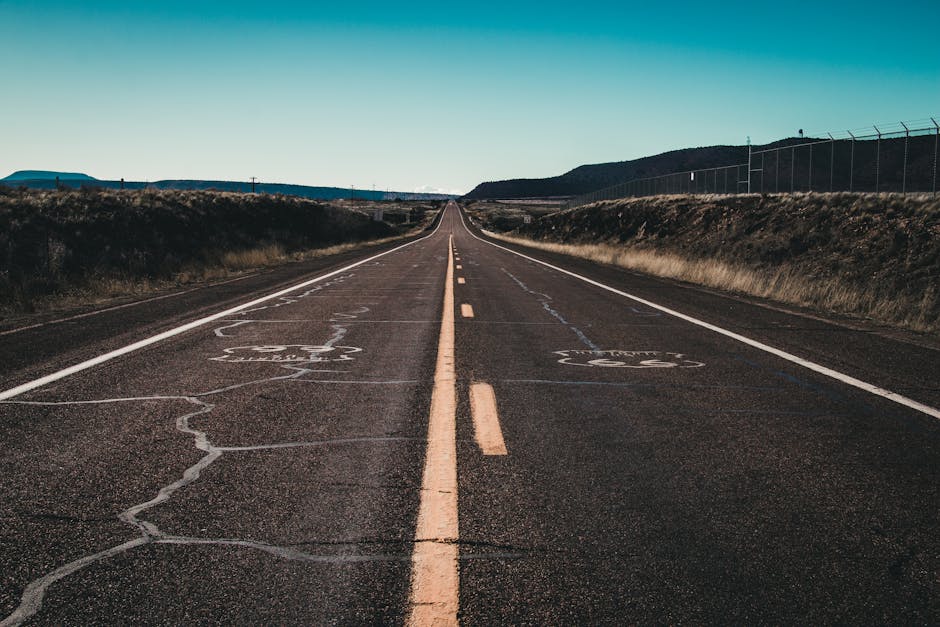
The First Route 66 Road Trip: How America Learned to Wander represents the moment Americans found that the journey itself could be the destination. Before Route 66, travel was about speed. After, it became about everything in between — the roadside diners, quirky attractions, and the freedom of the open road.
Quick Answer: How Route 66 Changed American Travel
- Established in 1926 – Connected Chicago to Los Angeles across 2,448 miles and eight states
- Created roadside culture – Gave birth to motels, diners, and family-owned attractions
- Enabled westward migration – Over 200,000 people traveled west during the Great Depression
- Transformed leisure travel – Shifted from necessity-based journeys to adventure for its own sake
- Built American identity – Became known as "The Main Street of America" and "The Mother Road"
The story of Route 66 is a story about people: entrepreneurs who built businesses on a dream, families who packed up their lives in search of a better future, and everyday Americans who found joy in the simple act of wandering.
When it opened in 1926, Route 66 was more than a highway. It was the first of its kind to connect small towns and rural communities across the heartland, taking a diagonal path that brought commerce and hope to isolated places. Fully paved in 1938, it first served as a path of escape for Dust Bowl families. Later, during the prosperity of the 1950s and 60s, it transformed into a road of adventure.
This shift — from a journey of necessity to one of freedom — is how America learned to wander.
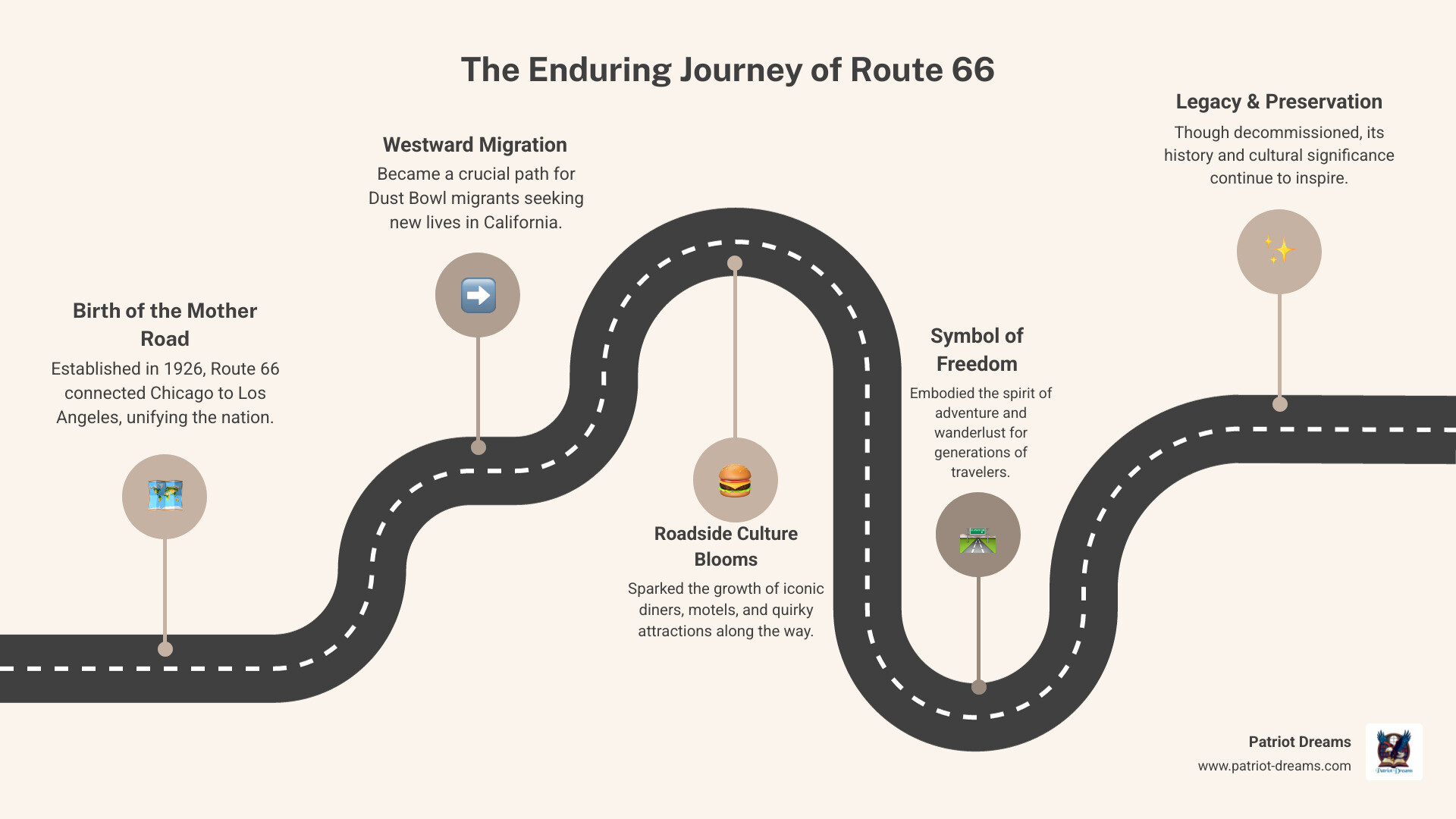
The Birth of the Mother Road: A New Path for a Nation on the Move
Sometimes the best ideas start with a simple question: What if we could connect everyone?
In the 1920s, America was growing fast, but its roads were poor and disconnected. Two men — Cyrus Avery from Tulsa, Oklahoma, and John Woodruff from Springfield, Missouri — envisioned a new kind of path that could change everything.
In 1926, their dream became U.S. Route 66, stretching 2,448 miles from Chicago to Los Angeles. Avery and his fellow promoters called it "The Main Street of America," a road for regular people — families chasing dreams, entrepreneurs opening diners, and farmers getting goods to market.
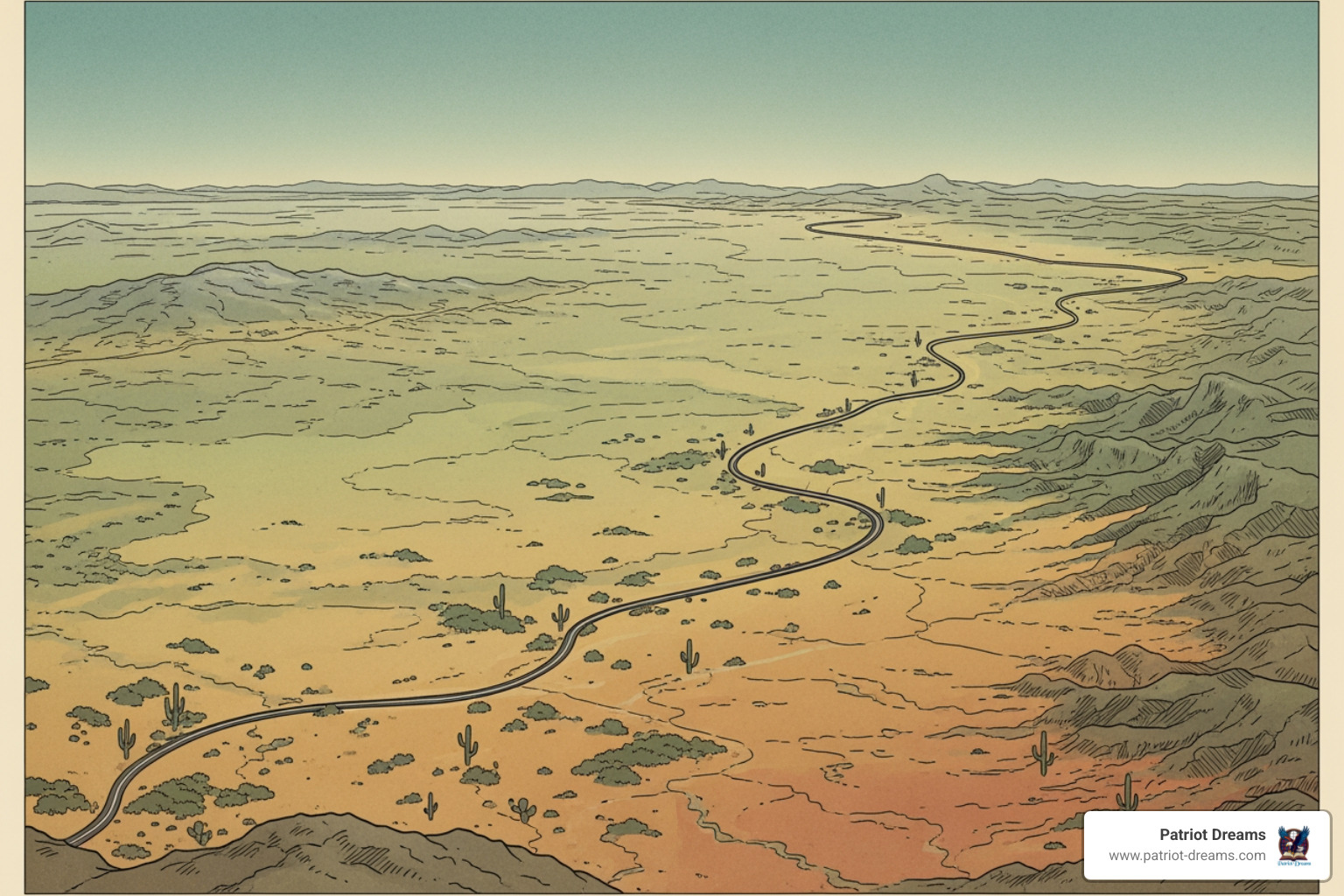
The creation of Route 66 was a remarkable moment in American Innovation History. It became the crown jewel of a new national highway plan, a path for dreamers connecting eight states and countless small towns.
From Dirt Paths to a National Artery
Before Route 66, long-distance travel was a miserable affair of dirt paths that turned to mud in the rain. A trip between states could take weeks. America was a modern nation with roads from another century. Route 66 changed that by taking a diagonal route through the heart of the country, deliberately bypassing major cities to serve the smaller communities that needed it most.
This was intentional. The planners knew that supporting rural communities would strengthen the nation. Farmers could reach markets faster, and small-town businesses could serve travelers. Places that felt forgotten were suddenly on the map. By 1938, the entire route was paved, making it one of the first fully paved highways in the U.S. and a promise of connection for all.
A Road with a Purpose
The visionaries behind Route 66 were building more than a road; they were building hope. Their goal was to link east and west, fostering commerce and a shared sense of American identity. The road became a lifeline for uniting a vast country, bringing a steady stream of travelers who needed gas, food, and a place to sleep.
Entrepreneurs took chances, paving the way for adventure by building diners and motels in the middle of nowhere, trusting that people would stop. And they did. The First Route 66 Road Trip: How America Learned to Wander started here, with a road that served a purpose beyond just getting somewhere fast. It was a symbol of progress that brought everyone along for the ride.
The Great American Journey: Why We Traveled West
There's something deeply moving about a road that carries not just cars, but dreams. Route 66 became that kind of road — a ribbon of hope stretching across the American heartland, carrying countless stories of courage, heartbreak, and the belief that life could be better down the road.
Every mile of Route 66 tells a human story. Some were about survival, others about celebration, but all were about a nation that refused to stay still.

The Road of Flight: Hope During the Great Depression
During the Dust Bowl and Great Depression, families made the impossible choice to head west. They packed their lives into old cars and traveled Route 66, carrying little more than the hope for a fresh start in California. Over 200,000 people made this desperate journey.
John Steinbeck captured this exodus in "The Grapes of Wrath," giving Route 66 its most enduring nickname: "The Mother Road." It was a fitting name. Like a mother, the road guided these travelers and connected them to others on the same difficult journey. These were true American Pioneer Stories — not of covered wagons, but of Model Ts, carrying a new generation of pioneers toward an uncertain future.
The Road to Opportunity: Post-War Prosperity and New Freedoms
After World War II, Route 66 transformed again. The same road that carried desperate families now carried a nation ready to explore. The post-war boom brought a golden age of family vacations, with station wagons and motels replacing jalopies and roadside camps.
But the freedom to wander wasn't the same for everyone. For Black travelers during the Great Migration, the road was both an opportunity and a challenge. Seeking better lives, they relied on "The Green Book" to find hotels, restaurants, and gas stations where they would be welcomed with kindness and safety. This part of the story reminds us that the simple act of traveling with dignity was a hard-won freedom. You can learn more about this complex history in A look at the history of Route 66.
The First Route 66 Road Trip: How America Learned to Wander
In those post-war years, travel stopped being just about getting somewhere. It became about the journey itself. This was the birth of The First Route 66 Road Trip: How America Learned to Wander — when Americans found that exploring their own country could be an adventure.
The freedom of the automobile and newfound prosperity meant families could take their time, stopping at quirky attractions and interesting diners. The modern road trip was born on Route 66, where wandering became wonderful and the journey became the destination.
The Rise of Roadside America: Diners, Motels, and Quirky Wonders
As Americans found the joy of the open road, a magical world bloomed along Route 66. This was the birth of roadside America, where mom-and-pop businesses offered travelers not just a service, but a story. From auto camps to drive-in diners, everything was built by dreamers who believed that if they created something special, people would stop.

This entrepreneurial spirit became a defining part of our American Cultural History, shaping how we thought about travel and hospitality.
Iconic Stops That Tell a Story
Every landmark along Route 66 has its own personality, created by individuals with a vision.
- In Catoosa, Oklahoma, the 80-foot concrete Blue Whale, built as a family gift, became one of the route's most beloved attractions.
- In Amarillo, Texas, Cadillac Ranch features ten Cadillacs buried nose-down. This 1974 art installation invites visitors to leave their mark with spray paint.
- The Wigwam Motel in Holbrook, Arizona, has offered travelers a chance to sleep in a teepee-shaped room since the 1940s.
- In Tucumcari, New Mexico, the Blue Swallow Motel has welcomed guests with its iconic neon sign and 1950s charm since 1940.
- Petrified Forest National Park in Arizona is the only national park containing a section of historic Route 66.
- In Dwight, Illinois, Ambler's Texaco Gas Station (1933) was the longest-operating gas station on the route and is now a restored visitor's center.
- The Hotel El Rancho in Gallup, New Mexico, hosted Hollywood legends like John Wayne, adding a touch of stardust to the highway.
- Red's Giant Hamburger in Springfield, Missouri, made history in 1947 as America's first drive-thru restaurant.
- The Rock Cafe in Stroud, Oklahoma, was built from rocks excavated during the paving of Route 66. Its owner inspired the character Sally Carrera in Pixar's "Cars."
- The Chain of Rocks Bridge near St. Louis is famous for its unique 30-degree turn in the middle of the span.
- While not on the route, the Gateway Arch in St. Louis symbolizes the westward expansion that defined the spirit of The First Route 66 Road Trip: How America Learned to Wander.
The People Who Built the Dream
Behind every one of these places stood real people with real dreams. Lillian Redman of the Blue Swallow Motel became legendary for her kindness, proving that hospitality was about making people feel genuinely cared for. Artist Bob Waldmire traveled the road in his VW Microbus, capturing its spirit in his artwork. In Erick, Oklahoma, Harley Russell's music studio offered travelers authentic character and a good laugh. In Kansas, Scott Nelson continues his family's legacy at Nelson's Old Riverton Store, a stop that has served travelers since 1925.
These small-town heroes are the true keepers of Route 66's spirit. They remind us that the best stories are often found in a conversation over coffee at a roadside diner.
The End of the Trail and a New Beginning: The Legacy of Route 66
The Federal-Aid Highway Act of 1956 created the Interstate Highway System, which promised faster, more efficient travel. But this progress came at a cost. As interstates bypassed the small towns along Route 66, businesses grew quiet. On June 27, 1985, the Mother Road was officially decommissioned and began to fade into memory.

The First Route 66 Road Trip: How America Learned to Wander
But the story didn't end there. The spirit of The First Route 66 Road Trip: How America Learned to Wander proved too resilient to disappear. Communities and passionate individuals refused to let their stories die. They formed preservation groups and began the hard work of saving the road.
Today, thanks to their dedication and the support of organizations like the National Trust for Historic Preservation, over 85% of the original route remains drivable. Navigating its discontinuous sections requires patience and a good map, but that's part of the adventure. The road asks you to slow down and engage with it, just as travelers did generations ago. These efforts recognize that Route 66 is a living connection to our shared history.
Getting Your Kicks: How Pop Culture Cemented the Legend
Pop culture had already secured Route 66's place in the American heart. In 1946, Nat King Cole's "(Get Your Kicks on) Route 66" became an anthem for the post-war spirit of freedom.
The CBS television series "Route 66" (1960-1964), featuring two young men seeking adventure in a Corvette, further cemented the road's mythical status. More recently, Pixar's film "Cars" drew inspiration from real people and places along the route, introducing its magic to a new generation. These cultural touchstones are wonderful examples of how our past echoes forward, much like the stories you'll find in Echoes of the Past: How 20th Century America Lives On in Today's Hit Songs.
The Road Ahead: The Centennial and Modern Wandering
As the 2026 centennial approaches, the official U.S. Route 66 Centennial Commission is planning a celebration to honor the highway and the people it touched. For modern wanderers, the spirit of the road is still there to be found.
To experience it, travel during the day, stop at the quirky attractions, and eat at the local diners. When you support these businesses and listen to their stories, you become part of the continuing story of Route 66, ensuring future generations can still get their kicks on the Mother Road.
Frequently Asked Questions about The First Route 66 Road Trip: How America Learned to Wander
Planning a journey along the Mother Road can feel different from other trips. Here are answers to some common questions.
How long does it take to drive all of Route 66?
To truly experience The First Route 66 Road Trip: How America Learned to Wander, give yourself at least two weeks. This isn't a race from Chicago to Santa Monica; it's about savoring everything in between. A slower pace leaves time for the unexpected findies and conversations that define the Route 66 experience. Rushing means you'll miss the heart of it all.
Is Route 66 still drivable today?
Yes, absolutely! Over 85% of the original route is still there for you to explore. However, it's not a continuous highway anymore, so you can't just type "Route 66" into your GPS. You'll need dedicated maps, guidebooks, or apps to steer the various sections. Think of it as a treasure hunt — piecing the historic path together is part of the adventure and the fun.
What is the most important thing to remember when traveling Route 66?
If there's one thing to take to heart, it's this: the journey itself is the destination. That's the whole point of Route 66. The magic is found in the small moments: a conversation at a diner, the glow of a neon sign at dusk, or a story from a local shopkeeper.
Approach the road with an open heart and a willingness to wander. When you do, you're not just taking a road trip; you're connecting with the spirit of findy that has drawn travelers to this road for generations, and you're adding your own story to its legacy.
Conclusion
The story of The First Route 66 Road Trip: How America Learned to Wander is the story of all of us. It’s about the dreamers who sought a new life and the families who later finded that the best memories are made along the way.
Route 66 is a living storybook, and its pages are still turning. Every restored gas station and every conversation with a shopkeeper adds another chapter. This isn't just about looking backward; it's about recognizing a timeless curiosity in ourselves — that same hope and willingness to see what's around the next bend.
The road taught us that wandering isn't aimless. It's how we find ourselves, our country, and each other. It showed us that small moments — a slice of pie, a quirky landmark, a kind word — are often what we remember most. These stories connect us across generations, reminding us of the resilience and kindness that have always been part of the American spirit.
As Route 66 approaches its centennial in 2026, we have a beautiful opportunity to honor the people who traveled it, built alongside it, and continue to preserve it. Their stories are our stories — tales of hope, adventure, and the enduring belief that the journey matters.
These are the kinds of inspiring stories we cherish at Patriot Dreams. We believe every American story deserves to be heard and passed down. To explore more narratives that capture the heart of America, we warmly invite you to check out the Patriot Dreams App where we bring these stories to life in our interactive map.
The road is still out there, waiting. And it's still teaching us how to wander.

Join the Patriot Dreams Community
Download the app today and start your journey through American history and personal legacy.

Explore Our Latest Insights
Dive into stories that shape our American legacy.