Rising From the Shadows: How African American Soldiers Inspired New Hope During the Civil War
%20-%20Kyle%20Falkenrath.jpg)
A New Dawn of Hope
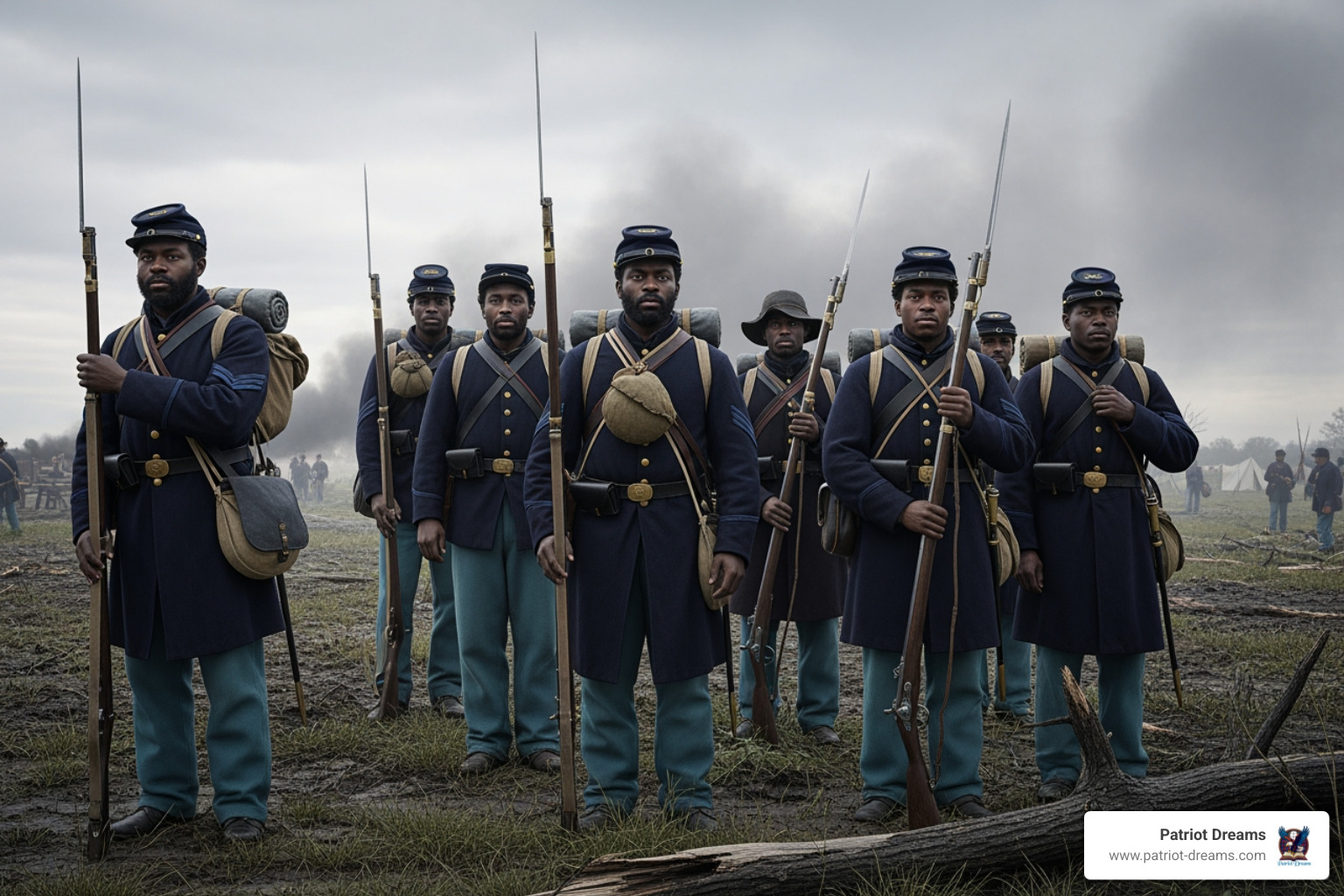
Rising From the Shadows: How Cathay Williams and African American Soldiers Inspired New Hope During the Civil War represents one of the most powerful changes in American history. When the Civil War began, African Americans were denied the right to serve. By war's end, over 180,000 Black soldiers had fought for the Union, fundamentally changing both the war's outcome and the nation's future.
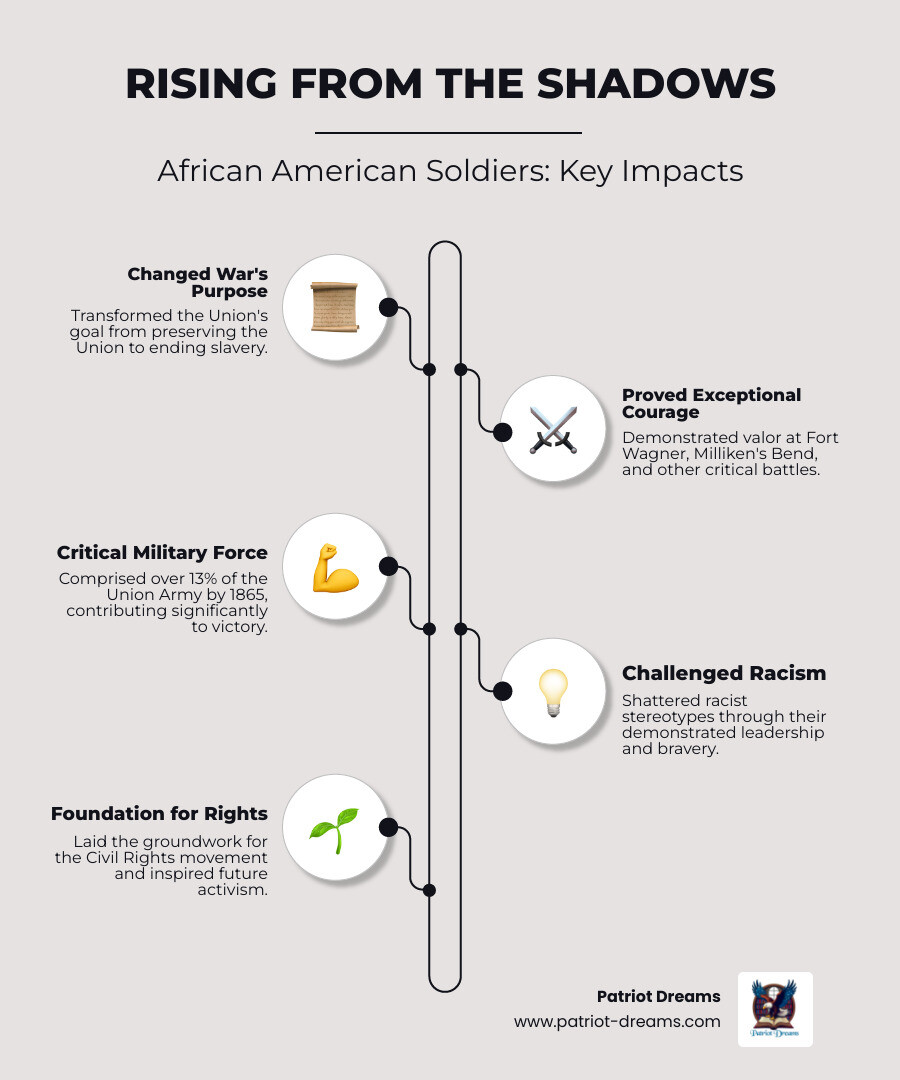
Key Impact of African American Soldiers:
- Changed the war's purpose from preserving the Union to ending slavery
- Proved their courage at battles like Fort Wagner and Milliken's Bend
- Comprised over 13% of the Union Army by 1865
- Earned citizenship through military service and sacrifice
- Laid the foundation for the Civil Rights movement
- Challenged racist stereotypes through demonstrated valor and leadership
- Inspired future generations including the Buffalo Soldiers and beyond
The story begins with a simple truth: these soldiers fought for something greater than military victory. They fought for freedom—their own, their families', and their children's. Every march, every battle, every act of courage was a statement that said, "We are citizens. We are men. We deserve dignity."
Among these brave souls was Cathay Williams, who would later become the only documented woman to serve with the Buffalo Soldiers. Her journey from enslaved cook to disguised soldier represents the extraordinary lengths African Americans went to prove their worth and claim their place in the nation's story.
Their service didn't just help win a war. It sparked a new vision of what America could become—a place where courage and character mattered more than the color of one's skin. These soldiers rose from the shadows of slavery and prejudice to become symbols of hope, not just for their own community, but for the very soul of the nation.
Similar topics to Rising From the Shadows: How Cathay Williams and African American Soldiers Inspired New Hope During the Civil War:
- Martin Luther King Jr.: The Dream, The Struggle, The Legacy
- The Real Life Behind the Legend: Casey Jones and the Making of an American Railroad Hero
- Behind the Badge: Real Stories of American Heroes in Pop Culture
A Cause Greater Than War: The Quest for Freedom and Citizenship
The call to arms for African American men was more than just a call to battle; it was a profound opportunity to claim their freedom and assert their identity as citizens and human beings. Imagine living in a country where your very humanity is questioned, where your labor is stolen, and your voice is silenced. For African Americans during the Civil War, the Union Army offered a path, however perilous, to redefine their place in America. It was a chance to step onto the stage of history and declare, "We belong."
The Deepest Motivations
What truly moved these brave souls to enlist? It was a complex mix of deeply personal and profoundly communal motivations. At its heart, it was the yearning for freedom—not just for themselves, but for their families, their loved ones still enslaved, and for the generations yet to come. They understood that military service was perhaps the one arena in which they could truly exercise their entitlement to citizenship. This wasn't merely about receiving rights; it was about demonstrating that they were already citizens in spirit, ready to defend the very ideals of the nation.
Beyond freedom, the act of fighting was a powerful assertion of their manhood and worth. In a society that relentlessly stripped them of dignity, serving in uniform was a way to prove, unequivocally, that they were "real men"—capable, courageous, and committed. This desire to prove their manhood, demonstrate their citizenship, and preserve racial pride served as primary motivations behind their unwavering desire to serve and fight. They sought to secure a future for their children, a future where the promise of the Declaration of Independence—that all men are created equal—might finally extend to them. We see echoes of this foundational American spirit in stories of Revolutionary War Heroes, where the fight for liberty defined a nation. The very words penned by Thomas Jefferson and the Declaration of Independence: How a Nation Found Its Voice resonated deeply, promising a vision of liberty that African Americans were determined to claim.
"Let the Slaves and Free Colored People Be Called Into Service"
Early in the war, the idea of arming African Americans was met with significant resistance from many within the Union. Yet, visionary leaders like Frederick Douglass tirelessly advocated for their inclusion. He understood that allowing Black men to fight would not only bolster the Union's forces but would also irrevocably tie their freedom to the nation's destiny. His powerful voice urged the nation to "Let the slaves and free colored people be called into service."
The turning point arrived with the Emancipation Proclamation in January 1863. This momentous declaration not only freed enslaved people in Confederate states but also officially authorized the enlistment of African American soldiers. The creation of the United States Colored Troops (USCT) was a monumental step, changing the war from a conflict solely about preserving the Union into a moral crusade for human liberty. From that moment on, a torrent of eager volunteers, both formerly enslaved and free, swelled the ranks. By the war's end, over 180,000 African American soldiers had served in the Union Army, constituting over thirteen percent of its total forces. These were not just soldiers; they were pioneers, carving a new path for their people and for the very soul of America. Their stories stand alongside those of other remarkable Historical American Figures who shaped our nation's journey.
The Remarkable Story of Cathay Williams
While the Civil War raged, countless stories of courage unfolded. One of the most unique is that of Cathay Williams, who carried the torch of service into the post-war era, showing that the fight for dignity knew no gender. Her remarkable journey reminds us that heroism often emerges from the most unexpected places, defying societal expectations and forging new paths.
A Woman in a Man's World
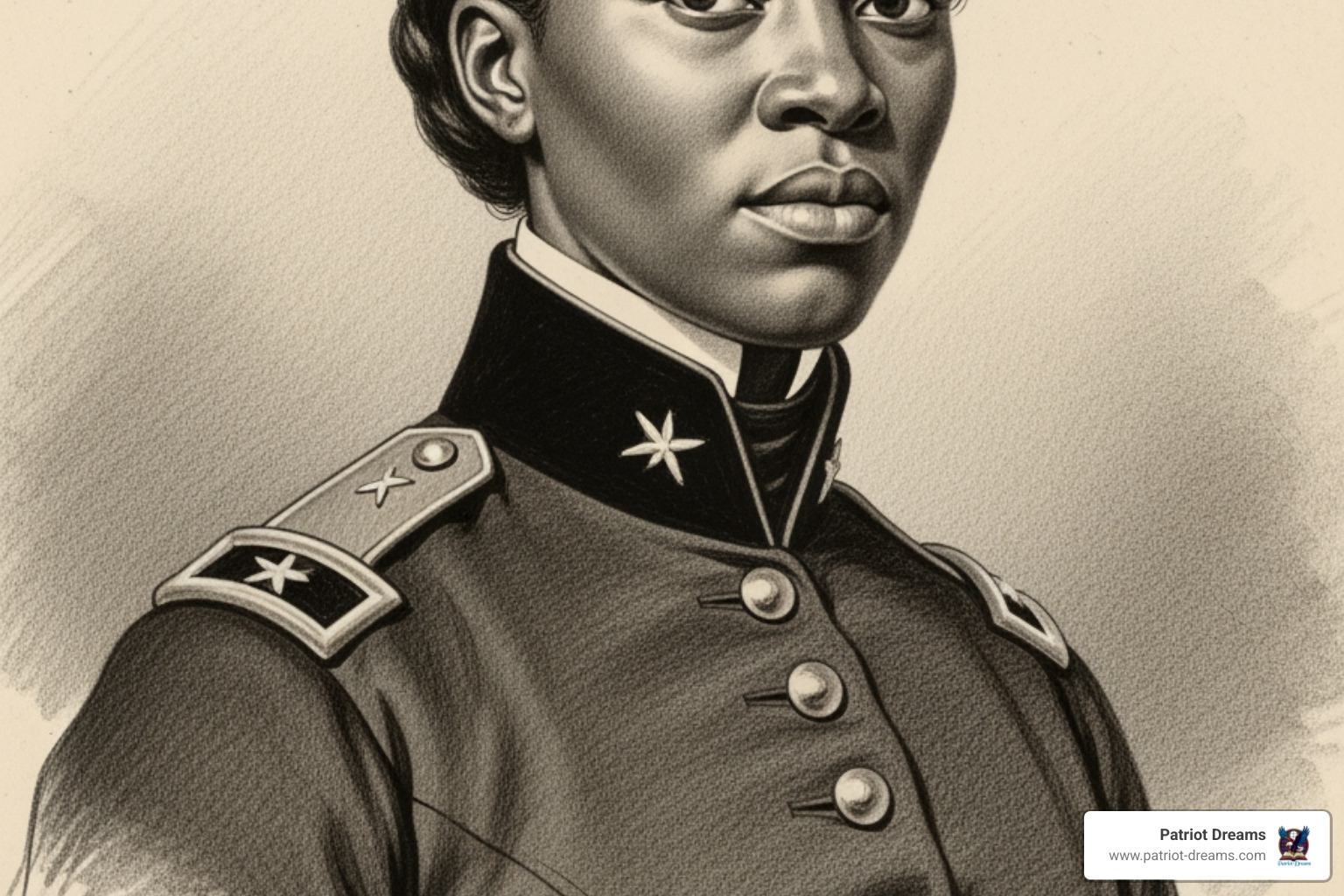
Cathay Williams's story is a testament to extraordinary determination. Born into slavery in Missouri around 1844, her early life was marked by the harsh realities of bondage. When the Civil War broke out, she, like many enslaved people, was impressed into service, first by the Confederates and then as a cook and laundress for the Union Army. It was during her time with the Union forces that she witnessed the power and purpose of soldiers, sparking an idea that would change her life.
Inspired by the sight of Black men fighting for their freedom, Williams made a bold decision. In 1866, after the war, at a time when women were strictly forbidden from military service, she disguised herself as a man and enlisted in the United States Regular Army under the name "William Cathay." Her motivation was simple yet profound: she wanted to earn her own living and escape the limitations placed upon her as a Black woman. She became the only known documented black woman to dress as a man and serve in the military, joining the newly formed Buffalo Soldiers—a lineage that built directly upon the legacy of Civil War service. We are fortunate that her story has been preserved, allowing us to learn more about her incredible journey. You can explore more about her remarkable life and service as a Cathay Williams/William Cathay: Buffalo Soldier and even watch a compelling documentary, 🎥 Cathay Williams: The Unsung Soldier of the Civil War 🇺🇸 . Her story is truly an unsung chapter in our nation's history, as highlighted by Cathay Williams .
The Challenges and Legacy of "William Cathay"
Serving in the army as "William Cathay" presented immense challenges. Cathay had to maintain her disguise every single day, a constant source of anxiety. She endured the grueling marches, harsh conditions, and frequent illnesses that plagued soldiers of the era, all while concealing her true identity. She was often sick, suffering from smallpox and other ailments, which led to hospital stays—each one a terrifying risk of findy during medical examinations. Despite these hardships, she served for nearly two years, a testament to her incredible resilience and determination. Her gender was eventually finded by an army surgeon, leading to her honorable discharge in 1868.
Cathay Williams's story is more than just an amazing anecdote; it's a powerful symbol. Her courage to defy societal norms and military regulations to claim her agency speaks volumes about the spirit of African Americans striving for dignity and self-determination. Her legacy reminds us of the countless untold stories of strength and perseverance that shaped our nation, much like the inspiring narratives found in American Pioneer Stories. She demonstrated that the desire for freedom and respect transcends all boundaries, even those of gender, laying a unique groundwork for future activism.
Courage Under Fire: How Black Soldiers Changed the Course of the War
On battlefields from Virginia to Mississippi, African American soldiers fought with exceptional bravery, forever shattering the cruel stereotypes used to justify their bondage. Their valor was not just a military asset; it was a moral force that reshaped perceptions and infused new purpose into the Union cause.
From Fort Wagner to the Crater
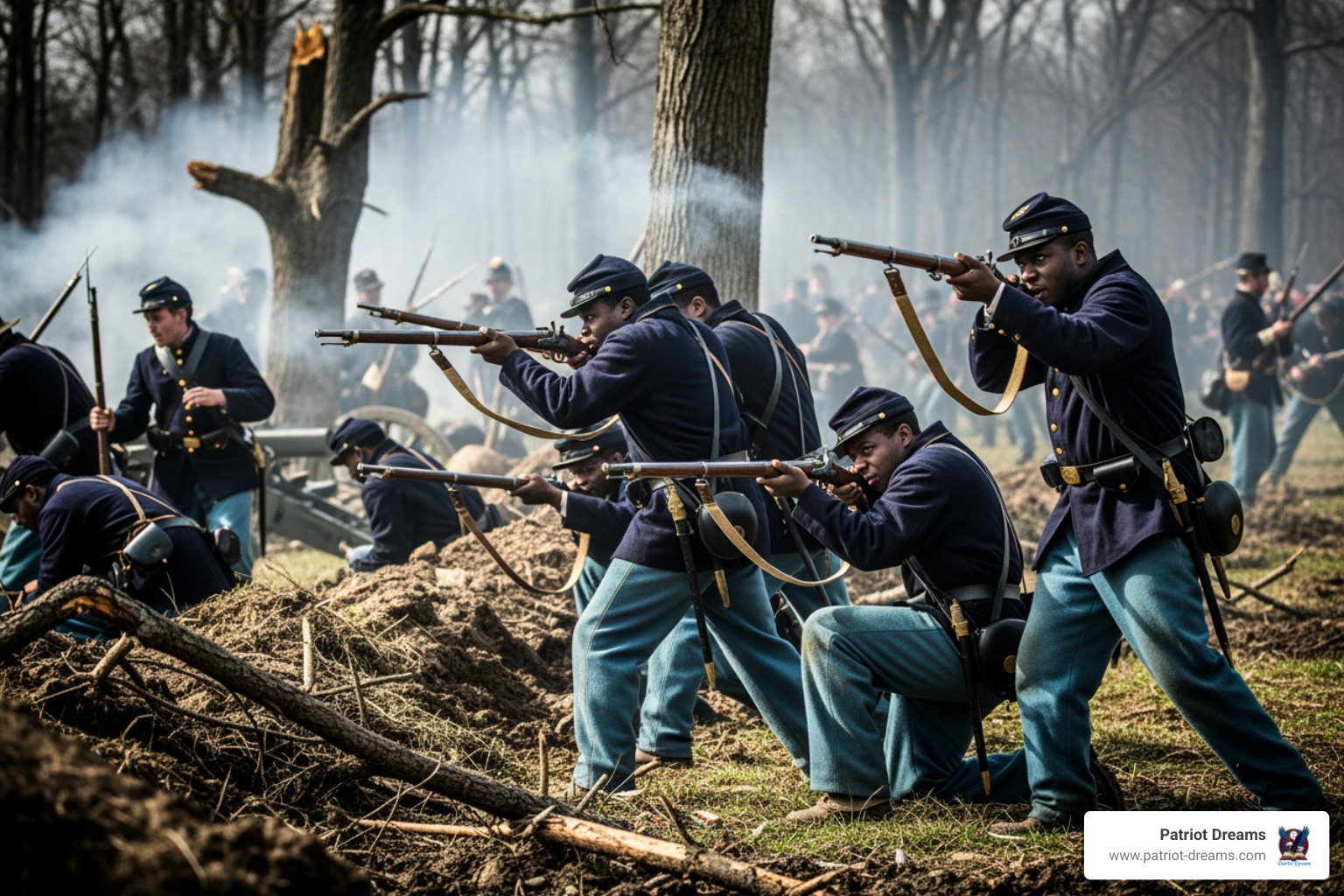
The courage of African American soldiers was undeniable on the battlefield. Their actions spoke louder than any prejudice. The heroic charge of the 54th Massachusetts Infantry Regiment on Fort Wagner in July 1863 is perhaps the most famous example. Though they suffered heavy losses and did not capture the fort, their extraordinary bravery under fire proved beyond doubt that Black soldiers could fight with as much courage and discipline as any other. This act of valor, depicted in powerful historical accounts, earned them respect from even their staunchest critics.
Similarly, at the Battle of Milliken's Bend in June 1863, newly recruited African American troops, many with minimal training, held their ground against a determined Confederate assault. Their fierce resistance, often fighting hand-to-hand, astonished observers and further dispelled racist notions of their inferiority. Later, at the Battle of the Crater during the Siege of Petersburg in 1864, despite being tragically misused and suffering immense casualties, African American regiments again demonstrated their willingness to fight and die for the Union and for their freedom. These battles were not just military engagements; they were profound statements, challenging racist ideologies and earning the respect of many white officers and soldiers who witnessed their unwavering resolve.
A New Perception of the Union Cause
The service of African American soldiers fundamentally shifted the moral landscape of the Civil War. What began, for many, as a war to preserve the Union, evolved into a war of liberation. Their presence on the battlefield made it impossible to ignore the central role of slavery in the conflict. This new perception galvanized support for the Union cause, both within the military and among the civilian population. It inspired enslaved people to seek freedom, knowing that the Union army now offered a pathway to liberty, and it invigorated free Black communities, giving them a direct stake in the war's outcome.
Globally, the sight of formerly enslaved people fighting for their freedom resonated deeply, gaining international support for the Union and making it difficult for European powers to formally recognize the Confederacy. The African American soldier became a powerful symbol of a new America—an America striving, however imperfectly, towards its stated ideals of liberty and justice for all. Their sacrifice infused the Union cause with a moral righteousness that transcended mere political unity, laying the groundwork for profound changes in American Cultural History.
Rising From the Shadows: How African American Soldiers Inspired New Hope During the Civil War
The service of these soldiers did not end with the Confederacy's surrender. Their courage laid the foundation for a century-long struggle for equality, inspiring future generations to continue the fight. The hope they kindled during the war burned brightly in the decades that followed, illuminating the path toward a more just society.
The Birth of the Buffalo Soldiers
After the Civil War, the nation faced the immense task of reconstruction and expansion. The bravery of African American soldiers during the war had not gone unnoticed. The Army Reorganization Act of 1866 authorized the creation of six permanent black regiments in the regular U.S. Army. Among these were the Ninth and Tenth Cavalries, famous for their service on the Western frontier, who came to be known as the "Buffalo Soldiers."
These regiments built directly upon the legacy of their Civil War predecessors. Three thousand former members of the United States Colored Volunteers joined the new regular Army, carrying forward the spirit of service and the fight for recognition. They protected settlers, built infrastructure, and fought in the Indian Wars, often under incredibly challenging circumstances and facing continued discrimination. Their unwavering dedication and effectiveness on the frontier further solidified their image as symbols of strength and resilience. The Buffalo Soldiers became iconic figures, not just as soldiers, but as "race warriors," embodying the aspirations of African Americans to contribute fully to the nation. Their stories are an integral part of The Frontier Myth Today: What the Old West Tells Us About Modern America.
How the experiences of African American soldiers during the Civil War lay the groundwork for future activism and the fight for civil rights
The military service of African American soldiers during and after the Civil War was a profound assertion of citizenship. These men believed they were already citizens, and their service was an exercise of that entitlement. They fought for their honor, pride, heroism, leadership, and, most importantly, their manhood. This foundation of self-worth and proven capability was crucial for the long struggle ahead.
Veterans of the Civil War and the Buffalo Soldiers often returned to their communities as leaders, bringing with them discipline, organizational skills, and a fierce determination to achieve equality. They became the backbone of movements for racial uplift, paving the way for the "New Negro" movement of the early 20th century, which emphasized racial pride, cultural assertiveness, and political activism. Their sacrifices and achievements created a powerful narrative that inspired future generations of civil rights activists. We see this legacy in the unwavering spirit of leaders like Martin Luther King Jr: The Dream, The Struggle, The Legacy and the quiet courage of activists like Rosa Parks Story. The "Double V" campaign of World War II, which called for victory against fascism abroad and racism at home, directly drew upon this long-standing tradition of military service as a claim to full citizenship.
How the narratives of African American soldiers, including Cathay Williams, challenge the prevailing racist ideologies of the time and offer a vision of hope and possibility for the future
The narratives of African American soldiers, from the battlefields of the Civil War to the Western frontier, fundamentally challenged the prevailing racist ideologies of their time. These men and, in Cathay Williams's unique case, this woman, shattered stereotypes of passivity, ignorance, and inferiority. They demonstrated intelligence, discipline, and unparalleled valor, proving that courage and capability were not defined by skin color. Their actions offered a powerful counter-narrative, replacing derogatory caricatures with images of heroism, leadership, and unwavering commitment to American ideals.
Their stories instilled a profound sense of hope and possibility for the future. They showed that African Americans were not just deserving of freedom, but capable of defending it and building a better nation. Their military service was a public, undeniable declaration that they were integral to the fabric of America, creating new narratives of Black heroism and inspiring racial uplift. This vision of an equal America, where character and contribution mattered above all else, was a guide of hope that guided the long and arduous journey toward civil rights, reminding us that true patriotism includes fighting for the promise of equality for everyone.
Conclusion: An Enduring Legacy of Hope
The stories of Cathay Williams and the nearly 200,000 African American soldiers who served the Union are a powerful chapter in our nation's history. They fought not just for a country, but for the very idea of what America could be—a place of freedom and dignity for all. Their courage echoes through time, reminding us that even in the darkest shadows, hope can rise. At Patriot Dreams, we believe in the power of these stories to inspire us all, to connect us to the best of America, and to remind us of the enduring spirit of perseverance that defines our nation. Their legacy is a cherished part of our collective heritage, a testament to the idea that every individual's fight for dignity enriches us all.
Join the Patriot Dreams Community
Download the app today and start your journey through American history and personal legacy.

Explore Our Latest Insights
Dive into stories that shape our American legacy.