The Army That Didn’t Exist: The Secret Story of the 23rd Headquarters Special Troops
%20-%20Kyle%20Falkenrath.png)
When Imagination Became the Greatest Weapon of World War II
The Army That Didn't Exist: The Secret Story of the 23rd Headquarters Special Troops is one of the most remarkable and heartwarming stories from World War II. This special unit used art, creativity, and imagination to save thousands of American livesnot with guns, but with inflatable tanks, sound effects, and theatrical performances that fooled the German army.
Quick Facts About the Ghost Army:
- Official Name: 23rd Headquarters Special Troops
- Activated: January 20, 1944, at Camp Forrest, Tennessee
- Size: 1,100 men (82 officers, 1,023 enlisted)
- Mission: Deceive German forces about Allied troop locations and strength
- Operations: More than 20 deception missions across France, Belgium, Luxembourg, and Germany
- Lives Saved: Estimated 15,000 to 30,000 American servicemen
- Secret Until: 1996 (kept classified for over 50 years)
- Recognition: Congressional Gold Medal awarded in 2024
Instead of traditional soldiers, the Ghost Army was filled with artists, designers, sound engineers, and theater professionals. Fashion designer Bill Blass, painter Ellsworth Kelly, and photographer Art Kane all served in this unique unit. These creative minds had an average IQ of 119one of the highest in the Army.
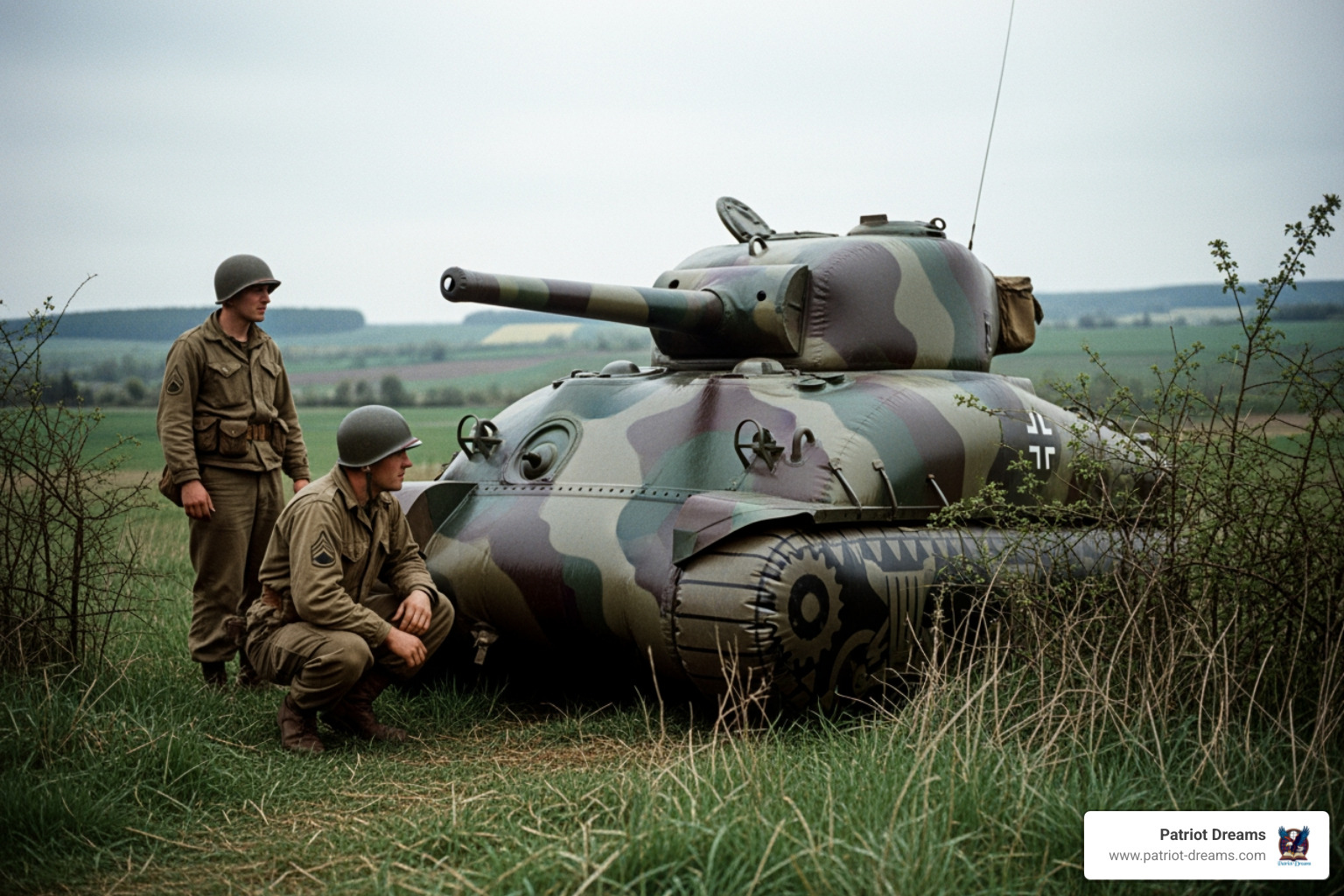
Their tools weren't rifles and grenades. They carried inflatable rubber tanks that weighed just 93 pounds, massive speakers that blasted recordings of tank movements, and radio equipment to send fake messages. They performed elaborate shows for an audience of German soldiers, making small forces look like massive divisions.
This wasn't about violence. It was about using kindness and cleverness to protect American lives. These men risked everythingthree were killed and dozens woundedto perform illusions that would draw enemy fire away from their fellow soldiers.
For decades after the war, these heroes couldn't tell anyone what they'd done. They kept their secret, even from their own families. When the story finally came to light in 1996, America finded a group of everyday people who had done something extraordinarythey'd turned imagination into salvation.
If youd like to explore more of the historical record behind their story, the Ghost Army entry on Wikipedia offers a helpful overview and additional context.
A Cast of Creative Heroes: Forming the Ghost Army
Imagine a military unit where the most valuable skills weren't marksmanship or tactical maneuvers, but creativity, artistic talent, and a knack for storytelling. This was the essence of the Ghost Army, officially known as the 23rd Headquarters Special Troops. This extraordinary unit was activated on January 20, 1944, at Camp Forrest, Tennessee, under the command of Colonel Harry L. Reeder. It was a groundbreaking concept, a military unit designed not to fight, but to deceive. For those who wish to dig deeper, the National World War II Museum offers a wonderful account of their story.
The individuals recruited for this unusual assignment were truly special. Over 1,100 men were handpicked, many of whom were artists, architects, designers, sound engineers, and theater professionals. Their average IQ was a remarkable 119, one of the highest in the entire Army. These were not your typical soldiers; they were thinkers, dreamers, and innovators.
Among their ranks were individuals who would later become household names in art and fashion. Fashion designer Bill Blass, minimalist painter Ellsworth Kelly, and renowned photographer Art Kane all lent their unique talents to the Ghost Army's cause. Their presence underscores the unit's reliance on imaginative and unconventional thinkers. It reminds us that heroism comes in many forms, sometimes with a paintbrush or a sound mixer instead of a rifle.More about other unconventional heroes from American history.
The Four Parts of the Illusion
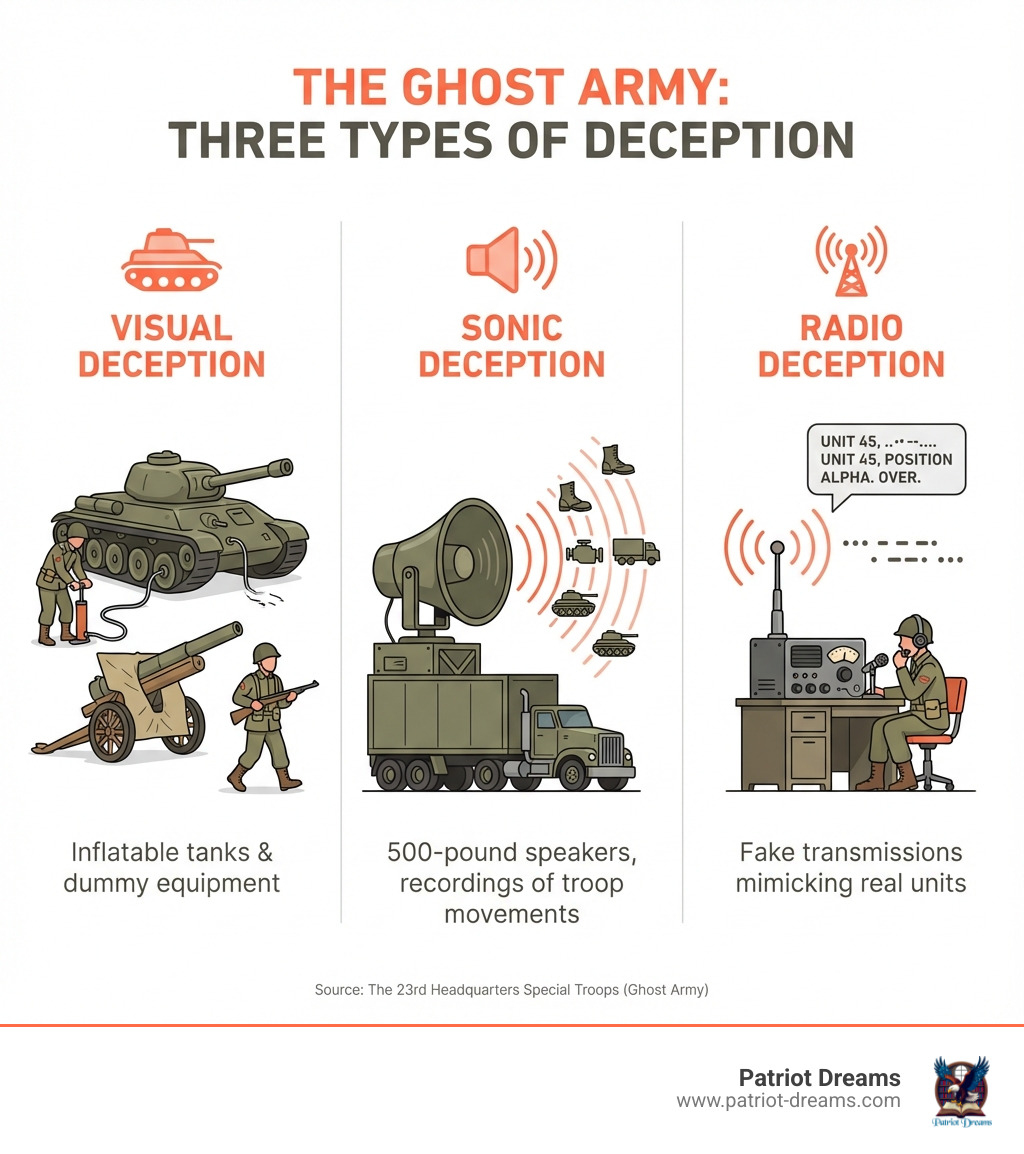
To create their elaborate deceptions, the Ghost Army was structured into four specialized companies, each playing a crucial role in the grand illusion:
603rd Engineer Camouflage Battalion: This was the largest unit, comprising 379 men. They were the masters of visual deception, responsible for deploying inflatable tanks, trucks, artillery, and jeeps. These rubberized fabric creations, weighing as little as 93 pounds for an M-4 Sherman tank, looked astonishingly real from a distance or during aerial reconnaissance. They even used "imperfect camouflage" to ensure they were just visible enough to be "found" by enemy scouts.
Signal Company Special: With 296 men, this company handled radio deception, often referred to as "spoof radio." Their task was to create false radio traffic, mimicking the unique sending styles of other units. This trickery convinced German intelligence that large numbers of troops were communicating from locations where they weren't.
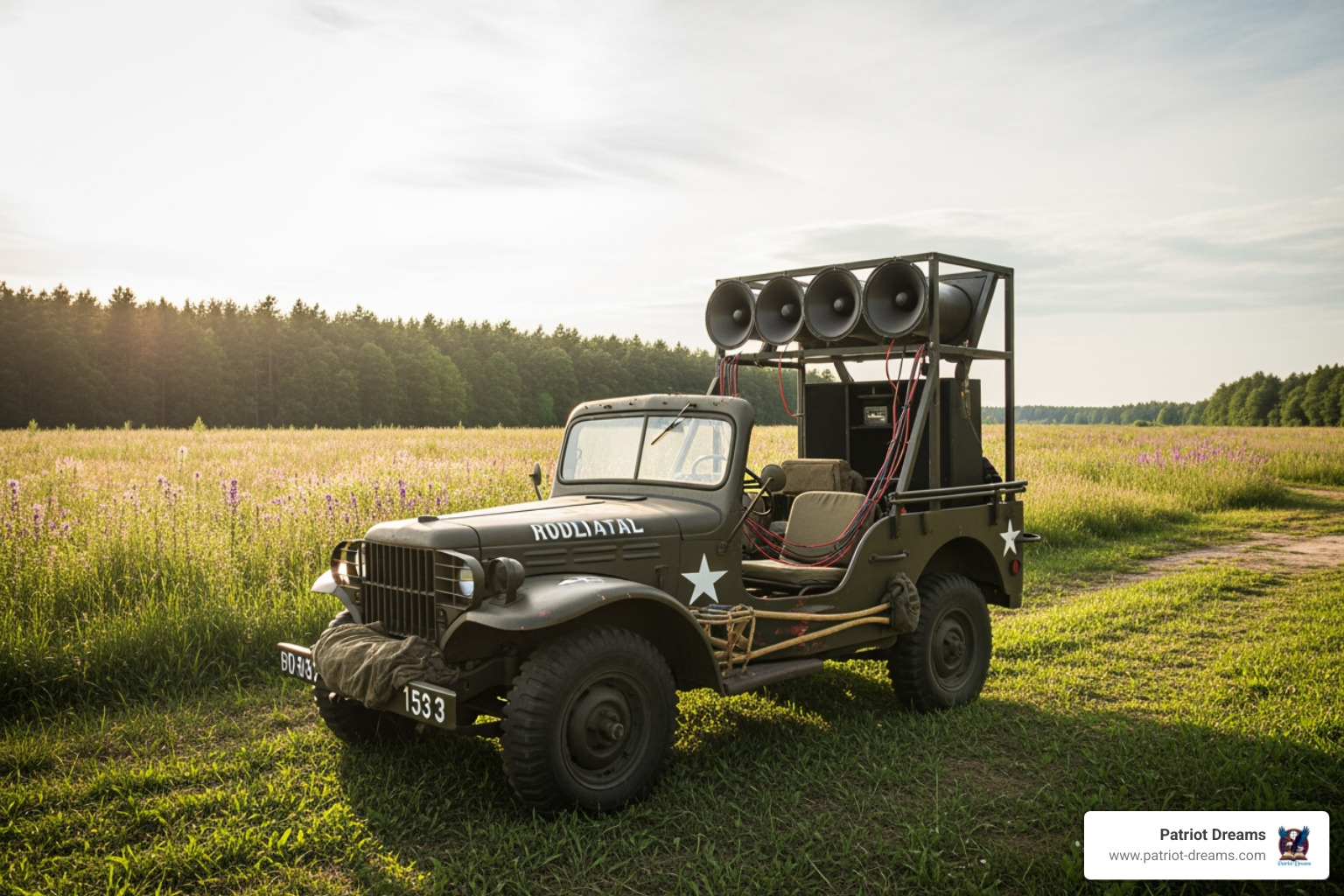
3132nd Signal Service Company: Staffed with 145 men, this unit was the sonic deception team. They blasted recordings of troop movements, trucks, and artillery fire through massive 500-pound speakers mounted on jeeps. These sound effects created the auditory illusion of thousands of soldiers assembling, even when the area was largely empty. They could simulate an entire tank or infantry division on the move.
406th Engineer Combat Company: This company, with 168 men, provided the essential support. They were responsible for perimeter security, construction of dummy installations, and demolition work, ensuring the integrity of the deception and protecting the artists at work.
The Art of War: A Traveling Roadshow of Deception
The Ghost Army truly embodied the idea of a "traveling road show of deception." Captain Fred Fox, an officer in the unit, famously wrote that it was "more theatrical than military." Their mission was to put on a convincing performance for the enemy, using a blend of visual, sonic, and radio illusions, along with clever atmospherics, to manipulate German perceptions of Allied strength and location. It was a fascinating blend of art and strategy, where imagination was the most potent weapon.
Visual Illusions
The most iconic tools in their arsenal were the inflatable tanks, trucks, and aircraft. These were not toys, but carefully crafted, life-sized replicas made from rubberized fabric. A dummy M-4 Sherman tank, for instance, weighed only 93 pounds when fully inflated. These "big boys" were deployed under the cover of darkness, then carefully arranged to simulate a real military encampment. They even used "imperfect camouflage"—just enough to suggest concealment, but not so much that they couldn't be spotted by German aerial reconnaissance. The goal was to be seen, but to convey a false truth.
Sonic Illusions
To complete the illusion, the Ghost Army employed powerful sonic deception. They used massive speakers, some weighing 500 pounds, mounted on jeeps. These speakers blasted prerecorded sounds of troop movements, the rumble of tanks, the roar of trucks, and even the sounds of soldiers building pontoon bridges. These auditory effects could travel for miles, creating the impression of a massive military force on the move or preparing for battle where none existed. It was like a carefully choreographed symphony of phantom warfare.
Radio Trickery
The Signal Company Special added another layer of deception through fake radio transmissions. They created entire phony traffic nets, mimicking the unique "fist" or sending style of actual radio operators from real units. This detail was crucial because German intelligence often identified units by the distinct rhythm and style of their radio operators. By skillfully imitating these patterns, the Ghost Army could convince the enemy that specific, large Allied divisions were in a particular area.
Atmospherics
Beyond the equipment, the men themselves were part of the act. This was "atmospherics"—the art of creating a believable environment. Soldiers would wear the patches of the units they were impersonating, drive marked vehicles, and even mingle in local towns. They would engage in conversations, subtly spreading rumors and disinformation about their (fictitious) divisions and their (false) intentions. Sometimes, they would even pose as high-ranking generals, adding weight to their fabricated presence. It was all about painting a picture so convincing that the enemy would believe it was real.Discover more about the Ghost Army’s remarkable story on Patriot Dreams.
On the Front Lines of Imagination: The Army That Didn’t Exist in Action
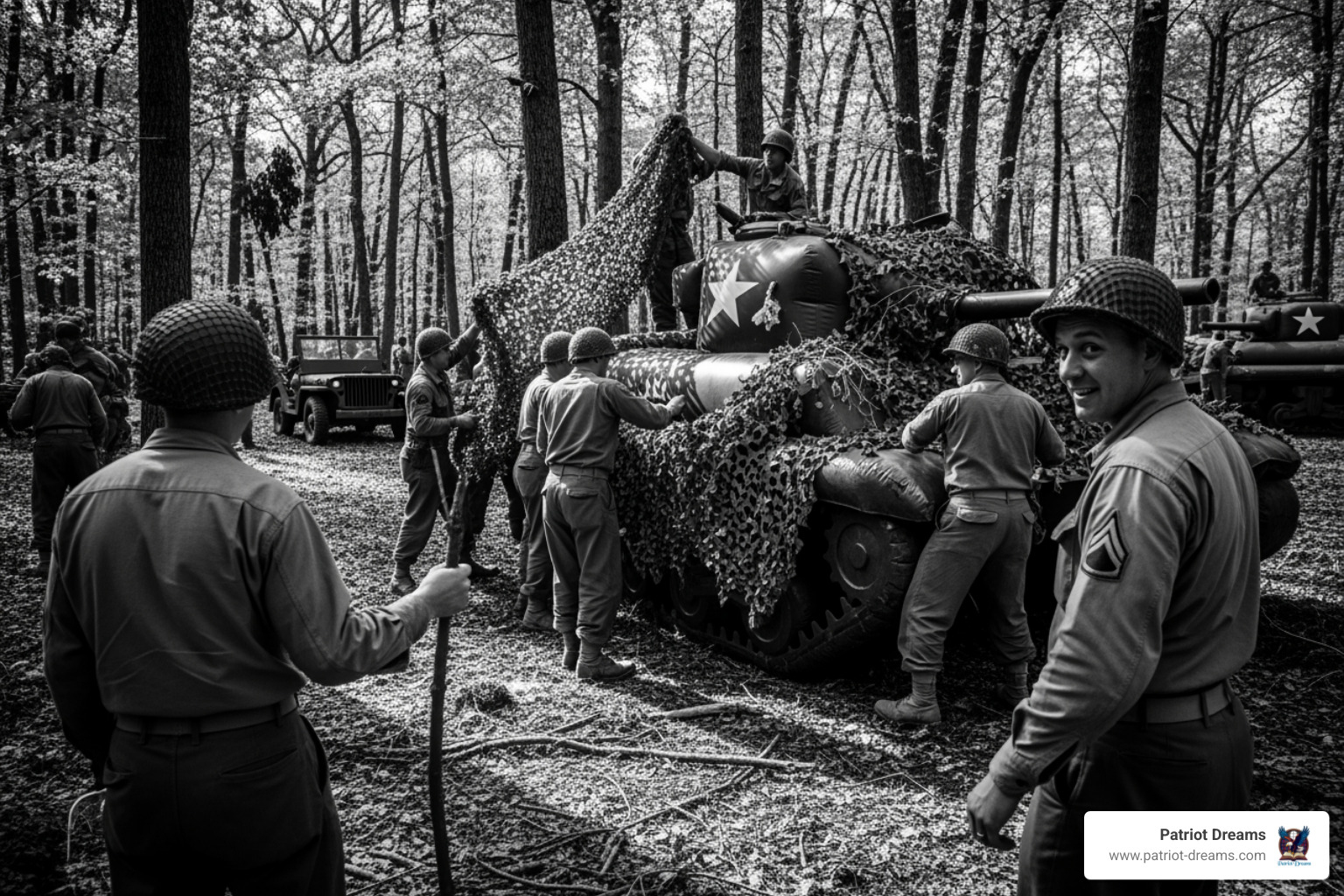
The Ghost Army wasn't just a training exercise; it was a unit that actively engaged in combat, albeit in a unique way. They carried out more than 20 deception missions across France, Belgium, Luxembourg, and Germany, consistently fooling German forces and diverting their attention. Their efforts are credited with saving an estimated 15,000 to 30,000 American servicemen's lives. It was a quiet, artistic form of heroism that had a profound impact on the war.
Operating so close to the front lines, even without direct combat, was incredibly dangerous. These men, armed with nothing heavier than .50 caliber machine guns, faced real risks. Three members of the 23rd Headquarters Special Troops were killed in action, and around 30 were wounded by artillery fire. Their courage lay not in direct confrontation, but in their unwavering commitment to their dangerous illusions, knowing that their work protected others.More on American ingenuity and creative problem-solving.
A Masterpiece of Deception: Operation Viersen
Perhaps the most impressive battlefield performance, and certainly a highlight in the story of The Army That Didn’t Exist: The Secret Story of the 23rd Headquarters Special Troops, was Operation Viersen in March 1945. This was truly their finest hour, a critical deception designed to mask the U.S. Ninth Army's actual crossing of the Rhine River.
The Ruse: With fewer than 1,100 men, the Ghost Army was tasked with impersonating two full divisions—a staggering 30,000 soldiers. They inflated over 600 dummy vehicles, transmitted false radio dispatches, and blared simulated sounds of soldiers building pontoon boats. Their goal was to convince the Germans that the Ninth Army would cross the Rhine ten miles south of its actual crossing point. It was a colossal bluff, executed with theatrical precision.
The Result: The deception worked perfectly. German intelligence was completely taken in, diverting their attention and resources to the false crossing point. This allowed the U.S. Ninth Army to enter Germany with little resistance, a move that saved thousands of lives and significantly advanced the Allied push into Germany. A classified Army report, released 30 years after the war, declared, "Rarely, if ever, has there been a group of such a few men which had so great an influence on the outcome of a major military campaign." This operation stands as a testament to the power of imagination and cleverness in the face of overwhelming odds.
A Secret Held for Decades: The Long Road to Recognition
For over 50 years after World War II, the existence of the Ghost Army was one of the best-kept secrets of the U.S. military. The men of the 23rd Headquarters Special Troops were sworn to secrecy, unable to speak about their extraordinary contributions even to their closest family members. This was a deliberate decision by the military, aimed at protecting their innovative deception tactics for potential future conflicts. Imagine the weight of such a secret, carried for decades, knowing you played a vital role in saving lives but forbidden from sharing your story.
Declassification and Recognition
The silence finally broke in 1996 when the Ghost Army's existence was declassified. Slowly, the incredible story of these "combat con artists" began to emerge. Families and communities, who had only vague notions of their loved ones' wartime service, finally learned the truth about their hidden heroism. It was a moment of profound revelation, bringing long-overdue understanding and pride.
In recent years, the nation has truly begun to acknowledge their unique service. In 2022, the U.S. Congress awarded the unit the Congressional Gold Medal, one of the country's highest honors. This recognition culminated in a heartwarming ceremony at the U.S. Capitol in March 2024, where three of the last surviving members of the Ghost Army—Bernie Bluestein, Seymour Nussenbaum, and John Christman—received the medal. It was a poignant moment, honoring a group of men whose creativity and courage had remained unsung for far too long. Their story reminds us that every contribution, no matter how unconventional, plays a part in our shared history.Explore more inspiring exhibits and stories on Patriot Dreams.
The Legacy of The Army That Didn’t Exist: The Secret Story of the 23rd Headquarters Special Troops
The influence of the Ghost Army extends far beyond the battlefields of World War II. Their innovative tactics continue to inspire modern military deception strategies, highlighting the enduring power of psychological warfare and the importance of outthinking, not just outfighting, an adversary. Their story is a powerful reminder that creativity and strategic thinking are just as vital in defense and security as physical strength.
The story of The Army That Didn’t Exist: The Secret Story of the 23rd Headquarters Special Troops is a testament to American ingenuity and a different kind of heroism. It's a narrative that celebrates the idea that art, imagination, and cleverness can be formidable forces for good, capable of saving countless lives and influencing the course of history. It teaches us that sometimes, the greatest victories are won not with brute force, but with a touch of theatrical magic and a heart full of kindness.
Frequently Asked Questions about The Army That Didn’t Exist: The Secret Story of the 23rd Headquarters Special Troops
What was the primary mission of the Ghost Army?
The primary mission of the 23rd Headquarters Special Troops, or Ghost Army, was tactical deception. They used inflatable props, sound effects, and fake radio messages to mislead the German army about the size and location of Allied forces, drawing enemy troops away from real Allied units and saving thousands of lives.
Who were some of the famous people in the Ghost Army?
The unit was filled with creative individuals, some of whom became famous after the war. Notable members include fashion designer Bill Blass, minimalist painter Ellsworth Kelly, and renowned photographer Art Kane.
Why was the Ghost Army's story kept secret for so long?
The Ghost Army's existence and operations were classified for over 50 years after World War II. The U.S. Army wanted to keep their successful deception tactics a secret in case they were needed for future conflicts. The records were finally declassified in 1996.
A Story of Courage, Creativity, and Kindness
The story of The Army That Didn’t Exist: The Secret Story of the 23rd Headquarters Special Troops is more than just a chapter in military history; it's a heartwarming testament to the human spirit. It shows us how art and imagination, wielded with courage and kindness, can become powerful tools for good. These everyday heroes, with their unique talents, chose to use their gifts not for destruction, but for the preservation of life.
Their quiet bravery, their commitment to a secret mission for so long, and their eventual recognition remind us of the gentle power of American ingenuity. It's a story that fills us with hope and pride, illustrating that even in the darkest times, creativity and compassion can light the way. At Patriot Dreams, we believe in preserving these inspiring stories, ensuring that the legacy of units like the Ghost Army continues to resonate, connecting us all to our shared heritage and the best of America.Discover more inspiring stories from America's past.

Join the Patriot Dreams Community
Download the app today and start your journey through American history and personal legacy.

Explore Our Latest Insights
Dive into stories that shape our American legacy.