In Depth Guide: A Nation Finds Its Voice on the Fourth of July

When America First Rang the Liberty Bell of Freedom
The First Fourth of July Celebration: A Nation Finds Its Voice is a heartwarming moment in American history, when people gathered to celebrate an extraordinary idea: that all are created equal and freedom is worth defending.
Key Facts About the First Fourth of July Celebration:
- Date: July 4, 1777 (one year after the Declaration was adopted)
- Location: Philadelphia, Pennsylvania
- Highlights: 13-cannon salutes, parades, a congressional dinner, music, bell ringing, and fireworks
- Significance: Established the tradition of celebrating American independence on July 4th
- Atmosphere: Joyful, spontaneous, and filled with hope
On July 3, 1776, John Adams wrote to his wife Abigail, predicting the day of independence would be "celebrated by succeeding generations, as the great anniversary Festival." He imagined it would be marked with "Pomp and Parade, with Shews, Games, Sports, Guns, Bells, Bonfires and Illuminations."
Adams was off by two days—he predicted July 2nd—but his vision for the celebration was remarkably accurate.
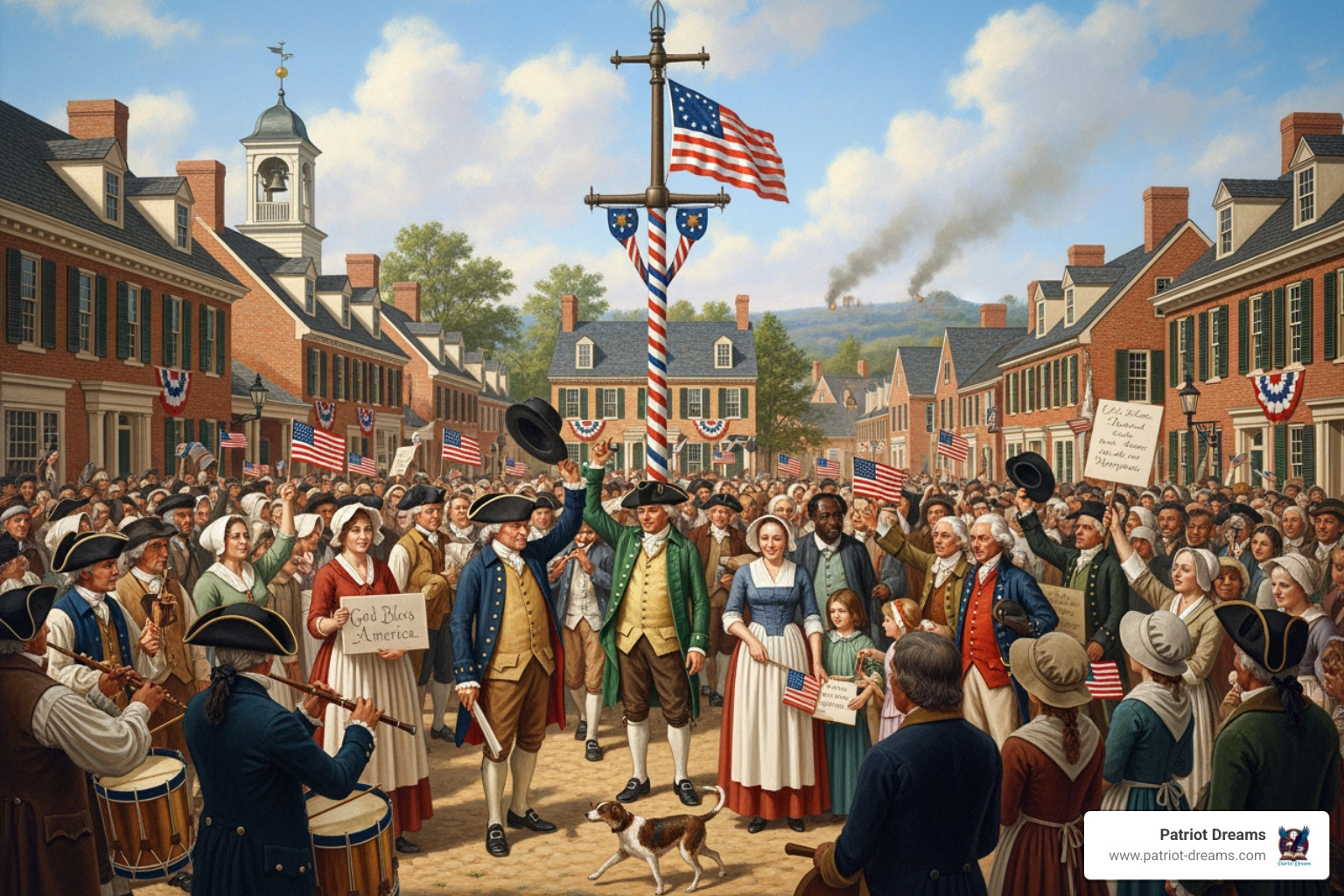
The first major celebration happened a year later, in 1777, in Philadelphia. The nation was still at war. General Washington's army had endured a brutal winter. Yet, the people of Philadelphia came together to celebrate something bigger than their struggles.
They rang bells, fired cannons, and shared meals. Ships in the harbor flew red, white, and blue bunting. Windows glowed with candlelight as patriots "illuminated" their homes. A captured Hessian band played music, and fireworks lit up the evening sky.
It wasn't just a party. It was a promise—a promise that this new idea of America was worth fighting for, believing in, and celebrating together.
The First Fourth of July Celebration: A Nation Finds Its Voice terms to learn:
- All About Benjamin Franklin: Inventor, Diplomat, and Founding Father
- Revolutionary War heroes
- Thomas Jefferson and the Declaration of Independence: How a Nation Found Its Voice
A Declaration of Hope is Born
The path to independence was a long one. For over a decade, tensions grew between the American colonies and Great Britain. With each new tax and restriction—like the Stamp Act and the Intolerable Acts—colonists felt their voices were going unheard. These were more than political disagreements; they were personal, affecting their lives and futures.
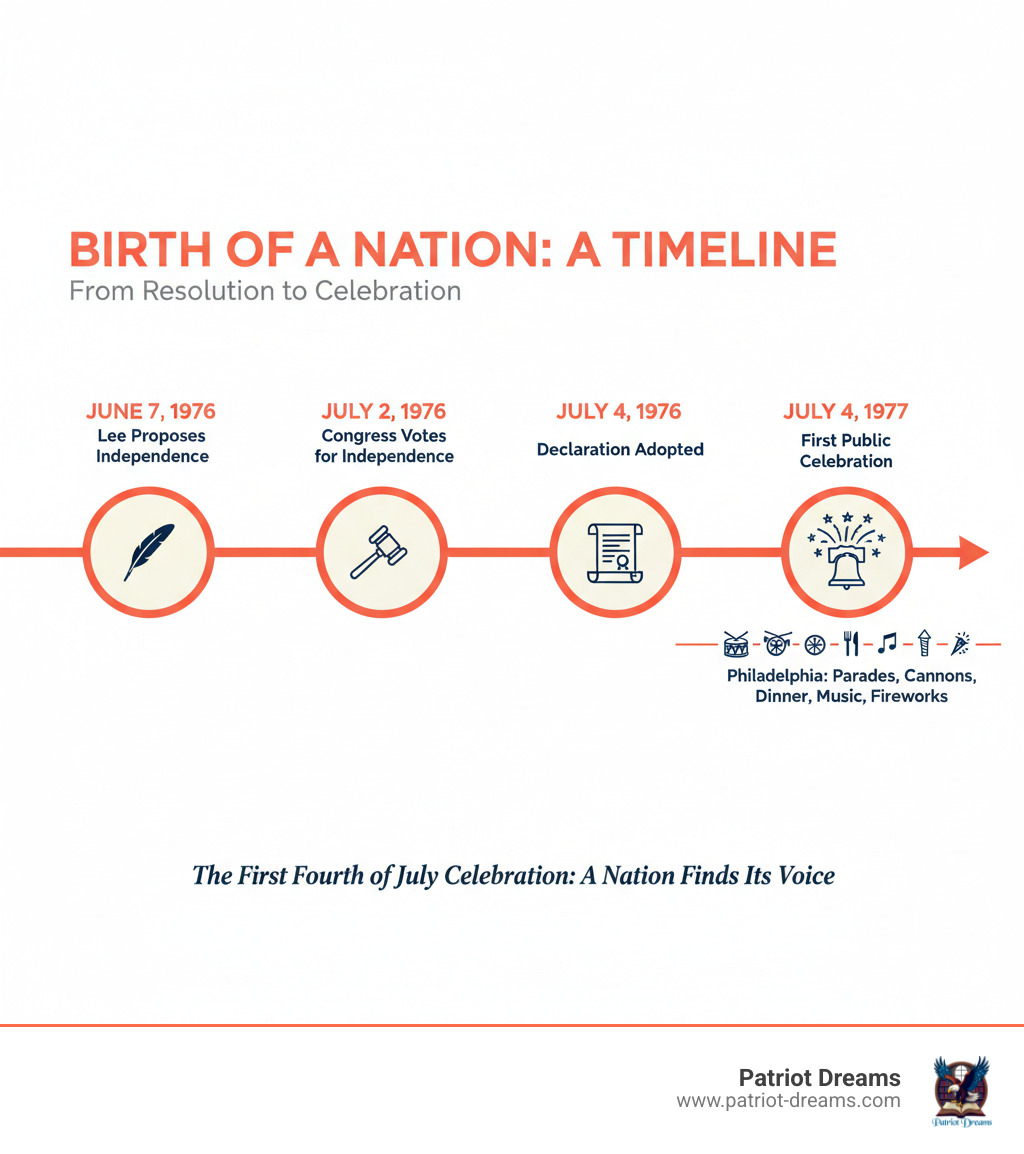
By the spring of 1776, patience had worn thin. On June 7th, Richard Henry Lee of Virginia stood before the Second Continental Congress and proposed that "these United Colonies are, and of right ought to be, free and independent States." After careful debate, Congress approved Lee's resolution on July 2nd, 1776—the day John Adams thought would become our nation's anniversary.
But a vote wasn't enough. The colonies needed a document to explain to the world why they were breaking away, one that would capture the hopes of a people ready to govern themselves.
The Committee of Five was tasked with drafting it: John Adams, Benjamin Franklin, Roger Sherman, Robert Livingston, and Thomas Jefferson. They were thinkers and dreamers who knew this moment was historic. Jefferson, with his gift for eloquent prose, took up the pen, channeling Enlightenment philosophy and the widespread yearning for liberty. More about the minds behind the Declaration.
Jefferson's draft was debated and revised by Congress for two days. Through these edits, the document became stronger and more powerful. On July 4, 1776, the Declaration of Independence was formally adopted. The First Fourth of July Celebration: A Nation Finds Its Voice had its beginning, though the parties would come later.

The Courage to Find a Voice
Imagine the scene in Independence Hall. Delegates from thirteen colonies were about to sign a document the British Crown considered treason—an act punishable by death.
Benjamin Franklin captured the moment with his famous wisdom and wit: "We must all hang together, or, most assuredly, we shall all hang separately." These men—the Founding Fathers—were making a choice that could cost them everything.
When they signed the Declaration, they were pledging their lives, their fortunes, and their sacred honor. Many would lose fortunes, and some would see their homes burned. Yet they signed anyway, creating a unified front that showed the world their belief in the cause.
Their courage was thoughtful and deeply principled. They understood what freedom required and were willing to pay the price. Learn about other brave patriots who carried that same spirit into battle.
A Document for the Ages
The Declaration of Independence did more than announce a separation from Great Britain. It laid out a vision of human dignity and rights that would inspire people for centuries.
At its heart are words that still resonate: that all men are created equal, with certain unalienable rights, including life, liberty, and the pursuit of happiness. These were powerful ideas, suggesting that government exists to serve the people, not the other way around.
The Declaration also listed grievances against King George III, but its core philosophy was even more important: that governments derive their power from the consent of the governed. This was a new theory of government that placed authority in the hands of the people.
It was a statement of ideals—a promise about the kind of nation America wanted to be. The Declaration gave voice to hopes that would guide the nation through its darkest hours and brightest triumphs. The powerful words of Patrick Henry had helped spark the fire, and now Jefferson's Declaration gave it purpose.
The First Fourth of July Celebration: A Nation Finds Its Voice
Once the Declaration of Independence was signed, news spread quickly. Riders carried it from town to town, where it was printed on broadsides and read aloud in village squares to cheering crowds. Upon hearing the words, people fired cannons and rang church bells. In New York, General George Washington had the Declaration read to his troops, reminding them they were fighting for the ideals of human liberty.
But the most memorable early celebration—The First Fourth of July Celebration: A Nation Finds Its Voice—took place a year later in Philadelphia on July 4, 1777. Even with the Revolutionary War still raging, the people of Philadelphia decided the anniversary deserved to be marked with joy.
It was a spontaneous gathering, not yet a national holiday, but ordinary Americans felt it was a day worth celebrating together. The bells of Philadelphia rang out, and ships in the harbor were draped in red, white, and blue bunting, a patriotic display that lifted spirits.
The Continental Congress gathered for a grand dinner, sharing food and fellowship. These men, who had pledged everything, were now breaking bread together one year into their bold experiment.
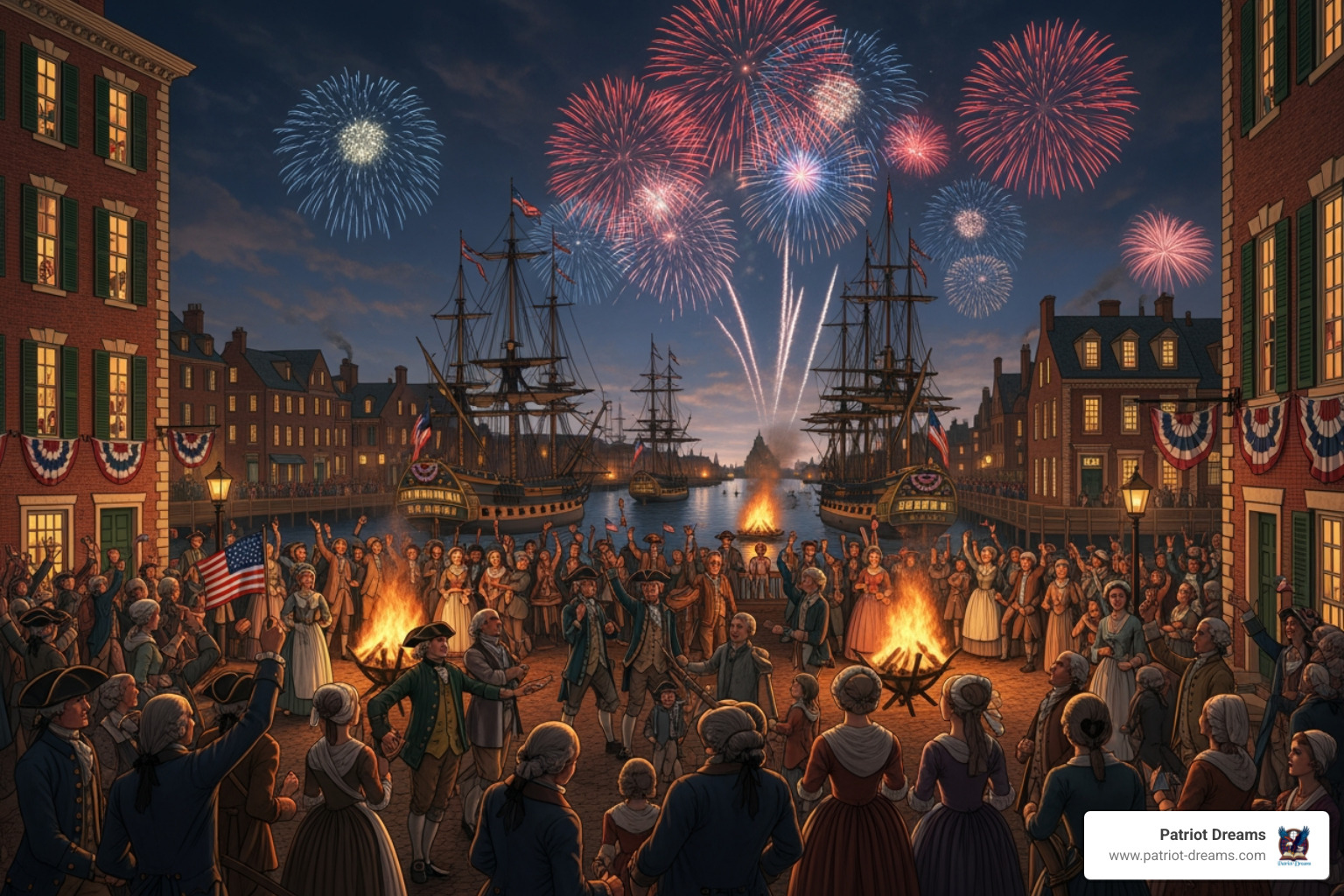
As twilight settled, music filled the air, performed by a captured Hessian band. The evening sky came alive with fireworks, their bright bursts reflected in the faces of the crowd. The city glowed with hope, and a tradition was born.
The Sights and Sounds of a New Tradition
That first celebration in Philadelphia created a template we still follow. Thirteen cannon volleys—one for each state—thundered across the city. Soldiers paraded through the streets, a reminder of the ongoing sacrifice for freedom.
At the congressional dinner, toasts were offered to liberty and independence, the unity of the states, and the success of the American cause. These were heartfelt prayers for a future that was far from certain.
Throughout the city, families placed candles in their windows, creating "illuminations" that spread a gentle glow from house to house. It was a quiet, powerful way of saying, "We stand together." Those loyal to Britain kept their windows dark, a striking contrast.
As darkness fell, the grand exhibition of fireworks began. Even the music was unique—a captured Hessian band playing for the very people they had once fought against, a reminder that humanity can find ways to create beauty, even in war.
Here are the kinds of toasts that would have been raised at the first July 4th dinner:
- To the United States of America!
- To the brave men who fight for our freedom!
- To the Continental Congress and our wise leaders!
- To the glorious cause of Liberty and Independence!
- To the memory of those who have fallen in our cause!
- To a lasting peace and prosperity for our new nation!
How Early Celebrations Echo Today
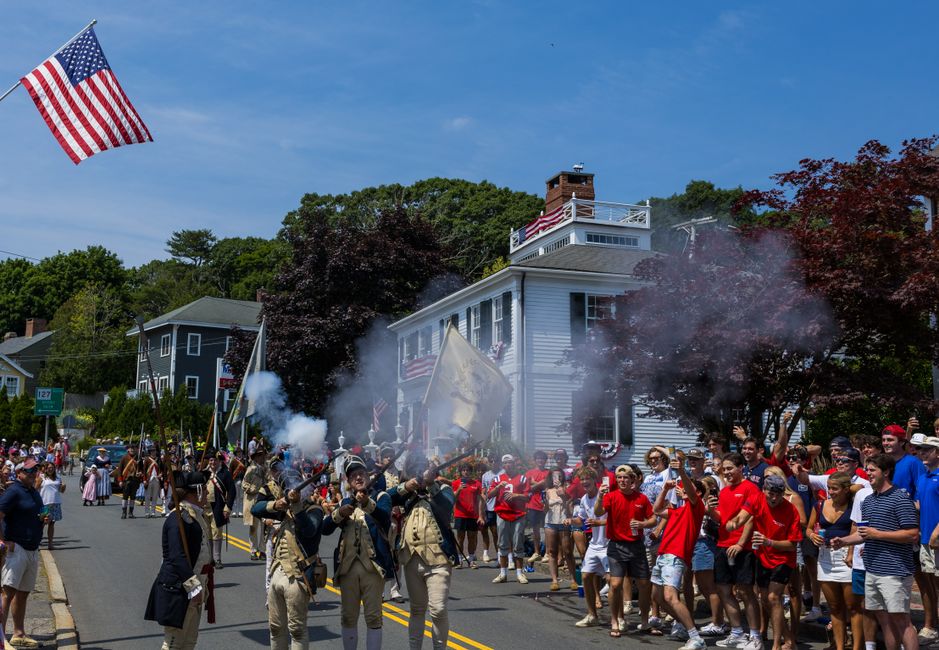
The spirit of independence spread quickly. In Bristol, Rhode Island, on that same day in 1777, thirteen gunshots were fired in salute. The following year, General George Washington honored the day by ordering a double ration of rum for his troops and an artillery salute. For soldiers enduring hardship, this gesture was a powerful reminder that they were part of something larger than themselves.
In 1783, the Moravian community in Salem, North Carolina, marked the occasion by performing "The Psalm of Joy," a musical program of thanksgiving. These early traditions grew into the Fourth of July we know today. The Bristol celebration continued, and the Bristol Fourth of July Parade has been held since 1785, making it the oldest in the nation.
The roots of our modern fireworks, parades, and barbecues reach back to these first gatherings. They remind us that celebrating together has always been part of the American spirit. To learn more, you can explore resources like the National Park Service's History of Independence Day.
The Declaration's Enduring Promise
The Declaration of Independence is a living document, a guiding star pointing us toward a more perfect union. The words written in 1776 planted seeds of hope that would grow in ways the Founders could hardly imagine.
From the start, the beautiful words about equality and liberty didn't include everyone. Throughout our history, brave Americans have pointed to the Declaration, asking for its promise to be fulfilled for all.
This ongoing conversation is a vital part of our national story. The Declaration's ideals have been challenged and expanded, proving that its principles are not frozen in time but are dynamic, calling us to live up to their full promise.
The First Fourth of July Celebration: A Nation Finds Its Voice marked the beginning of this journey, and it continues today. As we reflect on our story, we can explore more of our American Cultural History to understand the full arc of our nation's journey.
The First Fourth of July Celebration: A Nation Finds Its Voice for All
For millions of Americans held in slavery, the early Fourth of July celebrations were a stark reminder of promises that didn't yet include them. The gap between America's ideals and its reality was painfully wide.
Frederick Douglass, who escaped slavery to become a powerful voice for justice, captured this feeling perfectly. In his famous 1852 speech, he asked, "What to the Slave Is the Fourth of July?"
His words were unflinching. For enslaved people, he explained, the celebration was "yours, not mine," and the shouts of liberty felt like mockery. Yet, even as he called out the hypocrisy, Douglass never gave up on the Declaration's principles. He believed in those words and demanded that America live up to them.
Douglass saw the power in the Declaration as a tool for change. His speech was a call to action, a reminder that the work of freedom is never finished. You can read Frederick Douglass's powerful 1852 address on the promise of the Fourth and hear his voice speaking across time.
A Light for Generations to Come
The Declaration's words—"all men are created equal"—became a rallying cry for generations fighting to widen the circle of freedom.
Women's rights advocates used the Declaration's own logic—that governments derive power from the "consent of the governed"—to argue for their right to vote. The Declaration became their standard.
Decades later, during the Civil Rights Movement, leaders like Dr. Martin Luther King Jr. called the Declaration a "promissory note" that America owed to all its citizens. The dream of equality that began in 1776 was still unfolding, calling Americans to be better.
This is the ongoing work of freedom. Each generation looks at those founding principles and asks if we are living up to them. The Declaration doesn't give us all the answers, but it gives us the right questions and reminds us that building a more perfect union is work we all share.
When we remember key Historical American Figures who championed these ideals, we find inspiration for the work that still lies ahead. The light of the Declaration still shines, guiding us toward a dream where liberty and justice are truly for all.
Frequently Asked Questions about the First Fourth of July
Why do we celebrate on July 4th instead of July 2nd?
While the Continental Congress voted for independence on July 2, 1776, the text of the Declaration of Independence wasn't formally adopted until July 4th. This document, which explained why the colonies were separating from Britain, captured the hearts of the people. The first major anniversary celebration in Philadelphia in 1777 was held on July 4th, and the tradition was born. We celebrate the day America declared its ideals to the world.
What were the key elements of the first celebration in 1777?
The 1777 celebration in Philadelphia set the template for future festivities. It was a joyful day filled with bell ringing, parades, and speeches. Key elements included thirteen-cannon salutes for the new states, a grand dinner for the Continental Congress, and ships in the harbor decorated with red, white, and blue bunting. As night fell, homes glowed with candles (illuminations), and the evening ended with a spectacular fireworks display.
How did fireworks become a Fourth of July tradition?
John Adams predicted that independence would be marked with "Illuminations," and fireworks were a popular way to celebrate grand occasions in the 18th century. The very first major celebration in Philadelphia in 1777 included a grand fireworks display. The brilliant bursts of light against the night sky were a perfect symbol of the joy and hope of independence. The tradition felt so right that it has continued ever since, connecting us back to that first hopeful celebration.
Conclusion: The Continuing Story of America's Voice
From The First Fourth of July Celebration: A Nation Finds Its Voice in 1777 to the gatherings we cherish today, our nation's birthday brings us together. For nearly 250 years, Americans have paused to reflect and celebrate together on the Fourth of July.
The ways we celebrate have changed, from cannon salutes to choreographed fireworks, but the heart of the celebration remains the same. We still gather as communities, share meals with neighbors, and light up the night sky with wonder.
Today's Fourth of July celebrations are wonderfully diverse, reflecting the rich mix of American life. Families gather for picnics, main streets fill with parades, and community fireworks bring people together, united in this shared moment.
These modern celebrations honor the spirit of 1776 while acknowledging how far we've traveled. Each generation adds its own chapter to America's story, interpreting what freedom means in their time. Every voice matters, and every story contributes to the narrative of who we are as a people.
At Patriot Dreams, we're honored to help preserve and share these stories. When we understand where we've been, we can better appreciate where we're going together.
The American story is one of continuous growth, of learning from our past while reaching toward our ideals. It's about communities coming together and holding onto hope.
As you celebrate this Fourth of July, you're part of this beautiful, ongoing story. Your voice, your experiences, and your dreams for America are all threads in the larger mix of our shared heritage.
We invite you to continue exploring the stories that have shaped our nation and the voices that call us to be better. Explore more stories that shape our nation and find how your own story connects to this grand American adventure.
Join the Patriot Dreams Community
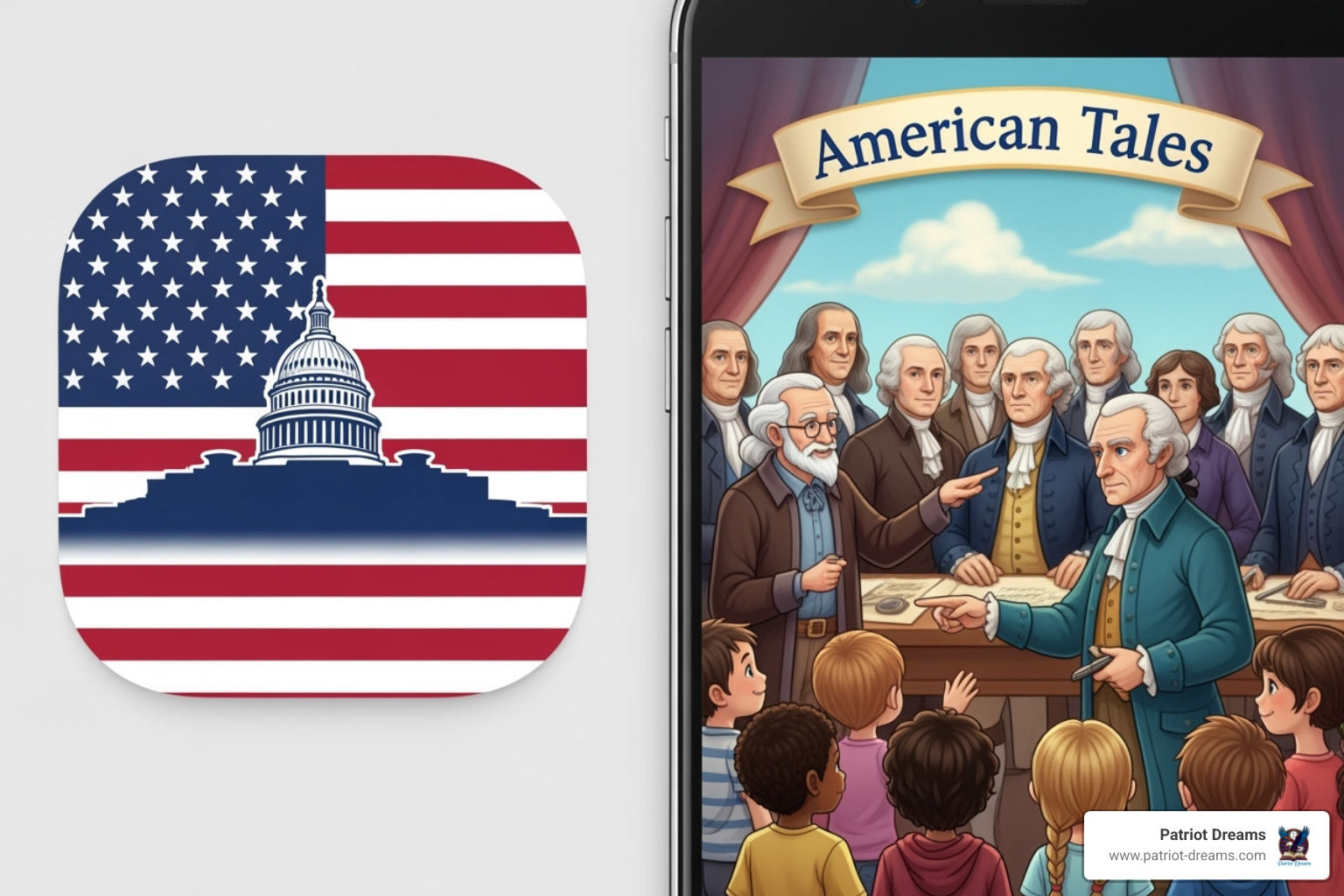
Download the app today and start your journey through American history and personal legacy.

Explore Our Latest Insights
Dive into stories that shape our American legacy.