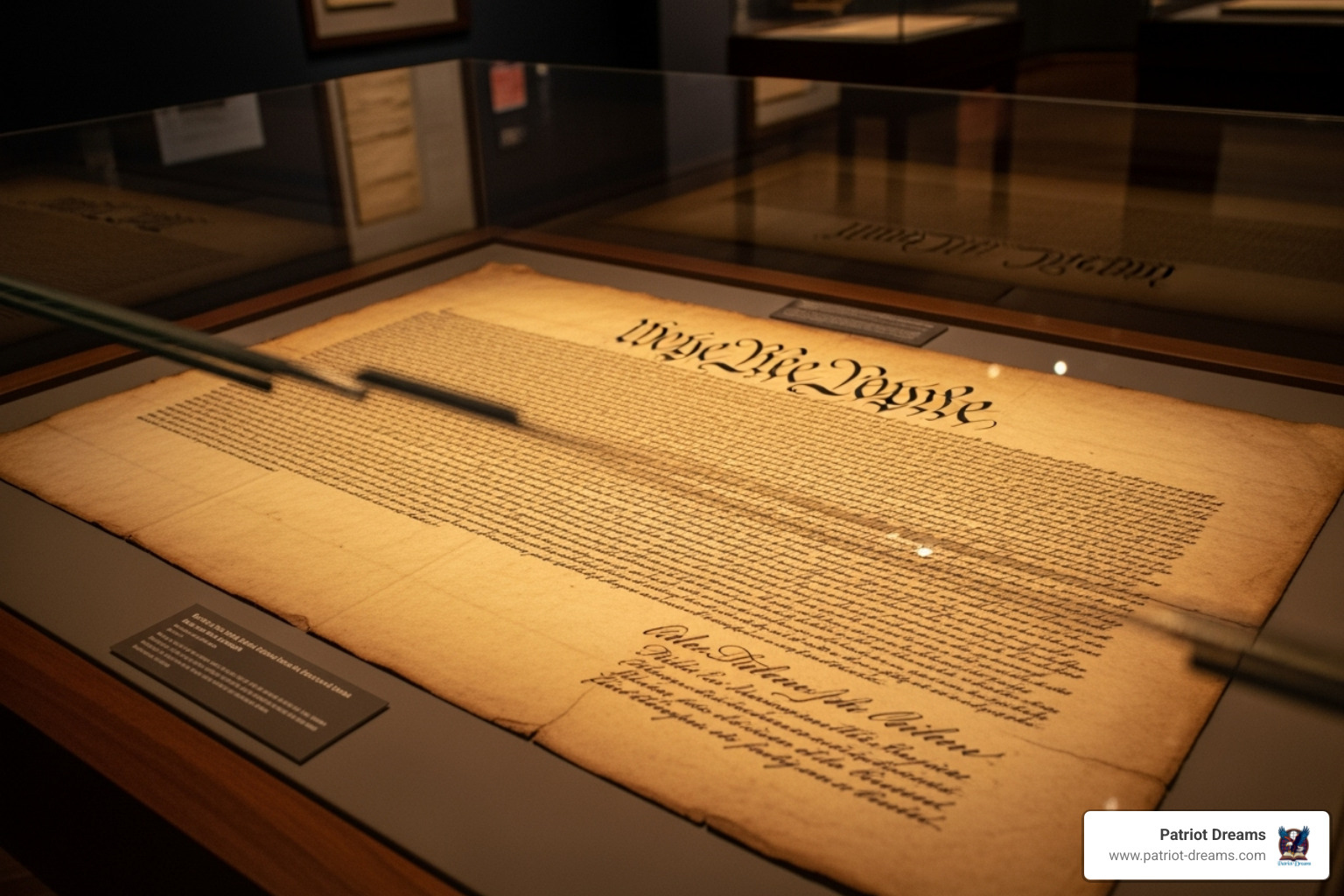
The First Transcontinental Railroad: Railroads, Ambition, and the Making of a Nation


A Dream That Spanned a Continent

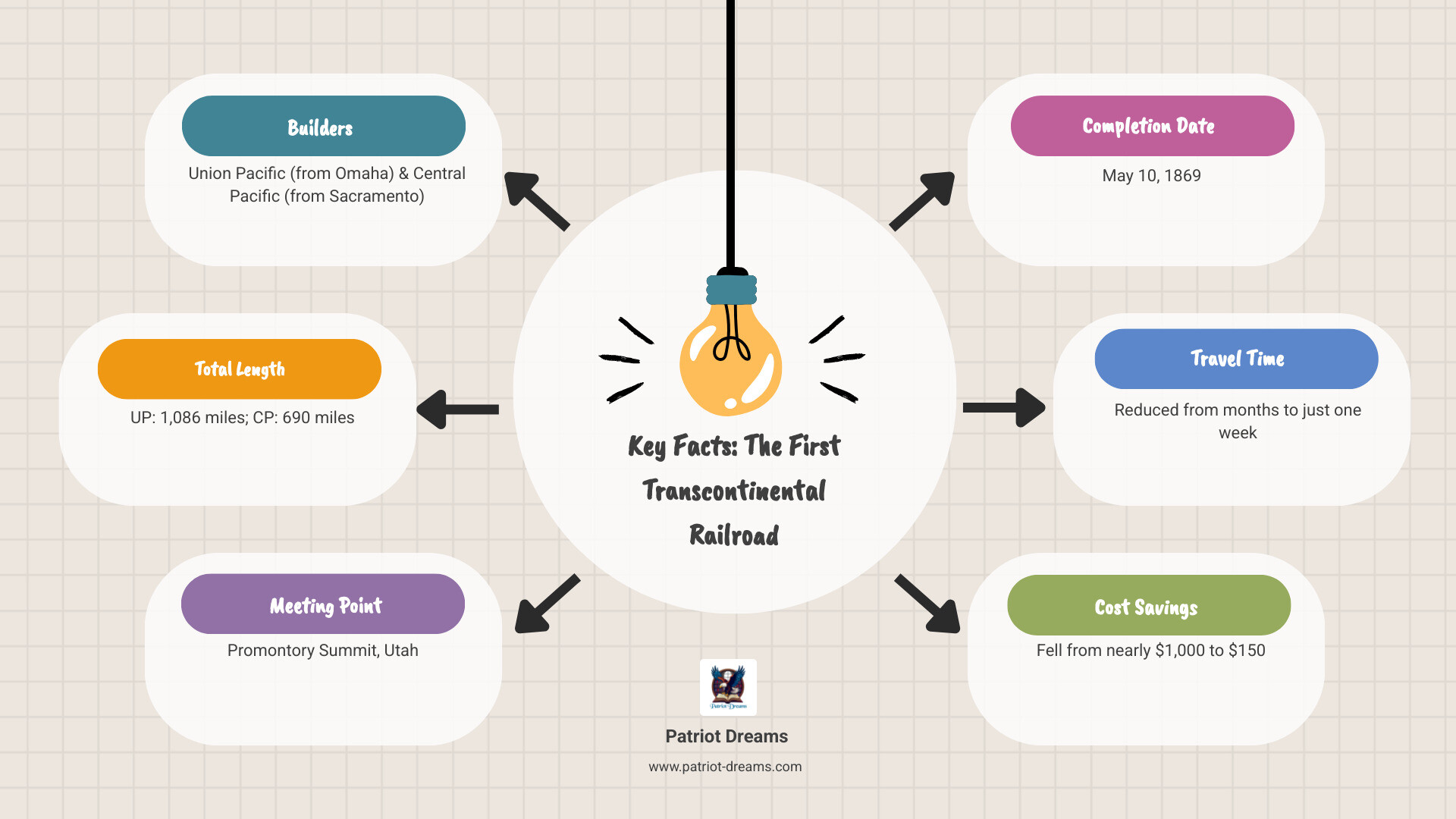
The First Transcontinental Railroad: Railroads, Ambition, and the Making of a Nation represents one of America's most extraordinary achievements. On May 10, 1869, Irish and Chinese laborers met on a windy bluff in Utah to lay the final wooden ties. They joined two great rail lines—the Union Pacific and the Central Pacific—to form a single transcontinental route.
Here's what made this achievement remarkable:
- Travel transformed: The journey across America dropped from months of dangerous travel to just one week
- Costs plummeted: Cross-country travel fell from nearly $1,000 to just $150
- A nation connected: For the first time, Americans could travel from coast to coast by rail
- Unity forged: The railroad helped bind a nation still healing from the Civil War
Before this iron ribbon, reaching the West Coast meant a perilous wagon train journey or an expensive sea voyage around Cape Horn that could take months. Families risked everything, uncertain if they would survive.
But visionaries like President Abraham Lincoln dreamed of something better. He saw the railroad as a way to hold the nation together during its darkest hour. The Pacific Railroad Act of 1862, signed during the Civil War, turned that dream into reality.
This is a story of ambition, determination, and unity—of thousands of workers who blasted through mountains and laid track across endless plains, and of a divided nation coming together to build something that would connect us all.
Must-know The First Transcontinental Railroad: Railroads, Ambition, and the Making of a Nation terms:
- History of Yellowstone: America’s First National Park and Its Legacy
- The True Story of Sacagawea: Guide, Interpreter, and American Icon
A Nation's Vision: The Call for an Iron Ribbon
Have you ever had a dream so big it felt almost impossible? That's exactly how many Americans felt about the idea of a railroad stretching from one coast to the other. But sometimes, the most ambitious dreams are the ones we need most—and The First Transcontinental Railroad: Railroads, Ambition, and the Making of a Nation was born from exactly that kind of necessity.
The Perilous Journey West
Imagine a family at the frontier's edge, their belongings in a covered wagon. They faced a four-to-six-month journey across a continent, with dangers we can barely imagine. They joined wagon trains, crawling across dusty plains and fording treacherous rivers. They climbed mountain passes where one mistake meant disaster. The Oregon Trail claimed countless lives from disease, accidents, weather, and exhaustion.
The sea route wasn't much better. A voyage around Cape Horn took over a hundred days through dangerous waters. Another option was sailing to Panama, trekking through the jungle, and catching another ship. Either way meant months cramped on a vessel, often seasick, and at great expense.
The cost was staggering: nearly $1,000 to cross the country, a year's earnings for many families. The courage of these pioneers, who risked everything for a new life in the West, is humbling. America desperately needed a better way to connect its two coasts.
Lincoln's Unifying Ambition
Enter Abraham Lincoln, a man who understood railroads in his bones. Before becoming president, he'd worked as a "rail-splitter" in his youth and later as a railroad attorney. He knew what trains could do for a nation—and he dreamed bigger than almost anyone.
Lincoln's vision went beyond just winning the Civil War or preserving the Union. He imagined an America where physical connection would reinforce political unity. He saw iron rails as threads that could weave a fractured nation back together, carrying not just goods and people, but shared purpose and identity.
The timing was remarkable. Even as the nation tore itself apart in civil war, Lincoln recognized that a transcontinental railroad could secure America's future. California's gold and resources needed to stay firmly in Union hands. The West needed to remain connected to the East. And after the war—whenever it ended—the country would need something grand to unite around.
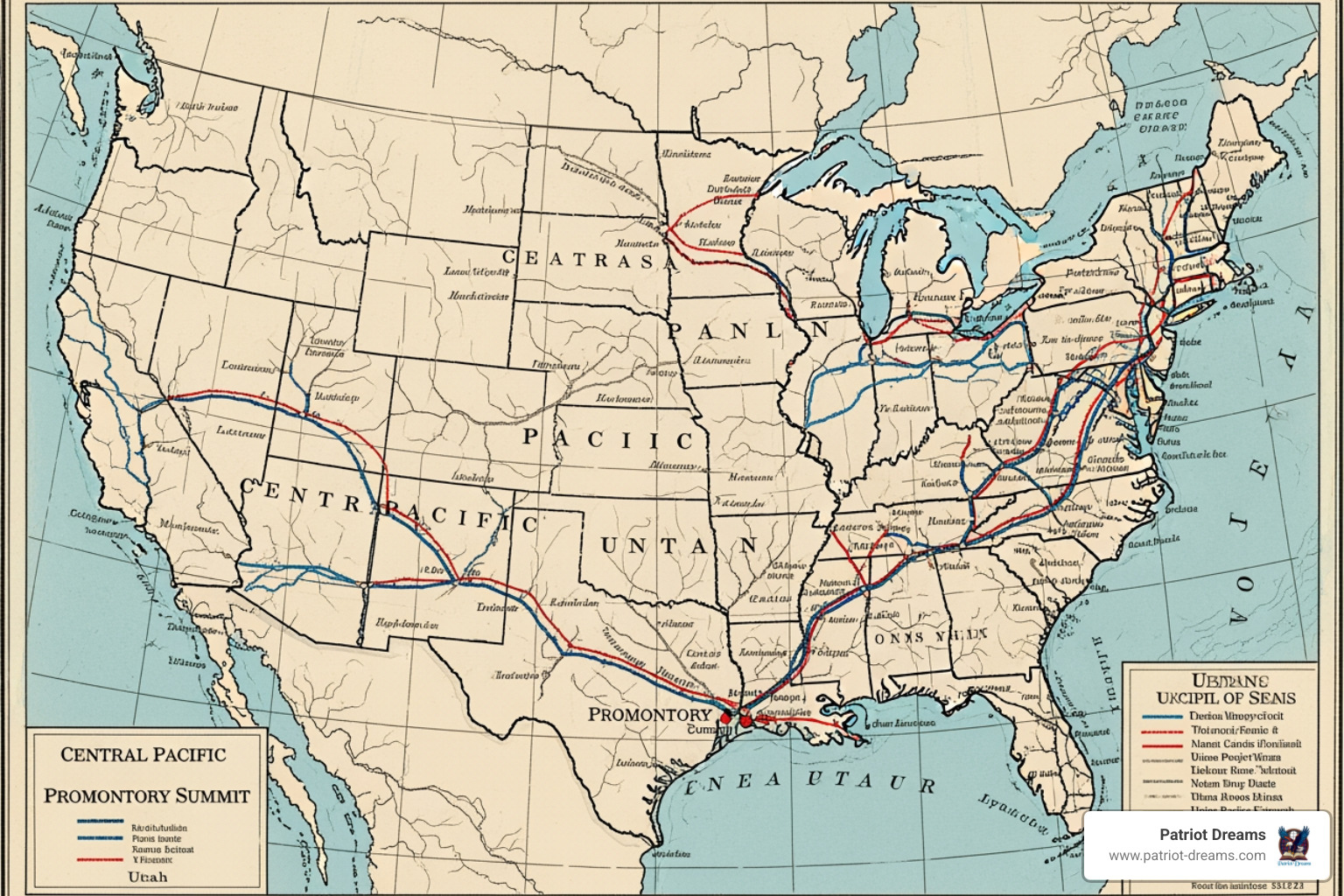
So in 1862, right in the middle of the war's darkest days, Lincoln signed the Pacific Railroad Act into law. This bold legislation chartered two companies to build the railroad: the Central Pacific Railroad Company starting in Sacramento, California, and the Union Pacific Railroad Company starting in Omaha, Nebraska. They would build toward each other until they met somewhere in the middle.
To make this massive undertaking possible, the government offered extraordinary support. For every mile of track laid, each company would receive 6,400 acres of land (later doubled to 12,800 acres) and $48,000 in government bonds. It was an incredible investment in America's future—a bet that connection and unity were worth any price.
Lincoln understood something profound: the railroad would be more than just a faster way to travel. It would be a symbol of what Americans could accomplish together, even in their darkest hour. It would turn the dream of Manifest Destiny from an idea of expansion into a tangible reality of connection.
That government support transformed an impossible dream into an achievable goal. The stage was set for one of the greatest races—and greatest achievements—in American history.
The Great Race to Promontory
Once President Lincoln signed the Pacific Railroad Act into law, something remarkable happened: a grand vision transformed into a thrilling competition. Two companies, starting from opposite ends of the country, would race toward each other across mountains, deserts, and plains. It was a contest against nature's fury, against time itself, and yes, against each other. And what a race it would be.
The Central Pacific's Climb
From Sacramento, California, the Central Pacific Railroad began its journey eastward, led by four ambitious businessmen who would become known as the "Big Four": Leland Stanford, Collis P. Huntington, Mark Hopkins, and Charles Crocker. Here's something interesting—not one of them had ever built a railroad before. They were merchants and businessmen who saw an opportunity and decided to chase it with everything they had.
The real engineering genius behind their early success was a man named Theodore Judah. He spent years surveying the rugged terrain, searching for a path through the seemingly impossible Sierra Nevada mountains. His careful work identified Donner Pass as the most practical route, though "practical" is perhaps a generous word for what lay ahead.
The Central Pacific faced a challenge that would test every ounce of their determination. Picture this: towering granite mountains, some peaks reaching over 7,000 feet, often buried under deep snow. They would need to blast tunnels through solid rock using only hand drills, black powder, and later, the dangerous new explosive called nitroglycerin. They'd build wooden trestles over ravines so deep that looking down made even the bravest workers dizzy.
Progress was painfully slow, measured in feet rather than miles on some days. But the men behind The First Transcontinental Railroad: Railroads, Ambition, and the Making of a Nation refused to give up. They knew that on the other side of those mountains lay the promise of a connected America.
The Union Pacific's Push
Meanwhile, starting from Omaha, Nebraska, the Union Pacific Railroad charged westward across the Great Plains. Where the Central Pacific battled mountains, the Union Pacific faced a different landscape—endless stretches of prairie that seemed to roll on forever. At first, this gave them a tremendous advantage. By the summer of 1867, they'd already reached Wyoming, having laid nearly four times as much track as their California competitors.
Thomas Durant led the Union Pacific, though his leadership was complicated. He was a man of big ambitions and controversial methods, having gained control of the company through questionable means. He even created a separate construction company called Crédit Mobilier, which made guaranteed profits for its shareholders while the railroad itself took on the financial risks. It wasn't the most honest way to do business, but it kept the work moving forward.
The Union Pacific had its own set of hardships to overcome. Getting supplies across hundreds of miles of undeveloped territory was a logistical nightmare. Every rail, every spike, every tie had to be transported to the construction site, often through lands where American Pioneer Stories were still being written. The workers faced harsh weather, limited resources, and the enormous task of building across a wilderness that had never seen such industry.
Despite the challenges and the scandals, the Union Pacific pushed forward with remarkable speed. The government's generous land grants and bonds—remember, each company received thousands of acres and substantial money for every mile completed—created a powerful incentive. The more track they laid, the more they gained. It was a race with very real rewards, and both companies were determined to win.
The Hands That Laid the Tracks
Every great dream needs dedicated hands to bring it to life. Behind every mile of gleaming track and every tunnel carved through solid granite were thousands of ordinary people doing extraordinary work. These laborers were the true heart of The First Transcontinental Railroad: Railroads, Ambition, and the Making of a Nation—men who transformed a vision on paper into iron reality through courage, sweat, and incredible determination.

An Immigrant Workforce
The Union Pacific's workforce told a story of new beginnings. Many were Irish immigrants fleeing famine, who found hope laying track across the endless Great Plains. Working alongside them were Civil War veterans, men who had fought on opposite sides just years before. Union and Confederate soldiers now labored together, building something bigger than their past conflicts.
The work was relentless, from scorching summer heat to bone-chilling winter blizzards. These men lived in temporary camps that moved with the railroad, giving rise to wild, chaotic settlements known as "Hell on Wheels" towns. These rough communities sprang up almost overnight and disappeared just as quickly when the work moved on.
It wasn't glamorous, but these workers, many seeking a fresh start, found purpose in connecting a nation. Their story is part of the larger mix of American Pioneer Stories that shaped our country.
The Indomitable Spirit of Chinese Laborers
When the Central Pacific Railroad faced the towering Sierra Nevada mountains, they encountered their greatest challenge. The work was so dangerous that finding workers willing to stay became nearly impossible. That's when they began hiring Chinese laborers.
From the start, these men faced prejudice and were paid less than white workers. Many doubted they could handle the brutal mountain work, but the Chinese laborers proved them wrong with sheer determination and skill.
By early 1867, approximately 14,000 Chinese workers were toiling in the Sierra Nevada, performing the most dangerous tasks. They dangled in wicker baskets over sheer cliffs, setting explosive charges to blast tunnels through solid granite. They worked through avalanches and snowstorms that buried entire camps. Their precision and work ethic became legendary, and the Central Pacific came to rely on them completely.
A small detail reveals their wisdom: while others fell ill from drinking cold stream water, Chinese workers boiled their water for tea. This simple cultural practice kept them healthier, a beautiful reminder that different perspectives and traditions make us all stronger.
These workers' contributions were immense, yet their story has often been overlooked. Understanding their role helps us see The Frontier Myth Today: What the Old West Tells Us About Modern America more clearly—recognizing that America's greatest achievements have always been built by people from many backgrounds working together.
A Changing Frontier for Native Americans
Every story of progress has more than one side, and it's important we acknowledge all of them with honesty and respect. While the railroad represented connection and opportunity for many, its construction brought profound and painful changes to the Native American tribes who had lived on these lands for generations.
The railroad's path, particularly the Union Pacific's route, cut through the traditional homelands of the Sioux, Cheyenne, and Arapaho peoples. The arrival of thousands of workers, construction noise, and the flood of settlers that followed disrupted a way of life that had existed for centuries. The buffalo herds, essential for tribal survival, began to disappear under the pressure of commercial hunting.
Conflicts arose as Native Americans defended their ancestral lands. Tensions escalated into violence on both sides. Treaties were made and broken. Families were displaced. This difficult chapter reminds us that what looks like progress from one perspective can mean loss from another.
We can honor the achievement of the transcontinental railroad while also recognizing its cost. Both truths matter and deserve to be told. Understanding this complexity doesn't diminish the railroad's importance—it helps us see the full picture of how our nation was built, with all its triumphs and sorrows.
The First Transcontinental Railroad: Railroads, Ambition, and the Making of a Nation
After years of backbreaking work, countless setbacks, and the dedication of thousands of workers, something extraordinary was about to happen. Two ribbons of iron, one stretching from the East and one from the West, were finally going to meet. The completion of The First Transcontinental Railroad: Railroads, Ambition, and the Making of a Nation wasn't just about connecting two coasts—it was about connecting a nation's heart.
The Golden Spike Ceremony
May 10, 1869, dawned at Promontory Summit, Utah, a windswept spot 690 track-miles from Sacramento and 1,086 from Omaha. This remote location was about to become the most famous place in America. Railroad officials, dignitaries, workers, and curious onlookers gathered on that spring morning to witness history.
The ceremony centered around a special golden spike, a gift from David Hewes, a San Francisco contractor who wanted to mark the occasion with something truly memorable. Made of 17.6-karat gold, this ceremonial spike would symbolize the joining of East and West. There were actually four special spikes used that day, each with its own story.
When the moment came, Central Pacific's Leland Stanford took the first swing at the golden spike. He missed, hitting the wooden tie instead! Union Pacific's Thomas Durant stepped up next and also missed. The crowd chuckled nervously. Finally, a railroad worker stepped forward and drove the spike home properly, connecting the two rails at last.
But here's what made the moment truly magical: the spike was connected to a telegraph wire. The instant the hammer struck, a single word flashed across the nation: "DONE." Church bells rang from coast to coast. Cannons fired in celebration. In cities and towns across America, people poured into the streets, rejoicing together. A nation still healing from the wounds of Civil War had something to celebrate—something that brought everyone together.
Economic Consequences of The First Transcontinental Railroad: Railroads, Ambition, and the Making of a Nation
The changes came swiftly and dramatically. Before the railroad, crossing America meant months of dangerous travel and nearly $1,000 in expenses—a fortune for most families. After May 10, 1869, that same journey took under a week and cost just $150. Think about what that meant for ordinary people. A farmer in Iowa could now ship goods to California markets. A family in New York could visit relatives in San Francisco without risking their lives.
The American West transformed almost overnight. New towns sprouted along the rail lines like wildflowers after spring rain. What had been remote, isolated territories became busy centers of commerce and agriculture. Goods that once took months to transport now moved in days. Resources from the West—timber, minerals, agricultural products—could reach Eastern factories and markets efficiently.
The railroad didn't just move things; it moved dreams. It made settlement possible for thousands of families who had only imagined a new life out West. It connected farms to markets, mines to smelters, and people to opportunities. The economic boom that followed helped build the modern American economy, creating wealth and jobs that rippled through every corner of the nation. This connectivity even opened up access to America's natural wonders, making places like those described in the History of Yellowstone: America's First National Park and Its Legacy accessible to everyday Americans.
Social Consequences of The First Transcontinental Railroad: Railroads, Ambition, and the Making of a Nation
But the railroad's greatest achievement might have been something you couldn't measure in dollars or miles. It connected people. For a nation that had just torn itself apart in civil war, The First Transcontinental Railroad: Railroads, Ambition, and the Making of a Nation became a powerful symbol of what Americans could accomplish when they worked together.
For the first time, ideas could travel as quickly as goods. A newspaper printed in New York could reach San Francisco in days. Families separated by thousands of miles could reunite. Different regions, each with their own customs and cultures, could share and learn from each other. The vast distances that had once made America feel like a collection of separate places began to shrink.
The railroad became something more than iron and wood—it became a symbol of American ingenuity and determination. People around the world looked at this achievement with amazement. How had a young nation, barely a century old and recently divided by war, managed to accomplish something so ambitious? The answer lay in the American spirit: the belief that no challenge is too great when people come together with a common purpose.
This wasn't just engineering; it was hope made real. It represented a new era of possibility, where distance no longer determined destiny. The railroad proved that America could dream big and make those dreams come true, a tradition that continues through countless innovations in American Innovation History. It showed the world—and reminded Americans themselves—what they were capable of achieving together.
The Enduring Echo of the Rails
The story of The First Transcontinental Railroad: Railroads, Ambition, and the Making of a Nation didn't end when that golden spike was driven home in 1869. In many ways, it was just the beginning. The spirit of that achievement—the belief that we can connect our nation through bold vision and hard work—continues to inspire us today.
Fulfilling Lincoln's Dream in the Modern Age
Abraham Lincoln understood something profound: a nation is strongest when it's connected, when goods, people, and ideas can flow freely from one coast to the other. That dream didn't die with him. It lives on in every conversation about how we can build better roads, stronger bridges, and more efficient ways to move what we need across this vast country.
Today, we're still having those conversations. The proposed merger between Union Pacific and Norfolk Southern, for example, echoes the same ambition that drove the original transcontinental project. This modern initiative aims to create a truly coast-to-coast rail network spanning more than 50,000 miles of track through 43 states, linking nearly 100 ports. It's about making our supply chains stronger, reducing delays, and ensuring that American businesses can compete in a global economy. As one thoughtful observer noted, it's about fulfilling Lincoln's dream in a new era.
The parallels are striking. Just as the Central Pacific and Union Pacific raced to connect East and West in the 1860s, we're still working to strengthen those connections today, adapting Lincoln's vision for the challenges and opportunities of our own time.
Strengthening a Nation's Future
Here's something that might surprise you: the railroad industry isn't just about moving freight. It's about building communities and creating opportunity. According to the Association of American Railroads, every single railroad job supports almost four additional jobs in other sectors—manufacturing, logistics, technology, and more. That's the kind of ripple effect that touches families and neighborhoods across America.
When we invest in our rail infrastructure, we're not just laying track or updating signal systems. We're strengthening supply chains that keep grocery stores stocked and factories running. We're creating good jobs that support families. We're building the kind of resilient, connected nation that Lincoln envisioned all those years ago.
The railroad continues to quietly serve as a backbone of our economy, connecting inland producers to markets around the world. It's a reminder that the work of building and maintaining our national infrastructure is never truly finished. Each generation has its part to play in keeping America strong, connected, and ready for whatever comes next. That's the enduring legacy of those who first dared to dream of an iron ribbon stretching across the continent.
Conclusion: A Story Forged in Iron and Spirit
When you step back and look at the whole picture, The First Transcontinental Railroad: Railroads, Ambition, and the Making of a Nation becomes so much more than a tale of iron rails and steam engines. It's really a story about us—about what happens when ordinary people come together to do something extraordinary.
Think about it: Chinese laborers suspended in baskets over cliffs, Irish immigrants laying track under scorching suns and freezing snows, Civil War veterans finding common purpose after years of division, visionaries like Lincoln believing in a united future even in the darkest hours. These weren't superheroes from a movie. They were real people with calloused hands and tired backs, people who believed that their hard work mattered, that they were building something bigger than themselves.
And they were right. That iron ribbon they forged across the continent didn't just connect two coasts—it connected hearts. It reminded a war-torn nation that we could still accomplish monumental things when we worked together. It showed us that bold ambition, paired with incredible perseverance and a willingness to collaborate, can turn even the most impossible dreams into reality.
This is exactly the kind of story that we at Patriot Dreams hold dear. It's a story of unity and progress, of determination and hope. It's the kind of tale that deserves to be remembered, shared, and passed down through generations—because it reminds us of who we are and what we're capable of when we believe in each other.
The transcontinental railroad taught us that distance doesn't have to divide us. Connection is always possible. And sometimes, the journey toward a more united future begins with a single spike driven into the ground, one deliberate step at a time.
We invite you to explore more stories of our nation's journey in America 250 Years in the Making, where every tale is a testament to the enduring spirit that continues to shape our shared home.

Join the Patriot Dreams Community
Download the app today and start your journey through American history and personal legacy.

Explore Our Latest Insights
Dive into stories that shape our American legacy.