The Best American Small Towns on a Budget
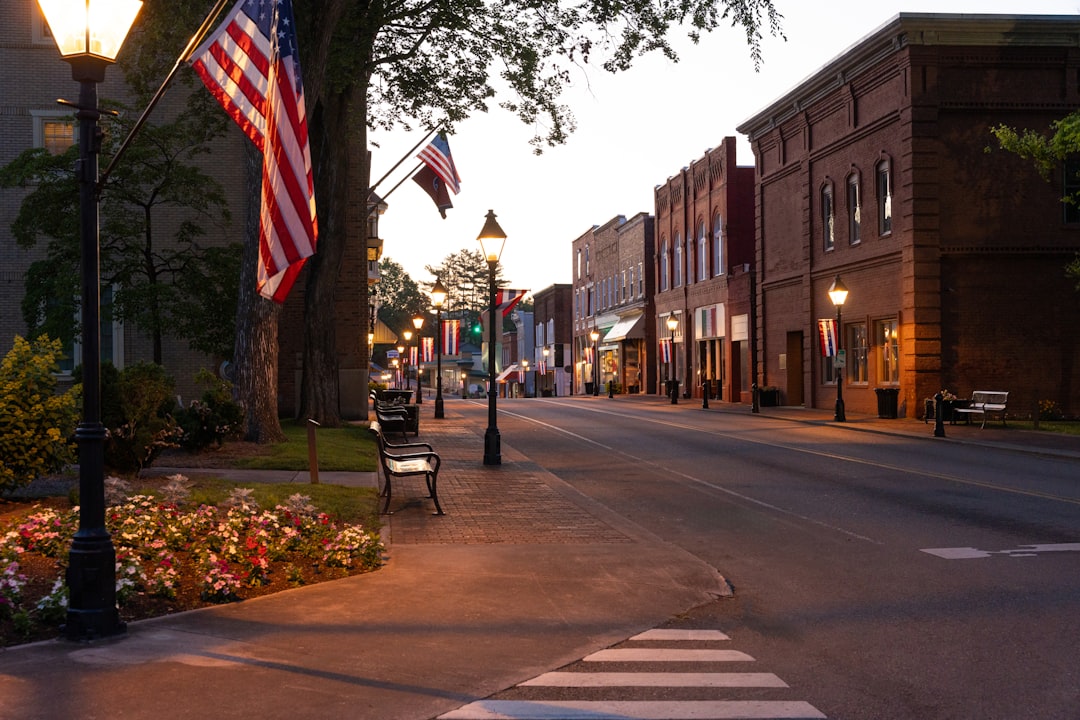

Why American Small Towns Deserve a Spot on Your Travel List
There are roughly 19,500 incorporated small towns across the United States, and each one holds a story worth knowing. Whether you're chasing history, family roots, or just a slower pace of life, these communities offer something rare — and often surprisingly affordable.
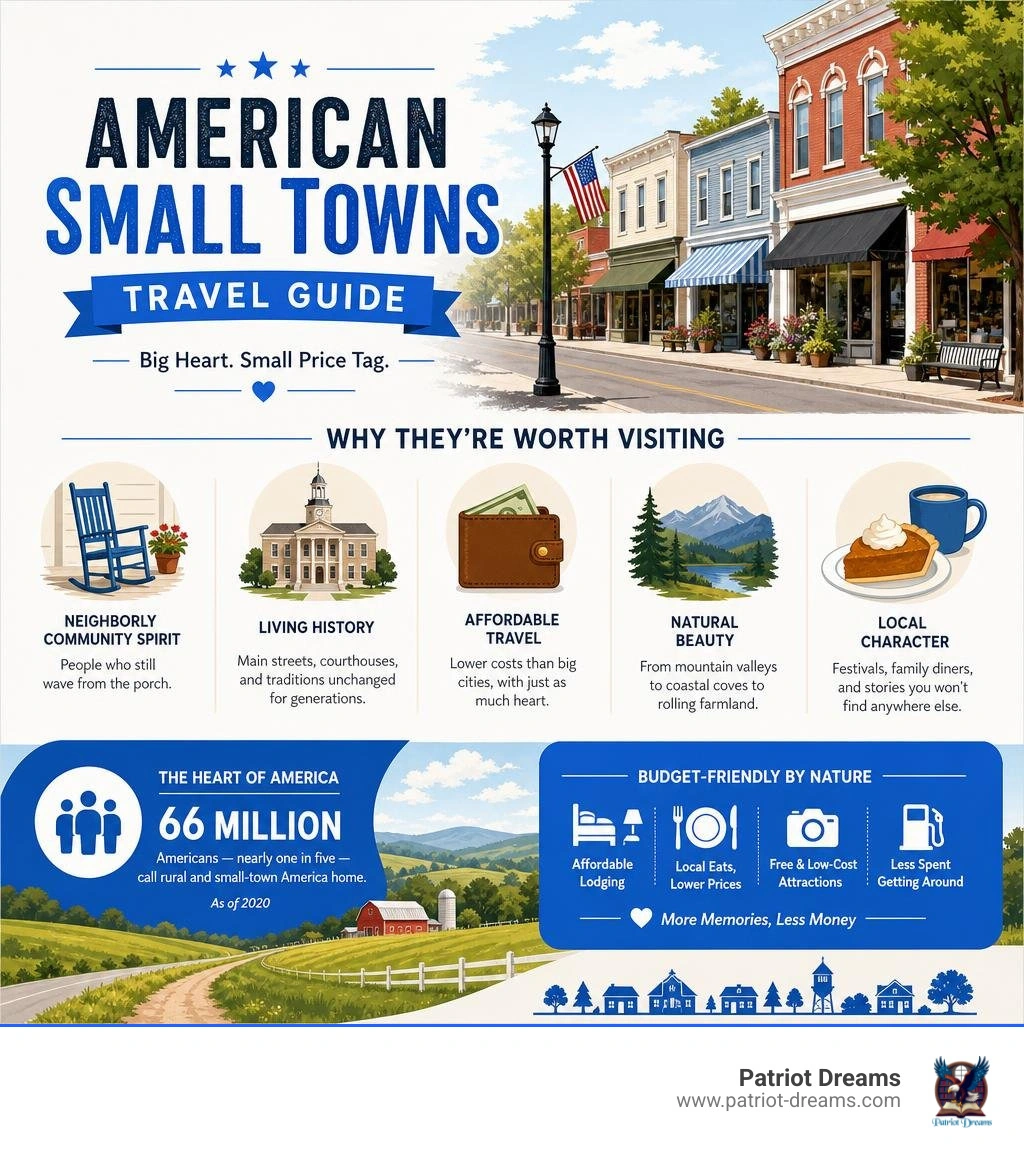
Quick answer: What are American small towns best known for?
- Neighborly community spirit — people who still wave from the porch
- Living history — main streets, courthouses, and traditions unchanged for generations
- Affordable travel — lower costs than big cities, with just as much heart
- Natural beauty — from mountain valleys to coastal coves to rolling farmland
- Local character — festivals, family diners, and stories you won't find anywhere else
There's something about a small town that feels like coming home — even if you've never been there before.
Maybe it's the handmade sign above a bakery door. Maybe it's the volunteer fire department decorating the town square at Christmas. Or maybe it's simply the feeling that people here know each other's names.
America has always been shaped by these small, steady communities. As of 2020, about 66 million Americans — nearly one in five — still call rural and small-town America home. These aren't just dots on a map. They are the quiet backbone of the country's culture, memory, and identity.
And here's the best part: exploring them doesn't have to cost a fortune.
What Defines the Heart of American Small Towns?
When we think of American Small Towns, we often picture a slower pace of life, a place where the local diner serves as the community living room, and the historic preservation of buildings is a labor of love. But what truly defines these communities?
Unlike major metropolitan areas, where life moves at a breakneck speed, small towns are anchored by a deep-seated neighborly spirit. Economically, they rely heavily on local businesses, family-owned shops, and community-driven initiatives rather than massive corporate offices. This economic structure keeps money circulating within the community and fosters a unique sense of pride. Here, you are not just a customer; you are a neighbor.

This community-first lifestyle is reflected in how traditions are preserved. Whether it is an annual parade down Main Street or a volunteer-led effort to restore a historic landmark, small towns hold onto their heritage with a gentle tenacity. Exploring these places allows us to step back from the modern rush and connect with the foundational stories of our country.
If you have ever wanted to experience a place where time seems to stand still, you will love our guide on Traveling Through Time: American Small Towns That Feel Like a Vintage Film Set, which explores how these communities preserve their physical history.
Discovering Historic American Small Towns in the Midwest
The American Midwest is home to some of the most welcoming and historically rich small towns in the nation. These communities have spent generations cultivating a unique sense of place, making them perfect destinations for budget-conscious travelers seeking authenticity.
One such gem is the Town of Wakarusa in Indiana. With a population of just under 2,000 residents, Wakarusa is the quintessential small town. It is a place where volunteer firemen still decorate a towering Christmas tree in the middle of the town square, and seasonal community events bring everyone together. The town's name is believed to come from a Native American term meaning "knee-deep in mud," a nod to its early frontier days. Today, Wakarusa is beloved for its annual Maple Syrup Festival, its beautiful Quilt Gardens, and a downtown that feels like a warm embrace.
Moving east into Ohio, we find the charming Village of Barnesville. Recognized as one of the state's best hometowns, Barnesville is deeply committed to preserving its heritage. The village is an official participant in the America 250-Ohio commemoration, celebrating the nation's upcoming milestone with community decorating contests and historical displays. If you visit in the autumn, you can experience the famous Barnesville Pumpkin Festival, a massive community effort that draws over 150,000 visitors annually to celebrate local agriculture, crafts, and neighborly fun without breaking the bank.
Further northwest lies the City of Darlington in Lafayette County, Wisconsin. Nestled along the banks of the Pecatonica River, Darlington is affectionately known as the "Pearl of the Pecatonica." This poetic nickname stems from the town's historical clam harvesting industry, which once supplied raw materials for pearl button production. Today, Darlington offers a picturesque escape with historic architecture, a beautiful riverfront campground, and a community that prides itself on looking out for one another.
Southern Charm and Heritage in Budget-Friendly American Small Towns
As we journey south and westward, the landscape changes, but the warmth of small-town hospitality remains constant. The South and its bordering regions offer incredible historical depth, often set against beautiful natural backdrops.
In the heart of historic Piedmont Virginia, Welcome to Gordonsville invites travelers to explore a town situated at the crossroads of American history. Located between Thomas Jefferson’s Monticello and James Madison’s Montpelier, Gordonsville played a significant role in the Civil War. Today, visitors can stroll through its historic district, visit the local Civil War museum, and enjoy critically acclaimed local dining. It is a town where community life is celebrated through events like the annual Chicken Festival, keeping local heritage alive and accessible to all.
In Missouri, the town of Humansville offers an honest slice of Midwestern and Southern-border life. To understand this community, one must ask, What Is Humansville?. Founded in the 1830s around a natural spring, the town was named after Judge James G. Human, a frontier farmer, soldier, and legislator who was known for his opposition to violence and his commitment to community building. Today, Humansville remains a peaceful haven where visitors can walk the historic streets near Big Spring, take in the rolling hills of the surrounding countryside, and experience the quiet resilience of a small farming community.
Finally, we look to the Town of Clarksville in Indiana, situated right across the Ohio River from Louisville. Founded in 1783, Clarksville holds the distinction of being the oldest town in the Northwest Territory. Its history is deeply tied to the Revolutionary War and the Lewis and Clark Expedition. Today, Clarksville balances its immense historical legacy with modern recreation, offering visitors the chance to explore the fossil beds at the Falls of the Ohio State Park or enjoy a walk through its historic neighborhoods.
How Small Communities Are Adapting to the Modern Era
While the charm of small towns is timeless, these communities face real modern challenges. Over the decades, shifts in manufacturing, agriculture, and retail have forced many small towns to adapt. Population loss and economic decline are constant hurdles, but the story of rural America is not one of defeat — it is one of incredible resilience.

Today, many small towns are revitalizing their economies by embracing modern trends like remote work, eco-tourism, and boutique hospitality. Main streets that once sat quiet are being filled with artisan shops, farm-to-table restaurants, and community art centers.
This spirit of adaptation is nothing new. In the early 20th century, small towns faced a different kind of isolation. The advent of the radio changed everything. By the 1920s, half of urban families owned a radio, and millions of stations were being built. By 1940, American families were listening to their radios for more than four hours each day, bridging the gap between rural communities and national news.
Following World War II, policy changes by the Federal Communications Commission (FCC) allowed for the construction of new broadcast outlets in rural areas. This meant that small towns finally got their own local radio stations, giving them a voice, a way to share local news, and a platform to strengthen community bonds.
Today, digital storytelling and remote work are playing a similar role, helping small towns attract new residents and visitors who crave a deeper connection to place and history.
Frequently Asked Questions About American Small Towns
What makes small towns more budget-friendly than big cities?
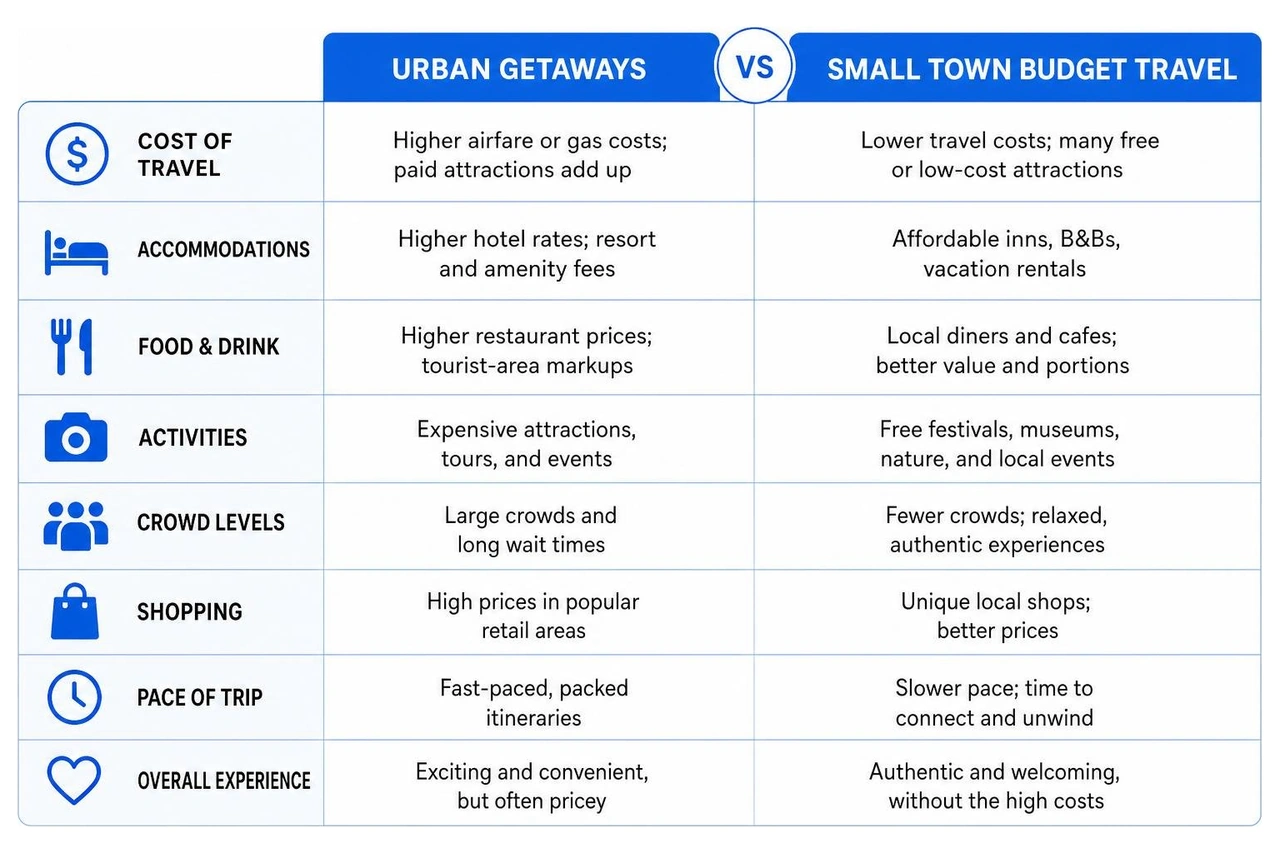
Small towns naturally lend themselves to budget travel because their local economies are built on different scales. Lodging at local bed-and-breakfasts or historic inns is often far more affordable than city hotels. Additionally, many of the best things to do in a small town — such as walking historic main streets, exploring local parks, or attending seasonal festivals — are entirely free. Dining at family-owned diners and cafes also keeps food costs low while providing a much more authentic taste of local flavor.
How can travelers best support local economies during their visit?
The best way to support a small town is to keep your spending local. Instead of visiting chain restaurants or major retailers near the highway, head straight to Main Street. Buy a book from an independent bookstore, grab a coffee from a local roaster, and choose a family-owned inn over a corporate motel. For more inspiration on wonderful communities to visit, check out this guide to 15 Small Towns Worth Visiting, which highlights unique spots across the country.
What is the best time of year to plan a small town road trip?
While every season has its charm, autumn and spring are particularly magical. Autumn brings beautiful fall foliage and harvest celebrations like pumpkin and apple festivals. Spring brings blooming wildflowers and local community events. Traveling during these shoulder seasons also helps you save on lodging. If you are looking to map out your next adventure, explore this list of 23 Small Towns We Love to Visit to find the perfect destination for your next road trip.
Conclusion
As we look ahead through the summer of July 2026, the quiet beauty of American Small Towns feels more valuable than ever. In a world that often feels fast and disconnected, these communities remind us of the simple joys of neighborliness, shared history, and a slower pace of life.
At Patriot Dreams, we believe that every town has a story, and every family has a legacy worth preserving. Our audio storytelling platform brings American history and heritage to life through an interactive map and unique listening modes. We want to help you hear the voices of the past, discover the hidden history of the places you visit, and record your own family stories so they are never lost.
The next time you plan a trip, consider skipping the crowded cities and taking the road less traveled. You might just find that the best stories — and the warmest welcomes — are waiting for you in America's small towns.
To start planning your journey through time, read our article on Traveling Through Time: American Small Towns That Feel Like a Vintage Film Set and let the adventure begin.

Join the Patriot Dreams Community
Download the app today and start your journey through American history and personal legacy.

Explore Our Latest Insights
Dive into stories that shape our American legacy.