How to Experience the Best Historical Places in the USA Without Boring Your Kids

Why Historical Places in the USA Are the Best Classroom Your Family Will Ever Visit
The historical places USA has preserved — from Revolutionary War battlegrounds to ancient Native American mounds — offer something no textbook ever can: the feeling of actually being there.
Here are the top historical places in the USA worth visiting with your family:
| Historical Place | Location | Why Visit |
|---|---|---|
| Independence Hall | Philadelphia, PA | Where the Declaration of Independence was adopted |
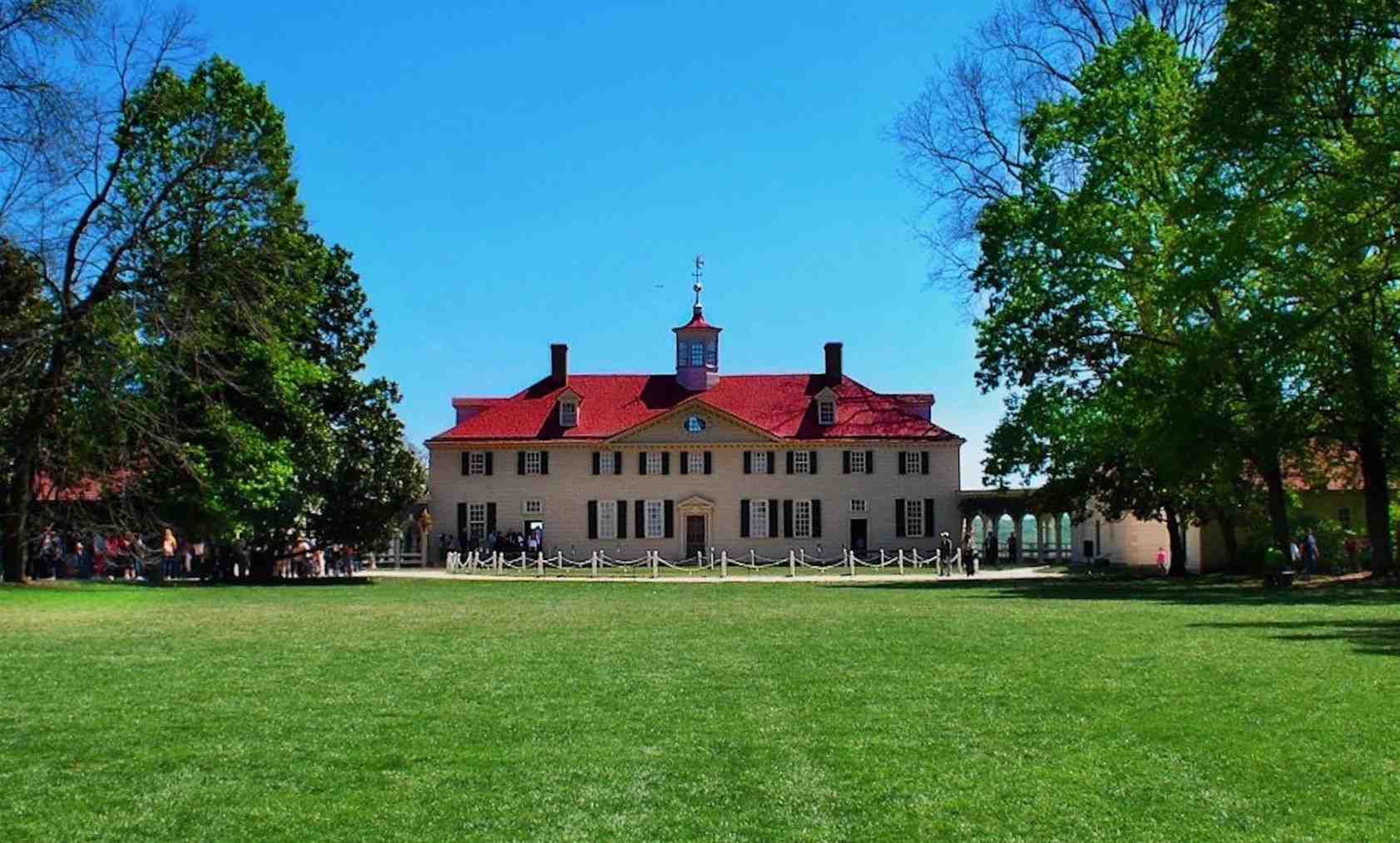
| Mount Vernon | Virginia | George Washington's estate and working farm |
| Monticello | Virginia | Thomas Jefferson's home and plantation |
| Colonial Williamsburg | Virginia | One of the world's largest living history museums |
| Gettysburg National Military Park | Pennsylvania | The Civil War's most pivotal battlefield |
| Freedom Trail | Boston, MA | 2.5-mile walk through 16 Revolutionary landmarks |
| Cahokia Mounds | Illinois | Ancient city once larger than medieval London |
| Natchez National Historical Park | Mississippi | Layers of Southern and African American history |
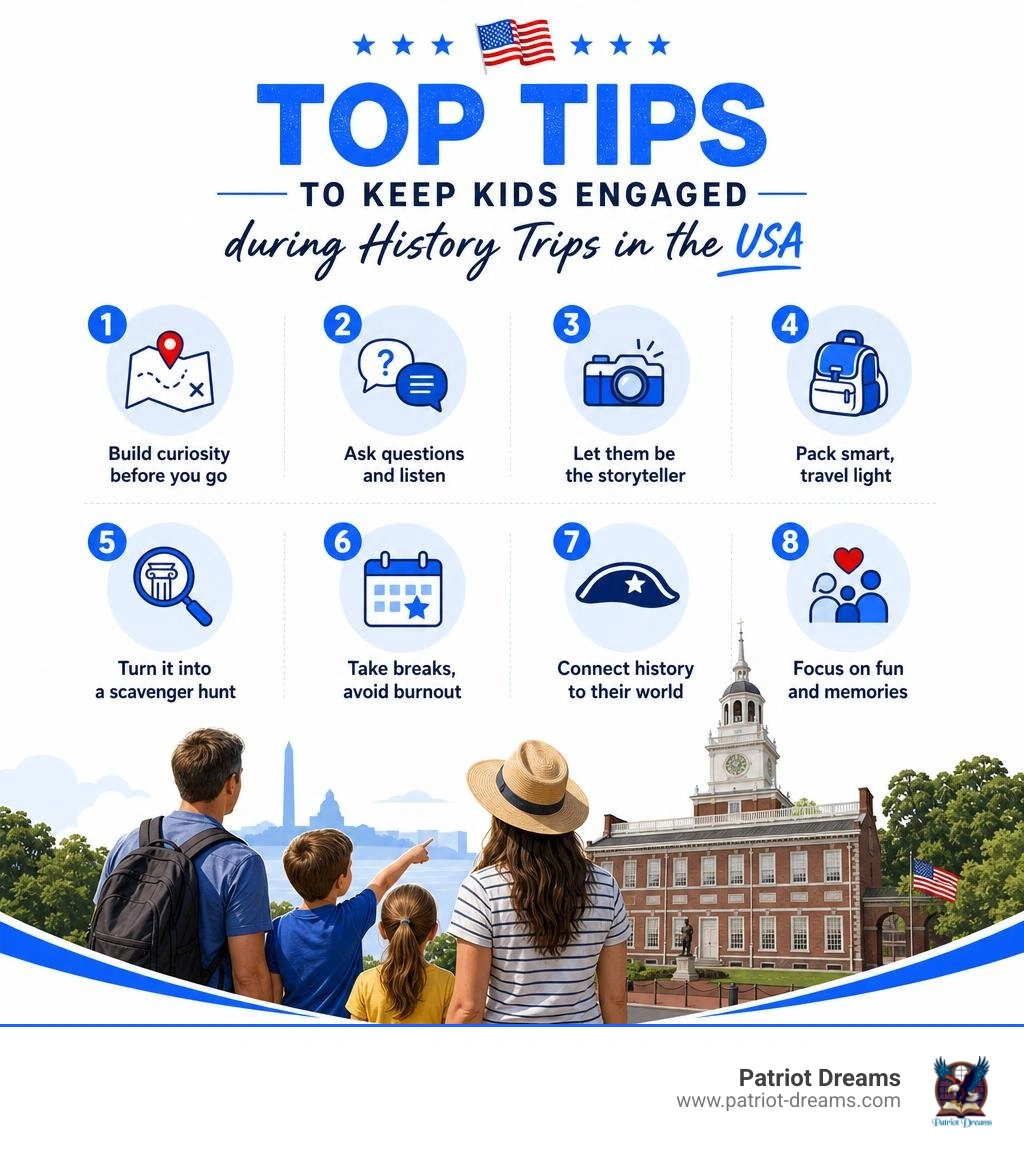
Here is the thing about history trips with kids: they can go one of two ways. Either your children are wide-eyed and asking questions you can barely keep up with — or they are slumped on a bench, counting ceiling tiles.
The difference is almost never the place. It is how you experience it together.
Standing inside Independence Hall in Philadelphia, in the very room where the Declaration of Independence was adopted, has moved grown adults to tears. Imagine what the right story, told at the right moment, can do for a curious child.
There are over 100,000 sites listed on the National Register of Historic Places. Sixty-four National Historical Parks and 85 National Historic Sites are managed across the country. Every single one holds a story worth telling — and most are waiting for your family to walk through the door.
We are Kyle & Emily, and we have spent years helping families like yours find the most meaningful, memorable ways to explore America's incredible heritage — and we are so glad you are here.
Historical places USA basics:
Understanding the Different Types of Historical Places in the USA
When you begin planning a family trip to explore America's past, you will quickly notice a few different labels on the map. You might see a "National Historic Site," a "National Historical Park," or a spot listed on the "National Register of Historic Places."
It is easy to get these confused, but understanding the difference actually helps us appreciate how our nation preserves its most precious memories.
The National Register of Historic Places is our country's official list of historic properties worthy of preservation. Authorized by the National Historic Preservation Act of 1966 and administered by the National Park Service (NPS), this register includes over 100,000 places across all fifty states and territories. These can be private homes, local courthouses, or entire neighborhoods.
To help visualize how these designations differ, we can look at this simple breakdown:
| Designation | Typical Scope | Primary Example |
|---|---|---|
| National Register of Historic Places | Over 100,000 properties recognized for local, state, or national significance. Can be privately owned. | Local historic districts, historic homes |
| National Historic Site (NHS) | Usually preserves a single, distinct historical feature or building. | Salem Maritime National Historic Site (the very first one, established in 1938) |
| National Historical Park (NHP) | A larger, multi-property area that extends beyond a single building to include natural landscape and multiple structures. | Valley Forge National Historical Park |
| National Historic Landmark (NHL) | The highest status of national significance. Only about 2,600 of the 90,000+ registered sites hold this title. | Independence Hall |
When we explore these places, we are stepping into a vast, protected tapestry. If you are curious about the landmarks closest to your own backyard, you can explore the List of U.S. National Historic Landmarks by state to find incredible pieces of the American story just a short drive away. Every single one of these American Historical Places represents a chapter of who we are, preserved so we can pass these stories down to the next generation.
The Role of the National Park Service in Keeping Stories Alive
Have you ever noticed the warm smile of a National Park Service ranger when you walk into a visitor center? That ranger is not just there to point you toward the restrooms; they are the keepers of our shared heritage.
The National Park Service plays an irreplaceable role in keeping the stories of our nation alive. Through careful preservation, guided educational tours, and interactive junior ranger programs, they turn what could be a dry history lesson into an active, emotional adventure. Rangers have a unique gift for storytelling, helping children look at an old wooden table or a grassy field and see the real human beings who stood there.
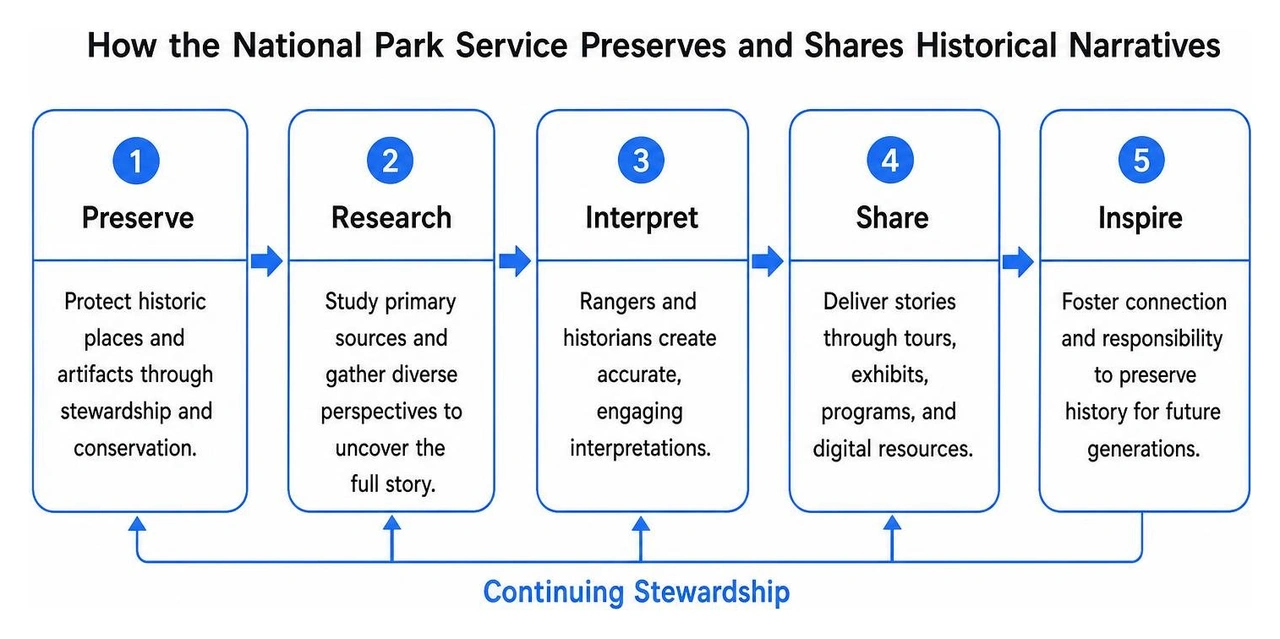
This dedication to preservation is a proud legacy that dates back to the very beginning of the national park system. You can trace this beautiful tradition back to the History of Yellowstone Americas First National Park and Its Legacy, which set the standard for how we value and protect our shared spaces. Today, that same spirit of stewardship ensures that our children can stand on the same ground where history was made, feeling a deep, personal connection to those who came before us.
Bringing History to Life: Family-Friendly Destinations That Spark Wonder
The secret to a successful family history trip is simple: find the human heart of the story. When children realize that the famous names in their textbooks were real people who had pets, made mistakes, worked with their hands, and faced difficult choices, history ceases to be a chore. It becomes a mirror.
The Magic of Storytelling at Presidential Homes and Historical Places in the USA
Visiting a presidential home offers an intimate, narrative-driven connection to the past that schoolbooks often miss. When we step onto the grounds of George Washington's Mount Vernon, we don't just see a grand mansion; we see the life of an innovative, sustainability-focused scientific farmer. Washington loved his land, designed a unique 16-sided treading barn for agricultural efficiency, and was a passionate dog lover. In fact, he had a French hound named Vulcan who was notorious for stealing food right off the kitchen table — much to Martha Washington's frustration! Knowing that the "Father of His Country" had to deal with a mischievous dog makes him instantly relatable to a child.
Further south in Virginia, Monticello | Thomas Jefferson's Home offers a powerful space to reflect on the complex, dual nature of early American history. Here, we stand where Thomas Jefferson’s ideals of liberty took root, while also recognizing that the estate was built and maintained by the labor of over 600 enslaved people.
By centering our visits on real people — like John Hemmings, the highly skilled enslaved woodworker who physically constructed many of Monticello’s iconic features, or Sally Hemings — we teach our children empathy and historical honesty. We also learn about the beautiful, lesser-known chapters of Monticello's survival, such as how Uriah Levy, the first Jewish commodore in the U.S. Navy, purchased and saved the estate from ruin in the 1830s out of deep respect for Jefferson's stance on religious freedom.
These personal, human stories are exactly what we look for when designing the Ultimate American Heritage Tour Guide 2026, helping families navigate these historic spaces with grace, curiosity, and heart.
Honoring Diverse American Experiences and Shared Journeys
The American story is a grand, beautiful, and sometimes difficult quilt made of many different threads. To truly understand the historical places USA preserves, we must listen to the voices of everyone who helped build this nation.
At the Tenement Museum in New York City, families can walk through restored apartments that once housed real immigrant families during the Progressive Era. Children can see how crowded, noisy, and challenging daily life was, but they also see the resilience, hope, and mutual cooperation that defined these communities. This spirit of community support was famously championed by reformers like Jane Addams, who co-founded Hull House in Chicago in 1889 to provide education, healthcare, and childcare to working-class families.

We also find deep roots of resilience in Native American history. At Acoma Sky City Pueblo in New Mexico, families can witness a community that has lived atop a sheer sandstone mesa for nearly a thousand years, preserving their language, culture, and traditions through generations of change.
By exploring the American Heritage Archives, we can help our children connect with these diverse narratives, teaching them that no matter where our ancestors came from, we are all part of a shared American journey.
Mapping Your Adventure: Regional Itineraries for Curious Families
Taking a family trip to historic sites is a wonderful way to bond, but it requires a bit of thoughtful pacing. If we try to see everything in one day, our little travelers will quickly become exhausted. The key is to plan regional road trips that combine movement, outdoor exploration, and storytelling.
Planning a Family Road Trip to Iconic Historical Places in the USA
One of the most rewarding journeys you can take is a road trip through the historic heart of the East Coast. If you are looking for inspiration from fellow travelers, you can read about Our Favorite Historical Sites Across the US to see how other families have mapped out their heritage adventures.
A classic itinerary might begin in Philadelphia, where you can walk down Elfreth's Alley — the oldest continuously inhabited street in the United States — and visit Independence Hall. Don't forget to stop by Benjamin Franklin's grave, where it is a local tradition to leave a shiny copper penny for good luck!
From Philadelphia, a short drive brings you to Gettysburg National Military Park (U.S. National Park Service), a place of quiet solemnity where kids can participate in ranger-led living history programs and see the final resting place of over 6,000 Union soldiers.
Further south lies Virginia's Historic Triangle: Colonial Williamsburg, Jamestowne, and Yorktown. This region is a paradise for hands-on learning. At Jamestowne, children can stand right next to active archaeological digs, watching researchers pull 400-year-old artifacts out of the soil in real-time.
To make the most of these walking heavy destinations, pairing your visits with self-guided Historical Walking Tours allows your family to move at its own gentle pace, stopping to rest, snack, and chat whenever you need to.
Practical Tips for a Smooth and Joyful Journey
To keep your journey peaceful and filled with joy, keep these simple, practical tips in mind:
- Choose the Shoulder Seasons: Visiting popular historic cities in the spring or autumn means milder weather, beautiful foliage, and far fewer crowds.
- Book Ahead: For high-demand experiences, like a tour of the White House or a timed entry to a presidential home, make your reservations several months in advance.
- Pace Your Days: Plan for one major historical site in the morning when energy is high, followed by a relaxed lunch, and a park or outdoor activity in the afternoon.
- Pack the Essentials: Always bring comfortable walking shoes, refillable water bottles, and plenty of simple snacks to keep energy levels steady.
By keeping the journey relaxed and focusing on quality over quantity, you will find some of the Best Places to Vacation in the US are those where you take the time to slow down and truly listen to the whispers of the past.
Hidden Gems: Off-the-Beaten-Path Treasures Worth Discovering
While iconic monuments are wonderful, there is a unique magic in finding a lesser-known historical site. These quiet, uncrowded places often spark the deepest sense of wonder because they feel like secrets waiting to be uncovered.

Ancient Wonders: Cahokia Mounds and Poverty Point
Long before European ships arrived on these shores, sophisticated ancient cultures built massive cities and engineering marvels across North America.
At the Cahokia Mounds State Historic Site in Illinois, families can explore the remains of a pre-Columbian metropolis that, at its peak around 1100 AD, was home to nearly 20,000 people — making it larger than London was at the same time! Climbing to the top of Monks Mound offers a breathtaking view and a profound sense of the scale of ancient Mississippian culture.
Further south, in Louisiana, lies the Poverty Point National Monument (U.S. National Park Service). This UNESCO World Heritage Site dates back over 3,000 years. Its massive earthen ridges and mounds required an estimated five million hours of manual labor to construct. Poverty Point was the heart of a vast trade network that stretched for hundreds of miles across the continent, proving that ancient America was a place of incredible connection, cooperation, and sophistication.
Small Towns with Big Stories
Sometimes, the grandest histories are preserved in the smallest places. Towns along historic migration routes and old highways hold a unique charm that makes you feel as though you have stepped back in time. You can explore these nostalgic places in our guide to Traveling Through Time American Small Towns That Feel Like a Vintage Film Set.
One such treasure is preserved at Natchez National Historical Park (U.S. National Park Service) in Mississippi. Located on the banks of the lower Mississippi River, Natchez holds a rich, complex history that spans European settlement, African enslavement, the cotton economy, and the inspiring struggles of the Civil Rights movement.
Walking through these quiet streets, or driving along iconic scenic routes like Route 66, helps children see that history isn't just found in grand marble museums in Washington D.C. It is woven into the very fabric of our everyday communities, our main streets, and our small towns.
Frequently Asked Questions About Family Travel to Historic Sites
What is the difference between a National Historic Site and a National Historical Park?
A National Historic Site (NHS) usually protects a single, distinct historical feature directly associated with its subject, such as a president's birthplace or a historic fort.
A National Historical Park (NHP) is typically a larger area that extends beyond a single property to include a mix of historic structures, agricultural land, and significant natural features, allowing visitors to experience an entire historical landscape.
How can we make visits to historic battlefields meaningful for children?
When visiting historic battlefields, we can help children focus on values like courage, reconciliation, and the quiet resilience of ordinary people. Instead of focusing solely on military tactics, look for personal stories.
Ranger-led programs, living history demonstrations, and junior ranger activities are wonderful tools. You can find more gentle ways to share these stories in our guide to Civil War Battlefields.
What are some budget-friendly ways to explore American heritage?
Exploring our nation's history does not have to be expensive! Many National Park Service sites offer free admission, and purchasing an America the Beautiful National Parks Pass is a highly cost-effective option for families planning to visit multiple parks.
Additionally, you can explore incredible primary sources, maps, and virtual exhibitions for free from home using Digital American History Tours.
Conclusion
At the end of the day, visiting these historic places is about so much more than checking destinations off a bucket list. It is about connection. It is about standing in a place where people once hoped, struggled, and worked together to build something beautiful, and realizing that we are part of that very same story.
When we share these journeys with our children, we are not just teaching them facts; we are giving them roots. We are showing them that they belong to a grand, resilient, and deeply human family.
We created Patriot Dreams to help families capture these moments of wonder. Our interactive map and immersive audio storytelling bring the personal, heartfelt stories of America’s past directly to your family, helping you preserve your own legacy of exploration and shared memories.
We would love to walk alongside you on your next adventure. Download the Patriot Dreams App today, and let's bring history to life, together.

Join the Patriot Dreams Community
Download the app today and start your journey through American history and personal legacy.

Explore Our Latest Insights
Dive into stories that shape our American legacy.