How to Navigate Personal Growth Using the Legend of Jumping Mouse


What the Legend of Jumping Mouse Can Teach Us About Growth
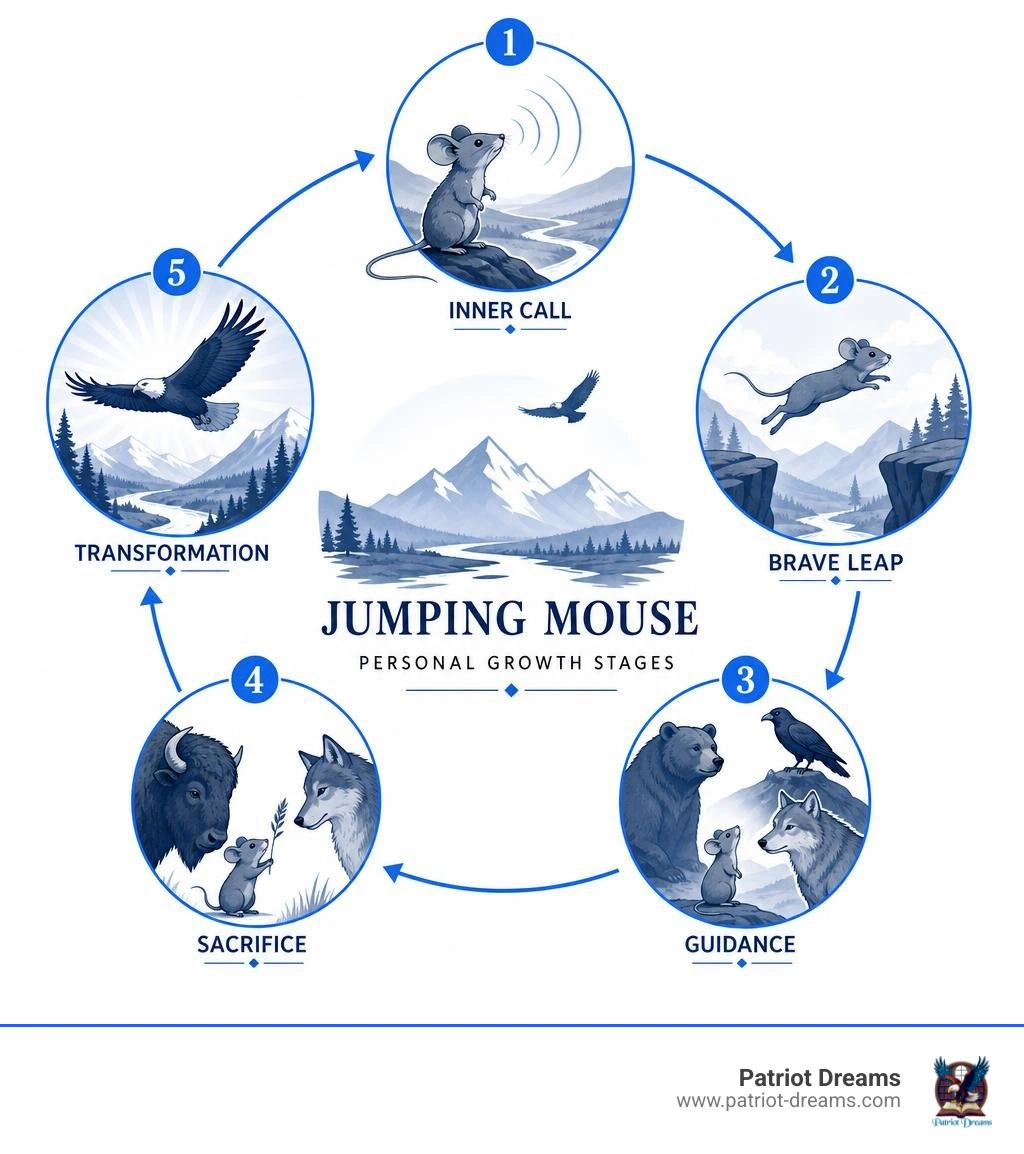
The legend of Jumping Mouse is a story about answering a quiet inner call, taking brave steps into the unknown, and helping others along the way. For personal growth, its lesson is practical: notice what keeps calling your attention, take one manageable leap toward it, and let compassion guide the choices you make next.
In many retellings, a small mouse hears a distant roar, follows it to a river, and begins a journey toward faraway mountains. With guidance from animal helpers, the mouse faces fear, gives up comfort to help a Buffalo and Wolf, and is finally transformed into an eagle. The details vary among modern versions, but the heart of the tale remains clear: courage grows through action, and generosity can change how we see ourselves and the world.
This guide explores the legend with care as an Indigenous oral-tradition story, while using its enduring images - the river, the leap, the animal guides, and the eagle - as gentle prompts for your own life.
We are Kyle & Emily, and we invite you to start where Jumping Mouse starts: by listening for the small but persistent call that asks you to grow.
Simple legend of jumping mouse glossary:
- American Indian Myths and Legends by Richard Erdoes
- Lewis and Clark Expedition
- American Cowboy Ranch Life
The Legend of Jumping Mouse: Cultural Origins and Oral Traditions
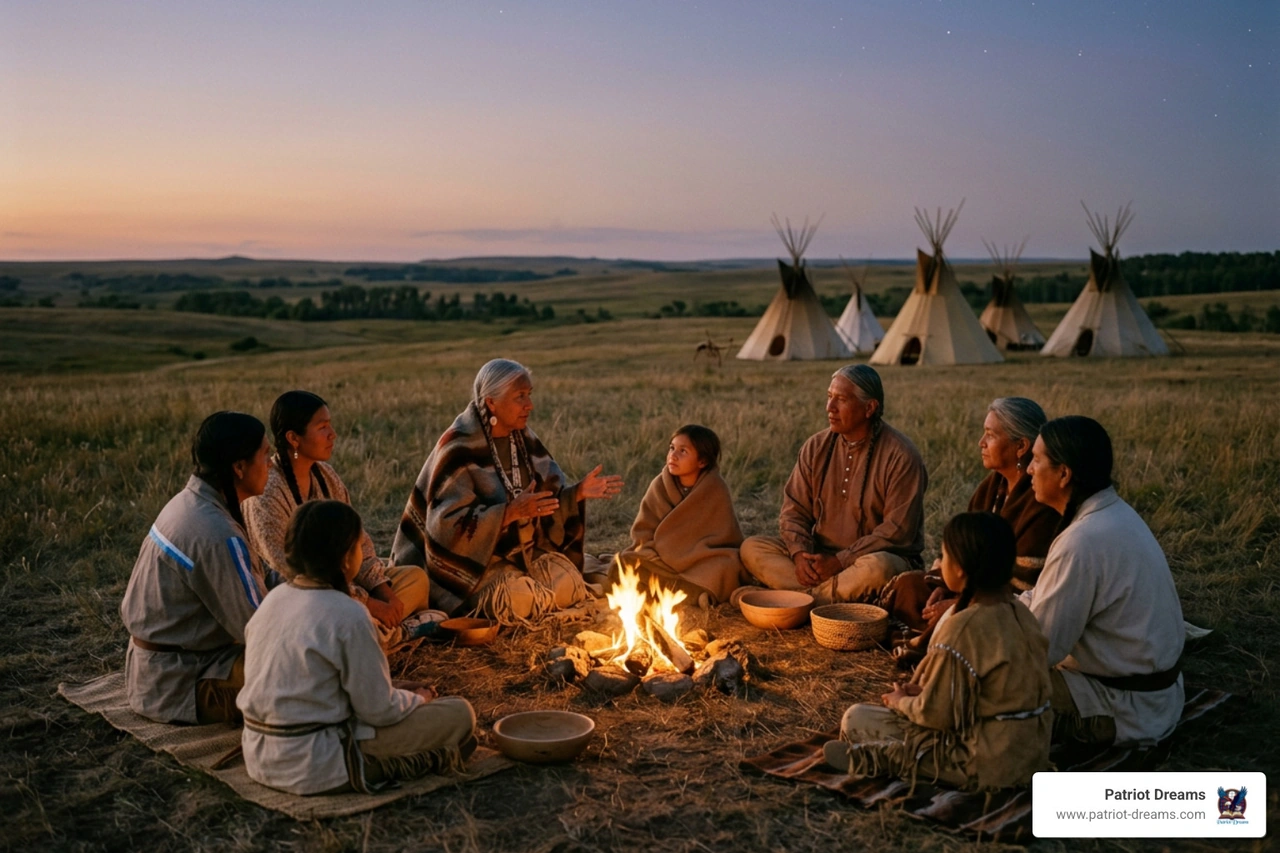
To truly appreciate the heart of this story, we must step back and honor where it began. The roots of this teaching stretch back through centuries of Indigenous storytelling across the Great Plains and neighboring woodlands. Tribal nations including the Northern Plains Lakota, Cheyenne, and Ojibwe (Anishinaabe) peoples have shared variations of this narrative around winter fires for generations. In fact, storytellers and cultural historians estimate the core oral tradition to be at least 10,000 years old.
These tales were never meant merely to entertain; they served as living compasses for how to walk in balance with the world. Within Plains Indigenous storytelling traditions, stories like that of the courageous little mouse carry spiritual wisdom linked to sacred geography, such as the healing waters of Medicine Lake, the vast prairies, and the profound ceremonial teachings of the Sundance. They remind us that every creature—no matter how small—has a vital purpose within creation. By exploring these Native American historical narratives, we discover a rich worldview centered on reciprocity, humility, and deep respect for our animal relatives.
Historical Preservation and Literary Adaptations
As oral legends met the printed page, gifted writers and artists worked to share these lessons with wider audiences while preserving their gentle power. One of the most celebrated modern retellings is John Steptoe's illustrated adaptation. Published in 1984, this classic 40-page picture book introduced generations of young readers to the little mouse’s quest. Steptoe, an acclaimed author who earned two Coretta Scott King Awards during his career, crafted breathtaking, detailed black-and-white pencil illustrations that brought the landscape alive.
Steptoe's retelling earned a prestigious Caldecott Honor in 1985 and holds an accessible Lexile measure of AD610, making it a beloved classroom staple for children and parents alike. Readers on Goodreads have celebrated the book with an average rating of 4.15 out of 5 stars across more than 1,100 reviews. Along with other classic lore in the rich tapestry of American folk stories, this tale illustrates how ancient Indigenous wisdom continues to illuminate our modern lives.
The Hero's Journey: Key Characters and Animal Guides

At its heart, the story mirrors the classic hero’s journey—a timeless path of awakening that speaks to anyone striving to live a meaningful life. The story begins with a busy little mouse who scurries about the forest floor like all his peers. Yet unlike the others, he pauses. He begins to hear an unexplainable roaring sound that fills his ears with wonder. When he asks his fellow mice about it, they dismiss him, too occupied with gathering seeds to pay attention to unseen mysteries.
Driven by curiosity, the mouse leaves behind the safety of his familiar home and sets off in search of the sound. When he finally reaches a wide, rushing river, he encounters Grandfather Frog sitting on a lily pad. Grandfather Frog explains that the roaring sound is the river of life. Recognizing the little creature's sincere heart, Frog offers him "medicine power" and invites him to jump as high as he can.
When the mouse leaps into the air, his perspective shifts completely: for the first time, he catches a glimpse of the majestic Sacred Mountains in the distance. When he lands, Grandfather Frog bestows upon him a new name—Jumping Mouse—and equips him with the strength and long legs needed to pursue the high places. Much like other beloved figures in our collection of classic American folklore characters, Jumping Mouse embarks on an unforgettable quest guided by allies who reveal his hidden potential.
Narrative Arc: Key Events in the Legend of Jumping Mouse
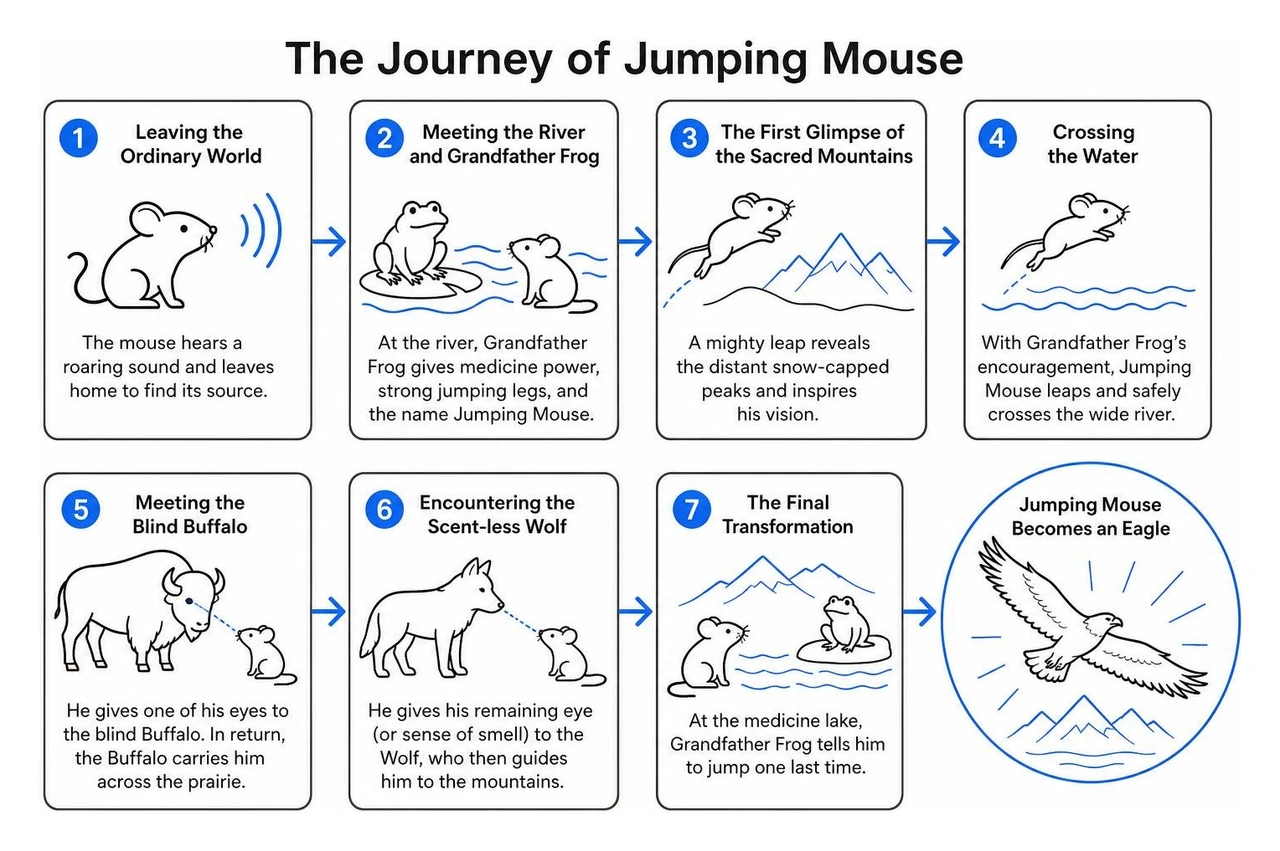
The path of Jumping Mouse unfolds across several clear, transformative milestones:
- Leaving the Ordinary World: The curious mouse hears a persistent roaring sound and chooses to leave his daily routine behind to discover its source.
- Meeting the River and Grandfather Frog: He encounters the rushing river and receives wisdom, strong jumping legs, and his sacred new name.
- The First Glimpse of the Sacred Mountains: A mighty leap reveals the distant snow-capped peaks, establishing his lifelong vision.
- Crossing the Water: With Grandfather Frog's encouragement and a leap of faith, Jumping Mouse crosses the wide river safely.
- Meeting the Blind Buffalo: Upon entering the open plain, he finds a mighty Buffalo dying of blindness and gives away one of his own eyes so the beast may live and see again. In return, the grateful Buffalo carries the mouse across the treacherous prairie.
- Encountering the Scent-less Wolf: In the dense brush near the mountains, he meets a Wolf who has lost his keen sense of smell and his will to live. Jumping Mouse selflessly gives away his remaining eye (or sense of smell, in some versions) to restore the Wolf's spirit. The Wolf then guides the sightless mouse to the foothills of the Sacred Mountains.
- The Final Transformation: Sitting alone, blind, and vulnerable at the edge of the medicine lake, Jumping Mouse is visited once more by Grandfather Frog, who tells him to jump one last time—transforming the humble creature into a soaring eagle.
The Symbolic Role of Mentors and Allies
Every character Jumping Mouse meets represents a vital stage in our own personal maturation:
| Animal Guide | Core Lesson Taught | Personal Growth Parallel |
|---|---|---|
| Raccoon | Curiosity & Discernment | Learning to pause, ask questions, and listen to inner longings. |
| Grandfather Frog | Encouragement & Vision | Seeking mentors who help us see beyond our immediate limitations. |
| Buffalo | Reciprocity & Physical Giving | Sharing our strength with others and finding community protection. |
| Wolf | Emotional Healing & Faith | Restoring hope to those in despair and trusting guidance when blind. |
| Eagle | Spiritual Transcendence | Rising above earthly limitations to see life with clarity and wholeness. |
Symbolic Lessons in Sacrifice, Courage, and Transformation
The most striking moments of the legend occur when Jumping Mouse makes radical sacrifices. When he meets the great Buffalo lying helpless on the plain, the mouse does not hoard his gifts. Recognizing that his own small eye could heal the giant creature, he willingly gives it away. Later, when he meets the depressed Wolf sitting quietly in the shadows, he gives away his other eye, rendering himself completely blind.
This is not a tale of foolish self-destruction; rather, it is a masterclass in ego surrender and radical empathy. In traditional Indigenous myths and legends, true vision comes from the heart, not physical eyesight. By giving away what he relied upon for daily survival, Jumping Mouse steps out of fear and enters total trust in the sacred flow of life. He demonstrates that becoming our best self is rarely about accumulating possessions or power; instead, it is about clearing away self-centeredness to serve the common good.
Metamorphosis: From Ground Dweller to Soaring Eagle
When the blind mouse arrives at the foot of the Sacred Mountains, he is stripped of his original identity. He can no longer scurry, forage, or protect himself. He trembles in the grass, awaiting whatever fate might bring.
It is precisely in this state of complete vulnerability that Grandfather Frog reappears. Frog touches the mouse with sacred river water and instructs him to jump with all his might. Jumping Mouse obeys, leaping into the dark void.
As he rises, the morning sunlight strikes his fur, and he feels warm wind beneath him. His front legs stretch into broad, powerful wings, his sight returns a thousand times clearer than before, and he soars high into the sky as a golden eagle. His transformation is the natural result of living an open-hearted life. By letting go of who he was on the ground, he earns the wings to fly among the peaks.
Practical Applications: Using the Story for Personal Growth
How can we apply this ancient teaching to our everyday lives in 2026? The journey of Jumping Mouse offers a practical blueprint for navigating transitions, overcoming fears, and discovering purpose.
First, consider the "roaring in the ears." We all experience quiet tugs of intuition—a desire to learn a craft, repair a relationship, volunteer in our community, or embark on a new career. Too often, our busy routines drown out that call. Personal growth begins when we, like the mouse, stop scurrying long enough to listen to what our spirit is trying to tell us.
Second, the story challenges us to replace creeping with leaping. Creeping is safe, predictable, and confined to our comfort zone. Leaping requires courage, whether that means speaking an honest truth, offering forgiveness, or stepping out into the unknown. When you take a leap of faith, you gain higher perspective and discover resources you never knew you possessed.
Psychological Dimensions in the Legend of Jumping Mouse
Modern psychology echoes the core wisdom of this ancient fable:
- Navigating Archetypal Transitions: Swiss psychologist Carl Jung described personal individuation as a process of leaving behind childhood conditioning to discover the integrated self. Jumping Mouse models this by stepping away from the herd mentality of his colony.
- Overcoming Scarcity Mindset: Fear tells us to clutch tightly to our time, energy, and resources. The mouse demonstrates radical abundance: when we give freely to uplift others, life finds a way to replenish us.
- Embracing Vulnerability: Researcher Brené Brown often notes that vulnerability is the birthplace of joy, belonging, and courage. Jumping Mouse achieves his ultimate breakthrough not when he is powerful, but when he embraces complete humility.
Daily Steps to Embody the Mouse's Courage
To weave the wisdom of the legend into your routine, try practicing these simple habits:
- Practice Mindful Listening: Dedicate five minutes each morning to quiet reflection. What quiet "roar" or creative spark is calling for your attention today?
- Identify Your Personal River: Pinpoint one obstacle that feels intimidating. What looks like a barrier is often the very bridge to your next stage of growth.
- Perform Unseen Acts of Service: Emulate the mouse’s generosity by helping a coworker, neighbor, or family member without expecting praise or repayment.
- Take One Courageous Leap: Choose one small action each week that pushes past self-doubt—introduce yourself to someone new, share an idea, or enroll in a class.
Frequently Asked Questions About Jumping Mouse
What is the core moral lesson of the Jumping Mouse legend?
The core moral of the legend is that true fulfillment is achieved through courage, empathy, and selfless service to others. It shows that personal transformation happens when we listen to our inner calling and willingly surrender our ego to help those in need.
Why did Jumping Mouse give away his sight and smell?
Jumping Mouse gave away his senses out of profound compassion for the suffering Buffalo and Wolf. Symbolically, releasing his physical senses allowed him to let go of fear-based survival and develop deeper spiritual insight, empathy, and trust.
How does the transformation into an eagle represent personal growth?
The eagle represents the ultimate realization of one’s higher potential. By living selflessly and acting bravely, the mouse ascends from a limited, ground-level existence to a broad, elevated perspective, embodying freedom, wisdom, and spiritual clarity.
Conclusion
The legend of Jumping Mouse reminds us of a comforting truth: no matter how small or ordinary we may feel, we all possess the capacity for extraordinary courage. Life asks each of us to listen for our own inner calling, to step beyond the familiar, and to offer kindness to our fellow travelers along the way. When we choose generosity over fear, we discover that our own lives are lifted higher in the process.
Preserving and sharing these timeless oral traditions connects us across generations, reminding us of the enduring values that unite our communities. At Patriot Dreams, we are dedicated to keeping these heartfelt stories alive. Through our interactive map and rich audio storytelling, we invite you to explore the diverse voices, legends, and everyday heroes that have shaped our shared history. Take a leap into our historical journey by exploring Patriot Dreams' 250 years of heritage exploration and discover the inspiring stories waiting for you today.

Join the Patriot Dreams Community
Download the app today and start your journey through American history and personal legacy.

Explore Our Latest Insights
Dive into stories that shape our American legacy.