Beyond the Textbooks: Gripping Stories of the American Revolution

Why American Revolution Stories Matter Today
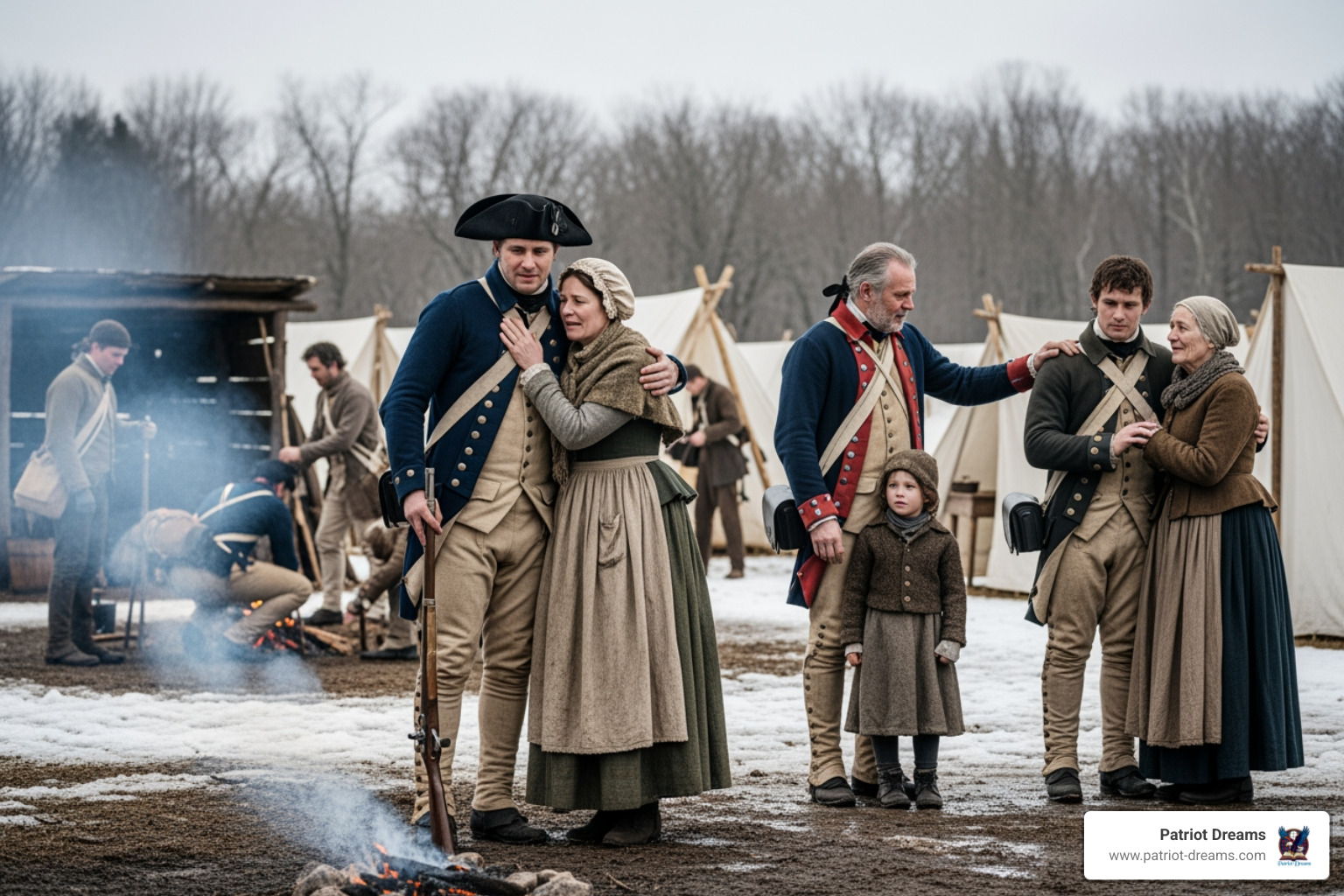
American Revolution stories are more than dates and battles in a dusty textbook—they're deeply human tales of courage, sacrifice, and hope that shaped the nation we call home. These are stories of neighbors who stood together, families who held strong through hardship, and everyday people who believed in something bigger than themselves.
Quick Overview: What You'll Find
- Paul Revere's Midnight Ride - How one man's brave journey sparked a revolution
- Washington's Valley Forge - The winter that tested—and strengthened—a young army
- The Declaration Signers - The personal courage behind America's founding document
- Untold Heroes - Women, African Americans, and Native Americans who shaped history
- Turning Point Battles - Moments when everything hung in the balance
- Legacy of Freedom - How these stories still inspire us today
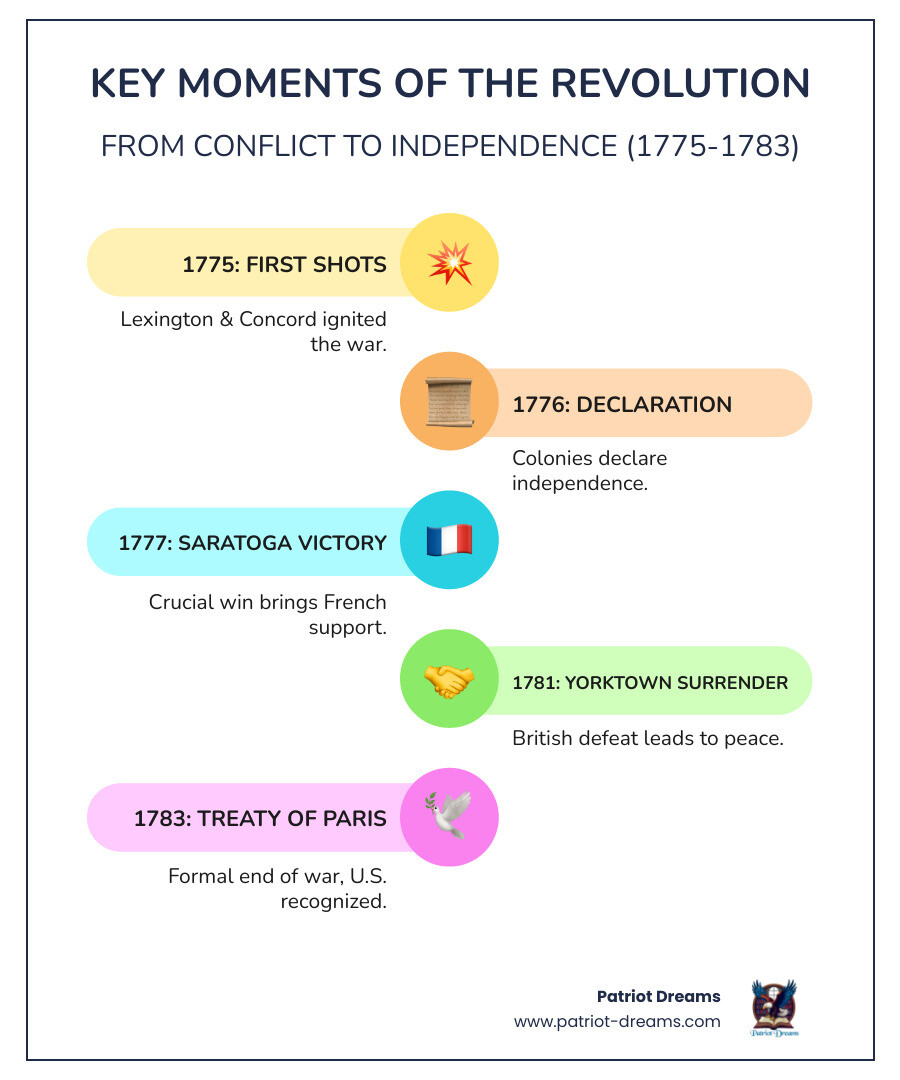
The first shots rang out on April 19, 1775, in Lexington and Concord—a moment often called the "shot heard 'round the world." But the real story began long before, in quiet conversations between neighbors, in letters written by candlelight, and in the hearts of people who dared to dream of self-governance.
This wasn't just a war between armies. It was a struggle that touched every family, every community, and every corner of the thirteen colonies. It lasted eight years and engaged more than two dozen nations. Through it all, ordinary people—farmers, merchants, mothers, and children—showed extraordinary courage.
These stories connect us to our shared past in the most personal way. They remind us that the freedoms we cherish today were won by people who weren't so different from us—people who worried about their families, who felt fear but chose courage anyway, and who believed in building something better for future generations.
Explore more about American Revolution stories:
- Born on the 4th of July: The Story of Pooli, The WWII Navy Cat
- The Pigeon Who Saved 194 Men: The Heroic Tale of Cher Ami
- Oregon Trail stories
The Spark of Revolution: A Midnight Ride and a "Shot Heard 'Round the World"
Before the first shots were fired, a quiet tension had been building. For years, few colonists in British North America objected to their place in the British Empire. But everything changed after the Seven Years' War (known in the United States as the French and Indian War), which ended in 1763. Great Britain, burdened by a staggering war debt, began to reform colonial administration, enforce tax laws, and place troops in America. These attempts to raise money led directly to conflict with the colonists, who felt their rights were being infringed upon. By the mid-1770s, relations between Americans and the British administration had become strained and acrimonious.
Colonial discontent simmered, turning into open defiance. Neighbors gathered, discussing their hopes for the future and the growing challenges posed by new taxes and British policies. Patriots had been gathering arms and powder and training to fight if necessary.
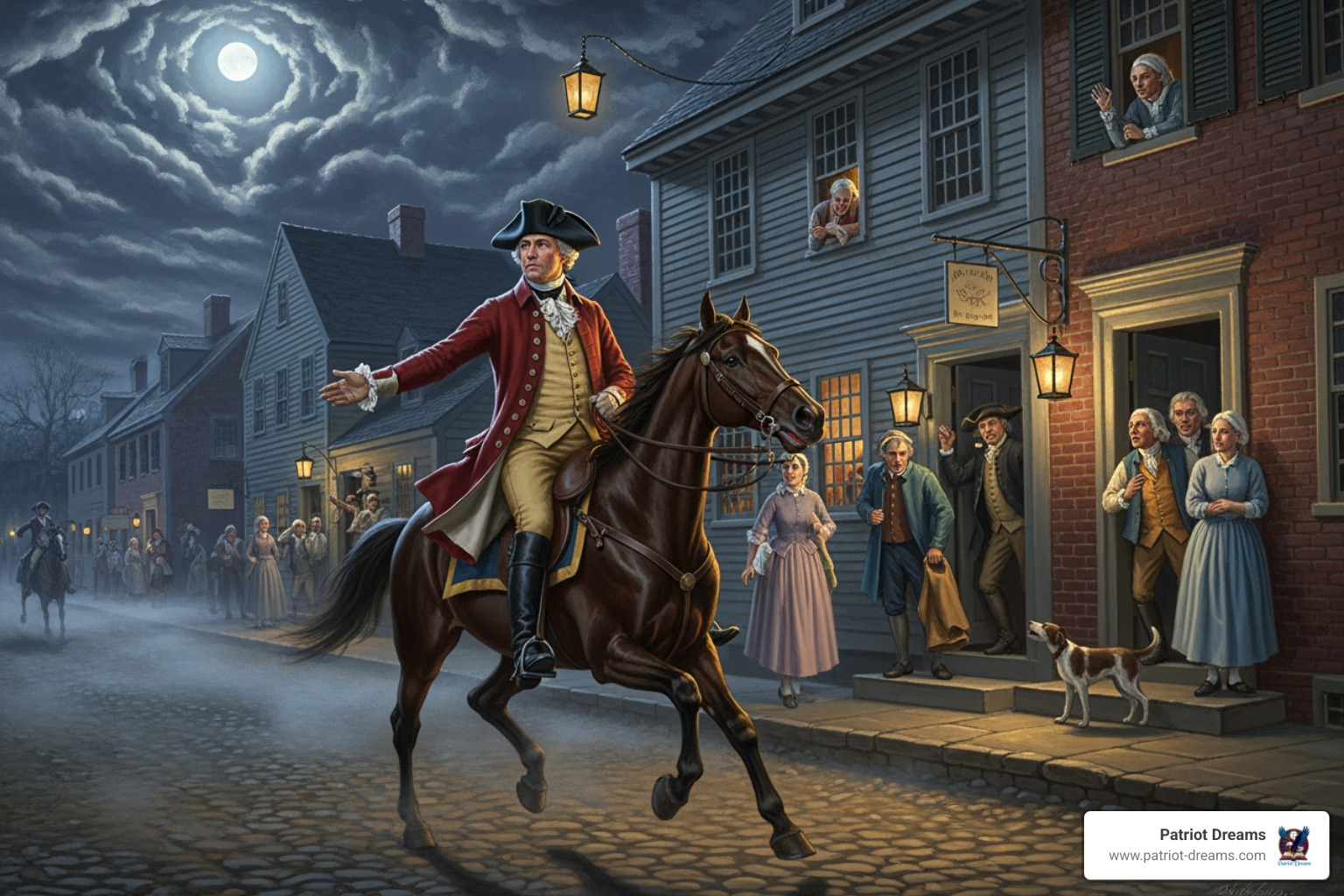
One of the most iconic American Revolution stories from this period is the midnight ride of Paul Revere. On the evening of April 18, 1775, Dr. Joseph Warren sent for Paul Revere, informing him that British troops were marching towards Lexington and Concord. Their mission was likely to arrest patriot leaders like Samuel Adams and John Hancock, and to destroy colonial stores of ammunition and supplies.
Revere set off, his mission clear. He was rowed across the Charles River, where he obtained a horse. Richard Devens Esq. informed him that he had met nine armed British officers going towards Concord. Revere, knowing the danger, proceeded with caution. Around 11 o'clock, with the moon shining bright, he began his legendary ride. He encountered two officers under a tree and turned his horse short about, riding on a full gallop for Mistick Road. He successfully alarmed Mr. Adams and Colonel Hancock in Lexington.
Later, joined by Mr. Daws and a young gentleman named Prescot, they continued towards Concord. Revere's journey was fraught with peril. About halfway from Lexington to Concord, they saw British officers. Revere was captured by four officers who put their pistols to his breast and ordered him to dismount. He was then interrogated by Major Mitchel of the 5th Regiment. Revere, ever bold, told them they would miss their aim and that he had alarmed the country all the way up. He warned them that 500 men would soon be there, while the British claimed to have 1500 coming.
Revere's account gives us a thrilling, first-person glimpse into the night that ignited the war. He described hearing a gun fired near the Meeting House, an alarm signal. When the British troops appeared, they halted, a single gun was fired, and then the whole fired a volley. This was the "shot heard 'round the world," marking the start of the American Revolutionary War.
The British, under General Thomas Gage, had hoped to catch the colonists by surprise and avoid bloodshed by sending troops on the night of April 18. However, colonial militia awaited them in Lexington, leading to a firefight. As John Andrews, Esq., of Boston wrote, "Yesterday produced a scene the most shocking New England ever beheld." He reported that eight were killed and fourteen wounded of the inhabitants of Lexington. The British troops then marched to Concord, where they found and set fire to colonial ammunition and stores. The country people, desperate and fearless, engaged the troops, forcing them to retreat back towards Boston, pursued by the militia. It was a bloody day, lasting seven hours, and marked the spirit of ordinary people standing together for what they believed was right.
The Unlikely General and His Ragtag Army
With the outbreak of hostilities, the Continental Congress recognized the need for a unified military effort. In June 1775, they appointed George Washington as commander-in-chief of the Continental Army. This was one of the most crucial American Revolution stories, as Washington's leadership proved indispensable.
Washington's first task was daunting: to transform a "ragtag militia" into a professional fighting force. He assumed command of the main American army in Cambridge, Massachusetts, on July 3, 1775. The challenges were immense: recruitment, retention, training, discipline, supply, and payment for soldiers' services were constant problems. Washington realized that simply keeping an army in the field was his single most important objective.
The early years of the war were tough. Despite Washington's daring victories, the British, with their superior sea power, often held the initiative. One of the most famous American Revolution stories of perseverance comes from the winter of 1777-1778 at Valley Forge. The Continental Army faced extreme hardship—bitter cold, scarce food, and rampant disease. It was a time that truly "tried men's souls." Yet, through sheer resilience and the camaraderie of the soldiers, they endured. The arrival of Baron von Steuben, a Prussian military officer, brought new hope and much-needed training, changing the Continental Army into a more disciplined force.
Before Valley Forge, Washington had already demonstrated his strategic brilliance and daring. On December 25-26, 1776, he led his troops in a perilous crossing of the Delaware River. This bold move led to the surprising victory at Trenton, New Jersey, where his forces overwhelmed a Hessian garrison and captured about 900 prisoners. Just days later, on January 3, 1777, Washington achieved another crucial victory at Princeton. These successes boosted morale significantly and showed that the Continental Army, despite its challenges, could defeat the British.
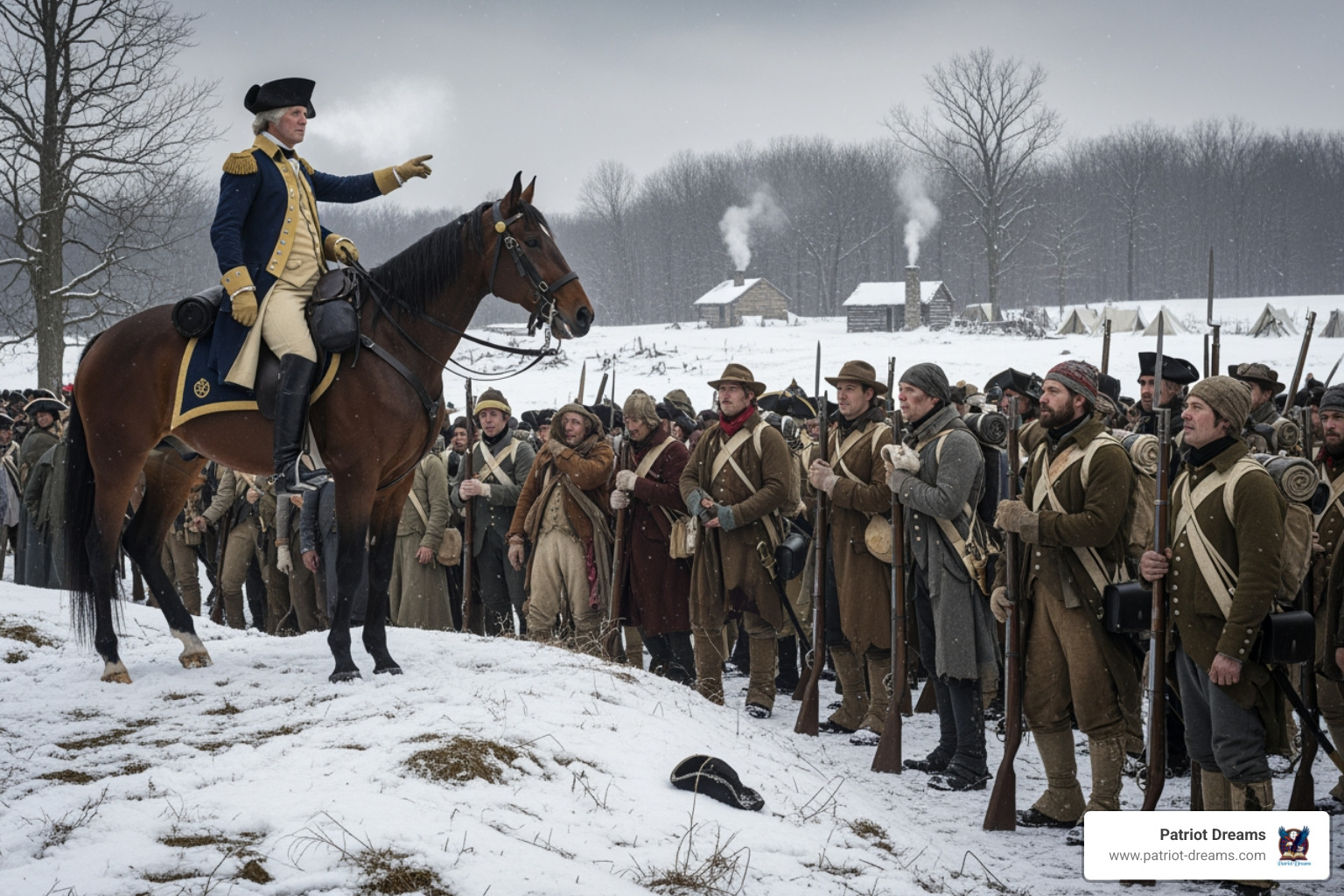
These stories of Washington's leadership, the soldiers' resilience, and the power of unity and perseverance are at the heart of the American spirit. They remind us that even in the darkest times, hope and determination can carry us through. We can learn more about this remarkable leader in George Washington: The General Who Became America's First President.
Voices of Freedom: The Declaration and the Diplomats
The fight for independence wasn't just on the battlefield; it was also in the halls of power and the hearts of thinkers. The Second Continental Congress convened on May 10, 1775, struggling with the escalating conflict. While they initially sought reconciliation, sending the "Olive Branch Petition" to King George III, the tide was turning towards independence.
The significant political and ideological developments leading to the Declaration of Independence form another cornerstone of American Revolution stories. John Adams, a passionate advocate for liberty, played a crucial role in pushing for separation from Britain. His dedication and foresight helped guide the Congress towards this momentous decision.
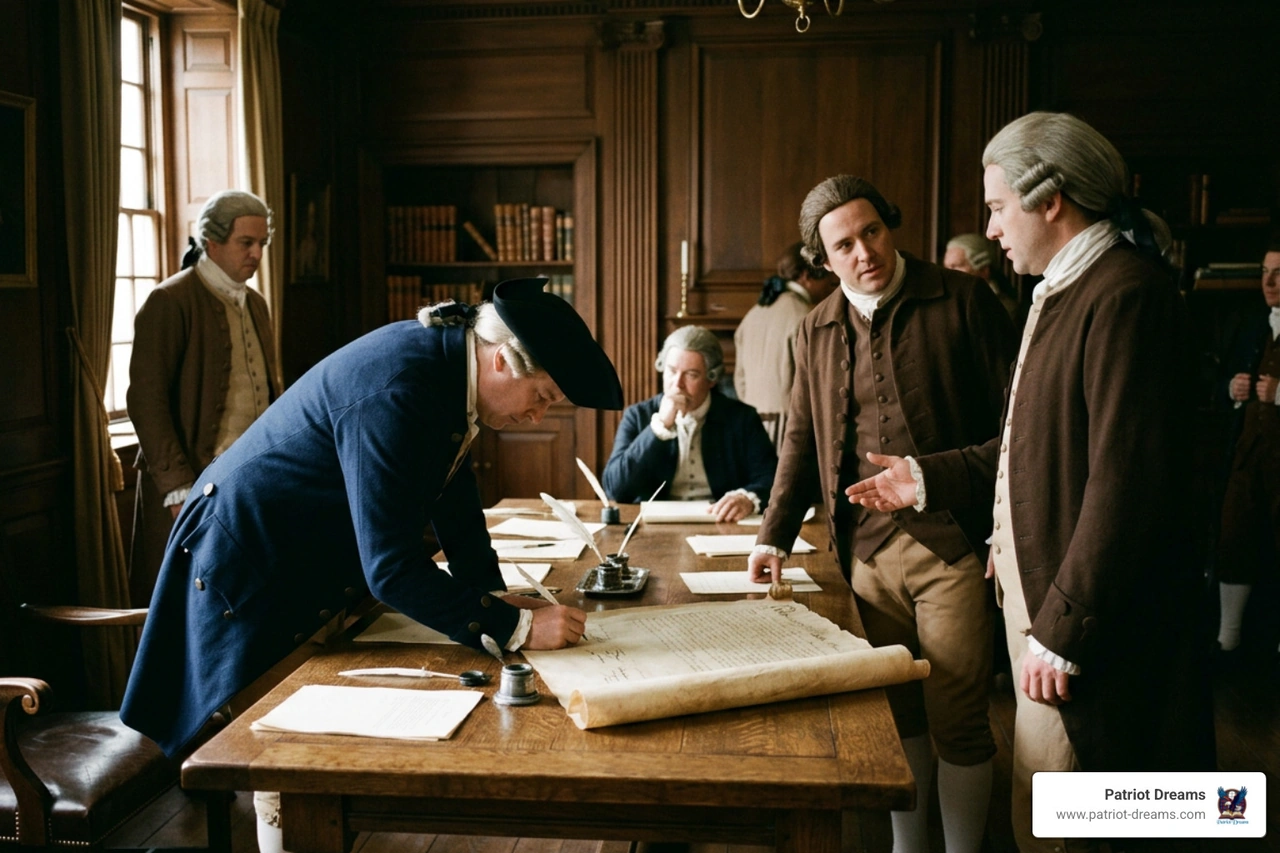
The task of drafting the Declaration fell largely to Thomas Jefferson. His eloquent words, outlining the natural rights of man and the grievances against the King, became the voice of a new nation. The courage it took to sign this document cannot be overstated; it was an act of treason against the British Crown, punishable by death. The importance of friendship and trust among the signers, as they pledged their lives, fortunes, and sacred honor, underscores the profound commitment to their shared ideal. You can dig deeper into this pivotal document in Thomas Jefferson and the Declaration of Independence: How a Nation Found Its Voice.
Beyond the declaration, diplomatic efforts were crucial. The young nation desperately needed allies. The wisdom and warmth of Benjamin Franklin, serving as an envoy to France, were instrumental in securing vital foreign support. His charm and intellect helped persuade the French monarchy to form an alliance with the nascent United States, providing military aid, naval support, and financial assistance. This diplomatic triumph was a testament to the value of working together for a common dream, even across oceans. Learn more about this remarkable Founding Father in All About Benjamin Franklin: Inventor, Diplomat, and Founding Father.
These American Revolution stories highlight the power of ideas, the bravery of political action, and the art of diplomacy in shaping a nation's destiny.
Lesser-Known American Revolution Stories: Heroes in the Shadows
The Revolution was shaped not just by generals and politicians, but by countless everyday people whose stories are just as powerful.
Untold American Revolution Stories: The Women Who Wove a Revolution
While men were on the battlefields, women played indispensable roles, often with quiet strength and unwavering resolve. Their American Revolution stories are a testament to their resilience. Mercy Otis Warren, a brilliant political writer and satirist, used her words to inspire neighbors and critique British policies, often under pseudonyms. Her intellectual contributions helped shape public opinion and fueled the spirit.
Sarah Bradlee Fulton, known as the "Mother of the Boston Tea Party," performed quiet acts of courage, helping to disguise the men involved and later nursing wounded soldiers. Women like her managed farms and businesses while their loved ones were away, keeping the colonial economy afloat and their families fed. Many women also served as camp followers, providing essential services like cooking, laundry, and nursing for the Continental Army, enduring the same hardships as the soldiers. Deborah Sampson even disguised herself as a man, Robert Shurtleff, to enlist in the Continental Army, serving with distinction and bravely fighting for her country. These women, whether in public or private life, demonstrated incredible fortitude, holding families and communities together through immense challenges. We see their spirit echoing through time, reminding us of the diverse experiences that shaped our nation.
The Complex Choices of Diverse Peoples
The Revolution was a period of profound upheaval, forcing individuals from all walks of life to make complex choices. These American Revolution stories show us the varied fabric of our past.
Enslaved people, yearning for freedom, often saw the war as an opportunity. Both the British and the Patriots offered emancipation in exchange for military service, leading many to seek liberty on either side. The contributions of Black Patriots were significant, with thousands fighting for American independence. The 1st Rhode Island Regiment, for example, was a notable integrated unit composed largely of African American soldiers, whose bravery on the battlefield earned them respect.
Native American tribes also found themselves caught in the conflict, forced to choose sides or attempt neutrality. Some, like the Oneida tribe, chose to support the Patriots, providing crucial intelligence and fighting alongside American forces. Others sided with the British, believing it offered the best chance to protect their lands and way of life from colonial expansion. These choices often led to civil war within tribal nations, adding another layer of tragedy to the conflict.
Then there were the Loyalists, those who remained loyal to the British Crown. Their difficult position often meant choosing loyalty to family, tradition, and established government over the cause. Many faced persecution, confiscation of property, and exile, highlighting the deep divisions within colonial society.
Understanding these diverse experiences—the hopes of enslaved people, the difficult decisions of Native Americans, and the convictions of Loyalists—is crucial. It helps us appreciate the multifaceted nature of the Revolution and respect each person’s journey during this turbulent time.
Crucial American Revolution Stories: Turning Points from the Battlefield
The war was a series of intense engagements, and certain battles stand out as pivotal turning points. These are the American Revolution stories where the fate of the young nation hung in the balance.
One of the most significant was the American victory at Saratoga in October 1777. This crucial win convinced France that the Americans could indeed win the war, leading to the signing of treaties of alliance and commerce. French involvement was the turning point of the war, bringing much-needed military, naval, and financial aid.
Following Saratoga, British military operations shifted their focus to the Southern Campaign between 1778 and 1781. They believed there was a large percentage of Loyalists in the South who could help them subdue the Patriots. While the British were successful in many conventional battles in the region, American generals Nathanael Greene and Daniel Morgan adapted their tactics. They turned to guerrilla and hit-and-run warfare, eventually stymying the British forces. Greene's steady leadership and Morgan's tactical genius proved incredibly effective against the British.
By 1781, British General Lord Charles Cornwallis was ordered to march into Virginia, awaiting resupply near Chesapeake Bay. This proved to be a critical misstep. The Americans, with their French allies, seized the opportunity, pouncing on Cornwallis and initiating the final siege at Yorktown. The combined American and French forces trapped Cornwallis, leading to his surrender on October 19, 1781. This signal victory for the Patriots effectively brought the major fighting to an end. The world turned upside down, and the joy and relief of impending peace spread throughout the colonies.
The Legacy of the Revolution: A New Nation and Its Enduring Ideals
The surrender at Yorktown marked the beginning of the end, but two more years of sporadic warfare and diplomatic negotiations lay ahead. The Americans and British signed a preliminary peace treaty on November 30, 1782, and the final treaty, known as the Peace of Paris, on September 10, 1783. This treaty was generally quite favorable to the United States, defining national boundaries and granting other concessions.
The end of the war was the beginning of a new chapter for America and the world. The Revolution led to the formation of a new nation and a new form of government—a republic built on hope and trust, where power resided with the people. This "American experiment" in democracy, founded on the ideals of liberty, equality, and self-governance, would inspire movements for freedom and self-determination around the globe.
The enduring ideals born from these American Revolution stories continue to resonate today. They speak of the right to choose our own path, the importance of community, and the power of collective action to overcome adversity. They remind us that the pursuit of a more perfect union is an ongoing journey, one that requires constant care and participation from all of us. As we look back, we celebrate America 250 Years in the Making and the timeless lessons these stories offer.
Frequently Asked Questions about the American Revolution
What was the main cause of the American Revolution?
While there were many tensions, a core cause was the colonists’ belief that they deserved the right to govern themselves, sparked by issues like “taxation without representation” after years of change and challenge. After the Seven Years' War, Britain's attempts to raise money through new taxes and stricter colonial administration led to significant conflict, escalating into open warfare.
Who were some of the most important figures in the American Revolution?
Beyond famous leaders like George Washington and Thomas Jefferson, the Revolution was shaped by countless ordinary soldiers, dedicated women like Mercy Otis Warren and Deborah Sampson, and diverse individuals including enslaved people who fought for their freedom, and Native American tribes like the Oneida who chose to support the Patriots. Every person who contributed, whether on the battlefield or the home front, played a part in the journey toward independence. Discover more Revolutionary War Heroes.
What was the most significant turning point of the war?
Many historians point to the American victory at the Battle of Saratoga in October 1777. This crucial win brought new friends and support, specifically inducing France to sign treaties of alliance and commerce with the United States. French involvement, though not immediately obvious, proved to be the pivotal moment that helped turn the tide toward independence.
Conclusion: Hearing the Echoes of History
The American Revolution is a grand mix woven from countless threads of individual courage, sacrifice, and hope. These American Revolution stories remind us of the human spirit that shaped our nation—the farmers who became soldiers, the writers who penned our ideals, the diplomats who forged alliances, and the countless unsung heroes who contributed to the birth of a new nation.
At Patriot Dreams, we believe these stories are treasures that connect us to our shared heritage and inspire us to build a better future. They are more than just history—they are the heartbeat of America. They teach us about resilience, community, and the unwavering belief in a brighter tomorrow. Just like a comforting story shared by a caring friend, these tales remind us that even in challenging times, there's always hope and the potential for a new beginning. We invite you to explore these stories with us, to feel the warmth of their legacy, and to carry forward the spirit of those who dreamed of a free and united nation.
Join the Patriot Dreams Community
Download the app today and start your journey through American history and personal legacy.

Explore Our Latest Insights
Dive into stories that shape our American legacy.