Detailed Guide to Martin Luther King Jr
The Life and Legacy of Martin Luther King Jr.
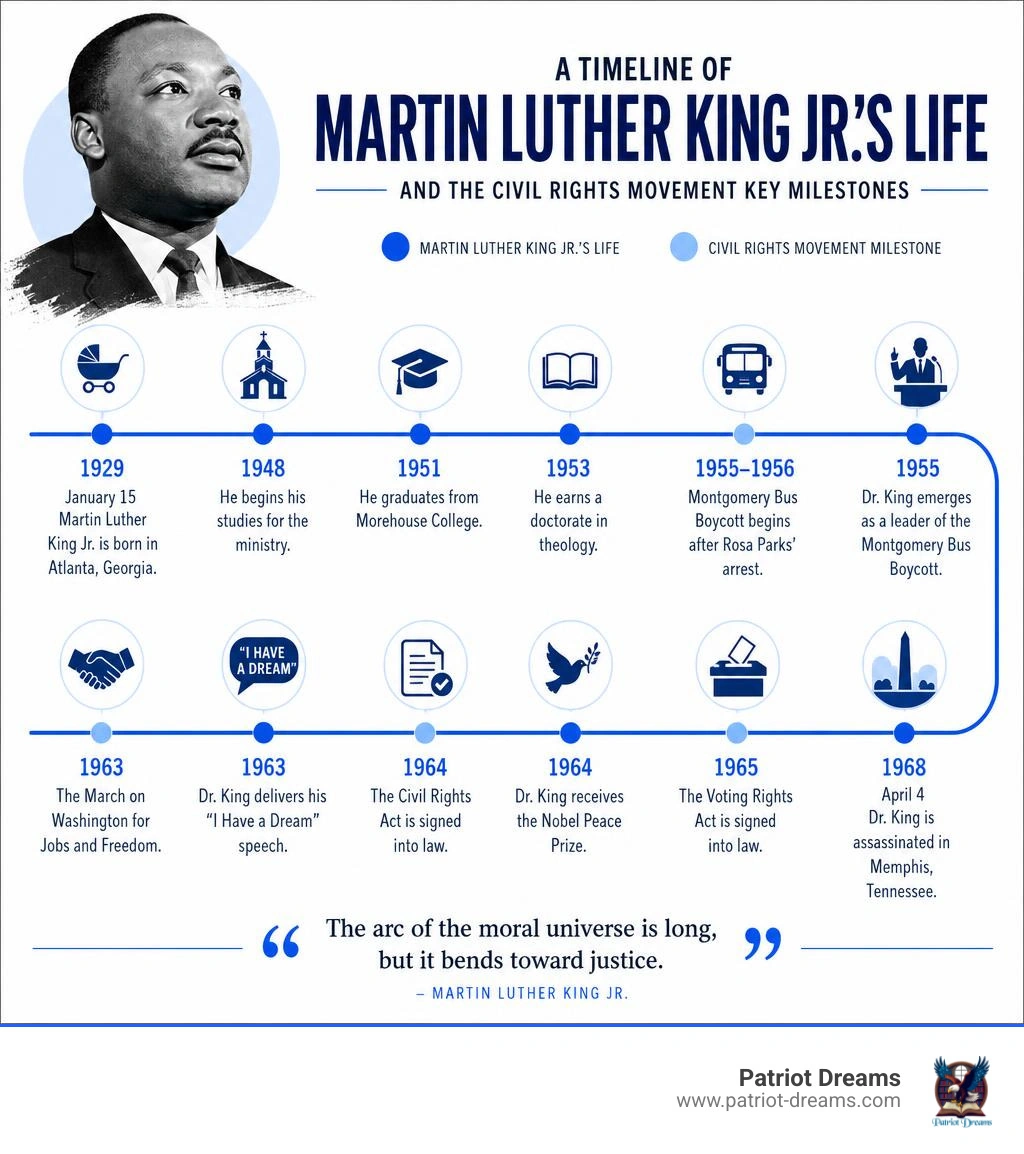
Martin Luther King Jr. was an American Baptist minister and civil rights leader who changed the course of history through the power of love, faith, and peaceful action.
Here is a quick overview of who he was:
- Born: January 15, 1929, in Atlanta, Georgia
- Died: April 4, 1968, in Memphis, Tennessee (aged 39)
- Role: Leader of the American Civil Rights Movement (1955–1968)
- Known for: Nonviolent resistance, the "I Have a Dream" speech, and the Montgomery Bus Boycott
- Key achievements: Helped pass the Civil Rights Act of 1964 and the Voting Rights Act of 1965
- Recognition: Nobel Peace Prize winner in 1964, at just 35 years old — the youngest recipient at the time
- Honor: The only non-president to have both a national holiday and a memorial on the National Mall in Washington, D.C.
In less than 13 years of leadership, Dr. King helped achieve more genuine progress toward racial equality than the previous 350 years had produced. That is a remarkable story — and it is one worth knowing deeply.
His story is not just about struggle. It is about hope. It is about a man who believed, with every fiber of his being, that people could be better to one another. That kindness could win. That love was stronger than hate.
There is something almost Mr. Rogers-like in that belief — a quiet, unshakeable faith that the world gets better when ordinary people choose to do the right thing, together.
This guide walks through his life from beginning to legacy, sharing the human moments and the historic ones alike.
The Early Life and Heart of Martin Luther King Jr
To truly understand Martin Luther King Jr., we have to look back at the quiet neighborhood streets of Atlanta, Georgia, where he grew up. Long before he was a national icon, he was a little boy nicknamed "M.L." who loved playing sports and neighborhood games. Born on January 15, 1929, he grew up in a warm, loving home on Auburn Avenue, surrounded by family, community, and the comforting sounds of the Ebenezer Baptist Church.
His family was deeply rooted in the Christian faith. His father, Martin "Daddy" King Sr., was a prominent pastor who led by example. Daddy King taught his children that every person deserved dignity. In a famous family story, Daddy King took young Martin to buy shoes. When the clerk demanded they move to the back of the store to be served, Daddy King refused, took his son by the hand, and walked out. "I don't care how long I have to live with this system," he declared, "I will never accept it." This courage left a lasting mark on young Martin.
Even as a boy, Martin noticed the painful realities of segregation. When he was just six years old, his closest childhood friend—a white boy who lived nearby—told him that they could no longer play together because they had to attend separate, segregated schools. It was a heartbreaking moment for a young child, and it was his first personal encounter with the racial divide. He also struggled with deep sensitivity; following traumatic family events, including the sudden illness of his beloved grandmother, he twice attempted suicide as a child by jumping from a second-story window. Yet, through these struggles, he found comfort in his family, his faith, and his studies.
Martin was incredibly bright. He excelled in school, skipping both the ninth and twelfth grades. He was also known for his sharp sense of style, earning the nickname "Tweed" or "Tweedie" from his high school classmates because of his fondness for tweed suits. Beyond his academic achievements, his brother fondly remembered him as the best jitterbug dancer in their social circle. At the young age of 15, he enrolled at Morehouse College, a historic institution where he began to find his voice. You can read more about his remarkable journey in this Martin Luther King Jr. Biography.
How a Young Martin Luther King Jr. Discovered the Power of Love
While studying at Morehouse College, Martin began to seriously consider how faith could be used to heal the world's wounds. He decided to follow in his father's footsteps and enter the ministry. After graduating from Morehouse, he attended Crozer Theological Seminary in Pennsylvania and later Boston University, where he earned a PhD in systematic theology.
During his student years, Martin's commitment to justice began to express itself in peaceful defiance. Interestingly, his first known use of nonviolent civil disobedience occurred way back in 1950 at Mary's Cafe in New Jersey—predating his formal exposure to Mahatma Gandhi's philosophy. When the cafe owner refused to serve Martin and his friends, and even fired a gun into the air to intimidate them, Martin stood his ground calmly and peacefully.
In his theological studies, Martin searched for a way to combine the Christian commandment of love with a practical method for social change. He found that answer in the teachings of Mahatma Gandhi. He realized that love did not mean being passive; it meant active, peaceful resistance to injustice. This powerful combination of Christian faith and nonviolent resistance became the foundation of his lifelong philosophy. To explore this spiritual evolution further, take a look at our article on Martin Luther King Jr.: The Dream, The Struggle, The Legacy.
The Beautiful Partnership of Martin and Coretta Scott King
While completing his doctoral studies in Boston, Martin met a talented young music student named Coretta Scott. Coretta was studying voice at the New England Conservatory of Music. She was not only gifted musically, but she also possessed a deep intellect and a strong commitment to peace and social justice.
The two fell in love and were married on June 18, 1953, on the lawn of Coretta's family home in Alabama. Their marriage was a true partnership. Together, they raised four children: Yolanda, Martin III, Dexter, and Bernice.
Coretta was not just a supportive spouse; she was an active leader in the movement. She brought music, grace, and an unwavering commitment to nonviolence to the struggle. Even when their home was bombed during the early days of the movement, Coretta remained steadfast, choosing peace over retaliation. Their home was always filled with love, laughter, and a shared dream of a better world for all children.
Walking Together: The Power of Nonviolent Community Action
At its heart, the Civil Rights Movement was about neighbors helping neighbors. Dr. King believed that the only way to build a "Beloved Community" was to walk hand-in-hand with those who disagreed with you, using the power of peace.
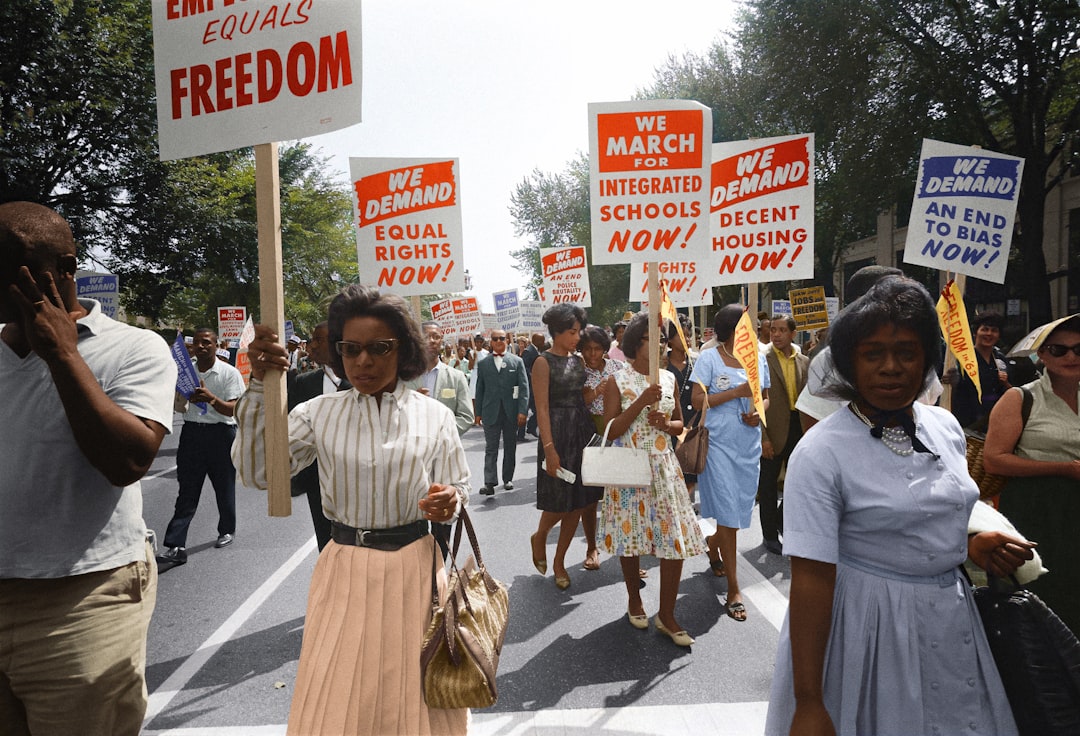
This philosophy of nonviolent action was tested time and time again. Dr. King was jailed 29 times during his activism, and he survived a near-fatal attack in 1958 when a woman stabbed him with a letter opener, nearly severing his aorta. Yet, he never wavered. He taught that nonviolence was not for the weak; it required immense courage, discipline, and love. It meant refusing to hate your oppressor, believing instead that love could transform hearts and minds.
The Montgomery Bus Boycott and the Strength of Unity
In December 1955, a quiet seamstress named Rosa Parks made a courageous decision on a bus in Montgomery, Alabama. Her refusal to give up her seat to a white passenger sparked a movement that would change America. To read her beautiful story of quiet courage, visit the Rosa Parks Story.
Following her arrest, the Black community of Montgomery came together to organize a boycott of the city's bus system. They chose a young, 26-year-old minister named Martin Luther King Jr. to lead their new organization, the Montgomery Improvement Association.
For 381 days (often cited as 385 days in various historical records), the community refused to ride the buses. Instead, they walked miles to work, organized carpools, and supported one another. It was a beautiful display of community unity. Despite harassment, arrests, and violence, the boycotters remained peaceful. Finally, the U.S. Supreme Court ruled that segregation on public buses was unconstitutional. It was a monumental victory that proved nonviolent resistance could truly work.
The Dream Shared with Millions by Martin Luther King Jr
As the movement grew, so did the crowds. On August 28, 1963, more than 250,000 people of all races gathered at the Lincoln Memorial for the historic March on Washington for Jobs and Freedom. It was there that Dr. King delivered his most famous address, the "I Have a Dream" speech.
Standing before the massive crowd and millions watching on television, Dr. King departed from his prepared notes and spoke from his heart. He shared his dream of an America where children "will not be judged by the color of their skin but by the content of their character."
His words echoed the promises of the Founding Fathers. He called upon the nation to live up to the true meaning of its creed, pointing directly to the ideals found in The Declaration of Independence: What It Really Says and Why It Still Matters. It was a defining moment in American history, inspiring millions to join the march toward equality. For a deeper look at the historical context of this era, you can explore the Martin Luther King Jr. on Wikipedia page.
A Legacy of Love, Peace, and Global Recognition
In 1964, at the age of 35, Dr. King became the youngest man to receive the Nobel Peace Prize. He accepted the award on behalf of the thousands of unsung heroes of the civil rights movement, donating the entire prize money of $54,123 to the continued development of the cause.
His leadership helped pave the way for landmark federal legislation that transformed the legal landscape of the United States.
Landmark LegislationYear PassedKey AchievementsCivil Rights Act1964Outlawed discrimination based on race, color, religion, sex, or national origin, and ended segregation in public places.Voting Rights Act1965Prohibited racial discrimination in voting, eliminating literacy tests and other barriers designed to disenfranchise Black voters.
These legislative victories were not easily won. They were built on the courage of everyday citizens—from the pioneering steps of Ruby Bridges Courage to the historical legacies of early freedom fighters like Harriet Tubman, Sojourner Truth Speech, and Crispus Attucks Martyr.
Despite these triumphs, Dr. King also faced severe challenges, including intense state surveillance. The FBI, under J. Edgar Hoover, subjected Dr. King to wiretapping, physical surveillance, and coordinated attempts to discredit his character. Yet, he remained focused on his mission, refusing to let intimidation derail his work.
The Beloved Community and Economic Justice
In his final years, Dr. King expanded his focus to address broader social issues. He spoke out passionately against the Vietnam War, calling for peace on a global scale. He also turned his attention to economic justice, launching the Poor People’s Campaign in 1968.
Dr. King realized that legal rights were not enough if people did not have the economic means to feed their families or secure decent housing. He envisioned a "Beloved Community" where poverty, hunger, and homelessness would not be tolerated. He sought to build a multiracial coalition of poor Americans—including Native Americans, Hispanic Americans, and white Americans—to march together for economic security.
His life was tragically cut short on April 4, 1968, when he was assassinated on the balcony of the Lorraine Motel in Memphis, Tennessee. His death sparked riots in over 100 U.S. cities, but his message of peace, unity, and love survived.
Frequently Asked Questions About His Legacy
What was his philosophy of nonviolence?
Dr. King’s philosophy of nonviolence was based on the belief that love is the most powerful force for social change. From his Christian faith and Gandhi's teachings, he advocated for peaceful protests, boycotts, and civil disobedience to expose injustice and appeal to the conscience of the community.
How long did the Montgomery bus boycott last?
The Montgomery bus boycott lasted for 381 days (often recorded as 385 days). It began on December 5, 1955, following Rosa Parks' arrest, and ended on December 20, 1956, when the federal ruling integrating the buses took effect.
Where can we visit to honor his memory today?
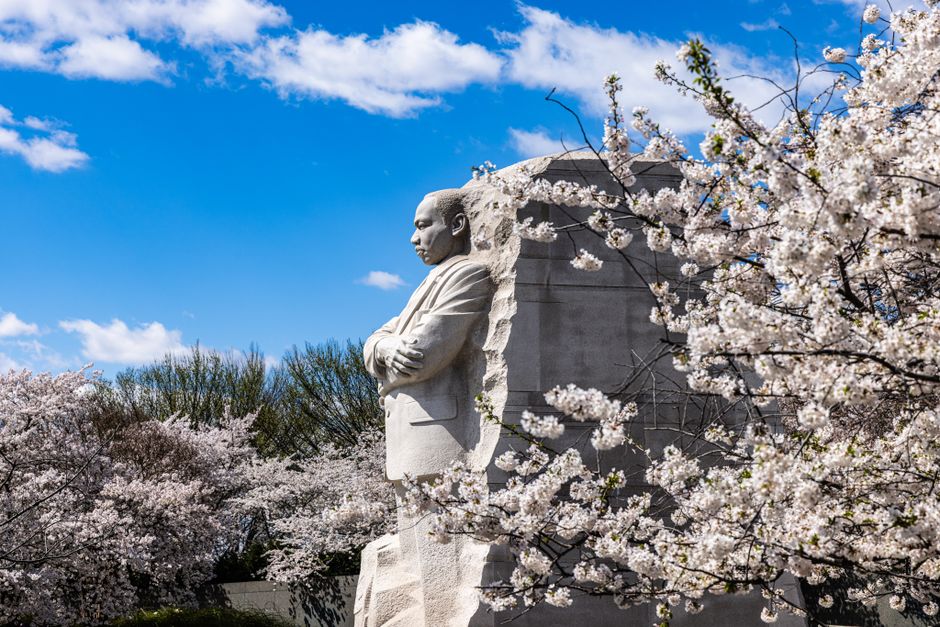
You can visit the beautiful Martin Luther King Jr. Memorial located on the National Mall in Washington, D.C. It is a stunning tribute featuring a 30-foot statue carved from stone, representing the "stone of hope" emerging from a "mountain of despair."
Conclusion: Keeping the Dream Alive in Our Neighborhoods
Here at Patriot Dreams, we believe that history is not just a collection of dates and facts. It is a tapestry of human stories—of courage, kindness, and everyday heroism. Dr. King's dream is still alive today, and it lives in the way we treat our neighbors, support our communities, and stand up for kindness in our own small ways.
Through our interactive maps and unique audio listening modes, we bring the stories of the American heritage to life, helping families preserve their own legacies while exploring the historic moments that shaped our nation. Let us continue to walk together, hand-in-hand, toward a brighter, kinder tomorrow.
If you would like to explore more stories of courage and unity, we invite you to Discover the Civil Rights Movement with us.

Join the Patriot Dreams Community
Download the app today and start your journey through American history and personal legacy.

Explore Our Latest Insights
Dive into stories that shape our American legacy.