The Ultimate Guide to Promontory Summit Utah and the Golden Spike Ceremony

Where History Drove Its Stake: The Story of Promontory Summit Utah
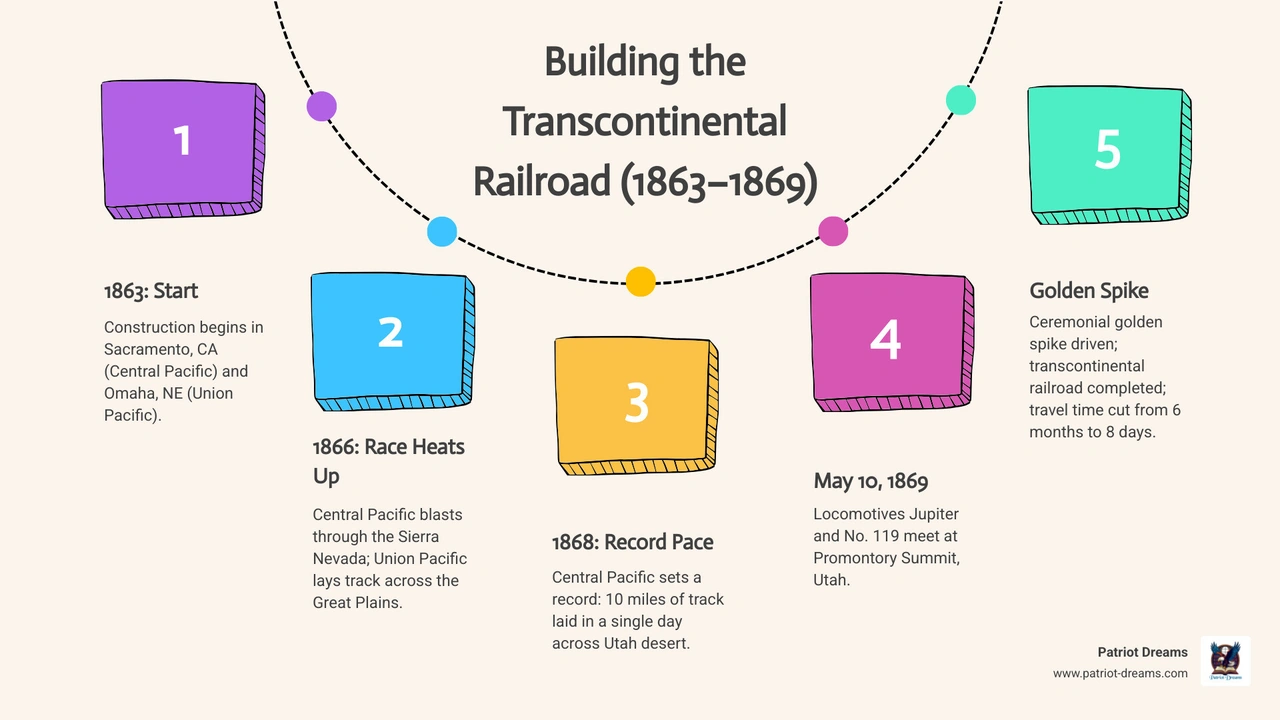
Promontory Summit, Utah is the historic mountain pass in Box Elder County where, on May 10, 1869, the Union Pacific and Central Pacific railroads met to complete America's first transcontinental railroad — a moment that shrank a continent and united a nation.
Here is what you need to know at a glance:
- What it is: The site where the Golden Spike was driven, completing the First Transcontinental Railroad
- Where it is: Box Elder County, Utah — about 66 miles northwest of Salt Lake City and 32 miles west of Brigham City
- Elevation: Approximately 4,902 feet (1,494 m) above sea level
- Why it matters: The railroad reduced coast-to-coast travel from six months to just eight days
- Visit today: Golden Spike National Historical Park features replica steam locomotives, walking trails, and live reenactments
Before this moment, crossing America meant months of grueling, dangerous travel by wagon or on foot. After it, the whole country felt a little closer — a little more like one family.
There is something deeply moving about that. Two teams of workers, coming from opposite ends of the continent, building toward each other through mountains, deserts, and everything in between. And when they finally met, the telegraph tapped three simple times — done — and the whole nation felt it at once.
We are Kyle & Emily, and we cannot wait to walk you through every remarkable chapter of this story — from the rugged geography that shaped the route, to the unsung heroes who laid every mile of track.
Exploring the Geography of Promontory Summit Utah
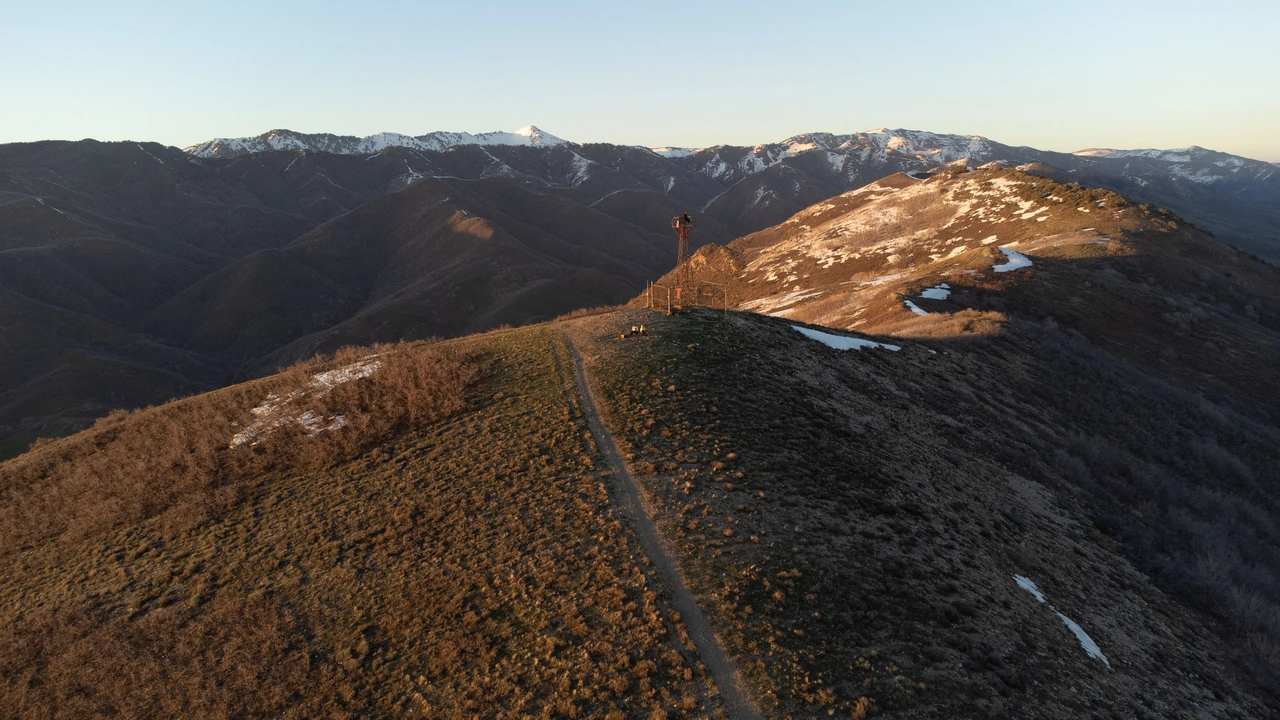
To truly appreciate what these builders achieved, we have to look at the land they had to conquer. The geography of Promontory, Utah is as beautiful as it is challenging.
Situated in the high-desert country of northern Utah, the summit sits at an elevation of approximately 4,902 feet (1,494 m) above sea level. It is nestled within a natural gap in the northern portion of the Promontory Mountains. This mountain range stretches about 35 miles (56 km) north to south, with its southern portion forming a dramatic cape that extends 20 miles (32 km) directly into the waters of the Great Salt Lake.
For those who enjoy exploring maps, the Promontory Summit Topo Map UT, Box Elder County (Golden Spike Monument Area) shows that the summit is technically classified as a "Gap" — a low point or pass between the ridges. Just to the south, the mountains rise sharply, culminating in Messix Peak, the highest point in the range at 7,349 feet (2,240 m).
Building a railroad through this Basin and Range province required navigating around these steep, unforgiving peaks. Instead of trying to scale the highest parts of the range, the engineers chose this northern pass. It was a rugged, dusty route, but it was the only logical way to connect the east and the west without plunging straight into the deep waters of the lake.
A quick note for fellow travelers: If you are looking up geographic coordinates, make sure you don't confuse this historical site with The Promontory, Utah. That is a completely different peak (also known as the Rainbow Benchmark) standing at 9,096 feet in southern Utah's Bryce Canyon National Park! When we talk about the Golden Spike, we are always heading north to Box Elder County.
The Road to Promontory Summit Utah
Before the iron rails arrived, this region was crossed by the famous pioneer trails. Thousands of families traveled by ox-drawn wagons and handcarts, navigating the dusty trails north of the Great Salt Lake. It was a slow, grueling journey. Pioneers like William Clayton even designed a "roadometer" in 1847 — a clever mechanical device attached to a wagon wheel — just to keep track of their daily mileage across these vast spaces.
Today, getting to the summit is much easier, but it still feels like a beautiful step back in time. Located about 32 miles (51 km) west of Brigham City and 89 miles (about a 90-minute drive) northwest of Salt Lake City, the route takes you through rolling hills and peaceful valleys. You can learn more about planning your drive in our Promontory Summit - 90 minutes from SLC | SLCTrips guide or check out our comprehensive Ultimate American Heritage Tour Guide 2026.
Because the historic summit is located within a protected watershed area, visitors are asked to respect the local environment. To keep the drinking water supply pure, dogs are strictly prohibited in certain areas of the park, and packing out all waste is highly encouraged. It is a small way we can all work together to keep this sacred piece of American history beautiful for generations to come.
The Great Race to Connect a Divided Nation
The story of the Transcontinental Railroad is a story of hope born in a time of great struggle. The groundwork and congressional approval for this massive project occurred in the early 1860s, right in the midst of the American Civil War.
President Abraham Lincoln saw the railroad not just as a tool for commerce, but as a vital physical bond to keep the Pacific coast connected to the Union. It was a promise of future unity during our nation's darkest hour. You can read more about this incredible era in our overview of American Innovation History.
Two rival companies were given the charter to build:
- The Central Pacific Railroad, building eastward from Sacramento, California.
- The Union Pacific Railroad, building westward from Omaha, Nebraska.
The government paid the companies in land grants and government bonds for every mile of track laid, which turned the project into a wild, high-stakes race. Because Congress hadn't initially specified an exact meeting point, the two companies actually graded parallel lines right past each other for miles!
Finally, on April 10, 1869, Congress stepped in with a Joint Resolution, officially establishing Promontory Summit, Utah as the meeting place. The stage was set for one of the greatest celebrations in American history.
The Unsung Heroes of the Iron Rails
While the railroad executives took the credit, the real miracle of Promontory Summit was built by the hands of thousands of ordinary men who showed extraordinary resilience.
On the Central Pacific side, the workforce was overwhelmingly made up of Chinese immigrant laborers. By the summer of 1868, more than 4,000 workers — of whom two-thirds were Chinese — were laying track at altitudes above 7,000 feet in the Sierra Nevada. Over the course of the project, more than 13,000 Chinese immigrants braved bitter winters, dangerous explosives, and backbreaking labor, blasting 15 tunnels through solid granite.
Despite their incredible skill and dedication, Chinese workers faced severe wage discrimination and were forced to secure their own food and tents, unlike their white counterparts. Yet, their perseverance never wavered.
On the Union Pacific side, the tracks were laid largely by Irish immigrants, Civil War veterans, and Latter-day Saint pioneers.
The spirit of teamwork between these diverse groups culminated in an unbelievable feat on April 28, 1869. To win a $10,000 bet made by Central Pacific management, a specially chosen crew of Chinese and Irish workers laid an astounding 10 miles (16 km) of track in just 12 hours. It was a display of coordination, strength, and mutual respect that remains unmatched in railroad history.
The Drama and Triumph of the Golden Spike Ceremony
The grand finale was scheduled for May 8, 1869, but as is often the case with big plans, life got in the way.
First, heavy rains and floods damaged the Devil's Gate Bridge in Wyoming, making the journey perilous. Then, a dramatic labor dispute unfolded when unpaid workers chained Union Pacific Vice-President Thomas Durant's luxury railcar to a siding in Piedmont, Wyoming, holding him hostage until they received their back wages!
Because of these delays, the ceremony had to be postponed for two days.
When May 10 finally arrived, a colorful crowd of anywhere from 500 to 3,000 people — including track workers, politicians, soldiers, and families — gathered at the summit.
The atmosphere was electric, but the actual driving of the last spike was wonderfully human and full of mishaps:
- The Missed Swings: Both Leland Stanford (Central Pacific) and Thomas Durant (Union Pacific) took turns swinging the silver-plated mallet at the golden spike. Remarkably, both of them missed entirely, striking the wooden tie instead!
- The Telegraph "DONE": Even though the VIPs missed, the clever telegraph operator manually tapped out the three blows. The mallet and the spike had been wired directly to the national telegraph network. When the signal "D-O-N-E" went out, bells rang, cannons roared, and tears of joy were shed in cities across the country.
To commemorate the joining of the rails, four precious-metal spikes were presented during the ceremony:
| Spike Name | Material | State of Origin | Current Location |
|---|---|---|---|
| The Golden Spike | 17.6-carat gold alloyed with copper | California | Stanford University Cantor Arts Center |
| The Second Golden Spike | Gold (kept as a secret family heirloom) | California | California State Railroad Museum |
| The Silver Spike | 25 troy ounces of solid silver | Nevada | Stanford University Cantor Arts Center |
| The Blended Metal Spike | Iron, silver, and gold | Arizona | Union Pacific Railroad Museum |
The Symbolic Spikes and the Famous Locomotives
Because gold is a very soft metal, the ceremonial spikes were never actually driven into the ground with a hammer. Instead, they were placed gently into pre-drilled holes in a highly polished California laurel wood tie. After the speeches, they were immediately removed and replaced with standard iron spikes.
The visual centerpieces of the ceremony were the two steam locomotives: the Central Pacific's Jupiter #60 and the Union Pacific's No. 119.
Interestingly, neither of these engines was originally chosen for the job! The Central Pacific's original locomotive, the Antelope, was damaged en route when a loose log rolled down a cut and struck it. The Union Pacific's original engine was also held up. In a stroke of historical destiny, the Jupiter and No. 119 stepped in to take their places, facing each other pilot-to-pilot as the final spike was driven.
Preservation, Memory, and Visiting the Historic Site
The glory of Promontory Summit as a main line was relatively short-lived. Between February 1902 and March 1904, the Southern Pacific built the Lucin Cutoff — a massive 102.9-mile (165.6 km) bypass that crossed directly over the Great Salt Lake using an extensive wooden trestle (later replaced by an earthen causeway in 1959).
The new cutoff bypassed the steep grades and sharp curves of the Promontory Mountains entirely. The last regularly scheduled transcontinental passenger train climbed through Promontory on Sunday, September 18, 1904.
For decades, the old line was used only occasionally. Finally, during World War II, the tracks were officially abandoned. On September 8, 1942, an "unspiking" ceremony was held at the summit, and the old steel rails were salvaged to support the war effort.
Thankfully, the story didn't end there. In 1957, the site was established as a National Historic Site, and in 2019, it was elevated to Golden Spike National Historical Park.
To bring the history to life, two beautifully detailed, fully operational steam replicas of the Jupiter and No. 119 were built in California using $1.5 million of federal funds. On May 10, 1979 — the 110th anniversary of the ceremony — these gorgeous engines met on a specially relaid 1.5-mile section of track, where they still run today.
Visiting Promontory Summit Utah Today
Today, visiting the park is a wonderful way for families to connect with our shared past. At the visitor center, you can watch a short, seven-minute introductory film to get oriented, browse historical exhibits, and see the spot where the rails met. You can find more helpful resources for your trip at Promontory Summit — LLMpedia.
One of the most unique things about the park is that you can actually walk or drive directly on the original 1869 railroad grade!
We highly recommend taking a stroll along the Big Fill Loop Trail. This easy 1.5-mile walking trail takes you past the massive earthworks built by the competing crews, including the "Big Fill" made by the Central Pacific and the "Big Trestle" site built by the Union Pacific. Standing in those deep rock cuts, you can almost hear the ring of the hammers and the voices of the workers.
If you are planning a visit, we suggest checking the park's daily schedule for locomotive runs and live reenactments, which are typically held on Saturdays and holidays during the warmer months. It is an experience that makes you feel incredibly proud of the grit, determination, and heart that built this country. To dive deeper into these stories before you go, you can Learn American History Online with us.
Frequently Asked Questions about Promontory Summit
What is the difference between Promontory Summit and Promontory Point?
This is one of the most common geographical mix-ups!
- Promontory Summit is the high mountain pass where the rails actually met in 1869. It is located at the northern end of the mountain range.
- Promontory Point is the southern tip of the peninsula that juts into the Great Salt Lake. This is where the modern Lucin Cutoff railroad causeway crosses the lake, completely bypassing the historic summit.
Why was the Golden Spike ceremony delayed?
The ceremony was originally scheduled for May 8, 1869. It had to be delayed for two days due to heavy rainstorms that damaged tracks in the region, as well as a labor dispute in Piedmont, Wyoming. Unpaid workers temporarily held Union Pacific Vice-President Thomas Durant's railcar on a siding until the company secured the funds to pay them their back wages.
How were Chinese workers recognized after the ceremony?
For many years, the contribution of Chinese laborers was overlooked in popular retellings, and they were famously absent from the most well-known photograph of the ceremony taken by A.J. Russell.
While some of this was due to the systemic biases of the era, historical records show that immediately after the ceremony, the Chinese workers were invited into a boarding car where they were warmly cheered and thanked by Central Pacific management.
In recent years, there has been a beautiful, concerted effort to honor their legacy. During the 150th anniversary celebrations, descendants of the Chinese workers stood on the very same tracks to receive the national recognition and gratitude their ancestors so richly deserved.
Conclusion: A Shared American Journey
The story of Promontory Summit, Utah is a beautiful reminder of what we can achieve when we build toward each other. It shows us that even when the terrain is rough, the weather is cold, and the task seems impossible, we can bridge the gaps between us if we keep working together.
When those two steam engines faced each other in the Utah desert, they represented more than just iron and steam. They represented the hopes of a nation that was learning how to heal, grow, and move forward as one family.
Every tie laid, every spike driven, and every mile conquered was a testament to the quiet heroism of everyday people — people who left their homes and crossed oceans to build a better future for their children.
We hope this guide inspires you to visit this beautiful place, to walk along the historic grade, and to listen closely to the whispers of the past. If you would like to explore more of these heartfelt stories, we invite you to join us on Patriot Dreams and dive into our deep-dive article, The First Transcontinental Railroad: Railroads, Ambition, and the Making of a Nation.
Thank you for spending this time with us today. Until our next journey, take care of yourself, and take care of one another.

Join the Patriot Dreams Community
Download the app today and start your journey through American history and personal legacy.

Explore Our Latest Insights
Dive into stories that shape our American legacy.