The Tall Tale Tradition: From Loggers and Lumberjacks to Today’s Storytellers


Spinning Yarns as Big as the American Sky
The Tall Tale Tradition: From Loggers and Lumberjacks to Today’s Storytellers is one of America's most beloved forms of storytelling. Born in the isolated lumber camps of the 19th century, these exaggerated tales of heroes like Paul Bunyan provided entertainment, community, and a way to face hardship with humor. Today, that same spirit thrives in festivals, podcasts, and family gatherings across the country.
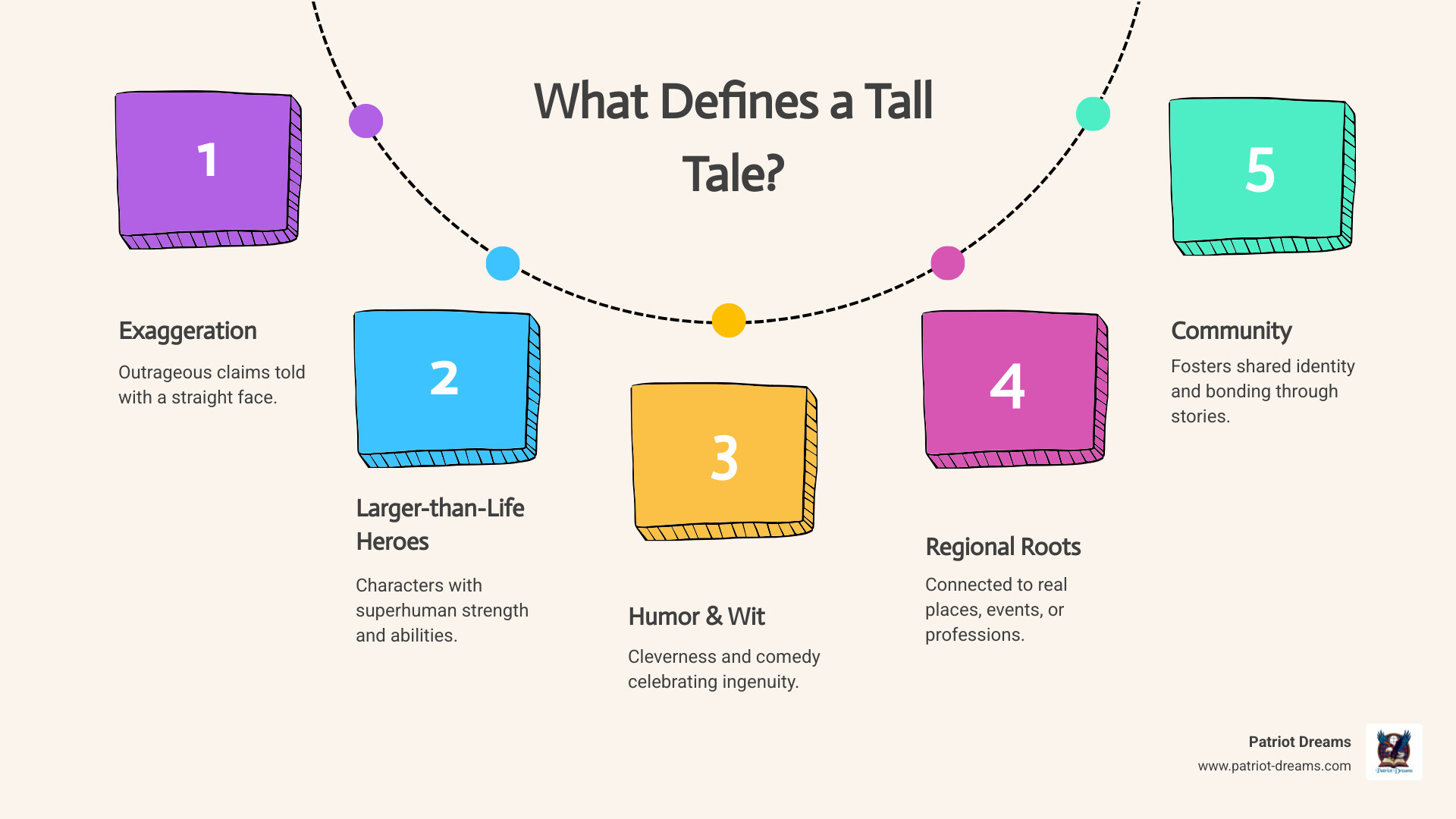
What defines a tall tale:
- Outrageous exaggeration told with a straight face
- Larger-than-life heroes with superhuman abilities
- Humor and wit that celebrates ingenuity
- Regional flavor connected to real places and work
- Community bonding through shared storytelling
Imagine a cold night in a logging camp, where men swapped stories that grew taller with each telling. Someone might describe Paul Bunyan's griddle, so large that cooks greased it by skating on it with bacon tied to their feet. Everyone knew it wasn't true, but that wasn't the point. These stories helped workers cope with danger, celebrated their labor, and created a sense of belonging. The tales were gifts passed from one storyteller to another, growing with each retelling.
This tradition spread across America, giving us folk heroes like John Henry and Johnny Appleseed, each capturing something essential about the American spirit: resilience, humor, and the belief that ordinary people could do extraordinary things. The thread remains unbroken, connecting those 19th-century loggers to us.
Simple guide to The Tall Tale Tradition: From Loggers and Lumberjacks to Today’s Storytellers:
- History of Yellowstone: America’s First National Park and Its Legacy
- The True Story of Sacagawea: Guide, Interpreter, and American Icon
The Heart of the Story: What Makes a Tall Tale?
There's something magical about a tall tale. It's a story that tells you the most outrageous thing with such a straight face that you almost want to believe it. A folklorist once called it "a joke masquerading as a true story," which captures it perfectly. These stories aren't meant to deceive; they're invitations to imagine and laugh together.
The Tall Tale Tradition: From Loggers and Lumberjacks to Today's Storytellers thrives on this dance between truth and imagination. The best tales blend just enough reality with wild exaggeration. A true tall tale spinner tells the most impossible details as casually as describing the weather, like how words once froze in mid-air. This deadpan style is what gives them their charm.
At the heart of every tall tale is a larger-than-life hero with superhuman abilities. These figures represented the values and dreams of the communities that created them. A logger hearing about Paul Bunyan clearing a forest in a single swing was hearing his own hard work celebrated and magnified into something magnificent.
In isolated logging camps and frontier settlements, these stories served many purposes. The task of taming the wilderness felt overwhelming, but tales of heroes digging the Grand Canyon made real struggles feel more manageable. They created community bonding as men gathered around a fire, sharing a laugh and a sense of belonging. This was also a way to cope with hardship; laughing at a story about giant mosquitoes made real dangers feel a bit lighter. And perhaps most beautifully, these stories carried the joy of sharing across generations, linking past to present.
The Purpose Behind the Playfulness
Behind the humor, tall tales carried real meaning. They helped create a shared identity for a young nation, giving pioneers from different backgrounds common narratives. They were also about celebrating hard work, as the heroes' exaggerated feats honored the real efforts of the loggers, steel drivers, and cowboys who built America. The clever solutions these heroes found reflected American ingenuity and a belief that any challenge could be met with enough grit.
Tall tales remind us of the joy of a good story and teach us about overcoming challenges with a laugh. They show that even when facing overwhelming odds, humor and hope can carry you through. That's the real heart of the tall tale—not the impossible feats, but the warmth and connection they create between people. We explore this further in Why the American Dream Still Resonates: A Cultural Deep Dive.
The Legend of Paul Bunyan: A Giant Born in the North Woods
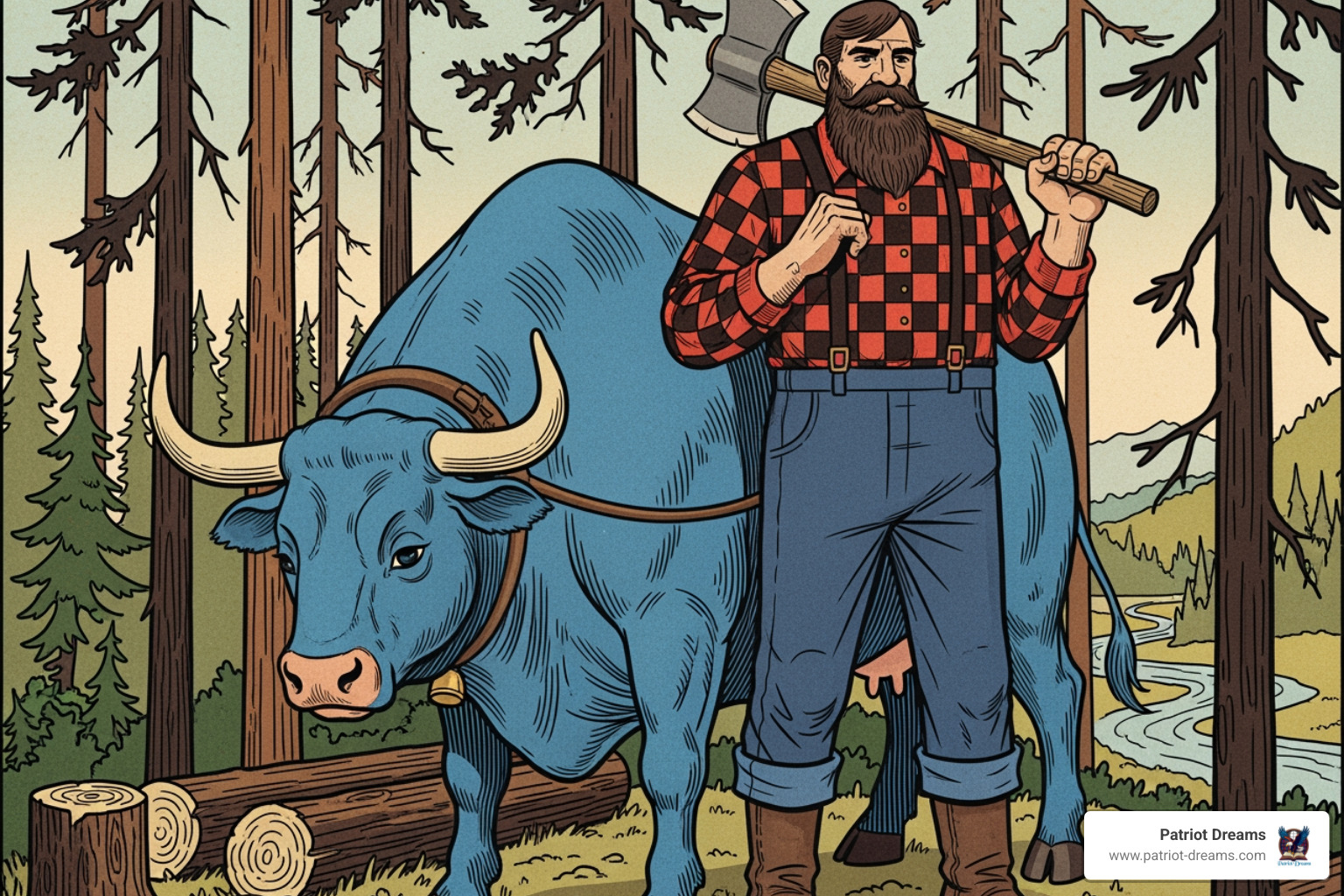
When we talk about American tall tales, Paul Bunyan stands out. He is the quintessential American tall tale hero, a mythical giant lumberjack whose story is woven into the fabric of the logging industry. His tales capture the essence of The Tall Tale Tradition: From Loggers and Lumberjacks to Today’s Storytellers, reflecting the challenges and triumphs of an era when human effort seemed to know no bounds.
From Campfire Yarns to Published Pages
The legend of Paul Bunyan began in the 19th-century logging camps of North America, where men gathered after long days to spin yarns. These oral tales were shared for years, but it was an advertising man, William B. Laughead, who made Paul Bunyan a household name. In a series of promotional pamphlets for the Red River Lumber Company starting in 1914, Laughead used the folk hero to publicize the company's products. This clever campaign transformed Bunyan from a regional figure into a national legend, later expanded upon by writers like Esther Shephard and James Stevens.
Paul's Unforgettable Crew and Their Mighty Feats
Paul Bunyan's adventures were always on a grand scale. As a baby, he was said to be so big that he destroyed four square miles of timber just by rolling in his sleep. His most famous companion was Babe the Blue Ox, who turned blue after being stranded in a blizzard during "the winter of the blue snow." Babe was essential to many of Paul's greatest feats, such as:
- Scooping out the Great Lakes to create a watering hole for Babe.
- Creating the Mississippi River from a leak in a water tank Babe was hauling.
- Logging North Dakota so completely that the state was cleared of its timber.
Paul's crew included other remarkable characters like Johnny Inkslinger, the bookkeeper who invented bookkeeping, and Big Ole the Blacksmith, who was strong enough to shoe Babe. The camp life was just as exaggerated, with cook shanties so large it took half a day to walk around them and a griddle so massive it was greased by assistants skating across it on strips of bacon. These tales made the harsh realities of logging life more bearable and fostered a beautiful sense of community.
A Lasting Legacy in American Culture
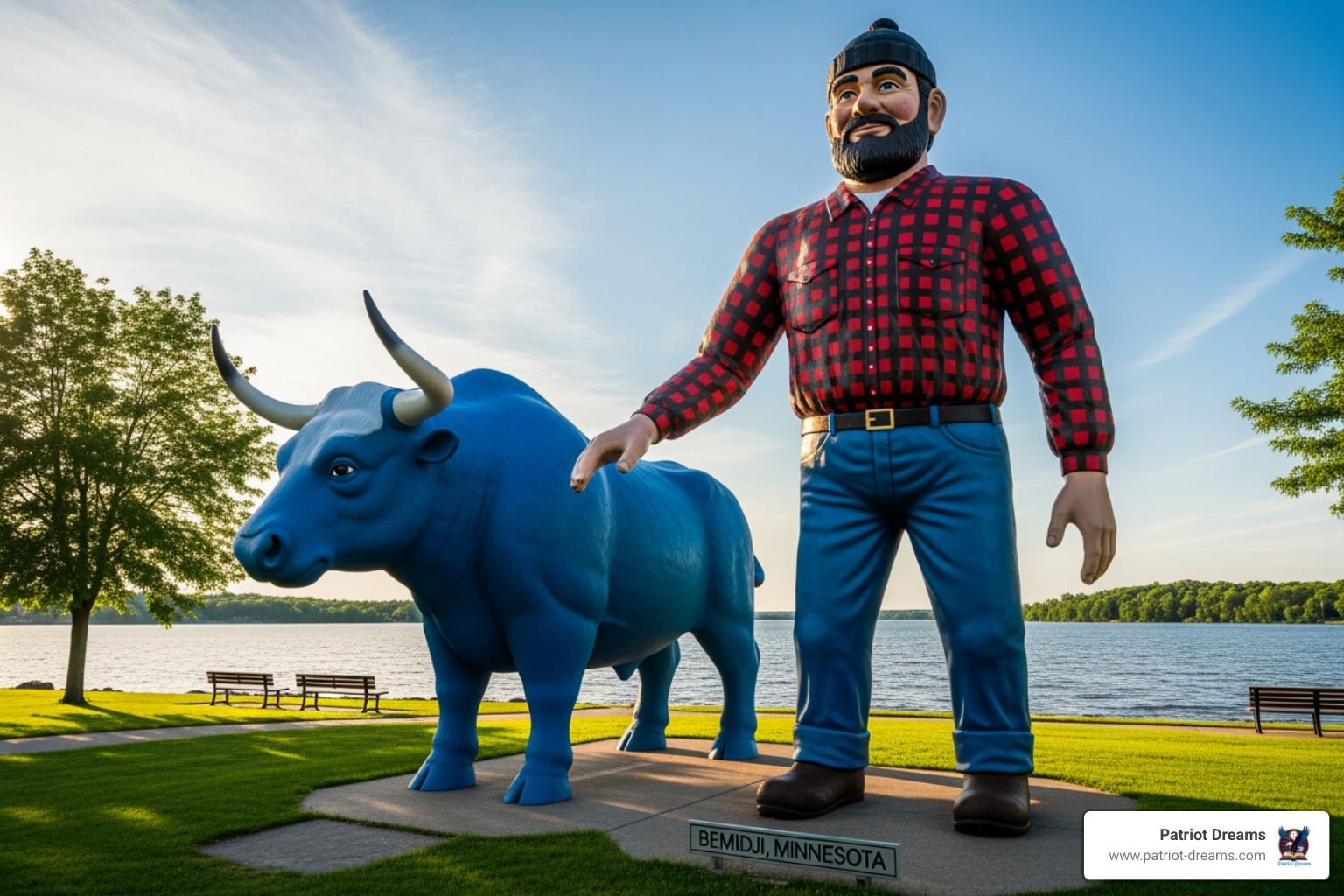
The legacy of Paul Bunyan is deeply ingrained in our collective imagination. His friendly image has been used in advertising and pop culture for over a century. Towering statues of Paul and Babe are beloved roadside attractions in cities like Bemidji, Minnesota, which is often considered Paul's "birthplace." Many of the giant "Muffler Men" sculptures from the 1960s and 70s were modeled after him. His name also graces recreational trails and scenic byways, and he has been lovingly referenced by poets like Robert Frost and Carl Sandburg. His stories have entertained audiences for over 100 years, proving the timeless appeal of a good, big story that connects us all.
Beyond Bunyan: A Roster of American Folk Heroes
While Paul Bunyan is a giant in American folklore, the landscape of tall tales is rich with other wonderful characters. These heroes come from all sorts of professions, and their stories contribute to the vibrant mix of The Tall Tale Tradition: From Loggers and Lumberjacks to Today’s Storytellers.
Heroes of Labor and the Frontier
Many of our most cherished heroes grew from the demanding work of building a nation.
John Henry, the legendary steel-drivin' man, is a powerful symbol of human strength and spirit. His famous tale tells of his race against a steam-powered drill while building a railroad tunnel. He won, proving he was faster than the machine, but his heart gave out from the effort. His story is a touching look at man versus machine and the endurance of the human spirit. You can learn more from the National Park Service website.
Then there's Pecos Bill, the ultimate cowboy. Created by writer Edward O'Reilly, Bill was said to be raised by coyotes and became the greatest cowboy of all time, riding a mountain lion and using a rattlesnake as a lasso. His wild adventures capture the daring spirit of the American West, which you can explore at Britannica.
Calamity Jane (Martha Jane Canary) was a real figure of the Old West whose life became filled with legendary tales, some of which she helped spread herself. Her story paints a picture of a tough, independent woman in a rough-and-tumble time. Britannica Kids offers an engaging overview.
Pioneers of a Different Kind
Not all tall tale heroes were laborers or cowboys. Some were pioneers whose real lives were so amazing they inspired legends.
Johnny Appleseed, whose real name was John Chapman (1774–1845), was a gentle pioneer dedicated to planting apple trees across Pennsylvania, Ohio, and Indiana. His legend grew from the kindness and generosity he showed to everyone he met, reminding us of the power of simple, steady acts of goodness. Britannica offers more on his life.
Davy Crockett (1786–1836) was a real frontiersman, soldier, and politician whose adventurous life became the stuff of legend. Exaggerated tales in popular almanacs solidified his image as a bear-wrestling hero who stood up for the common person.
Annie Oakley (1860–1926) was a real-life sharpshooter whose incredible skill made her famous worldwide. Her story, while based on fact, became the subject of tall tales celebrating her amazing precision and her journey from humble beginnings to a star in Buffalo Bill's Wild West show. Britannica has more on her remarkable life.
The Tall Tale Tradition: From Loggers and Lumberjacks to Today’s Storytellers
The journey of storytelling is always moving forward, yet a beautiful thread connects our past to our present. The Tall Tale Tradition: From Loggers and Lumberjacks to Today’s Storytellers continues to shine, finding new ways to express itself while holding onto its special spirit of humor and community.
The Enduring Influence on American Literature
Tall tales helped shape the way Americans write and tell stories, especially when it comes to humor. Writers like Mark Twain mastered the art of exaggeration by listening to others "spin yarns." He and others brought the fun of spoken tall tales into written humor, creating a uniquely American literary voice. As Carolyn S. Brown notes in her book The Tall Tale in American Folklore and Literature, these stories are more than just jokes; they are a way of "coping with stress by laughing at life's problems." You can explore more about this influence through resources like The Tall Tale in American Folklore and Literature or WorldCat.org.
How the Tradition of Tall Tales Continues Today
The lively spirit of the tall tale is very much alive. Events like the National Storytelling Festival and regional "Liar's Contests" bring people together to celebrate oral traditions. In our digital world, storytelling podcasts offer a new platform for these narratives, while digital archives from places like the Library of Congress's American Folklife Center (AFC) do vital work preserving audio recordings of American tall tales. You can explore these resources through their guide on Folktales and Oral Storytelling, ensuring these treasured voices are never lost.
Keeping the Stories Alive: The Tall Tale Tradition Today
Perhaps the most heartwarming way this tradition continues is within our own families. Gathering to share stories—whether it's about a quirky ancestor or a slightly embellished adventure—is a direct continuation of this cherished heritage. It reminds us of the importance of family stories, which become our own legends. It’s about preserving community history and passing down our own legends to future generations. At the heart of it all is the simple act of listening. When we listen to the stories of our elders and neighbors, we connect with a shared past and keep the human spirit of resilience and humor alive.
Frequently Asked Questions about the Tall Tale Tradition
Let's explore some common curiosities about this cherished American tradition.
What are the defining characteristics of a tall tale?
A tall tale is a story defined by outrageous exaggeration, often told with a deadpan, matter-of-fact tone. They feature larger-than-life heroes with superhuman skills, and their humor comes from the sheer absurdity of the events. They also often have a special connection to a real-world place or event, giving them a familiar touch.
What is the most famous American tall tale?
While Paul Bunyan and his blue ox, Babe, are arguably the most famous, our heritage is rich with other cherished tales. The stories of John Henry, the steel-drivin' man, Pecos Bill, the ultimate cowboy, and Davy Crockett, king of the wild frontier, are also beloved parts of American folklore.
Are tall tale heroes based on real people?
It's a wonderful mix! Some heroes, like Johnny Appleseed (John Chapman) and Davy Crockett, were real people whose extraordinary lives inspired legends. Others, like Pecos Bill, were literary inventions. And figures like Paul Bunyan began in oral tradition among loggers before being popularized by writers and advertisers.
Why are tall tales important to American culture?
Tall tales are more than just funny stories. They helped forge a national identity by celebrating values like hard work, ingenuity, and perseverance. They also provided a vital outlet for humor and camaraderie in tough environments, helping communities cope with stress and build a shared sense of belonging.
What is the difference between folklore and 'fakelore' in the context of tall tales?
Folklore refers to stories that grow organically within a community and are passed down through generations. 'Fakelore' describes material that seems authentic but was actually created or heavily altered for commercial or artistic reasons. Paul Bunyan's story is a great example, starting as folklore in logging camps and later becoming partly 'fakelore' through advertising, which helped spread his tale to millions.
How has the tradition of tall tales influenced American literature and storytelling?
Tall tales profoundly shaped American humor. Writers like Mark Twain learned from this tradition, using hyperbole and a deadpan delivery to create a distinctive literary style. This foundation of celebrating ingenuity and resilience through humor can be seen in American storytelling to this day.
What contemporary forms of storytelling continue the tradition of tall tales?
The Tall Tale Tradition: From Loggers and Lumberjacks to Today’s Storytellers is alive and well. You can find its spirit at storytelling festivals, in playful "Liar's Contests," and on podcasts. Most importantly, it continues in the embellished family stories we share about our own lives and ancestors, keeping the tradition of laughter and connection thriving.
Conclusion: The Unbroken Thread of American Storytelling
As we reach the end of our journey through The Tall Tale Tradition: From Loggers and Lumberjacks to Today's Storytellers, we hope you've felt the warmth and humor that connect us all. These stories, with their impossible feats and larger-than-life heroes, are more than just entertainment—they're part of who we are.
The spirit of the tall tale lives in every exaggerated fishing story and every family legend about a great-grandfather who "walked twenty miles to school." What matters isn't the literal truth, but the connection, laughter, and shared heritage we pass from one generation to the next.
There's a simple joy in a story well told. When we listen to these tales, we honor the past, celebrate resilience, and remind ourselves that even the biggest challenges can be faced with humor and hope. Your own family and community stories are treasures, every bit as valuable as the legends of Paul Bunyan. These are your tall tales, your contribution to the unbroken thread of American storytelling.
At Patriot Dreams, we believe in the power of these stories to inspire us. When we take time to hear the stories of our elders and share our own, we keep something vital alive. We remind each other that kindness, perseverance, and unity are gifts we can give to the future. So gather your family, listen to your neighbors, and don't be afraid to tell your own stories. It's a tradition worth keeping alive.

Join the Patriot Dreams Community
Download the app today and start your journey through American history and personal legacy.

Explore Our Latest Insights
Dive into stories that shape our American legacy.