When Comics Went Mainstream: The First American Comic Book and a New Pop-Culture Era
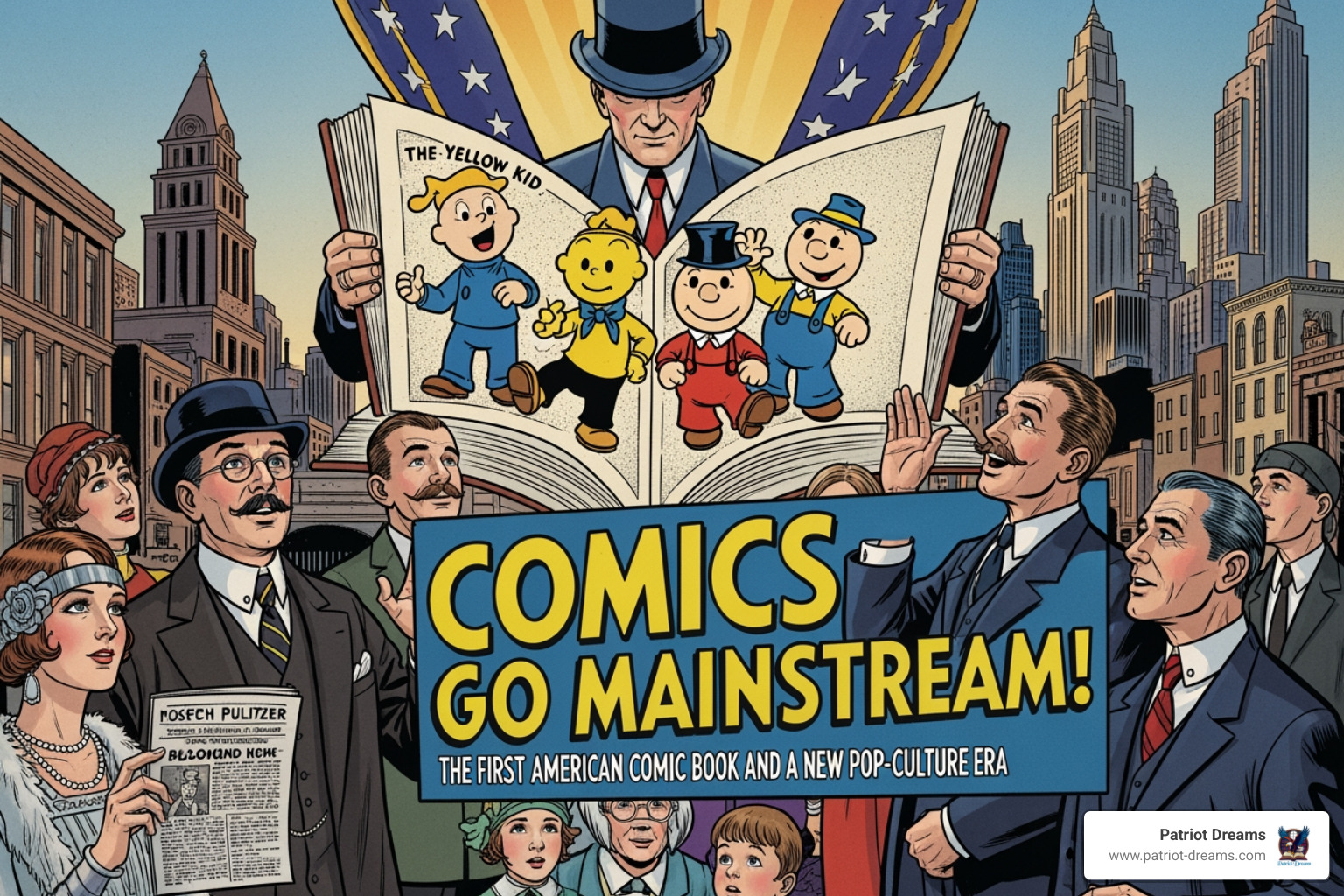

From Funny Pages to a Cultural Phenomenon
When Comics Went Mainstream: The First American Comic Book and a New Pop-Culture Era began in the 1930s, when a simple collection of reprinted newspaper strips transformed into a brand-new form of American entertainment. Here's what you need to know:
Key Milestones:
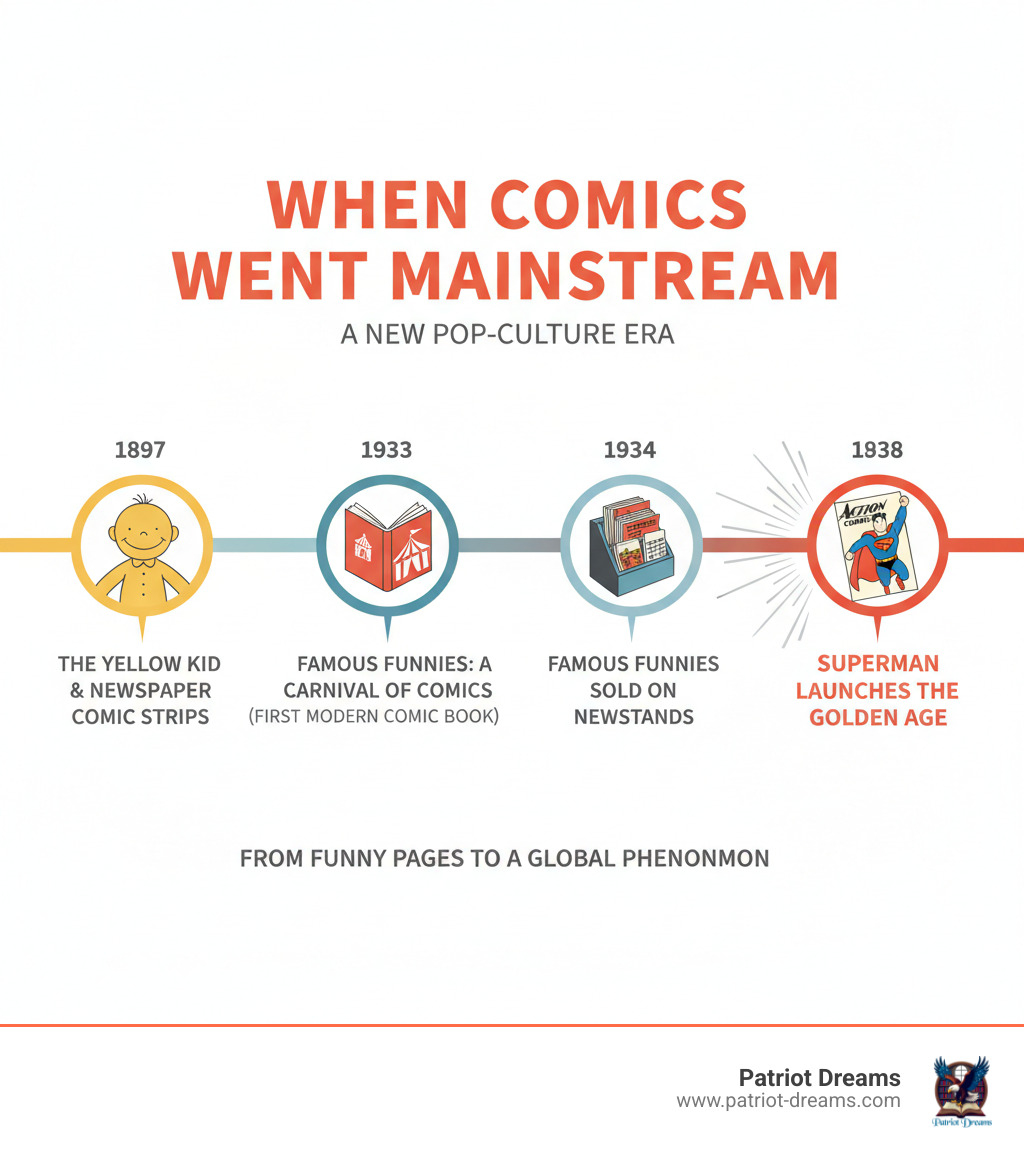
- 1933 - Famous Funnies: A Carnival of Comics appeared as the first modern American comic book
- 1934 - Famous Funnies became the first comic book sold regularly on newsstands
- 1938 - Superman's debut in Action Comics #1 launched the Golden Age and made comics a cultural force
- 1940s - Comic book readership exploded, with over 90% of children ages 7-17 reading them regularly
- World War II era - Comics became shared entertainment for families and soldiers, cementing their place in American life
In the depths of the Great Depression, American families searched for a moment of joy. Money was tight, but hope was precious. Newspapers offered comic strips that made people smile, but something bigger was coming.
A new kind of storytelling was being born—one that would give America its heroes when it needed them most.
The journey from newspaper funnies to the comic book wasn't just about a change in format. It was about creating a new way for Americans to dream together. Publishers like Eastern Color Printing and visionaries like Max Gaines saw an opportunity to bring these colorful stories to life in a way that anyone could afford. For just ten cents, a child could hold adventure in their hands.
When Superman first appeared in 1938, wearing his now-iconic cape and standing for truth and justice, something magical happened. He wasn't just a character—he became a symbol of what Americans believed in. He was followed by Batman, Wonder Woman, and Captain America, each offering their own brand of courage and hope.
These weren't just stories. They were a new American art form, created by immigrants and dreamers, read by millions, and loved across every walk of life. Comics became a shared language that brought communities together, from city streets to small-town diners.
The Dawn of a New Story: Precursors and the First American Comic Book
Every great story has a beginning, and the story of American comic books starts long before Superman soared through the sky. The colorful pages of Famous Funnies grew from seeds planted decades earlier, when artists were finding new ways to make pictures and words dance together.
The Earliest Comic-Like Storytelling
Long before the first comic book, Americans loved stories told with pictures. In the 1800s, illustrated tales and popular political cartoons in newspapers showed that drawings could tell powerful stories. One of the earliest examples, The Adventures of Mr. Obadiah Oldbuck, showed a complete story told through a series of captioned drawings. These early experiments taught Americans that pictures could speak as loudly as words.
Then came a breakthrough moment in 1897 with The Yellow Kid magazine. This publication collected newspaper comic strips and consistently used speech balloons, letting characters speak directly from the page. The Yellow Kid became one of America's first comic celebrities. During this "Platinum Age" of comics (1897-1938), all the pieces slowly came together: recurring characters, speech balloons, and stories told panel by panel.
These early experiments showed that Americans loved stories they could see and read at the same time. It was part of the beautiful mix of American Cultural History—immigrants and native-born Americans alike contributing ideas that would become something entirely new.
The Birth of the Modern Comic Book
The moment When Comics Went Mainstream: The First American Comic Book and a New Pop-Culture Era truly began was in 1933 with Famous Funnies: A Carnival of Comics.
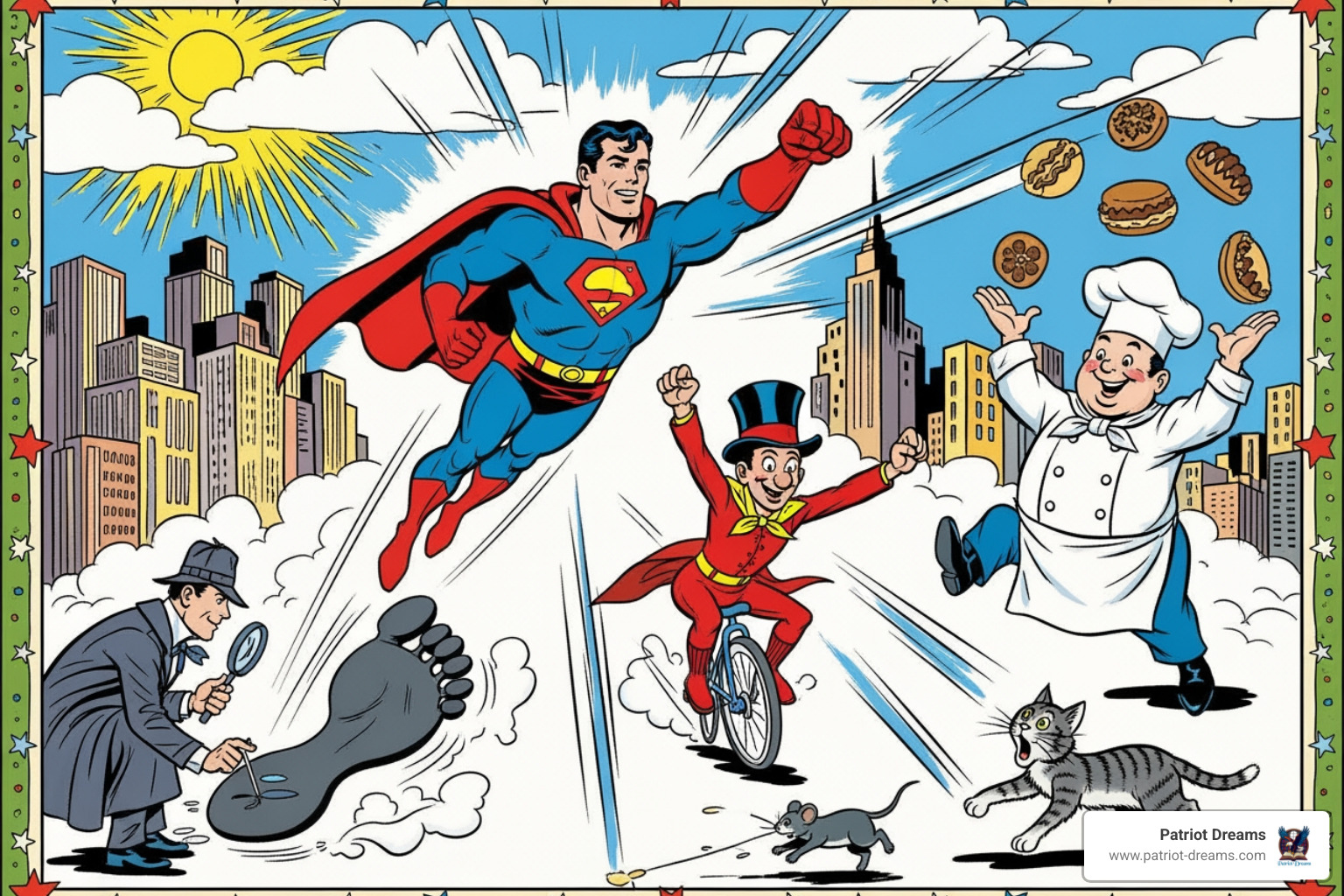
Famous Funnies: A Carnival of Comics started as a promotional giveaway for companies like Procter & Gamble. People loved it. Here was a collection of their favorite newspaper comic strips, all gathered in one colorful booklet they could hold and keep. The enthusiastic response proved that Americans wanted more.
Eastern Color Printing saw the opportunity and, in 1934, launched Famous Funnies as a regular newsstand publication. For the first time, you could walk into a store and buy a comic book for just ten cents. This was the first American comic book sold regularly, and it established the format for an entire industry.
These early comic books were filled with reprints of popular newspaper comic strips. Imagine being a child during the Depression and being able to collect all your favorite funnies in one affordable package! It was a small joy during hard times.
But the real game-changer came in 1935. Max Gaines and National Allied Publications (which would later become DC Comics) published New Fun Comics #1. This comic book featured something extraordinary: all-original material. These weren't reprints—they were brand-new stories and characters created specifically for comic books.
This shift from reprints to original content changed everything. Comic books were no longer just collections of yesterday's funnies. They became a fresh platform where new heroes could be born and new adventures could unfold. The stage was set. All that was needed was a hero who could capture the heart of a nation—and he was just around the corner.
The Golden Age: How Superheroes Forged a New Pop-Culture Era
With families across America finding the joy of comic books, the stage was set for a cultural revolution. Between 1938 and 1956, something extraordinary unfolded—a period we now call the "Golden Age of Comic Books." This was truly When Comics Went Mainstream: The First American Comic Book and a New Pop-Culture Era, as heroes emerged who would become part of our national identity.
An Explosion of Heroes
The year 1938 brought a moment that would echo through the decades. On the cover of Action Comics #1, a man in a cape lifted a car over his head. His name was Superman, and he was unlike anything America had seen before.
Created by Jerry Siegel and Joe Shuster, two young men with big dreams, Superman was a gift to a nation that desperately needed hope. The Great Depression had left many Americans feeling powerless, but here was someone who could fly, who stood for "truth, justice, and the American way." For ten cents, a child could believe that impossible things were possible.
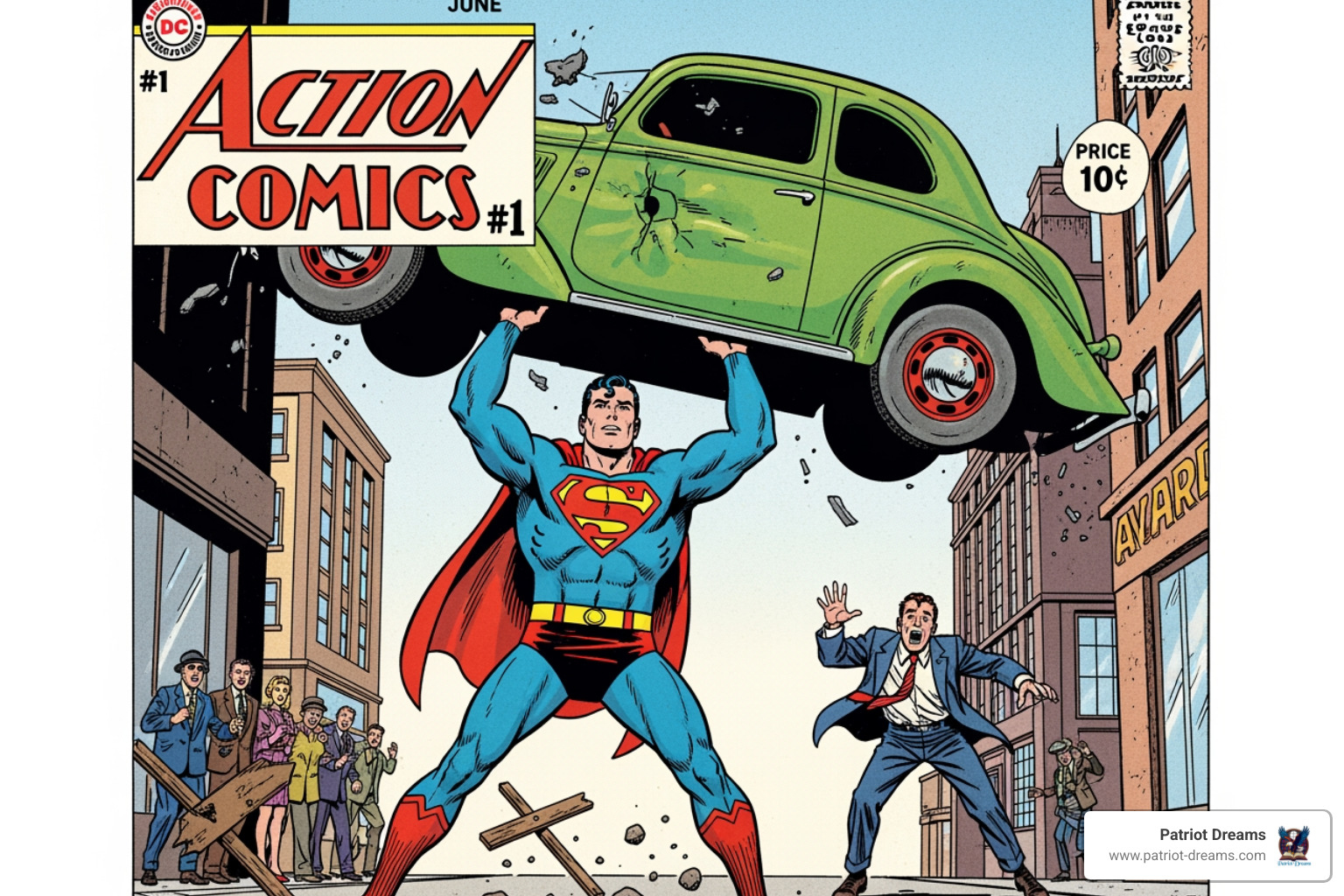
The response was immediate. National Allied Publications (later DC Comics) had struck gold. In 1939, they introduced Batman in Detective Comics. Where Superman had godlike powers, Batman was human, relying on his mind and determination. He showed that you didn't need superpowers to make a difference.
Then came Wonder Woman in 1941, a warrior princess who brought strength and compassion, proving that courage knows no gender. As America entered World War II, Timely Comics (later Marvel Comics) introduced Captain America. His debut issue famously showed him punching Hitler—a bold statement that resonated deeply with a nation preparing for war. These weren't just stories; they were rallying cries.
By 1944, an astonishing 44% of men in the Army called themselves avid comic book readers. Comics traveled in duffel bags, bringing a touch of home to soldiers and reminding them what they were fighting for. These stories of courage connect to the real-life bravery we celebrate in Behind the Badge: Real Stories of American Heroes in Pop Culture. Understanding how these narratives served the nation can be explored through resources like Document Analysis Worksheets from the National Archives.
Paving the Way for a Pop-Culture Revolution
The numbers tell an incredible story. During World War II, over 90 percent of children aged seven to seventeen read comic books regularly. But adults loved them too. Comic books had become a shared language connecting Americans from every background.
What made them so powerful? They were affordable, offered escape during hard times, and provided hope when it was needed most. The combination of dynamic artwork and compelling stories created a new way of telling tales that spoke directly to the heart.
The format itself was revolutionary. Artists and writers learned to control time and emotion through panel layouts and create entire worlds within colorful pages. This wasn't just entertainment—it was a new American art form, as innovative and distinctly ours as jazz or the movies.
The heroes born during this Golden Age became part of who we are as Americans. They reflected our values of perseverance, justice, and standing up for what's right. For families gathering to read, for soldiers finding comfort in familiar heroes, for children dreaming of their own futures—comic books had become something precious. They were a source of inspiration and a reminder of the best parts of being American.
When Comics Went Mainstream: The First American Comic Book and a New Pop-Culture Era
The mainstreaming of comics was not solely the work of caped crusaders. While superheroes undeniably dominated the Golden Age, the medium's widespread appeal also stemmed from its incredible versatility. This period was truly When Comics Went Mainstream: The First American Comic Book and a New Pop-Culture Era, offering something for everyone.
More Than Just Capes: The Rise of Teen Humor and Other Genres
As the 1940s progressed, comic books began to diversify into a multitude of genres. One of the most beloved to emerge was teen humor. In 1941, Pep Comics introduced Archie Andrews. This wholesome teenager and his friends quickly became a sensation. Archie's relatable adventures—navigating school, crushes, and everyday dilemmas—offered a gentler, humorous alternative to the epic battles of superheroes. The popularity of Archie and his gang was so immense that the publisher eventually rebranded as Archie Comic Publications. These stories captured the lighter side of American life, providing comfort and laughter.
Beyond teen humor, other genres flourished. Western, romance, science fiction, and talking animal comics gained significant traction, especially after WWII. This diversification meant there was truly something for everyone, from thrilling adventures on the range to heartwarming love stories, all available for a mere ten cents. This rich variety ensured that comics were not a passing fad but a deeply embedded part of our cultural fabric.
A New Visual Language: The Evolution of Comic Book Storytelling
The mainstream surge of comic books also coincided with a remarkable evolution in their visual style. What started as simple sequential panels quickly developed into a sophisticated visual language. Early comic books adopted dynamic artwork and panel layouts that allowed for a fluid reading experience. Speech balloons became standard, seamlessly integrating dialogue into the visual narrative.
Creators finded a unique power in the "between the panels" moments, where the combination of text and art could create a new, layered narrative. Artists and writers learned to control time and pacing, guiding the reader's eye and imagination through the story. This continuous evolution ensured that comic books remained fresh and engaging, solidifying their status as a powerful narrative art form.
When Comics Went Mainstream: The First American Comic Book and a New Pop-Culture Era's Societal Reception
The initial mainstream surge of comic books during the 1930s and 1940s was met with widespread adoration. For millions of Americans, they were an affordable escape, offering thrilling adventures and inspiring tales of heroism during the Great Depression and World War II.
During the war, comic book consumption skyrocketed. They were a source of entertainment for families and highly popular with soldiers overseas, with around 44% of men in the American Armed forces identifying as avid readers by 1944. The government even recognized their value for boosting morale, with agencies indirectly influencing storylines to promote positive ideals.
However, the rapid growth of this new medium also brought scrutiny. As comics grew in popularity and diversified after the war, some societal figures began to express concern about their influence on young readers. This led to a national conversation about the medium's content and impact.
In response, the comic book industry came together to form the Comics Code Authority (CCA) in 1954, implementing a set of self-regulating guidelines. This move dramatically altered content, leading to a greater focus on stories that were considered wholesome for all ages. While this period marked a challenging chapter, it also highlighted the profound societal impact comic books had achieved. They were no longer just "funny books"; they were a cultural force, capable of stirring national debate and reflecting American values and anxieties.
Frequently Asked Questions about the First American Comic Books
We know that diving into the history of American comic books can bring up a few questions. It's a story that touches so many parts of our shared cultural experience. Let's explore some of the most common questions people ask about how comics became such a beloved part of American life.
What is considered the very first American comic book?
That's a wonderful question! The first publication of its kind was Famous Funnies: A Carnival of Comics in 1933, which started as a promotional giveaway. The real breakthrough, however, came in 1934 when Famous Funnies, Series 1 hit newsstands. It was the first comic book that anyone could buy in a store, establishing the ten-cent format that launched an entire industry. This moment was truly When Comics Went Mainstream: The First American Comic Book and a New Pop-Culture Era began to take shape.
Who was the first superhero?
When you think of superheroes, you likely picture someone in a cape, and that idea started with one character: Superman.
In June 1938, Superman burst onto the scene in Action Comics #1. He wasn't just strong; he could fly, and he had a heart of gold. His incredible abilities and unwavering moral compass defined what it meant to be a superhero. He became the template for countless heroes to follow and gave America a symbol of hope during the difficult Depression years.
Why did comics become so popular in the 1930s and 40s?
During the tough times of the Great Depression and World War II, comic books were a wonderful gift. For just ten cents, they offered an affordable escape into worlds of adventure, where good always triumphed over evil and heroes stood up for what was right.
They gave families and soldiers stories of hope, courage, and justice when they were needed most. Comics became a shared cultural experience that brought people together, connecting them through tales of heroism. By 1944, around 44% of men in the Armed Forces were avid comic book readers. They were more than just entertainment; they were a reminder of the American spirit of resilience and the belief that one person can make a difference. That's why When Comics Went Mainstream: The First American Comic Book and a New Pop-Culture Era was about so much more than just stories—it was about finding light in the darkness together.
Conclusion: The Enduring Legacy of America's Comic Book Dream
The story of American comic books is a beautiful tale of imagination and necessity creating something truly special. When Comics Went Mainstream: The First American Comic Book and a New Pop-Culture Era wasn't just about a new product—it was about giving people something to believe in when they needed it most.
During the Great Depression, a ten-cent comic book could transport you to another world. When World War II called on our nation to serve, those same colorful pages traveled with soldiers, offering comfort and a reminder of what they were fighting for. From the groundbreaking pages of Famous Funnies to Superman's first leap into the sky, comics became a friend to millions.
The characters from this era—Superman with his moral compass, Batman's determination, Wonder Woman's compassion, and even Archie's everyday good-heartedness—became part of our national family. They taught us about courage and kindness, about standing up for what's right, and about never giving up hope. These weren't just stories; they were lessons in being human, wrapped in adventure and color.
Even when comics faced criticism, the medium proved resilient. It adapted and endured—much like the American spirit itself. The values these early comics championed—hope, justice, and the belief that one person can make a difference—continue to resonate today.
Today, you can see the legacy of those first comic books everywhere. The blockbuster movies, beloved television shows, and graphic novels all trace their roots back to those early pioneers who believed that words and pictures could create magic. And they were right.
At Patriot Dreams, we understand the power of stories to connect us to our past and to each other. Just as those early comics brought families together, we're dedicated to preserving and sharing the stories that make America special. These stories remind us that we're all part of a continuing narrative of courage, community, and dreams.
We invite you to Explore more inspiring stories from our nation's history with Patriot Dreams. Every tale deserves to be told and remembered. Let's keep these stories alive together, passing them down like treasured comic books, from one generation to the next—because that's how we honor where we've been and inspire where we're going.

Join the Patriot Dreams Community
Download the app today and start your journey through American history and personal legacy.

Explore Our Latest Insights
Dive into stories that shape our American legacy.