The First Thanksgiving Day Parade: When America Celebrated in Pageantry and Unity

Introduction: A Holiday Tradition is Born
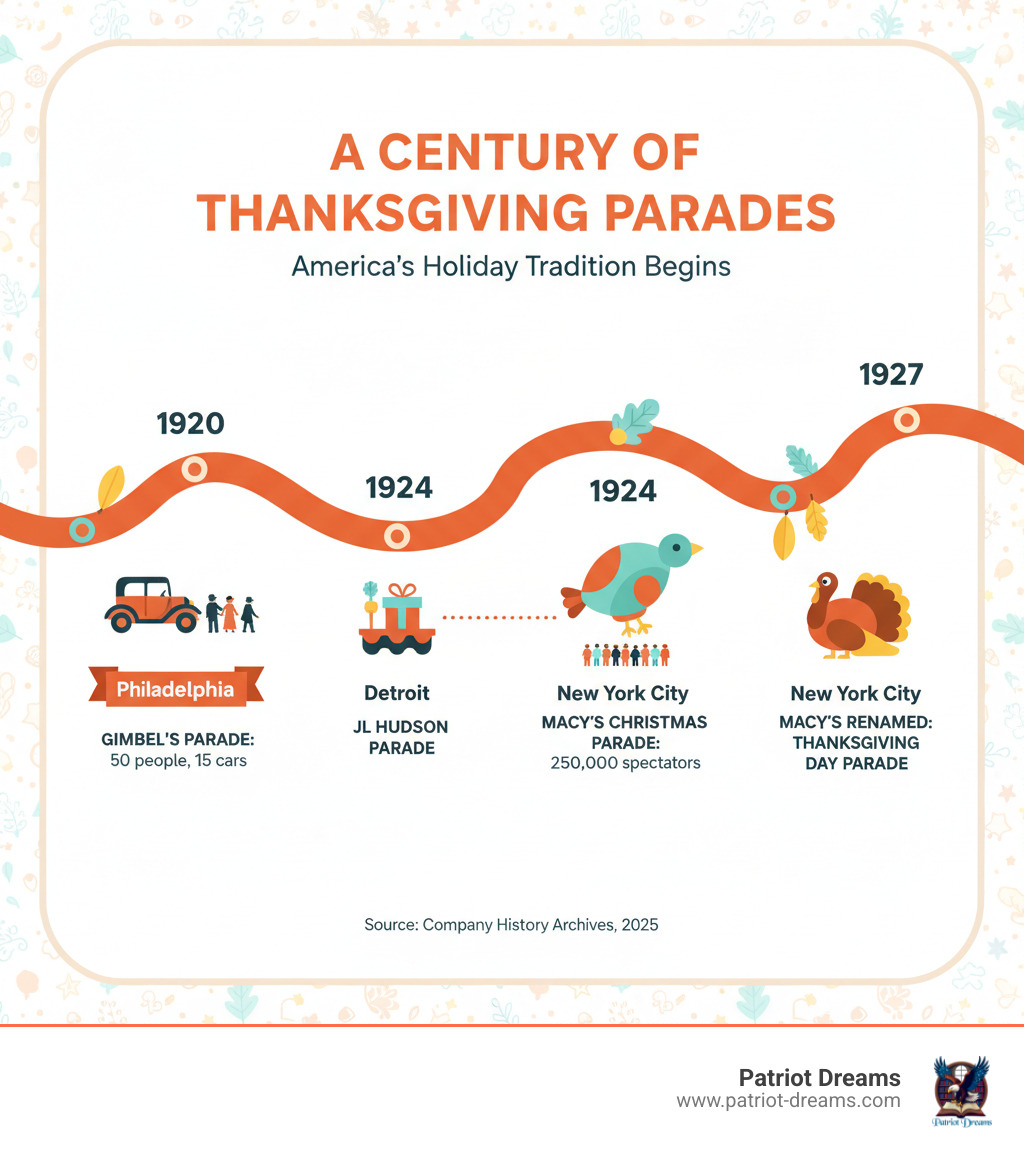
The First Thanksgiving Day Parade: When America Celebrated in Pageantry and Unity might bring to mind the famous Macy's spectacle in New York City, but the true story begins four years earlier in Philadelphia. In 1920, Gimbel Brothers Department Store organized what would become America's oldest continuous Thanksgiving parade tradition—a modest procession of 50 people, 15 cars, and one fireman dressed as Santa Claus that sparked a nationwide phenomenon.
Quick Facts About America's First Thanksgiving Parade:
- When: 1920 (not 1924)
- Where: Philadelphia, Pennsylvania
- Who: Gimbel Brothers Department Store
- Why: To kick off the holiday shopping season and bring the community together
- What Made It Special: Employees, many of them immigrants, celebrated in costumes reminiscent of their native countries' festivals
- Legacy: Evolved into today's 6ABC Dunkin' Thanksgiving Day Parade—the longest-running parade of its kind
The idea was simple but powerful. Store employees, many of them first-generation Americans, marched through city streets in festive costumes, accompanied by simple floats and local bands. Santa Claus rode on the final float, signaling the official start of the Christmas season. It wasn't grand or elaborate—just a neighborhood celebration that brought people together.
What started as a small community pageant in post-World War I Philadelphia became a beloved American tradition that spread to Detroit and New York City within just a few years. These parades weren't just about commerce. They became moments when communities gathered, children's eyes lit up with wonder, and America celebrated its diversity and shared hope for the future.
The True Beginning: Philadelphia's 1920 Thanksgiving Procession
When we think of Thanksgiving parades today, our minds often drift to giant balloons floating between skyscrapers and celebrity performances watched by millions. But the real story of The First Thanksgiving Day Parade: When America Celebrated in Pageantry and Unity begins in a much quieter, more intimate way—on the streets of Philadelphia in 1920.
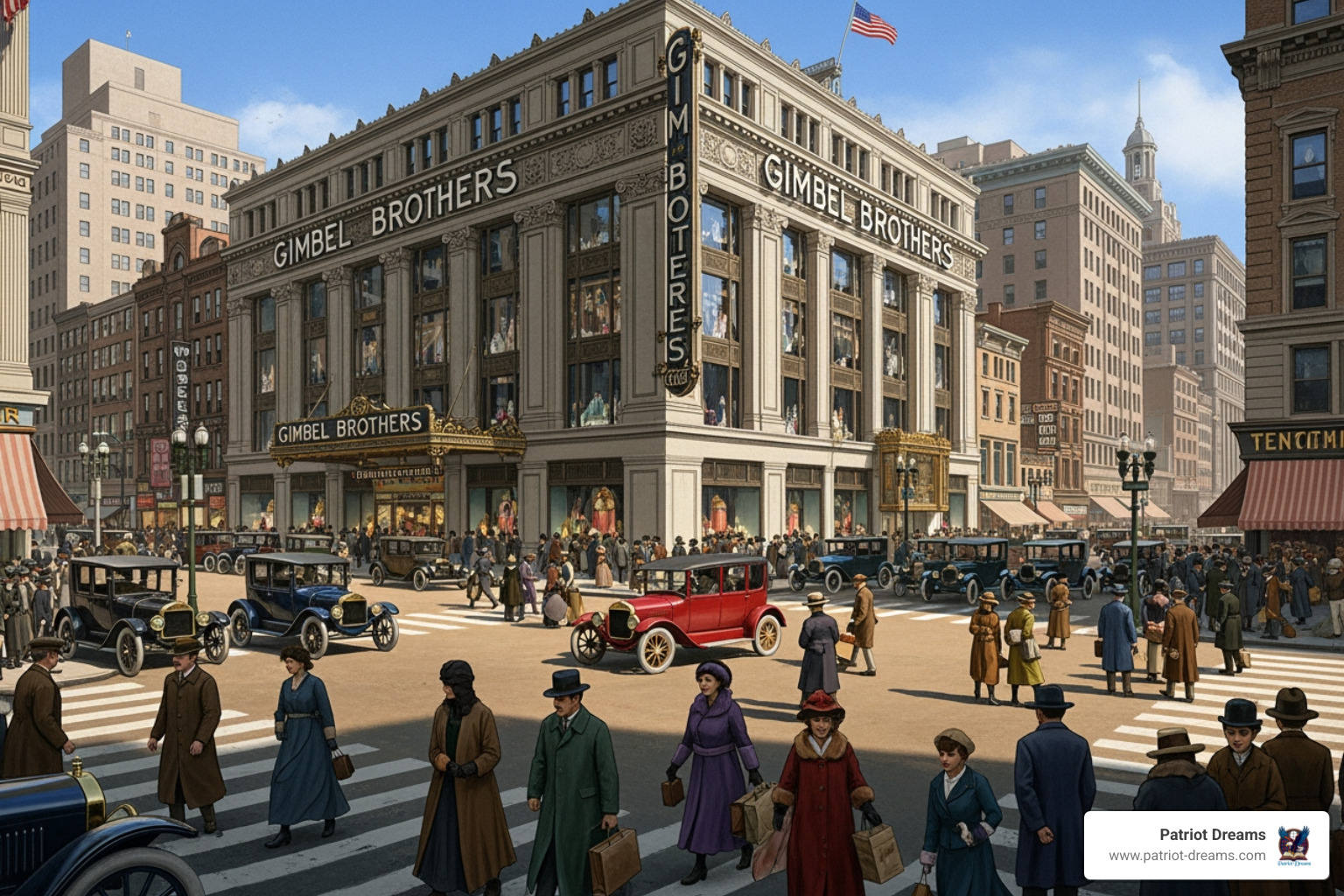
The Gimbel Brothers Department Store had a vision that autumn. Ellis Gimbel and his brothers wanted to do something special—something that would bring their city together and kick off the holiday shopping season in a way people had never seen before. They imagined a community pageant that would fill the streets with color, music, and joy. It was part business strategy, sure, but it was also something more. It was an invitation for Philadelphia to gather, celebrate, and share in the magic of the season together.
This wasn't just about selling merchandise. The Gimbel Brothers were creating a destination, a reason for families to bundle up on a chilly November morning and stand shoulder-to-shoulder with their neighbors. They wanted to spread holiday cheer through pageantry and unity, giving their city a new way to celebrate. In many ways, it reminds us of the community spirit we still find when Traveling Through Time: American Small Towns That Feel Like a Vintage Film Set—that same feeling of connection and shared experience.
A Humble Start for a Grand Idea
That first parade in 1920 was wonderfully, charmingly small. About 50 people participated, alongside 15 cars decorated for the occasion. There were no giant balloons, no elaborate mechanical floats, no television cameras. The star of the show? A fireman dressed as Santa Claus, riding on the final float to announce that the Christmas season had officially arrived.
The parade route started at the iconic Philadelphia Museum of Art and wound through the city streets, drawing crowds who lined the sidewalks to watch. It all ended, naturally, at the Gimbel Brothers store—a clever bit of planning that transformed festive atmosphere into foot traffic. But nobody seemed to mind the commercial angle. The whole event felt like a gift to the city, a simple celebration that brought smiles to faces and warmth to hearts on a cool November day.
It was a humble start, to be sure. But sometimes the grandest traditions begin with the simplest gestures—a few dozen people, a handful of cars, and one fireman willing to don a red suit and spread some holiday magic. The scale was small, but the community focus was genuine, and that's what made it work.
The Motivation: Spreading Holiday Cheer (and Commerce)
Let's be honest about what the Gimbel Brothers were up to. They were businessmen, and they understood that the holidays meant customers. The parade was designed to kick-off to Christmas shopping in spectacular fashion, creating excitement that would naturally lead people through their store's doors. It was department store marketing at its most creative, turning a festive atmosphere into a shopping destination.
But here's the thing: it worked because it wasn't just about commerce. The Gimbel Brothers genuinely wanted to create something special for Philadelphia, a new way to celebrate that would become woven into the fabric of the city's traditions. They understood that spreading holiday cheer and building goodwill in the community would matter more in the long run than any single shopping season.
The parade became a moment when the city could pause, gather together, and feel that wonderful anticipation that comes with the approach of the holidays. It was festive, it was fun, and yes, it was good for business—but it was also good for the soul of the community. That's a winning formula that would inspire cities across America to create their own Thanksgiving traditions in the years to come.
The First Thanksgiving Day Parade: When America Celebrated in Pageantry and Unity
Something special happened in Philadelphia in 1920. The nation was still catching its breath after World War I, and people were hungry for reasons to smile, to gather, to celebrate together. That's exactly what The First Thanksgiving Day Parade: When America Celebrated in Pageantry and Unity gave them—a chance to fill the streets with music, laughter, and hope.
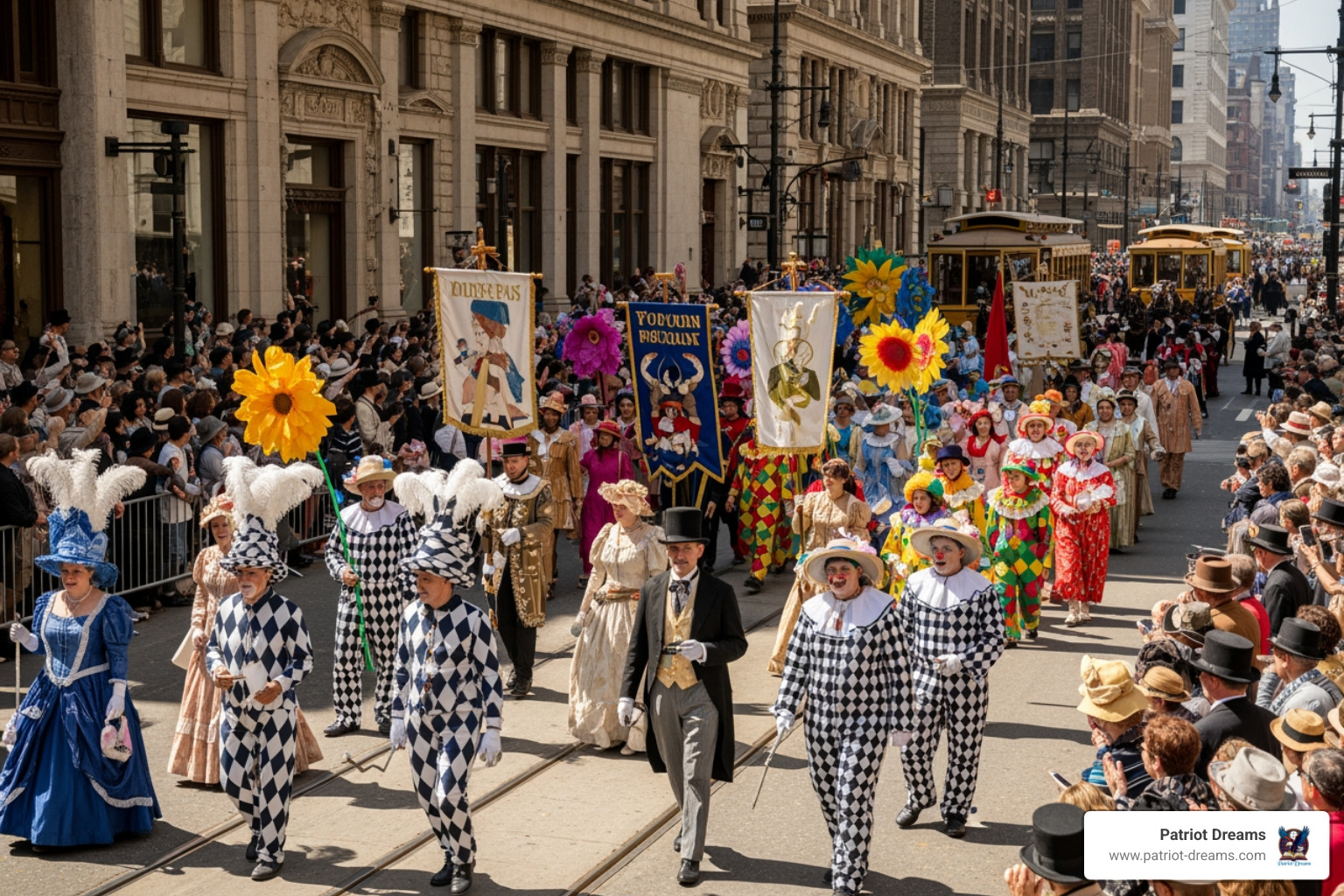
This wasn't a parade with towering balloons or celebrity performances. It was something simpler and, in many ways, more meaningful. Gimbel Brothers employees walked the streets in colorful costumes, changing ordinary city blocks into a stage for community joy. Simple floats rolled by, marching bands played cheerful tunes, and families lined the sidewalks shoulder to shoulder. It was street theater at its finest—unpretentious, accessible, and full of heart.
In those post-war years, Americans needed moments like these. The parade became more than entertainment. It was a reminder that life could be joyful again, that neighbors could gather without worry, and that the future held promise. These celebrations helped stitch communities back together, creating traditions that would echo through generations—much like the stories we explore in Folklore Files: Forgotten American Legends and What They Reveal About Us.
The Sights and Sounds of the First Parade
Picture this: a crisp November morning in Philadelphia, children bundled in coats, their breath visible in the cool air. Excitement rippled through the crowd as the parade approached. The floats that rolled down the street weren't elaborate—they featured Mother Goose themes that brought fairy tales to life in a way that felt magical to young eyes.
Gimbel Brothers employees, many of them working-class folks who'd spent the week behind store counters, became the stars of the show. They marched in vibrant costumes, waving to neighbors and strangers alike. Local bands added their own music to the morning, filling the air with melodies that made feet tap and hearts lift.
But everyone was really waiting for one moment: Santa's arrival. When that final float came into view, carrying a jolly Santa Claus, the crowd erupted in cheers. Children pointed and jumped. Parents smiled. That simple moment—Santa waving from his float—officially opened the Christmas season and created a feeling of togetherness that spread through the entire city. It wasn't fancy, but it was perfect.
How the First Thanksgiving Day Parade Showcased American Unity
Here's what made this parade truly American: the people marching in it came from everywhere. Many of Gimbel Brothers' employees were immigrants or the children of immigrants. They'd crossed oceans to build new lives in Philadelphia, bringing with them traditions, languages, and memories of celebrations from their homelands.
When these workers put on costumes and joined the parade, something beautiful happened. They weren't just representing a department store—they were sharing their traditions with their new neighbors. The parade became a place where different cultures mixed naturally, where diversity wasn't just tolerated but celebrated.
This was a celebration for everyone, regardless of where their families had come from. Wealthy families stood on the sidewalk next to working-class neighbors. Recent arrivals watched alongside people whose families had been American for generations. The neighborhood spirit was genuine and warm.
In those years after World War I, America needed healing. The country was looking for ways to feel whole again, to remember what united rather than divided. The First Thanksgiving Day Parade: When America Celebrated in Pageantry and Unity offered exactly that—a gentle, joyful gathering that reminded everyone of our shared humanity. It showed that even a modest parade could become a symbol of a hopeful nation, proving that the best American traditions often start with simple acts of coming together.
An Enduring Legacy: From Gimbels to a Modern Spectacle
That small gathering of 50 people and 15 cars that Gimbel Brothers organized in 1920 grew into something far beyond what anyone could have imagined. Today, Philadelphia's Thanksgiving tradition lives on as the 6ABC Dunkin' Thanksgiving Day Parade, proudly holding the title of the longest-running Thanksgiving parade in America. For over a century, this parade has remained a cherished part of Philadelphia's holiday season, adapting and growing while keeping its heart firmly rooted in community celebration.
The change has been remarkable. Where once a fireman dressed as Santa rode on a simple float, today's parade features massive, elaborate floats that tower over the streets. The handful of costumed employees has grown into thousands of marchers, performers, and volunteers who bring the parade to life each year. Those charming Mother Goose themes have evolved into technologically advanced floats and giant character balloons that capture children's imaginations in ways the original parade organizers could never have dreamed.
Perhaps the most striking change is how the parade reaches people. What started as a local street procession that Philadelphians watched from their neighborhood sidewalks now travels into homes across the nation through television broadcasts. Thanks to 6ABC, families who can't make it to the parade route can still gather around their screens, continuing the tradition of shared celebration that began over a hundred years ago.
The parade's participants have grown more diverse too. Instead of primarily Gimbel Brothers employees, today's procession includes marching bands from across the nation, professional performers who travel to Philadelphia specifically for this event, and community groups that represent the city's rich cultural mix. The sponsorship has evolved as well, reflecting changes in the retail landscape—from Gimbel Brothers to the current partnership with 6ABC and Dunkin', showing how the parade continues to adapt to new times while maintaining its essential character.
Yet through all these changes, something fundamental remains the same. The parade still brings people together. It still marks the official start of the holiday season. It still fills the streets with music and wonder. The scale may be grander, the visuals more spectacular, and the reach far wider, but the spirit of that first parade—neighbors gathering to celebrate, share joy, and look forward to the season ahead—endures unchanged.
A Tradition Spreads Across the Nation
Philadelphia's success didn't go unnoticed. Other cities and department stores across America saw what the Gimbel Brothers had created and wanted to bring that same magic to their own communities. The idea of a Thanksgiving Day parade began to spread, carried by the simple truth that people loved gathering together for celebration.
In Detroit, J.L. Hudson's Department Store organized its own parade, bringing festive pageantry to Michigan. Then, in 1924, something even bigger happened in New York City. Macy's department store launched what they initially called the "Macy's Christmas Parade." Like the Philadelphia event before it, this parade was organized by store employees—many of them European immigrants who remembered the vibrant street celebrations from their homelands and wanted to recreate that joy in their new country.
That first Macy's parade drew an astonishing 250,000 spectators, and it quickly grew into the nationally televised spectacle many people associate with Thanksgiving today. The New York parade brought its own innovations, eventually becoming famous for its giant character balloons and celebrity performances. For more insights into how these early parades shaped American business and culture, you can learn more about the history of other parades from the Library of Congress.
But here's what makes Philadelphia special: while other parades may have grown larger or more famous, Philadelphia's parade is the oldest continuous Thanksgiving Day parade in America. That's a distinction worth celebrating. Philadelphia didn't just participate in a national trend—they started it.
This spreading tradition showed something beautiful about America in the 1920s. Just as families were beginning to explore the country by car—finding the freedom of the open road like those early travelers on The First Route 66 Road Trip: How America Learned to Wander—communities were finding new ways to come together and celebrate. These parades transformed Thanksgiving from a quiet family meal into a vibrant public celebration, creating shared memories that would last for generations. They became part of the fabric of American life, moments when entire cities paused to watch, wonder, and give thanks together.
Frequently Asked Questions about America's First Thanksgiving Parades
You've learned about how The First Thanksgiving Day Parade: When America Celebrated in Pageantry and Unity began in Philadelphia back in 1920, and you might have some questions. That's wonderful! These parades have such a rich history, and understanding their origins helps us appreciate the tradition even more. Let's explore some of the most common questions people ask about these beloved American celebrations.
Which Thanksgiving parade is the oldest in America?
If you guessed New York City's famous Macy's parade, you're in good company—but that's not quite right! Philadelphia's Thanksgiving Day Parade holds the honor of being the oldest in the United States. It all started in 1920 when the Gimbel Brothers Department Store organized that first modest procession through the city streets.
The Philadelphia parade predates the New York City celebration by a full four years. While Macy's parade may have grown larger and more famous over time, Philadelphia can proudly claim the title of America's first and longest-running Thanksgiving parade tradition. Today, it continues as the 6ABC Dunkin' Thanksgiving Day Parade, still bringing joy to families more than a century later.
It's a beautiful reminder that sometimes the most enduring traditions don't start in the biggest cities or with the grandest plans—they begin with communities coming together to celebrate.
Why did department stores start Thanksgiving parades?
The answer combines a bit of smart business thinking with genuine community spirit. Department stores like Gimbel Brothers recognized that Thanksgiving was the perfect moment to officially kick off the Christmas shopping season. By creating a festive, family-friendly parade, they could attract customers to their stores while also spreading holiday cheer throughout the community.
But it wasn't just about making sales. These parades created something special—a destination where families could gather, children could experience wonder, and entire communities could share in the excitement of the approaching holidays. The parades generated goodwill, making the department stores beloved parts of the community rather than just places to shop.
Think of it as a gift to the city that also happened to be good for business. The stores invested in creating joy and togetherness, and in return, they became woven into the fabric of holiday traditions. It was a win for everyone—shoppers got a magical experience, communities got a new tradition, and stores became cherished local institutions.
What was the first parade like compared to today?
The difference is truly remarkable! That first parade in 1920 was an intimate, neighborhood affair. Picture about 50 people, 15 cars, simple floats with Mother Goose themes, and a fireman dressed as Santa Claus riding on the final float. Local bands provided the music, and Gimbel Brothers employees marched in costume, bringing smiles to the crowds lining the streets.
Today's parades are spectacular productions on an entirely different scale. The modern 6ABC Dunkin' Thanksgiving Day Parade features thousands of participants, elaborate floats with sophisticated technology, giant character balloons, professional performers, and marching bands from across the nation. Millions of people watch on television, experiencing the magic from their living rooms across the country.
Yet despite all these changes, something essential remains the same. Whether it's 1920 or today, the heart of the parade is still about bringing people together, creating shared moments of joy, and marking the beginning of the holiday season. The scale may have changed dramatically, but that warm feeling of community and celebration? That's stayed constant for over a century.
It's touching to think that the simple parade that wound through Philadelphia streets so long ago planted seeds that would grow into beloved traditions celebrated by millions. Sometimes the most powerful ideas start small and grow because they touch something true in the human heart.
Conclusion: A Story of Community and Celebration
When we look back at The First Thanksgiving Day Parade: When America Celebrated in Pageantry and Unity, we find something beautiful—a story that reminds us why traditions matter. That modest procession in Philadelphia in 1920 wasn't just about getting people to shop. It was about bringing neighbors together, celebrating the season, and creating a moment of shared joy during a time when our nation was still healing from war.
From 50 marchers and 15 cars to today's spectacular 6ABC Dunkin' Thanksgiving Day Parade, the tradition has grown in ways those first participants could never have imagined. Yet somehow, the heart of it remains unchanged. It's still about gratitude, about togetherness, and about pausing in our busy lives to celebrate something bigger than ourselves.
What strikes me most about this story is how it began with everyday people—store employees, many of them immigrants, who simply wanted to share their joy with their community. They dressed in costumes, marched down city streets, and created something that would last over a century. That's the kind of quiet heroism we love to celebrate at Patriot Dreams. It's not always the grand gestures that change the world. Sometimes it's just people showing up, participating, and caring about their neighbors.
This tradition of pageantry and unity is woven into the fabric of our American heritage. It reminds us that we're part of something enduring, something that connects us to generations past and future. These moments of collective celebration—whether it's watching a parade, sharing a meal, or simply gathering with loved ones—are what bind us together as a nation.
At Patriot Dreams, we're honored to preserve and share these stories. They're the threads that make up the beautiful mix of American life. The story of that first Thanksgiving parade, much like the resilience and spirit you'll find in American Pioneer Stories, shows us the best of who we are—creative, hopeful, and deeply connected to one another.
So this Thanksgiving, as you settle in to watch a parade or gather around the table, take a moment to appreciate the pioneers who started this tradition. Think about those Gimbel Brothers employees who marched through Philadelphia streets, creating something that would bring joy to millions. Their gift to us wasn't just a parade—it was a reminder that when we come together in celebration, we create memories that last forever.
We invite you to find more heartwarming stories of our nation's journey in America: 250 Years in the Making. Because every story, from the grandest parade to the quietest act of kindness, helps us understand who we are and who we can become.
Join the Patriot Dreams Community
Download the app today and start your journey through American history and personal legacy.

Explore Our Latest Insights
Dive into stories that shape our American legacy.