Discover the Real Stories Behind America's Forgotten Origins

Why the America Untold Story Begins Before Plymouth
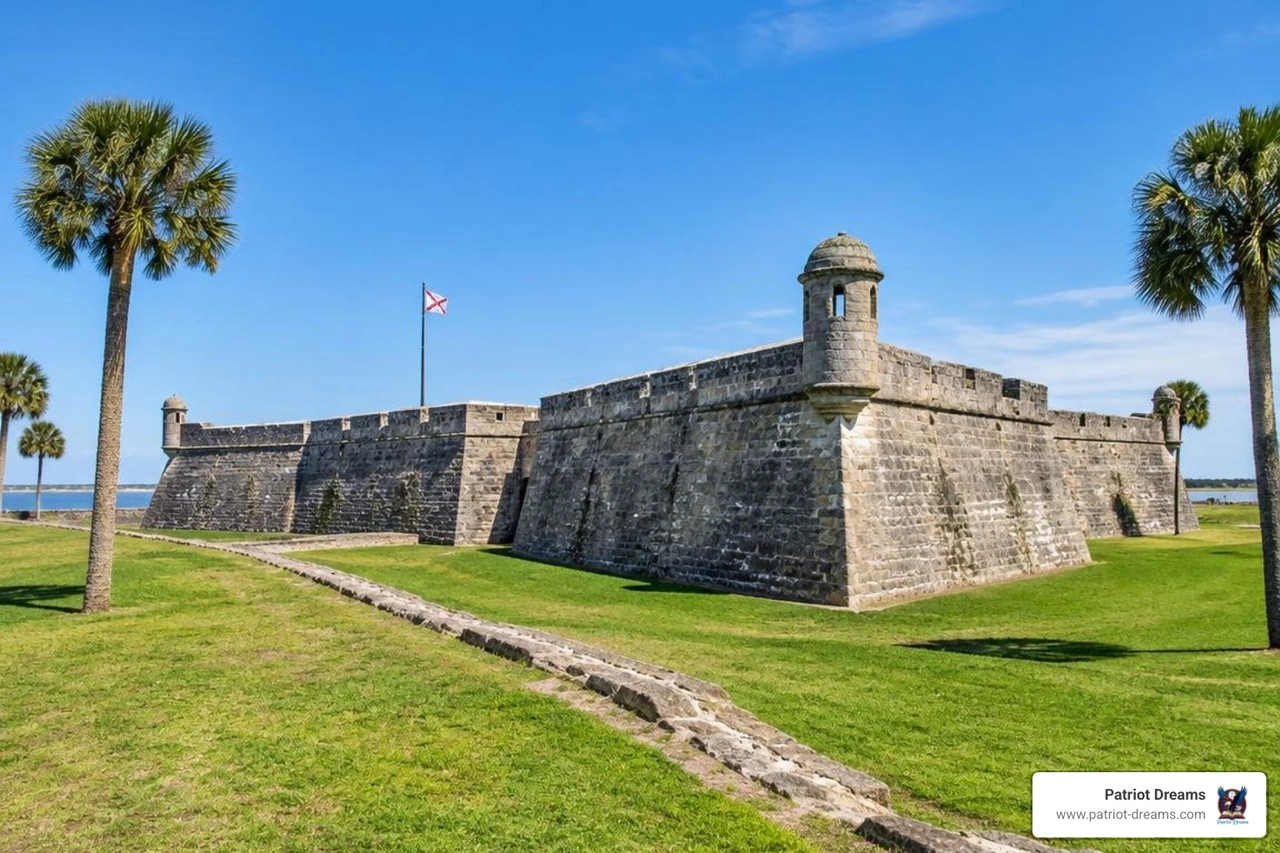
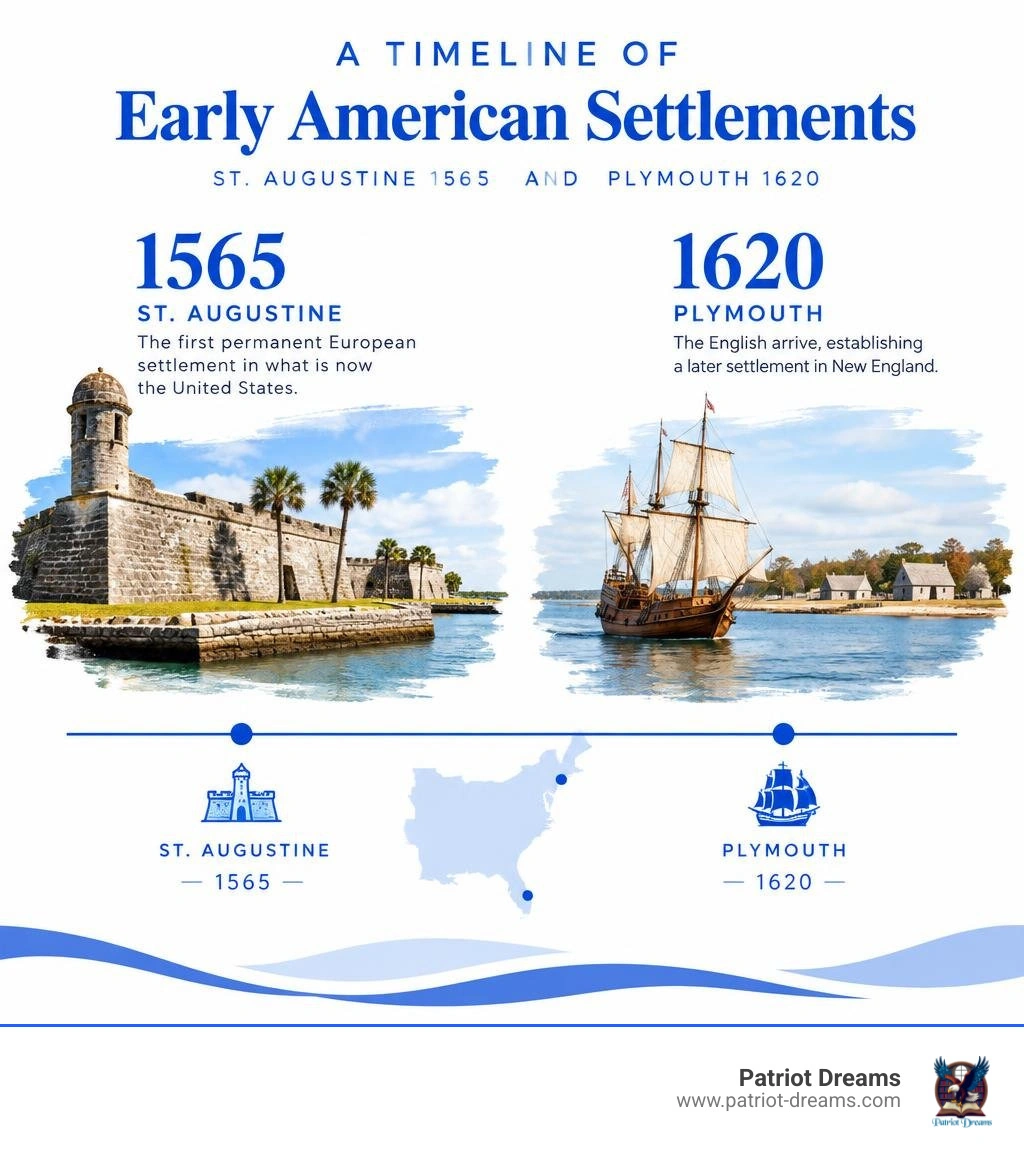
The America Untold Story begins with a simple correction to the familiar Pilgrim-centered timeline: St. Augustine, Florida, was founded by Spanish colonists in 1565, 55 years before Plymouth. It was the first permanent European settlement in what is now the United States.
That earlier beginning also makes the national story broader. Spanish settlers, Africans, Italians, Germans, Irish people, converted Jews, and Native communities all shaped colonial Florida. Looking at these chapters does not erase the story of Plymouth. It adds important neighbors, places, and voices that often receive less space in schoolbook timelines.
For families and history lovers, a helpful way to explore these forgotten origins is to:
- Start with St. Augustine and its 1565 founding.
- Compare Spanish Florida with the later English colonies.
- Use maps, local sites, diaries, and family stories to connect big events to real people.
The past is often more complicated - and more human - than the version we first learned. We are Kyle & Emily, and we invite you to look more closely at the early communities that helped shape America.
Explore more about america untold story:
- american stories smithsonian
- bessie coleman history
- St. Augustine, Florida
St. Augustine 1565: Exploring the America Untold Story Before Plymouth
When we think about the early days of our country, many of us picture quiet autumn gatherings, wooden cabins, and the cold shores of New England. Yet long before the Mayflower set sail, vibrant communities were already taking root under the warm Florida sun.
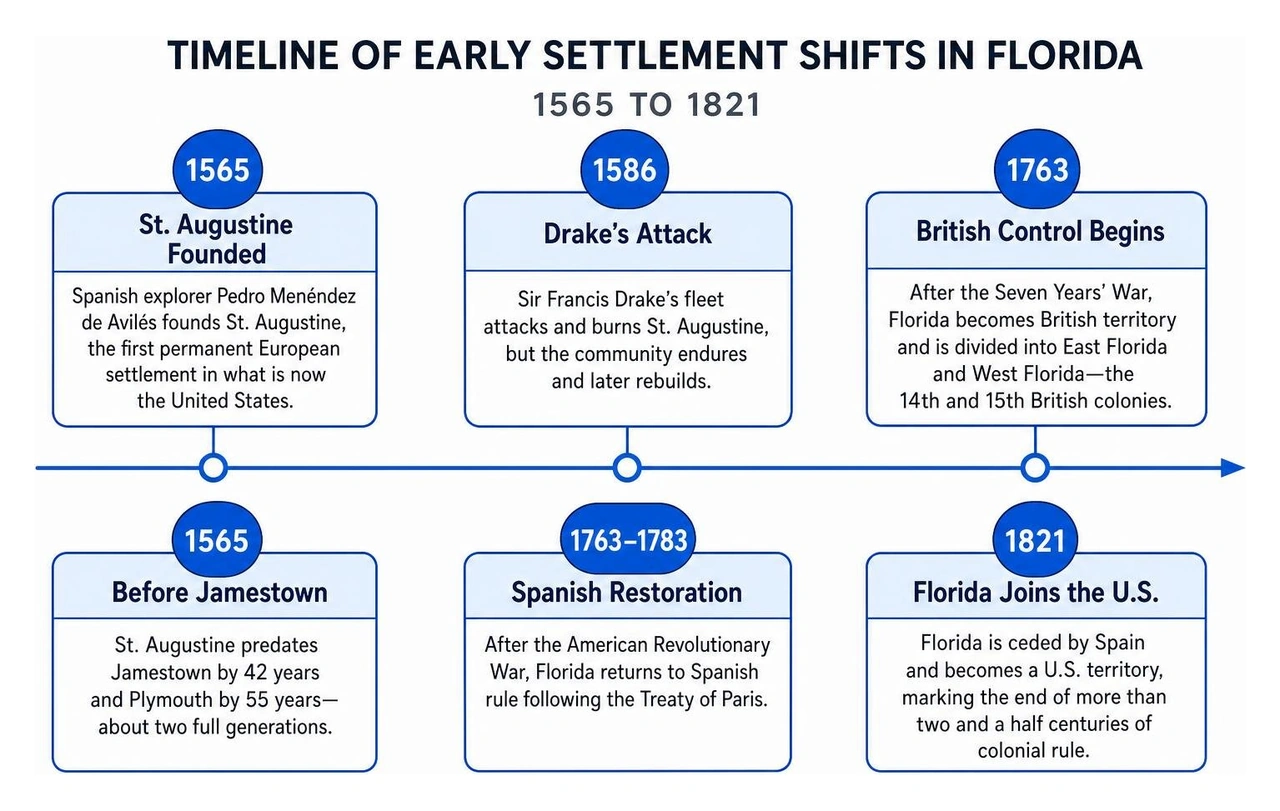
In September 1565, Spanish explorer Pedro Menéndez de Avilés led an expedition ashore on the northeast coast of Florida. There, he founded St. Augustine, establishing the first permanent European settlement in what is now the United States. This extraordinary chapter of our collective past predates Jamestown by 42 years and Plymouth by 55 years—roughly two full generations.
Firsthand accounts preserved in Spain's General Archive of the Indies and private family journals reveal how early settlers met the challenges of an unfamiliar wilderness. Men, women, and children built homes, planted crops, and forged complex relationships with the native Timucua people.
The settlement weathered intense trials. In 1586, Sir Francis Drake's fleet attacked and burned the town, yet the community rebuilt, demonstrating remarkable perseverance. Florida later shifted through several hands, briefly becoming British territory after the Seven Years' War in 1763—forming East and West Florida, the historic 14th and 15th British colonies—before returning to Spain and eventually joining the United States in 1821.
Broadening our perspective to include St. Augustine enriches our appreciation of early colonial endurance. These primary records bring these early neighborhoods to life, reminding us that history is best understood through the real people who lived it.
How the America Untold Story Reshapes Early Colonial Narratives
Traditional classroom lessons often focus almost entirely on English colonial history. While those stories are vital, viewing America solely through an Anglo-centric lens leaves out half the canvas. The narrative of St. Augustine shows that from the very start, early American communities were diverse and cooperative.
The 1565 expedition brought together people from varied backgrounds:
- Spanish pioneers and artisans seeking new opportunities in an uncharted territory.
- Free and enslaved Africans who contributed essential labor, craftsmanship, and cultural traditions.
- European immigrants, including Italians, Germans, and Irish settlers.
- Converted Sephardic Jews, who sought peace and fresh beginnings far from home.
- Local Timucua and neighboring Indigenous tribes, who shared agricultural techniques and navigated diplomatic alliances.
These diverse groups worked side by side to build churches, homes, and defensive walls. When we recognize this multicultural foundation, we realize that America's tradition of bringing different backgrounds together did not start in the late 19th century—it began with our earliest settlements.
From Colonial Roots to Global Superpower: Contrasting Historical Lenses
As our nation's story moved forward, the phrase "untold history" took on multiple meanings across different eras and media formats. While colonial histories highlight forgotten pioneers and daily community life, 20th-century historical studies often examine how the United States grew into a global superpower.
| Historical Focus | Primary Period Covered | Key Themes Explored | Core Themes |
|---|---|---|---|
| Early Colonial Origins | 1565 – 1820s | Archival discoveries, multicultural settlements, and pioneer resilience | Indigenous relations, community life, and everyday courage |
| 20th-Century Geopolitics | World War II – Modern Era | Global diplomacy and Cold War policies | Nuclear proliferation and modern presidency examinations |
| Early Republic & Battles | Revolutionary War – War of 1812 | Turning-point battles and civics education | Unsung defenders and naval innovations |
| Investigative Micro-Histories | 19th – 21st Century | Overlooked cultural milestones | Sports pioneers and historic mysteries |
Examining both early colonial settlement records and 20th-century historical analyses allows us to understand both our cultural foundations and the immense responsibilities that come with modern global leadership.
20th-Century Critiques and Geopolitical Shifts
As the United States moved through the 20th century, its role on the world stage evolved rapidly. Many historians have examined this modern transformation, looking closely at major events that shaped the modern world:
- The diplomatic decisions of the Cold War and the arms race.
- Interventions in foreign conflicts across Asia and the Middle East.
- Shifting foreign policies across different presidential administrations.
- Pressing 21st-century global challenges, from international trade to environmental stewardship.
While early colonial histories help us understand who we were, modern geopolitical studies encourage thoughtful reflection on our role in the wider world, showing how past decisions continue to affect everyday lives across our nation today.
Engaging Modern Audiences: Micro-Histories, Battlefields, and Living History
History is not confined to dusty textbooks; it lives in the places where everyday people stood their ground, solved problems, and created lasting change. In recent years, creative storytelling has brought forgotten stories directly to students, families, and curious listeners.

One wonderful example of how history comes alive is the story of the War of 1812. Rather than treating it as a forgotten conflict, this era holds turning points that defined our young nation:
- The resilience of the USS Constitution, the durable frigate whose thick oak hull earned it the affectionate nickname "Old Ironsides."
- Crucial battles on the Great Lakes, where inland naval victories secured vital supply lines and protected northern frontier settlements.
- The defense of Fort McHenry, where the sight of our flag enduring a nighttime bombardment inspired Francis Scott Key to write the words of our national anthem.
- The Burning of Washington, which, rather than breaking the American spirit, rallied ordinary citizens from every state to defend their shared home.
Tracing the America Untold Story Through Dynamic Digital Formats
Beyond the well-known milestones, community archives and deep-dive historical records help bring forward fascinating cultural moments, sports milestones, and enduring historical mysteries.
Audiences discover touching and surprising micro-histories, such as:
- The incredible feat of Jackie Mitchell, a 17-year-old female pitcher who made sports history in 1931 by striking out baseball legends Babe Ruth and Lou Gehrig in an exhibition game.
- The hidden hardships of early Atlantic crossings, revealing the true human grit required by early families who risked everything for a new life.
- Deep-dive reviews of historical events, exploring newly released documents surrounding famous 20th-century milestones.
By bringing these smaller human moments to light alongside major national events, we are reminded that history is made up of everyday people who met extraordinary moments with courage and determination.
Frequently Asked Questions About Forgotten Historical Narratives
What was the first permanent European settlement in what is now the United States?
The first permanent European settlement was St. Augustine, Florida, founded on September 8, 1565, by Spanish explorer Pedro Menéndez de Avilés. It was established 42 years before Jamestown (1607) and 55 years before Plymouth Colony (1620), making it the oldest continuously inhabited European-established community in the continental United States.
How do early settlement historical studies differ from 20th-century geopolitical critiques?
Historical explorations focusing on early settlements explore the multicultural origins, daily survival, and archival journals of early Spanish, Native, and European communities in the 16th to 18th centuries. In contrast, 20th-century critiques focus on modern foreign policy, Cold War diplomacy, nuclear proliferation, and international strategy.
Why are early multicultural settlements often left out of traditional textbooks?
Traditional American history curricula were historically written with a strong emphasis on English colonial traditions that directly led to the original Thirteen Colonies and the American Revolution. As modern researchers study archives in Spain, Florida, and Indigenous communities, curricula are expanding to include the rich, multicultural Spanish settlements that shaped our continent long before the 17th century.
Conclusion
Every corner of our country holds a story waiting to be heard. From the sandy shores of 1565 St. Augustine to the historic waters where Old Ironsides earned its legendary name, our nation's history is full of everyday courage, neighbor helping neighbor, and families working to build a better tomorrow.
When we step beyond standard textbook timelines and explore the varied roots of our communities, we gain a deeper appreciation for the rich tapestry of American life. These forgotten chapters connect naturally to the broader story of liberty, self-governance, and shared purpose shaped by the Founding Fathers.
By listening to these human stories—whether through archival letters, family keepsakes, or interactive audio maps—we discover that we are all part of one continuous American neighborhood. Together, we can carry these inspiring legacies forward, keeping the real stories of our shared past alive for generations to come.

Join the Patriot Dreams Community
Download the app today and start your journey through American history and personal legacy.

Explore Our Latest Insights
Dive into stories that shape our American legacy.