American Art Culture: A Colorful Journey Through History

What Is American Art Culture? A Journey Through the Nation's Creative Soul
American art culture is one of the richest and most varied creative traditions in the world — a living tapestry woven from Indigenous roots, immigrant dreams, everyday heroes, and bold artistic revolutions.
Here's a quick look at what defines it:
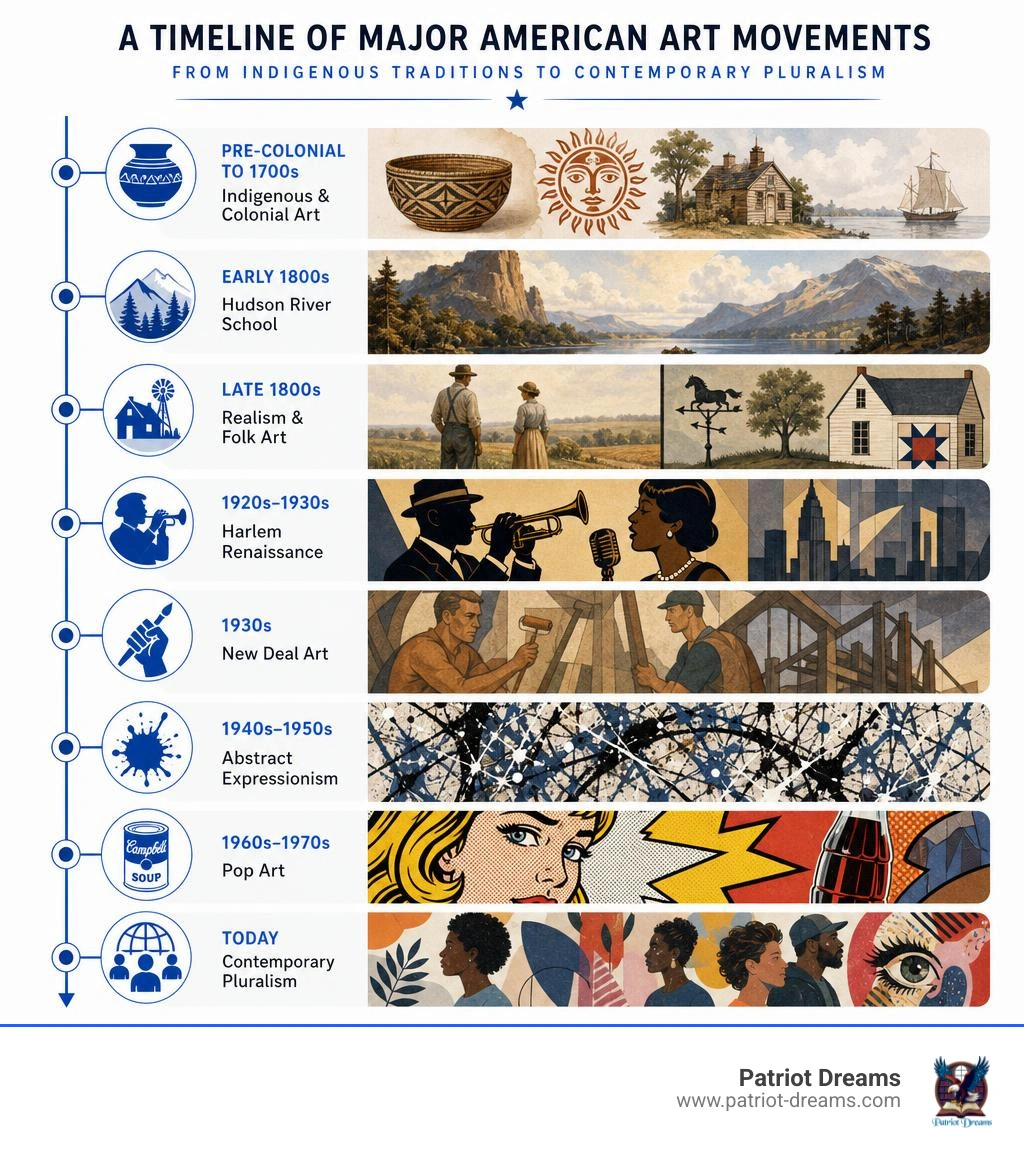
| Period | Key Movement | What It Represented |
|---|---|---|
| Pre-colonial to 1700s | Indigenous & Colonial Art | Community, identity, survival |
| Early 1800s | Hudson River School | Love of the American landscape |
| Late 1800s | Realism & Folk Art | Everyday life and working people |
| 1920s–1930s | Harlem Renaissance | African American pride and resilience |
| 1930s | New Deal Art | Hope during hardship |
| 1940s–1950s | Abstract Expressionism | America's first global art movement |
| 1960s–1970s | Pop Art | Consumer culture and everyday imagery |
| Today | Contemporary Pluralism | Every voice, every background |
From the very first watercolor sketches of Native American life painted by John White in 1585, to Jackson Pollock dripping paint across a canvas on the floor, American art has always told the story of real people living real lives.
It's a story about a nation still figuring itself out — and finding beauty along the way.
Whether you're a history enthusiast, a family looking to connect with your heritage, or simply someone who loves a good story, American art has something that speaks directly to you. It's personal. It's human. And it belongs to all of us.
The Roots of American Art Culture
When we think about the beginnings of american art culture, we are invited to look back at a time of dramatic transitions and profound cultural encounters. Long before the United States was a formal nation, the land was alive with creative expression. Every object made, from a hand-woven basket to a painted portrait, was a way for people to say, "We are here, and this is our home."
In the early colonial years, artistic expression was deeply practical. Settlers arriving from Europe brought their own traditions, but they quickly had to adapt to a new, unfamiliar world. One of the earliest European visual records of the continent was created by John White in 1585, whose delicate watercolors of Roanoke Island offered a rare glimpse of Native American communities to audiences back home.
As communities grew, the desire to document family lines and social standing led to the rise of colonial portraiture. In 1729, John Smibert, a Scottish-trained painter, arrived in Boston and opened what was essentially the first art gallery in the Americas. Smibert’s gallery became a vital gathering place where aspiring local artists could study European techniques. Through these early exchanges, a distinct Visual art of the United States began to form—a dialogue between old-world traditions and new-world realities.
During this era, art was not just something to be hung on a quiet gallery wall. It was found in the silver bowls crafted by local smiths, the hand-stitched quilts keeping families warm, and the carefully carved gravestones in town cemeteries. These objects of community craft were the building blocks of a shared identity, helping a diverse group of people find common ground. To explore this fascinating transition in depth, we highly recommend reading Art in American Colonies and the United States, c. 1600–1860, which beautifully outlines how early material culture shaped the American soul.
Indigenous Traditions and Early American Art Culture
It is vital to remember that the story of American visual expression begins thousands of years before European sails appeared on the horizon. Native American art traditions are the true foundation of this land's creative heritage. For Indigenous communities, art has always been inseparable from daily life, spirituality, and cultural preservation.
Rather than creating art purely for decoration, Native artists infused deep meaning into functional items. The intricate geometric patterns on Pueblo ceramics, the tightly woven baskets of California tribes, and the beautifully detailed beadwork of Plains communities were all forms of visual storytelling. They recorded family lineages, honored the natural world, and preserved sacred ceremonies.
For a long time, early European colonizers did not recognize these beautiful creations as "fine art," often classifying them as anthropological artifacts. However, as our appreciation has grown, we now recognize these ancient traditions as highly sophisticated forms of abstract and symbolic expression. Today, contemporary Native and Indigenous practitioners continue to weave their ancestral heritage into modern visual art, ensuring that these vital stories are never lost.
Colonial Portraits and the Search for Connection
As the colonies grew and prospered in the 18th century, a new generation of American-born artists began to emerge. Without formal art academies on this side of the Atlantic, early painters—often called "limners"—traveled from town to town, painting portraits of merchants, landowners, and their families.
These portraits, such as the famous Freake family paintings from 17th-century New England, were about much more than vanity. They were a way for families to assert their connection, status, and hope for the future in a wild new land.
Eventually, exceptionally talented American artists like Benjamin West and John Singleton Copley achieved massive success, even traveling to London to paint grand history scenes. Back home, artists like Gilbert Stuart captured the faces of the new republic's founders. Stuart’s unfinished 1796 portrait of George Washington, known as The Athenaeum, became the defining image of the first president—so iconic that it still graces our one-dollar bill today.
These early portraits are precious historical mirrors. If you would like to read the actual words, diaries, and letters of the people who lived through this formative era, the academic collection American Art to 1900 : A Documentary History offers an extraordinary window into how early Americans viewed their own developing culture.
Painting the Great Outdoors: The Hudson River School and Beyond
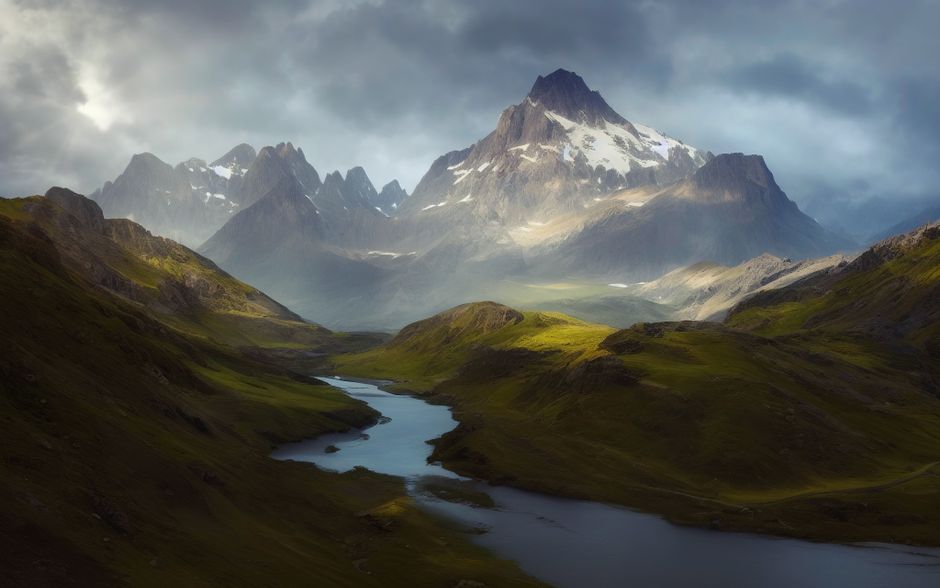
As the young nation moved into the 19th century, its gaze shifted from the faces of its citizens to the breathtaking majesty of the continent itself. This shift birthed the first uniquely American art movement: the Hudson River School.
The movement began in 1825 when a 24-year-old self-taught artist named Thomas Cole took a boat trip up the Hudson River. Captivated by the wild, untouched beauty of the Catskill Mountains, Cole painted glowing, dramatic landscapes that captured the imagination of the public. Cole and his followers believed that the American wilderness was a sacred sanctuary, untouched by the industrialization sweeping through Europe.
These paintings did more than just show pretty trees and mountains; they helped shape America’s environmental awareness. Artists like Asher Brown Durand and Frederic Edwin Church used light and scale to create a sense of the "sublime"—a feeling of awe and spiritual wonder in the presence of nature.
Later, artists like Thomas Moran traveled westward with government survey teams. Moran’s monumental paintings of the Grand Canyon and the geysers of the West were so influential that they were displayed in the halls of Congress. His stunning work played a direct role in persuading lawmakers to establish Yellowstone as the world's very first national park in 1872. Through these brushes, the wilderness became a cornerstone of our shared national identity.
Finding Home in the American Landscape
As the country expanded westward, artists like Albert Bierstadt joined expeditions to document the Rocky Mountains and Yosemite. Bierstadt's massive, glowing canvases captured the frontier spirit, offering a sense of hope, space, and endless possibility to a nation recovering from the wounds of the Civil War.
These grand landscape traditions are beautifully explored in American Visions: The Epic History of Art in America, where the author highlights how the vastness of the American territory shaped a unique artistic vision characterized by light, scale, and a deep reverence for the earth. For generations of families, these paintings became a visual promise of a fresh start and a peaceful home under the vast American sky.
Everyday Heroes: Realism, Folk Art, and the American Spirit
While some artists looked to the mountains for inspiration, others found deep beauty in the quiet, everyday moments of American life. In the mid-to-late 19th century, a movement known as Realism took hold. Artists like Winslow Homer and Eastman Johnson turned their attention to ordinary people—farmers harvesting wheat, children playing in schoolyards, and brave fishermen battling the sea.
Winslow Homer’s masterpiece The Herring Net (1885) honors the quiet heroism of working-class people, showing two fishermen in a small boat pulling in their catch against a gray, rolling ocean. This focus on honest, hard-working communities mirrored the musical traditions of the era, where simple acoustic instruments and heartfelt lyrics captured the joys and struggles of daily life. To understand how this spirit continues to influence our culture today, take a look at our article on Why Americana Music Keeps Surging A Look At Roots Revival And Relevance.
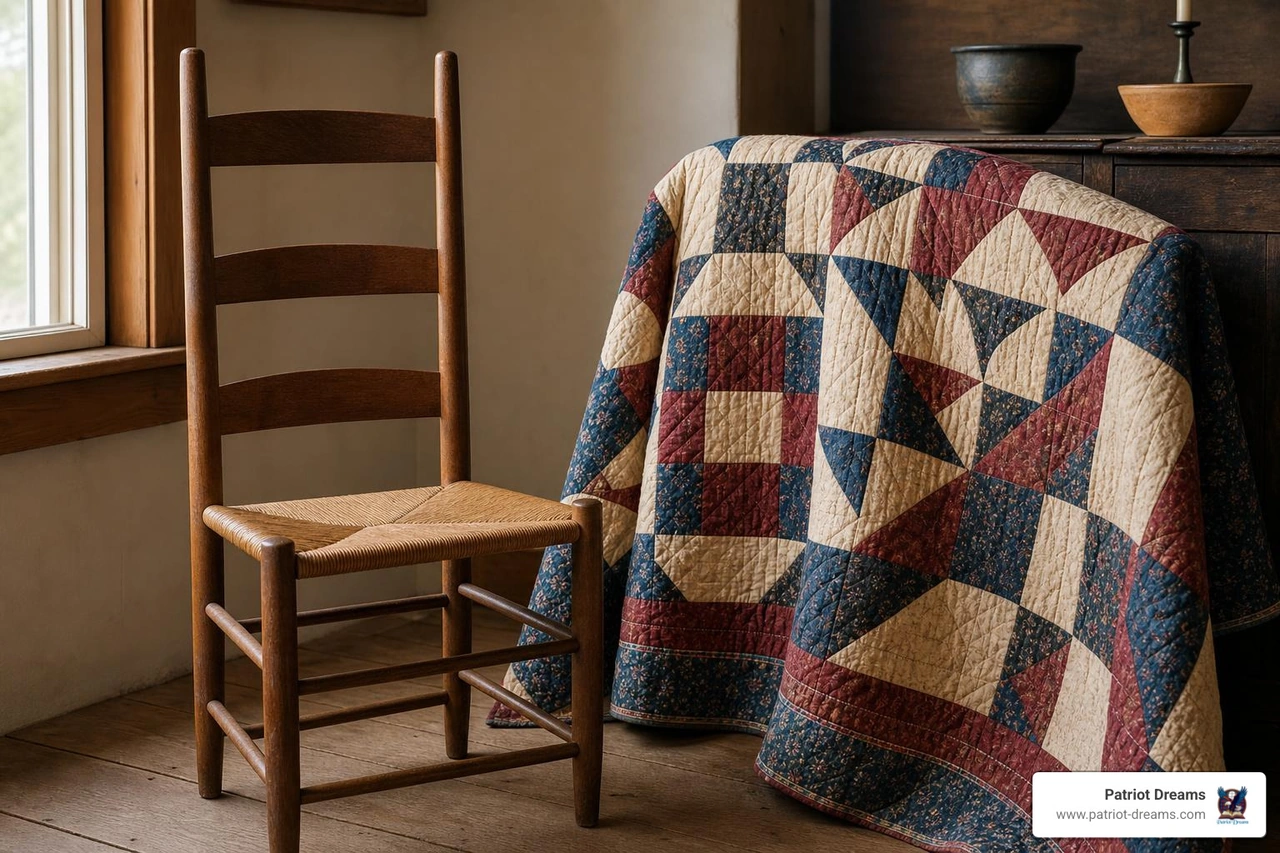
At the same time, religious and immigrant communities were creating their own beautiful visual legacies. The Shakers, a communal religious group, believed that "beauty rests on utility." They designed furniture that was incredibly simple, lightweight, and functional—principles that pre-dated modern minimalist design by nearly a century.
Meanwhile, Amish communities in Pennsylvania and Ohio began crafting stunning quilts. Made from solid-colored blocks of wool and cotton, these quilts featured intricate geometric patterns. Today, art historians recognize these historic quilts as some of America’s earliest and finest abstract art—created not for galleries, but to keep a family warm at night.
The Beauty of Simple Things in American Art Culture
Folk art is the creative voice of the everyday community. It includes hand-carved wooden weathervanes, painted canal boats, family portraits by self-taught painters, and decorative ironwork. Because these artists did not have formal academic training, they painted and carved from the heart, focusing on what mattered most to their families and neighborhoods.
This hand-crafted warmth is a vital part of american art culture. It reminds us that creativity belongs to everyone, not just those with expensive degrees. These humble, beautifully made objects carry the memories, values, and love of the hands that made them, preserving family heritage in a way that words alone never could.
Creative Revolutions: From the Harlem Renaissance to Pop Art
The 20th century was a time of rapid change, urbanization, and bold creative revolutions. One of the most significant cultural explosions in our history was the Harlem Renaissance of the 1920s and 1930s. Coinciding with the Great Migration—when millions of African Americans moved from the rural South to Northern cities—Harlem became a thriving center of literature, music, and visual art.
Artists like Archibald Motley painted vibrant, colorful scenes of urban nightlife, while sculptor Augusta Savage created breathtaking clay and bronze figures that celebrated African American identity. Augusta Savage’s monumental sculpture Lift Every Voice and Sing, created for the 1939 World’s Fair, was inspired by the beautiful hymn of the same name and stood as a powerful monument to cultural pride and resilience.
To explore how these diverse threads have been woven into the larger fabric of our nation's museums, you can read about the historic collections in Visual art of the United States - Wikipedia. This legacy of storytelling is also beautifully highlighted in modern exhibitions, such as the ones described in At the Peabody Essex Museum, tracking the American Experiment through more than two centuries of art, which show how pairing historical and contemporary voices helps us understand our unfinished national story.
The Rise of Modern Expression and Pop Culture
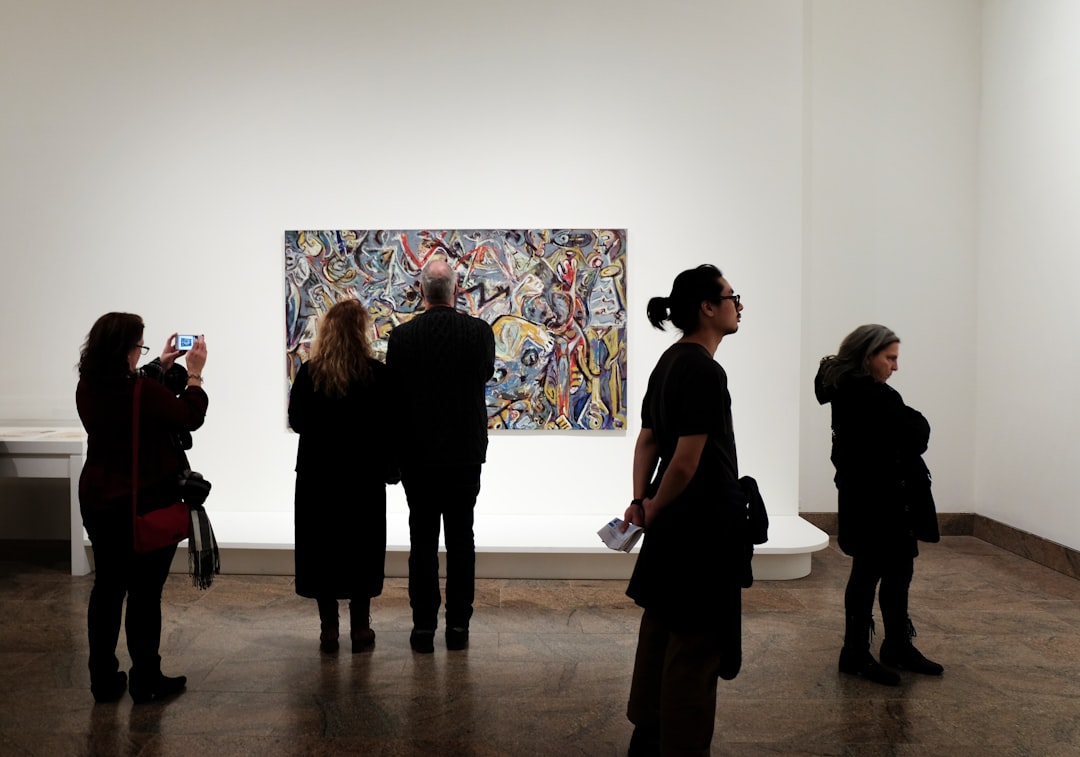
Following World War II, the center of the global art world shifted from Paris to New York City. This era saw the rise of Abstract Expressionism, the first American art movement to exert massive international influence. Artists like Jackson Pollock revolutionized painting by placing their canvases on the floor and dripping, pouring, and throwing paint directly onto them, capturing pure emotion and movement.
By the late 1950s and 1960s, a new generation of artists wanted to bring art back to the real world. This led to Pop Art, a movement that took inspiration from everyday consumer culture, advertisements, and comic books. Andy Warhol painted iconic images of Campbell's soup cans and colorful portraits of celebrities, while Roy Lichtenstein created large-scale paintings that mimicked comic book panels.
This era marked a time when high art and popular culture merged, making visual art more accessible to the general public than ever before. It was a creative boom that went hand-in-hand with other massive cultural shifts, which you can read about in our deep dive on When Comics Went Mainstream The First American Comic Book And A New Pop Culture Era.
Capturing the Nation's Soul: Photography and Public Art
During times of national trial, American artists have always stepped forward to document our struggles and offer hope. During the Great Depression of the 1930s, the U.S. government established the Federal Art Project (part of the Works Progress Administration, or WPA). This program employed thousands of artists to paint beautiful public murals in post offices, schools, and library walls across the country.
These murals did not depict distant mythological scenes; they showed local history, cooperative labor, and the strength of ordinary communities. They were designed to remind everyday citizens of their shared resilience and worth.
At the same time, documentary photographers were capturing the human face of the era. Dorothea Lange, working for the government's Farm Security Administration, took one of the most famous photographs in history: Migrant Mother (1936). The image of Florence Owens Thompson, a young mother holding her children in a dusty pea-pickers' camp, became an instant symbol of maternal love, dignity, and survival amidst extreme poverty.
This powerful tradition of visual storytelling has always worked hand-in-hand with other media, such as early cinema, to shape how we view our collective past. To see how these visual narratives transitioned to the silver screen, explore our article on When Film Becomes History How Movies Shape Our View Of America.
Framing the American Experience Through the Lens
As the 20th century progressed, "straight photography" emerged as a major art form. Photographers like Alfred Stieglitz and Ansel Adams argued that photos shouldn't try to look like paintings; instead, they should celebrate the unique, sharp clarity of the camera lens.
Whether capturing the quiet majesty of a national park or the bustling streets of a manufacturing town, photography has allowed us to preserve our family stories and build empathy across generations. It shows us our history exactly as it was, capturing the quiet heroism of the workers who built our towns. You can read more about how these industrial eras were immortalized in our feature on The Industrial Ages In Hollywood How Movies Portray Americas Manufacturing Boom.
Frequently Asked Questions About American Art Culture
What was the first uniquely American art movement?
The first cohesive, uniquely American art movement was the Hudson River School, which emerged in the 1820s. Led by Thomas Cole, these artists focused on painting the vast, wild, and glowing landscapes of the American wilderness, helping to foster a national identity rooted in the beauty of the natural world.
How did the New Deal support American artists?
During the Great Depression, the Federal Art Project (FAP) funded thousands of artists, commissioning public murals, sculptures, and poster designs. This program made art accessible to everyday people in public buildings and helped sustain legendary American artists during a time of severe economic hardship.
Why is New York considered a global art capital?
Following World War II, New York City replaced Paris as the center of the global art world. This shift was largely driven by the rise of Abstract Expressionism, a bold new movement that symbolized freedom, creative experimentation, and cultural pluralism, drawing artists and collectors from all over the globe.
Conclusion: Connecting Our Stories Through Art
At its heart, american art culture is a beautiful, ongoing conversation. It is a shared heritage that belongs to every one of us, reflecting our diverse backgrounds, our struggles, and our brightest hopes. From a hand-carved rocking chair to a grand museum canvas, every piece of art is a story waiting to be heard.
Here at Patriot Dreams, we believe that history isn't just found in textbooks—it lives in the songs, the paintings, the landscapes, and the quiet family memories passed down through generations. Our interactive audio storytelling platform is designed to bring these wonderful tales to life, helping you explore the roots of your community and preserve your own family legacy for the years to come.
Just like the artists who painted the grand canyons or stitched warmth into simple quilts, we all have a story to tell. We invite you to take the next step on this beautiful journey.

Join the Patriot Dreams Community
Download the app today and start your journey through American history and personal legacy.

Explore Our Latest Insights
Dive into stories that shape our American legacy.