
Beginner's Guide to American Stories Smithsonian
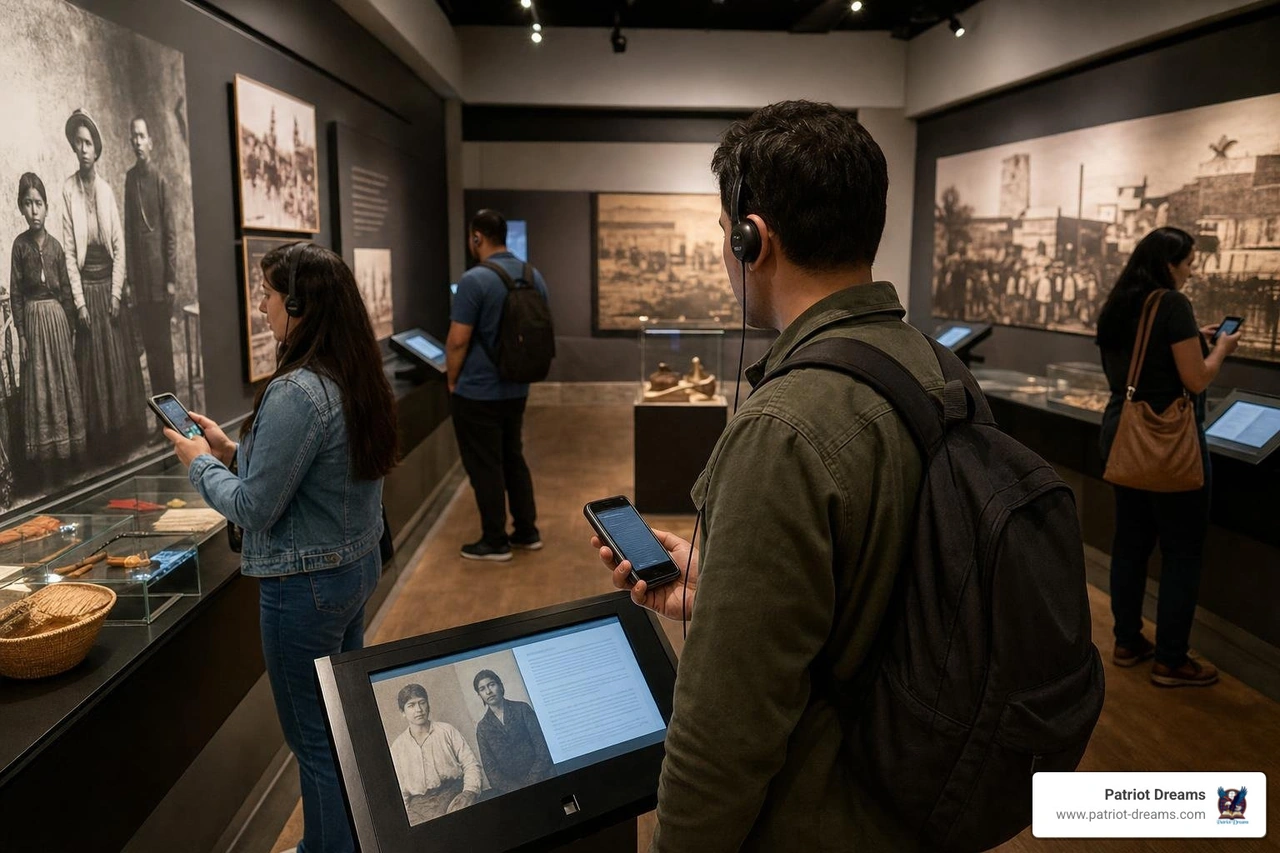

Overview of the American Stories Smithsonian Exhibition
The American Stories exhibition was a landmark chronological gallery at the National Museum of American History - Smithsonian Institution that showcased over 100 iconic and everyday artifacts spanning more than three centuries of our shared past. When major construction began on the museum's 120,000-square-foot West Exhibition Wing, interim director Marc Pachter and curators created this welcoming, modular space so beloved national treasures—like Kermit the Frog and Archie Bunker’s chair—would remain on view for visiting families and school groups rather than being tucked away into storage.
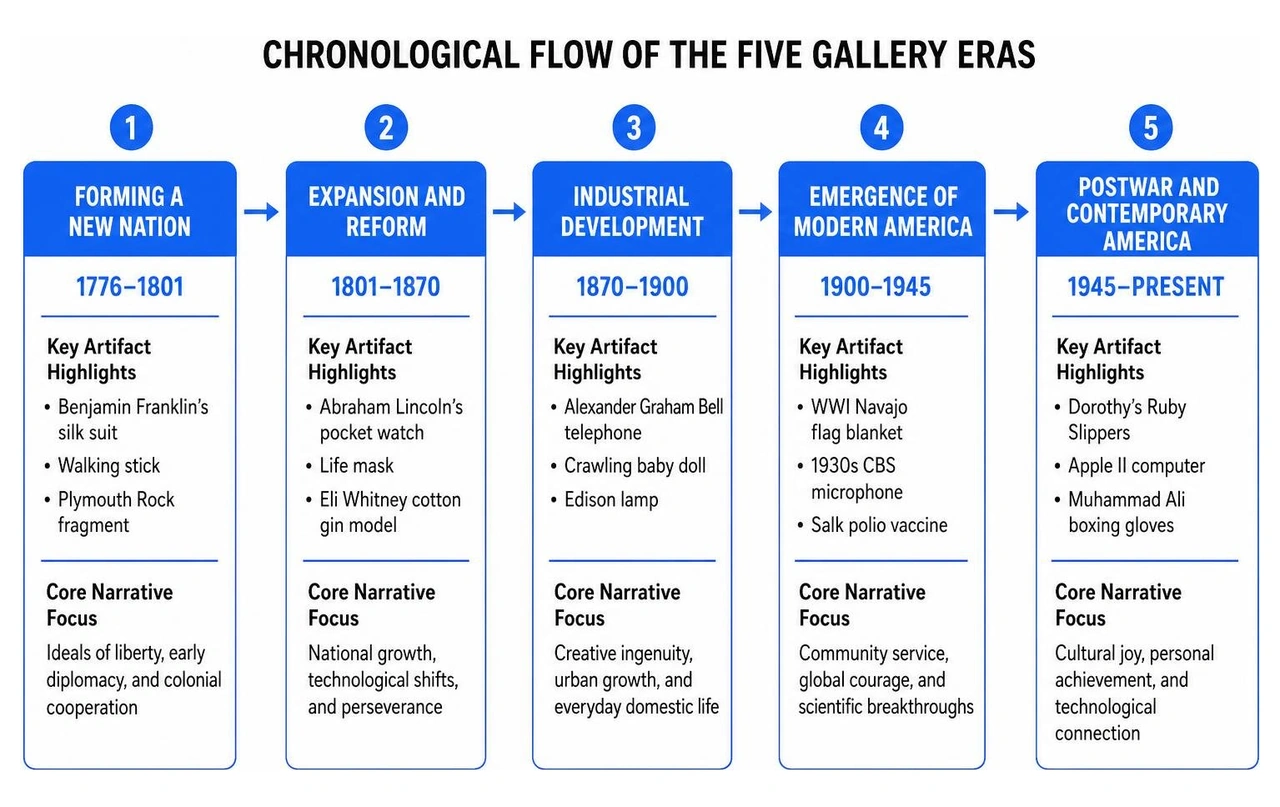
Rather than keeping objects separated in isolated specialty halls—such as military uniforms in one corridor and industrial patents in another—the gallery drew inspiration from the National Standards for History, taking guests on a continuous chronological journey from early transatlantic encounters in the 1600s straight through the dawn of the digital age in 2008.
| Historical Era | Time Span | Key Artifact Highlights | Core Narrative Focus |
|---|---|---|---|
| Forming a New Nation | 1776–1801 | Benjamin Franklin's silk suit, walking stick, Plymouth Rock fragment | Ideals of liberty, early diplomacy, and colonial cooperation |
| Expansion and Reform | 1801–1870 | Abraham Lincoln's pocket watch, life mask, Eli Whitney cotton gin model | National growth, technological shifts, and perseverance |
| Industrial Development | 1870–1900 | Alexander Graham Bell telephone, crawling baby doll, Edison lamp | Creative ingenuity, urban growth, and everyday domestic life |
| Emergence of Modern America | 1900–1945 | WWI Navajo flag blanket, 1930s CBS microphone, Salk polio vaccine | Community service, global courage, and scientific breakthroughs |
| Postwar and Contemporary America | 1945–present | Dorothy's Ruby Slippers, Apple II computer, Muhammad Ali boxing gloves | Cultural joy, personal achievement, and technological connection |
Core Chronology of the American Stories Smithsonian Gallery
Walking through the gallery felt like flipping through a cherished family scrapbook where every generation leaves a lasting note. Each era invited visitors to see how regular people met the great challenges of their time with creativity and resilience.
- Forming a New Nation (1776–1801): Here, visitors explored the physical craftsmanship of early America, looking closely at how our early citizens built the foundational frameworks of self-governance. Many of these stories reflect the selfless leadership of Famous American Heroes who turned bold ideals into practical reality.
- Expansion and Reform (1801–1870): This chapter brought focus to an evolving continent. Between early patent models and the quiet dignity of personal keepsakes, it showed how everyday families, inventors, and workers pushed past hardship to build lasting communities.
- Industrial Development (1870–1900): As railroad tracks united coastlines and workshops hummed with activity, physical inventions transformed homes and neighborhoods across the land.
- Emergence of Modern America (1900–1945): Through world events and industrial progress, neighbors came together in mutual aid and shared determination, supported by radio broadcasts that united living rooms across the nation.
- Postwar and Contemporary America (1945–Present): From personal computers to beloved television characters, this final era showed how modern creative arts, sports, and technology continue to build bridges between distinct communities.
Innovative Accessibility and Digital Features in American Stories Smithsonian
One of the greatest achievements of the exhibition was how it invited every visitor into the conversation. It was the museum’s first general subject exhibition to feature comprehensive Spanish translations across all display labels and companion websites.
The gallery also launched the innovative Access American Stories mobile app. This tool featured crowdsourced audio descriptions recorded by visitors and staff alongside sign language videos, ensuring that individuals who are blind, low-vision, or deaf could experience the heart of each artifact.
Through interactive kiosks and online portals, guests were even invited to suggest objects from their own hometowns, reminding us that Stories | National Museum of American History belong to all of us.
Iconic Artifacts and Everyday Treasures on Display
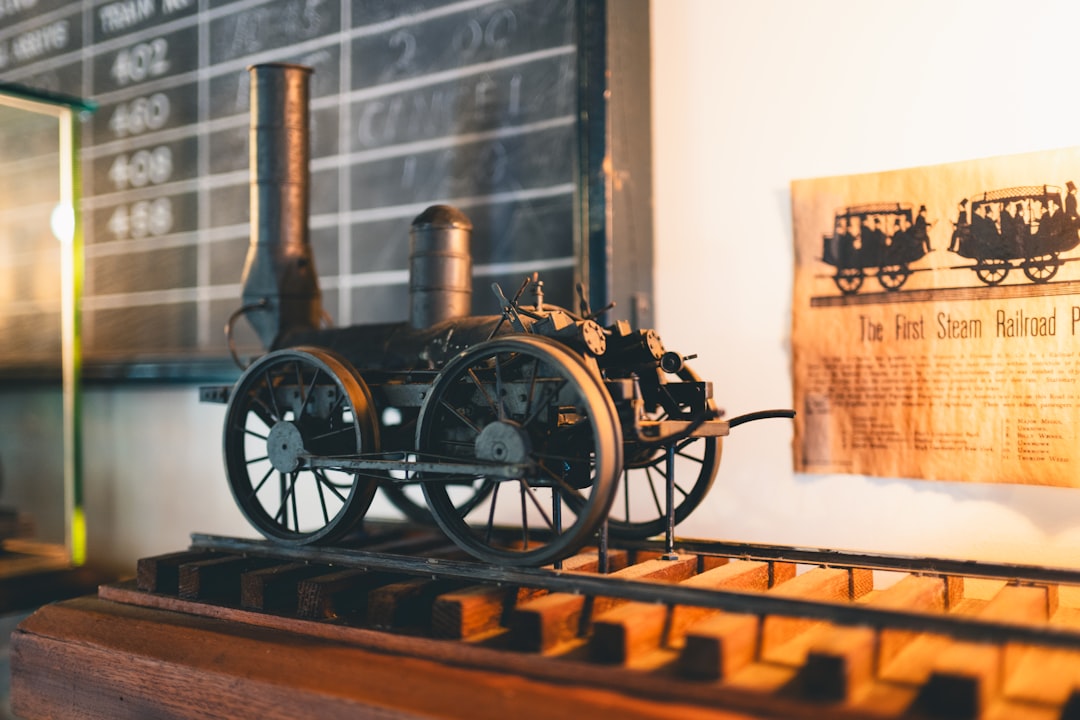
What made this gallery memorable was its intentional juxtaposition of high statecraft with everyday ingenuity. As announced when the “American Stories” Exhibition Opens at National Museum ... took place, items on display ranged from rare presidential relics to simple folk toys.
Just as railroad folklore celebrates perseverance in stories like The Real Life Behind the Legend: Casey Jones and the Making of an American Railroad Hero, these museum treasures captured the grit, curiosity, and goodwill of the people who shaped our country.
Presidential Relics and Foundational Milestones
Anchoring the early sections were quiet witnesses to national turning points:
- Benjamin Franklin’s Suit and Walking Stick: The modest silk suit Franklin wore in France in 1778 reminded viewers of the humble diplomacy and warmth that earned international respect for the young republic.
- Abraham Lincoln’s Gold Pocket Watch & 1886 Life Mask: Lincoln carried this watch throughout the Civil War. Unbeknownst to the president, a watchmaker had secretly engraved an uplifting message inside the movement during wartime repairs, standing as a quiet testament to shared solidarity.
- Plymouth Rock Fragment: A tangible reminder of the families who crossed the Atlantic in 1620 to build communities rooted in mutual support and shared faith.
These foundational objects illustrate why timeless American Legends continue to inspire our collective imagination across generations.
Pop Culture, Invention, and Daily Life
A few paces away from founding documents, visitors met the everyday creativity and entertainment that brought joy to American households:
- Dorothy’s Ruby Slippers: The glistening red shoes from The Wizard of Oz (1939), representing the timeless truth that there is no place like home.
- Kermit the Frog: Jim Henson’s beloved green puppet, showing how kindness, humor, and gentle song can unite generations of children.
- Alexander Graham Bell’s Box Telephone & Apple II Computer: Tangible milestones marking the steady evolution of human connection, showing how Americans continually invent new ways to talk with family and friends.
- Muhammad Ali’s Boxing Gloves & Jonas Salk’s Polio Vaccine: Physical proof of athletic dedication and scientific selflessness that protected millions of neighborhood children.
- 1870s Creeping Baby Doll: An ingenious mechanical toy reflecting the curious, inventive spirit that reached into Victorian-era nurseries.
Broadening Horizons: Diverse Voices and Community Narratives
The Smithsonian’s broader family of exhibitions has continually demonstrated that our national heritage is enriched by every culture and region. Just as early exploratory journeys relied on the invaluable partnership celebrated in The True Story of Sacagawea: Guide, Interpreter, and American Icon, modern museum storytelling preserves the contributions of immigrant communities, agricultural workers, and neighborhood artisans.
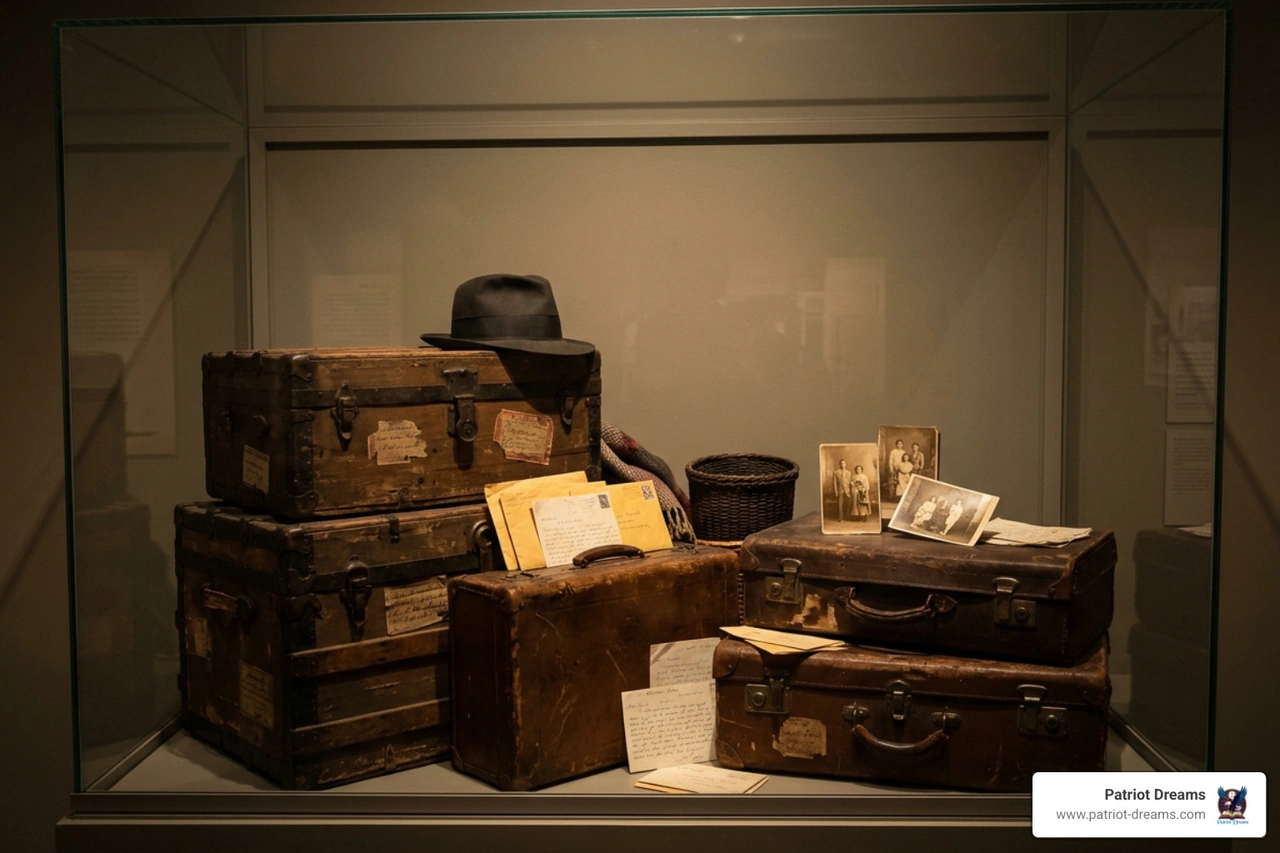
A wonderful example can be seen in the Asian Pacific American Center's showcase, How Can You Forget Me: Filipino American Stories. In 2005, twenty-six forgotten steamer trunks were discovered in South Stockton, California—the historic heart of "Little Manila."
Preserved by the fraternal mutual aid society Legionarios del Trabajo, these trunks held the three-piece suits, work gear, and personal letters of Filipino farmworkers from the 1910s to the 1970s. Rather than relying solely on formal government papers, curators used these personal time capsules to tell a rich, heartwarming story of community kinship and labor brotherhood.
Uncovering Grassroots Heritage Across Smithsonian Displays
This same spirit of celebration shines in the Smithsonian American Art Museum's We Are Made of Stories: Self-Taught Artists in the Robson Family Collection | Smithsonian American Art Museum.
This display brought forward 43 self-taught creators who learned their crafts not in academic halls, but at kitchen tables, neighborhood workshops, and community gatherings:
- William Edmondson: The son of enslaved parents who took up stone carving in 1932 to create expressive garden sculptures and grave markers.
- James Castle: Born deaf in rural Idaho, Castle fashioned his own visual world using soot, saliva, and discarded cardboard to craft tender landscapes.
- Purvis Young: A Florida painter who gathered salvaged wood from Miami lots to paint uplifting murals of communal life and spiritual hope.
These community collections affirm that the heart of America is found in everyday perseverance, local craftsmanship, and the stories we share around our own family tables.
Frequently Asked Questions About the Exhibition
What time period was covered by the American Stories exhibition?
The exhibition covered nearly four centuries of history, beginning with the Pilgrims' 1620 landing at Plymouth and concluding with the 2008 presidential election. Over 100 carefully chosen artifacts were used to represent major turning points, domestic life, cultural breakthroughs, and technological milestones across those 388 years.
When did the physical exhibition close at the Smithsonian?
The physical gallery inside the National Museum of American History officially welcomed its final visitors on January 5, 2020. It served successfully for eight years as a transitional gallery while the museum completed extensive renovations on its West Exhibition Wing.
Can visitors still explore the exhibition online?
Yes! The Smithsonian maintains a rich digital learning companion where you can view photographs of the artifacts, read historical notes, and access bilingual educational tools from home or the classroom.
Conclusion
The enduring lesson of the American Stories gallery is that history is not just a collection of dates in a textbook—it is a living tapestry woven from the real objects, quiet sacrifices, and bright hopes of everyday people. Whether preserved in a brass pocket watch, a pair of worn work boots, or an embroidered pillowcase, these items serve as tangible reminders of where we have been and what we can achieve when we build together.
Our nation's story is still being written every day in homes, workshops, and neighborhoods across the country. Just as early patriots and self-taught artisans preserved their heritage for future generations, your own family traditions and memories hold a special place in the broader American fabric.
To continue exploring the visionary people, foundational principles, and uplifting stories that shaped our nation's beginning, take a moment to explore our deep dive into the Founding Fathers and discover how their enduring legacy connects to our lives today.

Join the Patriot Dreams Community
Download the app today and start your journey through American history and personal legacy.

Explore Our Latest Insights
Dive into stories that shape our American legacy.