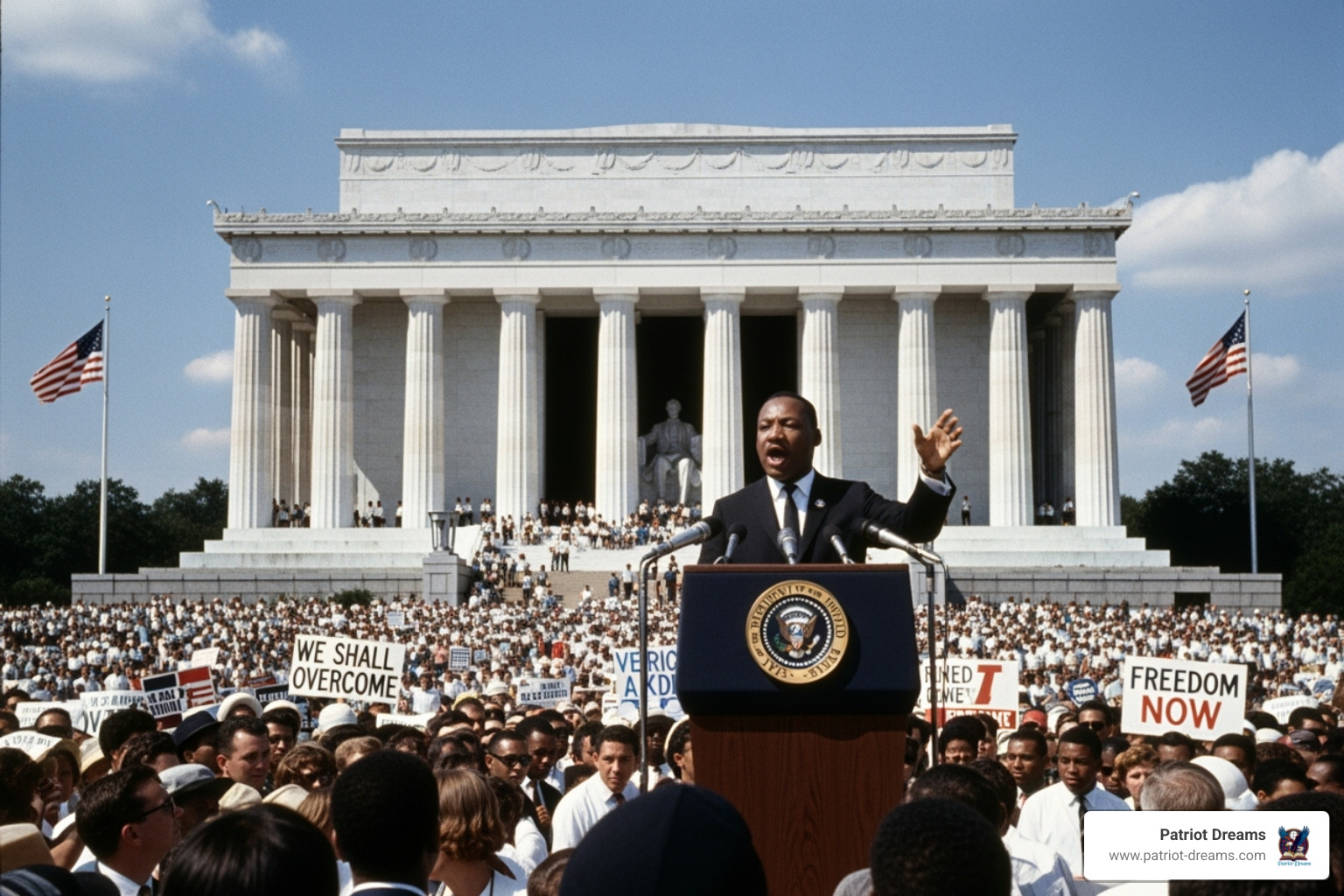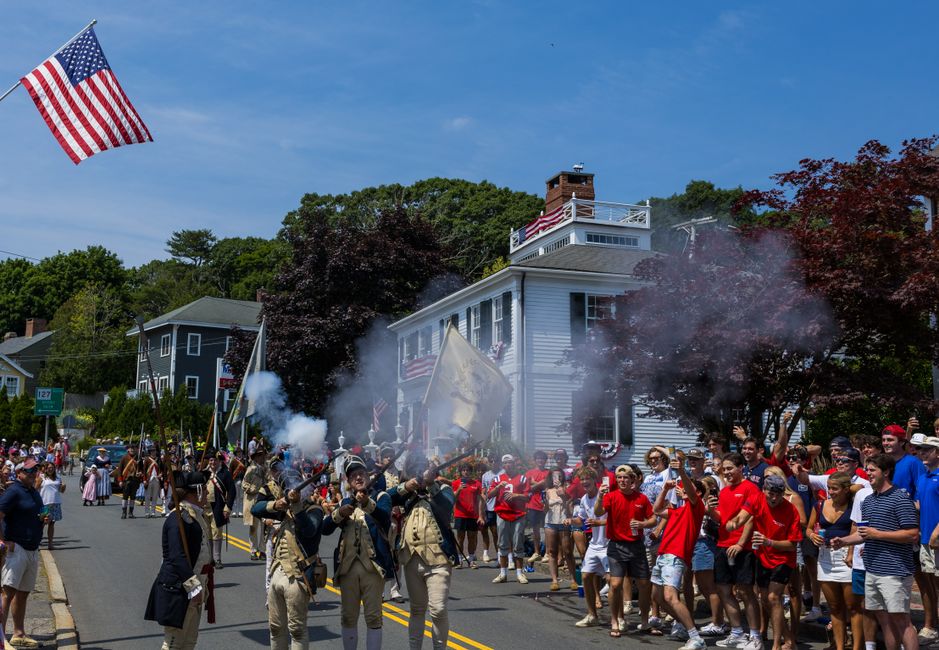
The Ultimate Roll Call of Famous American Heroes in History

Why Famous American Heroes Still Matter Today
Some of the most famous American heroes in history didn't wear capes or carry titles. They were farmers, nurses, scientists, and neighbors who chose courage when it counted most.
Here are some of the most celebrated American heroes across history:
| Hero | Known For |
|---|---|
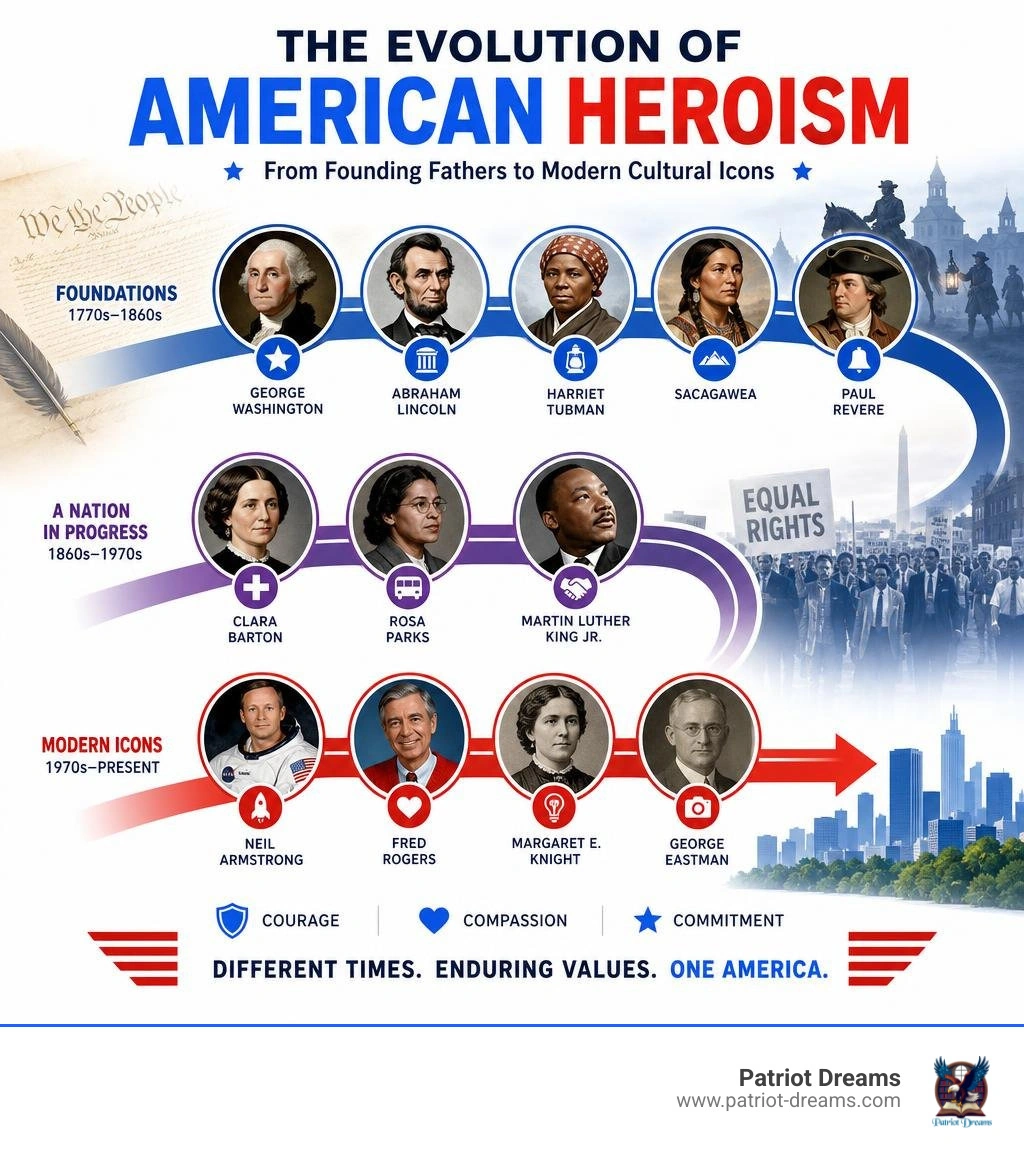
| George Washington | Led the Continental Army; first U.S. President |
| Abraham Lincoln | Preserved the Union; ended slavery |
| Harriet Tubman | Led enslaved people to freedom via the Underground Railroad |
| Martin Luther King Jr. | Led the Civil Rights Movement through nonviolent protest |
| Sacagawea | Guided the Lewis and Clark Expedition across the American West |
| Clara Barton | Founded the American Red Cross; nursed soldiers in the Civil War |
| Rosa Parks | Sparked the Montgomery Bus Boycott with quiet, dignified defiance |
| Neil Armstrong | First human to walk on the moon, watched by 650 million people |
| Fred Rogers | Brought kindness and empathy into millions of American homes |
| Paul Revere | Warned colonial minutemen of approaching British troops |
America's story has always been shaped by all kinds of people. Presidents and generals, yes — but also poets, inventors, teachers, and everyday citizens who simply refused to give up.
What makes someone a hero changes over time. In 2005, more than 2.4 million Americans voted in a Discovery Channel poll to name the greatest American of all time. Ronald Reagan came in first. Abraham Lincoln was second. Martin Luther King Jr. was third. But ask a classroom of kids today, and you might hear very different names.
That's the beauty of this story. It keeps growing.
This article is a warm-hearted roll call of the men and women who helped shape this country — the iconic and the overlooked, the celebrated and the quietly extraordinary.
Come for the names you know. Stay for the ones that might just surprise you.
Basic famous american heroes terms:
What Defines Our Famous American Heroes?
When we think of a hero, we often picture grand monuments or history books. But if we look closer, we find that the true heart of an American hero lies in something much simpler: the choice to care for others. Over the decades, our understanding of what makes someone a hero has grown and deepened.
In our early days as a country, we often looked to battlefield generals and political leaders. While their sacrifices were immense, we have come to realize that some of our most enduring heroes are the everyday citizens who built our communities from the ground up. These are the teachers who stayed late, the scientists who worked in quiet labs, and the neighbors who lent a hand when times were tough.
Today, we place a high value on quiet courage, kindness, and empathy. We understand that standing up for a neighbor or speaking out for fairness is just as heroic as leading an army. Heroism is not about being perfect; it is about choosing to do what is right, even when it is hard, to help make our collective neighborhood a warmer, safer place for everyone.

The Pillars of the American Story: Founders and Preservers
Every great home needs a strong foundation and a steady hand to keep it standing when the storms roll in. In the story of America, we have been blessed with leaders who stepped forward not to seek power, but to serve. They understood that leadership is a heavy responsibility, one that requires putting the needs of the community above personal ambition.
When we look back at the moments that tested our country the most, we see how crucial unifying leadership truly is. To see how these values were put into practice, let us look at a simple comparison of two of our most foundational leaders.
| Leadership Style | George Washington | Abraham Lincoln |
|---|---|---|
| Core Philosophy | Leading by example, setting firm boundaries of power, and practicing humility. | Leading through deep empathy, listening to opposing views, and keeping the family together. |
| Greatest Test | Keeping a fragile, volunteer army united against a global empire. | Holding the nation together during a painful, dividing civil war. |
| Enduring Legacy | Voluntarily stepping down from power to ensure a peaceful democracy. | Forgiving those who strayed and reminding us of our shared humanity. |
George Washington: The Father of His Country
Long before he was a general or a president, a young George Washington worked as a surveyor on the rugged Virginia frontier. This early experience taught him the value of hard work, discipline, and a deep respect for the land. He did not have a formal college education, but he carried a quiet determination and a commitment to self-study.
When the Revolutionary War began, he was called to lead the Continental Army. It was a daunting task, keeping a cold, hungry, and poorly equipped force together through long winters like the one at Valley Forge. Yet, his steady presence became a beacon of hope. What made Washington a truly unique hero, however, was his humility. At the end of the war, when he could have easily held onto power, he chose to resign his commission and return to his beloved farm at Mount Vernon.
Later, after serving two terms as our first president, he set another profound precedent by stepping down voluntarily, leaving us with a timeless Farewell Address that warned us to guard our unity and avoid bitter divisions. To learn more about his home and his daily life, you can explore George Washington's Mount Vernon to see the place where this quiet leader found his peace.
Abraham Lincoln: The Preserver of the Union
If Washington is the father who founded our home, Abraham Lincoln is the guardian who saved it from falling apart. Growing up in a log cabin, Lincoln’s early life was defined by manual labor and a thirst for knowledge. He would read by the light of the fireplace, teaching himself law and grammar because he believed in the power of words and ideas. He was also a remarkably down-to-earth person, known in his youth as an elite amateur wrestler who only lost one recorded match out of about three hundred!
As president during the Civil War, Lincoln carried a heavy sorrow in his heart, yet he never lost his sense of humor or his deep empathy for others. He understood that a divided family cannot stand. In his famous Gettysburg Address, he reminded us of our shared dedication to the idea that all people are created equal. Lincoln's heroism was not loud or boastful; it was a gentle, persistent strength that sought to bind up the nation’s wounds with malice toward none and charity for all.
Quiet Architects and Voices of Change
While the history books often focus on the loudest voices, some of the most beautiful parts of our American neighborhood were built by quiet architects. These are the individuals who used science, exploration, compassion, and art to make our world a little kinder and more welcoming. They remind us that collaborative heroism—working together for a common good—is what truly moves us forward.

Sacagawea and the Explorers of the American West
When we think of the vast, open spaces of the American West, we must remember the incredible young woman who helped map them. Sacagawea was only a teenager, carrying her infant son on her back, when she joined the Lewis and Clark expedition.
Her role was not merely that of a guide; she was a symbol of peace. When Native American tribes saw a woman and a baby traveling with the expedition, they understood that the group was not a war party. With her deep knowledge of the land, her resilience, and her quiet strength, Sacagawea helped guide the travelers across thousands of miles, proving that gentleness and understanding are often the best tools for exploration.
Clara Barton: Healing a Nation's Wounds
During the darkest days of the Civil War, a former teacher named Clara Barton decided she could not sit idly by. She went directly to the battlefields, bringing supplies, comforting the wounded, and nursing soldiers from both sides of the conflict. The soldiers began to call her the "Angel of the Battlefield."
Her compassion did not end when the war did. She went on to found the American Red Cross, creating an institution that still steps forward today to help families when disasters strike. The life of this remarkable Clara Barton Nurse teaches us that a single person with a heart full of compassion can build a legacy of healing that lasts for generations.
Martin Luther King Jr.: A Dream of Unity
In a time when our country was deeply fractured by racial division, a young minister named Martin Luther King Jr. stepped forward with a message of love and nonviolence. Inspired by his faith and the peaceful protest methods of Mahatma Gandhi, he showed us that the most powerful way to fight injustice is with the strength of our character and the warmth of our hearts.
He dreamed of a day when children of all backgrounds would play together as brothers and sisters. His voice, filled with hope and dignity, called on us to build a "beloved community" where everyone is valued. To explore his life's journey in detail, you can read our Martin Luther King Jr Complete Guide and discover how his dream continues to inspire us to be better neighbors today.
Harriet Tubman: The Moses of Her People
The story of Harriet Tubman is one of the most breathtaking examples of selflessness in human history. After escaping the bonds of slavery herself, she did not simply enjoy her hard-won freedom. Instead, she returned to the South nineteen times, risking her life again and again to lead dozens of others to safety along the Underground Railroad.
She used to say that she never lost a passenger on her train. During the Civil War, she even served as a scout, a nurse, and a spy. Harriet Tubman’s life was a testament to the idea that true freedom is something we must share, and that no obstacle is too great when we are guided by love for our fellow human beings.
Rosa Parks: The Quiet Strength of Dignity
Sometimes, a quiet "no" can change the course of history. When Rosa Parks refused to give up her seat on a crowded bus in Montgomery, Alabama, she wasn't trying to start a movement—she was simply standing up for her basic human dignity.
Her quiet, resolute act of defiance sparked a city-wide bus boycott and became a turning point in the struggle for civil rights. The Rosa Parks Story reminds us that we do not need to be loud to be strong, and that a single, quiet act of courage can inspire millions to stand up for what is right.
Fred Rogers: A Gentle Voice of Kindness
For over thirty years, a gentle man in a red cardigan walked into our living rooms through the television screen and asked us a simple question: "Won't you be my neighbor?" Fred Rogers understood that children need to feel safe, valued, and loved just as they are.
At a time when television was becoming and loud, Mr. Rogers slowed things down. He talked directly to us about big feelings, kindness, and how to care for one another. He showed us that the greatest strength we can have is our ability to listen and understand. To read more about his beautiful legacy of love, you can visit The Legacy of Fred Rogers and bring a little of his warmth into your own day.
How We Remember: Media, Polls, and Legacy
How do we decide who belongs on the list of famous American heroes? It turns out that the way we remember our history is a beautiful mix of public memory, modern science, and the power of a good story.
Sometimes, we use modern technology to look at history. In recent years, computer scientists and historians have teamed up to analyze "big data"—looking at millions of Wikipedia pages, search trends, and book scans to see which figures have left the deepest footprints on our culture. These algorithmic rankings help us see who has stood the test of time, though we must always remember to look beyond the numbers to find the quieter, diverse voices who might not have had the same access to the spotlight.
The Science and Polls Behind Famous American Heroes
In 2005, a massive public poll called The Greatest American invited millions of everyday citizens to cast their votes. It was a wonderful national conversation that brought people together to debate what truly makes someone great. While modern political leaders and pop icons ranked highly due to our natural "recency bias," timeless figures like Abraham Lincoln and Martin Luther King Jr. remained firmly at the top.
Historians like Steven Skiena and Charles Ward have also studied historical significance by comparing "gravitas" (long-term structural impact) with "celebrity" (temporary fame). They found that while celebrity fades, the quiet gravitas of those who built our institutions and defended our freedoms only grows stronger with time.
How Media and Storytelling Create Famous American Heroes
We also have to recognize the incredible power of storytelling. Consider the story of Paul Revere. For decades after the Revolutionary War, he was remembered in Boston as a skilled silversmith and a successful industrialist who opened the nation's first copper rolling mill. But in 1861, on the eve of the Civil War, the poet Henry Wadsworth Longfellow wrote a stirring ballad called "Paul Revere's Ride."
Longfellow wanted to inspire young people to step forward and save the Union. In doing so, he turned a highly coordinated, community-wide intelligence network into the myth of a lone rider shouting in the night. To discover the real, complex, and fascinating man behind the poem, you can explore the Paul Revere (U.S. National Park Service) archives and see how history and poetry dance together.
Frequently Asked Questions
Who was voted the greatest American of all time in public polls?
In the famous 2005 Discovery Channel and AOL poll, over 2.4 million votes were cast by the public. President Ronald Reagan was voted into the number one spot. He was followed by Abraham Lincoln at number two, and Martin Luther King Jr. at number three, representing the highest-ranked person of color. Oprah Winfrey was the highest-ranked woman on the list, coming in at number nine.
Did Paul Revere actually ride alone during his famous midnight ride?
No, he did not! While the famous poem paints a picture of a lone hero, the real ride was a beautiful example of community cooperation. Revere was part of a dedicated network of riders, including William Dawes and Dr. Samuel Prescott. In fact, Revere was captured by British troops outside Lexington and had to walk back, while Dr. Prescott was the one who actually made it all the way to Concord to deliver the warning. You can read more about this fascinating journey of sorting myth from reality in We rode along Paul Revere's route to sort myth from reality.
How do controversial figures fit into the concept of an American hero?
History is made by real people, and real people are rarely perfect. Figures like John Brown, outlaws of the old West, or divisive political leaders remind us that our past is filled with complexity. When we look at these figures, we learn that heroism isn't about being flawless. It is about the lessons we can draw from their struggles, their courage, and even their mistakes. Looking at history with a kind and understanding heart helps us grow wiser today.
Conclusion
At the end of the day, the story of our famous American heroes is really a story about family. It is a reminder that the values of kindness, courage, resilience, and community are passed down from one generation to the next, like a treasured family recipe or a favorite song.
Here at Patriot Dreams, we believe that every family has its own heroes—grandparents who worked hard to build a life, mothers who loved unconditionally, and neighbors who made the world a little brighter. Our interactive audio maps are designed to help you explore the great stories of our national heritage while preserving your own family's legacy for the children of tomorrow.
We invite you to take a gentle look back at our shared history by exploring our complete guide to US Historical Figures. Let us remember that we are all neighbors in this beautiful country, and that the next chapter of the American story is ours to write together, with kindness and hope.

Join the Patriot Dreams Community
Download the app today and start your journey through American history and personal legacy.

Explore Our Latest Insights
Dive into stories that shape our American legacy.