The Easiest Way to Activate History Learning Mode


Why History Learning Mode Changes Everything About How We Explore the Past
History learning mode is any intentional approach — traditional, digital, or hands-on — that shifts learning from passive memorization to active, meaningful discovery.
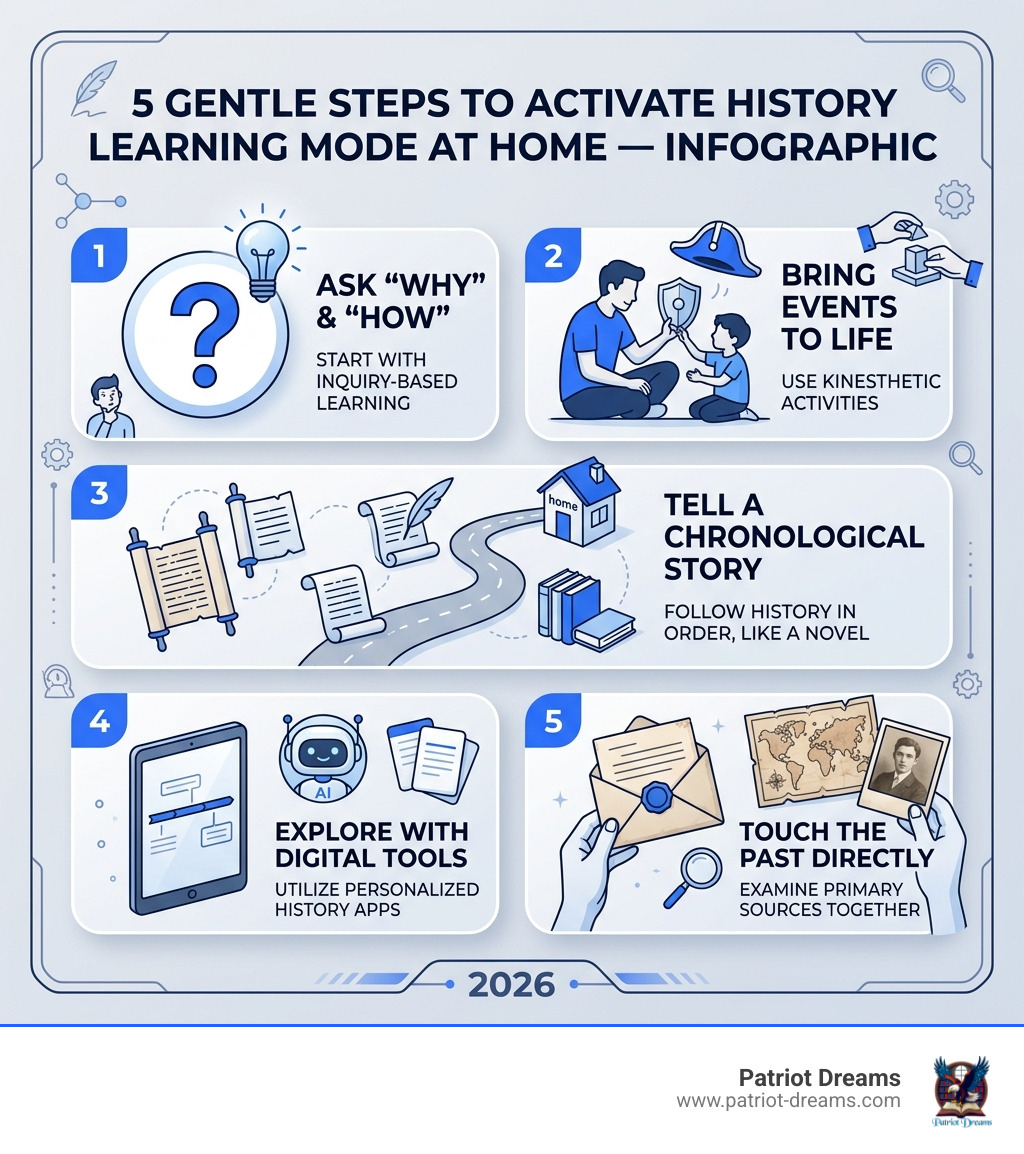
Here is a quick look at the most effective ways to activate it:
- Inquiry-based learning — Ask "why" and "how" questions, not just "when" and "who"
- Kinesthetic activities — Act out events, build models, deliver famous speeches
- Chronological storytelling — Follow history in order, like a great novel unfolding
- Personalized digital tools — Use AI tutors, timelines, and study modes that fit your pace
- Primary source exploration — Read real letters, pamphlets, and accounts together
Think back to a moment when history clicked for you. Maybe a grandparent told a story at the dinner table. Maybe a worn old book fell open to a page that felt alive. That feeling — that quiet, warm spark of connection — is exactly what history learning mode is meant to rekindle.
For too many of us, history was taught as a list of dates to memorize and then forget. Research backs this up: rote memorization is one of the biggest barriers to genuine engagement with the past. But when we shift the mode — when we move from passive recitation to active exploration — something wonderful happens. History stops being a chore and starts feeling like home.
At Patriot Dreams, we believe the American story belongs to all of us. And the best way to step into that story is to find the learning mode that feels natural, joyful, and real.
Embracing the Heart of History Learning Mode

When we sit down together to talk about the past, we aren't just reciting facts; we are building bridges. Activating your History learning mode starts with the simple realization that history is a collection of human choices. It is the story of neighbors helping neighbors and families persevering through hard times.
Sometimes, history can feel like a heavy chore, especially if we approach it as a series of tests to pass. But when we treat it as a conversation, the weight lifts. By focusing on heartfelt connection and active listening, we can transform a dry lesson into a shared journey. If you are looking for ways to spark that interest, our Engaging History Lessons Guide offers wonderful starting points for making these moments special.
Moving Beyond Rote Memorization
The true beauty of history lies in the shared storytelling. Instead of asking a child to memorize the year a treaty was signed, try asking them what they think the people in that room were feeling. Family discussions that bridge the gap between generations allow children to see that the "heroes" of the past were real people with fears and hopes just like ours.
We can even practice "heroes of kindness" role-playing. What would it look like to be a person of character in 1776? Or 1945? For those of us who are lifelong learners, History for Adults reminds us that it is never too late to find the personal meaning behind the names on a page.
The Power of Inquiry-Based Frameworks
Children are born with a natural sense of wonder. They want to know "why." Inquiry-based frameworks, like the Educating for American Democracy Roadmap, encourage this by structuring history around big, driving questions. Instead of a hierarchy of facts, this mode uses a logical progression of themes that help us understand our place in the American story.
By fostering civil discourse through understanding, we teach our children that it’s okay to have different perspectives. In fact, surfacing the tensions of the past helps us navigate the challenges of the present. This approach aligns deeply with our Patriot Dreams Learning Philosophy, where we prioritize the "why" behind the "when."
Modern Tools to Personalize Your History Learning Mode

In May 2026, we have more tools than ever to help us find our way through the past. Technology doesn't have to be cold or isolating; it can be a warm companion that guides us. Modern innovations, such as human-computer interaction emotion recognition, are even being used in classrooms to help teachers understand when a student is feeling frustrated or disengaged, improving the accuracy of student emotion recognition by 2.67%. This allows for a much more supportive environment.
Digital integration means we can find personalized learning paths that fit our unique rhythms. Whether you are a visual learner who loves timelines or an auditory learner who thrives on stories, there is a mode for you. Discovering these paths through Audio History Lessons can turn a car ride or a quiet afternoon into a time of deep discovery.
Guided Audio Journeys and Interactive Discovery
One of the gentlest ways to step into the past is through guided audio. Imagine walking through a historical site while a kind voice tells you the story of the people who once stood where you are standing. This step-by-step guidance helps us find our own pace in the narrative.
You don't have to rush. The American story is vast, and there is joy in the slow unfolding of a well-told tale. You can explore our Patriot Dreams Audio Library to find stories that resonate with your family’s heritage and interests.
Creating a Supportive Self-Learning Environment
Learning on your own can sometimes feel daunting, but it becomes much easier when we build a supportive environment. The role of encouragement cannot be overstated. Small victories—like finally understanding a complex cause-and-effect relationship or finishing a primary source document—should be celebrated.
Personalized AI tutors and study modes, such as the 12 modes offered by jypi or the step-by-step guidance of ChatGPT study mode, provide real-time feedback that fosters confidence. These tools act like a "24/7 office hour" tutor, helping you work through problems rather than just giving you the answers. To help structure this journey, our Patriot Dreams Study Guides provide gentle prompts for family reflection.
Bringing the Past to Life Through History Learning Mode
Have you ever noticed how much better you remember something when you actually do it? That is the magic of kinesthetic learning. Studies show that physical movement strengthens memory retrieval and motivates us to unearth more information. When we use our hands to create or our bodies to move, the past leaps off the page and into our hearts. This is a core part of our Audio Exploration American Roots experience, where we encourage listeners to connect physically with the world around them.
Acting Out the American Story
There is something truly special about a backyard play. You don't need fancy costumes—a simple towel can be a cape, and a cardboard box can be a ship. Acting out scenes from history, like the famous speeches of Lincoln or the brave appeals of the Grimké sisters, helps us feel the weight and passion of their words.
Reading famous speeches with heart allows us to step into the shoes of those who came before us. It’s not about being a perfect actor; it’s about feeling the courage it took to stand up for what was right. For more ideas on active learning, you can explore these History Lesson Plans and Activities.
Hands-On Models and Primary Source Analysis
Solving a "history mystery" together is a wonderful way to spend a Saturday. You can look at a primary source—like an old letter or a 1830 Cherokee pamphlet—and try to figure out the author’s purpose and point of view. Building models of local landmarks out of recycled materials also helps children understand the physical reality of historical events.
| Learning Style | Tactile Activities | Auditory Activities |
|---|---|---|
| K-2 Students | Building a "Story of Place" model | Listening to local folk tales |
| 3-5 Students | Creating a salt-dough map of routes | Audio stories of early explorers |
| 6-8 Students | Role-playing a town hall debate | Analyzing recorded speeches |
| 9-12 Students | Creating a museum-style exhibit | Deep-dive podcasts on civil rights |
The Classical Approach to Chronological Understanding
There is a quiet comfort in things being in order. The classical approach to history emphasizes chronological learning—following the timeline of humanity from the very beginning. This helps us see how one event led to another, creating a sense of continuity and belonging. By building this foundation, we ensure that the story of our shared heritage makes sense as a whole. Our American History Library is organized to help you find these threads and follow them through time.
Building a Foundation with Real Books
In our digital age, the tactile comfort of a good book is still one of the best ways to activate your History learning mode. Classical curricula like Story of the World use "real books"—narrative-driven stories rather than dry textbooks—to engage a child's imagination.
Early memorization of inspiring quotes or poems isn't about rote drill; it's about furnishing the mind with beautiful thoughts that will stay with a person for a lifetime. When we combine these readings with our American History Audio Collection, we create a rich, multi-sensory environment where critical thinking can truly flourish.
Frequently Asked Questions about History Learning Mode
How can I start learning history on my own?
The best way to start is by following your own sense of wonder. Is there a family story you’ve always wanted to know more about? Or a local landmark you pass every day? Start there. We’ve put together a gentle 7-step roadmap for self-discovery in our guide on How to Learn U.S. History on Your Own. It’s not about how much you cover, but how much you connect.
What are the best tools for history students?
We believe the best tools are those that prioritize storytelling over testing. While Quizlet Learn is excellent for mastering specific terms through personalized study paths, always try to pair those facts with a narrative. Personalized audio paths and interactive maps, like the ones found in our Patriot Dreams Digital Resources, help keep the human element at the center of your studies.
How do I adapt history lessons for different ages?
History is for everyone! For younger children (K-2), focus on the "story of place" and personal community stories. For middle grades (3-8), you can introduce more complex "why" questions and hands-on projects. High schoolers (9-12) are ready to tackle primary source analysis and civil discourse on contentious topics. You can find more age-appropriate strategies at Learn American History Online.
Conclusion
At Patriot Dreams, we are more than just a platform; we are a community dedicated to heritage preservation and resilience. We believe that by looking back with kindness and curiosity, we find the hope we need to move forward together. Our past isn't just a collection of old stories—it's the foundation of our shared home.
We invite you to join us in this journey of discovery. Whether you are listening to a story while you walk or building a timeline in your hallway, you are helping to keep the American spirit alive. We would love to have you Join the Patriot Dreams Creator Hub and share your own stories of kindness, perseverance, and home. Together, let's keep the past present.

Join the Patriot Dreams Community
Download the app today and start your journey through American history and personal legacy.

Explore Our Latest Insights
Dive into stories that shape our American legacy.