Making History Pop: Tips for More Engaging History Classes

Why Engaging History Lessons Matter More Than Ever
Engaging history lessons transform dates and names into stories that touch the heart. Here's how to make history come alive:
- Tell human stories instead of listing facts
- Use hands-on activities like role-playing and projects
- Connect to personal experiences through family history
- Explore primary sources that let students find for themselves
- Bring in technology like interactive maps and audio stories
- Make it local by visiting nearby historical sites
If you've ever watched a child's eyes glaze over during a history lesson, you're not alone. As one high school history teacher notes, adults often tell him they "disliked the subject in school, but now find it interesting." Something gets lost between the fascinating reality of our past and the way we teach it.
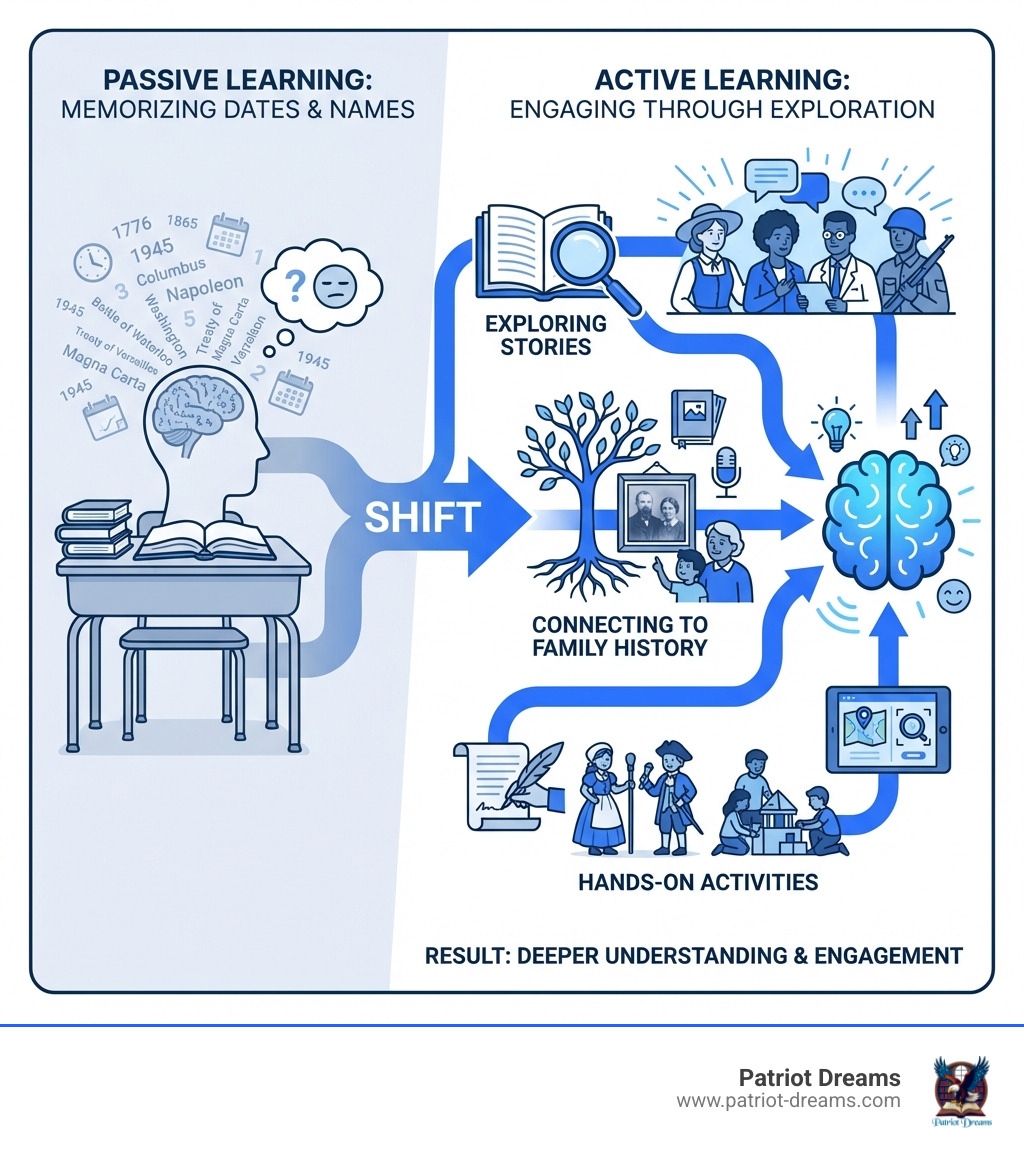
The problem isn't history itself. The problem is when we ask young minds to memorize lists of dates, battles, and names without understanding the people behind them. When we forget that history is really about neighbors helping neighbors, families building new lives, and ordinary folks doing extraordinary things.
History becomes magical when we remember it's about people, not just events. A grandmother who lived through the Great Depression. A young soldier writing letters home. A community coming together to build a schoolhouse. These are the stories that stick with us.
This guide will show you how to bring history to life for the young people in your life — whether you're a parent, grandparent, or teacher. We'll explore ways to make the past feel present, turn learning into adventure, and help children see themselves as part of America's ongoing story.
The Heart of History: Connecting Through Stories
History isn't just a collection of dusty facts; it's a mix woven with human experiences, emotions, and decisions. For many students, the challenge with history is that it can feel like a dull subject, something to "just get through." This often happens when lessons focus on rote memorization rather than the vibrant, relatable human stories at history's core. As one educator wisely puts it, "if taught with the intent to inspire and engage, history is far from boring or monotone."
To make history truly resonate, we need to focus on the individuals who lived through these moments. When we make an effort to humanize historical figures, sharing not just their achievements but also their struggles, their hopes, and even their flaws, we create a bridge for students to connect with the past. This approach helps young people relate to prominent individuals and develop a deeper understanding of their decisions and the times they lived in. It's about remembering that behind every date and event, there were real people, just like us, navigating their world.
Think about the incredible journey of Sacagawea, guiding Lewis and Clark through vast, unknown territories, or the ingenious mind of Benjamin Franklin, shaping a new nation with his wisdom and inventions. These aren't just names; they are tales of courage, resilience, and ingenuity. By exploring stories like The True Story of Sacagawea: Guide, Interpreter, and American Icon or learning All About Benjamin Franklin: Inventor, Diplomat, and Founding Father, we can help children feel an emotional connection to the past.
When we present history through a narrative structure, focusing on individual stories rather than just broad historical narratives, we foster a deeper emotional investment. This helps make history memorable and relevant, changing abstract concepts into tangible experiences. As an article for MiddleWeb suggests, humanizing historical figures helps students relate, turning figures from textbooks into characters they can understand and even admire.

A Guide to Creating Engaging History Lessons
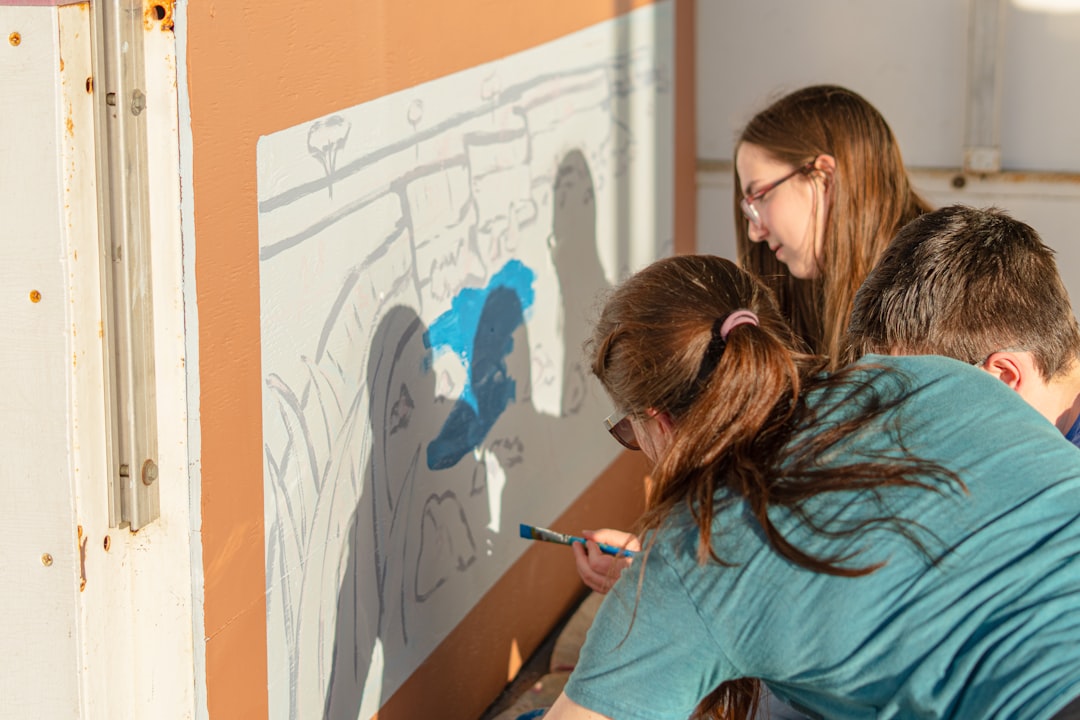
When students actively participate and engage in hands-on learning, their curiosity naturally blossoms. Moving beyond traditional lectures opens up a world of findy, changing history from a passive subject into an exciting adventure.
Using Primary Sources for Engaging History Lessons
One of the most powerful ways to bring history to life is by letting young people become historians themselves. This means diving into primary sources—the actual documents, letters, photographs, and artifacts from the past. Imagine holding a copy of a letter written by a Revolutionary War soldier or examining an old photograph of a busy 19th-century American street. These aren't just pictures; they're windows into another time.
The "Reading Like a Historian" curriculum, for example, champions this approach. It teaches students to investigate historical questions by employing critical reading strategies like sourcing, contextualizing, corroborating, and close reading. Instead of just memorizing facts, students learn to evaluate the trustworthiness of multiple perspectives on historical issues and make their own historical claims, supported by documentary evidence. This process helps young minds develop crucial critical thinking and analytical skills.
Primary sources are essential for understanding historical context and perspectives. The National Archives, for instance, holds a vast collection of documents that can be used for educational purposes, allowing students to engage directly with America's past. Whether it's analyzing a famous document like The Declaration of Independence: What it Really Says and Why it Still Matters or exploring the stories of everyday Americans, primary sources offer direct evidence of historical events and people.
We can guide students to analyze these sources by asking questions like: "Who created this? When and why?" and "What else was happening at that time?" By doing so, they learn to piece together the puzzle of the past, making history a thrilling detective story. Patriot Dreams offers unique audio stories that can serve as excellent complements to primary source analysis, providing context and emotion that bring the documents to life. You can explore the Patriot Dreams app to find stories that align with your historical inquiries.
How Project-Based Learning Creates Engaging History Lessons
Project-based learning (PBL) is a fantastic way to make history truly engaging. Instead of simply listening to lectures, students take on active roles, choosing and managing their own history projects. This approach encourages young people to research deeply, analyze information, and express their creativity, all while developing valuable skills like problem-solving and self-management.
Imagine students creating their own museum exhibits about the American West, producing podcasts that narrate key moments in the Civil Rights Movement, or writing historical fiction stories from the perspective of a pioneer on the Oregon Trail. These types of projects allow for a deeper understanding and appreciation of historical events. For instance, one month-long project-based learning initiative had students serve as delegates to the Constitutional Convention in Philadelphia. Through discussions and debates, they developed a profound understanding of the founders' goals and intentions. This hands-on, immersive experience brings history to life in a way that textbooks alone cannot.
PBL aligns beautifully with the idea of experiential learning, where students learn by doing. It allows them to explore topics they are genuinely interested in, fostering a sense of ownership over their learning. Whether it's understanding the spirit of American Innovation History through building a model of an early invention or researching the lives of significant figures, project-based learning cultivates creativity and collaboration, making history a subject they'll love.
Stepping into the Past with Role-Playing and Simulations
What better way to understand history than to step right into it? Role-playing and simulations allow young people to explore historical events from different perspectives and truly understand the motivations and challenges faced by people in the past. It’s like having a time machine in your classroom or living room.
Imagine your child participating in a mock trial of a historical figure, debating a crucial decision during the American Revolution, or reenacting a pivotal moment in American history. These activities immerse students in an experience they otherwise wouldn't have, bringing key figures and periods to life. For example, by exploring the complexities of James Madison: Constitution, students can role-play as delegates debating the very foundations of our nation, struggling with the compromises and ideals that shaped our government.
This method encourages empathy and critical thinking, as students must consider the viewpoints of different historical actors. They might "step into the shoes" of a Union soldier, a suffragette, or an immigrant arriving at Ellis Island. By taking on these roles, they gain a much richer understanding of historical events than they would from simply reading about them. It's a powerful way to make history feel personal and immediate.
Making Learning Fun with Educational Games
Who says learning can't be fun? Educational games are a fantastic way to gamify history lessons, increasing student engagement and making the acquisition of knowledge an exciting challenge. These games can go far beyond simple fact review, encouraging strategy, decision-making, and interactive problem-solving in a historical context.
Many online resources offer history and social studies games that can enliven lessons. Some offer detailed, story-driven games based on different eras in American history, allowing players to experience historical events from the perspective of a young person living through them. Others provide games designed to teach kids about U.S. governance, such as simulating running a law firm or crafting a bill to pass through Congress.
These games transform potentially dry historical content into interactive challenges, moving beyond rote memorization. They help young people practice critical thinking, teamwork, and communication in an enjoyable format. Our Patriotic Stories App also offers story-driven experiences that can be integrated into learning, allowing children to engage with narratives of American history in unique listening modes. Whether it’s a quiz about historical figures or a strategy game set during a pivotal American event, educational games make learning an adventure they'll want to start on again and again.
Using Modern Tools to Explore Yesterday
Technology has opened up incredible new avenues for exploring the past, making history more dynamic and accessible than ever before. From smart classrooms to digital tools, we can now journey through time with unprecedented ease and engagement.
Bringing Historical Figures to Life with Technology
Imagine being able to "converse" with Abraham Lincoln or Abigail Adams! While time travel isn't quite here yet, technology offers us the next best thing. AI tools, such as AI chatbots, can simulate conversations with historical figures, offering a novel way for students to interact with the past. Some platforms allow students to have text-based conversations with AI models trained to imitate historical figures, asking them about their challenges or experiences. As one edtech professor noted, AI "may be able to offer the next best thing" to having historical figures as guest speakers.
This interactive storytelling can spark immense curiosity. However, it also presents a valuable opportunity to develop critical thinking. Since AI-generated responses are still evolving and can be unreliable, we can ask students to critically analyze the AI's output, looking for factual errors or missing crucial context. This exercise, as recommended by historian and history educator Jonathan S. Jones, helps students scrutinize information and become discerning consumers of digital content. Our Patriot Dreams app features aim to provide similar immersive experiences, allowing children to engage with the stories of historical American figures in a personal and interactive way.
Exploring History Through Sound and Sight
Beyond interactive conversations, smart classrooms and digital tools can make history lessons truly dynamic through rich multimedia experiences. Visual aids like maps, images, and videos are powerful tools to illustrate historical concepts and help students picture what happened.
Educational apps and videos can offer virtual tours of historical places, allowing young people to "walk through" ancient ruins or explore historical landmarks from afar. The smart classroom model leverages these technologies to help students better understand historical events, making learning immersive and engaging.
At Patriot Dreams, we believe in the power of sound and sight to bring history to life. Our Educational Audio App offers unique listening modes that immerse children in American stories, enhancing their understanding of American Cultural History. Imagine listening to the stirring words of Patrick Henry or the insightful observations of Abigail Adams, brought to life by talented narrators. Audio stories, combined with visual aids like maps and historical images, create a multi-sensory learning experience that makes history more relatable and memorable.
Connecting History to Home and Heart
History feels most real when it touches our own lives and communities. Making history tangible and personally relevant is key to building deep, lasting connections across generations. It helps children see themselves not just as observers of the past, but as inheritors and shapers of the future.
Finding Your Local History
The world around us is brimming with history, often in places we visit every day. Encouraging children to explore their local history can make the subject incredibly personal and exciting. As high school history teacher Benjamin Barbour suggests, teaching about the history in our own backyard can make topics more relatable.
Think about the local landmarks, museums, and civic organizations in your town. A visit to a historical society, an old battlefield, or even a preserved 19th-century home can provide invaluable context and a tangible sense of connection to the past. What stories do the old buildings tell? Who were the people who lived and worked here generations ago?
Exploring your town's history can reveal amazing stories of resilience, community, and change. Perhaps your town played a role in the Underground Railroad, was a stop on an early trade route, or saw a significant event during the Civil War. Finding these local connections helps children understand that history isn't just something that happened far away; it happened right here, where they live. Our stories about Traveling Through Time: American Small Towns That Feel Like a Vintage Film Set can inspire you to look for the historical gems hidden in plain sight.
Uncovering Your Own Family's Story
Perhaps the most personal connection to history lies within our own families. Every family has a rich mix of stories, experiences, and legacies that connect directly to the broader American narrative. Uncovering these stories can be an incredibly powerful and engaging history lesson.
We can encourage children to become family historians by interviewing grandparents, great-aunts, or other elders. What were their lives like during major historical events like World War II, the Great Depression, or the Civil Rights Movement? What challenges did their families overcome? What traditions did they carry forward? Educator Jennifer Gonzalez recommends presenting oral histories from witnesses of specific events or trends, and who better than our own family members? These interviews create invaluable primary sources, unique to your family.
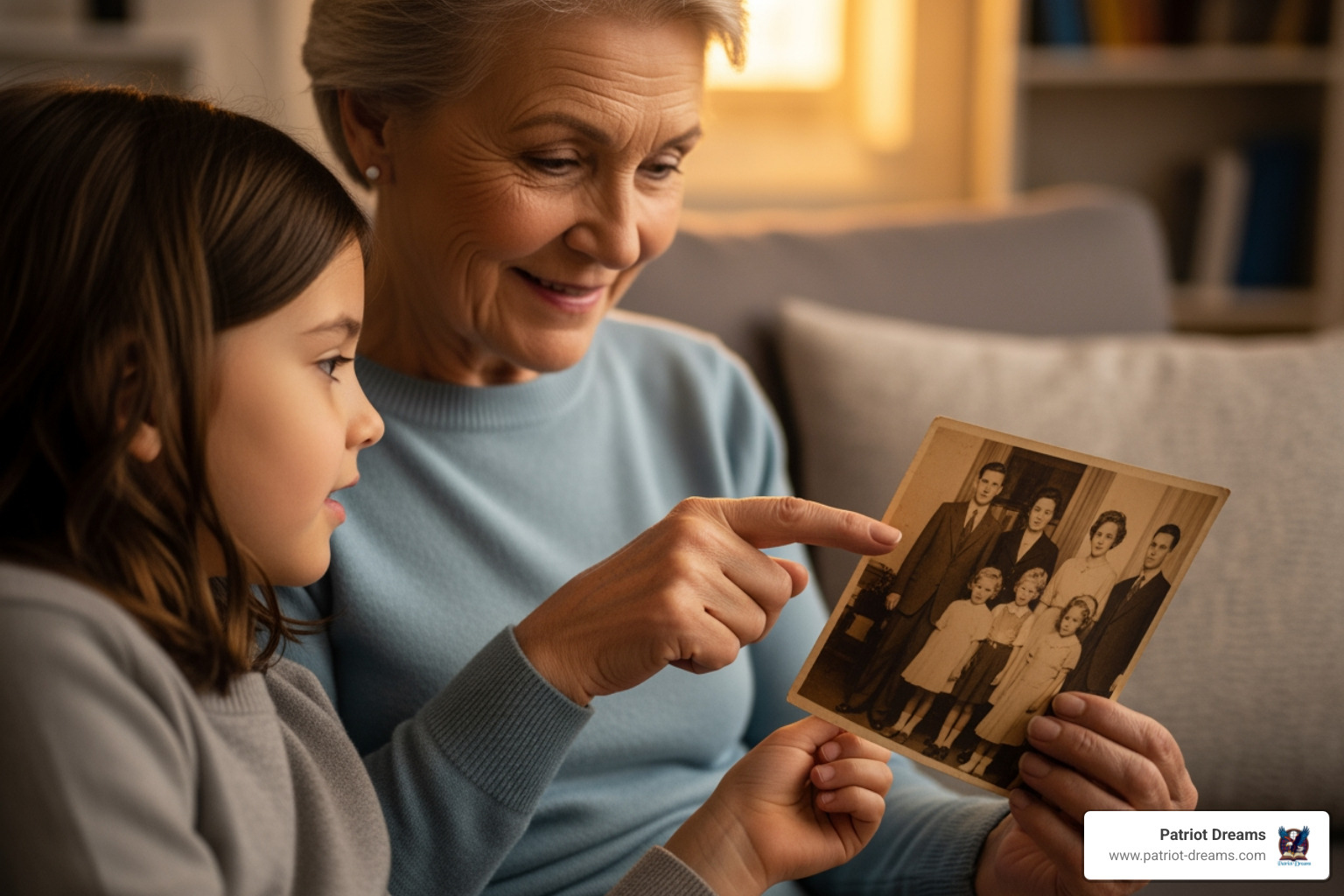
Looking through old family photographs, letters, or heirlooms can also spark fascinating conversations. These family artifacts are tangible links to the past, making abstract historical concepts deeply personal. By exploring your family's journey, you help children connect their personal legacy to the grand narrative of American history. This not only makes history relevant but also fosters a sense of identity and belonging. Patriot Dreams is dedicated to Family History Preservation and encourages you to pass down these precious insights for generations to come.
Frequently Asked Questions about Making History Engaging
We understand that making history pop can sometimes feel like a daunting task. Here are some common questions we hear, along with our thoughts on how to tackle them with warmth and encouragement.
What is the biggest challenge in making history engaging for students?
The biggest challenge often lies in overcoming the perception that history is dull, dry, and simply a list of facts to be memorized. As we've seen, students often report that history lessons are full of "dates, people, and places which often require rote memorization." This approach can make history feel irrelevant and disconnected from their lives. The core issue is when we present history as something to be passively absorbed, rather than an exciting journey of human stories and findy. When lessons lack engagement, it's easy for young people to lose interest and struggle to see the value of learning about the past.
How can I connect historical events to my child's own life?
Connecting historical events to a child's own life is one of the most effective ways to make history engaging. We can do this by:
- Exploring Local History: Visit local historical sites, museums, or even just old buildings in your town. What stories do these places hold? How have they changed over time? Teaching about the history in their own backyard can make topics more personal.
- Uncovering Family Stories: Encourage conversations with grandparents or older relatives about their experiences during significant historical periods. Look at old family photos or heirlooms. These personal narratives link family legacy directly to national history.
- Finding Personal Connections: Help your child identify historical figures or events that align with their interests. If they love sports, research the history of baseball. If they love science, explore the lives of American inventors.
- Comparing Past and Present: Discuss how daily life, technology, or social norms have changed (or stayed the same) since a particular historical period. "How would you cook dinner without electricity?" or "What would school be like 100 years ago?" These comparisons make history tangible.
By linking history to personal experiences, family narratives, and local environments, we make the past feel relevant and immediate, fostering a deeper understanding and appreciation.
How can I know if my child is really learning when we use these creative methods?
It's natural to wonder if creative, hands-on methods are truly leading to learning, especially when traditional assessments might look different. When we use engaging methods, we're not just looking for memorization; we're looking for deeper understanding and skills development. Here’s what we can look for:
- Critical Thinking and Analysis: Can your child analyze a primary source and form their own conclusions? Do they question different perspectives? Are they able to make historical claims supported by evidence?
- Engagement and Curiosity: Are they asking follow-up questions? Do they want to learn more on their own? A sustained interest and genuine curiosity are strong indicators of learning.
- Ability to Articulate Understanding: Can they explain historical events or the motivations of historical figures in their own words, perhaps through a role-play, a project presentation, or a discussion?
- Creativity and Problem-Solving: How do they express their understanding in projects—through models, stories, or performances? Do they show creativity in tackling historical challenges?
- Empathy and Perspective-Taking: Can they discuss historical events from different viewpoints, showing an understanding of the diverse experiences of people in the past?
These innovative methods encourage skills that go far beyond rote facts, preparing young minds not just for history class, but for life. We can still use traditional quizzes and discussions, but also look for these deeper signs of engagement and comprehension.
Conclusion
History, at its heart, is a vibrant mix of human stories—tales of struggle and triumph, innovation and resilience, kindness and community. When we accept these narratives and invite young people to actively participate in their discovery, we open up the true magic of the past. The joy of finding a personal connection to a historical event or understanding the motivations of a figure from long ago is a powerful and lasting experience.
We hope this guide inspires you to explore new ways of making engaging history lessons a cherished part of your family's or classroom's journey. Let us encourage each other to seek out the stories in our communities, to preserve the legacies within our families, and to see history not as a distant subject, but as an ongoing conversation we are all a part of.
To begin your own journey into the heart of America's stories, explore the Patriot Dreams app.

Join the Patriot Dreams Community
Download the app today and start your journey through American history and personal legacy.

Explore Our Latest Insights
Dive into stories that shape our American legacy.