The Ultimate Guide to Johnny Appleseed Pioneer Stories

The True Stories Behind Johnny Appleseed
Johnny Appleseed pioneer stories begin with a real man: John Chapman (1774-1845), a frontier nurseryman whose life was far more practical, generous, and interesting than the familiar tale of a wanderer tossing seeds as he walked.
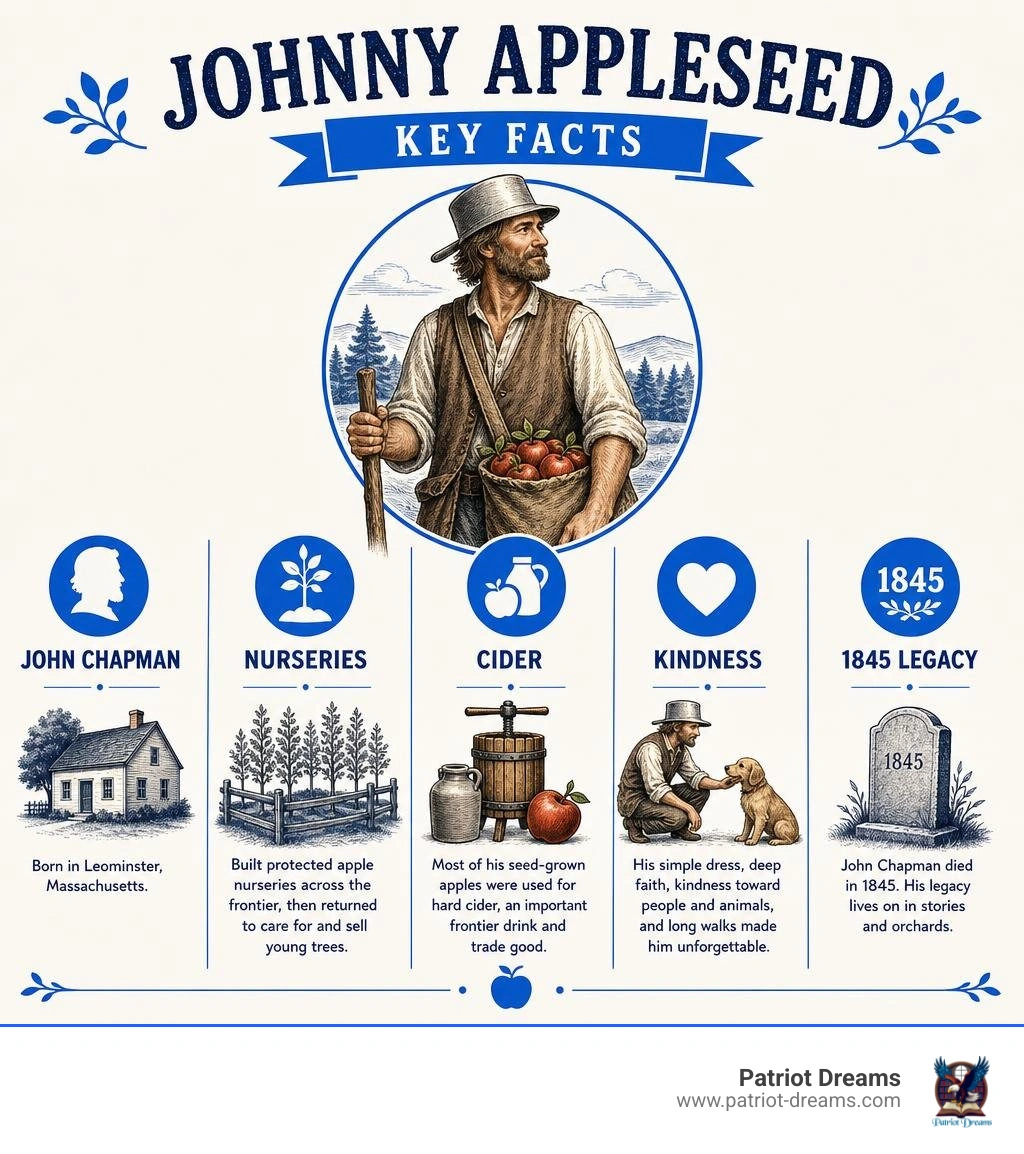
- Real name: John Chapman, born in Leominster, Massachusetts.
- What he did: Built protected apple nurseries across the growing frontier, then returned to care for and sell young trees.
- Why apples mattered: Most of his seed-grown apples were used for hard cider, an important frontier drink and trade good.
- Why he became a legend: His simple dress, deep faith, kindness toward people and animals, and long walks through the wilderness made him unforgettable.
- What is uncertain: Even his Fort Wayne, Indiana, burial place has more than one claimed location.
The best-known stories blend documented history with folklore. Chapman was not simply poor or aimless. He accumulated roughly 1,200 acres of land and operated a thoughtful nursery business, yet chose a plain life shaped by his spiritual beliefs and care for others. That combination turned an apple grower into one of America’s most lasting folk heroes.
Kyle & Emily invite you to step past the tall tales and discover the warm, surprising history of the man behind the legend.
Johnny Appleseed pioneer stories vocab to learn:
Who Was John Chapman? The Real History Behind the Folk Legend
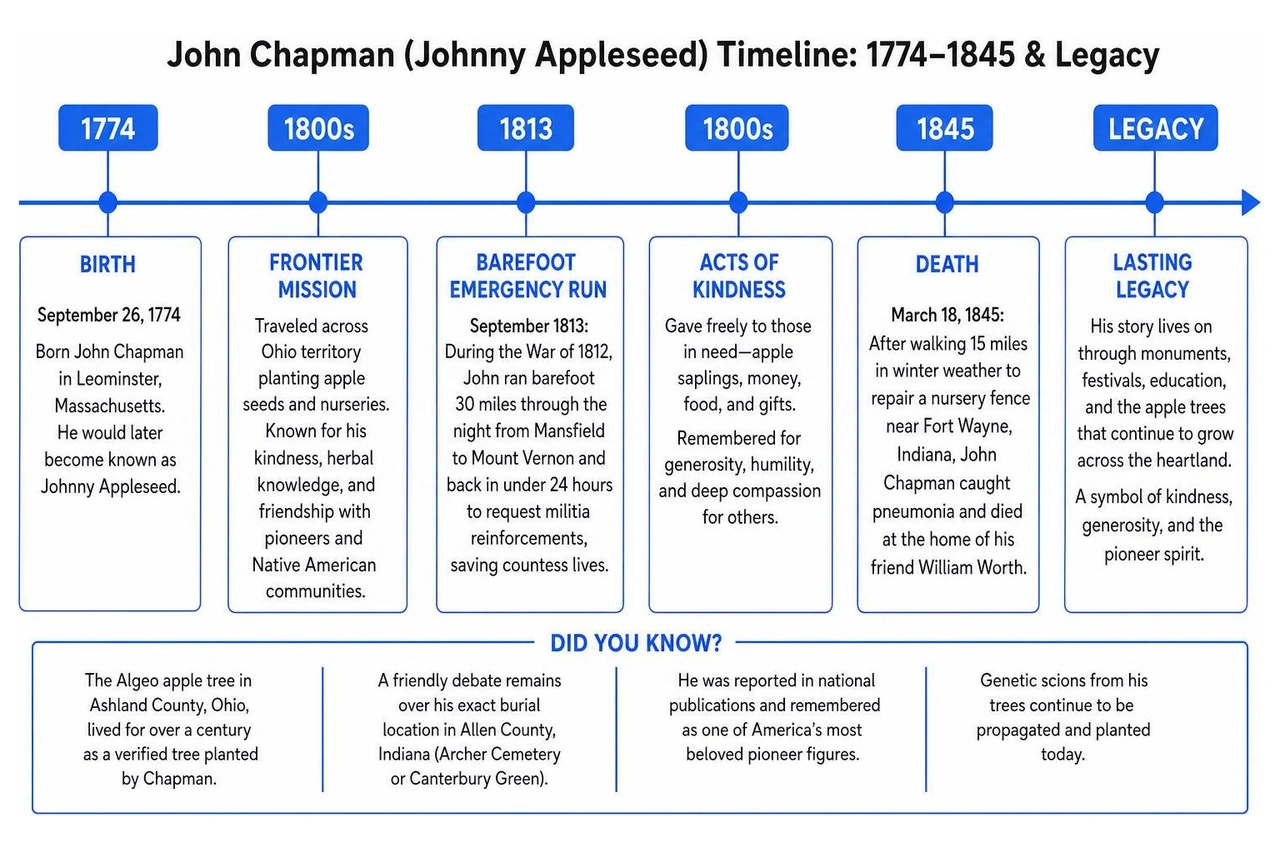
When we picture Johnny Appleseed today, we often imagine a childlike figure strolling barefoot through boundless forests, tossing apple seeds to the wind like fairy dust. But beneath the beloved tall tales stands the inspiring historical figure of John Chapman. Born on September 26, 1774, in Leominster, Massachusetts, young John grew up during the dawn of our nation. His father, Nathaniel Chapman, served as a minuteman at the Battle of Concord before joining the Continental Army under George Washington.
For generations, historians wondered about John's early years. Archival discoveries shed bright new light on his childhood in Longmeadow, Massachusetts. Researchers uncovered a 1781 store receipt charging his father for rum and sugar "delivered to your boy," proving seven-year-old John lived in Longmeadow. Church pew assignment records from 1791 show seventeen-year-old John seated in the young men's gallery. You can read more about how Johnny Appleseed’s Western Mass. roots confirmed by centuries-old store receipt offers physical proof of his upbringing.
As a young man, John learned the art of fruit propagation while working as an apprentice under an orchardist named Mr. Crawford. Around 1792, at eighteen, he began traveling west with his eleven-year-old half-brother, Nathaniel. These early journeys sparked his lifelong mission to bring fruit, beauty, and neighborly comfort to families braving the wilderness. His early travels were part of a grand tradition of heartwarming pioneer stories that shaped our country.
Frontier Business Strategy and Land Ownership
Far from being a penniless drifter, John Chapman was a shrewd and successful frontier entrepreneur. In the early 1800s, land development companies like the Ohio Company of Associates offered land grants to prospective homesteaders, but there was a catch: settlers had to prove their intent to establish permanent homesteads. Frontier land laws required settlers to plant at least fifty apple trees and twenty peach trees within three years to secure legal land deeds.
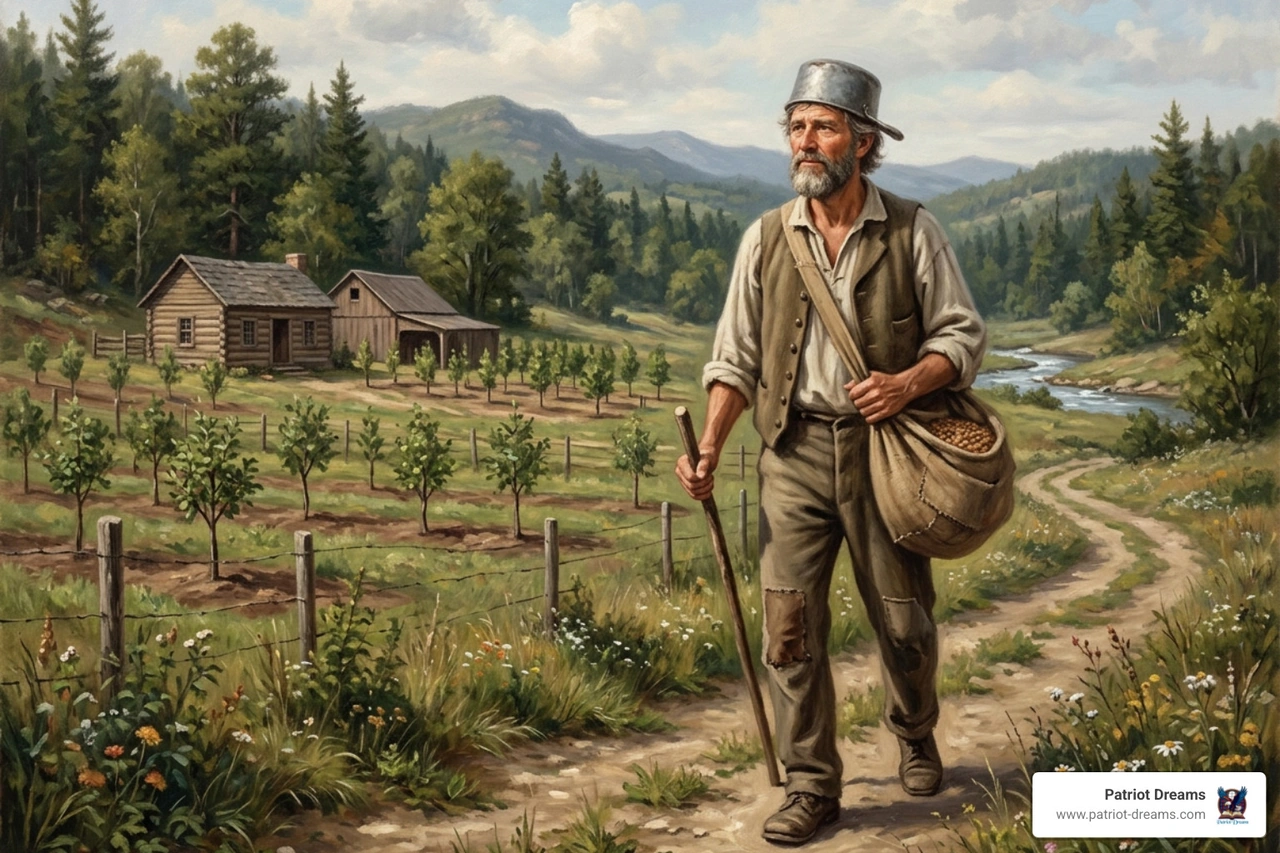
John recognized a unique economic opportunity. He scouted ahead of westward migration along major river valleys, clearing loamy land along fertile creek banks. He established fencing around his plots, sowed seeds, and created thriving nurseries. When pioneer families arrived in their wagons, John was waiting with healthy young saplings ready for planting.
Through this innovative chain-nursery strategy, detailed in historical records about John Chapman: Pioneer Nurseryman | NC Historic Sites, Chapman acquired extensive property. At the time of his death, he owned roughly 1,200 acres of valuable real estate across Pennsylvania, Ohio, and Indiana. One single nursery plot in Milan Township, Indiana, held over 15,000 trees! He charged a fair price for his saplings—usually a "fippenny bit" (about 6.25 cents). During the financial Panic of 1837, when cash was scarce, he dropped his prices to two or three cents, or gave trees away on credit to families in need.
The Role of Hard Cider in the Frontier Economy
Why were apple trees so critical to early American settlers? Today, we think of apples as a sweet snack for lunchboxes. But in the late 18th and early 19th centuries, only about one out of every hundred apple trees grown from seed yielded fruit palatable for fresh eating. The remaining 99% produced tart, sour apples.
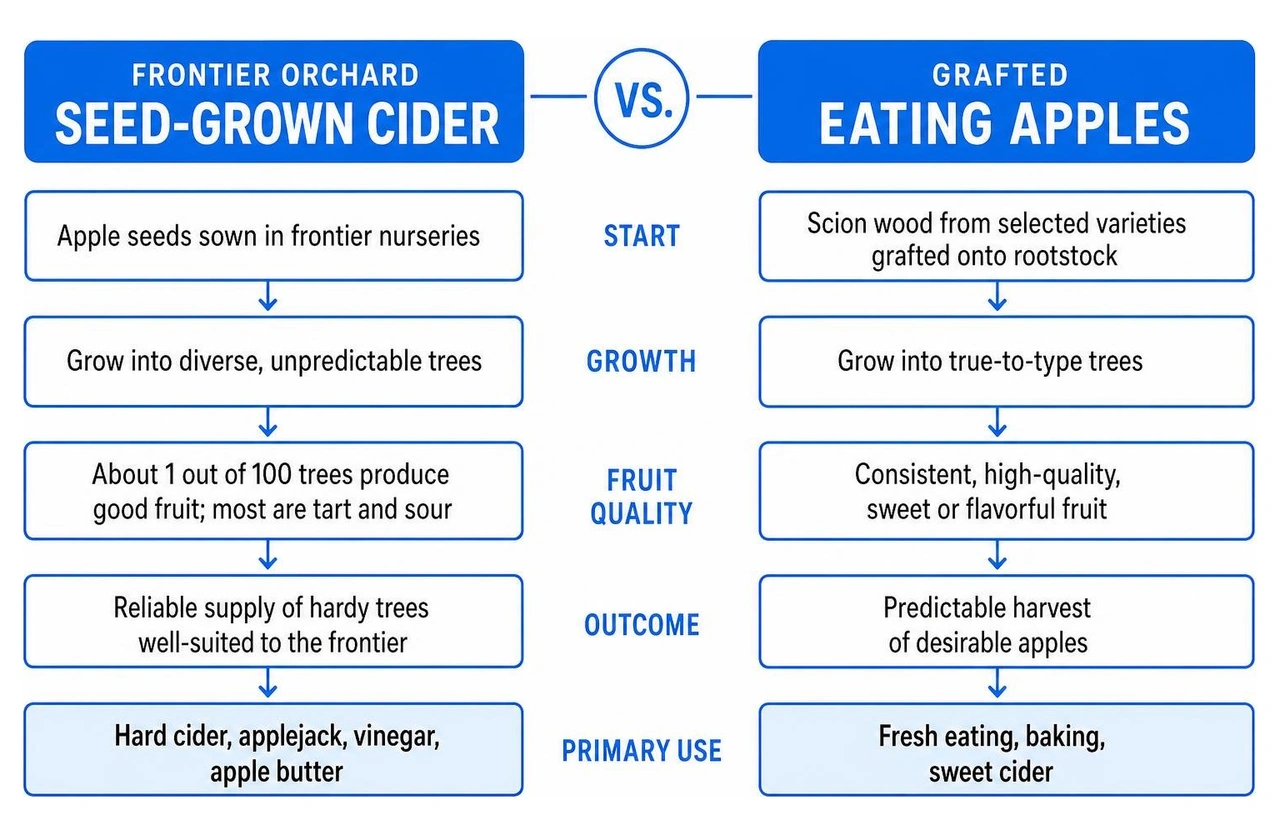
These sour seedling apples were perfect for making hard cider and applejack. On the frontier, clean drinking water was difficult to come by, and hard cider provided a safe, natural beverage that could be preserved through the winter. It was also processed into apple butter and vinegar, or sold to growing cities as a cash crop. In early 19th-century Ohio, residents aged fifteen and older drank an average of 30 gallons of hard cider every year!
| Feature | Seed-Grown Apples (Chapman's Method) | Grafted Table Apples |
|---|---|---|
| Primary Use | Hard cider, applejack, vinegar, apple butter | Fresh eating, baking, sweet cider |
| Flavor Profile | Mostly tart, astringent, and sour | Sweet, crisp, and palatable |
| Genetics | Genetically unique seedlings | Cloned genetic replicas of mother tree |
| Frontier Value | High (fulfilled land grant laws & cider needs) | Moderate (required delicate grafting skills) |
Myth vs. Reality in Johnny Appleseed Pioneer Stories
As decades passed, the historical reality of John Chapman merged with glowing folk traditions. We love national legends because they highlight the qualities we admire most: generosity, resilience, and a deep love for the land. Exploring how pioneer tales grow over time connects us to our broader culture, much like exploring the folklore files forgotten american legends and what they reveal about us or examining from folk hero to film icon the story of paul bunyan his place in american myth making.
Fenced Nurseries vs. Random Seed Scattering in Johnny Appleseed Pioneer Stories
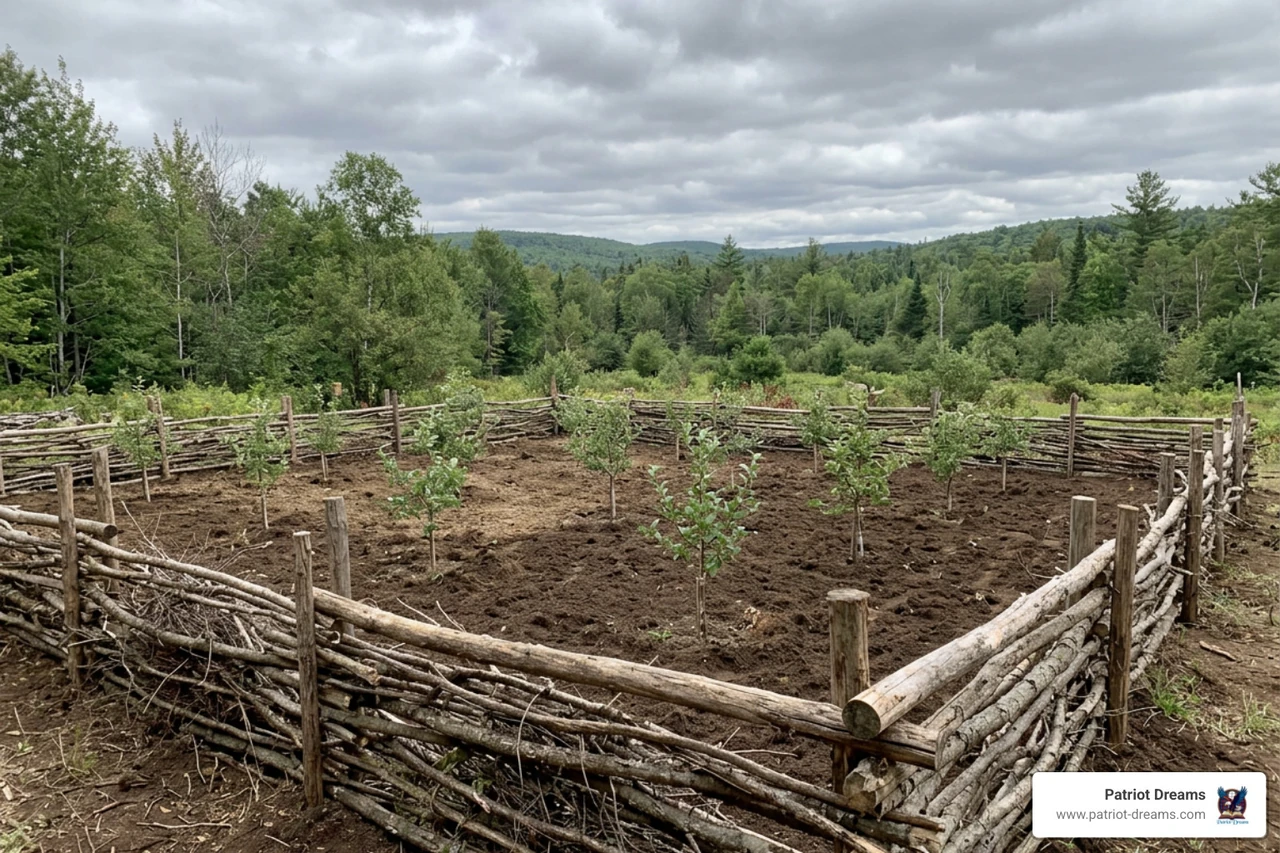
The popular belief that Johnny Appleseed pioneer stories portray a man randomly scattering apple seeds through wild woods is a romantic myth. If someone scattered seeds aimlessly in the wilderness, forest growth and wildlife would quickly consume the saplings.
Instead, John used a methodical planting system:
- Seed Collection: Every autumn, he visited cider presses along the Potomac and Monongahela rivers in Western Pennsylvania, collecting free seeds from cider pomace and packing them into heavy leather bags.
- Water Transportation: In 1806, he famously loaded two canoes lashed together like a makeshift catamaran with bags of seeds, navigating down the Ohio River and up tributaries like the Muskingum, Mohican, and Black Fork rivers.
- Site Selection: He chose fertile, loamy soil along stream borders and natural forest clearings.
- Protective Fencing: He enclosed each plot with sturdy fences built from fallen trees, logs, and brush to keep out deer and livestock.
- Caretaker Partnerships: He left plots under the care of trusted local neighbors who managed sales on share-cropping terms, returning regularly to tend the stock.
Distinctive Appearance and Clothing in Johnny Appleseed Pioneer Stories
What about his iconic outfit? Folk tales describe Johnny wearing a tin mush pot on his head and a coffee sack for a shirt. While some of these descriptions were exaggerated by late 19th-century writers, they were rooted in his genuine humility.
Contemporary observers recorded that John wore simple, cast-off clothing traded for apple trees. He often wore a coffee sack with armholes cut out, viewing luxury garments as unnecessary vanity. When given good clothes, he gave them to poor families heading west. As for his headwear, historical accounts show he usually crafted a lightweight cap from pasteboard with a broad visor to shade his eyes, though an Ashland County settler remembered seeing him wear a tin pot that doubled as a cooking vessel. He traveled barefoot through much of the year, developing soles so tough that settlers claimed a rattlesnake couldn't bite through them.
Religious Beliefs, Animal Welfare, and Philosophical Views
To truly understand John Chapman, we must look at his deep spiritual foundation. John was an ardent disciple of Emanuel Swedenborg, a Swedish theologian who founded The New Church. Swedenborgian theology taught that God's love flows through all creation, emphasizing harmony between nature, humanity, and the Divine. You can explore his spiritual journey in The Core of Johnny Appleseed: The Unknown Story of a Spiritual Trailblazer.
Opposition to Grafting and Tree Pruning
John’s religious faith dictated his agricultural practices. Most commercial orchardists grafted desirable fruit branches onto rootstocks to ensure sweet eating apples. However, Chapman strongly opposed grafting and pruning. He believed that cutting plant tissues inflicted pain on living organisms and violated nature's divine order.
He insisted that trees should be raised naturally from seed. Even though this meant ninety-nine out of a hundred trees bore sour apples, John viewed every seedling as a unique creation of God. His religious conviction directly filled the frontier's urgent demand for hard cider apples.
Vegetarianism and Compassion for Wildlife
John's reverence for life extended to every living creature. He became a strict vegetarian later in life, believing it was wrong to kill any animal for food. Settlers preserved sweet anecdotes highlighting his gentle spirit:
- The Campfire Mosquitoes: One cool night, John noticed mosquitoes flying into his campfire and burning. Deeply pained by their distress, he poured water from his cooking pot to extinguish the flames, choosing to shiver in the dark rather than cause harm.
- The Hollow Log Bear: During a winter snowstorm, John sought shelter inside a hollow log, only to find a mother bear and her cubs sleeping soundly inside. Rather than disturb them, he peacefully slept outside in the snow.
- The Rescued Wolf: After finding a wolf caught in a hunter's trap, John healed its injured leg and released it. The grateful wolf reportedly followed him like a loyal companion for years.
- Rescuing Workhorses: John frequently bought old, neglected workhorses destined to be put down, rented pasture land for their recovery, and gifted them to needy families under a solemn promise of humane treatment.
Legendary Johnny Appleseed Pioneer Stories and Frontier Heroics
During the early 1800s, life on the American frontier carried immense hardship and tension. John Chapman served as a gentle ambassador of peace, welcome in both pioneer cabins and Native American villages. Native tribes respected him as a holy medicine man because of his spiritual nature and knowledge of medicinal herbs like dogfennel.
The 1813 Barefoot Emergency Run
During the War of 1812, conflicts flared across the Ohio territory. In September 1813, following the burning of the Greentown village, fear swept through Richland County. Settlers gathered for safety inside the wooden blockhouse at Mansfield, fearing an imminent raid. Someone needed to travel to Mount Vernon to request militia reinforcements.
John Chapman quietly stepped forward from a dark corner of the blockhouse. Traveling barefoot through thirty miles of rugged forest trails in the dead of night, he alerted remote farmhouses along the way, calling out: "The spirit of the Lord is upon me, and he hath anointed me to blow the trumpet!"
He completed the round-trip journey from Mansfield to Mount Vernon and back in under twenty-four hours, bringing militia relief and saving countess lives. You can read modern details of this feat in Johnny Appleseed’s heroic night run tracked from Mansfield to Mount Vernon & back.
Frontier Acts of Generosity and Kindness
John’s legendary kindness endeared him to everyone he met:
- Credit for the Needy: When sixteen-year-old orphan David Hunter needed to support eight younger siblings, John gave him sixty apple saplings on a simple handshake, telling him to pay only if his crops succeeded.
- Secret Acts of Charity: After staying overnight at a struggling family's home, John would quietly slip out before dawn, leaving five-dollar notes tucked beneath plates or under tablecloths.
- Gifts for Children: He carried ribbons, calico fabric, and small gifts in his pockets to bring joy to pioneer children living far from towns.
- Food Preservation: He once retrieved floating bread crusts from a bucket of pig slop to gently remind a housewife never to waste food provided by Providence.
Death, Disputed Gravesite, and Lasting Cultural Legacy
In March 1845, at seventy years old, John Chapman walked fifteen miles through winter weather to repair a damaged nursery fence near Fort Wayne, Indiana. He caught pneumonia—then called the "winter plague"—and passed away peacefully on March 18, 1845, at the home of his friend William Worth.
His passing was reported in national publications, including historical compilations featured in Johnny Appleseed : a Pioneer Hero - DocsLib . Today, a friendly debate remains over his exact burial location in Allen County, Indiana. Some records point to Archer Cemetery in Johnny Appleseed Park along the St. Joseph River, while other historical accounts suggest Canterbury Green. Regardless of the exact spot, his memory is cherished across the heartland.
Monuments, Festivals, and Modern Heritage
John Chapman’s legacy continues to flourish:
- Surviving Trees: The famous Algeo apple tree in Ashland County, Ohio, lived for over a century as a verified tree planted directly by Chapman. Genetic scions of his trees continue to be propagated today.
- Community Festivals: Towns across Massachusetts, Ohio, Pennsylvania, and Indiana host annual autumn festivals featuring cider pressing, historical reenactments, and folk music.
- Parks and Landmarks: Johnny Appleseed Park in Fort Wayne, Indiana, and numerous state historical markers commemorate his frontier travel routes.
Frequently Asked Questions About Johnny Appleseed Pioneer Stories
Was Johnny Appleseed a real person or just a mythical folk character?
Yes, Johnny Appleseed was a real historical figure named John Chapman. Born in Massachusetts in 1774, he became a prosperous pioneer nurseryman, land speculator, and missionary who accumulated roughly 1,200 acres across Pennsylvania, Ohio, and Indiana before his death in 1845.
Why did Johnny Appleseed grow apples from seeds instead of grafting?
John grew apples from seed primarily due to his Swedenborgian religious convictions. He believed that grafting and tree pruning were unnatural and caused pain to plants. Seed-grown apples yielded sour fruit, which was ideal for hard cider—the most popular beverage on the early American frontier.
Where is Johnny Appleseed buried and why is it disputed?
John Chapman died on March 18, 1845, near Fort Wayne, Indiana. His exact gravesite is disputed between Archer Cemetery (located inside Johnny Appleseed Park) and a nearby site at Canterbury Green, as historical grave markers from the 1840s were made of wood and lost over time.
Conclusion
The story of John Chapman reminds us that true heroism on the American frontier wasn't measured by weapons or wealth, but by kindness, service, and planting seeds of hope for generations to come. Long after his barefoot journeys ended, the shade of his orchards continues to comfort us, inspiring us to care for our neighbors and honor our heritage.
At Patriot Dreams, we love celebrating the timeless stories that bring our history to life. Through interactive audio journeys and heritage preservation, we help families preserve their own cherished memories alongside America's greatest legends. We invite you to explore historic pioneer stories with Patriot Dreams and share the heartwarming history of our nation with those you love.

Join the Patriot Dreams Community
Download the app today and start your journey through American history and personal legacy.

Explore Our Latest Insights
Dive into stories that shape our American legacy.