Too Old for Treason? The Story of the Oldest Declaration Signer
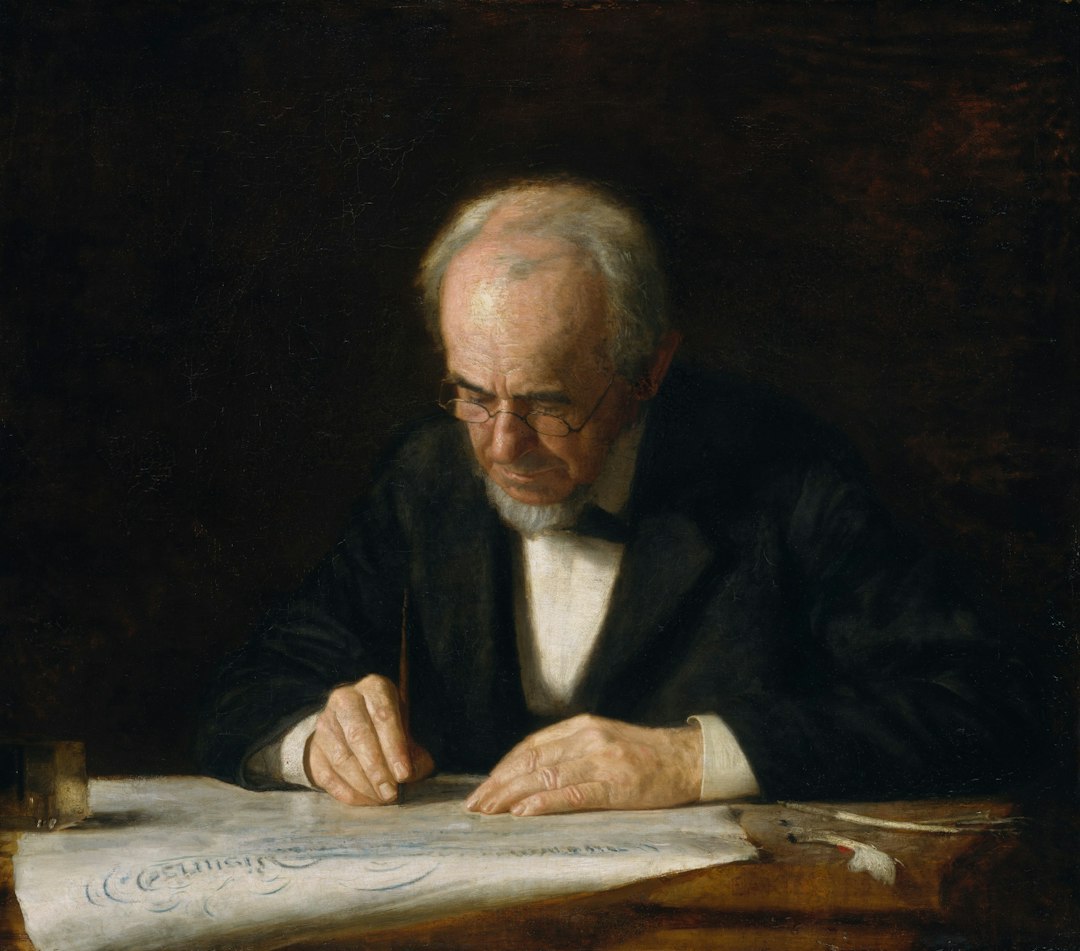

Benjamin Franklin Was the Oldest Declaration of Independence Signer
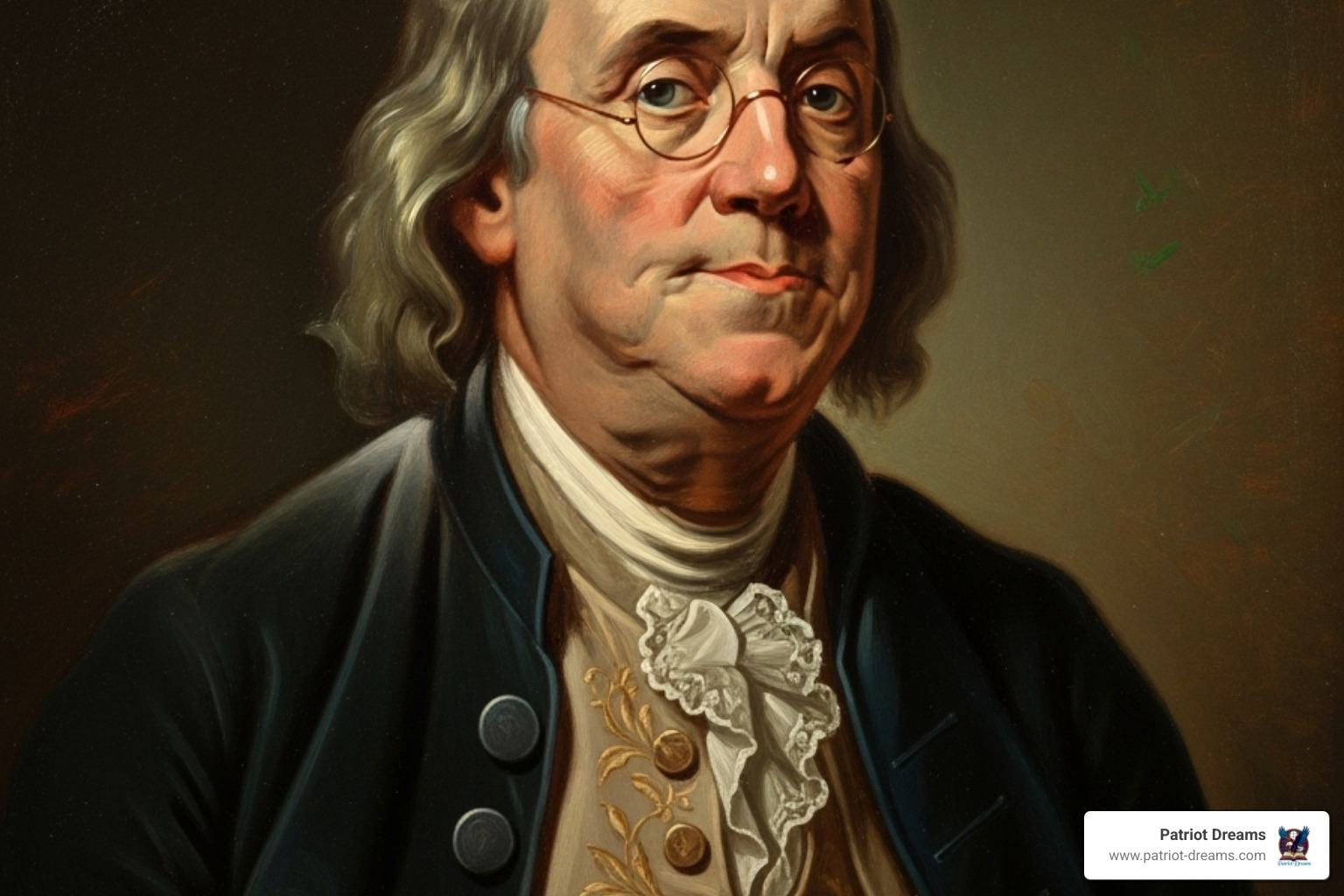
Benjamin Franklin was the oldest Declaration of Independence signer. He represented Pennsylvania and was 70 years old when most delegates signed the parchment copy on August 2, 1776.
Franklin was a printer, writer, inventor, scientist, and public servant. His age set him apart from the youngest signers, Edward Rutledge and Thomas Lynch Jr., who were both 26 - a striking 44-year gap across the group.
At 70, Franklin brought a lifetime of learning and service to a dangerous moment in American history. He had health troubles, including gout, but still helped guide the cause for independence and served on the committee that prepared the Declaration's text. His presence was a reminder that courage is not limited by age.
In this list, we will meet the senior statesmen who signed beside him and see how experience, persistence, and conviction shaped their work.
We are Kyle & Emily, and we love helping families explore the people and moments that make American history feel close to home.

Quick look at oldest declaration of independence signer:
- Declaration Signers
- how many delegates signed the declaration of independence
- list the signers of the declaration of independence
5 Oldest Delegates Who Risked Everything in 1776
When delegates gathered in Philadelphia during the summer of 1776, putting pen to parchment was an act of profound personal courage. Every signer understood the stakes. If the Revolution failed, their signatures served as direct evidence of high treason against the British Crown.
For the senior members of the Second Continental Congress, signing was not just a youthful impulse. These men had spent decades building reputations, accumulating property, establishing successful businesses, and serving their communities. They had everything to lose and very few years left to rebuild if disaster struck.
According to the official Signers Factsheet from the National Archives, fifty-six delegates pledged their lives, fortunes, and sacred honor. While the average age in the assembly room was around forty-four, a handful of elder statesmen anchored the room with steady wisdom and decades of public experience. You can see the full demographic breakdown in our complete guide to the Declaration signers.
Here are the five oldest patriots who risked everything in 1776:
| Signer | Colony / State | Age in August 1776 | Primary Occupation | Notable Role |
|---|---|---|---|---|
| Benjamin Franklin | Pennsylvania | 70 | Printer, Scientist, Statesman | Committee of Five drafter |
| Stephen Hopkins | Rhode Island | 68 | Merchant, Jurist, Politician | Former Governor & Chief Justice |
| Philip Livingston | New York | 60 | Merchant, Philanthropist | Leading merchant & financier |
| Francis Lewis | New York | 63 | Merchant | War procurement & logistics |
| John Witherspoon | New Jersey | 53 | Minister, College President | President of Princeton University |
These seasoned leaders brought balance and calm resolve to the fiery debates in Philadelphia. Their willingness to take the ultimate risk proved that devotion to a shared dream of liberty belongs to every generation.
Profile of the Oldest Declaration of Independence Signer
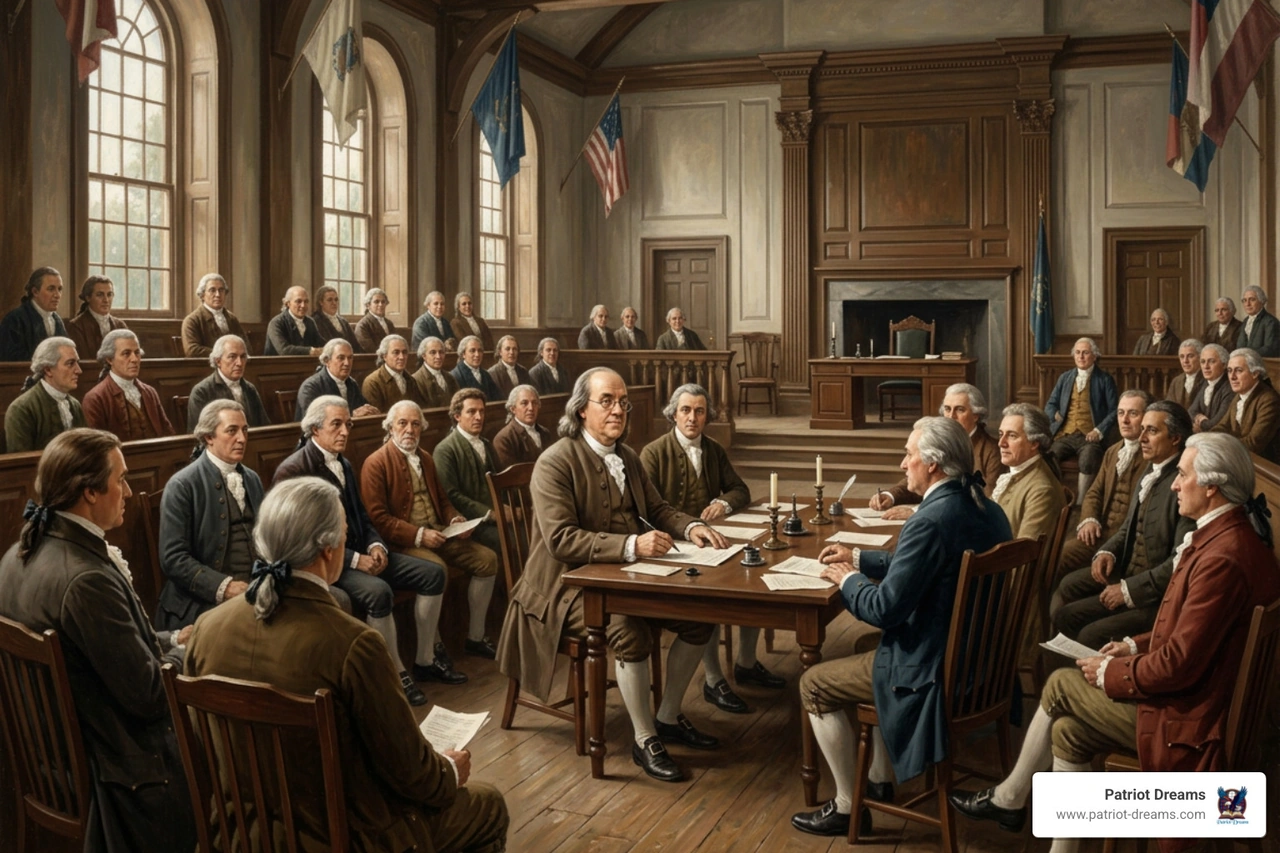
To truly appreciate the courage of the senior signers, we have to look closely at the man who stood at the front of the generational line: Benjamin Franklin. By 1776, Franklin was not simply a respected Pennsylvania delegate; he was arguably the most famous American in the world.
Through his beloved Poor Richard's Almanack, his groundbreaking experiments in electricity, and his decades of civic leadership, Franklin had built an unmatched international reputation. When the Second Continental Congress assembled, he was naturally chosen alongside Thomas Jefferson, John Adams, Roger Sherman, and Robert R. Livingston to serve on the prestigious Committee of Five tasked with drafting the document. You can explore his entire journey in our biography of Benjamin Franklin.
Why Benjamin Franklin Became the Oldest Declaration of Independence Signer at Age 70
Born in Boston in January 1706, Franklin was seventy years old when he affixed his name to the document on August 2, 1776. At an age when most people in the eighteenth century had long since retired from public life, Franklin was working long hours under intense pressure.
His physical health presented daily hurdles. Franklin suffered from severe bouts of gout and painful kidney stones, which often made walking across the cobblestone streets of Philadelphia an ordeal. Yet, he rarely allowed physical discomfort to keep him from serving his community.
His brilliant mind and gentle humor remained as sharp as ever. Decades of experimenting and problem-solving—from bifocals to the lightning rod, as seen in Franklin's famous scientific inventions—gave him a unique ability to find practical solutions during tense political moments. When Thomas Jefferson drafted the initial lines of the Declaration, Franklin offered several subtle, crucial edits. Most notably, he helped refine the phrase describing truths as "self-evident," transforming a philosophical concept into a warm, undeniable statement of human dignity.
Stephen Hopkins and the Senior Patriots Who Stood Beside Him
Right behind Franklin stood Stephen Hopkins of Rhode Island, who was sixty-eight years old in the summer of 1776. Hopkins was a respected former colonial governor, chief justice, and merchant whose life had been dedicated to public welfare.
Hopkins suffered from a debilitating condition known then as palsy, which caused his hands to shake uncontrollably. When it came time to step forward and sign his name to the parchment, he had to use his left hand to steady his right hand. Rather than letting his condition deter him, Hopkins looked up at his fellow delegates and famously declared, "My hand trembles, but my heart does not."
His signature stands on the parchment today as a moving testament to personal grit and quiet courage. Hopkins had spent his career advocating for colonial rights, even authoring influential pamphlets well before the war began, as detailed in this Stephen Hopkins historical profile. His steadfast spirit showed everyone in the room that true strength comes from inner conviction rather than physical perfection.
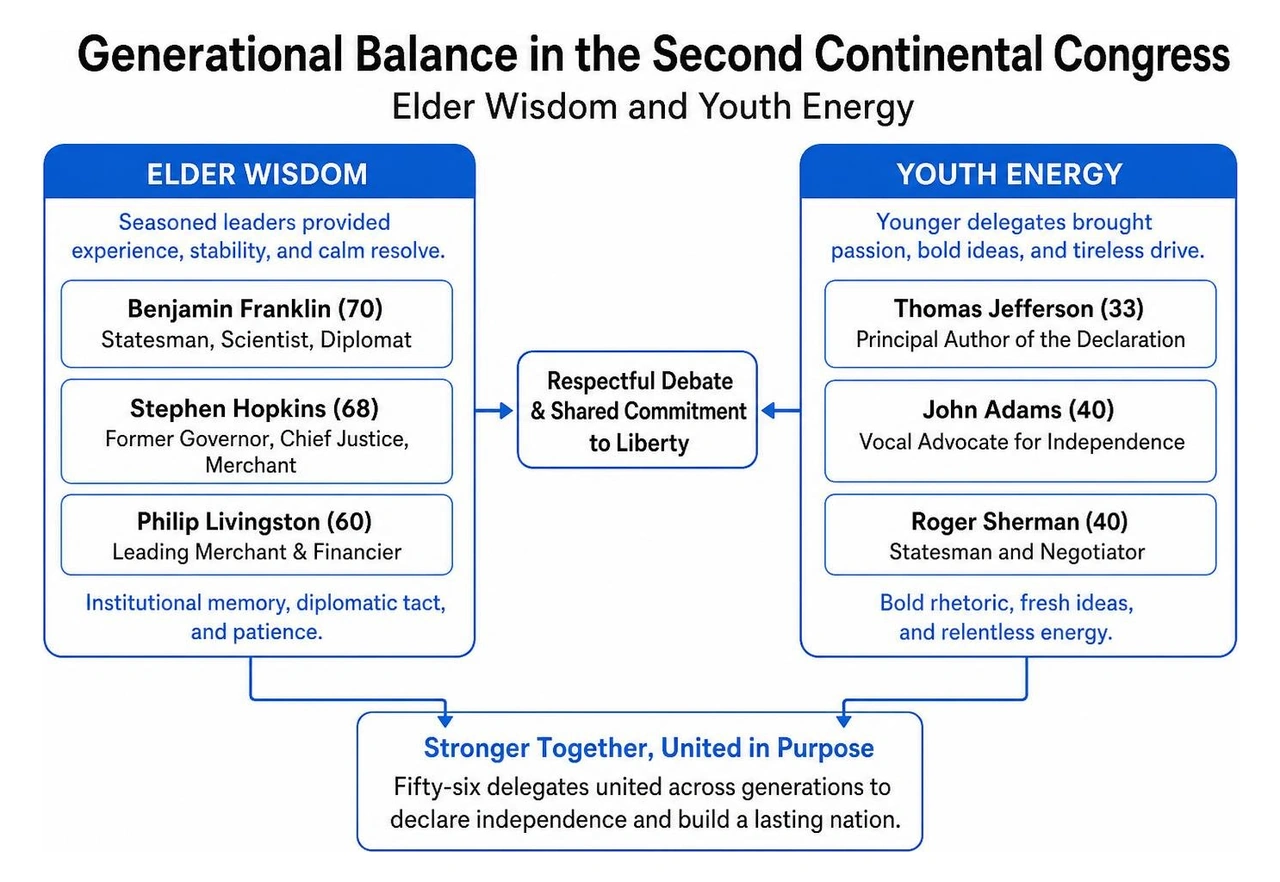
How Age Shaped the Second Continental Congress
The room inside the Pennsylvania State House brought together people from vastly different stages of life. The dynamic interplay between youthful energy and elder wisdom gave the Second Continental Congress its unique strength.
Younger delegates brought tireless passion and bold rhetoric, while senior figures like Franklin, Hopkins, and Livingston provided institutional memory, diplomatic tact, and patience. Knowing how many delegates signed the document helps us appreciate the rare sense of unity required to bring fifty-six distinct individuals into full agreement. Together, these Founding Fathers showed that when neighbors listen to one another across generational lines, they can build something lasting.
Key Differences Between the Youngest and Oldest Declaration of Independence Signer
The age contrast within the hall was remarkable:
- The Youngest Signers: Edward Rutledge and Thomas Lynch Jr., both representing South Carolina, were just twenty-six years old.
- The Oldest Signer: Benjamin Franklin of Pennsylvania was seventy years old.
- The Age Gap: A massive forty-four years separated Franklin from Rutledge and Lynch.
This generational breadth influenced how delegates approached daily challenges:
- Legislative Experience: Senior delegates had spent thirty to forty years navigating town councils, colonial assemblies, and courts of law. They understood the slow, delicate art of compromise.
- Physical Demands vs. Endurance: While younger delegates could travel by horseback across rough colonial roads with greater ease, elder statesmen brought the mental endurance needed to sit through months of grueling debate in humid Philadelphia summer heat.
- Perspective on Legacy: Younger men were just beginning their families and public careers, looking ahead toward future governance. Elder statesmen were staking a lifetime of accumulated honors and peaceful retirement on a principled stand for self-governance.
Age at Signing vs. Longevity: The Case of Charles Carroll
When exploring the ages of the signers, it is easy to confuse the oldest signer at the time of signing with the longest-living signer. While Benjamin Franklin holds the honor of being the oldest man to sign in 1776, Charles Carroll of Carrollton holds the record for remarkable longevity.
Born in September 1737, Carroll was thirty-eight years old when he signed the Declaration. A wealthy Maryland landowner and the only Roman Catholic signer, Carroll lived an extraordinary life of public service. He survived every other delegate who signed the document, living until November 14, 1832, when he passed away peacefully at the age of ninety-five. Carroll lived fifty-six years after signing, surviving long enough to help lay the cornerstone for the Baltimore and Ohio Railroad, bridging the era of colonial independence with the dawn of modern American industry.
You can read more about other fascinating figures from this era, including North Carolina's dedicated merchant Joseph Hewes, Connecticut's steadfast leader William Williams, and Maryland's peace-seeking patriot Thomas Stone, in our American Historical Figures Complete Guide.
Frequently Asked Questions about the Oldest Signers
Who was the oldest person to sign the Declaration in 1776?
Benjamin Franklin was the oldest person to sign the Declaration of Independence. Born on January 17, 1706, he was seventy years and six months old when the formal signing ceremony took place on August 2, 1776, representing Pennsylvania.
How many delegates were over age 60 when signing?
Seven delegates were sixty years of age or older in 1776. These senior leaders included Benjamin Franklin (70), Stephen Hopkins (68), Francis Lewis (63), Philip Livingston (60), John Hart (65), Samuel Adams (53, approaching his senior years), and Matthew Thornton (62).
Which signer lived the longest after the Revolution?
Charles Carroll of Carrollton lived the longest after the signing. He passed away on November 14, 1832, at the age of ninety-five, fifty-six years after signing his name in Philadelphia.
Conclusion
The story of the oldest Declaration signers reminds us that building a community rooted in kindness, freedom, and mutual respect requires every hand, no matter how seasoned or fragile. Leaders like Benjamin Franklin and Stephen Hopkins proved that age brings a special kind of courage—one quieted by experience, strengthened by patience, and dedicated to the wellbeing of future generations.
At Patriot Dreams, we love bringing these warm, human stories of American heritage to life through our interactive audio tours and maps. History isn't just dates on a page; it is the living memory of everyday people and visionary neighbors who chose hope over fear. We invite you to explore the stories of the Declaration of Independence signers and discover the inspiring voices that helped shape our shared home.
Join the Patriot Dreams Community
Download the app today and start your journey through American history and personal legacy.

Explore Our Latest Insights
Dive into stories that shape our American legacy.