The Courage of Mitchell Red Cloud Jr.: A Native American Hero of the Korean War
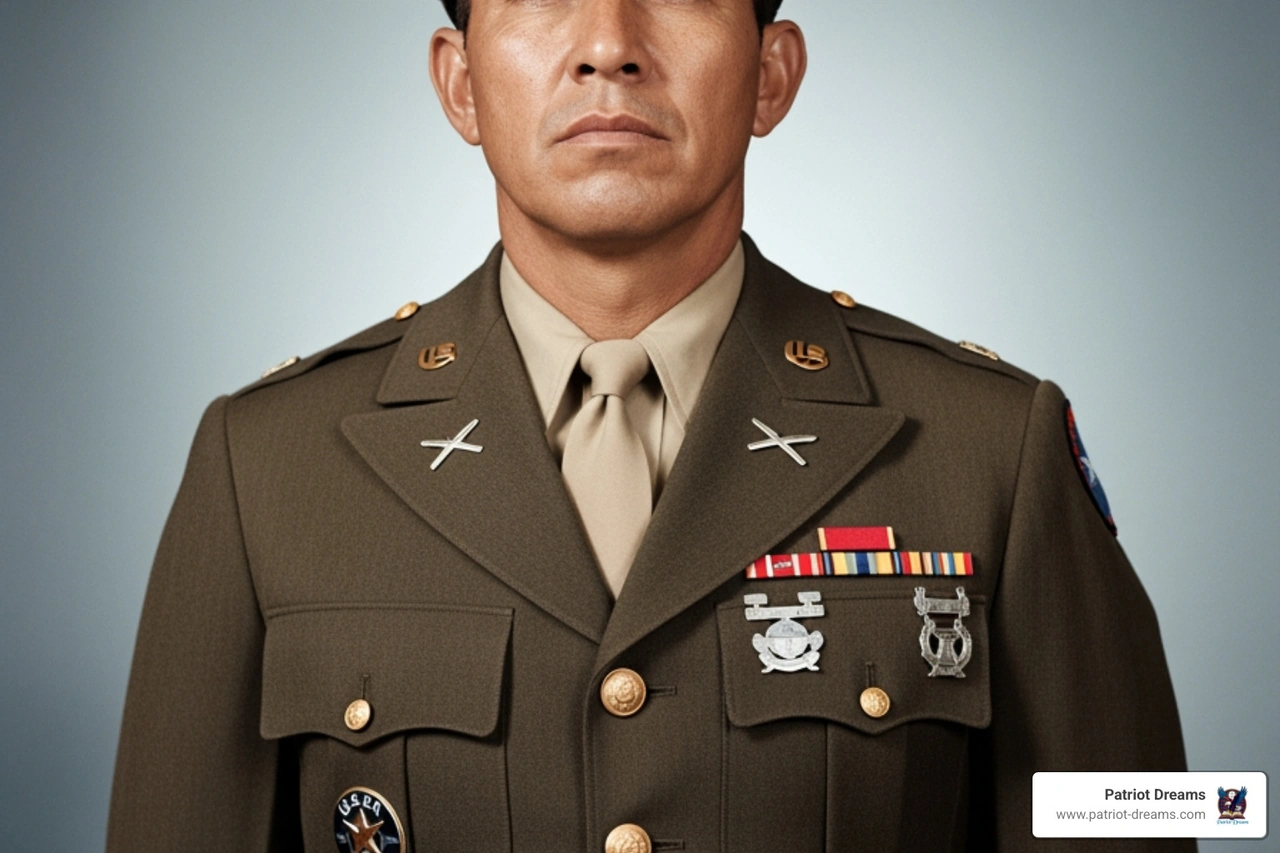

The Story of Mitchell Red Cloud Jr. Deserves to Be Remembered
The Courage of Mitchell Red Cloud Jr.: A Native American Hero of the Korean War is one of the most moving stories in all of American military history — and yet, not enough people know his name.
Here is a quick look at who he was and why his story matters:
- Who: Corporal Mitchell Red Cloud Jr., a member of the Ho-Chunk (Winnebago) Nation, born July 2, 1925, in Hatfield, Wisconsin
- What he did: On November 5, 1950, near Chonghyon, North Korea, he single-handedly held off a surprise Chinese assault — absorbing at least eight gunshot wounds — so his fellow soldiers could escape and regroup
- His service: U.S. Marine Corps (1941–1945), then U.S. Army (1948–1950)
- His award: The Medal of Honor, presented posthumously by General Omar N. Bradley on April 3, 1951
- His legacy: Camp Red Cloud in South Korea, the USNS Red Cloud, and an annual Ho-Chunk Nation observance on July 4th all carry his name forward
His daughter Annita once said something that stays with you: "A person never dies until he's forgotten. And that's what's really important to me — that he's not forgotten."
That feeling is exactly why we're telling his story here.
Mitchell Red Cloud Jr. was a young man from a small Wisconsin town who carried the values of his people — courage, loyalty, and love of community — all the way to the frozen ridges of North Korea. What he did in the final hours of his life saved the lives of the men around him.
This is his story.

Discover more about The Courage of Mitchell Red Cloud Jr.: A Native American Hero of the Korean War:
- General Jonathan Wainwright: The Hero of Bataan’s Defiance
- The Four Chaplains, George Fox, Alexander Goode, Clark Poling, John Washington
- Molly Pitcher
A Son of the Ho-Chunk Nation: Early Life and Heritage
Mitchell Red Cloud Jr. was born in the small community of Hatfield, Wisconsin, on July 2, 1925. He was a member of the Ho-Chunk Nation, a people with a deep and storied history in the Great Lakes region. Growing up along the Black River, Mitchell was immersed in a culture that valued the natural world and the strength of the community. His heritage was one of resilience; his grandfather, Chief Winneshiek, famously refused to be resettled to Nebraska, choosing instead to remain in the ancestral lands of Wisconsin.
As a young boy, Mitchell learned the traditional skills of his people. He became an expert woodsman and hunter, skills that would later serve him well in the jungles of the Pacific and the mountains of Korea. Those who knew him in his youth described him as easygoing and kind, but there was a quiet strength beneath his gentle demeanor. He attended high school in Black River Falls, but like many young men of his generation, his eyes were turned toward the brewing conflict across the oceans.
His story is a reminder of the enduring spirit of Native American warriors who have served this country with distinction throughout every major conflict. Much like the Cherokee Trail of Tears Stories that speak of hardship and perseverance, Mitchell’s early life was a foundation of character that would soon be tested on the global stage.

The Courage of Mitchell Red Cloud Jr.: A Native American Hero of the Korean War in the Making
In 1941, at the tender age of 16, Mitchell did something that speaks volumes about his character: he dropped out of high school and convinced his mother to sign the papers so he could enlist in the U.S. Marine Corps. He wasn't even old enough to shave, yet he was ready to defend his home.
This early commitment to service is a hallmark of the American Historical Figures Complete Guide. Mitchell wasn't just looking for adventure; he was following a tribal legacy of the "warrior's path," where protecting the people is the highest honor one can achieve.
From the Pacific Jungles to the Frozen Ridges: WWII Service
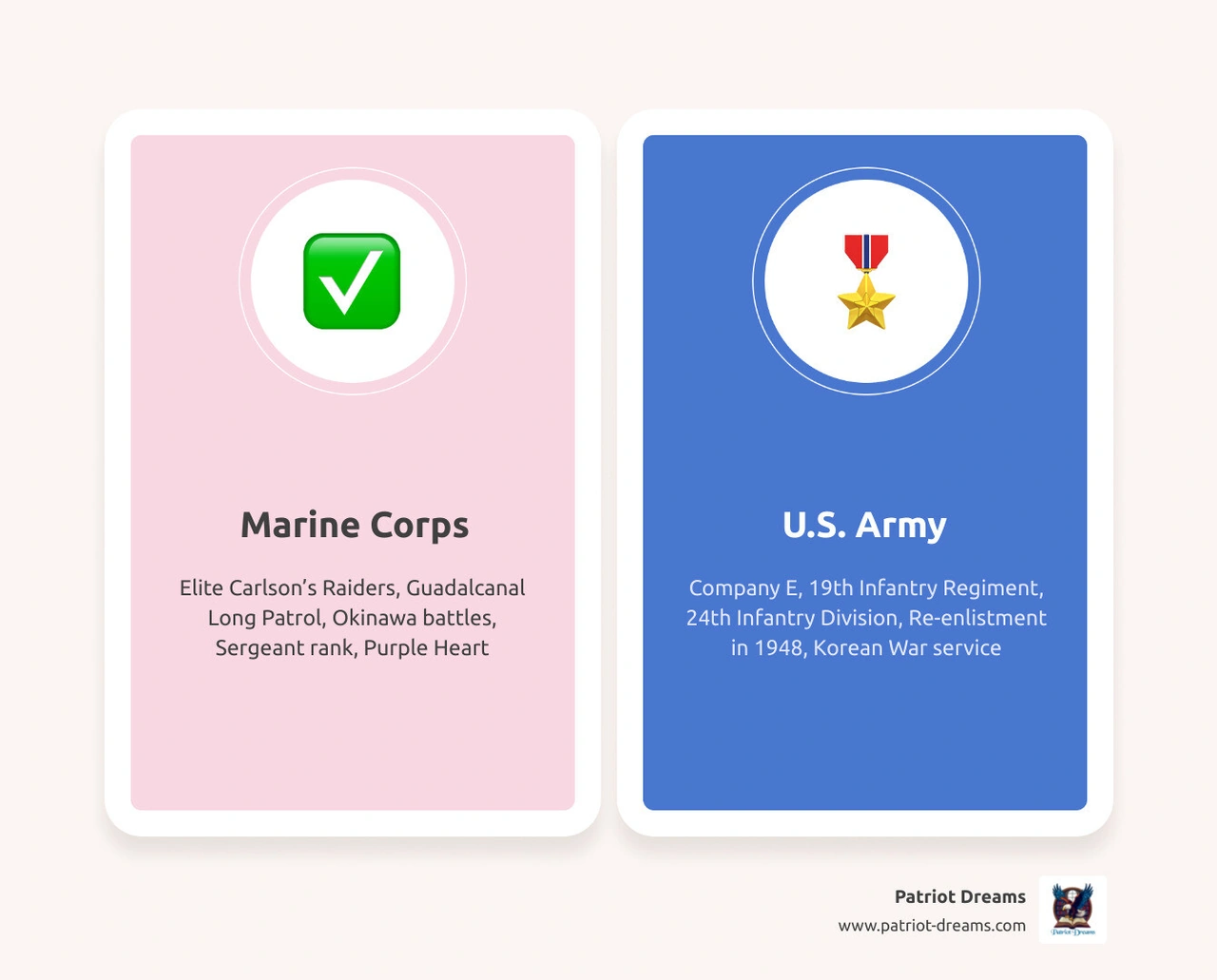
Mitchell’s first taste of combat came during World War II. He wasn't just any Marine; he was selected for "Carlson’s Raiders," an elite special operations unit known for their ruggedness and ability to operate behind enemy lines. During the famous "Long Patrol" on Guadalcanal in 1942, Mitchell’s Ho-Chunk hunting skills were put to the ultimate test. The conditions were brutal. Between the tropical diseases and the constant threat of Japanese patrols, Mitchell lost a staggering 75 pounds.
Despite suffering from malaria and other illnesses, he refused a medical discharge in 1943. He wanted to stay with his brothers-in-arms. He later fought in the bloody battle for Okinawa, where he was wounded in the shoulder and earned his first Purple Heart. By the time the war ended in 1945, he had risen to the rank of Sergeant.
After the war, Mitchell returned to Wisconsin, but the quiet life didn't seem to fit a man who had seen so much. He spent time researching his heritage, even publishing an article on the Black Hawk War in the Wisconsin Archaeologist. He was a man of intellect as well as action, showing us that a warrior can also be a scholar. You can find more about individuals like him in our list of Famous Figures in American History, and you can also read more about his life on his Mitchell Red Cloud Jr. Wikipedia page.
A Warrior’s Return and Re-enlistment
For a few years, Mitchell tried to settle down. He married and had a daughter, Annita. However, the call to serve remained strong. In 1948, he re-enlisted—this time in the U.S. Army. He was assigned to Company E, 19th Infantry Regiment, 24th Infantry Division.
When the Korean War broke out in 1950, Mitchell was among the first to be deployed. His transition from a Marine Sergeant to an Army Corporal didn't bother him; he was a veteran who commanded the respect of every man in his unit. His younger comrades looked up to him, not just for his combat experience, but for his kindness. He was known to trade his rations for candy so he could give it to the local Korean children.
The Ultimate Sacrifice on Hill 123
By November 1950, the war in Korea had taken a dangerous turn. On the night of November 5, Mitchell’s unit was positioned on Hill 123 near Chonghyon, North Korea. It was a cold, dark night, and the atmosphere was thick with tension. Mitchell was manning a forward listening post, a position of extreme danger, armed with his Browning Automatic Rifle (BAR).
Suddenly, the silence was shattered. Thousands of Chinese troops from the 355th Regiment launched a massive surprise assault. They were less than 100 feet away when they burst from the brush. Most men would have retreated immediately, but The Courage of Mitchell Red Cloud Jr.: A Native American Hero of the Korean War was about to be etched into history.

The Courage of Mitchell Red Cloud Jr.: A Native American Hero of the Korean War and His Final Stand
Mitchell was the first to sound the alarm. He stood up and began pouring devastating fire into the charging enemy. He was almost immediately struck by gunfire, but he refused to fall. Even after being hit twice in the chest, he pulled himself up.
In a moment of unbelievable grit, he wrapped his arm around a small tree to steady himself so he could keep firing. He ordered his fellow soldiers to get to safety, shouting for more ammunition to be left by his side. A medic who tried to help him was waved away; Mitchell knew that every second he spent firing his BAR was a second his company had to reorganize and survive.
He was eventually struck by at least eight bullets. When his body was found the next morning, he was still propped against that tree, surrounded by a staggering number of dead enemy soldiers. His sacrifice had prevented Company E from being completely overrun. His story of selfless devotion is as inspiring as that of Who Was Father Kapaun: The Medal of Honor Recipient on the Path to Sainthood. For a deeper look at the events of that night, Mitchell Red Cloud Jr.: Korean War Hero offers a thoughtful account of his bravery.
Interestingly, while the enemy typically looted the bodies of fallen Americans for supplies, they reportedly left Mitchell’s body untouched. Many believe this was a sign of respect from the Chinese soldiers for the incredible bravery he had displayed.
A Legacy of Honor and Remembrance
The news of Mitchell’s heroism quickly reached home. On April 3, 1951, General Omar N. Bradley presented the Medal of Honor to Mitchell’s mother, Nellie Red Cloud, at the Pentagon. It was a somber but proud moment for the Ho-Chunk Nation and the entire United States.
The military has ensured that his name lives on. In 1957, an Army base in Uijeongbu, South Korea, was named Camp Red Cloud. In 1999, the U.S. Navy commissioned the USNS Red Cloud, a large strategic sealift ship. His daughter, Annita, christened the ship in traditional Ho-Chunk regalia, a beautiful bridge between his military service and his tribal roots.
Honoring The Courage of Mitchell Red Cloud Jr.: A Native American Hero of the Korean War Today
Today, Mitchell Red Cloud Jr. is remembered as a titan of the Ho-Chunk people. Every July 4th, the Ho-Chunk Nation observes "Corporal Mitchell Red Cloud Jr. Day" to honor his memory. He was also inducted into the American Indian Hall of Fame in 1983, the first Winnebago to receive that honor.
In recent years, his story has reached a new generation through a graphic novel published by the Association of the U.S. Army (AUSA). It’s a wonderful way to keep his legacy alive, ensuring that young people today can see the face of a true American hero. The Army also shares a beautiful tribute to his memory, which you can read at Cpl. Mitchell Red Cloud Jr. | Article | The United States Army. His life is a vital part of the tapestry of US Historical Figures who have shaped our nation.
Frequently Asked Questions about Mitchell Red Cloud Jr.
What was Mitchell Red Cloud Jr.'s most heroic act?
His most heroic act took place on November 5, 1950, during the Korean War. While manning a forward post on Hill 123, he detected a surprise Chinese assault. Despite being mortally wounded, he refused medical aid and had himself tied to a tree so he could continue firing his weapon, providing the necessary cover for his unit to retreat and reorganize.
Which Native American tribe did Mitchell Red Cloud Jr. belong to?
Mitchell Red Cloud Jr. was a proud member of the Ho-Chunk Nation, also historically known as the Winnebago tribe, based in Wisconsin.
What military honors and memorials are named after him?
He was posthumously awarded the Medal of Honor. Memorials in his name include Camp Red Cloud in South Korea, the USNS Red Cloud (a Navy sealift ship), a park in La Crosse, Wisconsin, and a rifle range at Fort Benning, Georgia.
Conclusion
At Patriot Dreams, we believe that every story of courage is a thread that holds our country together. The Courage of Mitchell Red Cloud Jr.: A Native American Hero of the Korean War is a story of a man who gave everything for his friends and his country, never losing sight of the values his family and tribe instilled in him.
Mitchell’s life reminds us that heroism isn't just about what happens in the heat of battle; it’s about a lifetime of choosing to show up, choosing to serve, and choosing to care for others. Whether he was trading rations for candy or holding a ridge against impossible odds, he represented the very best of the American spirit.
We invite you to keep these stories alive in your own families. Explore our interactive maps and listen to the voices of the past. Together, we can ensure that heroes like Mitchell Red Cloud Jr. are never forgotten.

Join the Patriot Dreams Community
Download the app today and start your journey through American history and personal legacy.

Explore Our Latest Insights
Dive into stories that shape our American legacy.