
The Pied Piper of Saipan: Guy Gabaldon’s Remarkable Story

A Childhood of Kindness: How Guy Gabaldon Learned the Language of the Heart
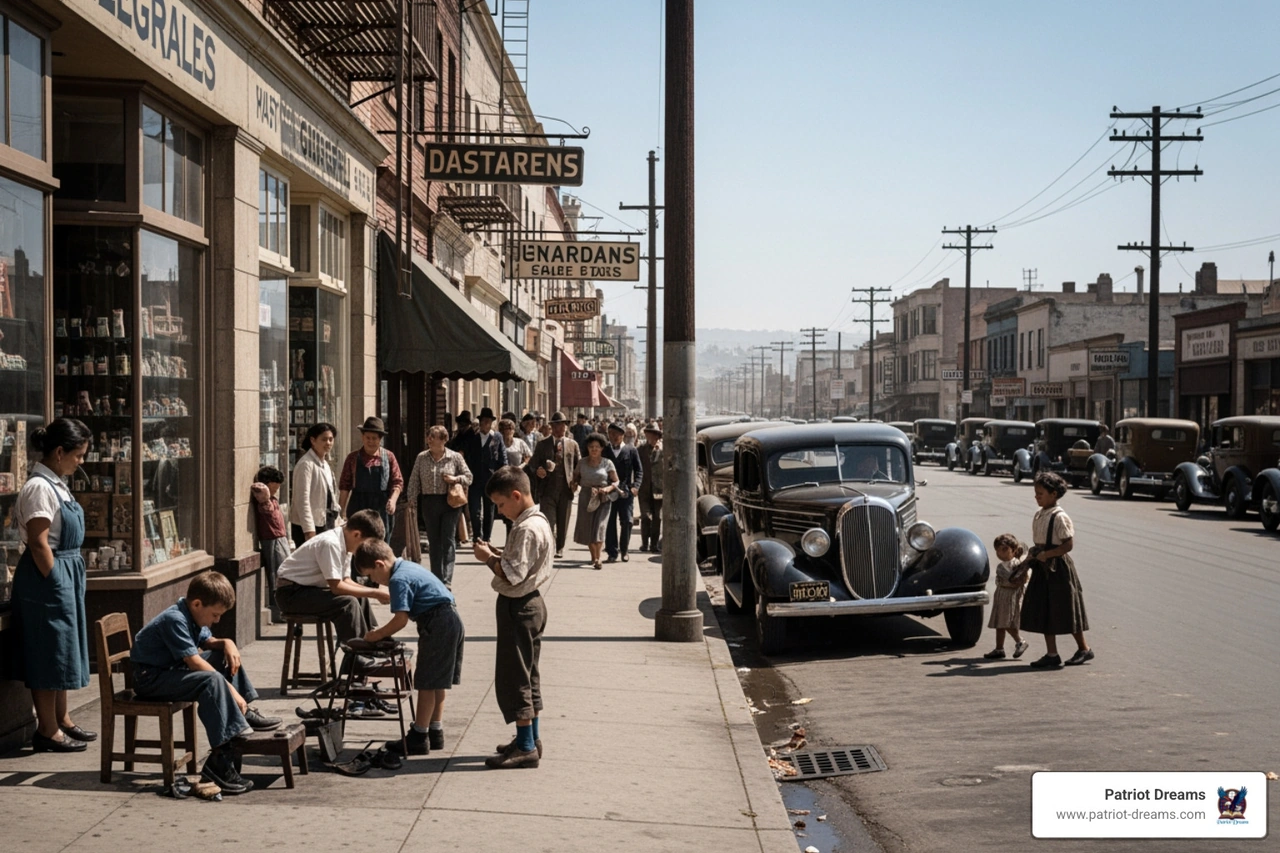
To truly understand The Pied Piper of Saipan: Guy Gabaldon’s Remarkable Story, we have to go back to the sunny, bustling streets of East Los Angeles in the 1930s. Guy was born in 1926 into a large Mexican-American family, but his childhood was far from easy. By the age of 10, he was a "waif" on the streets, shining shoes on Skid Row to help make ends meet. He eventually joined a multi-ethnic street gang called the "Moe Gang," which sounds tough, but it was here that Guy learned the resilience and "street smarts" that would later keep him alive in the Pacific jungles.
However, the most pivotal moment of his young life happened at age 12. Guy was "adopted" — not by law, but by love — by the Nakanos, a Japanese-American family. He became inseparable from the Nakano twins, Lyle and Lane. For several years, Guy lived in their home, ate their food, and attended Japanese language school with them every day.
This wasn't just about learning vocabulary; it was a total cultural immersion. He learned "backstreet" Japanese — the kind of informal, emotional language spoken by real people, not just diplomats. This upbringing is a beautiful example of the American spirit we celebrate during Hispanic Heritage Month: The Fearlessness of Guy Gabaldon. It shows how kindness and open doors can prepare us for greatness in ways we never expect.
The Bond That Transcended Borders
The bond Guy shared with the Nakanos was tested by one of the most difficult chapters in American history. Following the attack on Pearl Harbor and the signing of Executive Order 9066, the Nakano family was sent to an internment camp. Guy watched his foster family be taken away, a heartbreaking experience that deeply influenced his sense of empathy.
Even as he joined the Marine Corps at age 17, Guy didn't carry hatred for the Japanese people. He remembered the kindness of the Nakanos. While some of his fellow Marines saw only an "enemy," Guy saw people who had families, just like the one that had taken him in. This sense of loyalty and brotherhood reminds us of other famous stories of sacrifice, such as We Stick Together: The Unforgettable Sacrifice of the Sullivan Brothers. Guy’s unique background gave him a "language of the heart" that would soon become his most powerful weapon.
The Battle of Saipan and the Courage to Choose Compassion
By June 1944, the United States was ready to strike the Mariana Islands. Saipan was a vital target. If the U.S. could capture it, they could build airfields for the B-29 Superfortress, allowing American bombers to reach the Japanese home islands.
The battle was brutal. Saipan was defended by over 31,000 Japanese soldiers who lived by the Bushido code — a warrior's ethic that viewed surrender as a deep dishonor. Many soldiers and even civilians believed the propaganda that Americans would torture them, leading thousands to choose suicide over capture. It was a landscape of jagged cliffs and deep caves, a place where the tragedy of war was felt by many Pearl Harbor Survivors who were now pushing toward the end of the conflict.

The Pied Piper of Saipan: Guy Gabaldon’s Remarkable Story and the Power of Persuasion
When Guy arrived on Saipan with the 2nd Marine Division, he was assigned to an intelligence section. But Guy wasn't one for sitting behind a desk. On his very first night, he "went rogue." He snuck out on a lone-wolf patrol, moving silently through the brush. He used his "backstreet Japanese" to surprise two Japanese soldiers, killing one but convincing the other two to surrender.
When he returned to camp with prisoners, his commanding officer, Captain John Schwabe, was furious. Guy had left his post and risked his life (and the safety of the unit). He was threatened with a court-martial. But Guy didn't stop. He knew he could do more. The next night, he went out again and returned with 50 prisoners.
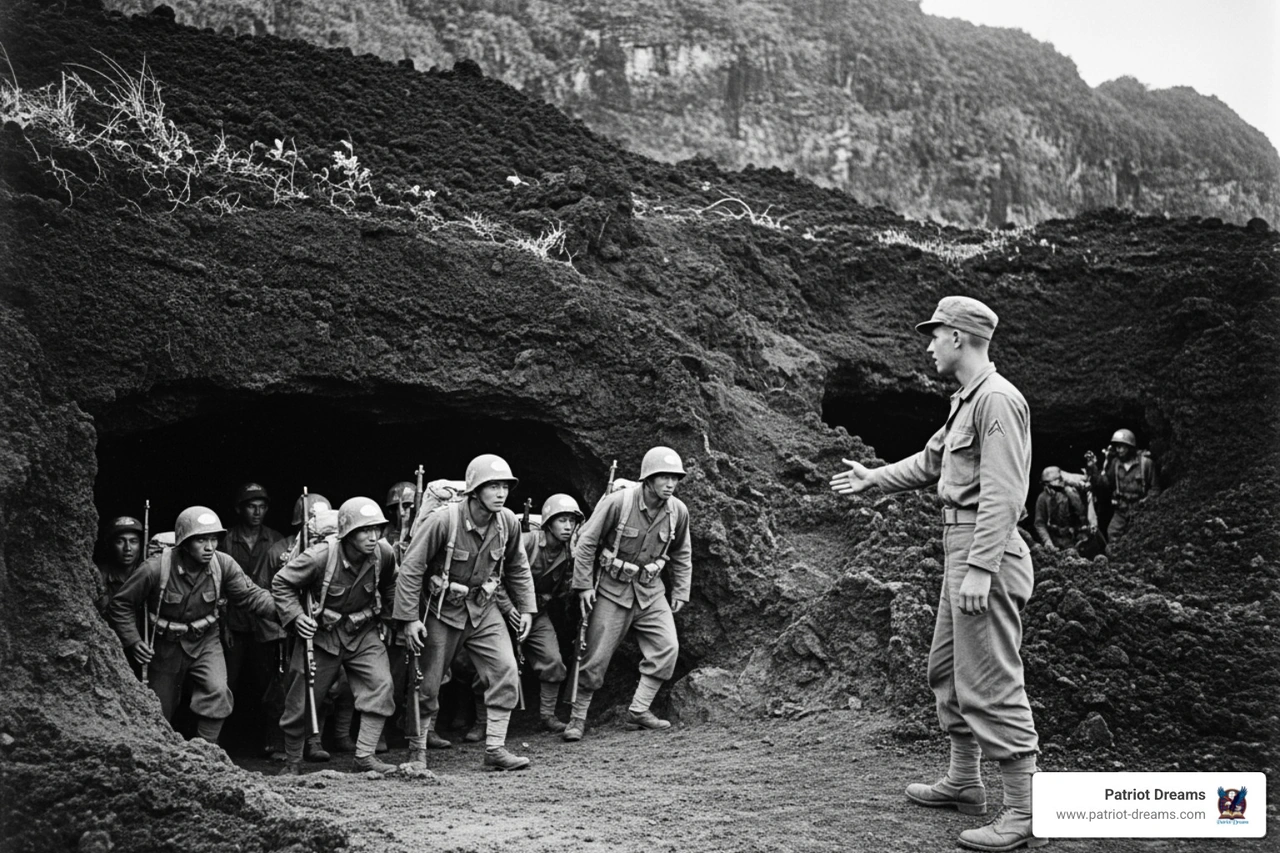
Guy’s tactic was simple but brave: he would approach the mouth of a cave alone, often after killing the guards to show he meant business. Then, he would start talking. He told them they would be treated with dignity. He promised them food, water, and medical care. Slowly, the "lone-wolf" began to win the trust of his superiors. You can read more about these early exploits in How Guy Gabaldon Became The 'Pied Piper of Saipan'.
The Pied Piper of Saipan: Guy Gabaldon’s Remarkable Story of the 800-Soldier Surrender
The climax of The Pied Piper of Saipan: Guy Gabaldon’s Remarkable Story occurred on July 8, 1944, near Marpi Point. The island was nearly won, but thousands of Japanese were trapped against the northern cliffs.
Guy approached a large cave complex alone. He captured two guards and then sent one of them back inside with a message: Surrender now, and you will be treated honorably. If not, the island will be leveled. He even posed as an envoy for General "Howlin' Mad" Holland Smith, claiming the Americans had the entire area surrounded by massive naval firepower.
To the shock of the Marines watching from a distance, a Japanese officer emerged, followed by a trickle of soldiers, then a flood. By the end of the day, Guy had single-handedly persuaded over 800 soldiers and civilians to surrender. It was a humanitarian feat that saved nearly a thousand lives in a single afternoon.
A Brave Choice in the Face of Danger
Guy’s "psychological warfare" was rooted in simple human kindness. He didn't just use threats; he used K-rations and cigarettes. He spoke to them as people. This wasn't the kind of heroism usually seen in movies, but it was just as dangerous. Every time he approached a cave, he was one trigger-pull away from death.
His ability to bridge the gap between two warring cultures is why his story is often featured in discussions about the human side of conflict, such as Behind the Badge: Real Stories of American Heroes in Pop Culture.
A Legacy of Peace: Awards, Media, and the Post-War Years
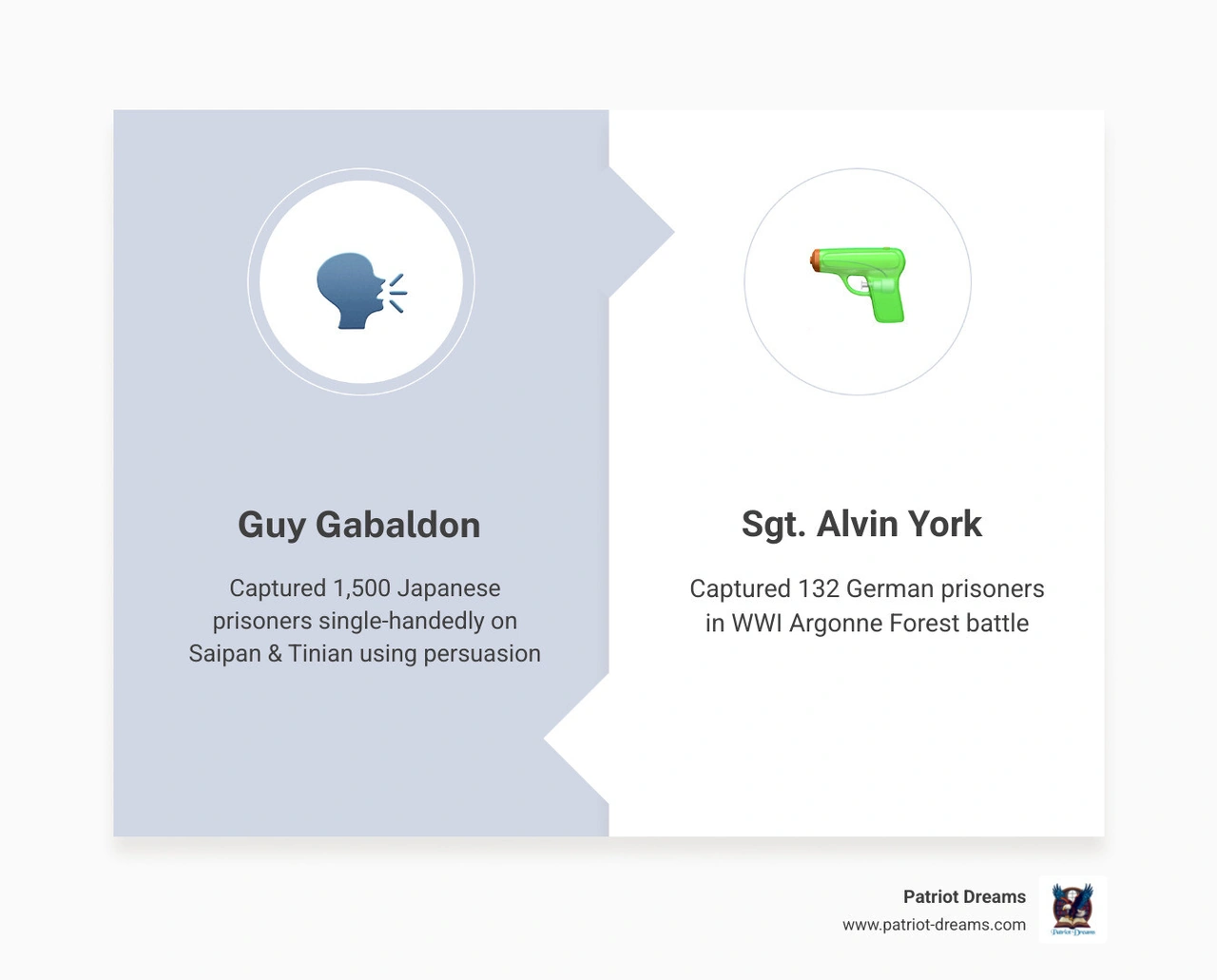
After his incredible service on Saipan and Tinian — where he was eventually wounded by machine-gun fire — Guy returned home. His commanding officer recommended him for the Medal of Honor, noting that Guy had captured more than ten times the number of prisoners as the legendary Sgt. Alvin C. York did in WWI.
However, the recommendation was downgraded to a Silver Star. It wasn't until 1960, after Guy's story was featured on the TV show This Is Your Life, that the Navy upgraded his award to the Navy Cross, the second-highest honor for valor. While some still lobby for him to receive the Medal of Honor, Guy’s legacy is secure in the hearts of those who know his story. His life reminds us of other unsung heroes who worked in the shadows, like Virginia Hall: The Limping Lady Who Outwitted the Nazis.
In 1960, Hollywood turned his life into a movie called Hell to Eternity, starring Jeffrey Hunter. While the movie took some creative liberties, it brought international attention to the boy from East LA who became a legend.
Honoring the Pied Piper of Saipan: Guy Gabaldon’s Remarkable Story Today
Post-war life for Guy was just as colorful as his time in the Marines. He ran businesses in Mexico, wrote a book titled Saipan: Suicide Island, and even ran for Congress. He eventually moved back to Saipan, where he lived for many years, continuing to foster a spirit of reconciliation between the U.S. and Japan.
Guy passed away in 2006 and was buried with full military honors at Arlington National Cemetery. His story remains a beacon of what one person can achieve when they lead with courage and compassion, much like the selfless service of Who Was Father Kapaun: The Medal of Honor Recipient on the Path to Sainthood.
Lessons in Leadership: Why the Pied Piper of Saipan: Guy Gabaldon’s Remarkable Story Still Inspires Us
At Patriot Dreams, we believe that history is more than just dates and maps; it’s about the values that define us. Guy Gabaldon’s story teaches us several vital lessons for today:
- Cultural Intelligence is a Superpower: Guy’s ability to understand the "other side" saved more lives than any weapon.
- Moral Courage: It took guts to go against orders and choose a path of persuasion over destruction.
- The Power of One: An 18-year-old private changed the course of a battle through sheer force of will.
Guy demonstrated the classic Marine Corps leadership traits: justice, judgment, tact, and integrity. His story is a reminder that even in the darkest times, we can choose to be a light. It’s the same spirit of unity found in the story of The Four Chaplains: George Fox, Alexander Goode, Clark Poling, John Washington.
Frequently Asked Questions about Guy Gabaldon
How many prisoners did Guy Gabaldon actually capture?
Most historical records and his Navy Cross citation credit him with capturing or persuading over 1,300 Japanese soldiers and civilians. Some estimates from his commanding officer and military intelligence put the number closer to 1,500 across the campaigns of Saipan and Tinian.
Why was Guy Gabaldon called the "Pied Piper"?
He was given the nickname because he would go into the hills and caves alone and "lure" the enemy out. Just like the fairy tale character who led the children out of Hamelin, Guy would lead long lines of surrendering Japanese back to American lines.
Did Guy Gabaldon ever receive the Medal of Honor?
No. Despite a strong recommendation from his superiors and decades of lobbying by veteran groups and the Hispanic community, he was awarded the Navy Cross. Many still believe his actions warranted the nation's highest military honor.
Conclusion
The Pied Piper of Saipan: Guy Gabaldon’s Remarkable Story is a testament to the fact that the American dream is built on the contributions of people from all walks of life. Guy was a kid who could have been forgotten by the system, but instead, he became a hero who chose to save his enemies rather than just defeat them.
As we look back at his life in May 2026, we are reminded that our history is full of these "quiet" heroes whose weapons were words and whose shield was their character. We hope Guy’s story inspires you to look for the "language of the heart" in your own life.
If you enjoyed this journey into the past, we invite you to Listen to more stories of American heroes on the Patriot Dreams app. Together, we can keep these legacies alive for the next generation.

Join the Patriot Dreams Community
Download the app today and start your journey through American history and personal legacy.

Explore Our Latest Insights
Dive into stories that shape our American legacy.