
The Best Family Revenge Stories: From Ghosted Parties to Lost Millions


The Human Side of Family Revenge Stories
Family revenge stories are some of the most gripping, heartbreaking, and surprisingly relatable tales you'll ever come across. Here's a quick look at what draws so many people to them:
- Inheritance disputes - A family member steals what was rightfully yours
- Generational grudges - A wound passed down from parent to child over decades
- Financial betrayal - Trust funds drained, signatures forged, assets hidden
- Stepfamily conflict - Years of unappreciated sacrifice finally reaching a breaking point
- Legacy and truth-telling - Correcting the public record after a loved one passes
These stories hit differently than workplace drama or neighbor feuds. When the person who betrays you is supposed to love you, the stakes feel impossibly high. And the desire for justice — or at least some small measure of closure — runs deep.
Research even backs this up. Studies show that younger people and men tend to score higher on measures of spitefulness, but the truth is, family conflict can push almost anyone to their limit. It doesn't matter how calm or forgiving you are by nature.
Some of these stories end in court. Some end with a quiet act of brilliance. And some — the best ones — end in healing.
We're Kyle & Emily, and we've gathered the most powerful family revenge stories we could find — from stolen millions to reunion envelopes that changed everything — so pull up a chair and settle in.
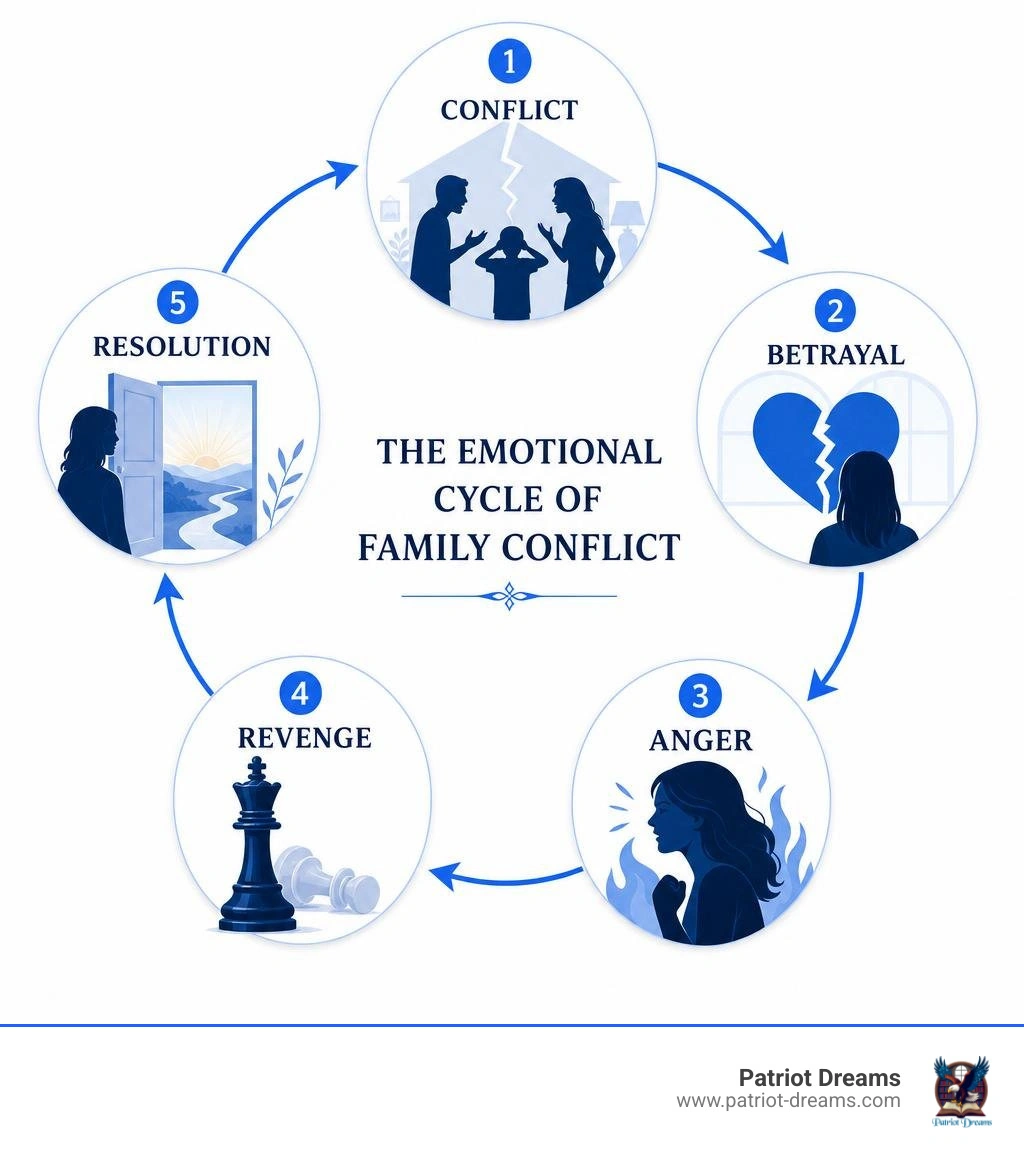
Understanding the Heart of Family Revenge Stories

There is something uniquely painful about a betrayal that comes from within our own household. When we experience conflict at work or with a neighbor, we can usually go home, close the door, and find sanctuary. But when the conflict is inside the family, the sanctuary itself is broken.
What truly motivates someone to seek vengeance against their own flesh and blood? Unlike simple workplace disputes over stolen lunches or office space, family conflicts are fueled by deep emotional stakes. When a family member betrays us, they aren't just taking an asset or crossing a boundary; they are fracturing our sense of identity, safety, and trust.
Historically, when greed and desperation take over, the consequences can be devastating. We see this in extreme cases where business partnerships between siblings turn toxic. For instance, in a deeply tragic case from New Jersey, a long-standing financial dispute between brothers ended in unspeakable tragedy. Prosecutors revealed that Keith Caneiro confronted his brother, Paul, over systematically embezzling funds from their co-owned businesses and an irrevocable trust. The confrontation led to a devastating escalation, culminating in a trial where a Jury convicts New Jersey man who killed his brother's family and burned their home.
These heartbreaking moments remind us of how critical it is to address grievances before they grow into destructive forces. When we look at these stories, we see a reflection of broader human struggles: the desire for power, the need for control, and the deep-seated yearning for loyalty. To explore how these dynamics have shaped our collective history, you can read more about The American Story: Values, Beliefs, and Myths Unveiled. It helps us understand how we, as a culture, navigate the delicate balance between personal justice and the preservation of our shared values.
Famous Tales of Inheritance and Reclaimed Legacies

Inheritance theft and financial abuse are among the most common catalysts for family revenge stories. When a parent or relative passes away, the distribution of their estate is supposed to be a reflection of their final wishes and love. Unfortunately, it can also become a battleground where old rivalries and hidden greed come to light.
When trust funds are drained, signatures are forged, or assets are hidden, the victims of this financial abuse often feel completely powerless. However, some individuals find quiet, legal, and highly sophisticated ways to reclaim their agency and expose the truth.
How Financial Truth-Telling Shapes Family Revenge Stories
Consider the remarkable journey of a woman who spent decades being treated as the family scapegoat. From a young age, her achievements were minimized, and she was forced to work multiple jobs just to survive, even paying off a massive $720,000 mortgage on the family home to prevent foreclosure. Despite her sacrifices, her parents attempted to hand the deed of the house over to her favored sister as a gift.
The turning point came when her Aunt Martha discovered old bank statements in a filing cabinet. These documents revealed that her parents had systematically hidden and drained a $2.3 million trust fund that had been left entirely to her. Armed with this knowledge and her professional skills in financial analysis, she hired a forensic accountant and legal counsel to bring the truth to light.
You can read the full, dramatic account of how she stood up for herself in How I Reclaimed My $2.3 Million Inheritance After My Family Tried to Steal Everything: The Christmas Dinner Revelation That Changed My Life - America Focus. By using forensic accounting to trace the stolen assets, she didn't just reclaim her financial security; she reclaimed her dignity.
This story highlights the immense power of financial transparency and the importance of Family History Preservation. When we document our family histories with honesty, we protect the legacies of those who came before us from being distorted by greed.
The Stepfamily Reunion Envelope and the Power of Boundaries
Another powerful example of reclaiming self-worth involves a woman who spent nine years caring for her stepfamily, only to be treated as an outsider. The breaking point arrived at a large family reunion when her stepdaughter publicly insulted her, referring to her as "the help" and telling her she belonged in the kitchen.
Unbeknownst to the family, the stepmother had recently discovered that her husband and stepdaughter had attempted an unauthorized transfer of $800,000 from her personal investment accounts. Rather than reacting with immediate anger, she quietly gathered her evidence. At the reunion dinner, she handed over an envelope containing a 47-page forensic accounting report detailing the attempted theft, along with divorce papers and a revocation of the collateral she had provided for her husband's struggling business.
To read how this quiet act of boundary-setting unfolded, check out the narrative on My Stepdaughter Called Me "The Help" at Our Family Reunion. Then They Opened My Envelope - AMERICAN WONDERHUB. By revoking her financial support, she allowed the ungrateful system to collapse under its own weight, proving that setting firm boundaries is often the most elegant form of justice.
Generational Grudges and the Search for Justice
Sometimes, the pain of a family betrayal is not resolved in a single season. It can linger, quietly passing from one generation to the next like an unwanted heirloom. When trauma is left unaddressed, it can shape the lives of children who were not even born when the original conflict began.
The 23-Year Grudge: A Son's Retaliation in Pune
A sobering example of how a family grudge can survive across decades occurred in Pune, India. In 2003, a man was tragically murdered, leaving behind a wife and an infant son who was only a year and a half old. As the boy grew into adulthood, he watched his mother struggle daily to run a small eatery to support them, all while enduring a prolonged, exhausting legal battle.
The narrative of his father's death was nurtured throughout his entire life. When the alleged murderer was finally released on bail in April 2026, the young man, now 24 years old, took the law into his own hands and executed a retaliatory attack.
This tragic cycle of generational violence is detailed in several news reports:
- Pune youngster kills father’s ‘killer’ after 23 years | Pune News - The Indian Express
- Pune Crime: Son Kills Father’s Alleged Murderer After 23 Years, Four Arrested in Bhor Taluka Revenge Case
- 23 years after father’s murder, son hacks alleged killer to death in Katraj Ghat | Pune News - The Times of India
While this case shows the extreme endurance of a family grudge, it also serves as a heartbreaking cautionary tale. It highlights the critical need for early psychological support and healthy avenues for grief. When justice is sought through violence, it only creates more victims and extends the cycle of pain.
Finding Peace Beyond Generational Family Revenge Stories
How do we break these cycles in our own families? The answer lies in shifting our focus from retaliation to healing. True justice does not come from hurting those who hurt us; it comes from building a life so beautiful and peaceful that the pain of the past no longer has power over our future.
By preserving Personal Historical Accounts with honesty and grace, we can look back at our ancestors' struggles with empathy rather than anger. Our Preserving Family Stories Guide offers gentle, practical ways to document your family's journey, helping you transform historical pain into a legacy of resilience, understanding, and hope.
Lessons in Healing: Moving from Spite to Legacy Preservation
When we are wronged by those closest to us, the temptation to strike back in spite can be incredibly strong. Yet, the most satisfying and long-term resolution is often found in "playing the long game"—focusing on self-improvement, securing legal protections, and preserving the absolute truth of our lives.
For instance, when dealing with aging parents or vulnerable relatives, securing a durable Power of Attorney (POA) and keeping detailed financial records can prevent exploitation before it starts. In other cases, families have used honest obituaries to set the public record straight, omitting abusive or absent relatives to preserve the true, loving legacy of the deceased.
To help visualize the difference between these two paths, let's look at how destructive retaliation compares to constructive boundary setting:
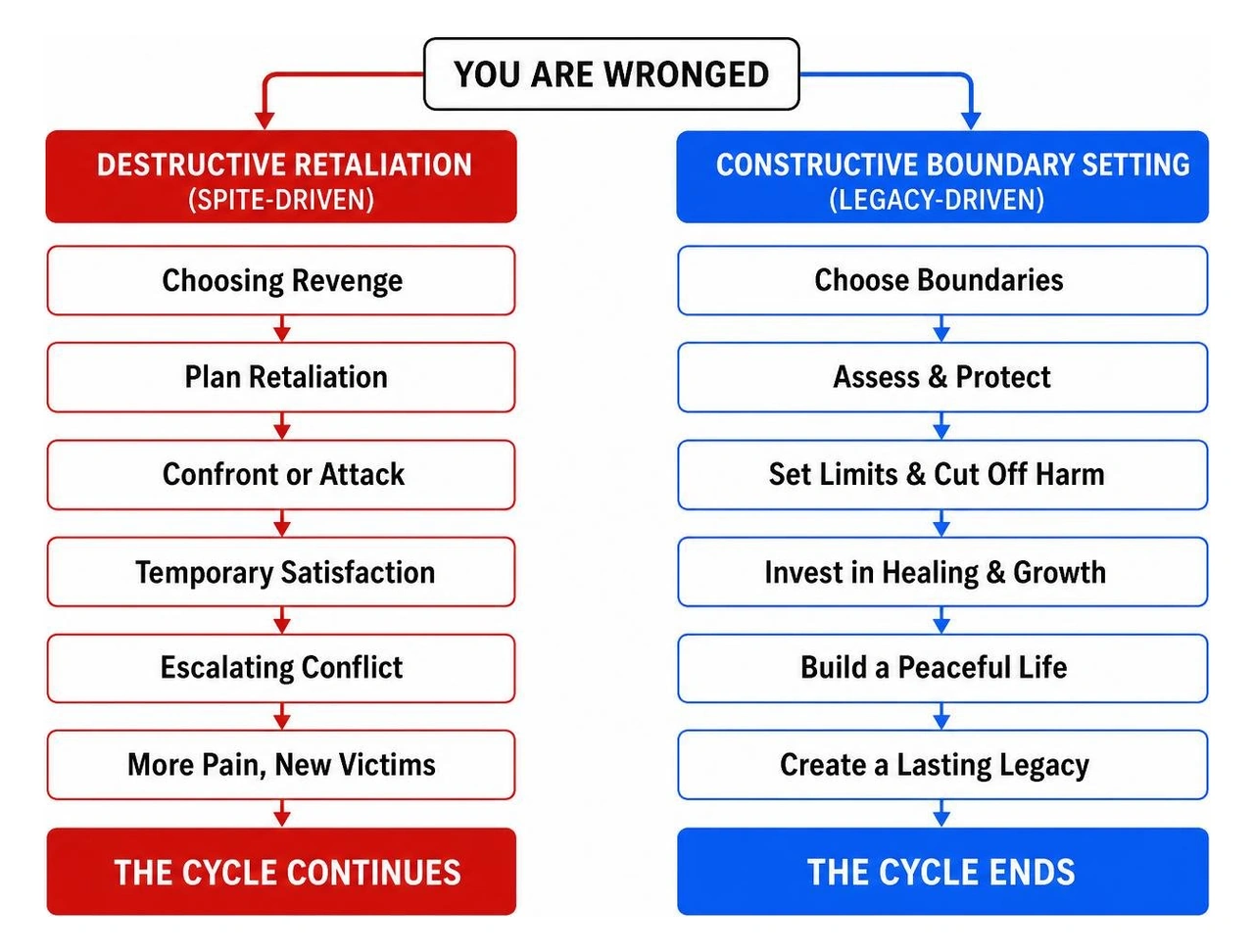
| Action Type | Destructive Revenge (Spite-Driven) | Constructive Boundaries (Legacy-Driven) |
|---|---|---|
| Primary Goal | To inflict pain or embarrassment on the wrongdoer. | To protect one's peace, assets, and emotional well-being. |
| Methods Used | Public confrontations, retaliation, or active sabotage. | Legal audits, forensic accounting, and cutting off contact. |
| Long-Term Impact | Keeps you tied to the conflict; perpetuates anger. | Fosters personal growth, healing, and true independence. |
By choosing to set constructive boundaries, we stop giving our energy to the people who hurt us. We begin to plant seeds for a healthier, happier future.
Frequently Asked Questions About Family Conflict
Navigating family disagreements can be incredibly complex. Here are a few common questions and thoughtful ways to approach these sensitive situations.
What motivates someone to seek revenge against a family member?
The primary driver is almost always a sense of deep emotional betrayal. Because we expect our family to be our safest support system, a breach of that trust feels incredibly personal. When formal channels (like legal systems or family discussions) fail to acknowledge the wrong, individuals may feel forced to seek validation or justice on their own terms.
How can families resolve deep-seated inheritance disputes peacefully?
The most effective way is through transparent, third-party mediation and clear legal documentation. Relying on professional forensic accountants or estate planning attorneys helps remove the intense emotion from the situation, allowing families to focus on factual records and fair, legally binding solutions.
Can sharing family stories help heal generational wounds?
Yes, beautifully so. When we take the time to listen to and record our family's history, we often discover the underlying struggles, misunderstandings, and challenges that our ancestors faced. This narrative approach allows us to view our family members as complex, imperfect human beings, fostering empathy and helping us close old wounds.
Conclusion: Preserving Your True Family Legacy
At the end of the day, every family has its challenges, its quiet triumphs, and its moments of struggle. The stories we choose to carry forward define who we are. While family revenge stories show us the depths of human hurt, they also remind us of the incredible resilience of the human spirit.
We don't have to let the difficult chapters of our history write the rest of our lives. We can choose to preserve our stories with love, honesty, and a commitment to healing.
Here at Patriot Dreams, we believe that every family’s journey is worth remembering. Through our audio storytelling platform, we help you bring your family's history, heritage, and personal triumphs to life on an interactive map. It’s a warm, gentle way to ensure that your true legacy—one of kindness, strength, and perseverance—is preserved for generations to come.
We invite you to take a gentle step toward healing and connection today. Explore our guide on how to preserve your family history and start documenting the stories that truly matter.

Join the Patriot Dreams Community
Download the app today and start your journey through American history and personal legacy.

Explore Our Latest Insights
Dive into stories that shape our American legacy.