Hands Off the Americas and the Making of the Monroe Doctrine 1823

What the Monroe Doctrine of 1823 Said
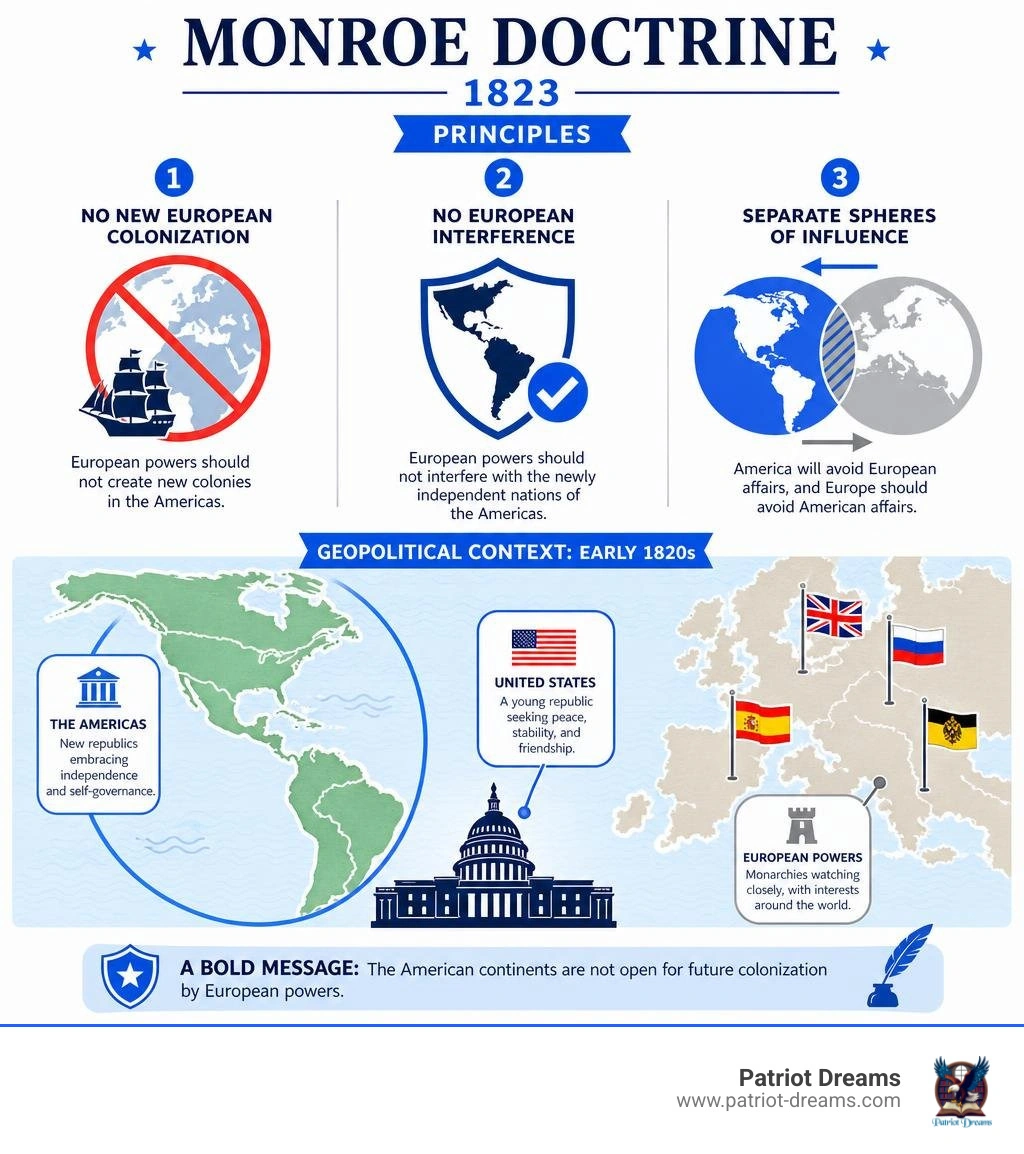
The Monroe Doctrine of 1823 was President James Monroe's warning that European powers should not create new colonies or interfere with independent nations in the Americas. In return, the United States said it would stay out of Europe's internal conflicts and existing European colonies.
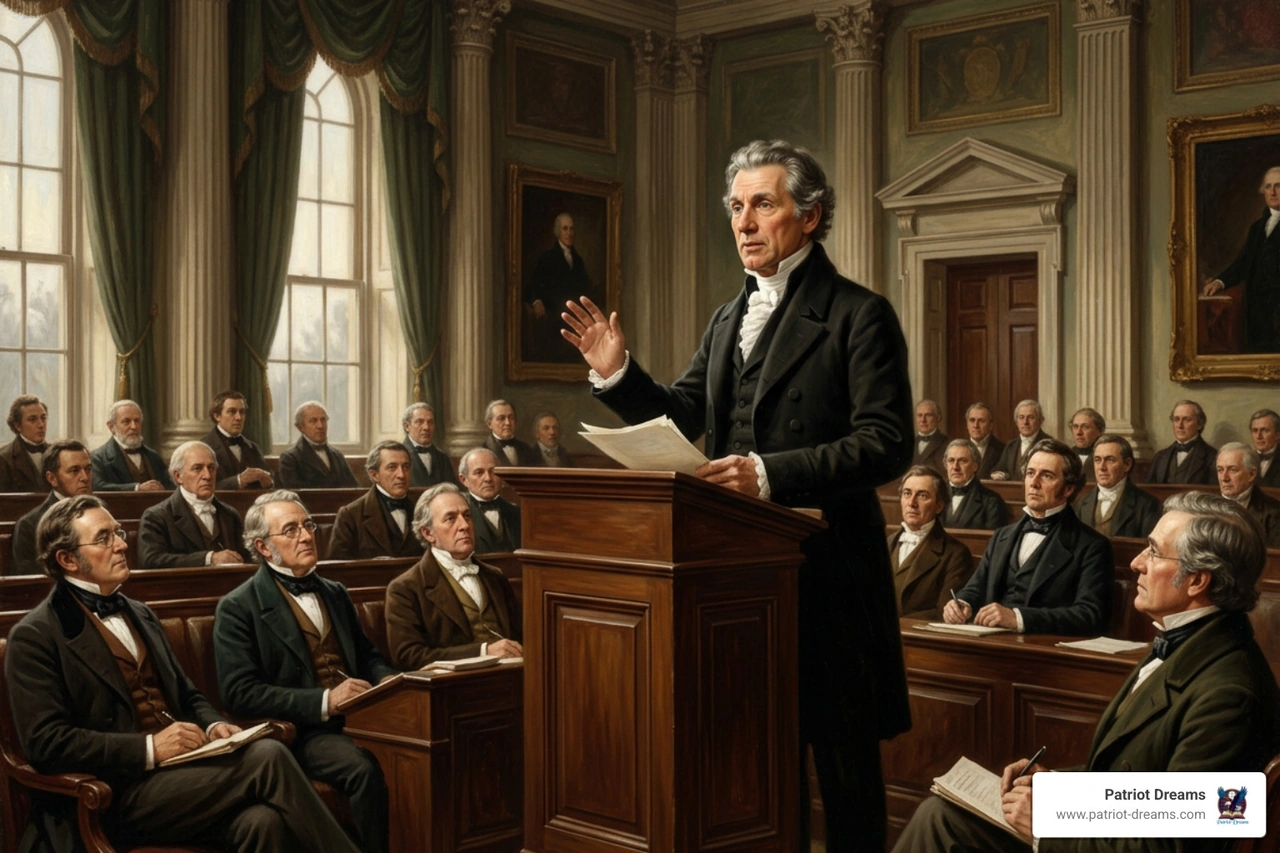
Delivered to Congress on December 2, 1823, the policy rested on three simple ideas:
- No new European colonization in the Western Hemisphere.
- No European interference with the newly independent countries of the Americas.
- Separate spheres of influence: America would avoid European affairs, and Europe should avoid American affairs.
Monroe wrote that the American continents were no longer to be considered open for future colonization by European powers. It was a bold statement from a young nation with limited military strength, shaped by concern for Latin America's new republics and by wider rivalry among Britain, Russia, Spain, and other European powers.
Kyle & Emily will guide you through what Monroe said, why he said it, and how this 1823 message shaped two centuries of American diplomacy.
Geopolitical Origins of the Monroe Doctrine 1823
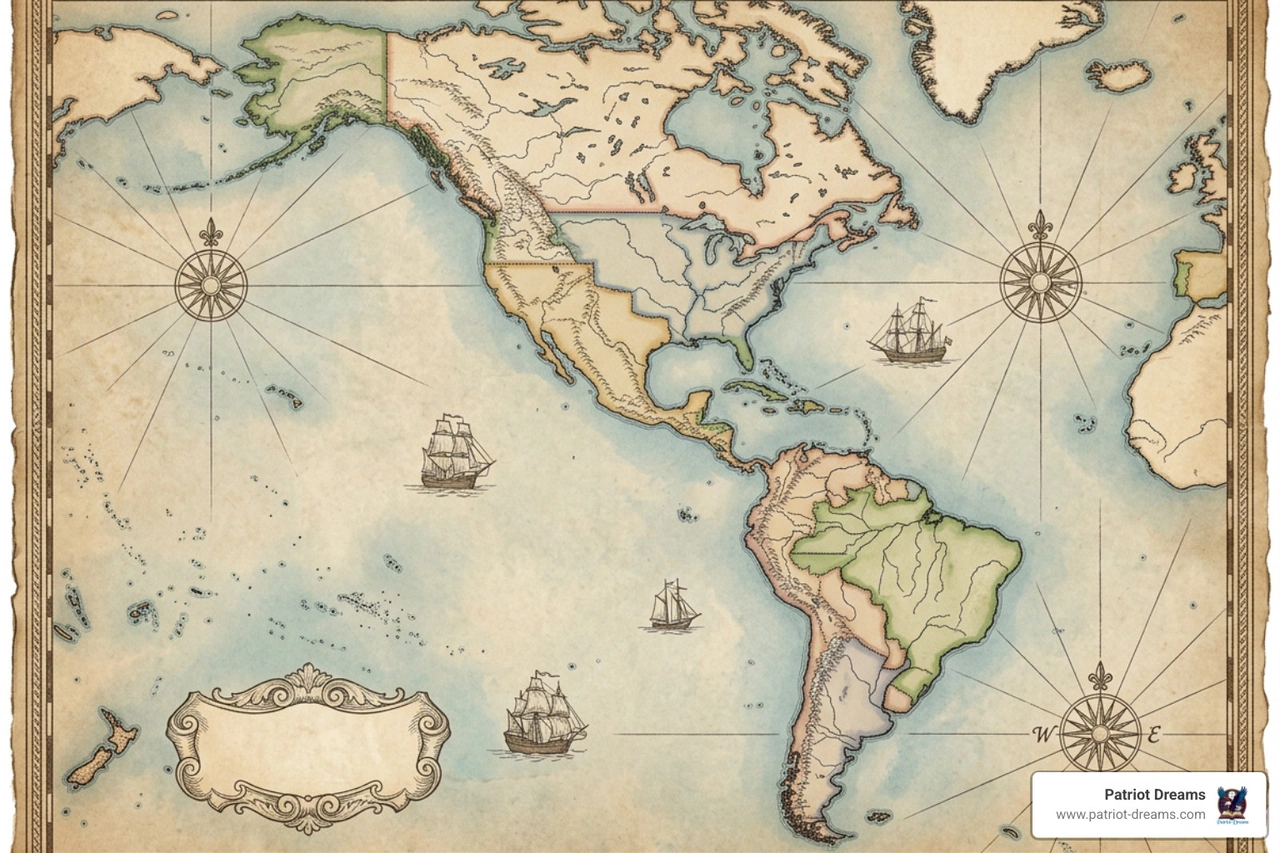
To understand why this message mattered so deeply, we need to travel back to the early 1820s. The world was emerging from decades of turmoil following the Napoleonic Wars. Across South and Central America, people had fought courageous campaigns for liberty, breaking away from the Spanish Empire to establish fifteen newly independent nations between 1810 and 1823.
In Washington, leaders watched these developments with genuine hope. The United States was the first republic in the modern Americas, and seeing neighbors embrace self-governance felt like a natural triumph for liberty. However, European monarchies saw things differently.
As preserved in the official milestone transcript from the National Archives, President Monroe felt compelled to establish clear diplomatic boundaries before European rivalries crossed the Atlantic ocean.
European Powers and the Holy Alliance
In Europe, major powers including Austria, Prussia, Russia, and France had formed the Holy Alliance and broader concert systems aimed at restoring traditional monarchies. After French troops intervened in Spain in 1823 to restore King Ferdinand VII to absolute power, rumors swirled that these European crowns might combine forces to reconquer Spain's lost American colonies.
At the very same time, Czar Alexander I of Russia issued an imperial decree (an ukase) in 1821. This edict asserted sweeping Russian territorial claims along the Pacific Northwest coast down into Oregon territory, while barring foreign ships from vast stretches of northern Pacific waters. The young United States suddenly found itself looking at potential imperial encirclement from both the northwest and the south.
British Proposals and the Role of John Quincy Adams
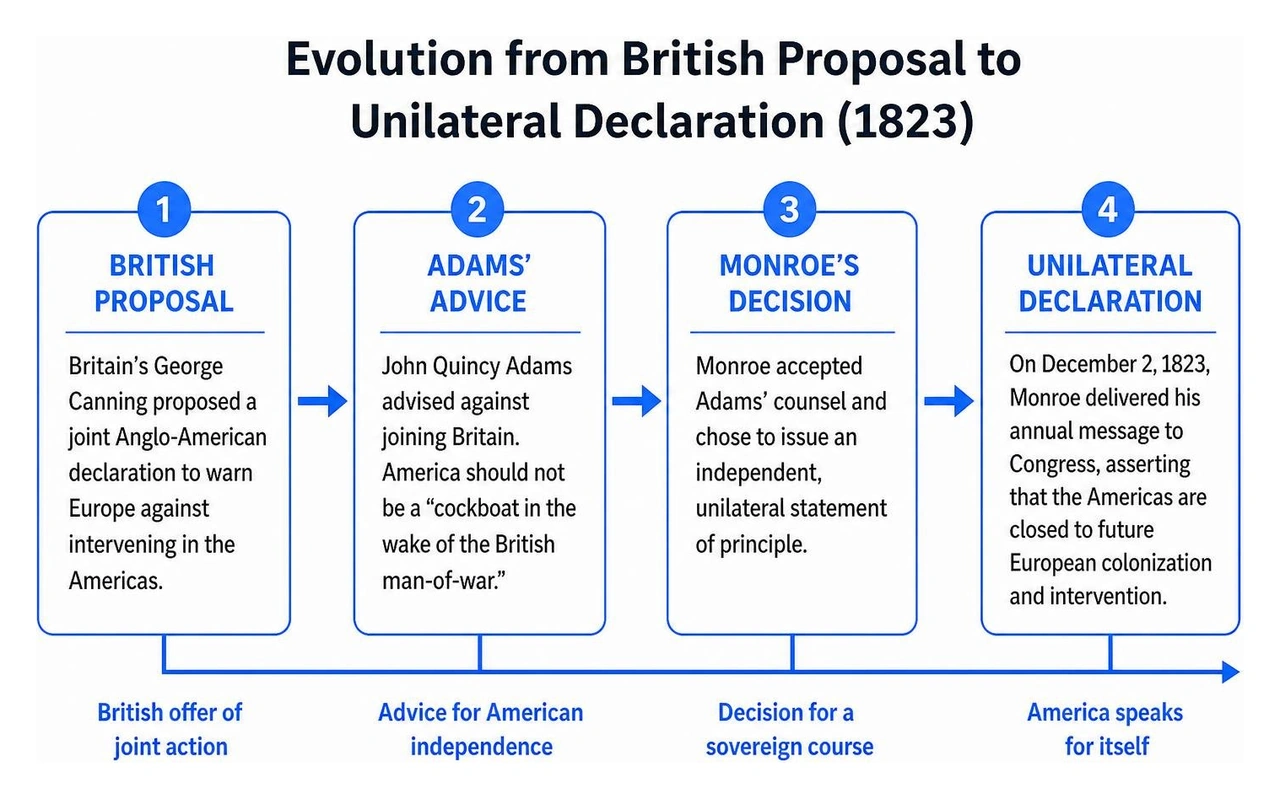
Great Britain found itself in an interesting position. Having built thriving merchant trade networks with the new Latin American republics, Britain did not want Spain or France reasserting closed colonial trade monopolies. British Foreign Secretary George Canning approached the American minister in London, Richard Rush, proposing a joint Anglo-American declaration warning continental Europe against intervention.
President Monroe turned to his trusted mentors, former presidents Thomas Jefferson and James Madison, who both advised accepting the British offer. But Monroe’s brilliant Secretary of State, John Quincy Adams, strongly disagreed.
Adams argued that joining Britain would make the United States appear dependent on British power. In a famous metaphor, Adams warned that America should not come in as a mere "cockboat in the wake of the British man-of-war." Instead, Adams urged Monroe to issue an independent, unilateral statement of principle. As detailed in the historical analysis of Monroe's annual message at Miller Center, Monroe embraced this sovereign path, ensuring the message was delivered directly by the American executive to Congress.
The Core Principles of Hemispheric Defense
When Monroe delivered his annual address on December 2, 1823, the foreign policy passages were woven directly into a broader report on domestic matters, including road construction, the postal service, and naval patrols protecting commerce against piracy. Yet those few foreign policy paragraphs became a foundational pillar of American statecraft.
At its heart, the policy established what historians call the "two spheres" concept: the Old World of European monarchies and the New World of American republics operated under fundamentally distinct political systems that should remain separate. For an easy-to-understand breakdown, you can explore the definition of Monroe Doctrine on our heritage platform.
The Core Pillars of the Monroe Doctrine 1823
The announcement contained three foundational clauses, with a fourth recognized over time:
- The Non-Colonization Principle: The American continents were closed to any future European colonization.
- The Non-Intervention Principle: Any attempt by European powers to extend their political system to the Americas or control independent nations would be viewed as dangerous to U.S. peace and safety.
- Mutual Neutrality: The United States would not meddle in European internal affairs or European wars, nor interfere with existing European colonies in the Western Hemisphere.
- De Facto Recognition: The United States respected established independent governments that demonstrated self-rule.
| Policy Milestone | Year | Primary Focus | Geopolitical Scope |
|---|---|---|---|
| Washington's Farewell Address | 1796 | Avoiding permanent political alliances | Domestic national defense & neutrality |
| Monroe's Annual Message | 1823 | Hemispheric defense against European recolonization | Western Hemisphere non-interference |
| Roosevelt Corollary | 1904 | Asserting international police power | Active regional stabilization |
Balancing Isolationism and Early American Expansionism
Monroe’s declaration delicately balanced George Washington’s traditional advice against foreign entanglements with the nation’s natural desire for regional security. By drawing a clear line around the Americas, the United States sought to safeguard neighboring republics while ensuring peaceful trade routes across the Atlantic and Pacific oceans.
Immediate Reception and Global Impact
At the time Monroe delivered his address, the United States had a modest standing army and a growing, but relatively small, navy. Because of this, European powers and Latin American leaders responded with a mix of curiosity, quiet appreciation, and occasional skepticism.
As explained in the State Department diplomatic milestone overview, the immediate practical enforcement of the policy in the 1820s relied heavily on British naval dominance (Pax Britannica), because Britain's commercial interests aligned with keeping European colonial rivals away from South American ports.
International Reaction to the Monroe Doctrine 1823
In European capitals, responses varied:
- Austria: Chancellor Klemens von Metternich dismissed the declaration as an arrogant gesture from a young republic.
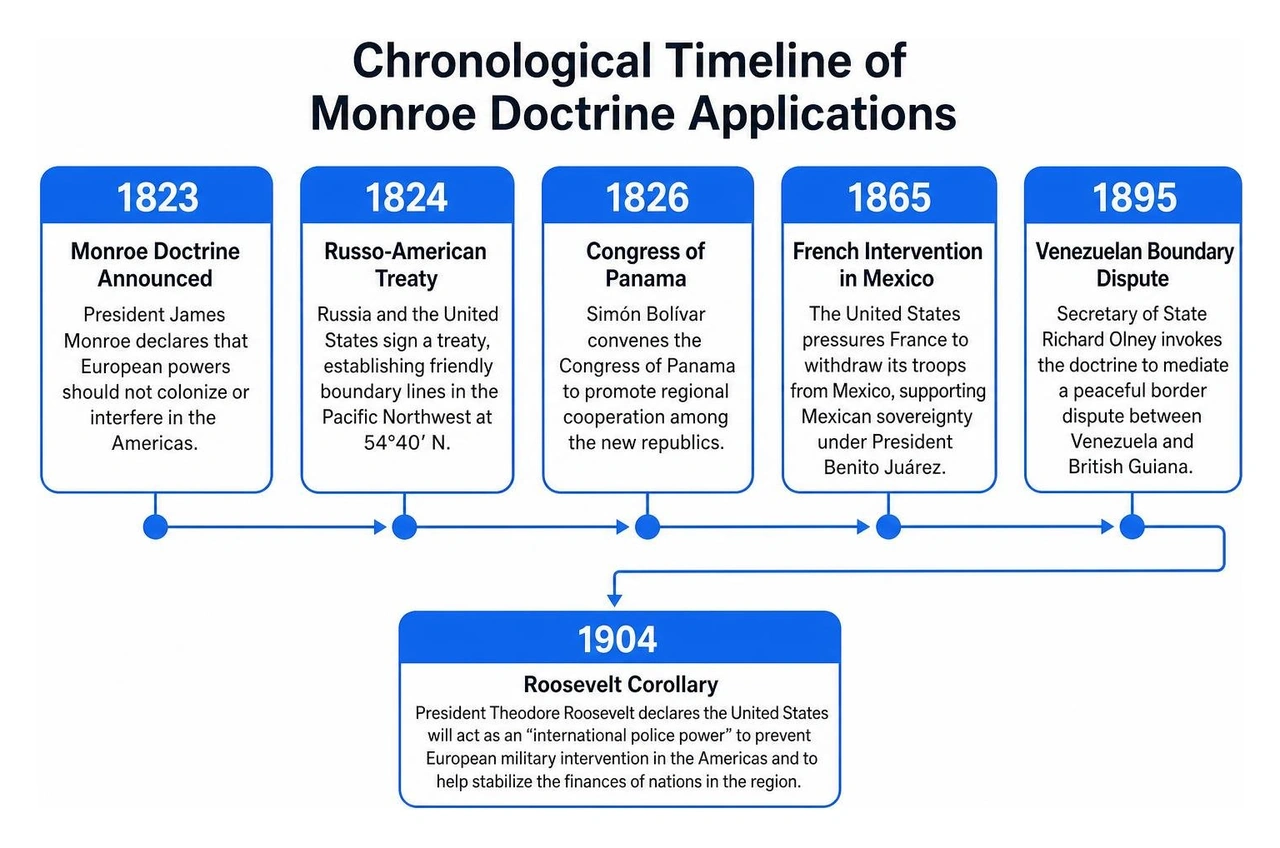
- Russia: Czarist officials treated the statement coolly, though Russia soon negotiated the Russo-American Treaty of 1824, setting friendly boundary lines in the Pacific Northwest at 54°40′ N.
- Great Britain: British officials welcomed the practical outcome of protecting open trade, even while George Canning privately bristled at the unilateral American stance.
Initial Views from Latin America and Simón Bolívar
In South America, leaders like the great liberator Simón Bolívar welcomed the friendly sentiments expressed by the United States. When Bolívar convened the historic Congress of Panama in 1826 to foster regional cooperation among the new republics, delegates looked warmly on the shared principles of hemispheric solidarity, even as each country focused on building its own domestic institutions.
Evolution and Reinterpretation Across Two Centuries
Interestingly, the phrase "Monroe Doctrine" was not coined until the early 1850s, roughly three decades after the speech was delivered. Over the course of two centuries, successive presidents adapted the core message to meet new global challenges. You can read more about how this framework expanded in our feature on the James Monroe Doctrine.
Key historical applications included:
- 1865 French Intervention in Mexico: After the American Civil War, the U.S. pressured France to withdraw its troops from Mexico, supporting Mexican sovereignty under President Benito Juárez.
- 1895 Venezuelan Boundary Dispute: Secretary of State Richard Olney invoked the doctrine to mediate a peaceful border dispute between Venezuela and British Guiana.
Theodore Roosevelt and the Roosevelt Corollary
In December 1904, President Theodore Roosevelt introduced what became known as the Roosevelt Corollary in his annual message to Congress. Roosevelt sought to address situations where European nations threatened to use naval force to collect unpaid debts from Caribbean and Central American governments, such as in Santo Domingo.
To prevent European military occupations, Roosevelt declared that the United States would act as an "international police power" to help stabilize regional finances. As documented in the PBS American Experience documentation on the corollary, this represented a significant shift from Monroe’s original defensive posture into an active regional stewardship role.
Cold War Applications and Modern Strategic Relevance
Decades later, during the twentieth century, the doctrine's protective spirit found new expression:
- 1948 Organization of American States (OAS): The creation of the OAS established mutual defense and cooperation across the Americas.
- 1962 Cuban Missile Crisis: President John F. Kennedy echoed the historic principle of hemispheric defense when establishing a naval quarantine to remove Soviet offensive missiles from Cuba.
Even today in September 2026, as we reflect on American foreign policy, Monroe’s message remains a foundational touchstone for discussions about national defense, trade, and hemispheric partnership.
Frequently Asked Questions About the Monroe Doctrine
What was the primary purpose of the Monroe Doctrine in 1823?
The primary purpose was to deter European monarchies from re-establishing colonial control over newly independent nations in Latin America, while asserting U.S. neutrality regarding European internal affairs.
Who was the primary author behind the doctrine's wording?
While President James Monroe delivered the address and made the final policy decisions, Secretary of State John Quincy Adams crafted much of the specific diplomatic language and championed the idea of making an independent American statement.
How did the Roosevelt Corollary alter the original doctrine?
President Monroe’s original 1823 message was a defensive warning telling European powers to stay out of the Western Hemisphere. Theodore Roosevelt’s 1904 Corollary expanded this into an active stabilization policy, asserting that the U.S. could intervene to resolve financial crises before European creditors used military force.
Conclusion
The story of the Monroe Doctrine is ultimately a story of American confidence and vision. In 1823, a young nation looked out across a changing hemisphere, stood shoulder-to-shoulder with newly free neighbors, and calmly drew a line in defense of liberty.
At Patriot Dreams, we love bringing these extraordinary moments of American history to life. Through our interactive audio maps and stories, you can walk the very halls where Monroe and Adams debated, listening to the voices, ideas, and everyday perseverance that built our nation. We invite you to continue your journey by exploring the legacy of the James Monroe doctrine through interactive storytelling with our family of listeners today.

Join the Patriot Dreams Community
Download the app today and start your journey through American history and personal legacy.

Explore Our Latest Insights
Dive into stories that shape our American legacy.