Monsters and Myths of American Folklore Creatures

The Stories That Shaped a Nation: American Folklore Creatures From Every Corner of the Country
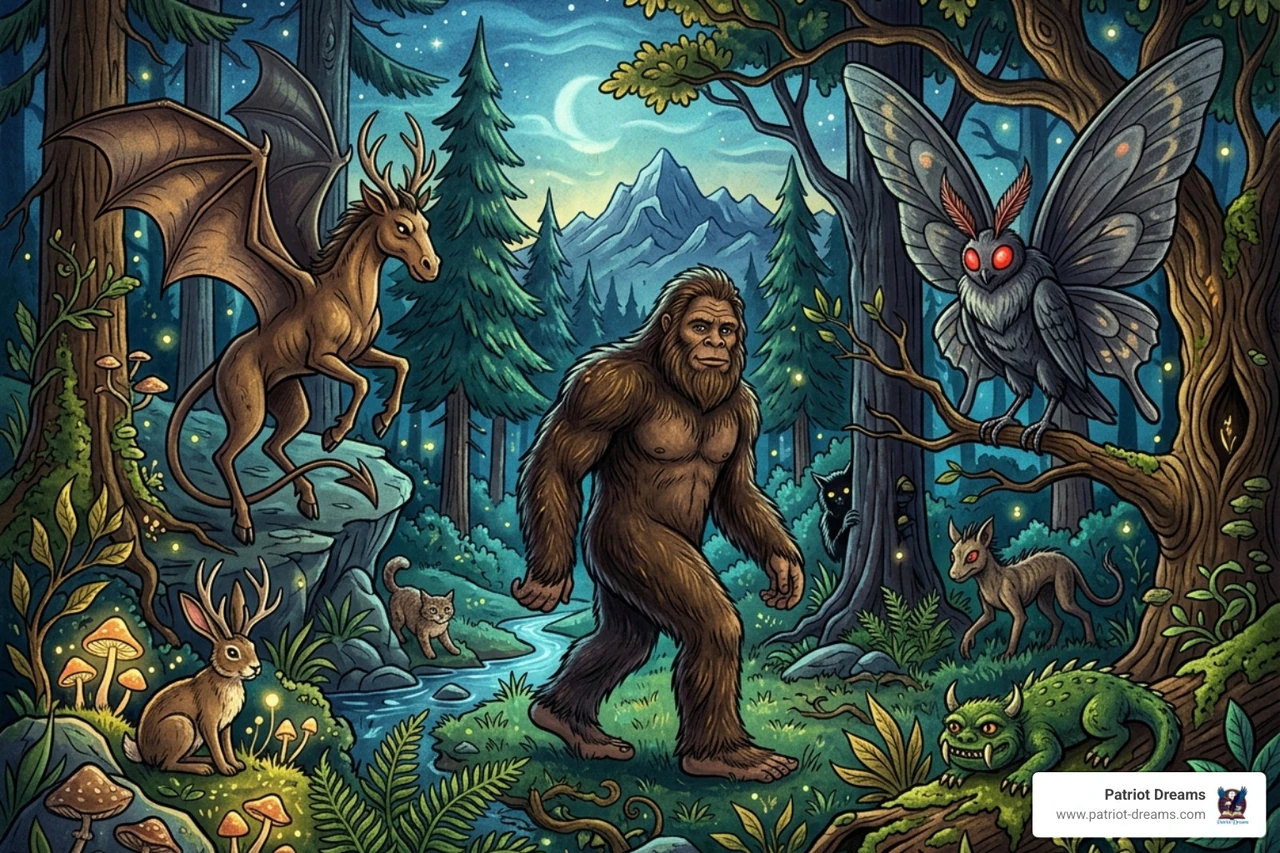
American folklore creatures are legendary beings — from shape-shifting spirits to winged monsters — that have been passed down through generations of storytelling across the United States.
Here is a quick look at some of the most famous ones and where they come from:
| Creature | Region | Known For |
|---|---|---|
| Mothman | West Virginia | Winged humanoid; linked to the Silver Bridge collapse |
| Jersey Devil | New Jersey | Bat-winged beast of the Pine Barrens |
| Wendigo | Great Lakes / Northern forests | Cannibalistic spirit from Indigenous tradition |
| Bigfoot | Pacific Northwest | Giant, elusive ape-like figure |
| Chupacabra | Southwest / Puerto Rico | Blood-draining livestock predator |
| Jackalope | Wyoming | Horned jackrabbit; lumberjack tall tale |
| Thunderbird | Indigenous nations, widespread | Massive sky spirit; ancient protector |
| Skinwalker | Navajo Nation | Shape-shifting figure from sacred oral tradition |
These creatures are not just spooky campfire stories. They are living pieces of American identity — shaped by the land, the people, and the communities that called each region home.
From the foggy hemlock forests of Pennsylvania to the sun-baked deserts of the Southwest, every corner of America has its own monster. And every monster has something to tell us about the people who first told the tale.
There is something deeply human about gathering around a fire and sharing a story that makes the hairs on the back of your neck stand up. These legends connect us — across generations, across cultures, across the wide and varied landscape of this country. They remind us that wonder is woven into the American experience.
Whether you grew up hearing about the Wendigo in the North Woods, the Rougarou in Louisiana's bayous, or the Wampus Cat in the Appalachian hills, chances are a creature from this list feels like home.
Exploring the Legends: A Guide to American Folklore Creatures
When we step into the quiet, shaded places of our country, it is easy to imagine that we aren't alone. In the heart of the Mid-Atlantic, two particular legends have captivated the American imagination for decades, blending history with a touch of the supernatural.
The Jersey Devil: A Family Legacy in the Pine Barrens

Deep in the Pine Barrens of South Jersey, locals still keep an eye on the sky for the Jersey Devil. Legend has it that in 1735, a woman known as Mother Leeds found herself pregnant with her thirteenth child. In a moment of frustration, she supposedly cursed the unborn infant, crying out, "Let it be a devil!"
As the story goes, the child was born normal but quickly transformed into a creature with a horse’s head, bat wings, and a forked tail. It let out a blood-curdling scream and flew up the chimney, disappearing into the dark woods. Interestingly, researchers have found that the "Leeds Devil" legend might actually have roots in colonial-era politics. The Leeds family were real people who faced social ostracism from their Quaker neighbors due to their interest in astrology. Over time, these community tensions grew into the monster we know today.
From the 1909 sighting wave that closed schools and factories to modern sightings, the Jersey Devil remains a symbol of New Jersey’s wild, untamed heart. If you're interested in how these legends intersect with other eerie tales, you might enjoy exploring American Folklore Ghost Stories.
The Mothman: The Red-Eyed Messenger of West Virginia
Further south in Point Pleasant, West Virginia, the legend of the Mothman took flight in the late 1960s. Between November 1966 and December 1967, residents reported seeing a seven-foot-tall humanoid with massive wings and glowing red eyes.
The sightings culminated in the tragic collapse of the Silver Bridge on December 15, 1967, which resulted in the loss of 46 lives. Many locals came to believe the Mothman was a harbinger of the disaster. While skeptics suggest the "creature" was likely a misidentified sandhill crane or a large owl, the Mothman has become a beloved part of the town's heritage. Today, Point Pleasant celebrates this legacy with a twelve-foot chrome statue and an annual festival that draws thousands of visitors.
Guardians of the Great Lakes and Beyond: American Folklore Creatures
As we move toward the northern forests and the Southern bayous, the american folklore creatures we encounter often carry deeper, more somber warnings about the relationship between humanity and nature.
- The Wendigo: Rooted in Algonquian tradition, the Wendigo is a chilling spirit of the Great Lakes and Canadian border regions. It is often described as a gaunt, skeletal giant with an insatiable hunger for human flesh. In many ways, the Wendigo serves as a cultural cautionary tale against greed and cannibalism during harsh winters. It represents "nature's vengeance" against those who lose their humanity.
- The Rougarou: In the French-Catholic communities of Louisiana, the Rougarou (or Loup-Garou) is a werewolf-like creature that prowls the swamps. Legend says that those who break the rules of Lent for seven years in a row might find themselves transformed into this beast. It’s a story used to keep children in line and to reinforce community values.
These American Folklore Characters highlight the theme of transformation—how our actions and our environment can change who we are. They remind us that the wilderness is a place of power that deserves our utmost respect.
Whimsical Wonders: Small-Town American Folklore Creatures
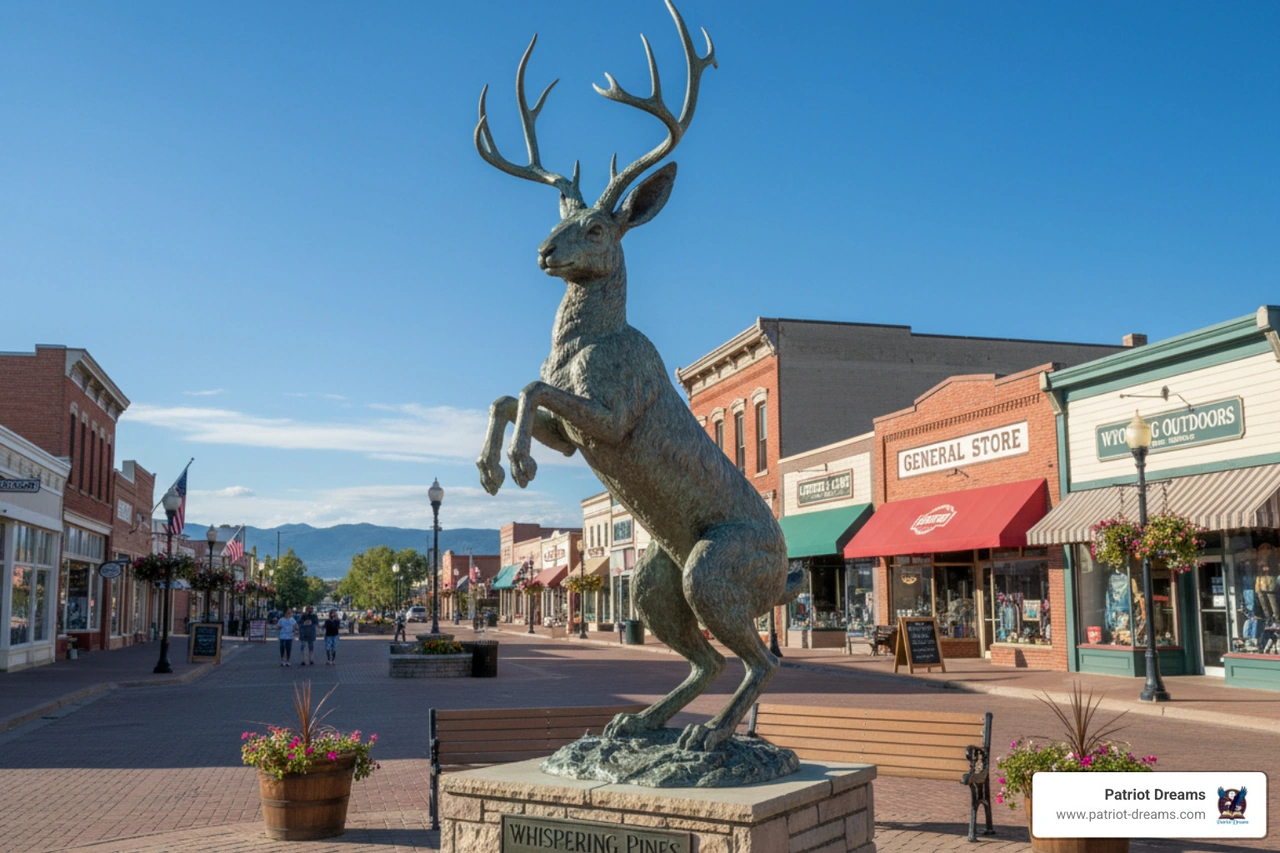
Not every legend is a monster of the shadows. Some of our favorite american folklore creatures were born from a sense of humor and a bit of American "boosterism." Take the Jackalope, for instance. This cross between a jackrabbit and an antelope is the pride of Douglas, Wyoming.
The modern Jackalope was popularized in the 1930s by the Herrick brothers, who used their taxidermy skills to graft deer antlers onto a rabbit. While it started as a fun hoax, it became a massive hit. The town of Douglas even issues "Jackalope hunting licenses" (valid only on June 31st!).
Scientific research suggests that sightings of "horned rabbits" might actually be caused by the Shope papilloma virus, which causes horn-like growths on rabbits. Regardless of the science, the Jackalope represents the Tall Tale Tradition From Loggers And Lumberjacks To Todays Storytellers—a way for communities to find joy, share a laugh, and put their small towns on the map.
Whimsy in the Woods: The Fearsome Critters of the Lumber Camps
In the early 20th century, logging camps were hotbeds for creativity. Woodsmen spent long nights in bunkhouses telling stories of "fearsome critters"—bizarre animals that supposedly lived in the deep woods. These stories were often shared to haze newcomers or "greenhorns," testing their gullibility with straight-faced descriptions of impossible beasts.
Author William T. Cox helped document these in his 1910 book, Fearsome Creatures of the Lumberwoods. Two of the most famous examples are the Hodag and the Squonk.
The Hodag of Rhinelander
The Hodag is the official mascot of Rhinelander, Wisconsin. Originally "discovered" by Eugene Shepard in 1893, it was described as having the head of a frog, the face of an elephant, and thick spines down its back. Shepard even claimed to have captured one, though he eventually admitted it was a clever hoax to drum up interest in the area. Today, Rhinelander embraces the Hodag with statues and festivals, proving that a good story can become a permanent part of a town's soul.
The Squonk of Pennsylvania
In the hemlock forests of Pennsylvania, you might hear the muffled sobs of the Squonk. This is perhaps the saddest creature in American lore. It is said to be so ashamed of its warty, ill-fitting skin that it spends all its time weeping. Hunters who try to catch a Squonk often find themselves holding nothing but a pool of tears, as the creature dissolves when cornered.
| Trait | Hodag | Squonk |
|---|---|---|
| Temperament | Fierce and mischievous | Melancholy and shy |
| Physical Feature | Spines and bull horns | Warty skin and webbed toes |
| Defense Mechanism | Claws and spears | Dissolves into tears |
| Home State | Wisconsin | Pennsylvania |
The legacy of these creatures is intertwined with From Folk Hero To Film Icon The Story Of Paul Bunyan His Place In American Myth Making, showing how the working-class heroes of our past used imagination to make sense of the vast, intimidating wilderness.
Ancient Echoes: Indigenous Legends and Sacred Spirits
Long before settlers arrived, the land was filled with the stories of Indigenous nations. These legends are often deeply sacred and tied to specific landmarks, serving as a spiritual map of the American landscape.
- The Thunderbird: A powerful sky spirit found in many Indigenous cultures, the Thunderbird is said to create thunder with the flap of its wings and lightning with the blink of its eyes. It is a symbol of protection and strength, often depicted in ancient petroglyphs that date back 4,000 years.
- Water Babies: In the Great Basin and the West, stories of Water Babies warn people to be careful near rivers and lakes. These are not cute infants; they are powerful spirits that can be mischievous or even dangerous if not shown proper respect. In places like the Duchesne River, these stories are still shared to teach children about water safety and spiritual boundaries.
- Skinwalkers: In Navajo (Diné) tradition, the yee naaldlooshii or Skinwalker is a person who has gained the supernatural ability to turn into an animal. These stories are treated with great solemnity and respect. Unlike "fearsome critters," which are meant for entertainment, Skinwalker legends are part of a living spiritual tradition that emphasizes balance and the consequences of breaking social taboos.
When we share these stories, we must do so with a spirit of Folklore Files Forgotten American Legends And What They Reveal About Us. They are not just "myths"—they are the heritage of the first people of this land, reflecting a deep, enduring connection to the earth.
Why We Keep Telling These Stories Today
In April 2026, you might wonder why we still talk about the Mothman or the Jersey Devil in an age of satellites and smartphones. The truth is, we need these stories more than ever.
Modern media has given these legends a new life. From the Mothman’s appearances in games like Fallout 76 to the Fresno Nightcrawlers trending on social media, these creatures have adapted to the digital age. They provide us with a sense of mystery in a world that often feels over-explained.
More importantly, these legends foster a sense of community and identity. Whether it's the 12,000 people who attend the Mothman Festival or the locals in Pennsylvania celebrating "Squonkapalooza," these stories bring us together. They give us a reason to gather, to laugh, and to wonder what might be lurking just beyond the campfire’s light.
Sharing folklore is an act of resilience. It is how we preserve our heritage and pass down the values of our ancestors. As we look at the The Mythical Creatures of Legend… From America, we see a reflection of ourselves: our fears, our hopes, and our uniquely American sense of wonder.
Frequently Asked Questions about American Folklore Creatures
What is the difference between a cryptid and a fearsome critter?
While the terms are often used interchangeably, there is a subtle difference:
- Cryptids (like Bigfoot or the Mothman) are creatures that people genuinely believe might exist in the real world. They are often the subject of "cryptozoology," where enthusiasts look for physical evidence.
- Fearsome Critters (like the Hodag or the Side-Hill Gouger) are intentionally whimsical. They originated in the tall tales of logging camps and were meant to entertain, prank, or explain the unexplainable in a humorous way.
Which American folklore creatures are considered the most famous?
Bigfoot is undoubtedly the "king" of American cryptids, with thousands of sightings across the country. The Mothman, Jersey Devil, and Wendigo follow closely behind, each representing a different region of the U.S. In recent years, the Chupacabra has also become a household name across the Southwest.
Are there any real-world explanations for these monsters?
Yes! Many legends have fascinating roots in reality:
- Mothman: Often attributed to sandhill cranes or large owls with "eyeshine."
- Jackalope: Likely inspired by rabbits with the Shope papilloma virus.
- Jersey Devil: Tied to historical family feuds and misidentified sandhill cranes.
- The Bloop: Once thought to be a monster, it was later identified by NOAA as the sound of icequakes.
Conclusion
At Patriot Dreams, we believe that every story matters. Whether it’s a legendary beast of the woods or the story of your own grandfather’s arrival in this country, these narratives are the threads that make up the fabric of our nation. Our interactive maps and audio storytelling platform are designed to help you explore this rich heritage and even preserve your own family’s "tall tales."
The american folklore creatures we’ve explored today remind us that America is a place of endless mystery and beauty. They invite us to look a little closer at the world around us and to keep the tradition of storytelling alive for the next generation.
Preserve your own family legends at the Patriot Dreams Creator Hub and help us keep the wonder of America alive.
Join the Patriot Dreams Community
Download the app today and start your journey through American history and personal legacy.

Explore Our Latest Insights
Dive into stories that shape our American legacy.