Spooky and Sacred: Must-Read Latin American Folktales


Why Latin American Folklore Stories Belong on Your Bookshelf
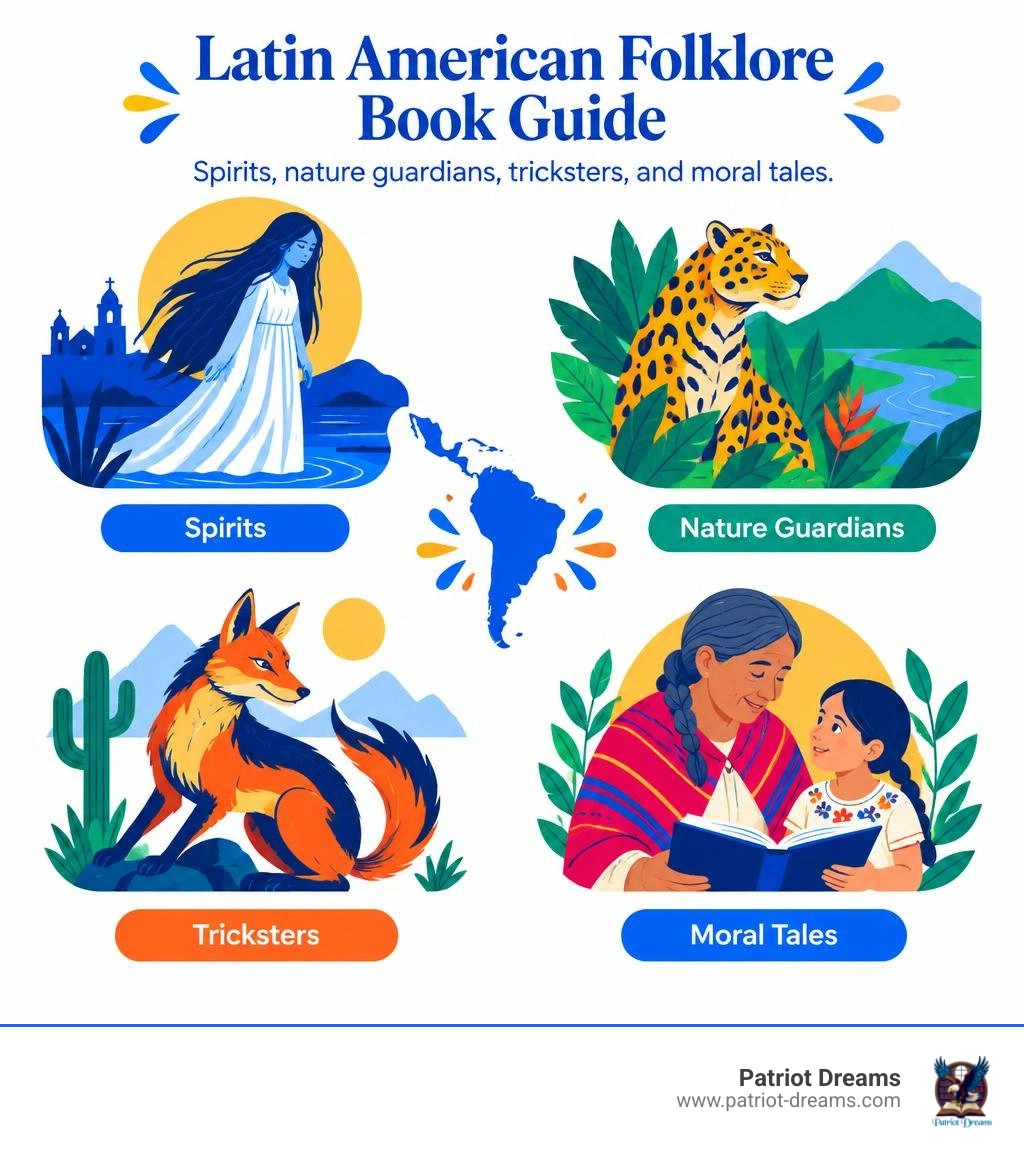
The best books of Latin American folklore stories bring together spooky spirits, clever animals, sacred nature guardians, and family lessons passed down across generations. Look for collections that name each tale's country or community, preserve regional context, and include notes on translation or sources. For families, bilingual editions and illustrated retellings can make these stories easy to share aloud.
From Mexico's grieving La Llorona to Venezuela's bone-carrying whistler, El Silbón, these tales do more than provide a good scare. They reflect Indigenous traditions, Spanish colonial and Catholic influences, and African oral storytelling traditions. Many also teach a clear lesson: respect the natural world, listen to elders, keep your promises, and care for your community.
A well-chosen anthology lets readers travel from Amazonian rivers to Andean peaks without treating Latin America as one single culture. Each legend has a place, a people, and often several versions worth discovering.
We are Kyle & Emily, and we love helping families find stories that make history, heritage, and shared reading feel close to home.
Quick latin american folklore stories definitions:
The Cultural Tapestry Behind Latin American Folklore
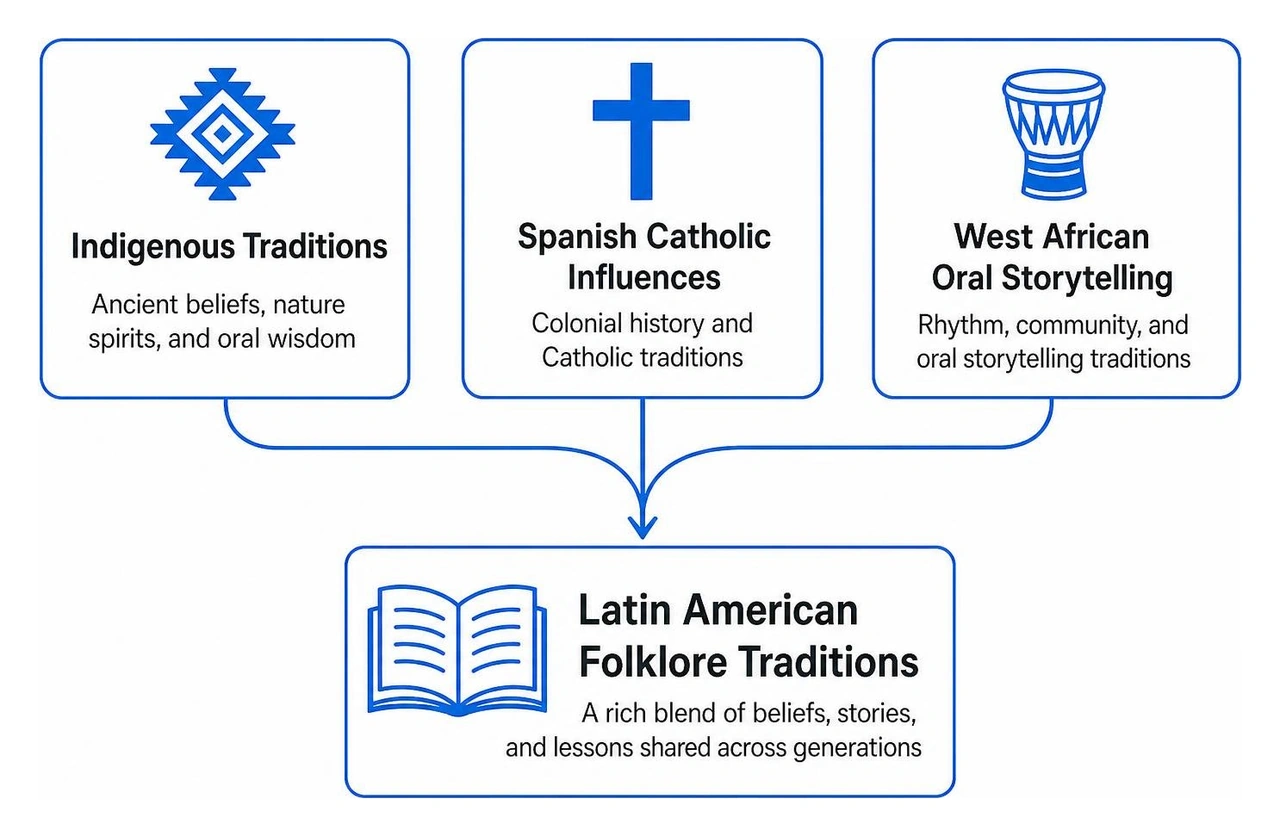
When we open a collection of folktales from across the Americas, we are stepping into a living conversation between three distinct worlds: ancient Indigenous traditions, Spanish Catholic influences, and West African oral storytelling. Much like the deep roots of Native American history, the stories preserved across Central and South America show how communities kept their identities alive through profound historical transitions.
This unique blending of beliefs—often called cultural syncretism—transformed everyday storytelling into a resilient community classroom. In the iconic panoramic Latin American Folktales anthology, stories are framed around a velorio, a traditional community wake where neighbors gather to comfort one another, share memories, and pass along timeless wisdom. Within this context, spooky encounters and sacred encounters serve a clear purpose: they offer moral warnings, encourage kindness toward neighbors, and teach young people that our actions carry lasting consequences.
Iconic Cryptids and Spooky Spirits
The shadowy figures of Latin American lore do not just wander the dark to frighten unsuspecting travelers—they enforce community boundaries and remind us to stay humble. Exploring these figures alongside our guide to legendary creatures reveals how every culture crafts cautionary beings to protect loved ones from danger.
- La Llorona (The Weeping Woman): Documented in Mexico City as early as 1550, this heartbroken mother mourns near rivers and waterways. While she warns children against wandering near dangerous waters after dark, she also stands as a tragic symbol of remorse and sorrow.
- El Silbón (The Whistler): Emerging from the plains of Venezuela and Colombia, this towering figure carries a sack of bones and whistles a chilling musical scale. The supernatural paradox of his whistle teaches alertness: when his melody sounds far away, he is actually standing right beside you.
- El Chupacabras: First sighted in Puerto Rico in 1995, this modern cryptid quickly became an international legend, with sightings stretching from Chile all the way north to Maine.
- La Ciguapa: A Dominican spirit of the mountains characterized by long, flowing hair and backward-facing feet that make her footsteps impossible to track.
- La Segua: Found in Central America, the Costa Rican legend of La Segua tells of a lovely maiden who turns into a horse-faced specter on lonely roads, reminding travelers that true beauty is found in character, humility, and respect.
Nature Guardians and Amazonian Entities
In addition to spooky road spirits, Latin American oral traditions feature sacred guardians who protect forests, rivers, and wildlife from greed and exploitation. These narratives instill a heartfelt environmental ethic, urging listeners to treat the land with gratitude.
In the Amazon basin, the Amazonian legend of Chullachaqui describes a shape-shifting forest guardian who mimics the voices of loved ones to test whether hunters enter the jungle with humility or arrogance; his only giveaway is an uneven, backward foot. In the great rivers, the massive serpent Yacumama protects clean waters, while legends tell of pink river dolphins transforming into handsome partygoers at dusk to remind villagers to respect aquatic life. Similarly, the sacred Guarana myth of the Maué people recounts how a beloved child's sacrifice led to the growth of the healing guarana plant, proving that life, sustenance, and healing emerge when we honor the gifts of nature.
Best Anthologies and Collections of Latin American Folklore Stories
Finding the right books for your home shelf means looking for anthologies that treat these stories with care, authenticity, and respect for their original communities.

| Book Title & Author | Focus Region | Reading Level | Standout Feature |
|---|---|---|---|
| Latin American Folktales by John Bierhorst | Pan-Latin America (20 countries) | Adult / Academic | 100 authentic tales structured as a community velorio |
| Latino Folk Tales (Curated Catalog Editions) | Mexico, Peru, Caribbean | Grades K–8 | Available in bilingual, Braille, and audio formats |
| Tales from the Rain Forest | Amazon Basin | All Ages | Indigenous myths emphasizing ecology and family bonds |
| Leyendas de mi Tierra (Historical Editions) | Central America | Young Adult / Adult | 19th-century colonial recordings of regional lore |
Classic Collections of Latin American Folklore Stories for Adults
For adult readers and history enthusiasts, scholarly anthologies provide invaluable cultural context. The Pantheon Fairy Tale and Folklore Library edition edited by John Bierhorst remains the gold standard, offering 100 stories collected across 20 Hispano-American countries. Much like exploring traditional American ghost tales, reading these classic field recordings allows us to appreciate how oral storytellers used drama, humor, and psychological insight to help communities process grief, celebrate courage, and understand their shared past.
Bilingual Latin American Folklore Stories for Families and Classrooms
Sharing folktales together around the dinner table or before bedtime is one of the warmest ways to build empathy and language skills. Accessible collections—such as the over 80 titles cataloged through the Wisconsin Talking Book and Braille Library—offer English and Spanish editions suitable for young learners.
These fables teach moral responsibility through memorable animal characters and human choices. For example, the Paraguayan tale of the Karãu bird tells of a young man who neglected his ailing mother to attend a dance; transformed into a black marsh bird, his mournful call reminds listeners of the lifelong duty we share to care for our aging parents and family members.
Lesser-Known Regional Legends and Indigenous Narratives
Beyond the well-known urban legends lies a treasure trove of regional Indigenous stories that celebrate perseverance, harmony, and everyday heroism. Just as we discover profound reflections of the human spirit in sacred traditions in American Indian myths and legends, Latin American regional lore deepens our appreciation for diverse native communities.
In the Salado region of northern Chile, the Atacameño shepherdess story weaves a poignant tale of love, animal transformation, and family devotion between a young woman, a condor of the Andes, and a helpful fox messenger. Further east in the wetlands, the Guaraní talking frog myth recounts how a speaking marsh spirit gently protected lost children while teaching an arrogant hunter the necessity of humility and respect for all living creatures.
How Latin American Folktales Compare to Broader Storytelling Traditions
Folklore reminds us that no matter where we grow up, human beings share the same hopes, fears, and yearnings for connection. When comparing regional mythologies, we notice universal themes appearing across oceans and borders:
- The Cautionary Bogeyman: Just as European homes spoke of the Boogeyman and American towns shared warning tales, Spanish and Latin American families gently sang of El Coco to encourage little ones to rest peacefully at night.
- The Heroic Outlaw and Trickster: Clever animals outsmarting stronger predators appear in Mexican fables just as trickster characters define broader American and African oral traditions.
- The Wandering Spirit: The weeping phantom seeking peace is an archetype shared from classical Greek myths to early American frontier legends.
By defining American folklore characters alongside international traditions, we see how every culture uses storytelling to pass down essential life skills. Exploring forgotten folklore and cultural memory shows that these legends are not merely superstitions—they are the treasured emotional maps of the people who came before us.
Frequently Asked Questions About Latin American Folklore
What is the most famous Latin American folktale?
La Llorona is widely regarded as the most famous Latin American legend. With documented historical roots dating back to colonial Mexico City in 1550, this story of a mourning mother wandering near water has evolved into countless regional variations across North, Central, and South America, reinforcing water safety and family loyalty.
How do indigenous and Spanish traditions blend in these stories?
During the colonial era, European Christian teachings combined with native Mesoamerican, Andean, and Amazonian spiritual cosmologies. Indigenous nature spirits took on the roles of guardian angels or cautionary apparitions, while traditional Catholic moral lessons were adapted into local storytelling settings like the velorio (community wake).
Where can readers find authentic primary sources for Latin American folklore?
Authentic collections can be found in university archives, bilingual public library catalogs, the Digital Public Library of America, and published anthologies from recognized folklorists like John Bierhorst and Richard Erdoes. These curated collections preserve original dialects, regional notes, and cultural contexts.
Conclusion
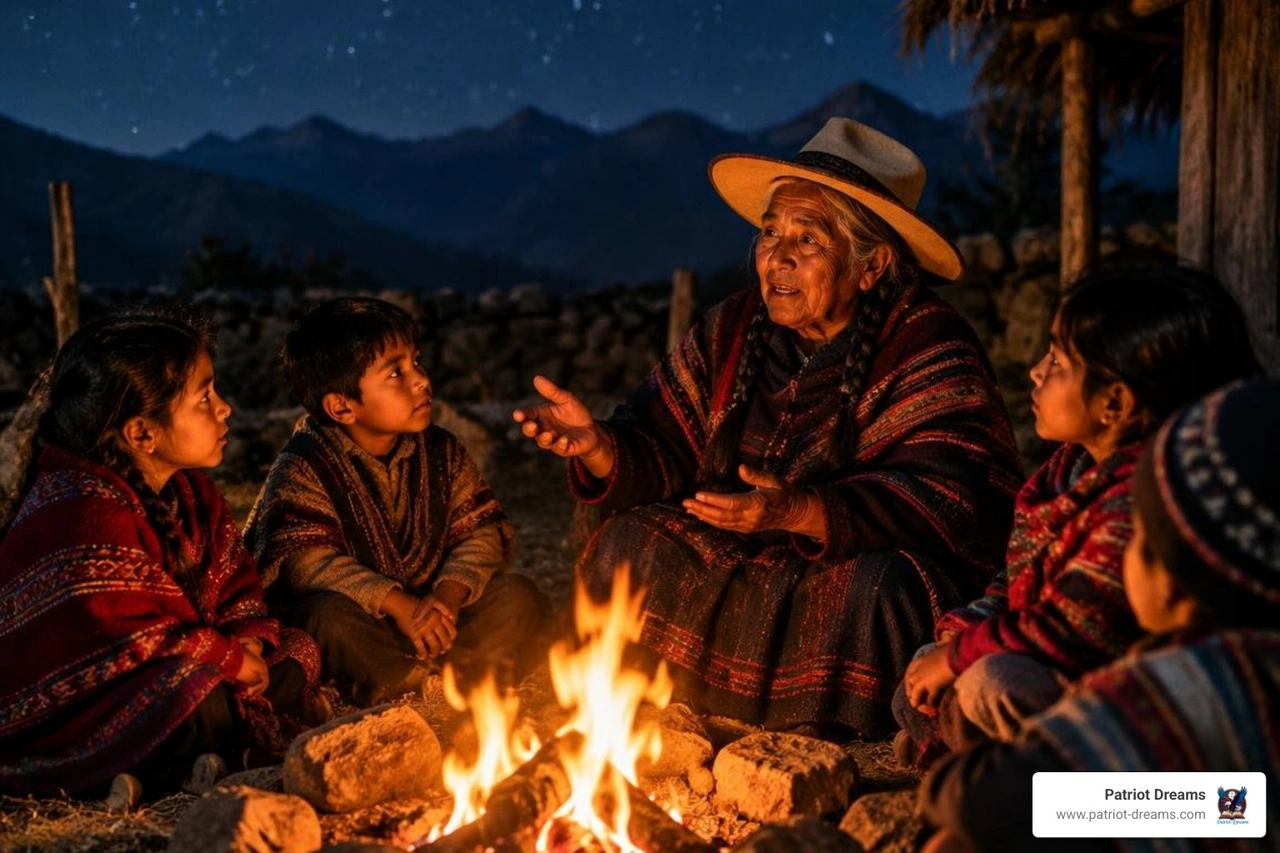
Stories have a quiet, enduring power. Long before books were printed or screens lit up our living rooms, families sat together around simple fires, sharing tales that made the world feel understandable, sacred, and deeply connected. Whether recounting the quiet lesson of a mountain shepherdess or the eerie warning of a distant whistle across the plains, these legends remind us of what matters most: honoring our elders, caring for the land, and treating our neighbors with patience and kindness.
At Patriot Dreams, we believe that listening to the stories of our neighbors helps us discover our shared heart. Through our interactive exploration of shared heritage, we bring history and oral storytelling to life so families can celebrate the diverse voices that enrich our nation's story. We invite you to bring these timeless folktales into your own home, pull up a chair, and discover how much we all truly have in common.

Join the Patriot Dreams Community
Download the app today and start your journey through American history and personal legacy.

Explore Our Latest Insights
Dive into stories that shape our American legacy.