The Real Story of Native America

The Story America Was Built Upon: A Guide to Native American History
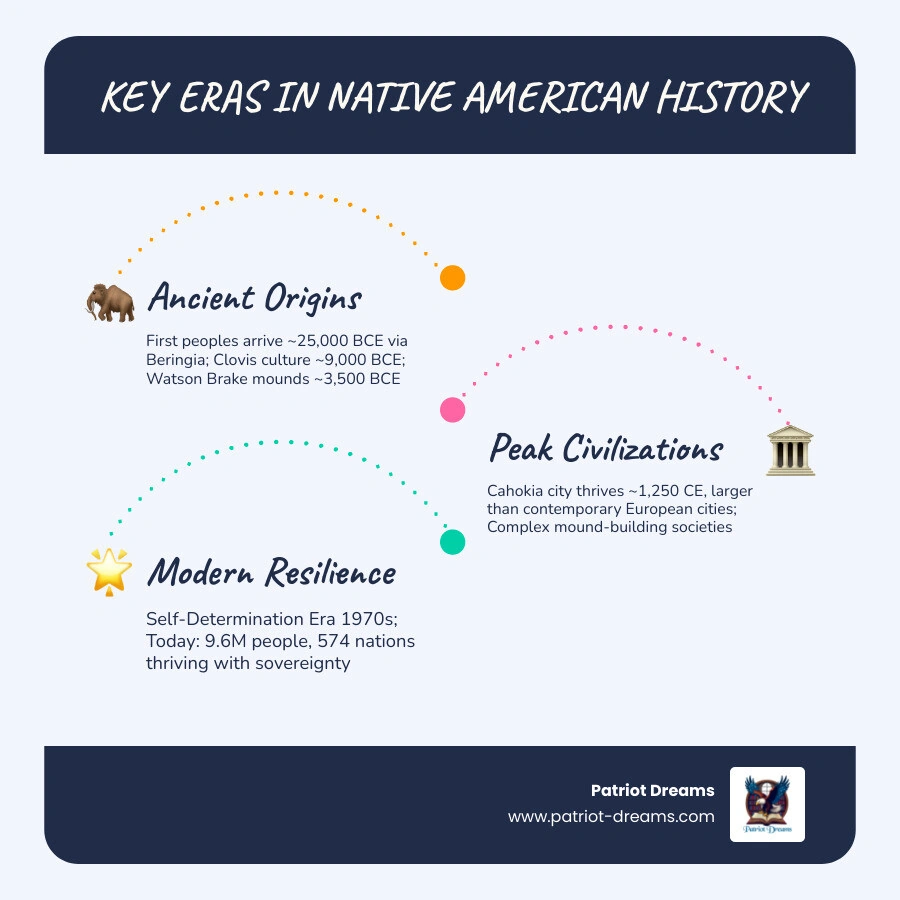
Native American history stretches back at least 25,000 years — long before the first European ship ever crossed the Atlantic.
Here is a quick look at the key chapters of that story:
| Time Period | What Happened |
|---|---|
| ~25,000 BCE | First peoples cross into North America via the Beringia land bridge |
| ~9,000 BCE | Clovis culture spreads across the continent |
| ~3,500 BCE | Watson Brake mound complex built — oldest known in the Americas |
| ~1,250 CE | Cahokia reaches its peak — a city larger than any in the U.S. until after 1800 |
| 1492 onward | European contact brings disease, conflict, and massive change |
| 1830 | Indian Removal Act leads to the Trail of Tears |
| 1924 | Indian Citizenship Act grants citizenship to all Native Americans |
| 1970s | Self-Determination Era begins — tribes reclaim their right to govern themselves |
| Today | Over 9.6 million Native Americans live in the U.S., representing 574 federally recognized nations |
There is a quiet kind of wonder in knowing that the land beneath our feet holds thousands of years of human story. Long before our towns and highways, there were trail systems, trade networks, great cities, and living traditions.
When European settlers arrived in the 15th century, they found a continent already richly populated — hundreds of nations, each with their own language, government, and way of life. What followed was one of the most complex and consequential chapters in all of human history.
This guide is an invitation to sit with that story — with honesty, with respect, and with genuine curiosity. Because understanding Native American history is part of understanding America itself.
Native American history word guide:
- American Revolution stories
- Oregon Trail stories
- California Gold Rush
The Deep Roots of Native American History
To truly understand Native American history, we have to look back much further than the 1700s. The story begins with the Paleo-Indians, the adventurous ancestors of today’s tribes, who traveled across Beringia—a land bridge connecting Siberia and Alaska—at least 15,000 to 25,000 years ago. These early Americans weren't just passing through; they were creating a home.
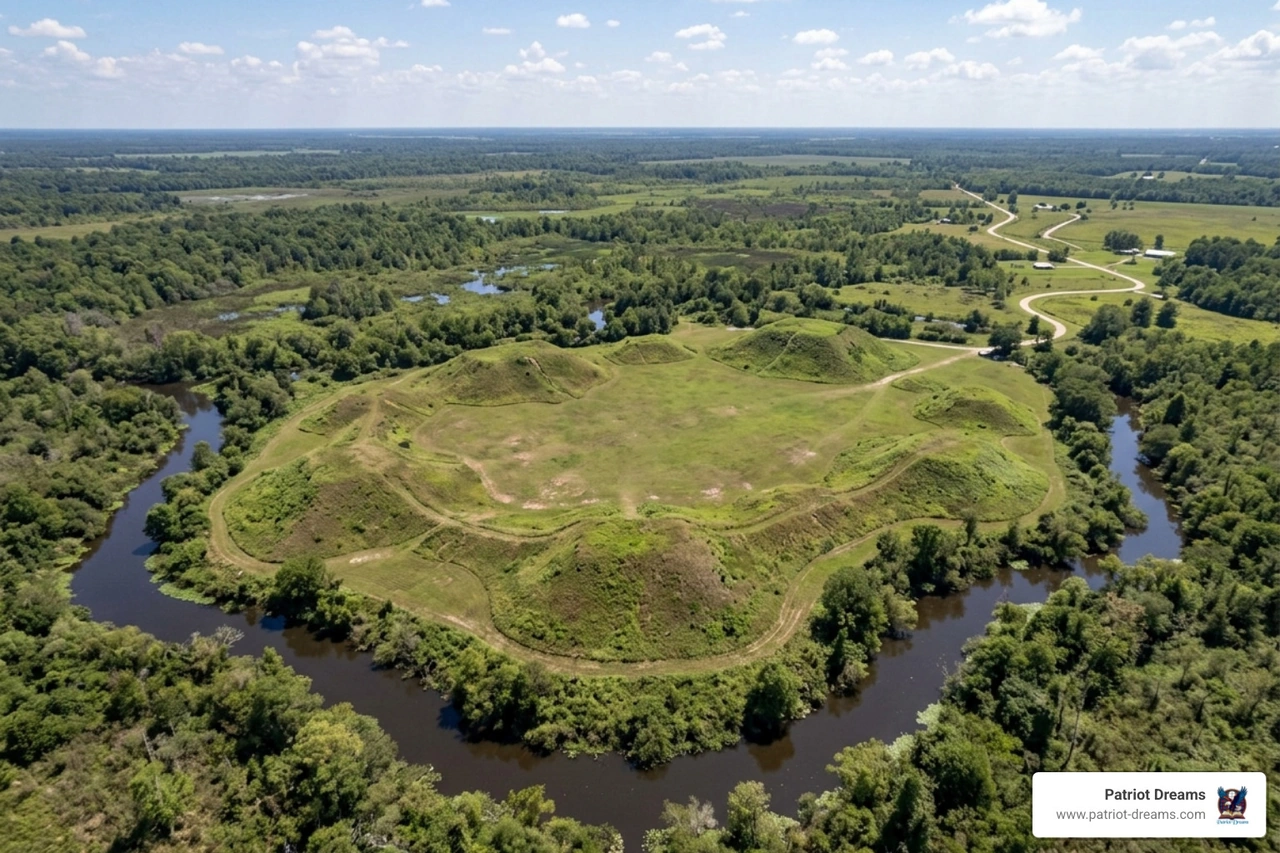
As the ice receded, the Clovis culture emerged around 9,000 BCE, famous for their beautifully crafted fluted spear points. These people were skilled hunters of megafauna like mammoths, but as the world warmed, they adapted. During the Archaic period, societies became more settled. We see the first evidence of massive engineering projects like Watson Brake in Louisiana, an 11-mound complex dating to 3500 BCE. Remarkably, these were built by hunter-gatherers who hadn't yet turned to full-time farming.
Later, the Poverty Point culture (around 2200 BCE) created a massive trading hub that stretched across the heart of the continent. These ancient pathways and frontier crossings show us that North America was never a "wilderness"—it was a busy, connected world.
The Great Cities and Traditions of the First Americans
By the time we reach the Mississippian period (800 CE to 1600 CE), Native societies had built urban centers that would have rivaled the great cities of Europe. Scientific research on Indigenous urban centers shows that Cahokia, located near modern-day St. Louis, was the largest of these. At its peak in 1250 CE, it housed up to 30,000 people. Its center, Monks Mound, has a base larger than the Great Pyramid of Giza!
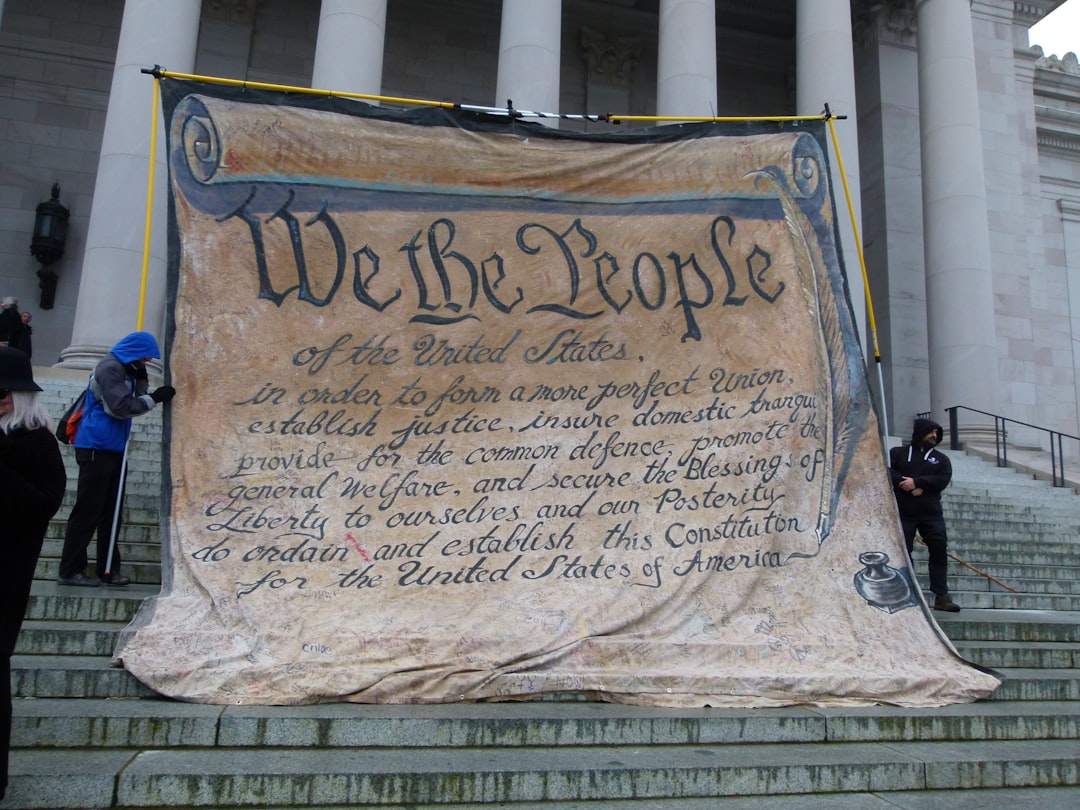
These societies weren't just about big buildings; they were about big ideas. The Hopewell Exchange was a vast trade network that moved obsidian from the Rockies and shells from the Gulf Coast all across the Eastern Woodlands. Meanwhile, in the Northeast, the Iroquois Confederacy (Haudenosaunee) established a sophisticated "Great Law of Peace" that some historians believe influenced the U.S. Constitution itself.
| Feature | Cahokia (Mississippian) | Mesa Verde (Ancestral Puebloan) |
|---|---|---|
| Location | Illinois/Mississippi River | Colorado/Four Corners |
| Architecture | Massive earthen mounds | Stone cliff dwellings |
| Economy | Corn agriculture & river trade | Dry-land farming & pottery |
| Peak Era | 1050–1250 CE | 1100–1300 CE |
Cultural Diversity Across the Continent
It is a common mistake to think of Native Americans as one single group. In reality, the continent was a mosaic of diversity. By May 2026, we recognize hundreds of distinct linguistic groups and cultures.
- The Arctic and Subarctic: Groups like the Inuit and Yup'ik adapted to the frozen north with incredible ingenuity.
- The Plains: Tribes like the Sioux (Lakota/Dakota) and Blackfeet developed a rich culture centered around the buffalo and, later, the horse.
- The Woodlands: The Cherokee and Choctaw built stable, agricultural towns in the lush Southeast.
- The Southwest: The Navajo (Diné) and Pueblo peoples created vibrant traditions in weaving, jewelry, and architecture that persist today.
A Season of Change: Contact and Resilience

When European explorers arrived, the "Columbian Exchange" began—a massive swap of plants, animals, and ideas. But it also brought "invisible killers" like smallpox. In some areas, up to 90% of the population was lost. Yet, Native American history is not just a story of loss; it is a story of incredible resilience.
Take the Pueblo Revolt of 1680. Led by a man named Po’Pay, several Pueblo nations united to drive Spanish colonizers out of modern-day New Mexico. They successfully kept their traditions alive and independent for over a decade. In the East, the Wampanoag initially sought a peace treaty with the Pilgrims to ensure mutual survival, a story that reminds us of the early attempts at neighborly cooperation.
As the years passed, Native people often acted as vital bridges between worlds. We remember the true story of Sacagawea, who helped the Lewis and Clark Expedition navigate the vast Western landscape, often carrying her infant son on her back.
Navigating the Challenges of the 19th Century
The 1800s were perhaps the most difficult century for Native nations. The Royal Proclamation of 1763 had tried to limit settler expansion, but after the U.S. was formed, the pressure for land became relentless. The Indian Removal Act of 1830, signed by Andrew Jackson, forced thousands of people from their ancestral homes.
The resulting "Trail of Tears" saw the Cherokee, Muscogee, Seminole, Chickasaw, and Choctaw marched hundreds of miles to "Indian Territory" (Oklahoma). We still listen to the heartfelt stories of the Trail of Tears today to honor those who perished and those who survived. During this time, leaders like Chief John Ross fought in the courts, while the brilliant Sequoyah invented the Cherokee syllabary—the first written Native language system—to help his people stay connected and strong.
Heroes of the Land: Leadership and Legacy
As settlers moved West, great leaders rose to defend their way of life. Sitting Bull and Crazy Horse became symbols of resistance at the Battle of Little Bighorn in 1876. These weren't just "warriors" in the Hollywood sense; they were spiritual leaders and protectors of their families.
Tragically, the era of the "Indian Wars" largely ended with the Wounded Knee Massacre in 1890. But even in the face of such hardship, the spirit of these nations remained unbroken. The tales of the frontier are filled with moments of both conflict and surprising friendship, reminding us of our shared humanity.
Enduring Contributions to Native American History
Native Americans have contributed to the fabric of our world in ways many people don't even realize. Did you know that the "Hula Hoop" was inspired by Native American hoop dances? Or that things as common as kayaks, snowshoes, and even early forms of pain relievers (using willow bark, the precursor to aspirin) were Native inventions?
Perhaps the most famous contribution came during World War II. The Navajo Code Talkers used their complex native language to create an unbreakable code that helped win the war in the Pacific. Despite facing discrimination at home, these brave men—along with thousands of other Native soldiers—served with the highest rate of military service of any ethnic group in the U.S. Research on Native American demographics and status shows a long-standing tradition of service and sacrifice.
Healing and Progress in the 20th Century
The 20th century brought a slow shift toward justice. In 1924, the Indian Citizenship Act finally recognized all Native Americans as U.S. citizens. Later, the "Indian New Deal" (Indian Reorganization Act of 1934) began to reverse the damaging policies of the Dawes Act, which had broken up tribal lands.
By the 1960s and 70s, the Self-Determination Era took hold. Groups like the American Indian Movement (AIM) and events like the occupation of Alcatraz Island brought national attention to treaty rights. We also saw the rise of modern heroes like Mary Ross, the first Native American female engineer, who played a crucial role in the early days of the space race. These stories of American pioneers show that Native excellence is found in every field, from the stars to the halls of justice.
Preserving the Spirit of Native American History
Today, there is a beautiful movement of cultural revitalization. Young people are learning their ancestral languages through apps and community schools. Traditional arts, like pottery and weaving, are being celebrated in global galleries.
This isn't just about looking back; it’s about moving forward with a sense of pride. Much like the nostalgic tales of the Oregon Trail, these modern stories are about the journey of a people who refuse to be forgotten.
The Modern Spirit: Sovereignty and Community Today
As of May 2026, there are 574 federally recognized tribes in the United States. Each one is a "sovereign nation," meaning they have the right to govern themselves, run their own courts, and manage their own lands. Recent legal milestones, like McGirt v. Oklahoma, have reaffirmed these rights, proving that treaties made over a hundred years ago still matter today.
Life for Native Americans today is a blend of tradition and modernity. While many live on reservations—which are often centers of cultural life—about 78% of Native people live in urban areas. They are our doctors, teachers, artists, and neighbors.
However, challenges remain. Issues like Missing and Murdered Indigenous Women (MMIW), land rights disputes like those at Standing Rock (DAPL), and economic disparities are still being addressed. But through it all, the focus remains on stewardship—taking care of the land and each other for the next seven generations.
Frequently Asked Questions about Native American History
Who are the largest Native American tribes today?
According to the 2020 Census, over 9.6 million people identify as American Indian or Alaska Native (alone or in combination). The largest tribes by population are:
- Cherokee: Approximately 1.4 million people.
- Navajo (Diné): Approximately 434,000 people.
- Choctaw: Approximately 295,000 people.
- Blackfeet: Approximately 288,000 people.
- Sioux: Approximately 220,000 people.
What is the significance of tribal sovereignty?
Tribal sovereignty is the inherent right of Indigenous tribes to govern themselves. It is not "granted" by the U.S. government; rather, it is a right that existed before the U.S. was founded. This allows tribes to have their own governments, police forces, and schools, and to maintain a government-to-government relationship with the United States.
How have Native Americans influenced modern American culture?
The influence is everywhere! From the food we eat (corn, beans, squash, chocolate, and vanilla) to the names of our states (like Oklahoma, Mississippi, and Massachusetts). Native Americans also gave us sports like lacrosse and influenced our concepts of environmental conservation and democratic governance.
Conclusion
The story of Native American history is a long, winding river. It has seen seasons of great peace and seasons of terrible storms. But through it all, the river keeps flowing.
When we look at this history, we shouldn't just see a list of dates or tragedies. We should see the kindness of the Wampanoag, the brilliance of Sequoyah, the bravery of the Code Talkers, and the vibrant laughter at a modern-day Powwow. We are all part of a larger American family, and our history is more beautiful when every voice is heard.
At Patriot Dreams, we believe that every family legacy and every tribal story is a thread in the great American tapestry. We invite you to explore these stories, honor the resilience of those who came before us, and help us build a future rooted in respect and unity.
Join the Patriot Dreams Community
Download the app today and start your journey through American history and personal legacy.

Explore Our Latest Insights
Dive into stories that shape our American legacy.