An Essential Guide to Legacy Storytelling

Why Legacy Stories Matter to Every Family
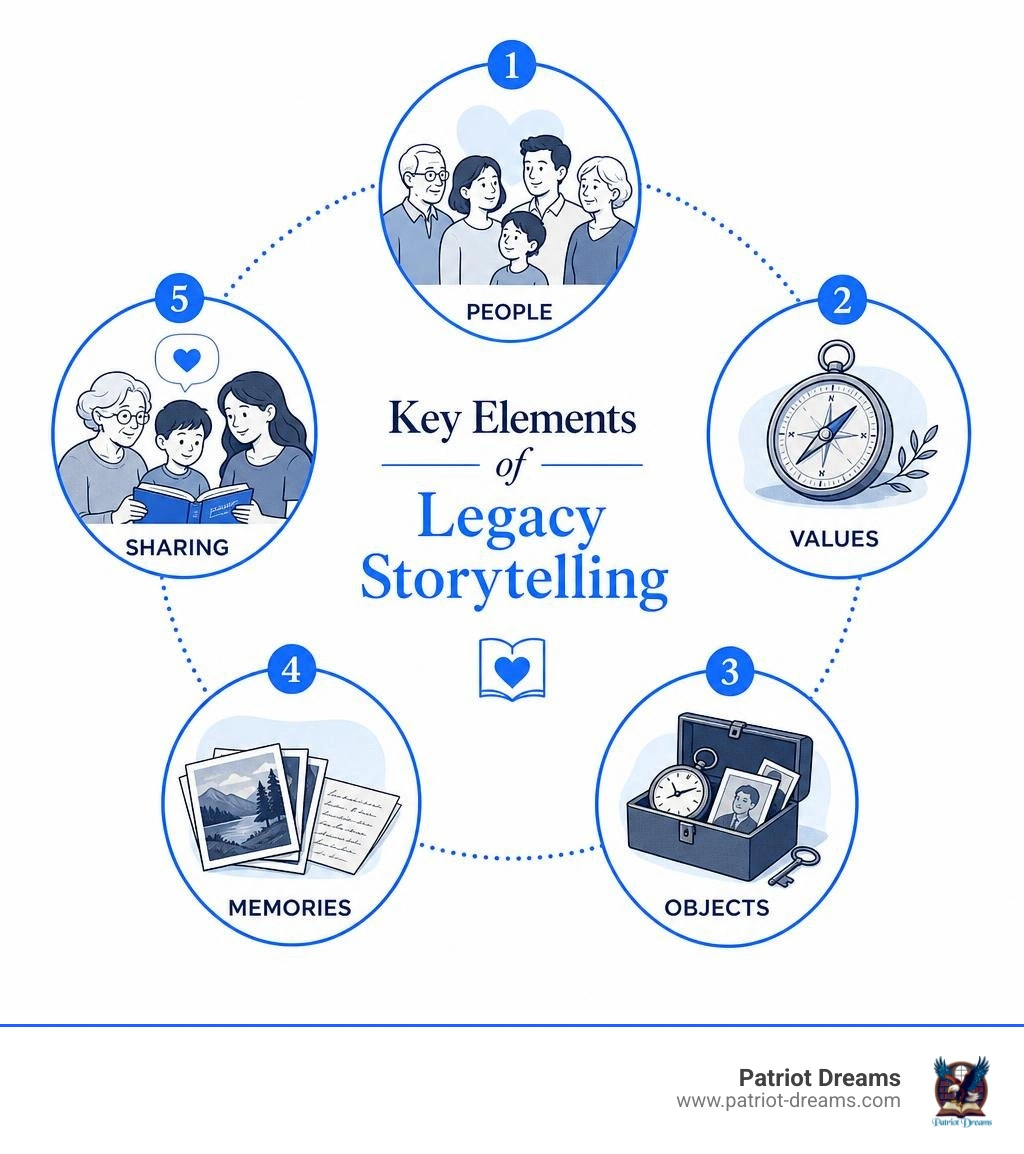
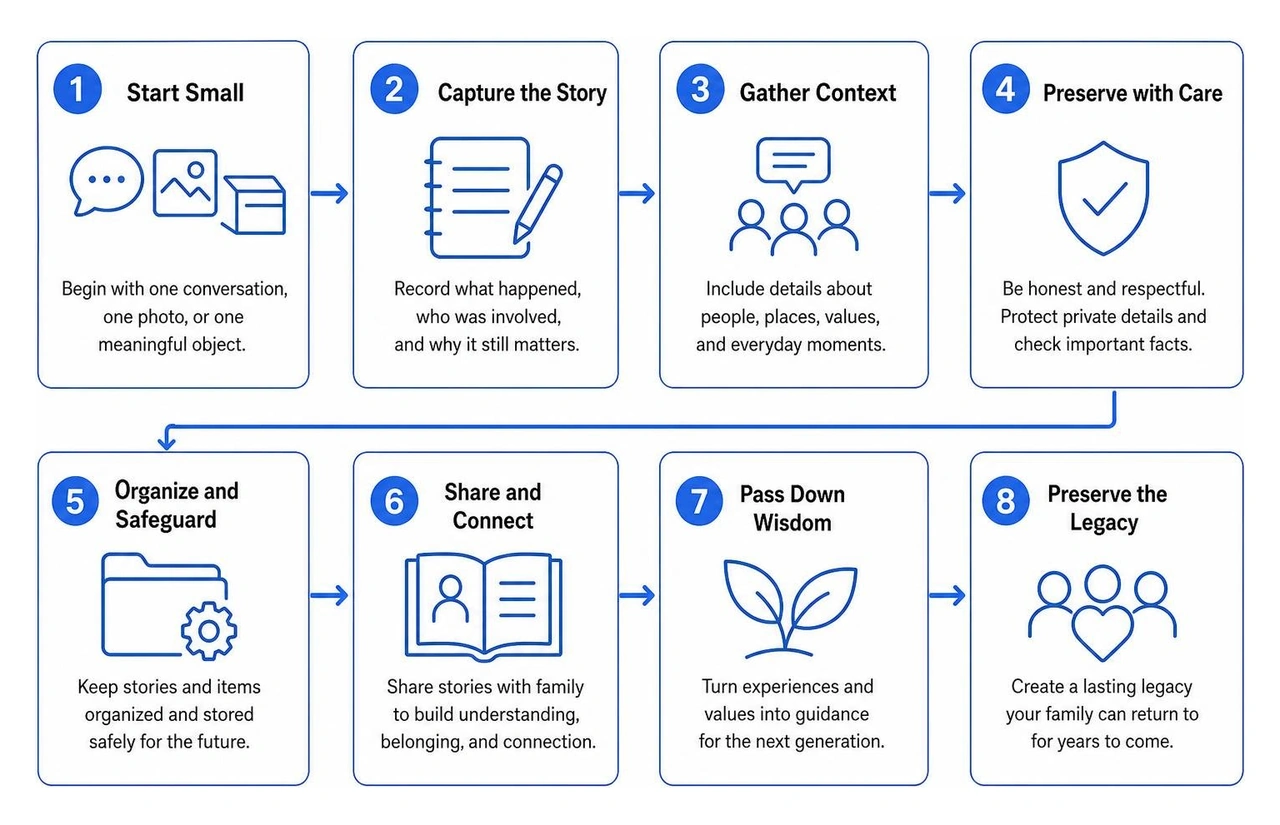
Legacy stories are the true accounts, memories, values, and everyday moments that help a family or community understand where it came from and what it hopes to pass on. Start with one conversation, one photo, or one meaningful object. Record what happened, who was involved, and why it still matters.
A legacy does not need to begin with fame, wealth, or a grand event. It may live in a grandparent's work ethic, a handwritten letter, a well-used tool, a family recipe, or a story of someone helping a neighbor when it counted.
When these memories are shared with care, they do more than preserve names and dates. They give younger generations a sense of belonging, show how ordinary people met hard seasons with courage, and turn family history into practical wisdom for the future.
The best legacy storytelling is honest and respectful. It protects private details, checks important facts where possible, and makes room for stories that are unfinished or imperfect.
At Patriot Dreams, we'll help you turn the memories already around you into a legacy your family can return to for years to come.
How Legacy Stories Preserve Identity Across Generations
Every family carries a collection of experiences that shape how its members see the world. When we talk about family history preservation, we are not merely recording names, birthplaces, or dates on a family tree. We are passing along the core values, kindness, and hard-earned resilience that guided our ancestors through their own unique journeys.
A thoughtful narrative bridges the gap between generations. When children and grandchildren learn how their elders navigated unexpected difficulties, they gain an emotional anchor. Knowing that an ancestor faced uncertainty with quiet dignity gives younger family members a steady foundation to draw upon when facing their own challenges. Legacy storytelling transforms personal trials into lasting wisdom, ensuring that the character of those who came before us remains an active, guiding presence.
Why Everyday Objects Anchor Legacy Stories
Often, the most meaningful vessels of family heritage are not grand estates, but humble, everyday physical items. A well-worn pocketknife, a handwritten recipe card, or an old family automobile can carry profound sentimental value. As seen in moving accounts of family estate values, the true measure of what we inherit lies in the integrity, patience, and stewardship entrusted to us rather than material wealth alone.
Consider the remarkable power of small, preserved artifacts. During World War II, a young Dutch woman named Jacqueline Meents-Lenstra lovingly kept a baby journal detailing the first smiles, developmental milestones, and a tiny lock of hair from a Jewish infant she protected as her own. Decades later, that delicate record served as the sole physical link connecting an adult survivor to his earliest days, leading to documented Holocaust rescuer archives where Yad Vashem has recognized more than 28,000 individuals across 51 nations—including countless brave souls in the Netherlands—as Righteous Among the Nations. Everyday keepsakes hold the power to safeguard our deepest truths across lifetimes.
The Impact of Community Philanthropy and Civic Service
Legacies extend far beyond the walls of our homes; they echo through the neighborhoods, towns, and communities we help build. Grassroots philanthropy and local civic service allow families to weave their values directly into public life. Across America, community foundations help people direct their generosity toward lasting local improvements, such as establishing regional endowment funds, mentoring the next generation, or supporting community parks.
This spirit of collective uplift has deep historical roots. During the Great Depression, when national unemployment climbed to an estimated twenty-five percent, the Civilian Conservation Corps (CCC) brought together close to three million previously unemployed young men between 1933 and 1938. Known affectionately as "Roosevelt's Tree Army," these workers planted millions of trees, halted soil erosion, and constructed the trails and shelters that families still enjoy across state and national parks today. When we document both community philanthropy and shared public works, we celebrate how everyday service leaves a better world for those who follow.
Uncovering and Reconstructing Lost Family Narratives
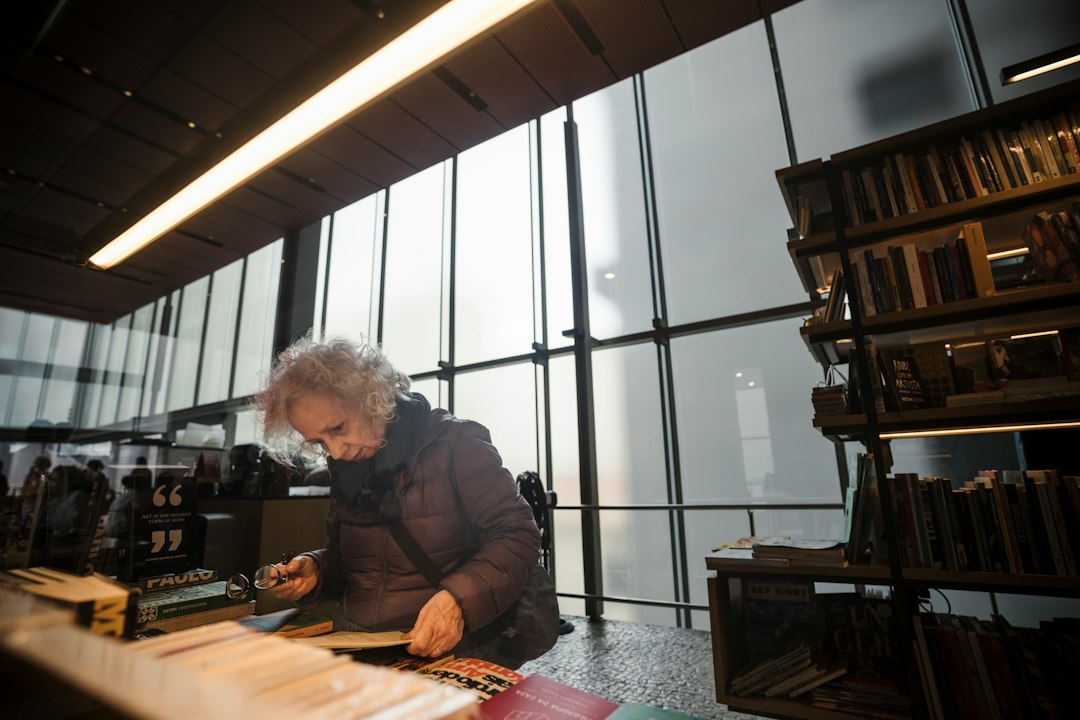
Unearthing the stories of our ancestors often feels like a rewarding detective journey. Many families possess only fragments of their lineage—a faded photograph, an old letter, or a name mentioned in passing. By consulting our American historical archives complete guide, families can learn how to piece these clues together into a rich, coherent tapestry.
This journey of discovery is vividly shown in real-life multigenerational family memoirs, where children who lost parents at a young age have embarked on years-long quests to interview extended relatives, gather historical school projects, and cross-reference international records. These investigative efforts reconstruct ancestral journeys across continents, turning lost fragments into inspiring chronicles of survival and unity.
Overcoming Gaps in Historical and Personal Records
When piecing together family timelines, you may encounter periods where public records seem scarce. Historically, public archives have reflected cultural and institutional disparities; for instance, the Black Women's Suffrage Digital Collection contains three times as many materials about Harriet Tubman as Susan B. Anthony to actively counterbalance centuries of archival omission across national libraries and museums.
To bridge these gaps, private family historians rely heavily on gathering personal historical accounts through gentle, thoughtful oral interviews.
- Ask open-ended questions: Invite relatives to describe the smells, sounds, and daily routines of their childhood homes.
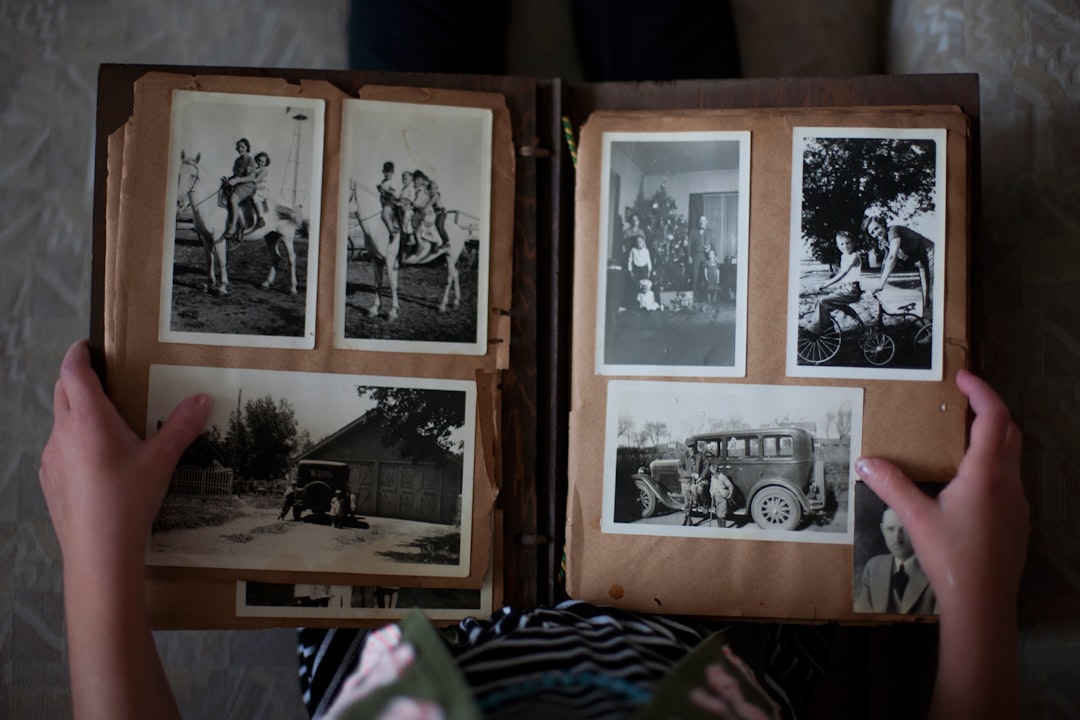
- Utilize visual prompts: Bring out old family photo albums, wedding announcements, or high school yearbooks to spark forgotten memories.
- Search local repositories: Explore county land registries, church ledgers, and regional newspaper archives for hidden mentions of family milestones.
Ethical Considerations and Accuracy in Family Histories
Documenting family history requires a careful balance between factual honesty and personal empathy. Every family tree contains moments of hardship, misunderstanding, or private difficulty. When preserving these chronicles, the goal is not to judge or air grievances, but to understand the context in which our predecessors lived.
Always verify dates, spellings, and locations across multiple census files, certificates, or personal letters whenever possible. If living family members prefer that certain sensitive, private experiences remain confidential, honor their wishes with grace and discretion. A legacy story should build understanding, connection, and pride across generations.
Practical Frameworks to Record and Share Heritage

Preserving your family's voice does not require expensive studio equipment. What matters most is creating a comfortable, relaxed environment where loved ones feel heard. When you sit down to record family stories, find a quiet room, set up a simple smartphone microphone or digital recorder, and let the conversation flow naturally.
To help structure your sessions, our preserving family stories guide provides conversation prompts that celebrate the humor, traditions, and everyday triumphs that make your family unique.
Methods to Curate and Publish Legacy Stories
Once you have gathered oral recordings, journal pages, and cherished keepsakes, consider how best to share them with extended family:
- Self-Published Keepsake Books: Compile transcripts, photographs, and scanned documents into a bound volume. Families often use posthumous life-writing to honor a departed relative's unshared creative writings, screenplays, or journals, ensuring their authentic voice is never forgotten.
- Interactive Audio Maps & Digital Platforms: Modern digital storytelling tools allow you to pin recorded voice clips and photographs to specific geographic locations, creating a living trail of your family's milestones.
- Living Memorials & Family Gatherings: Dedicate time during reunions or milestone birthdays to play recorded excerpts, retell favorite family tales, and invite the youngest members to ask questions.
Comparing Traditional Memorials and Living Legacy Formats
There are many ways to honor a life, from quiet traditional monuments to vibrant, interactive archives that grow with each generation. Both approaches offer unique comfort, as families work to preserve family history in ways that feel authentic to them.
ElementTraditional MemorialsLiving Legacy & Digital ArchivesPrimary MediumEngraved stone markers, physical scrapbooks, church memorial programsInteractive audio recordings, searchable digital transcripts, curated online exhibitsAccessibilityRequires physical travel to a specific geographic site or family homeInstantly accessible to extended family members across the globeNarrative ScopeFocuses on essential biographical facts (birth, marriage, passing dates)Captures personal voice, humor, values, oral wisdom, and life reflectionsIntergenerational EngagementPassive viewing during formal visits or memorial servicesActive, ongoing contribution where younger generations add memories and photosEvolution Over TimeStatic and unchanging once completedDynamic; can be updated with new genealogical discoveries and family milestones
Frequently Asked Questions About Legacy Storytelling
What is the primary difference between a biography and a legacy story?
A biography is primarily a factual, chronological account of a person's life events, accomplishments, and career milestones. A legacy story focuses on the transmission of character, core values, life lessons, and emotional wisdom. It explores not just what an individual did, but who they were, how they treated others, and what lasting principles they leave behind for future generations.
How can someone start documenting family stories with limited information?
Begin with what is right in front of you. Record a 15-minute conversation with an elder relative, transcribe the text from the back of an old family photograph, or document the history of a single heirloom passed down through your family. Small, consistent efforts often unlock doors to forgotten stories and encourage other relatives to share their own memories.
What tools are most effective for preserving oral histories today?
Modern smartphones equipped with voice memo apps provide clear audio capture. Pairing these recordings with automated transcription software, cloud storage backup systems, and interactive digital heritage platforms ensures your family's oral treasures are safely preserved, easily searchable, and simple to share across generations.
Conclusion
Preserving your heritage is one of the kindest gifts you can offer to those who come after you. Every family has a unique story filled with moments of courage, everyday humor, and enduring love. By recording these voices today, we create a warm, welcoming bridge that connects our past with our future, honoring the everyday heroes and American legends who quietly shaped the world we live in. We invite you to sit down with a loved one, press record, and start celebrating your family's lasting journey today.
Join the Patriot Dreams Community
Download the app today and start your journey through American history and personal legacy.

Explore Our Latest Insights
Dive into stories that shape our American legacy.