10 Key Facts About Martin Luther King Jr.

Martin Luther King Facts That Show a Life of Courage and Service
Here are 10 essential Martin Luther King facts to know: he was born Michael King Jr., entered college at 15, led the 381-day Montgomery Bus Boycott, helped bring more than 250,000 people to the March on Washington, and won the Nobel Peace Prize at age 35.
His life was much more than one famous speech. King used disciplined, nonviolent action to press for equal rights, voting rights, and greater economic opportunity. He also faced 29 arrests, survived a 1958 stabbing, and continued building a movement for dignity and hope until his death in 1968 at age 39.
These facts offer a clear starting point for understanding both the man and the many everyday people who helped shape the Civil Rights Movement. We are Kyle & Emily, and we invite you to explore the milestones, surprises, and lasting lessons in King's story.

Martin luther king facts vocabulary:
Essential Martin Luther King Facts: Early Life and Education
When we look back at the childhood of Dr. King, we see a loving home filled with faith, music, and deep community roots. Growing up on Auburn Avenue in Atlanta, Georgia, young Martin was surrounded by family members who served their community with great care. His grandfather and father both served as pastors at the historic Ebenezer Baptist Church, instilling in him an early appreciation for the power of words to uplift human hearts.
Understanding Martin Luther King Early Life helps us see how a bright, thoughtful boy grew into a national voice for fairness and unity. He was an inquisitive student who loved reading and debate, eventually earning his doctorate from Boston University.
Surprising Martin Luther King Facts About His Birth Name
One of the most surprising details about King's early years is that he was not named Martin at birth. When he was born on January 15, 1929, his parents named him Michael King Jr. His father was also known as Michael King.
Everything changed in 1934 when his father traveled to Berlin, Germany, for the Baptist World Congress. While there, the elder King visited historic sites associated with the 16th-century Protestant reformer Martin Luther. Moved by Luther's courage to stand up for his convictions, the father decided to change his own name to Martin Luther King Sr. and his five-year-old son's name to Martin Luther King Jr., as recorded in the National Museum of African American History and Culture records.
Academic Milestones and College at Age Fifteen
King’s love of learning allowed him to progress through school at a remarkable pace. He was such a dedicated student that he skipped both the ninth and twelfth grades, enrolling at Morehouse College in Atlanta at just 15 years old.
At Morehouse, King earned his Bachelor of Arts in Sociology by age 19. During these collegiate years, he found a profound mentor in college president Dr. Benjamin Mays, an educator whose passionate advocacy for dignity left a lifelong mark on the young scholar. King then attended Crozer Theological Seminary in Pennsylvania, where he was elected class valedictorian, before completing his doctoral studies in systematic theology.
Major Milestones of the Civil Rights Movement
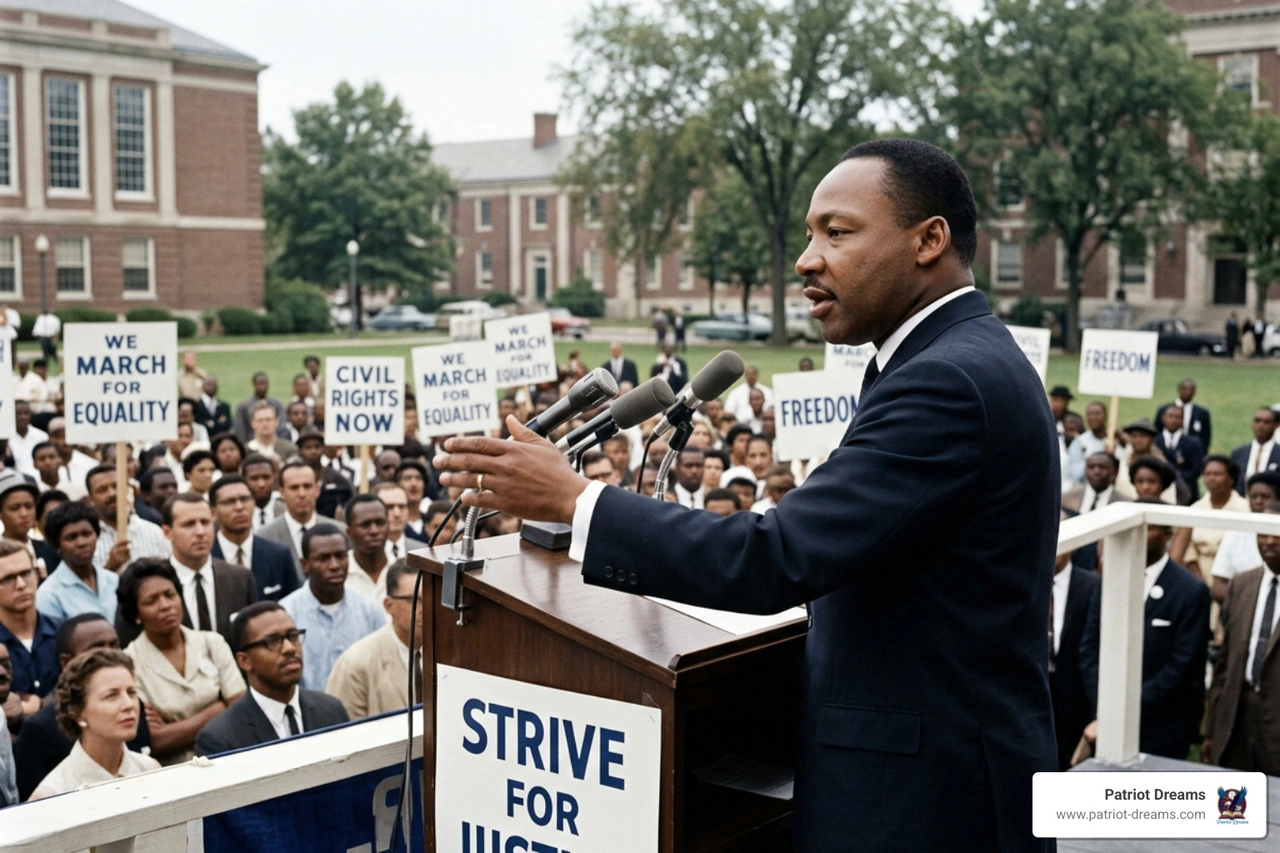
When Dr. King stepped into national leadership, he brought people together with a message rooted in nonviolence, kindness, and unwavering perseverance. Alongside everyday citizens, students, and churchgoers across the country, he helped organize historic campaigns that moved our nation closer to its founding promises.
| Campaign / Milestone | Timeframe | Key Focus | Historic Outcome |
|---|---|---|---|
| Montgomery Bus Boycott | 1955–1956 (381 Days) | Public transit integration | U.S. Supreme Court ruled bus segregation unconstitutional |
| March on Washington | August 28, 1963 | Jobs, freedom, and civil equality | Galvanized nationwide support for federal civil rights protections |
| Selma Voting Rights Movement | 1965 | Fair and equal voting access | Prompted the passage of the landmark Voting Rights Act of 1965 |
The Montgomery Bus Boycott and the March on Washington
In December 1955, after Rosa Parks was arrested for refusing to give up her seat on a segregated city bus, local community leaders formed the Montgomery Improvement Association and chose the 26-year-old King as their spokesperson. The inspiring Rosa Parks Story sparked a community-wide effort where thousands walked, carpooled, and supported one another for 381 consecutive days until the buses were fully integrated.
Years later, on August 28, 1963, King joined with other prominent organizers for the March on Washington for Jobs and Freedom. Over 250,000 citizens from every walk of life gathered peacefully around the Lincoln Memorial reflecting pool, creating an enduring image of American unity.
Historic Martin Luther King Facts Behind the "I Have a Dream" Speech
The soaring words delivered on the steps of the Lincoln Memorial remain some of the most beloved in American history. Yet many people do not realize that the famous refrain was not in the prepared text King carried to the podium.
As King spoke, the legendary gospel singer Mahalia Jackson called out from behind him: "Tell them about the dream, Martin! Tell them about the dream!" Setting aside his written notes, King began speaking straight from his heart, painting a timeless picture of children judged by the content of their character rather than external markers. You can read more about his visionary words in our MLK Dream for America overview and our dedicated Martin Luther King Jr. Quotes Guide.
Winning the Nobel Peace Prize at Age 35
In October 1964, Dr. King received global recognition when he was awarded the Nobel Peace Prize. At just 35 years of age, he was the youngest person ever chosen for the honor at that time.
Rather than keeping the $54,123 award money for personal use, King donated every penny to support the ongoing work of nonviolent civil rights organizations, as noted in the official Nobel Peace Prize biographical records.
Courage Under Fire: Arrests and Lesser-Known Struggles
Leading a nationwide movement required immense personal resilience. Throughout his years of public service, Dr. King faced constant threats, federal monitoring, and physical danger, meeting every hardship with patience and a calm spirit.
Twenty-Nine Arrests for Civil Disobedience
Over the course of his 13 years in the public spotlight, King was arrested 29 times. Most of these arrests stemmed from peaceful acts of civil disobedience, such as participating in sit-ins at segregated lunch counters or marching without municipal permits.
During an 11-day confinement in 1963, King composed his famous "Letter from Birmingham Jail." Writing on the margins of old newspapers and scraps of paper smuggled in by his attorney, he explained why peaceful citizens could not simply wait on the sidelines when their neighbors were suffering injustice.
Surviving the 1958 Assassination Attempt
A decade before his tragic passing in 1968, Dr. King narrowly survived an attempt on his life. On September 20, 1958, while signing copies of his first book, Stride Toward Freedom, at a department store in Harlem, a woman named Izola Ware Curry stepped forward and struck him in the chest with a seven-inch steel letter opener.
The blade rested right against his aorta. Surgeons at Harlem Hospital operated for hours to carefully remove the weapon. Doctors later remarked that if King had merely sneezed, the blade would have ruptured his heart. King publicly forgave his attacker and expressed gratitude for the medical team that saved his life.
The 1999 Civil Trial and Legacy Vindications
Following King's assassination in Memphis, Tennessee, questions lingered regarding the full circumstances of his death. In 1999, the King family pursued a wrongful death civil trial in Memphis to bring additional testimony and evidence into public light.
The jury returned a verdict finding that a broader conspiracy was involved in the tragedy. The King family requested and received a symbolic award of just $100, which they immediately donated to charity, affirming that their sole intention was uncovering truth rather than seeking financial gain, an effort preserved in The King Center historical archives.
Broadening the Mission: Economic Justice and Personal Passions
In the final years of his life, Dr. King expanded his vision to ensure every American family had access to decent jobs, quality housing, and good education. For an in-depth view of his full career, explore our Martin Luther King Jr. Complete Guide.
The Poor People's Campaign and Vietnam War Stance
In late 1967, King announced the creation of the Poor People’s Campaign. This multiracial effort sought an "Economic Bill of Rights" that would provide jobs, unemployment insurance, and fair wages for all Americans, bringing together poor rural families, urban workers, and Native American communities.
During this same period, King spoke out against the Vietnam War, delivering a landmark address at Riverside Church in New York City. He expressed deep concern that military expenditures were drawing critical resources and attention away from vital anti-poverty programs at home.
Pop Culture and Personal Hobbies: Star Trek and Pool
Beneath the serious mantle of leadership, King was a warm, humorous man who loved spending quiet evenings relaxing with his family and friends. He was known among his inner circle as a formidable pool player, often visiting neighborhood recreation centers where he could connect with local residents over a friendly game of billiards.
He was also a dedicated fan of the science fiction television series Star Trek. King admired how the show portrayed a diverse crew working together in harmony. When actress Nichelle Nichols, who played Lieutenant Uhura, planned to leave the series to return to Broadway musical theater, King met her at a fundraiser and urged her to stay. He explained that her groundbreaking presence on television showed the world what equality looked like in practice, convincing her to remain with the show.
Frequently Asked Questions About Martin Luther King Jr.
How many times was Martin Luther King Jr. arrested?
Dr. King was arrested 29 times during his life. Nearly all of these arrests were for nonviolent civil disobedience, including participating in peaceful marches, prayer vigils, and lunch counter sit-ins across the American South.
What was Martin Luther King Jr.'s original name?
He was originally named Michael King Jr. at birth in 1929. In 1934, his father traveled to Germany and was inspired by the life of Protestant reformer Martin Luther, subsequently changing his own name and his son's name to Martin Luther King.
How did Mahalia Jackson influence the "I Have a Dream" speech?
During the 1963 March on Washington, gospel singer Mahalia Jackson sat behind Dr. King on the podium. As his prepared remarks drew near their close, she encouraged him to tell the crowd about his dream, prompting him to improvise the iconic closing passage.
Conclusion
The life of Dr. Martin Luther King Jr. reminds us that one person, armed with goodwill, courage, and a deep love for their fellow human beings, can help bend the arc of history toward justice. From his childhood in Atlanta to the steps of the Lincoln Memorial, King dedicated his life to helping America realize its highest ideals of unity, brotherhood, and peace.
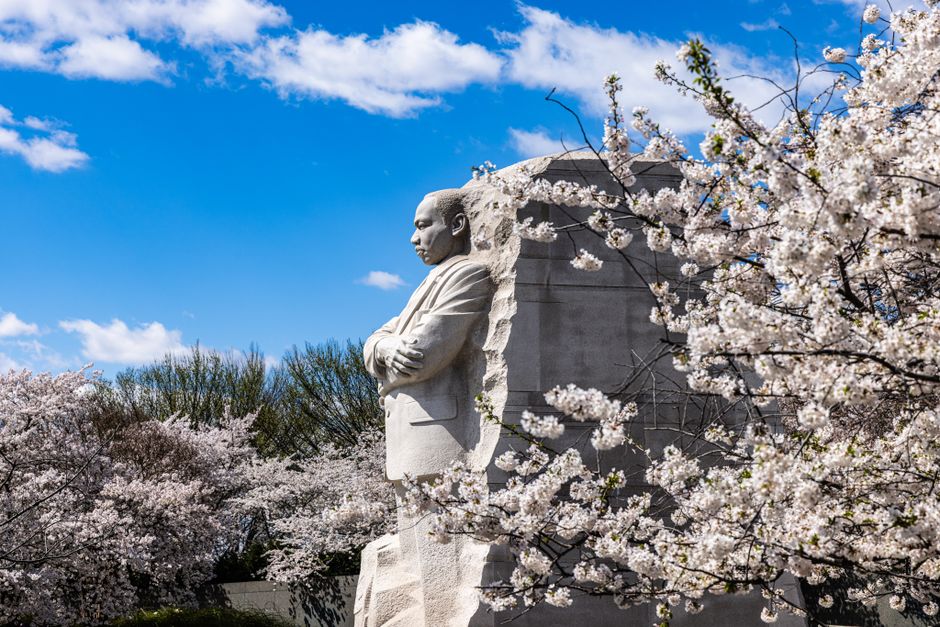
Today, visitors can stand before the Stone of Hope at the Martin Luther King Jr. Memorial in Washington, D.C., reflecting on the enduring power of his message. At Patriot Dreams, we love bringing these extraordinary American journeys to life through interactive audio storytelling that connects your family with the heroes of our shared past.
We invite you to keep exploring, learning, and sharing these powerful stories by discovering the full history of the Civil Rights Movement.

Join the Patriot Dreams Community
Download the app today and start your journey through American history and personal legacy.

Explore Our Latest Insights
Dive into stories that shape our American legacy.