The Complete Guide to The Ghost Army
%20-%20Kyle%20Falkenrath.png)
The Ghost Army: America's Secret Band of Artist-Soldiers Who Fooled Hitler
The Ghost Army was a top-secret U.S. Army unit in World War II that used inflatable tanks, recorded sound effects, and fake radio transmissions to trick German forces into believing large Allied forces were present where they were not.
Here's a quick snapshot of what made them extraordinary:
| Quick Fact | Detail |
|---|---|
| Official name | 23rd Headquarters Special Troops |
| Active | January 1944 – March 1945 |
| Size | ~1,100 men |
| Deceptions carried out | 25 battlefield operations |
| Lives estimated saved | 15,000 to 30,000 |
| Declassified | 1996 |
| Congressional Gold Medal | Awarded 2022, ceremony 2024 |
These were not typical soldiers. Many were artists, designers, and creative professionals — men who painted watercolors in their downtime and then, at night, set up rubber tanks and blasted recorded troop sounds across the French countryside.
Imagine four soldiers casually lifting what appeared to be a 40-ton tank. French civilians who witnessed this reportedly concluded that Americans must simply be superhumanly strong. They had no idea the tank weighed almost nothing — because it was made of rubber.
That blend of ingenuity, courage, and quiet creativity is what makes the Ghost Army one of the most remarkable and heartwarming stories in American military history. And for more than 50 years, almost no one knew it happened.
Related content about The Ghost Army:
- The Army That Didn’t Exist: The Secret Story of the 23rd Headquarters Special Troops
- General Jonathan Wainwright: The Hero of Bataan’s Defiance
- The Courage of Mitchell Red Cloud Jr.: A Native American Hero of the Korean War
The Origins of the 23rd Headquarters Special Troops
To understand how this unique unit came to be, we have to look back to the dark days of early 1944. The Allies were preparing for the monumental task of invading occupied Europe. Brute force alone would not be enough to break Adolf Hitler’s grip on the continent; the Allied high command knew they needed to outsmart, outmaneuver, and utterly bewilder the enemy.
The brainchild of Colonel Billy Harris and Major Ralph Ingersoll, the 23rd Headquarters Special Troops was officially activated on January 20, 1944, under the command of Colonel Harry L. Reeder. Rather than recruiting seasoned front-line infantrymen, the military did something quite unusual. They went looking for individuals with creative minds, sharp intellects, and unique problem-solving skills.
We often think of military recruits as having a certain background, but the men of the 23rd were a beautifully diverse group of artists, architects, actors, and engineers. Many were handpicked from elite art schools in New York and Philadelphia, advertising agencies, and prestigious universities. This gave the unit one of the highest average IQs in the entire U.S. Army—an impressive 119.
Consisting of roughly 82 officers and 1,023 enlisted men, this 1,100-man unit was designed to do the work of an entire army. They were trained to act as a traveling roadshow of illusion, capable of simulating up to two full divisions—approximately 30,000 men—on the battlefield.
To learn more about the early days and structure of this legendary group, explore The Army That Didn't Exist: The Secret Story of the 23rd Headquarters Special Troops.
The Art of Deception: How Illusions Saved Lives
At its core, The Ghost Army was designed to save lives. Every time the German military focused their artillery, reconnaissance, and troop movements on a fake American division, real American soldiers elsewhere were given a vital window of safety to advance, dig in, or rest.
Through their 25 successful battlefield deceptions, it is estimated that the 23rd saved between 15,000 and 30,000 U.S. lives. They did this not with heavy machinery or destructive firepower—their actual weaponry was nothing heavier than .50 caliber machine guns—but with pure imagination, theatrical flair, and creative engineering.
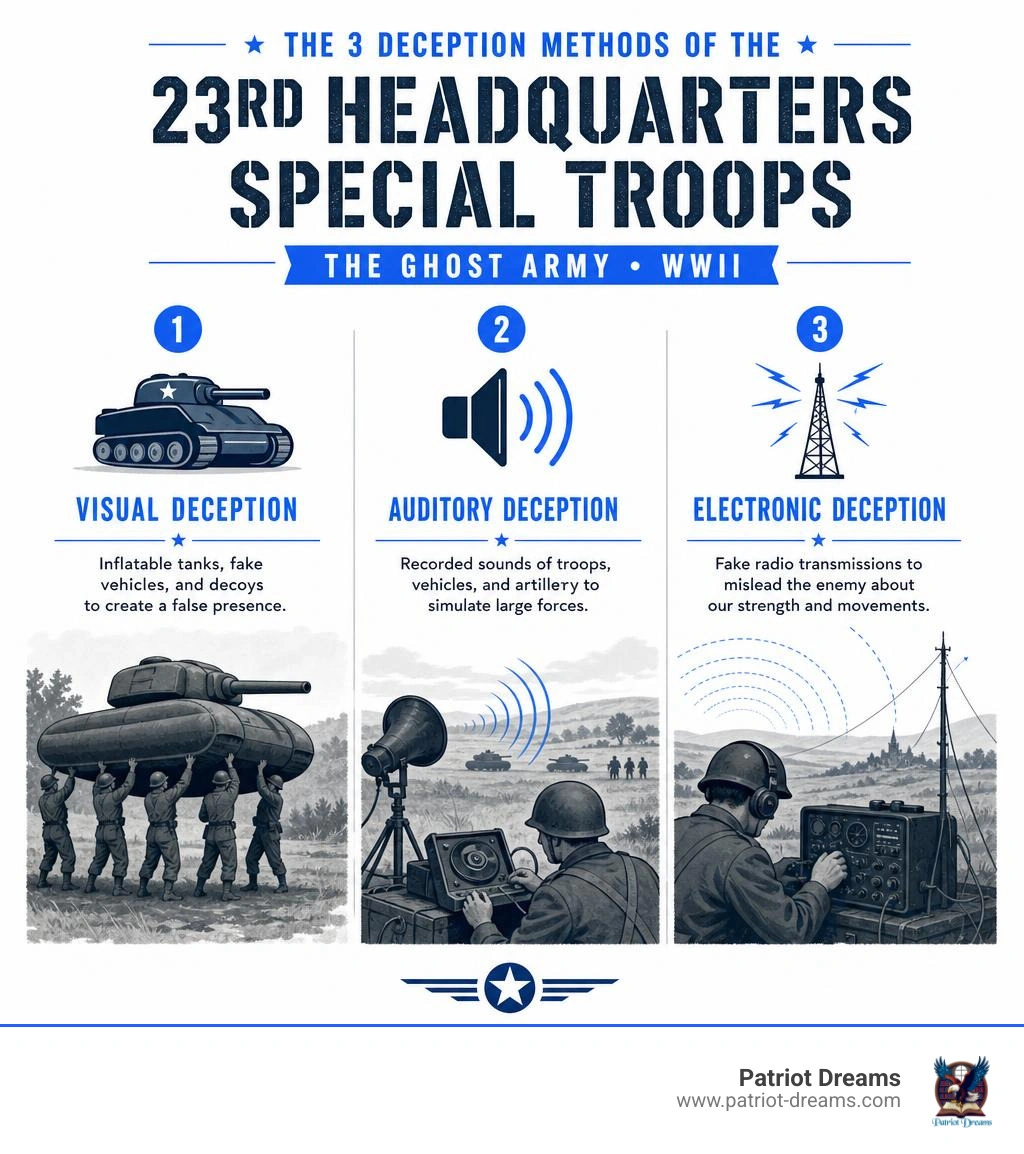
They accomplished this monumental task by combining three distinct types of deception: visual, sonic, and radio.
Visual Deception and Inflatable Decoys
The visual magic of the unit was primarily carried out by the 603rd Camouflage Engineers. Armed with air compressors and a fleet of heavy-duty trucks, these soldier-artists could inflate realistic rubber tanks, jeeps, trucks, and artillery pieces in a matter of minutes.
From a distance, or from the cockpit of a German reconnaissance plane, these decoys looked exactly like the real thing. To make the illusion even more convincing, the men of the 603rd would intentionally camouflage the fake tanks poorly. They knew that if a decoy was perfectly hidden, the Germans wouldn't find it. By leaving just enough of a tank's silhouette visible under a net, or by creating fake tank tracks in the mud using real tractors, they ensured the German scouts would spot them and report the "massive buildup" of American forces.
They even went so far as to hang fake laundry on clotheslines and set up dummy bivouacs (temporary campsites) to make it look like thousands of soldiers were living in the area. For a closer look at how these master illusionists pulled off these visual feats, check out the classic article When an Army of Artists Fooled Hitler.
Sonic Deception and Radio Trickery
Visuals alone were not enough to fool a highly trained enemy. Sound and communication were just as critical. That is where the 3132nd Signal Service Company came in.
Equipped with state-of-the-art wire recorders, these soldiers traveled to actual military training grounds to record the sounds of tanks, bulldozers, troop movements, and bridge building. In the field, they played these sound effects through massive, 500-pound speakers mounted on the backs of armored half-tracks. These sounds were so powerful that they could be heard up to 15 miles away, easily convincing German scouts across a river that a massive mechanized division was moving in under the cover of night.
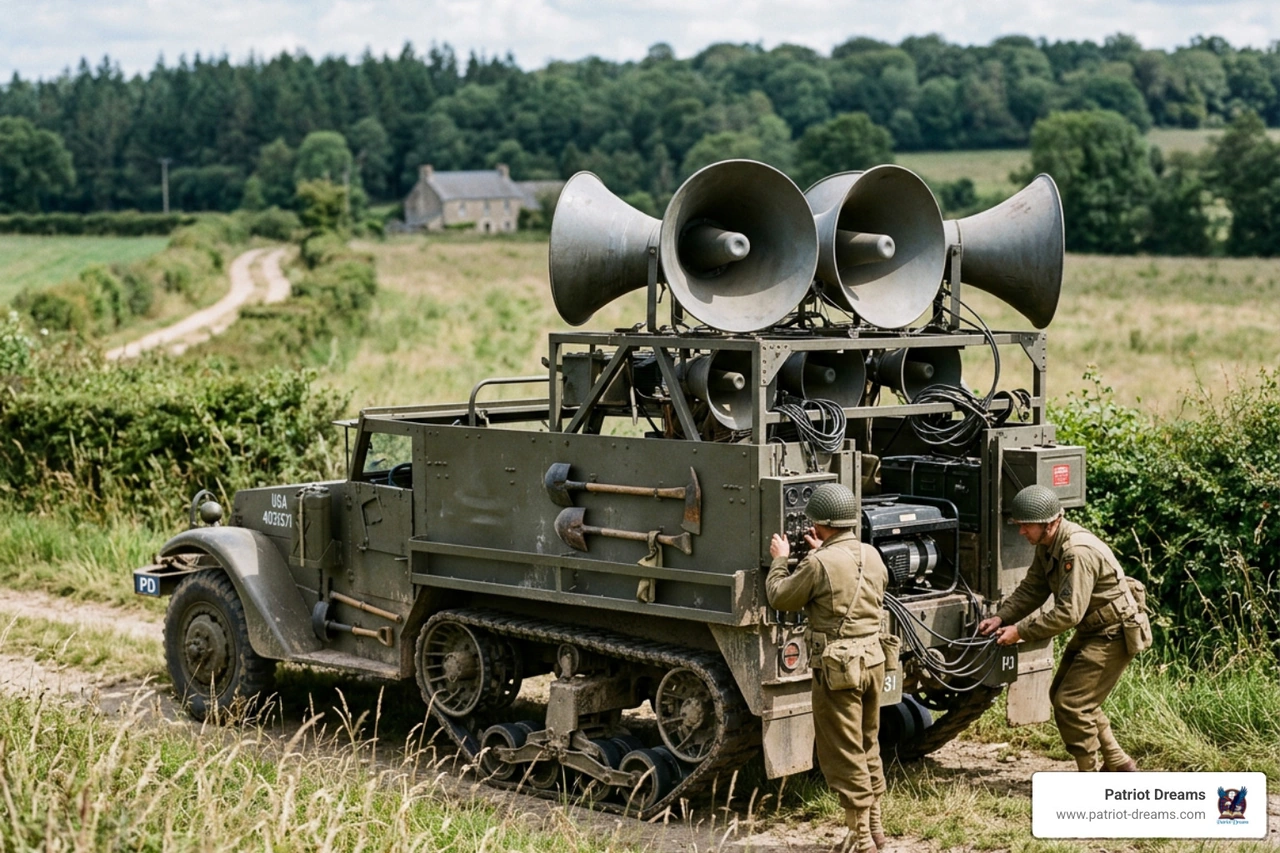
At the same time, the unit’s radio operators engaged in "spoof radio." They created fake networks, mimicking the distinct typing styles (called "fists") of real operators from actual divisions. When German intelligence intercepted these fake transmissions, they believed they were listening to genuine military communications planning an imminent attack.
Key Operations of The Ghost Army Across Europe
From the moment they arrived in England in May 1944, just before D-Day, the Ghost Army was thrust into some of the most critical campaigns of the European theater. They operated across France, Luxembourg, Belgium, Germany, and Italy, adapting their scripts and illusions to meet the changing needs of the battlefield.
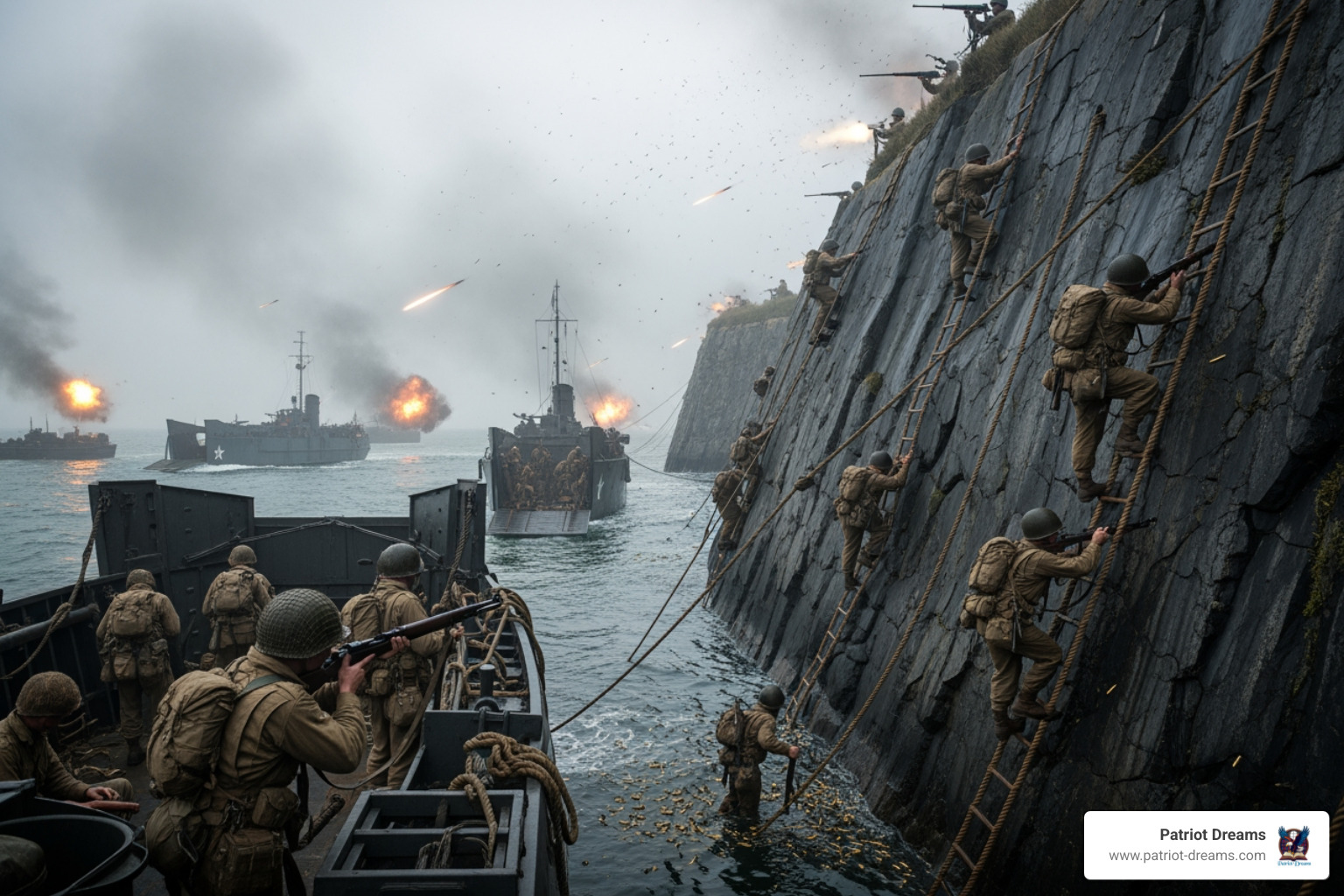
One of their first major contributions took place during the siege of Brest, where they set up dummy artillery positions to draw enemy fire away from real units, such as those detailed in Scaling the Cliffs of Hell: The D-Day Heroism of the 2nd Ranger Battalion.
During the Battle of the Bulge, the unit used counterfeit radio traffic to deceive the enemy about General George S. Patton’s Third Army movements, helping to stabilize the Allied lines during a critical moment of vulnerability.
Their masterpiece, however, was Operation Viersen in March 1945 during the Rhine crossing. Tasked with impersonating two complete American divisions (the 30th and the 79th), the 1,100 men of the Ghost Army set up hundreds of inflatable vehicles, broadcasted massive construction sounds, and filled the airwaves with fake radio traffic. The German forces fell for the trick completely, focusing their defenses opposite the Ghost Army's fake position and allowing the real U.S. divisions to cross the Rhine River with minimal casualties.
To understand the sheer scale of what they simulated, consider this comparison:
| Feature | Real U.S. Army Division | Ghost Army Simulated Division |
|---|---|---|
| Actual Personnel | ~15,000 men | ~1,100 men |
| Heavy Tanks | Hundreds of tons of steel | Inflatable rubber vehicles (lifted by hand) |
| Communication | Thousands of active radios | Engineered "spoof" radio scripts |
| Sound Profile | Natural movement of machinery | 500-pound speakers playing wire recordings |
The Creative Souls Behind the Illusion
What makes The Ghost Army so incredibly endearing is the human element. These were gentle, creative souls who used their artistic gifts to protect their fellow human beings. They proved that courage doesn't always wear a traditional uniform—sometimes, it carries a paintbrush.
Artists, Designers, and Heroes of The Ghost Army
Many of the young men who served in the 23rd went on to shape the landscape of American art, fashion, and design in the decades following the war. Among them were:
- Bill Blass, who became a legendary American fashion designer.
- Ellsworth Kelly, who went on to become one of the most influential painters and sculptors of the 20th century.
- Arthur Singer, who became an internationally acclaimed wildlife artist.
- Art Kane, who became a world-renowned photographer.
These men brought a unique perspective to the military. Where others saw a battlefield, they saw a stage. They understood color, shadow, perspective, and human psychology—the exact ingredients needed to create a believable illusion. To support ongoing efforts to preserve their biographies and personal histories, you can visit The Ghost Army Legacy Project.
The Human Stories of Everyday Kindness
In their downtime, when they weren't inflating tanks or broadcasting the sounds of heavy machinery, these soldier-artists did what they loved most: they sketched. They captured the quiet beauty of the European countryside, the ruins of bombed-out churches, and the faces of local civilians.
There are beautiful stories of camaraderie between the soldiers and the French villagers. When French civilians noticed the rubber tanks, the soldiers would gently play along, sometimes telling them with a wink that "the Americans are very strong" when four men would pick up a tank and carry it. They shared their rations, sketched portraits of local children to give to worried mothers, and painted beautiful watercolors of daily life.
This gentle spirit of empathy and connection is a beautiful example of Military Patriotism—the idea that we fight not out of hatred for what is in front of us, but out of love for what we leave behind.
Keeping the Secret: Decades of Silence and Final Recognition
Perhaps the most astonishing part of the Ghost Army's story is that when the war ended, the curtain came down, and the actors went home in absolute silence.
Fifty Years of Classified Silence
Because their tactics were so effective, the U.S. military kept the existence of the 23rd Headquarters Special Troops classified for decades. The soldiers were sworn to secrecy, forbidden from telling their wives, children, or friends about the inflatable tanks and sound trucks.
When Bill Blass or Ellsworth Kelly became famous after the war, they couldn't explain how they had spent their military service. For 50 years, their incredible contributions remained locked away in military archives. This silent sacrifice reminds us of other quiet heroes of the era, such as the legendary spy featured in Virginia Hall: The Limping Lady Who Outwitted the Nazis.
It wasn't until 1996 that the unit's records were finally declassified, allowing these aging veterans to finally share their stories with their proud families.
The Congressional Gold Medal and Lasting Legacy
As the years passed, a dedicated group of historians, family members, and surviving veterans worked tirelessly to ensure the Ghost Army received the recognition they deserved.
In February 2022, President Joe Biden signed the Ghost Army Congressional Gold Medal Act into law. On March 21, 2024, a beautiful ceremony was held at the U.S. Capitol, where the three surviving veterans—Seymour Nussenbaum, Bernie Bluestein, and John Christman—were honored in person.
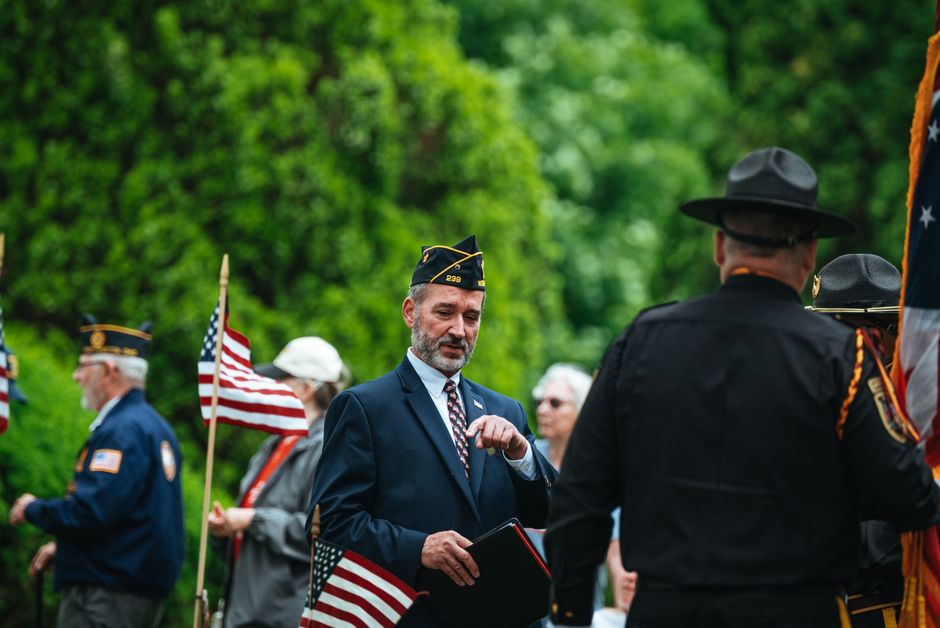
Today, their legacy lives on, not only in history books but as a foundational chapter in modern military deception and information operations.
Frequently Asked Questions about WWII Deception
How many lives did The Ghost Army save?
Historians and military analysts estimate that the Ghost Army's 25 tactical operations saved between 15,000 and 30,000 Allied lives by drawing enemy forces away from real, vulnerable troop concentrations.
Who were the most famous members of the unit?
Several members went on to achieve massive post-war fame in the creative arts, including fashion designer Bill Blass, minimalist painter Ellsworth Kelly, wildlife illustrator Arthur Singer, and photographer Art Kane.
When was the unit's existence finally declassified?
The operations of the 23rd Headquarters Special Troops remained a closely guarded military secret for more than 50 years until they were officially declassified in 1996.
Conclusion
The story of The Ghost Army reminds us that there are many ways to serve our country. It shows us that creativity, kindness, and intelligence can be just as powerful as physical strength. These young artists went to war armed with nothing but paint, rubber, and sound, and in doing so, they brought thousands of young men safely home to their families.
Here at Patriot Dreams, we believe that these personal, heartfelt stories are the true heartbeat of American history. Through our interactive map and unique audio storytelling platform, we are dedicated to preserving these family legacies and bringing history to life for generations to come.
We invite you to join us on this journey of discovery. Explore America's 250-Year Journey and help us keep the stories of everyday heroes like the Ghost Army alive forever.

Join the Patriot Dreams Community
Download the app today and start your journey through American history and personal legacy.

Explore Our Latest Insights
Dive into stories that shape our American legacy.