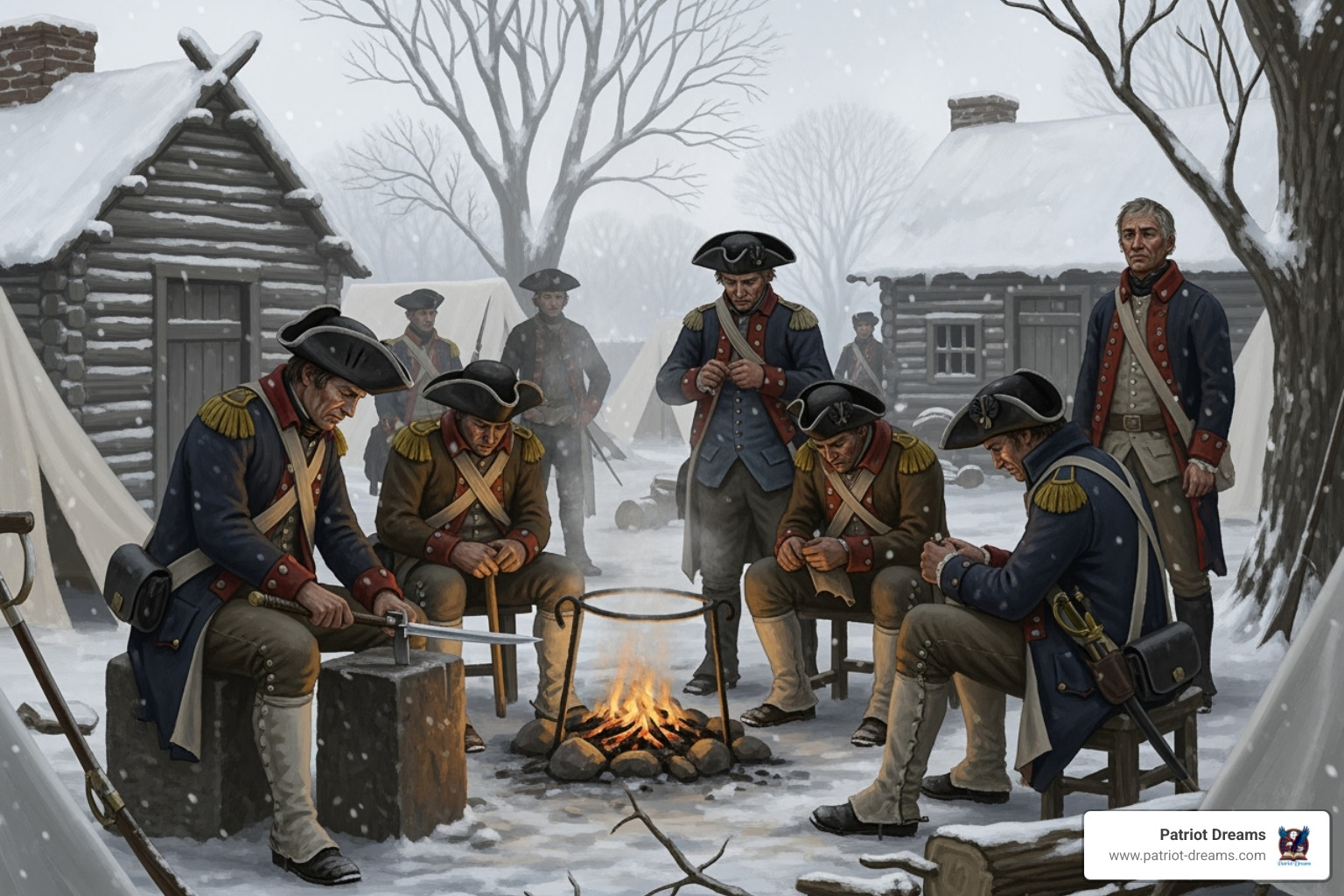
The Ultimate Guide to the Constitutional Convention
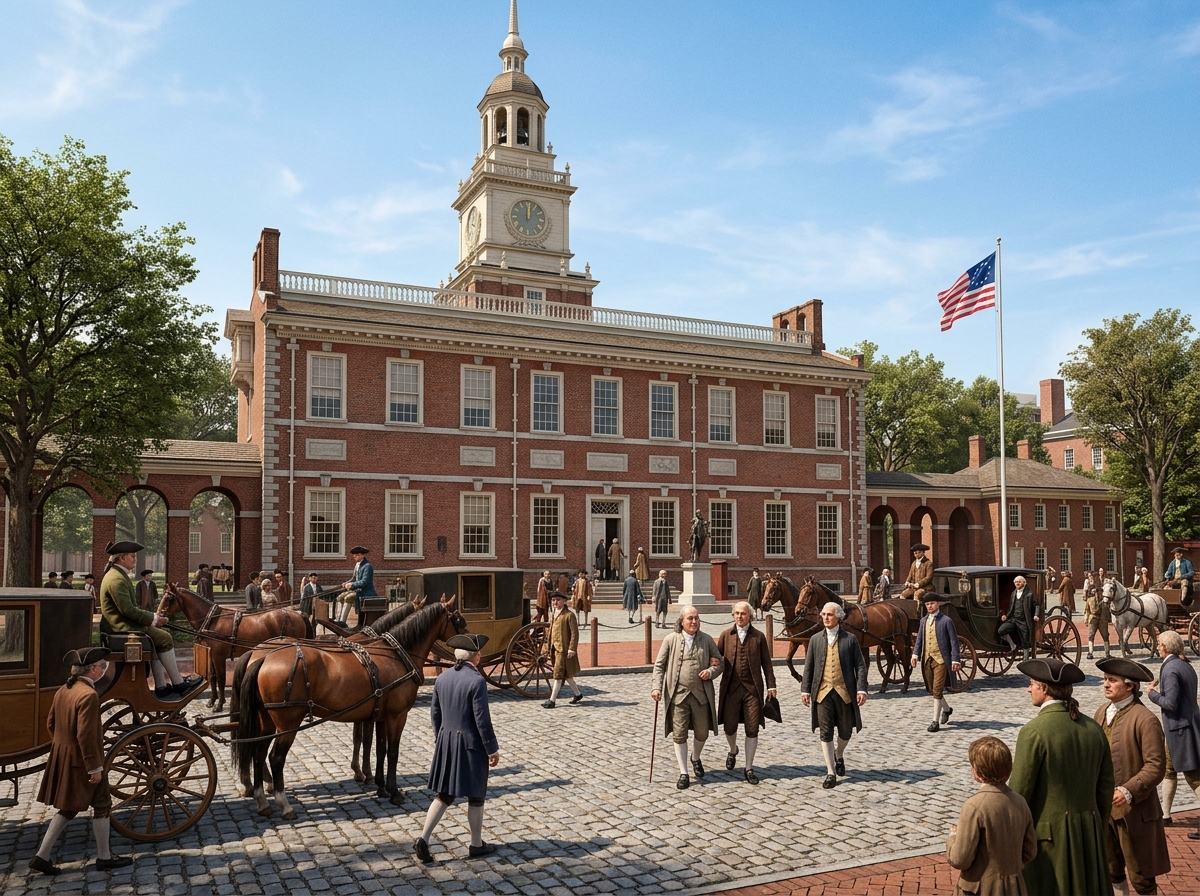

The Summer That Shaped a Nation: A Quick Look at Constitutional Convention History
Constitutional Convention history is the story of how a group of remarkable Americans came together in the summer of 1787 to build something brand new—a government strong enough to hold a young nation together.
Here's the short version, if that's all you need right now:
- When: May 25 – September 17, 1787
- Where: Independence Hall, Philadelphia, Pennsylvania
- Who: 55 delegates from 12 of the 13 states (Rhode Island did not attend)
- Why: The existing government—the Articles of Confederation—was too weak to keep the country running
- What happened: Delegates scrapped the Articles and wrote an entirely new U.S. Constitution
- Result: 39 of 55 delegates signed it on September 17, 1787; it took effect March 4, 1789
Think about the courage that took. These men walked into a sweltering Philadelphia summer, nailed the windows shut to keep their debates secret, and refused to leave until they had built something worth believing in.
They disagreed—sometimes fiercely. They came from big states and small ones, northern farms and southern plantations. But they kept talking. They kept listening. And slowly, carefully, they found a way forward together.
That spirit—of patience, of compromise, of shared hope—is what makes this story so worth knowing.
Whether you're a lifelong history lover or just starting to explore America's past with your family, the story of the Constitutional Convention is one of the most human, most hopeful chapters in American history.
Quick Constitutional Convention history definitions:
- American Revolution stories
- Oregon Trail stories
- California Gold Rush
The Road to Philadelphia: Why the Articles of Confederation Failed
Before we can appreciate the "miracle at Philadelphia," we have to understand the "leaky roof" the Founders were trying to fix. After the American Revolution Stories Ultimate Guide reached its conclusion with independence, the young United States was governed by the Articles of Confederation.
Adopted in 1781, the Articles were less like a national government and more like a "firm league of friendship." While that sounds lovely and neighborly, it didn't work very well for a growing country. The central government was intentionally kept weak because the states were afraid of creating another king-like authority. However, this weakness led to deep trouble.
A Government Without a Wallet or a Voice
Under the Articles, the national Congress had no power to tax. If the country needed money to pay off war debts, it had to ask the states nicely—and the states often said "no." This lack of funding meant we couldn't maintain a proper military or even pay the soldiers who had fought for our freedom.
Foreign policy was also a mess. Because the central government couldn't enforce treaties, states often ignored the 1783 Treaty of Paris. This gave the British an excuse to keep their military forts on American soil in the Northwest. Meanwhile, Spain barred American ships from using the Mississippi River, a vital lifeline for Western farmers. Without a strong federal voice, the U.S. was being pushed around on the world stage.
Shays' Rebellion: The Final Straw
The economic troubles hit home in 1786. In Massachusetts, struggling farmers—many of them veterans—were losing their land because they couldn't pay high taxes and debts. Led by Daniel Shays, they rose up in an armed revolt.
Shays' Rebellion sent a shiver through the states. It showed that the government couldn't maintain order or protect property. As Constitutional Convention and Ratification, 1787–1789 explains, these internal and external pressures led to the Annapolis Convention in 1786. Only five states showed up, but they issued a bold call: meet in Philadelphia next year to fix the government.
The Visionaries: Key Figures in Constitutional Convention History
When May 1787 arrived, 55 delegates traveled to Philadelphia. They were a diverse group of lawyers, merchants, and farmers, but they shared a common goal: saving the United States. In the annals of Constitutional Convention history, a few names stand out as the steady hearts and brilliant minds of the summer.
George Washington: The Steady Hand
It’s hard to imagine the convention succeeding without George Washington The General Who Became Americas First President. He had retired to his beloved Mount Vernon and was initially reluctant to attend. But he was persuaded that his presence was vital for the convention’s legitimacy.
Unanimously elected as the president of the convention, Washington rarely joined the debates. Instead, he sat in a tall wooden chair at the front of the room, providing a sense of dignity and order. His mere presence reminded everyone that they were there for something bigger than their local interests.
James Madison: The Architect
If Washington was the heart, James Madison was the brain. Often called the "Father of the Constitution," Madison arrived with a suitcase full of books and a head full of ideas. He had spent the winter studying ancient and modern governments to figure out why they failed.
The James Madison Constitution wasn't just a list of rules; it was a vision for a balanced government. Madison took meticulous notes every single day, giving us the best record we have of what happened behind those closed doors.
Benjamin Franklin: The Peacemaker
At 81 years old, Benjamin Franklin was the elder statesman. He was often carried to the sessions in a sedan chair by prisoners from the local jail! While he wasn't the primary author of the text, his wit and wisdom saved the convention more than once. When tempers flared, Franklin was the one to tell a joke or suggest a compromise. You can learn more about his incredible life in our guide All About Benjamin Franklin Inventor Diplomat and Founding Father.
Other notable Founding Fathers included Alexander Hamilton, who pushed for a very strong central government, and James Wilson, who argued passionately for the people to have a direct vote in their leadership. Though 55 men participated, only 39 would ultimately put their names on the final parchment.
The Spirit of Compromise: Balancing Power and Representation
The biggest hurdle in Constitutional Convention history was a simple question: How do we make sure every state has a fair say?
Big States vs. Small States
The "Large States" (like Virginia and Pennsylvania) wanted representation based on population. They supported the Virginia Plan, which proposed a two-house legislature where more people meant more votes.
The "Small States" (like New Jersey and Delaware) were terrified of being bullied by their bigger neighbors. They countered with the New Jersey Plan, which called for a one-house legislature where every state got exactly one vote—just like under the Articles.
FeatureVirginia PlanNew Jersey PlanLegislatureBicameral (Two Houses)Unicameral (One House)RepresentationBased on PopulationEqual for Every StateExecutiveChosen by CongressMulti-person CommitteePowerStrong National GovernmentExpanded State Powers
The Great Compromise
By July, the convention was at a breaking point. Some delegates threatened to leave; others talked of seeking foreign alliances. That’s when Roger Sherman of Connecticut stepped forward with what we now call the Connecticut Compromise or the Great Compromise.
He suggested a "Bicameral" (two-house) legislature:
- The House of Representatives: Representation based on population (satisfying the big states).
- The Senate: Every state gets two senators, regardless of size (satisfying the small states).
This beautiful balance is still how our government works today. It teaches us that in a family or a nation, we move forward by making sure everyone feels heard.
The Shadow of Slavery
We must also acknowledge the difficult compromises made regarding slavery. As Constitutional Convention | History & Compromises | Britannica notes, the issue of how to count enslaved people for representation and taxation led to the Three-Fifths Compromise. This decided that three out of every five enslaved people would be counted for a state's population.
The delegates also agreed that Congress could not ban the "importation" of enslaved persons until 1808. These were heavy, painful compromises made to keep the Southern states from leaving the convention. While they allowed the Constitution to be signed, they left a legacy of conflict that the nation would have to face in the generations to come.
Crafting the Three Branches: Executive and Judicial Debates
Once the legislative branch was settled, the delegates turned to the "Executive" and "Judicial" branches. They wanted to ensure a separation of powers so that no one person or group could ever become too powerful.
The Presidency
Should the leader be one person or a committee? Most delegates agreed that a single Executive—a President—was needed for clear leadership, especially in foreign affairs. But they worried about how to choose this person.
They rejected a direct popular vote (fearing the people wouldn't know candidates from other states) and they rejected having Congress choose the President (fearing the President would be a "puppet" of the legislature). The result was the Electoral College, a complex compromise that we still use today. They also gave the President the veto power, allowing him to check the power of Congress.
The Courts
The delegates established a Supreme Court to be the highest authority on the law. They wanted judges to be independent, so they decided that federal judges would serve for life (during "good behavior") and their salaries could not be lowered while they were in office. This ensured they could make fair decisions without worrying about political pressure.
From Drafting to Ratification: The Birth of a New Nation
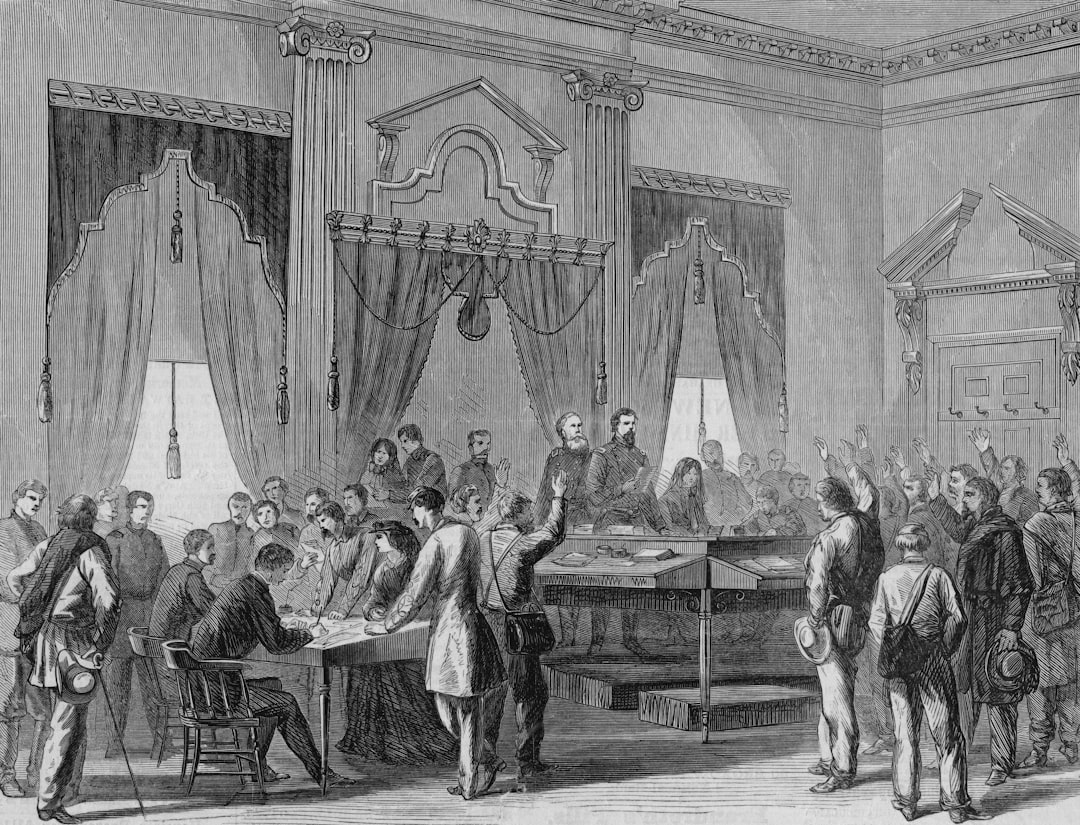
As the summer ended, the "Committee of Detail" and the "Committee of Style" took all the agreed-upon ideas and polished them into a final document. Gouverneur Morris, a delegate with a flair for writing, is credited with penning the famous preamble: "We the People of the United States..."
The Missing Bill of Rights
When the Constitution was finally signed on September 17, 1787, three delegates—George Mason, Edmund Randolph, and Elbridge Gerry—refused to sign. Their biggest complaint? The document didn't have a Bill of Rights to protect individual liberties.
Federalists (who supported the Constitution) argued that a Bill of Rights wasn't necessary because the government only had the powers specifically listed. Anti-Federalists (who opposed it) weren't convinced. They feared the new "Supreme Law of the Land" would swallow up the rights of the people. You can read more about this debate in The US Constitution Bill of Rights Explained Simply.
The Battle for Ratification
Signing the document was only the beginning. It had to be "ratified" (approved) by at least 9 of the 13 states. This led to a year of intense public debate. Alexander Hamilton, James Madison, and John Jay wrote the Federalist Papers to explain why the new government was needed.
On the other side, figures like Patrick Henry gave passionate speeches against it. You can hear the echoes of that era in the Patrick Henry Speech. Eventually, a compromise was reached: several states agreed to ratify the Constitution only if a Bill of Rights was added immediately after.
On June 21, 1788, New Hampshire became the ninth state to ratify. The "miracle" was complete. The new government officially began on March 4, 1789, and the first ten amendments (the Bill of Rights) were added in 1791.
Frequently Asked Questions about Constitutional Convention History
What was the primary goal of Constitutional Convention history?
While the delegates were officially sent to Philadelphia to "revise" the Articles of Confederation, their primary goal quickly became creating a completely new framework. They realized that a "patchwork" fix wouldn't work. They needed a system of federalism where power was shared between a strong national government and the individual states to ensure national unity and economic stability.
Who were the most influential figures in Constitutional Convention history?
James Madison is often titled the most influential due to his drafting of the Virginia Plan and his detailed notes. George Washington provided the essential leadership and trust needed to keep the delegates together. Benjamin Franklin acted as the "glue" through compromise, and Roger Sherman saved the convention with the Great Compromise. To explore more about these men, check out our guide on the Founding Fathers.
Why was a Bill of Rights not initially included?
Many delegates felt that the Constitution already limited the government's power enough that a Bill of Rights wasn't needed. They also worried that if they listed specific rights, people might think those were the only rights they had. However, this omission almost stopped the Constitution from being ratified. For a simple breakdown of the rights that were eventually added, see The US Constitution Bill of Rights Explained Simply.
Conclusion: A Legacy of Hope and Persistence
The story of Constitutional Convention history isn't just a collection of old dates and dusty papers. It’s a story about people—people who were tired, hot, and often frustrated, but who refused to give up on the idea of America.
They showed us that even when we have big differences, we can find a common path if we approach each other with respect and a willingness to listen. They built a "living" document, designed to grow and change as we grow and change.
At Patriot Dreams, we believe that these stories are the heart of our family legacies. When we understand the perseverance of those who came before us, it gives us hope for our own journey. Whether you are exploring your own family heritage or the heritage of our nation, we invite you to keep the conversation going.
Experience history with the Patriot Dreams app and bring these stories to life for your children and grandchildren. Together, we can ensure that the spirit of 1787—the spirit of unity and shared dreams—continues to shine bright.

Join the Patriot Dreams Community
Download the app today and start your journey through American history and personal legacy.

Explore Our Latest Insights
Dive into stories that shape our American legacy.