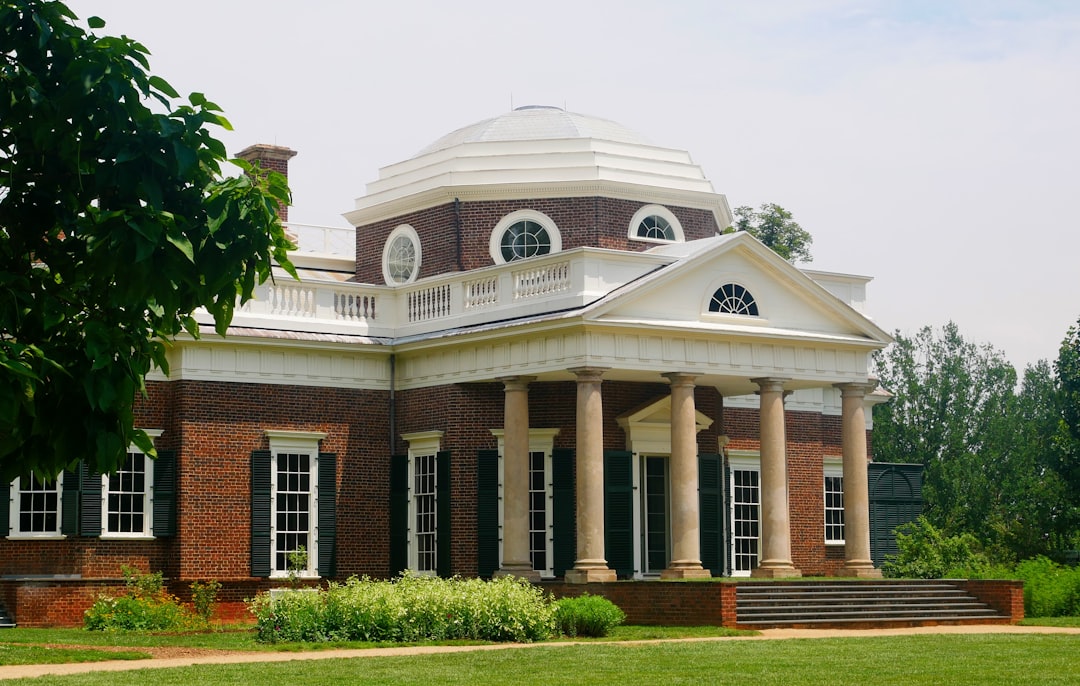
Voices from the Frontlines of the American Revolution
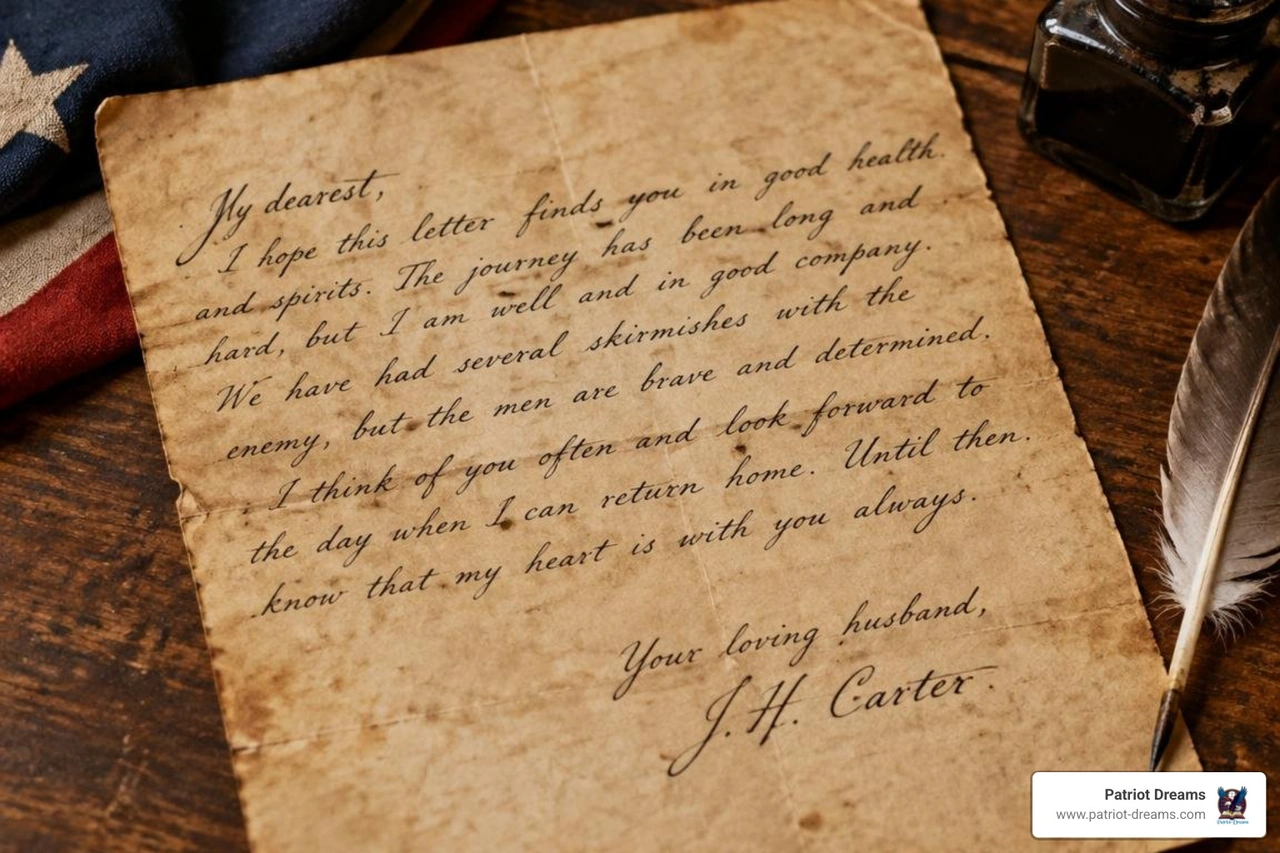

Read Revolutionary War Soldier Letters in Their Own Words
To read Revolutionary War soldier letters, start with Peter Brown's 1775 letter to his mother about Bunker Hill and the Davenport brothers' letters from their years of service. These letters tell us what soldiers saw, what they needed, and how much they missed home.
A letter could carry battle news and a simple request for clothing on the same page. It also gave families a way to stay close when they could not know when they would meet again. We're Kyle and Emily, and we'll help you explore the people behind these pages.
Key Revolutionary War Soldier Letters and What They Reveal
When we sit down with historical letters, we meet real people facing extraordinary circumstances with quiet dignity. The Continental Army was not composed of mythical giants; it was made of farmers, blacksmiths, apprentices, and shopkeepers who had to navigate freezing winds, empty stomachs, and deep longing for their firesides. In our collection of American Revolution stories, these handwritten pages stand out because they strip away romantic legend and show us raw, honest humanity.
The correspondence left behind by these men shows that military life was often defined by logistics and endurance rather than constant action. Soldiers wrote about waiting weeks for promised pay, repairing shoes with scrap leather, and stretching meager rations of salted meat and flour. Yet, within those same sentences, they expressed unwavering care for their neighbors and families back home.
Eyewitness Accounts in Revolutionary War Soldier Letters from Major Battles
When battles did occur, soldiers captured the chaos, courage, and sorrow in vivid detail. Just days after the clash on Breed’s Hill, Private Peter Brown sat down to write to his mother on June 25, 1775. As a company clerk serving under Colonel William Prescott, he offered an intimate view of the fighting, describing how the men fortified the hill while facing what felt like "all Boston fortified against us." Brown spoke candidly about his fears, his narrow escape from what he termed the "arrows of death," and his deep desire to reassure his mother that he was unharmed.
From the other side of that same engagement, Marine Lieutenant John Waller's battle account provides a somber counterpoint during the Battle of Bunker Hill. Writing on June 21, 1775, Waller grieved the immense officer losses within the 1st Battalion of Marines, describing the bloody ascent up the redoubt and mourning his fallen companion Archy Campbell. These twin perspectives remind us that battlefield heartbreak touched every family involved.
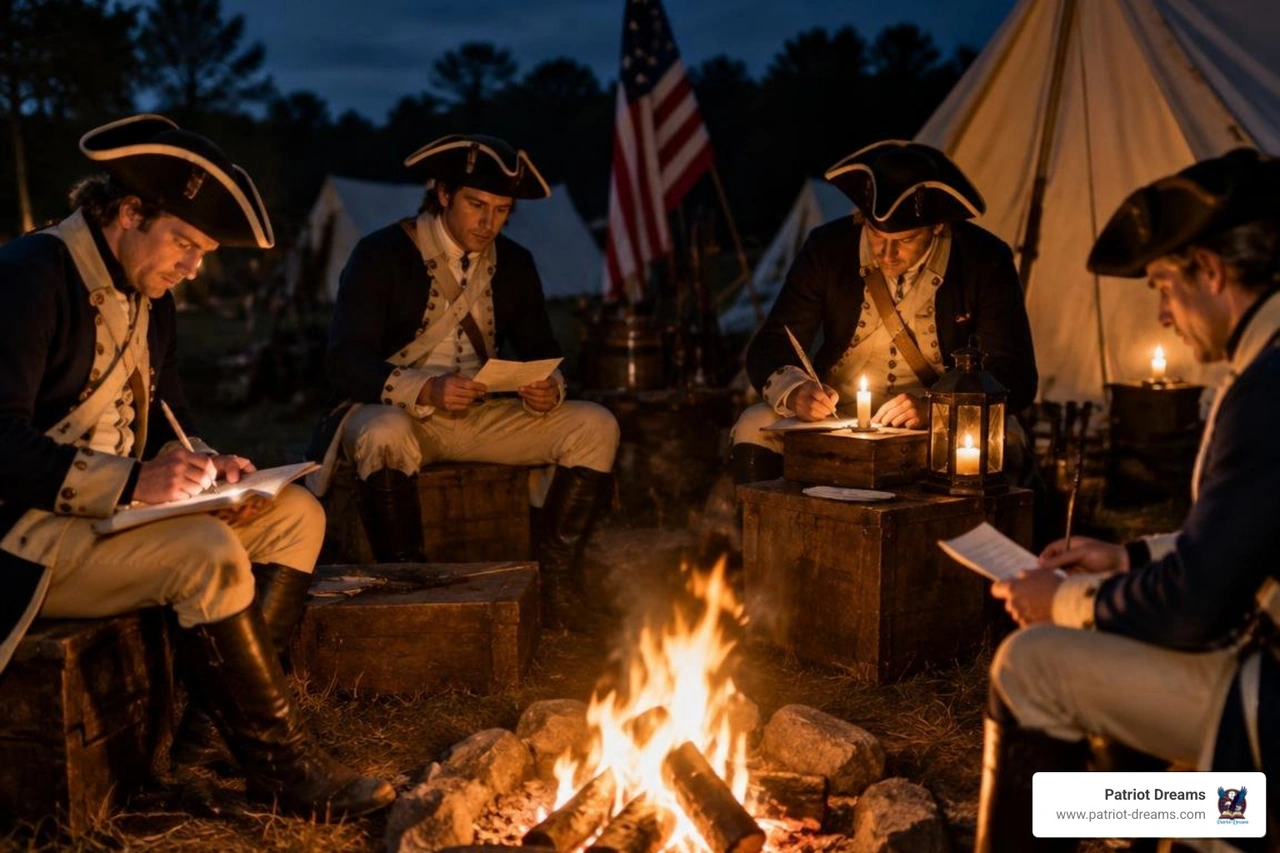
Further into the conflict, leadership reports carried the same immediacy. Following the pivotal actions at Freeman’s Farm during the Saratoga campaign, General Horatio Gates drafted an October 12, 1777 report to John Hancock. Gates detailed tactical successes—including the capture of eight brass cannon—while also documenting the heavy human cost, noting that around 300 wounded British troops had been left under his protection and praising frontline commanders who sustained serious injuries.
Meanwhile, ordinary militia captains balanced battlefield duties with civic cares. The Robert McCallen papers and militia letters contain a remarkable December 26, 1776 letter written amidst the foggy, ice-choked morning surrounding the Battle of Trenton. McCallen’s papers show how community-based militias operated, pairing battlefield reports with community firearm loan registries and tender inquiries about his family's farm in Pennsylvania.
Winter Camps, Valley Forge, and Logistical Trials
Winter encampments tested the resolve of the army just as much as open combat. During the bitter winter of 1777–1778, General George Washington sheltered roughly ten thousand troops at Valley Forge. In his later recollections drawn from his father’s letters, Henry Woodman described soldiers huddling together inside newly constructed log huts during fierce snowstorms, leaning on each other for warmth and companionship.
Letters from officers like Lieutenant William Barton of New Jersey and Captain Ezra Selden of Connecticut reveal the emotional rhythm of camp life. Barton wrote home to his father Gilbert asking for basic necessities and dreaming of a wagon ride home, while Selden detailed the sudden boost in morale when official news arrived confirming the French alliance.
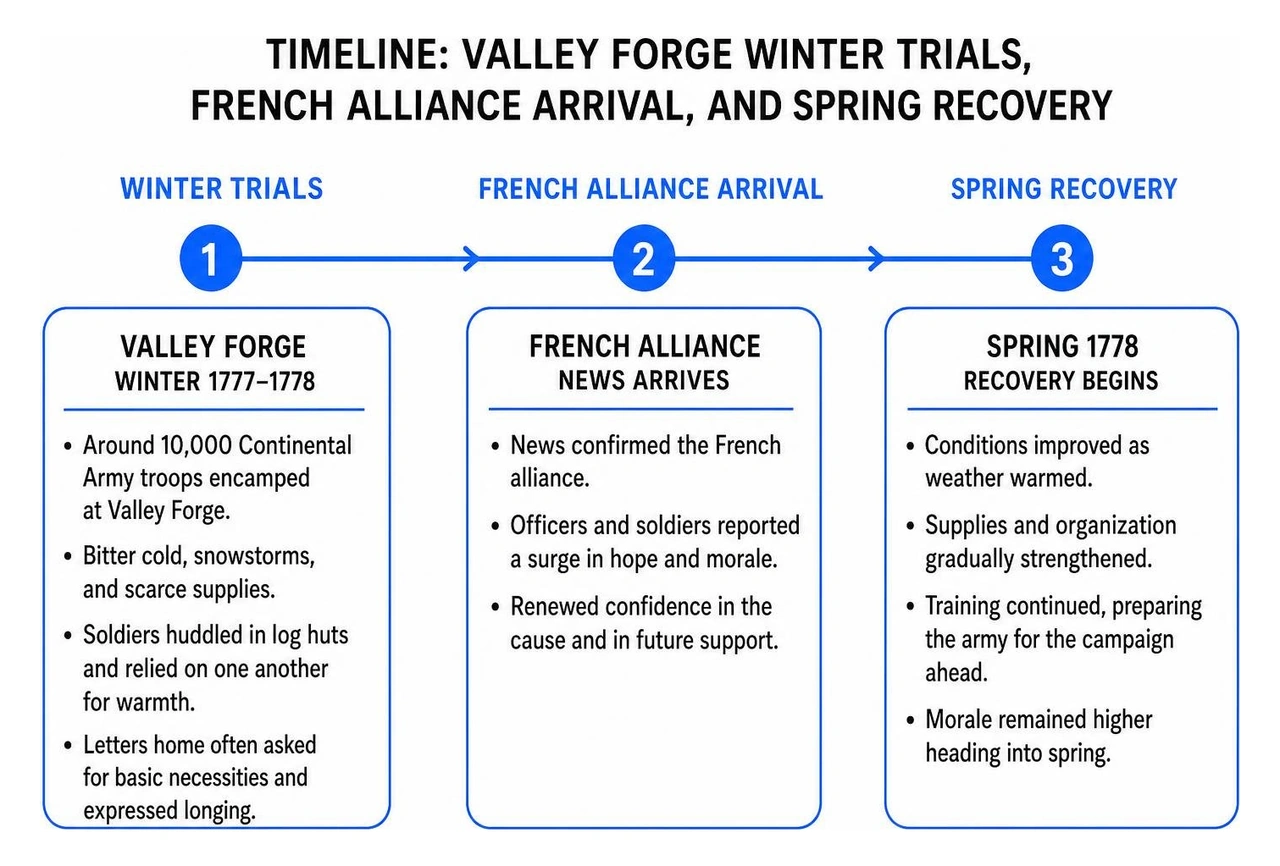
Among the most moving records from this period is The Davenport Letters collection, featuring 17 surviving letters exchanged by brothers James and Isaac How Davenport between 1778 and 1783. Isaac Davenport, who served in Washington’s Commander-in-Chief’s Guard and the 3rd Continental Dragoons, wrote home from Valley Forge on January 15, 1778, discussing daily duties and small comforts. Tragically, Isaac lost his life later that year during the Baylor Massacre at just twenty-four years old. His brother James served faithfully through the end of the conflict, preserving the memory of his brother’s sacrifice for future generations.
Love, Family Ties, and the Emotional Toll of Separation
The Revolutionary War separated husbands, wives, parents, and children for years at a time. In this era before instant messaging, ink on paper was the only lifeline keeping marriages and families tethered together across hundreds of miles.
The correspondence between Lieutenant Joseph Hodgkins of the Ipswich Minutemen and his wife Sarah Perkins Hodgkins offers one of the richest records of wartime marriage. Between 1775 and 1778, Joseph penned 86 letters from camps across Boston, Long Island, Harlem Heights, White Plains, and Princeton. Sarah sent back 20 letters that survive today (with at least 22 lost to time). Her notes reveal the heavy emotional and domestic burdens shouldered by women in the American Revolution, who tended farms, raised children, and managed local shortages alone. By the spring of 1778, Sarah confessed to being "very low in spirits," yet unfailingly closed her notes with steadfast loyalty: "I remain your Loving wife till death."
A similar blend of romance and practical partnership appears in the more than 150 letters exchanged between Henry and Lucy Knox. While Henry hauled 59 captured British cannons from Fort Ticonderoga through snowy mountain passes to lift the Siege of Boston, Lucy handled procurement, tracked soaring inflation, managed smallpox inoculations, and coordinated army supplies from home. Their letters shifted naturally from playful endearments—"Dear Girl, how much I love you"—to precise inventories of wine, tea, and warm coats needed for the regiment.
| Letter Collection | Primary Author(s) | Years Covered | Key Themes & Daily Realities |
|---|---|---|---|
| Hodgkins Correspondence | Joseph & Sarah Hodgkins | 1775–1778 | Enlisted camp life, Ipswich home front, farm burdens, marital devotion |
| Knox Letters | Henry & Lucy Knox | 1775–1783 | Artillery logistics, inflation, home procurement, deep affection |
| Davenport Letters | Isaac & James Davenport | 1778–1783 | Valley Forge winter, dragoon service, loss at Baylor Massacre |
| Gilbert Letter Book | Sgt. Benjamin Gilbert | 1780–1783 | Junior officer duties, Yorktown victory, personal relationships |
| McCallen Papers | Capt. Robert McCallen | 1776–1783 | Militia mobilization, Battle of Trenton, community firearm borrowing |
Literacy, Tone, and Archival Survival of Revolutionary War Correspondence
The letters that survive from the Revolutionary War reflect a broad spectrum of educational backgrounds. While senior officers wrote with formal eighteenth-century rhetoric, common soldiers often wrote phonetically, spelling words exactly as they sounded in their regional New England or Mid-Atlantic accents. These variations do not diminish their eloquence; instead, they bring us closer to their true speaking voices, offering diverse perspectives on the Revolutionary War.
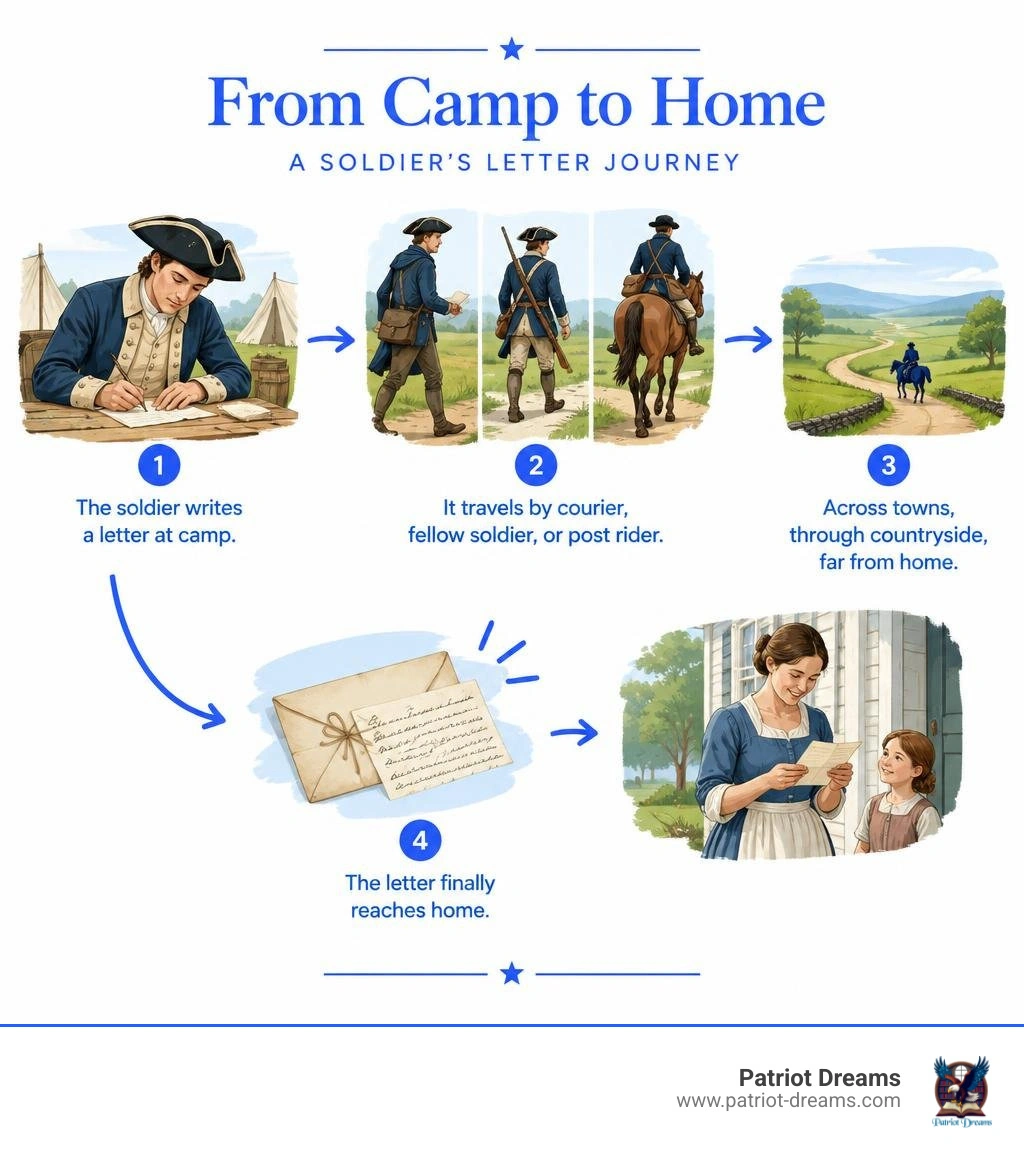
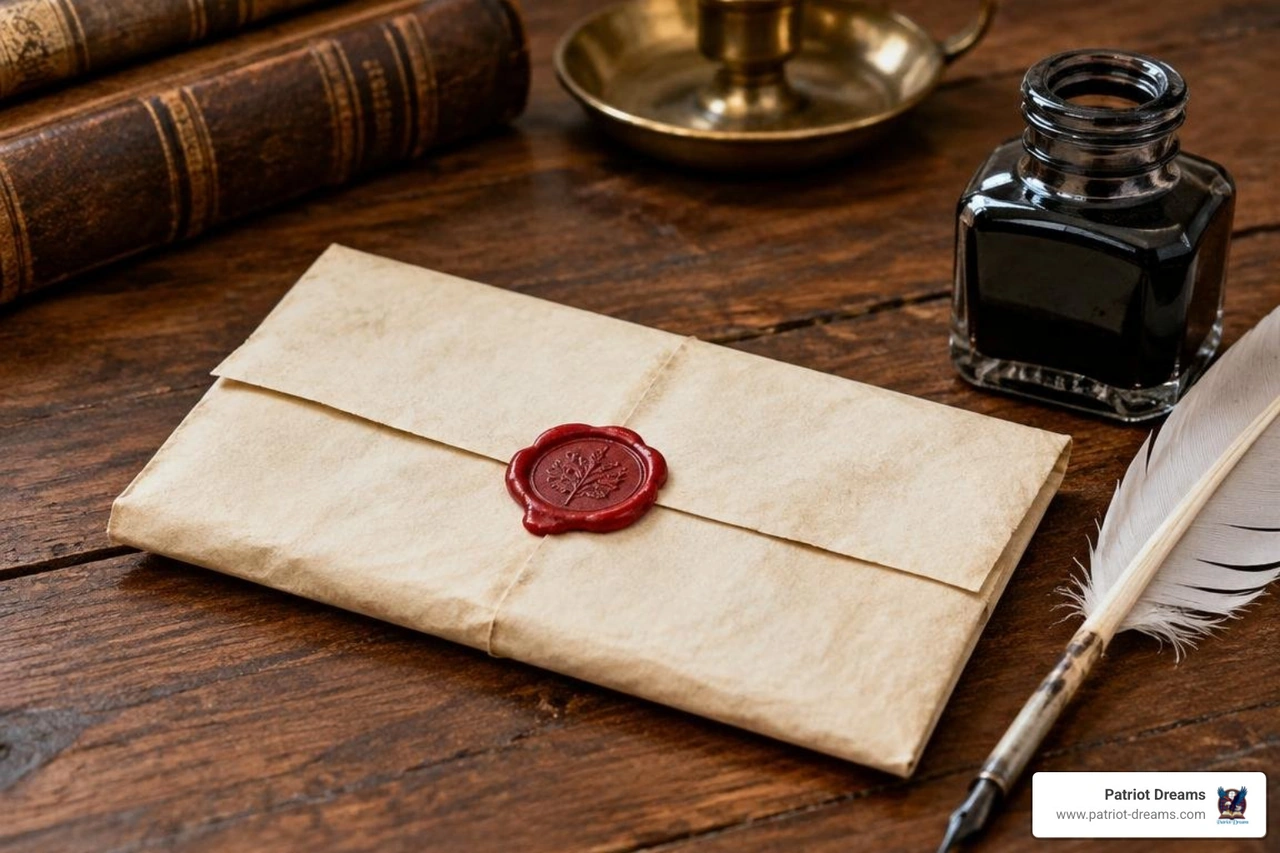
These physical artifacts survived thanks to durable materials. Eighteenth-century writers used rag paper made from linen and cotton fibers, inscribed with iron gall ink that bonded directly with the page. Soldiers folded their letters into self-contained packets, sealed them with hot wax, and entrusted them to post riders or traveling comrades.
A wonderful example of personal record-keeping is the Benjamin Gilbert letter book archive, which contains copies of 83 personal letters written by Sergeant Benjamin Gilbert between 1780 and 1783. Across 219 pages, Gilbert recorded everything from the shock of Benedict Arnold's treason to the exhilaration of the victory at Yorktown, interspersed with personal news and heartfelt messages to friends.
Similarly, three surviving letters from Connecticut soldier Samuel Cooper, alongside preserved Connecticut soldier correspondence and commissions, capture ordinary requests for linen stockings and ribbons alongside official seals signed by Governor Jonathan Trumbull. Each document stands as a time-worn testament to duty and personal devotion.
How Modern Archives Preserve Revolutionary War Soldier Letters
Today, preserving these irreplaceable voices requires careful stewardship. In the nineteenth century, many families transcribed brittle original letters into leather-bound ledgers to keep the words legible for future generations.
In our modern era, university libraries, historical societies, and museum archives use high-resolution digital scanning and standardized archival descriptions to safeguard these manuscripts. Digital preservation allows students, historians, and genealogists to examine original handwriting, wax seal impressions, and paper textures without exposing delicate centuries-old fibers to light or wear.
Frequently Asked Questions About Revolutionary War Soldier Letters
What were the most common hardships described in soldier letters?
Soldiers most frequently wrote about shortages of basic necessities, including shoes, warm blankets, salt, and clean clothing. Delays in receiving continental pay, bouts of camp illness such as dysentery and smallpox, and the emotional pain of being separated from loved ones were constant themes across all ranks.
How did letters travel between the front lines and colonial homes?
Because formal postal routes were often disrupted by military movements, soldiers relied heavily on informal networks. Letters were typically carried by traveling soldiers returning home on furlough, teamsters driving supply wagons, or trusted civilian travelers heading toward neighboring towns.
Where can readers explore digitized Revolutionary War soldier correspondence?
Digitized collections are openly accessible through institutions such as the Massachusetts Historical Society, the William L. Clements Library at the University of Michigan, the Gilder Lehrman Institute of American History, and the Museum of the American Revolution.
Conclusion
Reading these letters feels like sitting down in a cozy room with an old family album. It reminds us that behind every grand date in a history book were quiet, caring people who loved their families, looked out for their neighbors, and hoped for a peaceful tomorrow.
The story of our nation was written not just by famous statesmen, but by ordinary men and women who shared their burdens with patience and grace. To explore more about the builders of our heritage alongside these everyday patriots, take a moment to learn about the Founding Fathers and frontline patriots who helped shape the American journey.
At Patriot Dreams, we believe that listening to these voices helps us feel a little closer to one another. When we remember how much these early Americans cared for their communities through difficult times, it inspires us to carry that same warmth, kindness, and neighborly spirit into our own lives today.

Join the Patriot Dreams Community
Download the app today and start your journey through American history and personal legacy.

Explore Our Latest Insights
Dive into stories that shape our American legacy.